
Places in this article: Samarkand · Bukhara · Khiva · Tashkent
Great scientists of Uzbekistan: al-Khwarizmi, al-Biruni, Ibn Sina, Ulugh Beg and where to see their traces
Every time a phone suggests a route or a search engine sorts a page, it runs an algorithm. The word comes from a man born in Khorezm, the oasis where Khiva stands: Muhammad ,Did you know? The word “algorithm” comes from a scholar of Khorezm Muhammad al-Khwarizmi, born in Khorezm around 780, worked at the House of Wisdom in Baghdad. The Latin form of his name gave us “algorithm”, and “algebra” comes from al-jabr in the title of his book. A statue of him stands in Khiva. Read more → “the man from Khwarazm”. His Latin name, Algoritmi, became a word for a method of calculation, and the title of his book on equations gave the world “algebra”.
He was not alone. Within a few hundred kilometres of each other, today’s Uzbekistan saw the births of a famous astronomer read by Dante, the scholar who measured the Earth, the physician whose textbook taught Europe medicine for centuries, and a prince who built the greatest Did you know? Ulugh Beg measured the year to within 25 seconds Working at his Samarkand observatory, Ulugh Beg put the tropical year at 365 days 5 h 49 min 15 s, about 25 seconds too long, closer than Copernicus a century later. Read more → of his age. Here are the great scientists of Uzbekistan, what each of them did, and where you can still see their traces.
Why so many scientists came from here
From the 9th to the 15th century the oases of Central Asia were rich, connected and full of books. Scholars from Khwarazm and Fergana went to Baghdad, where the Abbasid caliphs, al-Ma’mun above all, gathered translators and scientists in the House of Wisdom. Bukhara under the Samanids had one of the great libraries of its time, and around 1000 the rulers of Khwarazm kept a circle of scholars at their court in Gurganj. In the 15th century Ulugh Beg turned Samarkand into a school of astronomy.
Most of these men wrote in Arabic, the international language of science of the time, and some in Persian. Their names often tell you where they came from: al-Khwarizmi from Khwarazm, al-Farghani from Fergana. The story of the age is told in our history of Uzbekistan in 10 minutes.
Al-Khwarizmi: algebra and the algorithm
Muhammad ibn Musa al-Khwarizmi lived from about 780 to about 850. The 10th-century bibliographer Ibn al-Nadim names Khwarazm as his homeland. Around 820 he was working at the House of Wisdom in Baghdad, and there he wrote the book that gave algebra its name: al-Jabr, a guide to solving equations, written with the encouragement of the caliph al-Ma’mun. Robert of Chester translated it into Latin in 1145, and it remained a university textbook in Europe until the 16th century.
A second book explained calculation with the Indian numerals, the positional system with zero that we still use. Its Latin version began with the words Algoritmi de numero Indorum, and from them came the word “algorithm”. He also compiled astronomical tables with tables of sines and, in 833, a revised geography of the known world.
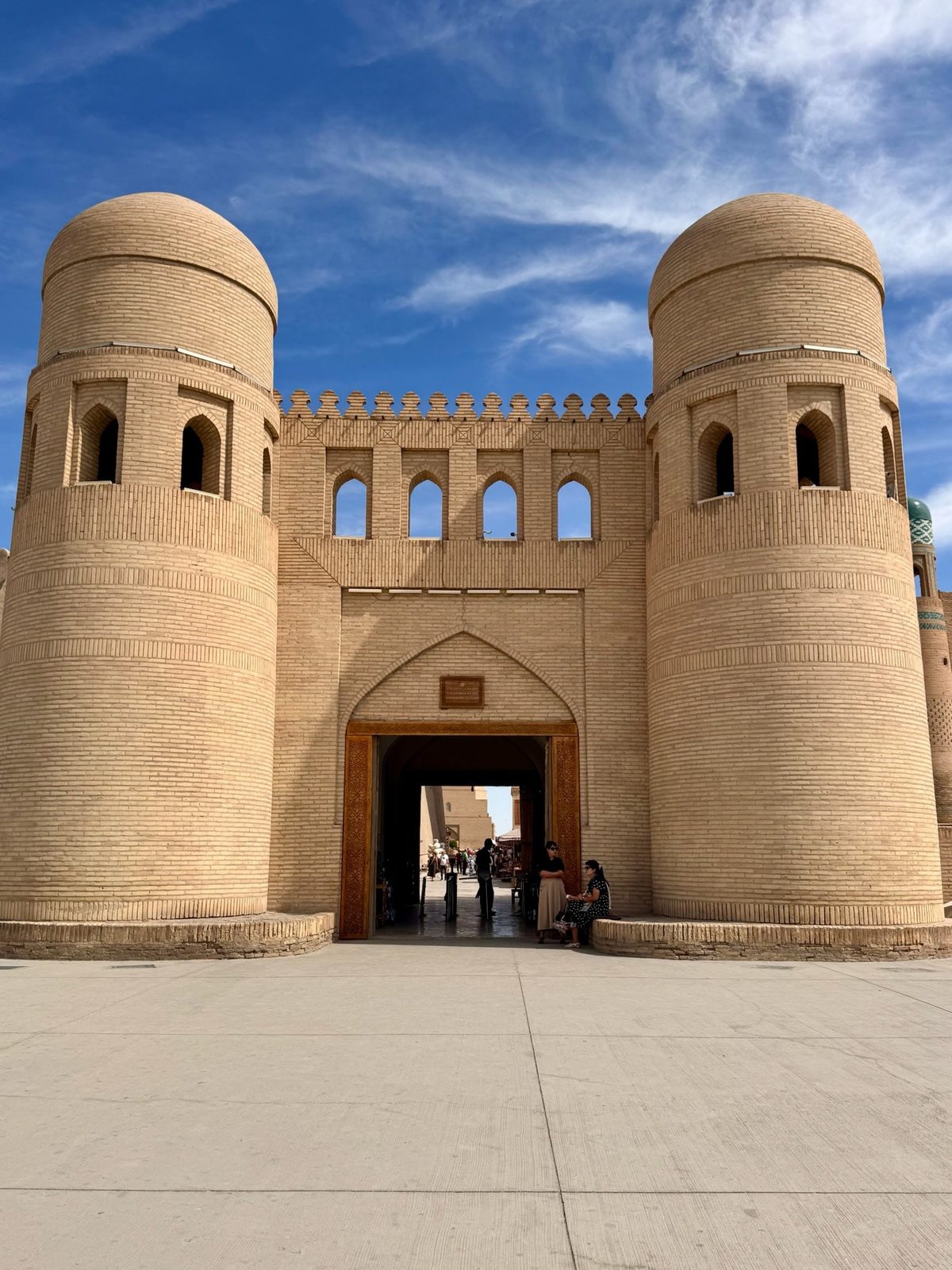
His statue, a seated figure with a book, stands just outside the west gate of Khiva’s .Did you know? People still live inside Khiva's museum city Itchan Kala packs more than 50 historic monuments and about 250 old houses inside clay walls 8–10 m high and 5–6 m thick, and families still live and work in its lanes. Read more → We start the walk there: see Khiva in one or two days.
Al-Farghani: the astronomer Dante read
Ahmad al-Farghani, about 800 to 870, most likely came from Quva in the ;Did you know? Legend says Fergana's 'heavenly horses' sweated blood Legend says the horses of Dayuan, as Chinese chronicles called Fergana, sweated blood, and around 102 BC Emperor Wu of Han sent an army to bring some home. The 'blood' was most likely a skin parasite that causes tiny bleeding spots. Read more → his name says “from Fergana”. In Baghdad he took part in the measurement of a degree of the meridian ordered by al-Ma’mun, to work out the size of the Earth. In 861 he supervised the building of the Nilometer on Rawda Island in Cairo, which measured the height of the Nile flood.
His summary of Ptolemy’s astronomy, the Elements of astronomy, was translated into Latin by John of Seville in 1135 and by Gerard of Cremona before 1175, and Europeans knew him as Alfraganus. Dante seems to have learned his astronomy from it. Columbus used al-Farghani’s figure for the Earth, but read his Arabic miles as shorter Roman miles and so believed Asia was much closer. A lunar crater carries his name. In Fergana city the central park is named after him and has his monument, and in Quva a memorial complex with his statue opened in 1998; see our Fergana Valley guide.
Al-Biruni: the scholar who measured the Earth
Abu Rayhan al-Biruni was born on 4 September 973 in ,Did you know? Legend: Khiva’s oldest columns came from a lost capital Khiva says the oldest columns of its Juma Mosque were saved from Kath, the old capital of Khorezm that the Amu Darya swallowed. What is known: 21 of the 212 columns date from the 10th–12th centuries, and some carry Kufic inscriptions. Read more → then a capital of Khwarazm, south of the .Did you know? Part of the Aral Sea is coming back In 2005 the 12-km Kokaral dike was completed to keep the Syr Darya's water in the North Aral Sea. The level rose faster than expected, the water grew less salty, and fish and fishing returned. Read more → He served the rulers of Khwarazm until 1017, when Mahmud of Ghazni took the country and brought him to Ghazni, in today’s Afghanistan. He travelled with Mahmud’s campaigns to India, learned Sanskrit and wrote India, completed around 1030, a careful description of its sciences, beliefs and customs.
His range is hard to believe: a book on the calendars and eras of many peoples, a great encyclopedia of astronomy, a book on minerals and gems, and a pharmacology that gives the names of medicines in several languages. To measure the radius of the Earth he climbed a hill near Nandana, in today’s Pakistan, measured how far the horizon dipped below the level and worked out the answer by trigonometry; the result was within a few per cent of the modern value. He exchanged letters with the young Ibn Sina, arguing about the nature of the universe, and died in Ghazni in 1048.
Beruniy, a town in Karakalpakstan, carries his name, and so does the Al-Biruni Institute of Oriental Studies in Tashkent, a research institute whose collection of manuscripts is on UNESCO’s Memory of the World register. For the far west of the country, read our Karakalpakstan travel guide.
Ibn Sina (Avicenna): the physician from Afshona
Abu Ali ibn Sina, known in Europe as Avicenna, was born around 980 in ,Did you know? Avicenna was born in a village near Bukhara Ibn Sina, known in Europe as Avicenna, was born around 980 in Afshona, a village near Bukhara. His Canon of Medicine was a standard textbook in European universities for centuries; today a memorial museum stands in his native village. Read more → a village near Bukhara, where his father served the Samanid rulers. He studied in Bukhara and at 17 became a physician to the Samanid emir Nuh II, who let him use the palace library. When the Samanid state fell, around 999–1000, he left for Gurganj in Khwarazm, and later worked in Ray, Hamadan and Isfahan, in today’s Iran. He died in Hamadan in 1037.
He is believed to have written about 450 works, of which some 240 survive. The Canon of Medicine, five books covering the medical knowledge of his time, became a standard textbook in the Islamic world and in Europe, in use into the 17th century and beyond; The Book of Healing is a vast encyclopedia of philosophy and science. In Afshona a memorial museum of Ibn Sina opened in 1980, for the thousandth anniversary of his birth; it belongs to the Bukhara museum-reserve. See museums of Samarkand and Bukhara and around Bukhara.
Ulugh Beg: the prince who measured the sky
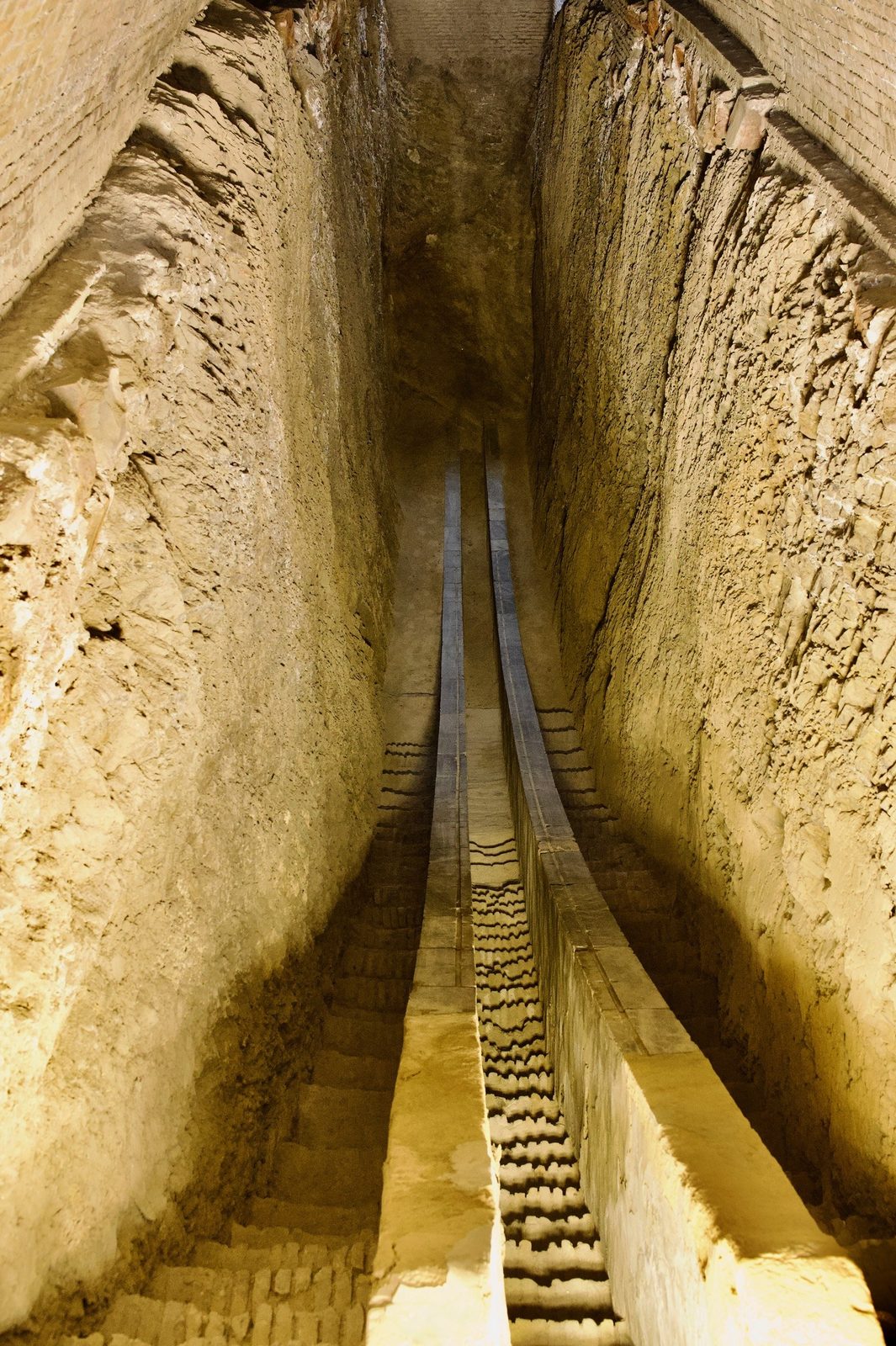
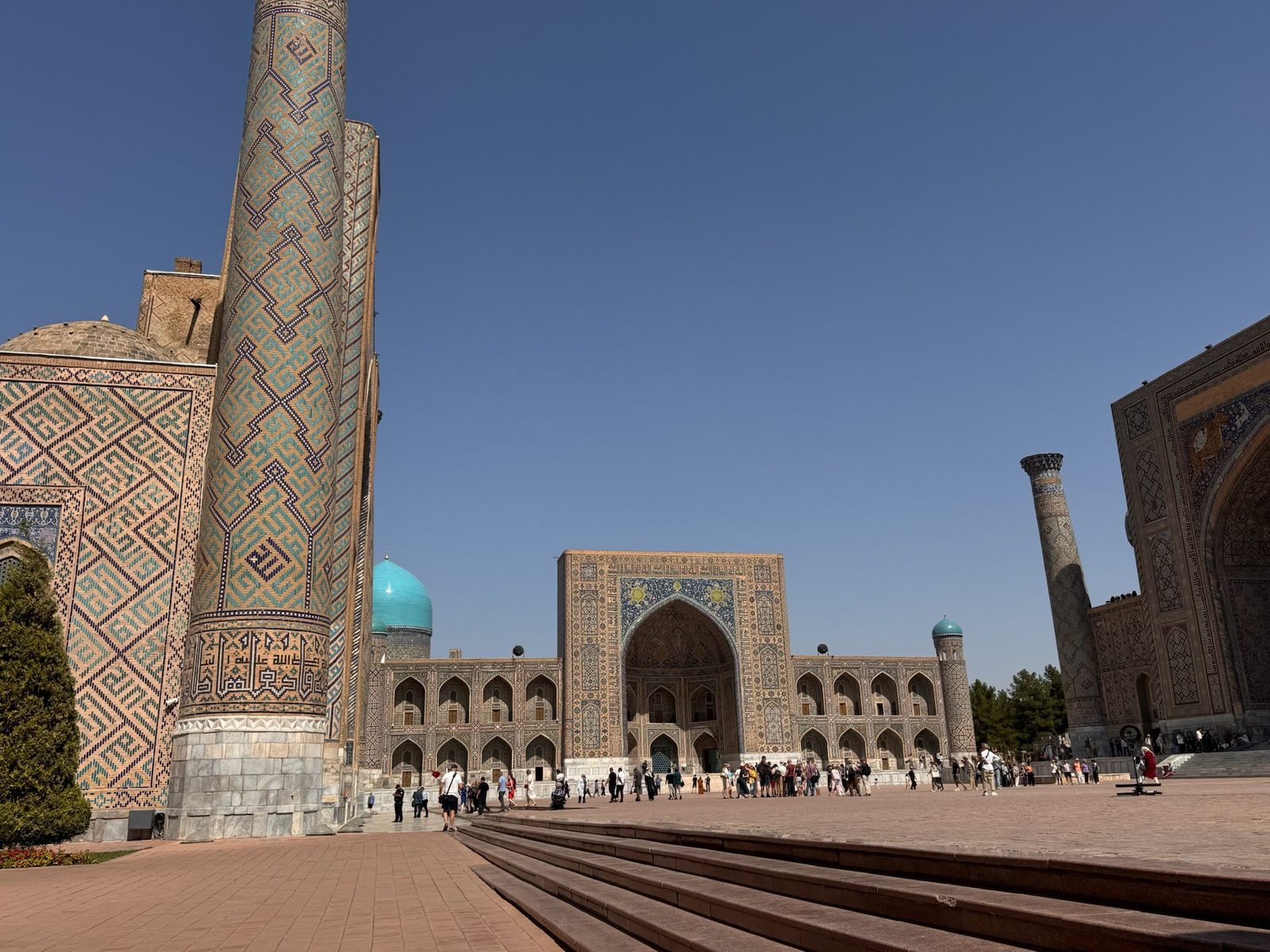
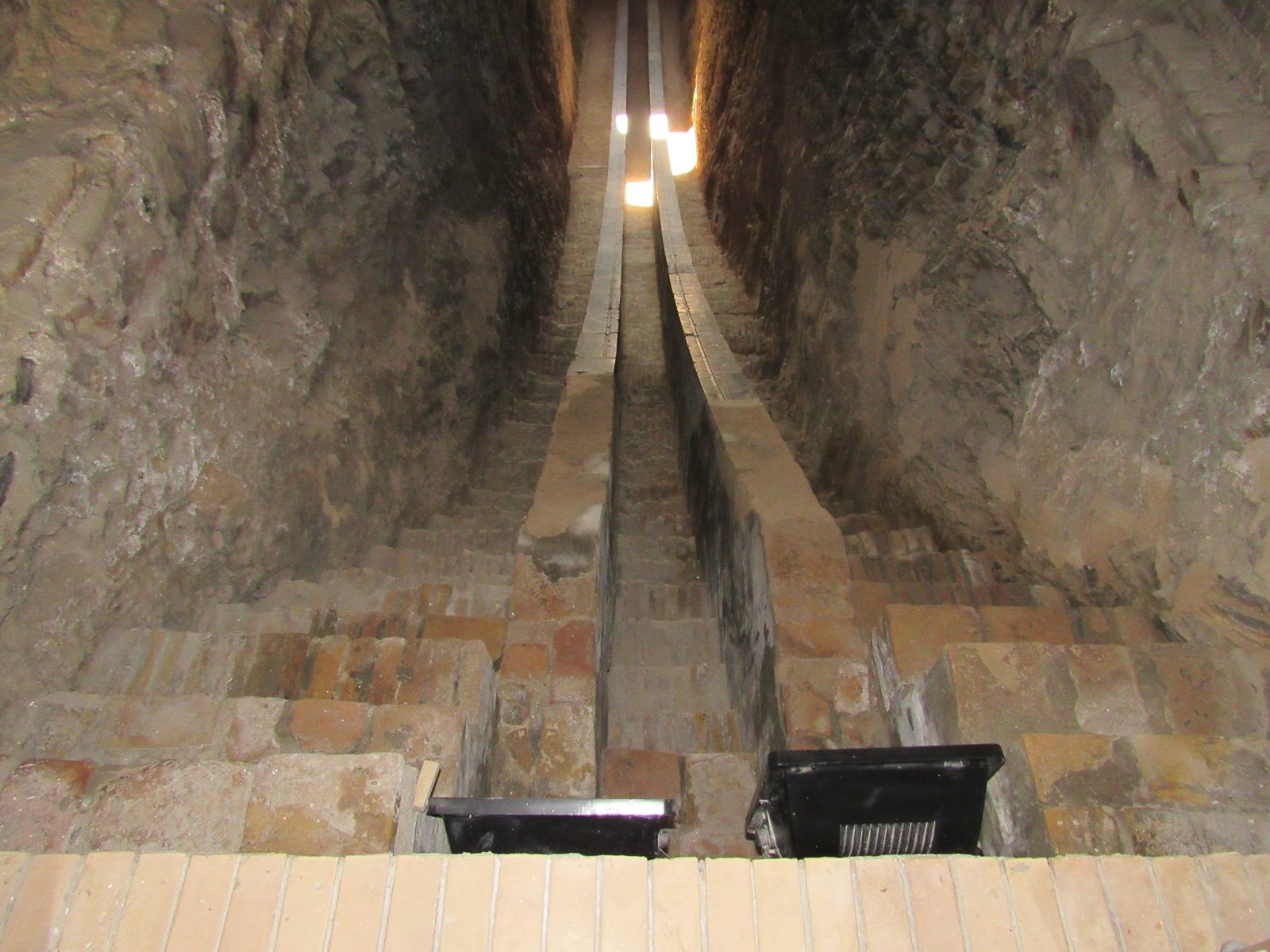
Ulugh Beg, born in 1394, was a grandson of Amir Timur (Tamerlane, 1336–1405), founder of the Timurid empire, which had its capital in Samarkand. Born near Shahrisabz. Read more → and governed Samarkand for forty years from 1409, yet he is remembered as a scientist. In 1417–1420 he built his An Islamic college: student cells and classrooms around a courtyard behind a grand portal. In the old towns many now house museums and craft workshops. Read more → on the Registan, where astronomy was the main subject, and in the 1420s an observatory on the Kuhak hill, built around a meridian arc with a radius of about 40 metres. How Timur made Samarkand his capital is in Amir Timur (Tamerlane).
The results went into the Did you know? A former teacher found the lost observatory in 1908 After Ulugh Beg's death his observatory was taken apart for its bricks and even its site was forgotten. Vasily Vyatkin, keeper of Samarkand's monuments, traced it through a 17th-century land deed and in 1908 dug up the great marble arc. Read more →, finished in 1437, with a catalogue of 1,018 stars measured afresh. His tables reached Europe in print in 1665, when Thomas Hyde published them in .Did you know? Ulugh Beg’s star catalogue was first printed in Oxford Europe first read Ulugh Beg’s star catalogue in print in 1665, when the orientalist Thomas Hyde edited it at Oxford. Ulugh Beg’s astronomers in Samarkand had measured the positions of 992 stars again and added 27 too far south to be seen from the city. Read more → Ulugh Beg died in 1449 and lies in ,Did you know? Timur's tombstone went to Persia and came back The dark-green jade slab on Timur's grave in Gur-e-Amir was carried off by Nader Shah in 1740. It broke, and on his advisers' urging he sent it back to Samarkand. Read more → near his grandfather. The great arc, the museum and how to plan the visit are in our guide to the Ulugh Beg Observatory.
Al-Kashi and Qadi Zada al-Rumi: π and sines in Samarkand
Ulugh Beg gathered leading mathematicians of the Islamic world around him. Jamshid ,Did you know? In Samarkand, al-Kashi worked out π to 16 decimal places In 1424 Jamshid al-Kashi computed π to 16 decimal places, the most accurate value of his time. Nobody did better for about 180 years, until Ludolph van Ceulen reached 20 places. Al-Kashi did his best work at Ulugh Beg’s court and died in Samarkand in 1429. Read more → born around 1380 in Kashan in Iran, did his most important work at his court. In 1424 he computed π to 16 decimal places, the most accurate value of his time, and in 1427 he finished The Key of Arithmetic, which uses decimal fractions with ease and treats the rule for solving triangles that French schoolchildren still call le théorème d’Al-Kashi. He died in Samarkand on 22 June 1429.
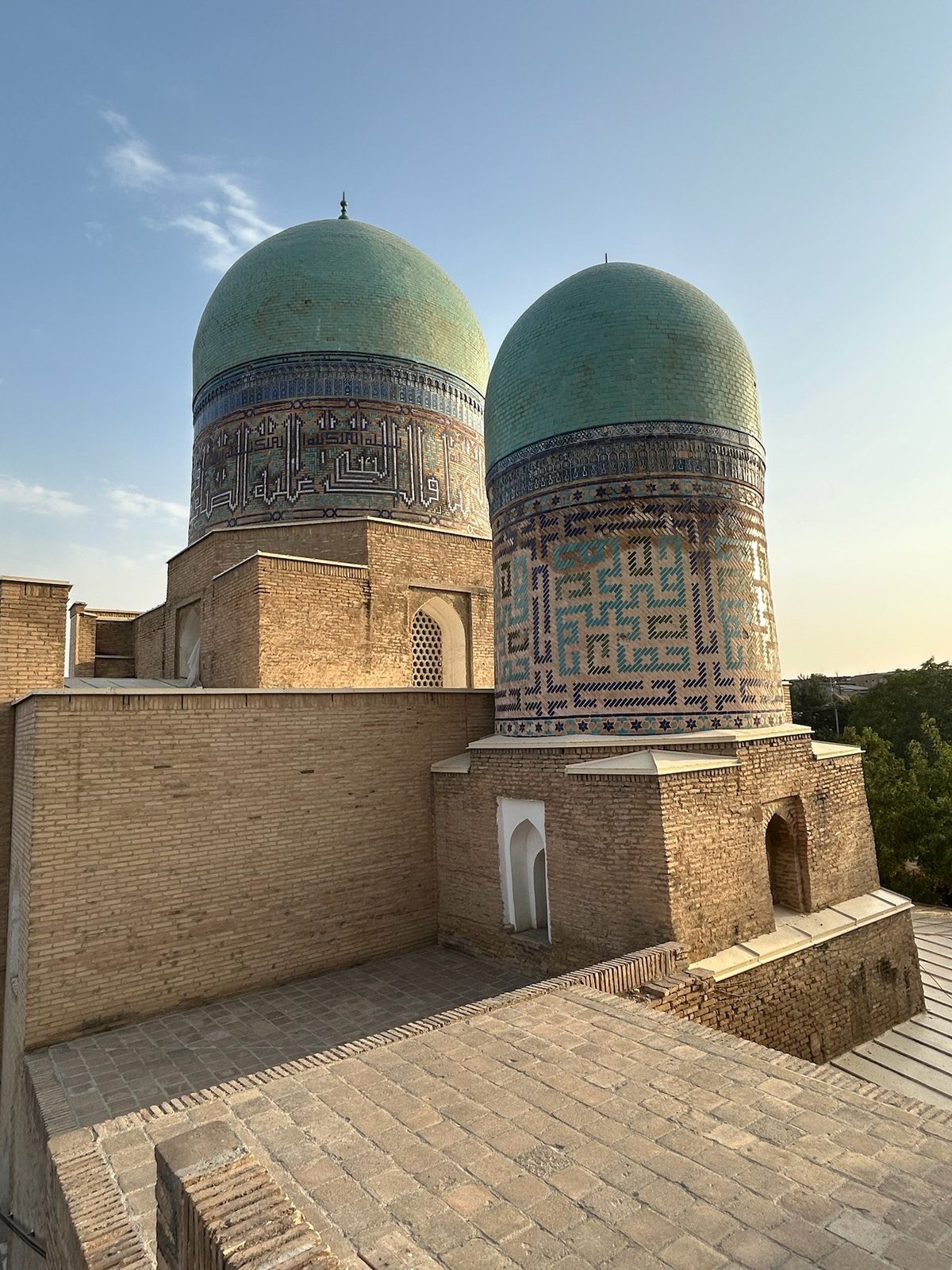
Did you know? Ulugh Beg’s astronomer came to Samarkand from Bursa Qadi Zada al-Rumi, the astronomer of Ulugh Beg’s observatory, was born in 1364 in Bursa, in today’s Turkey, and made his career in Samarkand. He worked on the Zij-i Sultani and computed the sine of one degree to an accuracy of a trillionth. Read more → al-Rumi, “the judge’s son from Rum”, was born in Bursa, in today’s Türkiye, in 1364, worked at the observatory and taught at Ulugh Beg’s madrasah; he computed the sine of one degree with remarkable precision. He died in Samarkand around 1436. A twin-domed mausoleum of the 1430s at Shah-i-Zinda is traditionally called by his name, though that rests on tradition only.
Where to see their traces
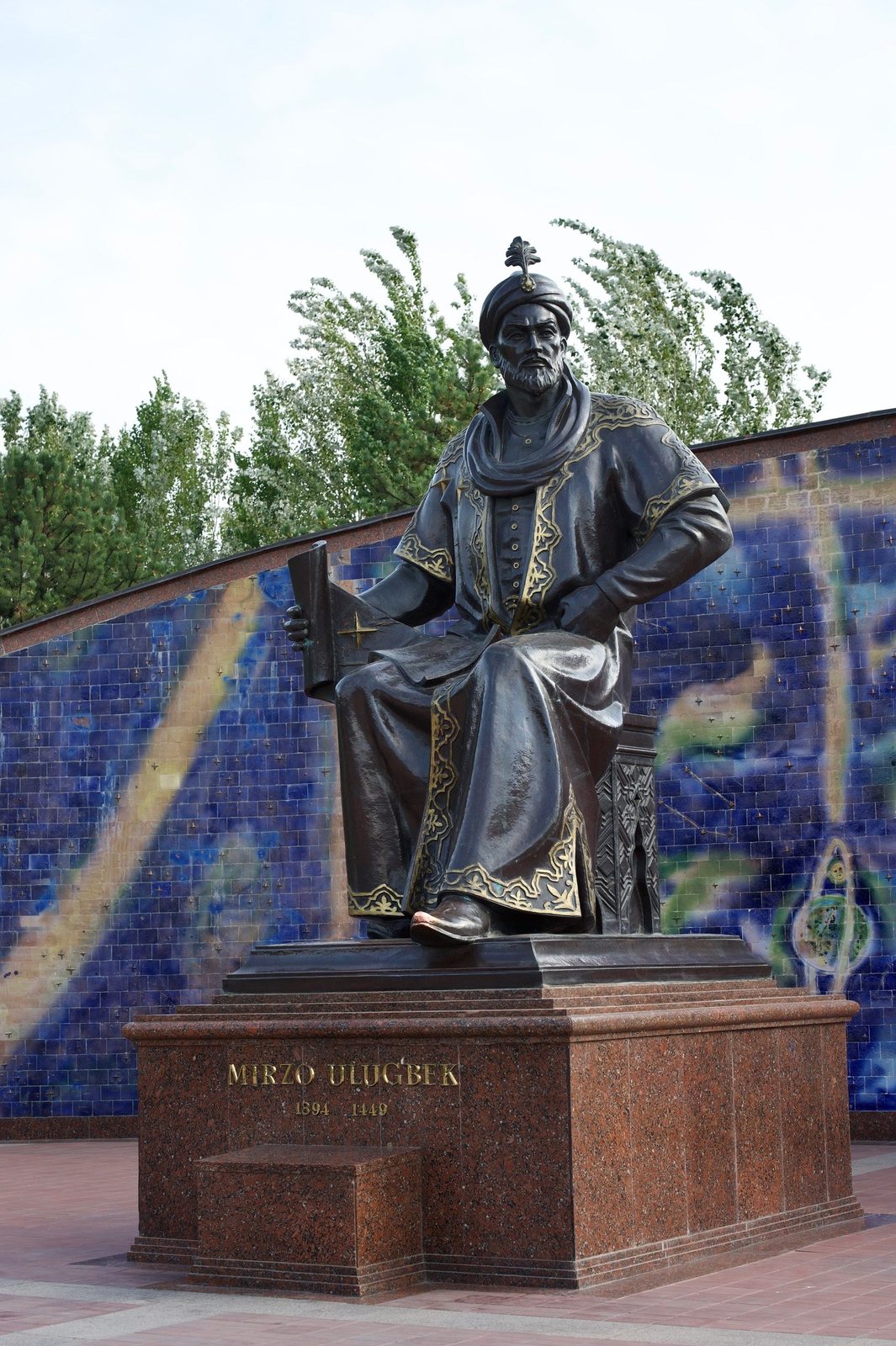
- Samarkand: the Ulugh Beg Observatory with its museum, the Did you know? Engineers pulled a leaning minaret back upright By 1920 a minaret of the Ulugh Beg Madrasah on the Registan was tilting. In 1932 engineer Vladimir Shukhov straightened it; the second minaret was set upright in 1965. Read more → on the ,Did you know? The Registan's sun-carrying lion went on a banknote The Sher-Dor Madrasah (1619–1636) is named for the big cats with the sun on their backs on its portal. The image appeared on the reverse of Uzbekistan's 200-som note of 1997. Read more → and the twin-domed mausoleum at .Did you know? Why Shah-i-Zinda means 'the Living King' The necropolis grew around the shrine of Qutham ibn Abbas, a cousin of the Prophet Muhammad. Legend says he did not die in battle but went down a deep well to a garden of paradise, where he lives on. Read more →
- Khiva: the statue of al-Khwarizmi outside the west gate of Itchan Kala.
- Bukhara region: the memorial museum of Ibn Sina in his native village of Afshona.
- Fergana Valley: the al-Fergani park and monument in Fergana, and the memorial complex in Quva.
- Tashkent: at the Center of Islamic Civilization, the Hall of Honor, where touch panels bring up more than 100 scholars and thinkers of the region, and the halls of the First and Second Renaissance.
The scholars on a trip
Two of our private tours are built around this story. Stars of Uzbekistan spends 5 days on astronomy and science: the Did you know? A solar furnace near Tashkent catches the sun with 62 mirrors The Big Solar Furnace near Parkent, about 45 km from Tashkent, has worked since 1987. A field of 62 heliostats sends sunlight onto a parabolic concentrator of 10,700 small mirrors, and the heat is used to test and make new materials. Read more → near Tashkent, Ulugh Beg’s observatory and madrasah in Samarkand, and a night under the stars in a yurt camp by .Did you know? Aydarkul is a wetland of international importance In 2008 the Aydar-Arnasay lake system, about 527,000 ha, became a Ramsar site. It lies where two great bird flyways cross and shelters Dalmatian pelicans and the rare white-headed duck. Read more → Heritage of the Great Scholars gives 7 days to the scholars of Tashkent, Samarkand and Bukhara, and Khiva, the city of al-Khwarizmi, can be added after Bukhara. On both the guide speaks your language and is included in the price, and the price is on request: it depends on your dates, hotels and group size.
In short
- Al-Khwarizmi, from Khorezm, gave us the words algebra and algorithm; his statue stands at the west gate of Khiva.
- Al-Farghani, from Fergana, wrote the astronomy book medieval Europe read as Alfraganus.
- Al-Biruni, born in Kath in Khwarazm, measured the Earth’s radius and wrote about India; Ibn Sina, born in Afshona near Bukhara, wrote the Canon of Medicine.
- Ulugh Beg, al-Kashi and Qadi Zada al-Rumi made Samarkand a centre of astronomy and mathematics in the 15th century.
- Start at the Ulugh Beg Observatory in Samarkand, then follow the names to Khiva, Bukhara and the Fergana Valley.