
Expert opinion
Pluses
- Four cities in 8 days: Tashkent, Khiva, Bukhara and Samarkand on a private tour for a minimum of 2 people.
- Trains between cities: Bukhara to Samarkand (14:58–16:41) and Samarkand to Tashkent (17:35–20:08) are by Uzbekistan's high-speed train: Tashkent to Samarkand in 2 hours 30 minutes, Tashkent to Bukhara in about 4 hours. Tickets are tied to your passport. Read more → high-speed train, with one flight to Urgench.
- Well covered: 7 nights, 7 breakfasts, air-conditioned transport, entrance tickets and a guide in your language are included; the Rice cooked in a kazan with carrots, onions and meat: the dish of every Uzbek celebration. Each region cooks it its own way. master class dinner in Bukhara comes only with the meal package.
Minuses
- A 7–8 hour drive: day 4 is about 490 km by car from Khiva to Bukhara across the The Kyzylkum, or Red Sands: the desert between the Amu Darya and Syr Darya rivers that the road and the railway cross on the way to Khiva. Desert.
- Tickets not in price: the Tashkent–Urgench flight and the trains are paid separately, and passenger data for train tickets is needed at least 62 days before travel.
- Meals and fees: lunches (6-lunches supplement), drinks and photo or video fees at the sites are not included.
AroundCA numbers
How we counted
By the AroundCA programme: we count only what is written in the day-by-day programme of this tour. If the programme gives no figure, we show nothing.
- Hotel changes
- 4
- Longest transfer
- 8 h · by car
- Walking
- Medium
Walking: Medium: dense days on foot (about ten sights in Bukhara on day 5; the Registan, Shah-i-Zinda, Bibi-Khanym and Siab bazaar on day 7; a climb up the Kunya-Ark watchtower in Khiva), but no trekking.
Best time
Mar–Jun, Sep–Nov
March and November are the start and end of the season: 11–17 °C by day, few crowds and lovely weather. Winters are getting milder, too: very few people, sunny days and pleasant prices.
Cool, fewer people: Jan–Feb, Dec
Better to avoid
Jul–Aug
July–August is outside the season and hot: 33–37 °C by day in all four cities.
A typical day
On day 5 in Bukhara the morning goes to the Ismail Samani Mausoleum, Chashma-Ayub, Bolo-Hauz Mosque, the Ark Fortress and Lyabi-Hauz. After lunch you see the three domed bazaars, the Poi-Kalon complex and Chor-Minor. The evening is a dinner at a local guesthouse with a plov master class.
What the price includes
What is included
- Accommodation in double/twin rooms
- Tourist taxes in hotels
- 7 breakfasts
- Tea and filtered water at meals
- Air-conditioned transport
- Entrance tickets to museums, monuments and historical sites
- Local guide in your language for all excursions
- Souvenirs and a map of Uzbekistan
- Half board: 7 breakfasts
Not included
- 6-lunches supplement (+$120 per person)
- Domestic flight Tashkent–Urgench (+$110 per person)
- Train Samarkand–Bukhara, economy (+$30 per person)
- Train Samarkand–Tashkent, economy (+$40 per person)
- Visa processing and costs (if applicable)
- International flights
- Early check-in or late check-out unless stated
- Drinks
- Photo and video fees at historical sites
- Personal expenses and services outside the itinerary
- Dinner with the plov master class in Bukhara (day 5) — included only with the meal package (full-board upgrade)
Extra cost on site
- Khiva: wine, fruit and cheese on a terrace at sunset (+$15 per person)
- Samarkand: Registan evening light and music show with entrance (+$15 per person)
- Photo and video fees at historical sites
- Drinks
Good for
- Couples and families who want privacy
- Travellers with fixed dates that don’t match group departures
Maybe not for you if
- Budget travellers — the group tour covers the same cities for less
Questions about this tour
What is the minimum group, and what does it cost?
It is a private tour from 2 people. The price is $1,250 per person with tourist-category hotels or $1,445 with business-category hotels, in a double/twin room; the single supplement is +$150 or +$350.
Which meals are included?
7 breakfasts, with tea and filtered water at meals. A 6-lunch supplement is available for +$120 per person.
Are the domestic flight and trains included?
No. The Tashkent–Urgench flight is +$110, the Samarkand–Bukhara train +$30 and the Samarkand–Tashkent train +$40 per person (economy). The Khiva–Bukhara leg is by car, about 490 km and 7–8 hours.
Who guides the excursions?
A local guide in your language accompanies all excursions, and entrance tickets to museums and monuments are included.
Is the visa included?
No, visa processing and costs (if applicable) are paid separately, as are international flights.
What is Arda Khiva, and can we spend an evening there?
Arda Khiva is a new tourist complex on the shore of Lake Govuk, a short drive from Ichan-Kala, opened in May 2025: 17 hotels and guest houses, a 3,000-seat amphitheatre, restaurants, a bazaar and a canal with gondolas. We can add an evening or a stay there on request.
Didn’t find your answer? Ask about this tour →
Make it your trip
Tick what you’d like to add — it goes into your request, and the manager confirms the final price.
Add a few days
Arrival, departure, transfers
Programme and details
Day-by-day route, prices and terms
Uzbekistan · 8 Days / 7 Nights · Private Tour
Oasis of Time: 8 Days in Legendary Uzbekistan
Tashkent – Khiva – Bukhara – Samarkand
This itinerary is a deep dive into Uzbekistan’s history and culture: ancient cities that once thrived on the A network of caravan routes between China and the Mediterranean. Samarkand, Bukhara and Khiva grew rich as stops along it., grand Islamic architecture, and the warm hospitality of local people.
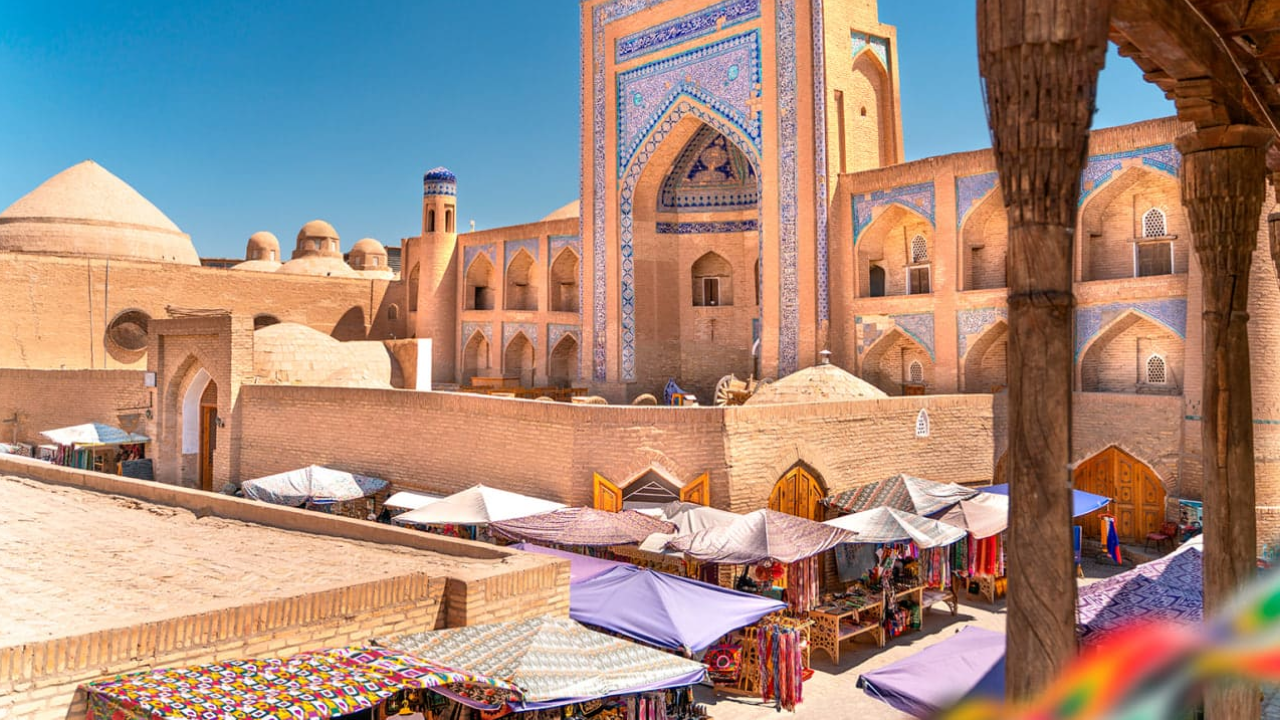
Khiva — a perfectly preserved open-air museum of palaces, madrasahs and minarets inside ancient city walls.
Bukhara — a spiritual and cultural centre with majestic Islamic architecture, trading domes and serene courtyards.
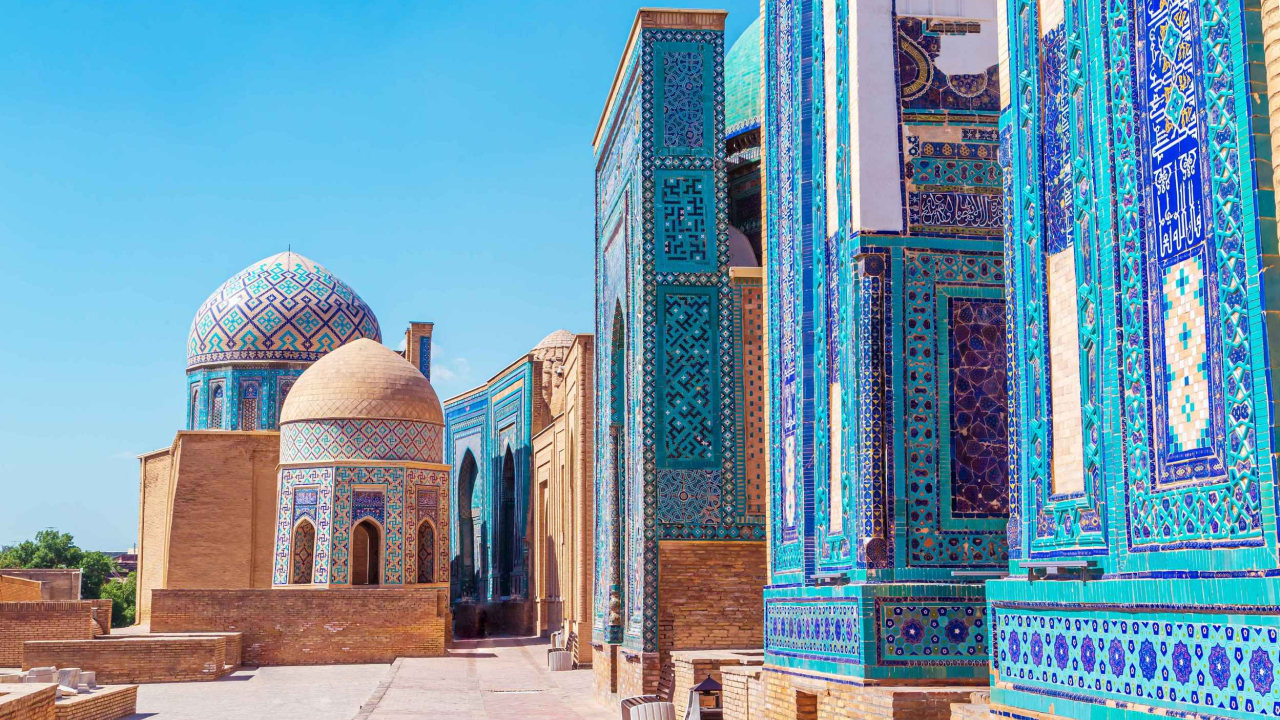
Samarkand — the jewel of the Timurid Empire, with grandiose squares, vibrant bazaars and stunning tilework.
Itinerary
Day by Day
Day 1 — Arrival in Tashkent
Arrival at Tashkent International Airport. Meet and greet by our local guide, private transfer to the hotel. Check-in from 14:00 and rest after the flight.
Evening: a leisurely walk through Amir Timur (Tamerlane, 1336–1405), founder of the Timurid empire, which had its capital in Samarkand. Born near Shahrisabz. Square — gardens, fountains and the equestrian statue of Amir Timur at its centre. The square is the symbolic heart of modern Tashkent, blending Soviet-era architecture with Central Asian flair.
Overnight: Tashkent
Day 2 — Tashkent City Tour
Breakfast at the hotel.
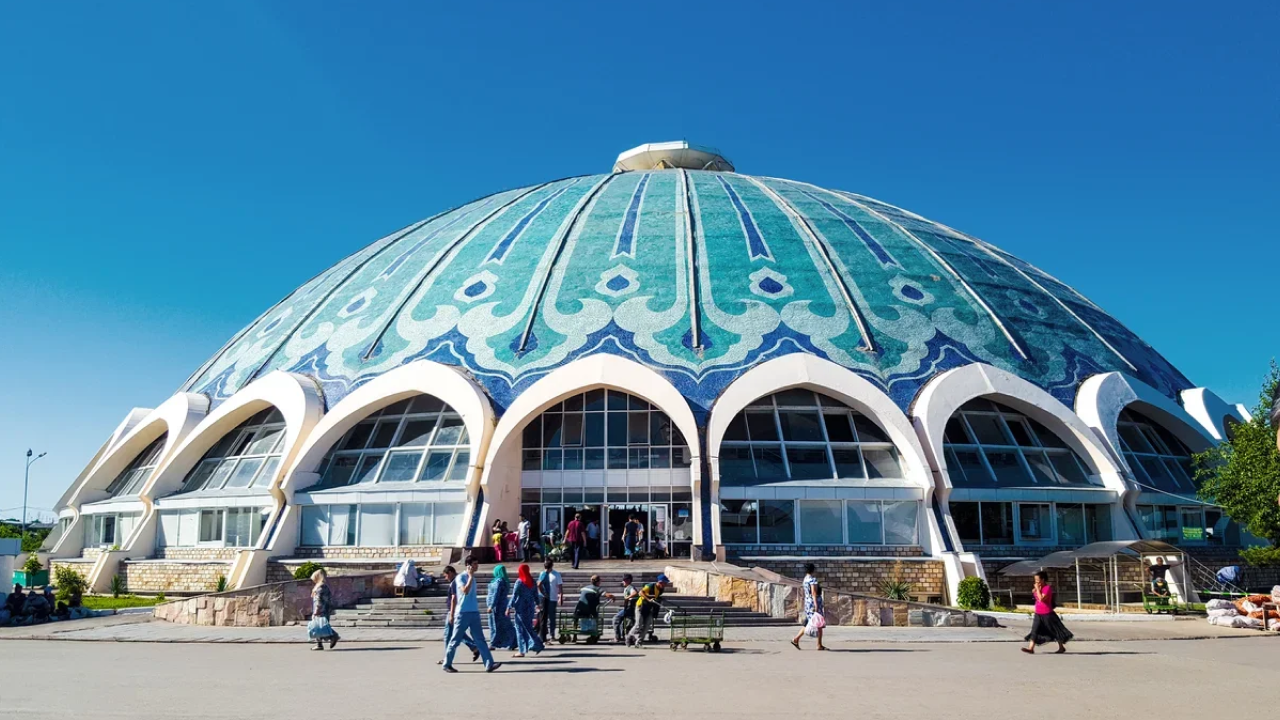
Old town: The religious heart of old Tashkent: madrasahs, a Friday mosque and mausoleums. Right next to it stands the new Center of Islamic Civilization, opened in 2026. Read more → Complex — the spiritual heart of Tashkent, home to the Uthman Quran, believed to be the world’s oldest Quran (7th century). Visits to Barak Khan Madrasah, Tillya Sheikh Mosque and the Mausoleum of Saint Kaffal Shashi. Tashkent's old bazaar under a big blue-green dome, not far from Hazrati Imam. Bring cash in so'm. Read more → — a bustling market under a striking blue dome, trading spices, textiles and local crafts since the Silk Road era.
Lunch.
New town: Independence Square (formerly Lenin Square) with the Monument of Independence and Humanism (1991); the Romanov Palace (exterior visit), built in 1891 for Grand Duke Nikolai Romanov; Opera and Ballet Square, home to the Did you know? An opera house with a foyer for every region The Alisher Navoi Theatre, opened in 1947, has six halls carved in the styles of Tashkent, Fergana, Bukhara, Samarkand, Khiva and Termez, each led by a master of that school. Read more → (built 1942–1947, seats 1,400); Amir Timur Square; and the Orthodox Cathedral of the Assumption of the Virgin.
Evening: dinner at a traditional Uzbek restaurant.
Overnight: Tashkent
Day 3 — Tashkent → Urgench → Khiva
Early breakfast at the hotel. Transfer to the airport for a morning flight to Urgench (subject to flight schedule), then a 30-minute drive to Khiva. Check-in at a hotel inside Did you know? People still live inside Khiva's museum city Itchan Kala packs more than 50 historic monuments and about 250 old houses inside clay walls 8–10 m high and 5–6 m thick, and families still live and work in its lanes. Read more →, the walled inner city.
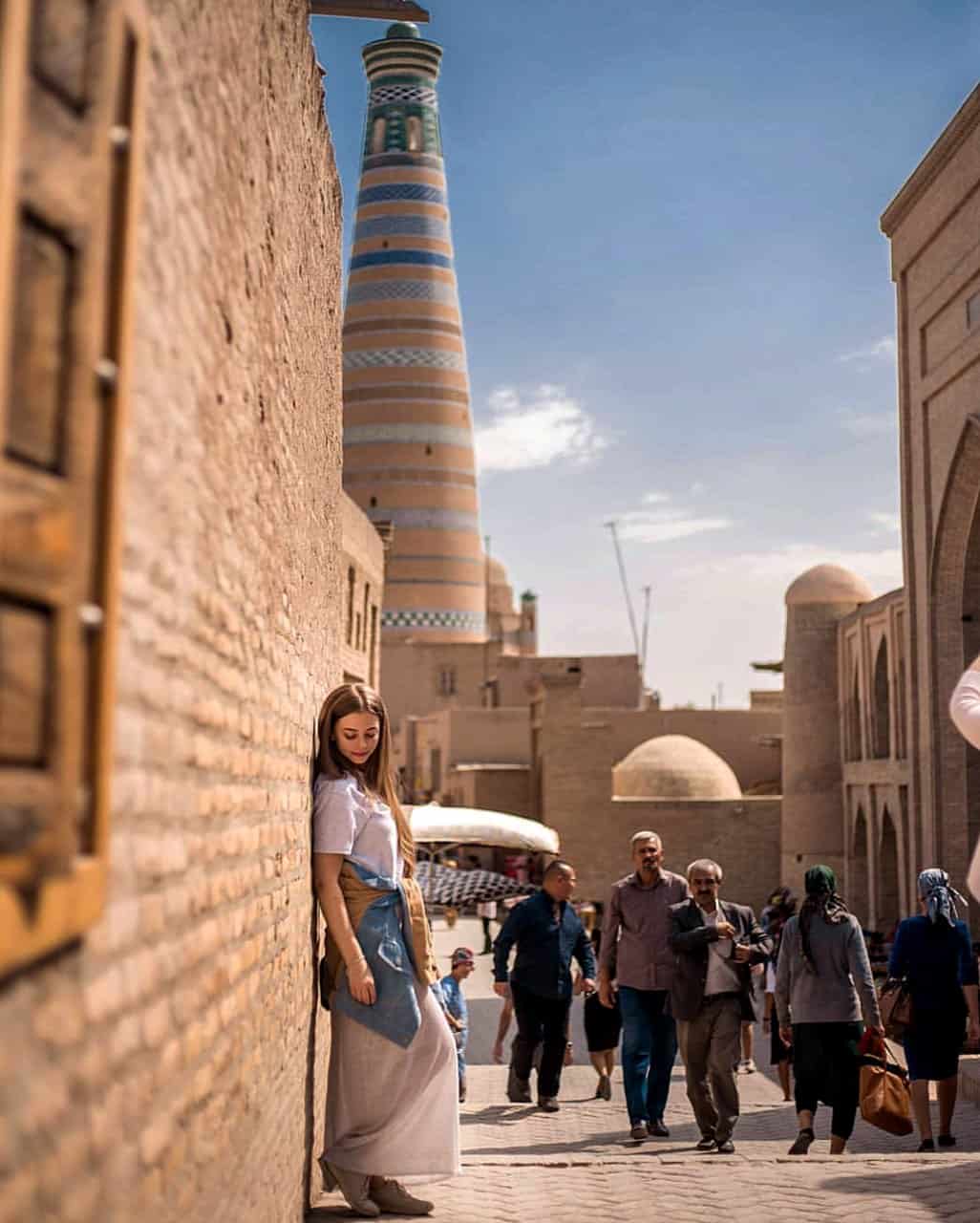
Full-day excursion in Khiva’s Ichan-Kala (UNESCO World Heritage Site) — once a key Silk Road stop and the last resting point for caravans before crossing the desert to Persia: Did you know? A 14-metre-wide base for a tower that stopped at 29 m Kalta Minor was begun in 1852 and meant to reach 70–80 m, but work halted in 1855 at about 29 m when its khan died. It is said to be the only minaret covered entirely in glazed tiles. Read more → Minaret, an unfinished turquoise minaret with intricate glazed tiles; Muhammad Amin Khan Madrasah, the largest in Khiva, now a hotel and museum, built in the mid-19th century; The old fortress-residence of the khans of Khiva, inside the walls of Itchan Kala. Citadel, the 17th-century royal residence with the Khan’s palace, mosque and prison cells — climb the watchtower for panoramic views of Ichan-Kala; Tash-Hauli Palace, built by Allakuli Khan in the 19th century, with carved wooden columns and blue-and-white ceramic mosaics.
Optional: relax on a terrace with wine, fruit and cheese as the sun sets over the old city (weather permitting) — +$15 per person.
Evening: dinner at a local restaurant in an ancient courtyard, then free time to explore Khiva after dark.
Overnight: Khiva
Day 4 — Khiva → Bukhara (by car, 490 km, 7–8 hrs)
Breakfast at the hotel. Transfer to Bukhara by car (approx. 490 km, 7–8 hours) across the Kyzylkum Desert. Arrival and check-in near the historic old town.
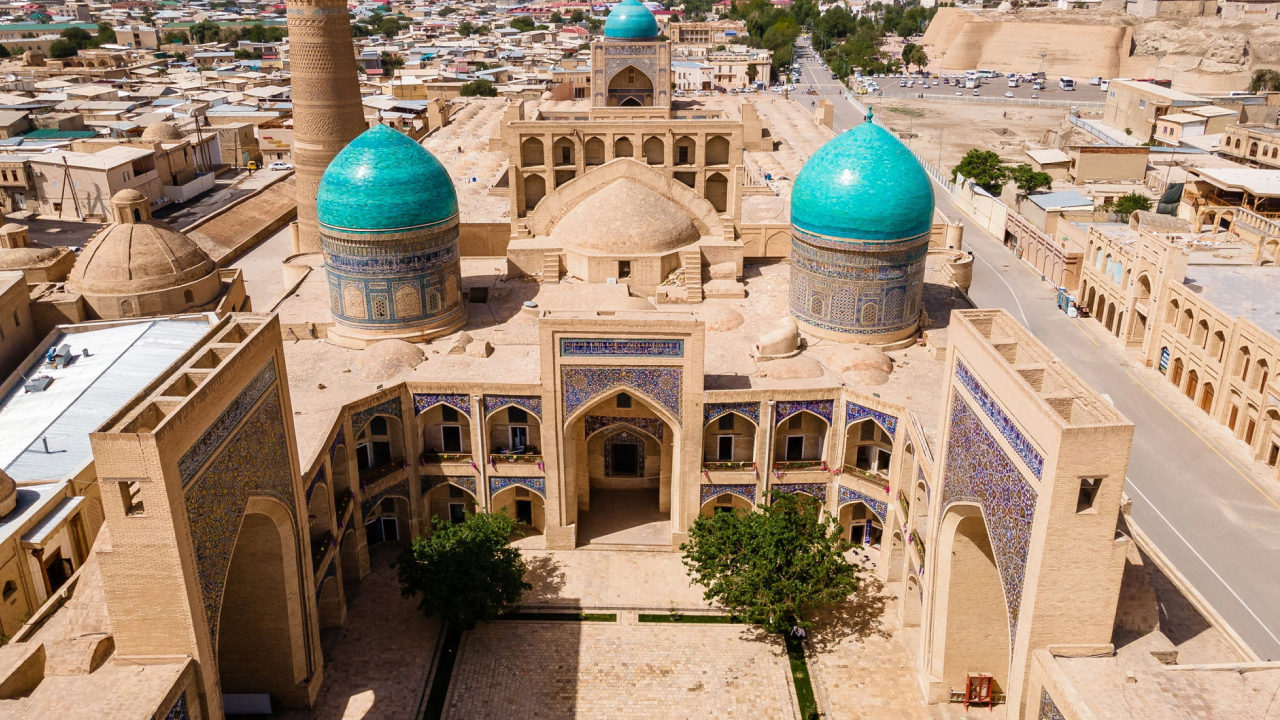
Noble Bukhara — the legendary city of the Great Silk Road. Its name is thought to derive from «bukharak», meaning «place of fortune». The only city in Central Asia with almost 2,000 UNESCO-listed monuments, where the atmosphere of the old Silk Road is still tangible while walking through the old town.
Evening: leisure time around Did you know? Bukhara's ponds were once its water supply Pools like Lyabi-Hauz, dug around 1620 and 46 × 36 m, were the city's main source of water. Most were filled in during the 1920s–30s because they spread disease; Lyabi-Hauz survived. Read more →, a pond surrounded by centuries-old mulberry trees and teahouses; dinner at a local restaurant.
Overnight: Bukhara
Day 5 — Bukhara Historical Tour
Breakfast at the hotel.
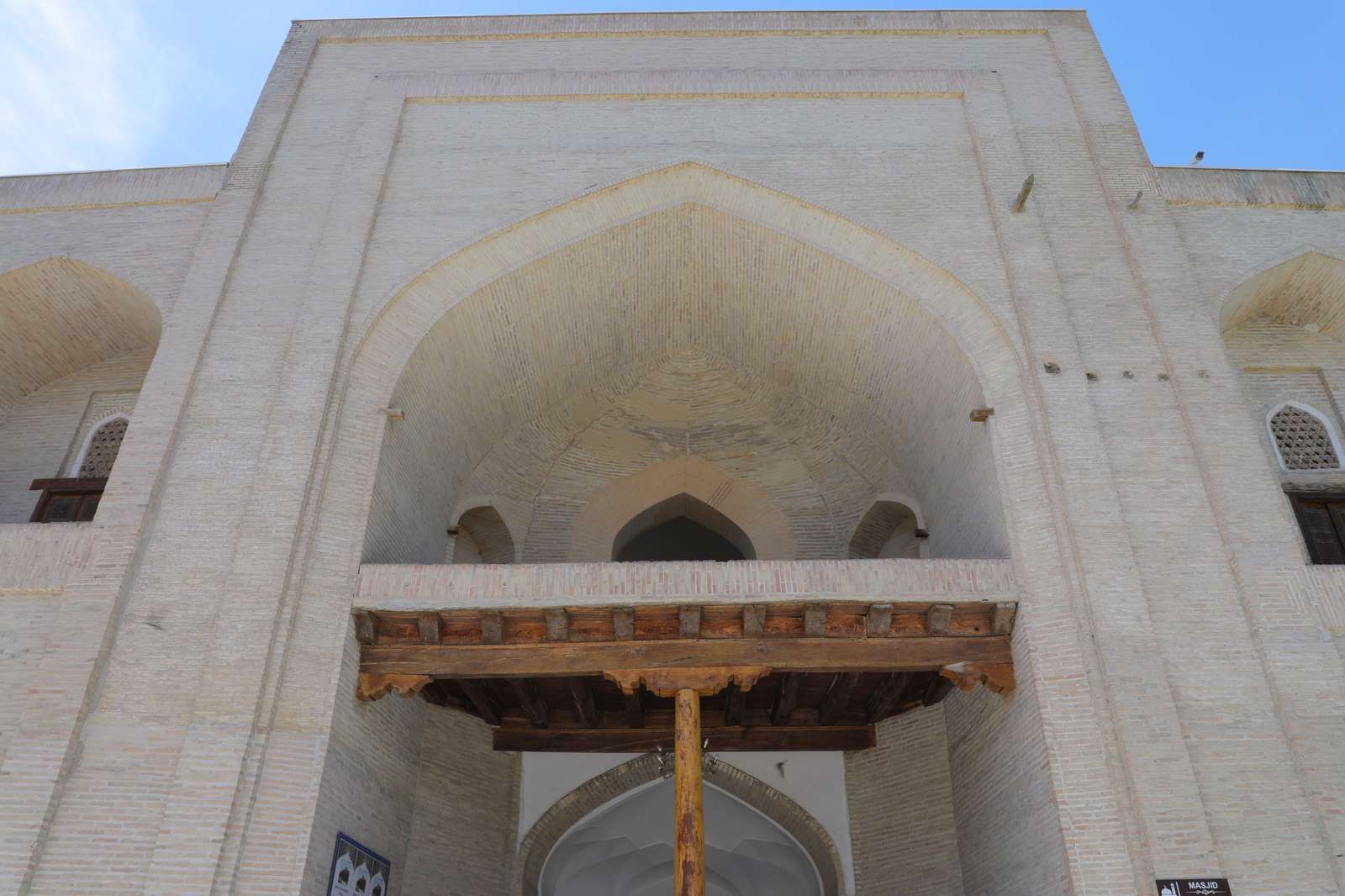
Morning: Ismail Samani Mausoleum, a 10th-century brick mausoleum with an intricate geometric design — one of the oldest Muslim monuments in Central Asia, built as the Samanid dynasty’s family tomb; Did you know? A cone-shaped dome over Job's spring Chashma-Ayub, 'Job's Spring', has a conical dome in the Khorezm style, rare in Bukhara. Legend says Job struck the ground with his staff and water flowed; inside is a museum of Bukhara's water supply. Read more → Mausoleum and Holy Spring (14th c.), the «Fountain of Saint Job»; A mosque of 1712 opposite the Ark in Bukhara. Its twenty carved wooden columns reflect in the pond in front. Mosque (18th c.), the Emir’s official mosque, with carved wooden pillars and a reflecting pool; The fortress-residence of the rulers of Bukhara on a high artificial hill: the oldest structure in the city. Read more →, the citadel of Bukhara’s Emirs dating back to the 5th century — palace, treasury and military structure, now museums of royal artifacts, manuscripts and weaponry; Lyabi-Hauz Ensemble (16th–17th c.), once a social and cultural hub for poets and scholars, including Did you know? A madrasah that was an inn, a fort and a museum Tashkent's Kukeldash Madrasah, built around 1570, became a caravanserai in the 18th century, later a fortress and then a museum, before returning to teaching in the 1990s. Read more → and Nadir Divan-Begi Khanaka.
Lunch.
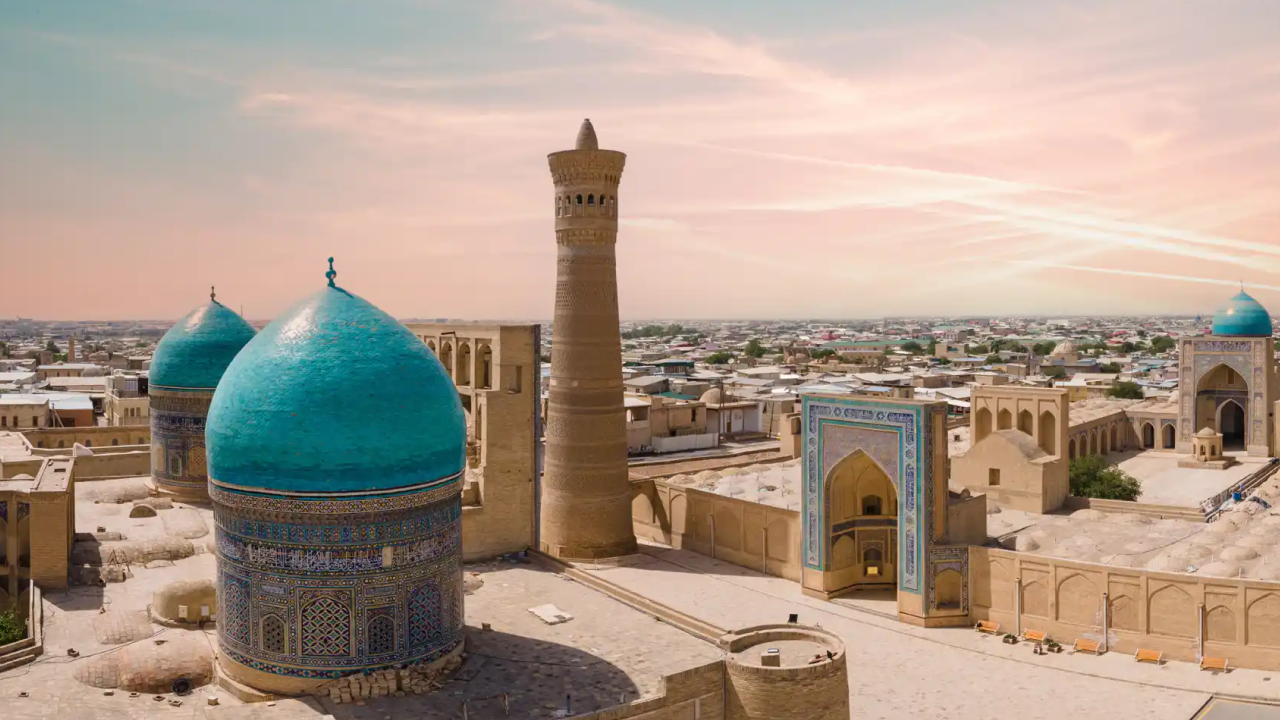
Afternoon: the three domed bazaars of the old Silk Road — Toki Zargaron (Jewelry Bazaar), Toki Telpak Furushon (Hat Makers’ Bazaar) and Toki Sarrafon (Money Changers’ Bazaar), trading silk, spices, jewelry and carpets since the 16th century. Poi-Kalon Architectural Complex — Did you know? Diggers went 13 m down and never found its base The Kalyan Minaret of 1127 rises about 46 m, and an excavation reached 13 m without finding the bottom of its foundations. Genghis Khan reportedly ordered it spared. Read more → (built 1127), Poi-Kalon Mosque (12th c., one of the largest in Central Asia) and Did you know? A madrasah still teaching after almost 500 years Mir-i-Arab, built in the 1530s opposite the Kalyan Mosque, was one of only three Islamic schools allowed to keep working in Soviet times, and it still trains students today. Read more → Madrasah (15th c., exterior visit, still an active Koranic school). Finally, A small gatehouse of 1807 in Bukhara with four towers topped by turquoise domes. — a small building with four distinctive blue-domed towers and Indian-influenced architecture, once the gateway to a now-vanished An Islamic college: student cells and classrooms around a courtyard behind a grand portal. In the old towns many now house museums and craft workshops..
Evening: dinner at a local guesthouse with a plov cooking master class (included in the price only when the meal package is purchased — the full-board upgrade, +$120 per person).
Overnight: Bukhara
Day 6 — Bukhara → Samarkand (high-speed train)
Breakfast at the hotel. Afternoon transfer to the train station for the Afrosiyob high-speed train to Samarkand (14:58–16:41).
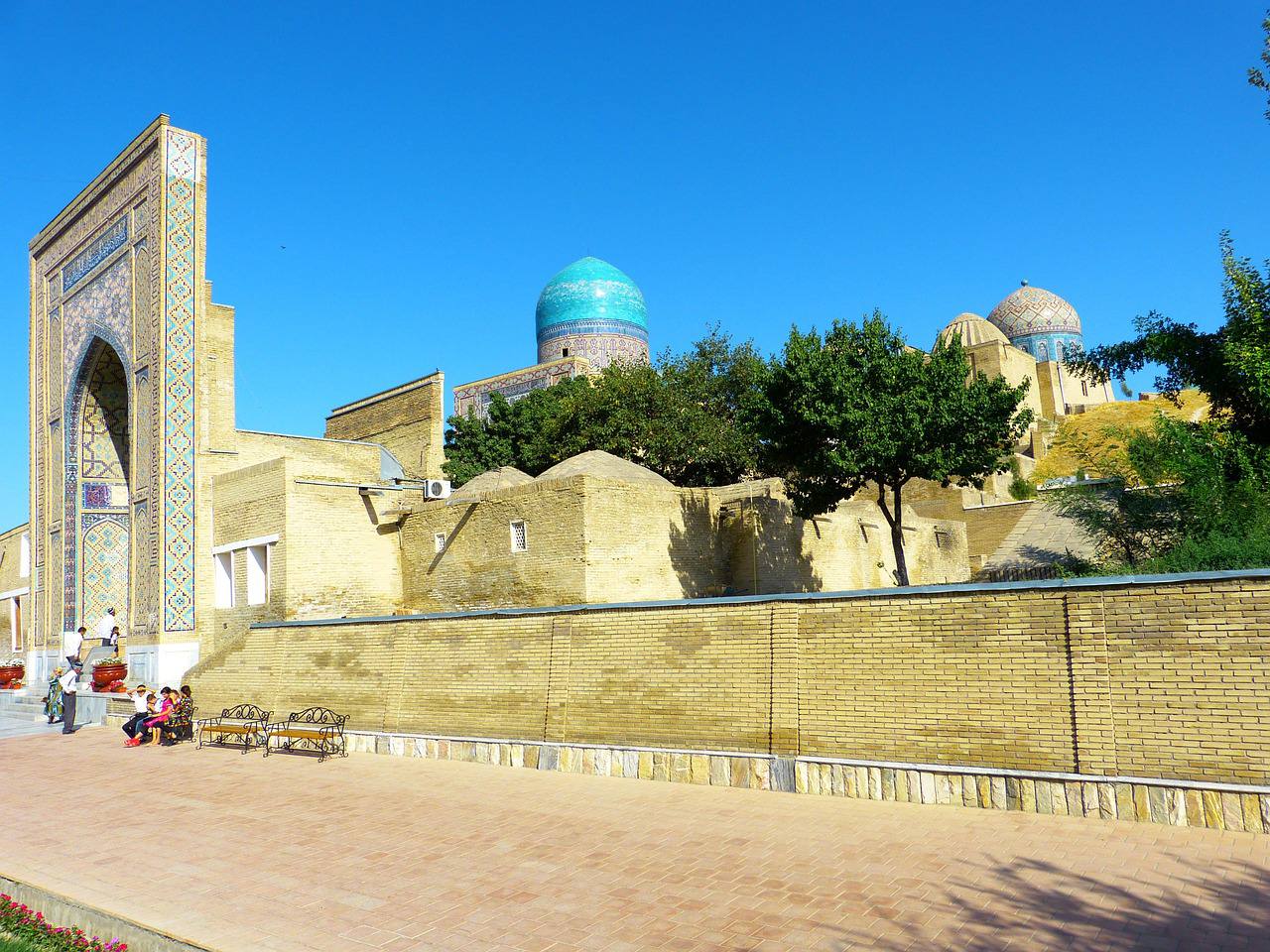
Arrival in Samarkand — the jewel of the Timurid Empire — and hotel check-in. Evening walk to the beautifully illuminated Did you know? Timur's tombstone went to Persia and came back The dark-green jade slab on Timur's grave in Gur-e-Amir was carried off by Nader Shah in 1740. It broke, and on his advisers' urging he sent it back to Samarkand. Read more → Mausoleum, the 15th-century final resting place of Amir Timur (Tamerlane); the design is said to have influenced later Mughal architecture, including the Taj Mahal.
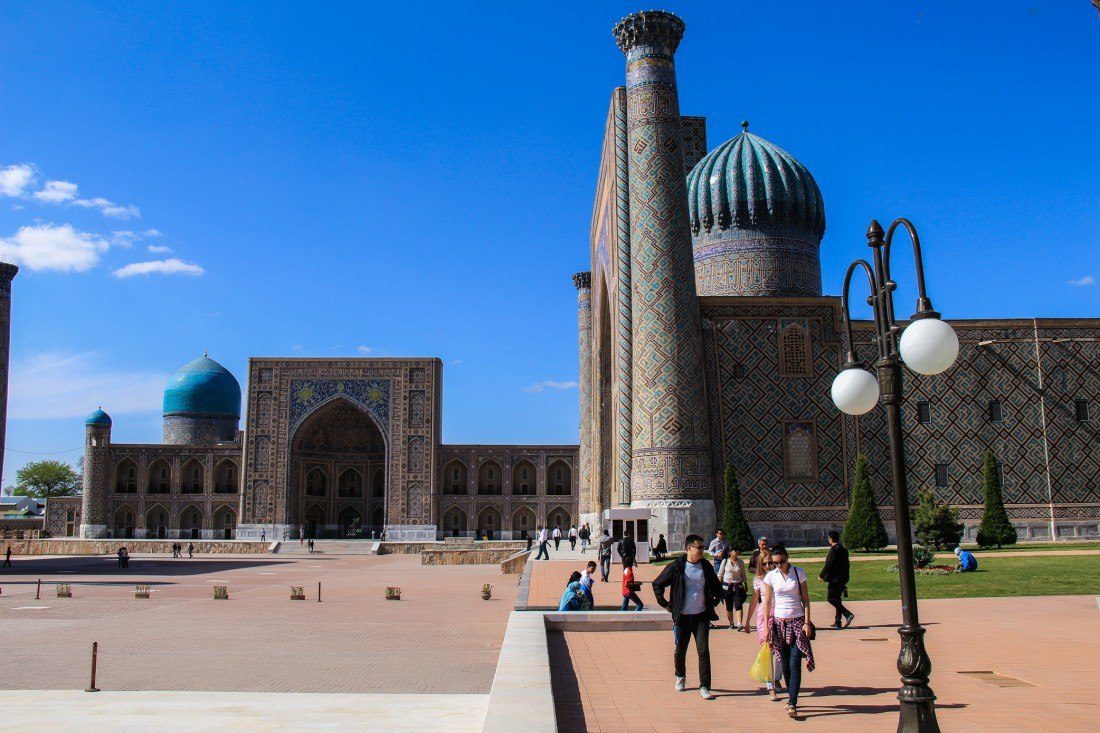
Optional: evening visit to Did you know? The Registan's sun-carrying lion went on a banknote The Sher-Dor Madrasah (1619–1636) is named for the big cats with the sun on their backs on its portal. The image appeared on the reverse of Uzbekistan's 200-som note of 1997. Read more → Square for the light-and-music show, with entrance — +$15 per person.
Dinner at a local restaurant.
Overnight: Samarkand
Train times are set by Uzbekistan Railways and may change. Nominative passenger data for train tickets must be submitted at least 62 days before travel; tickets are purchased (not reserved) 60 days ahead.
Day 7 — Samarkand City Tour → Tashkent (high-speed train)
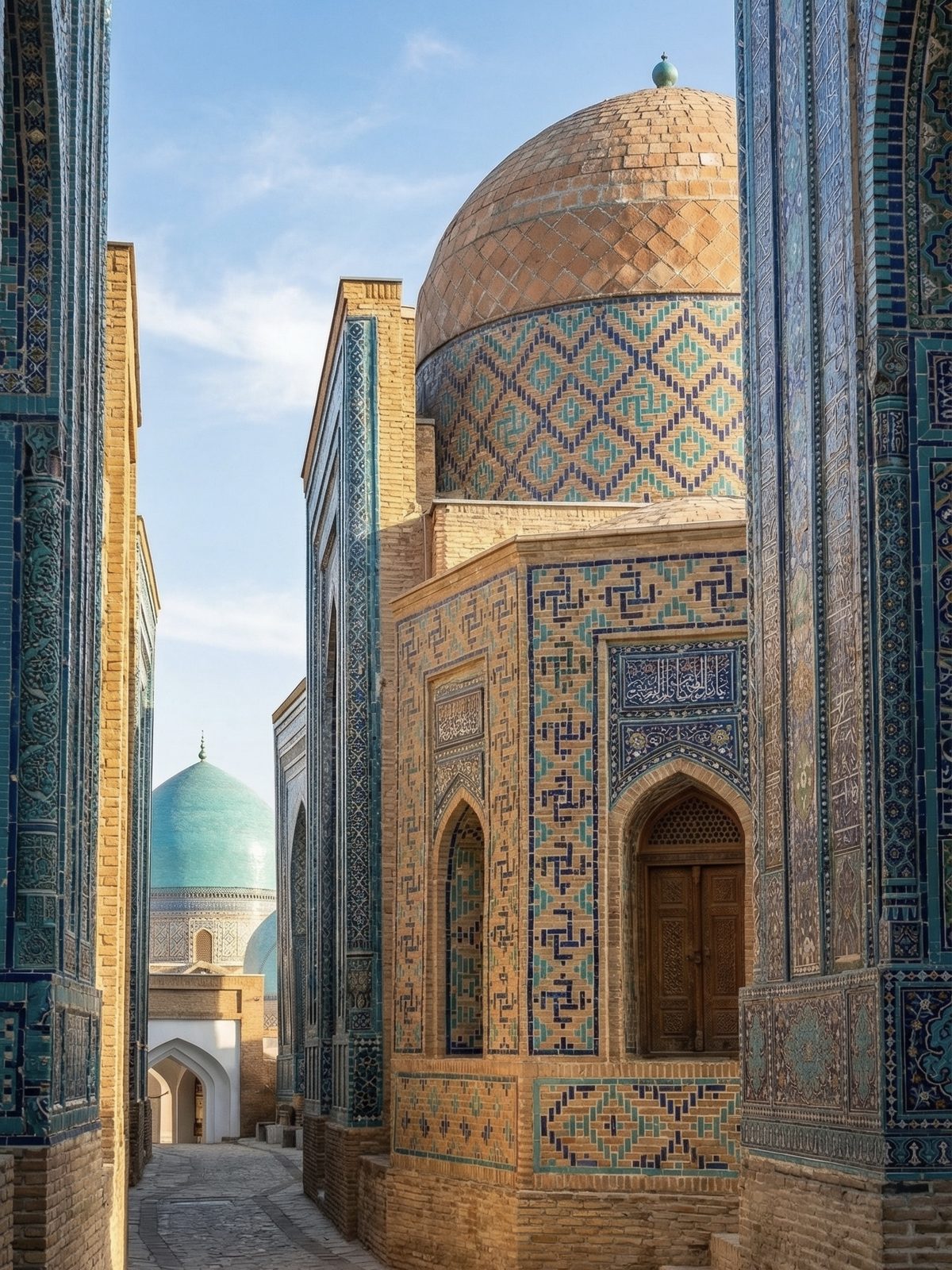
Breakfast at the hotel. Full day touring Samarkand, once a key point on the Silk Road between China and Europe and, from the 14th century, capital of Timur’s empire: Registan Square, framed by three grand madrasahs — Did you know? Engineers pulled a leaning minaret back upright By 1920 a minaret of the Ulugh Beg Madrasah on the Registan was tilting. In 1932 engineer Vladimir Shukhov straightened it; the second minaret was set upright in 1965. Read more → (15th c., built by Timur’s astronomer grandson), Sher-Dor Madrasah (17th c., known for its tiger mosaics) and Tilya-Kori Madrasah (17th c., a gold-decorated madrasah-mosque); Did you know? Why Shah-i-Zinda means 'the Living King' The necropolis grew around the shrine of Qutham ibn Abbas, a cousin of the Prophet Muhammad. Legend says he did not die in battle but went down a deep well to a garden of paradise, where he lives on. Read more → Necropolis, a chain of mausoleums built between the 9th and 14th centuries around the believed grave of Qutham ibn Abbas, a cousin of the Prophet Muhammad, with turquoise tilework and calligraphy; The great mosque Amir Timur ordered after his Indian campaign of 1398–1399, one of the largest of its time. Read more → Mosque, built by Amir Timur in the 14th century in honour of his wife after his campaign in India — one of the largest mosques of the Islamic world; Samarkand's main bazaar, right next to Bibi-Khanym: Samarkand bread, dried fruit, nuts and halva. Read more →, a working market by the Bibi-Khanym Mosque since Silk Road times, with fresh produce, dried fruit and Samarkand sweets.
Afternoon departure on the Afrosiyob high-speed train to Tashkent (17:35–20:08).
Evening: farewell dinner with live Uzbek music at one of Tashkent’s finest traditional restaurants.
Overnight: Tashkent
Train times are set by Uzbekistan Railways and may change. Nominative passenger data for train tickets must be submitted at least 62 days before travel; tickets are purchased (not reserved) 60 days ahead.
Day 8 — Departure
Breakfast at the hotel. Transfer to Tashkent International Airport for the departure flight.
Price
Tour Price
| Price per person, net, US$ | Touristcategory hotels | Businesscategory hotels |
|---|---|---|
| Min. 2 pax in group | $1,250 | $1,445 |
| Single supplement | +$150 | +$350 |
Prices are per person, based on double/twin room occupancy, for a minimum of 2 travelers per group. Rates may vary with currency fluctuations, new taxes or service charges.
Optional extras
| Optional excursion / upgrade | Price |
|---|---|
| Khiva — wine, fruit & cheese on a terrace at sunset (weather permitting) | +$15 / person |
| Samarkand — Registan Square evening light & music show, with entrance | +$15 / person |
| 6-lunches supplement (full-board upgrade) | +$120 / person |
| Domestic air ticket Tashkent–Urgench | +$110 / person |
| Domestic train Samarkand–Bukhara, economy class | +$30 / person |
| Domestic train Samarkand–Tashkent, economy class | +$40 / person |
Hotels
Hotels by Category
| City | Tourist category | Business category |
|---|---|---|
| Tashkent | Baden-Baden / Milan / Gabrielle or similar | Holiday Inn / Crowne Plaza / Lotte City Hotel or similar |
| Khiva | Zarafshan Boutique / Arslan Boutique / Asia Khiva or similar | Farovon or similar |
| Bukhara | Makon / Devon Begim / Asia Bukhara or similar | Wyndham Bukhara / Sahid Zarafshan / Mercure Ayvan or similar |
| Samarkand | Wellfort / Shaxzoda Elite / Grand Samarkand or similar | Movenpick / Continental / Kosh Havuz / Zarafshan Parkside or similar |