
The Center of Islamic Civilization in Tashkent: what to see and how to plan your visit
Places in this article: Tashkent
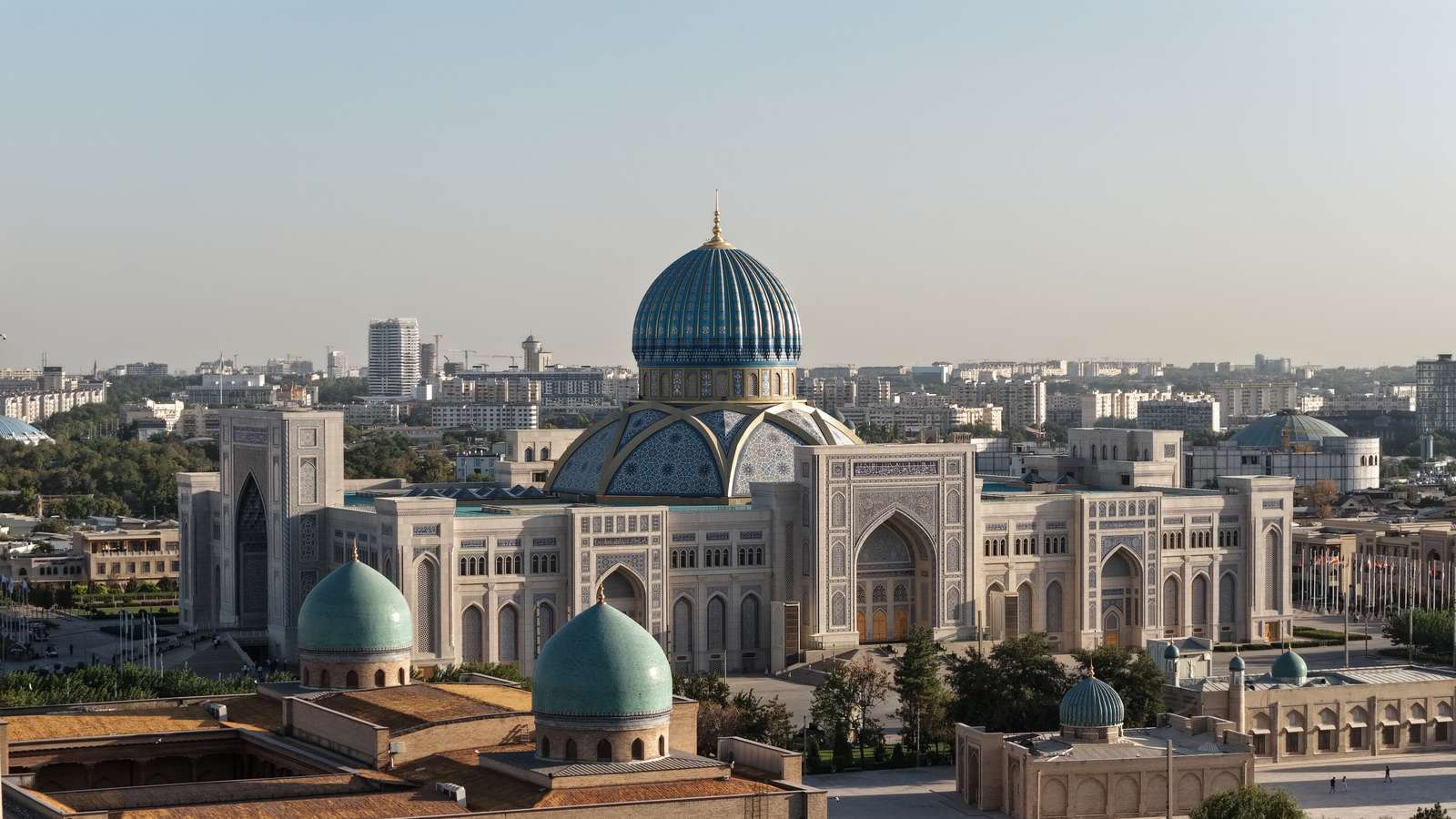
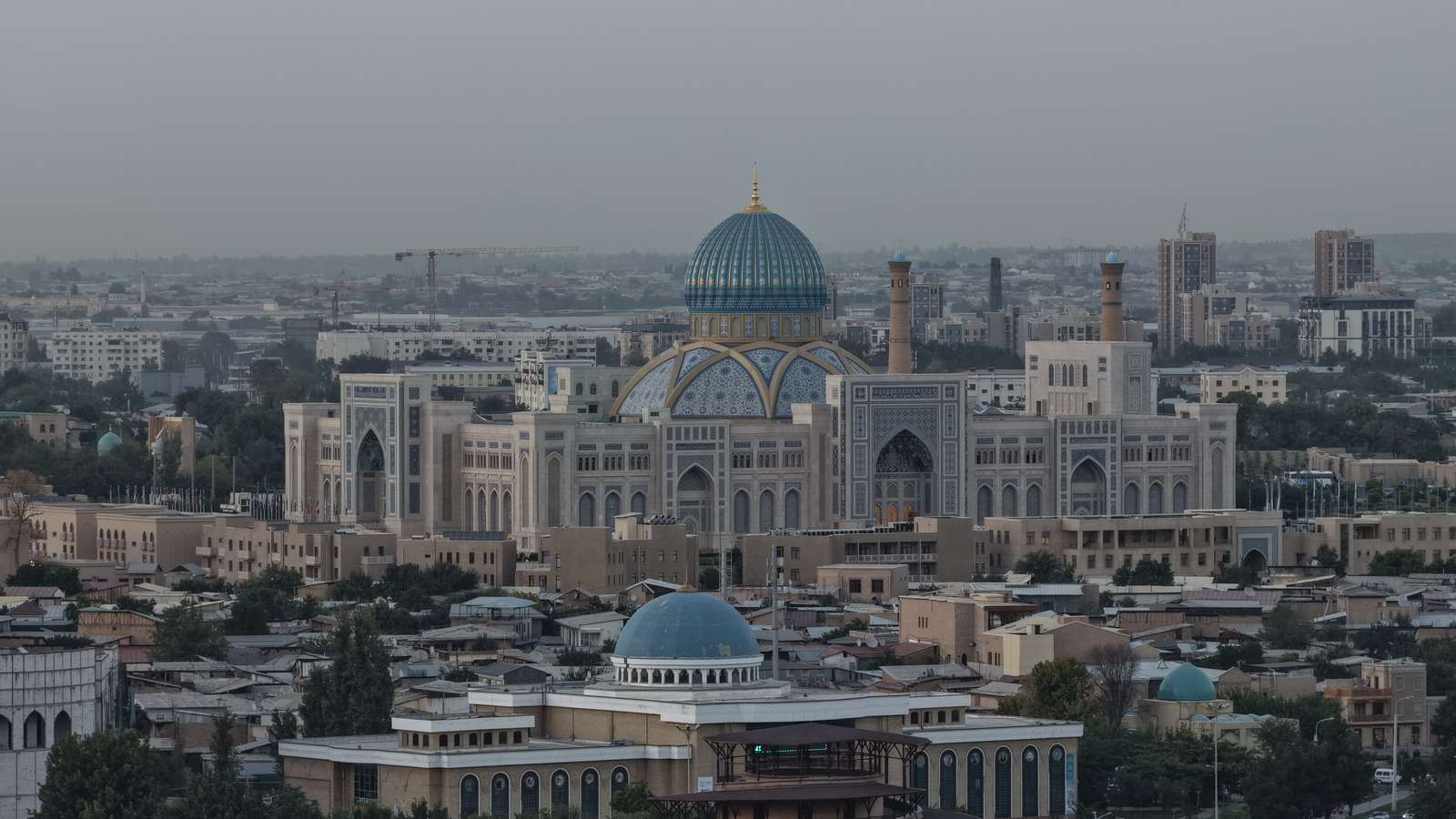
Stand on the square of The religious heart of old Tashkent: madrasahs, a Friday mosque and mausoleums. Right next to it stands the new Center of Islamic Civilization, opened in 2026. Read more → and look past the turquoise domes of the old An Islamic college: student cells and classrooms around a courtyard behind a grand portal. In the old towns many now house museums and craft workshops.: a much larger dome, 65 metres high and wrapped in blue-and-gold tilework, now fills the sky behind them. That is the Center of Islamic Civilization, which opened on 17 March 2026 and has quickly become one of the places we most want our guests to see in Tashkent.
Here is what is inside, what tickets cost and how to fit it into your day.
A building on the scale of a city block
The centre stands on a 10-hectare site in the Hazrati Imam area. The building itself is 161 metres long and 118 metres wide, with three floors and more than 42,000 square metres open to the public. It has a grand portal on each of its four sides, and the portals and outer arcades carry Qur'anic verses and hadiths about learning, tolerance, humanity and respect for parents.
Karasaray Street, which used to run right past the façade, has been turned into a pedestrian square: the traffic now goes through a tunnel underneath. So you approach the building on foot across open space, which is exactly how it is meant to be seen.
What is inside: a walk through the eras
The museum takes up about 8,350 square metres on the first floor, and the route is chronological. The halls follow in this order:
- Hall of Honor. Fourteen arches tell the key events of Central Asian history, and touch panels bring up more than 100 scholars and thinkers of the region.
- Sogdiana Hall (pre-Islamic era). Sogdian textiles, statues, ceramics, metalwork, weapons, coins and seals.
- Tolerance Square (First Renaissance). Scale models of buildings you may see later on your trip: the Samanid Mausoleum and the Magoki Attori Mosque in Bukhara, Chashma-Ayub, Rabati Malik and the Qusamiya madrasa.
- Sultan Husayn Mirza and Alisher Navoi sector (Second Renaissance). Timurid tilework, ornament and manuscripts, and the literary legacy of Navoi.
- New Uzbekistan. A tall glass stele with LED video at the end of the route.
Every exhibit has a QR code that opens short video and audio about it. Our advice: if you are heading on to Samarkand and Bukhara, spend extra minutes in the First and Second Renaissance halls. Afterwards the real buildings make a lot more sense.
One floor up is the library: more than 45,000 books, 2,609 of them rare editions, about 350,000 e-books and reading rooms for 310 people at a time. The ground floor has a children's area and a café, handy if you are visiting with kids.
The Qur'an Hall under the dome
The heart of the building is the Qur'an Hall directly under the great dome. Here lies the Mushaf of Uthman, a 7th-century Qur'an written on deerskin and listed in UNESCO's Memory of the World Register. For years it was kept in the small Muyi Muborak library across the square at Hazrati Imam; now it sits at the centre of the new museum, under protective glass. Around it is a gallery of 114 rare Qur'an manuscripts from the Samanid, Karakhanid, Ghaznavid, Timurid and Shaybanid eras.
Look up before you leave. The inside of the dome hosts a mapping show based on the night sky over Tashkent, with 90 Swarovski crystals and more than 650 lights. It is a separate ticket, and our advice is to take it.
Tickets, hours and the rules
The centre is open every day from 9:00 to 22:00. An adult ticket for foreign visitors costs 425,000 soum and includes an audio guide; an individual daytime visit costs 660,000 soum, and a VIP guided visit with entry through the main gate and no queue costs 850,000 soum. The mapping show under the dome is 175,000 soum for foreign adults. Standard tickets are sold for two-hour time slots, online at iTicket.uz or at the ticket offices; the e-ticket has a QR code you show at the entrance.
A few rules to know: no flash photography, and the Uthman manuscript itself may not be photographed. Do not touch the exhibits. The building includes religious areas with a dress code, so covered shoulders and knees are the easy choice; our guide to what to wear in Uzbekistan covers the details.
How we plan the visit
Allow two to three hours: that is how long the historical halls and the Qur'an Hall take at a comfortable pace. The address is 47 Karasaray Street, right next to Hazrati Imam, so the two fit easily into one visit, and Tashkent's old bazaar under a big blue-green dome, not far from Hazrati Imam. Bring cash in so'm. Read more → is a short taxi ride away.
A good plan is to use the late opening hours. Do Hazrati Imam and Chorsu in the morning, rest in the hottest part of the day, then come to the centre in the late afternoon and stay to see the tiled façade lit up after dark. Book your time slot in advance, especially on weekends and holidays.
More ideas for the city are on our Tashkent page, and you can browse tours that include Tashkent or let us match a tour to your dates.
In short
- The Center of Islamic Civilization opened in March 2026 next to Hazrati Imam, at 47 Karasaray Street.
- Inside: halls from Sogdiana to the Timurids and the 7th-century Mushaf of Uthman under a 65-metre dome.
- Open daily 9:00 to 22:00; buy a timed ticket on iTicket.uz or at the ticket office.
- Plan two to three hours, no flash, dress for a religious site.
- Come in the late afternoon and stay for the lit-up façade after dark.