
Places in this article: Samarkand
Ulugh Beg Observatory in Samarkand: the sextant, the stars and how to visit
Walk down a few steps at the Did you know? Ulugh Beg measured the year to within 25 seconds Working at his Samarkand observatory, Ulugh Beg put the tropical year at 365 days 5 h 49 min 15 s, about 25 seconds too long, closer than Copernicus a century later. Read more → and you are standing in a trench cut into the rock, with two marble-faced rails curving up toward the light. That is all that remains of the largest astronomical instrument of its age: an arc with a radius of about 40 metres, on which a single degree took up some 70 centimetres. Six hundred years ago, astronomers in Samarkand read the positions of the Sun, the Moon and the planets off it.
The man who built it governed the city for forty years, yet he is remembered as a scientist first. We take guests up this hill on most longer Samarkand programmes. Here is the observatory as our guides tell it: Ulugh Beg, the great sextant, the star tables, how the building was lost and found again, and how to fit it into your day.
A ruler who measured the sky
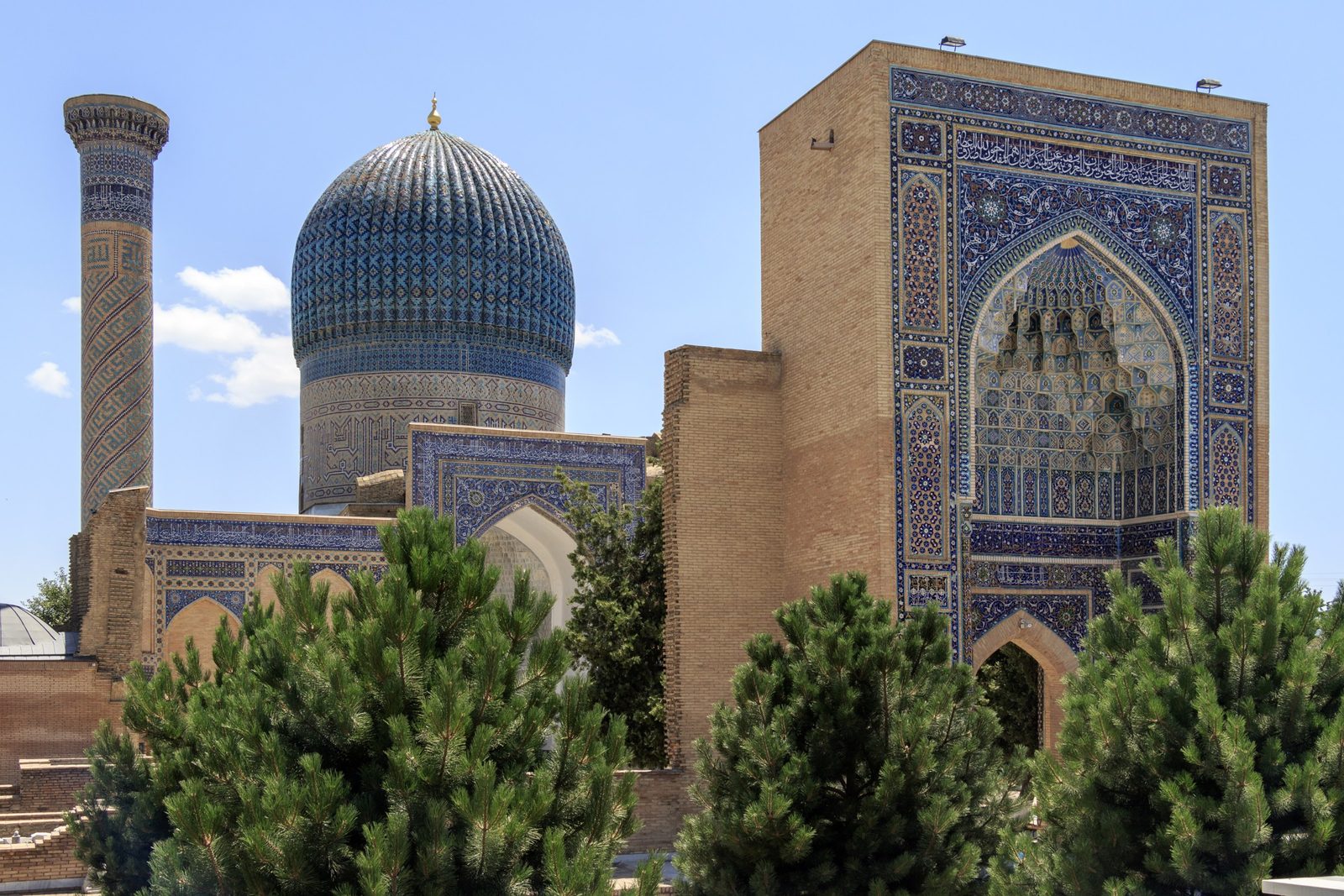
Muhammad Taraghay, known by his title Ulugh Beg, “the great prince”, was born in 1394, a grandson of .Amir Timur (Tamerlane, 1336–1405), founder of the Timurid empire, which had its capital in Samarkand. Born near Shahrisabz. In 1409, still in his teens, he became governor of Samarkand, and from 1411 he ruled all of Mavarannahr, the land between the Amu Darya and the Syr Darya, while his father Shah Rukh ruled the empire from Herat.
Ulugh Beg kept Samarkand for forty years, but his passion was mathematics and astronomy. He studied, taught and observed himself, and gathered leading scientists of the Islamic world around him: the mathematician Jamshid al-Kashi, the astronomer Qadi Zada al-Rumi and, later, Ali Qushji. His reign ended with his death in 1449. He lies in Gur-e-Amir, a few steps from his grandfather.
The madrasah on the Registan: a school for astronomers
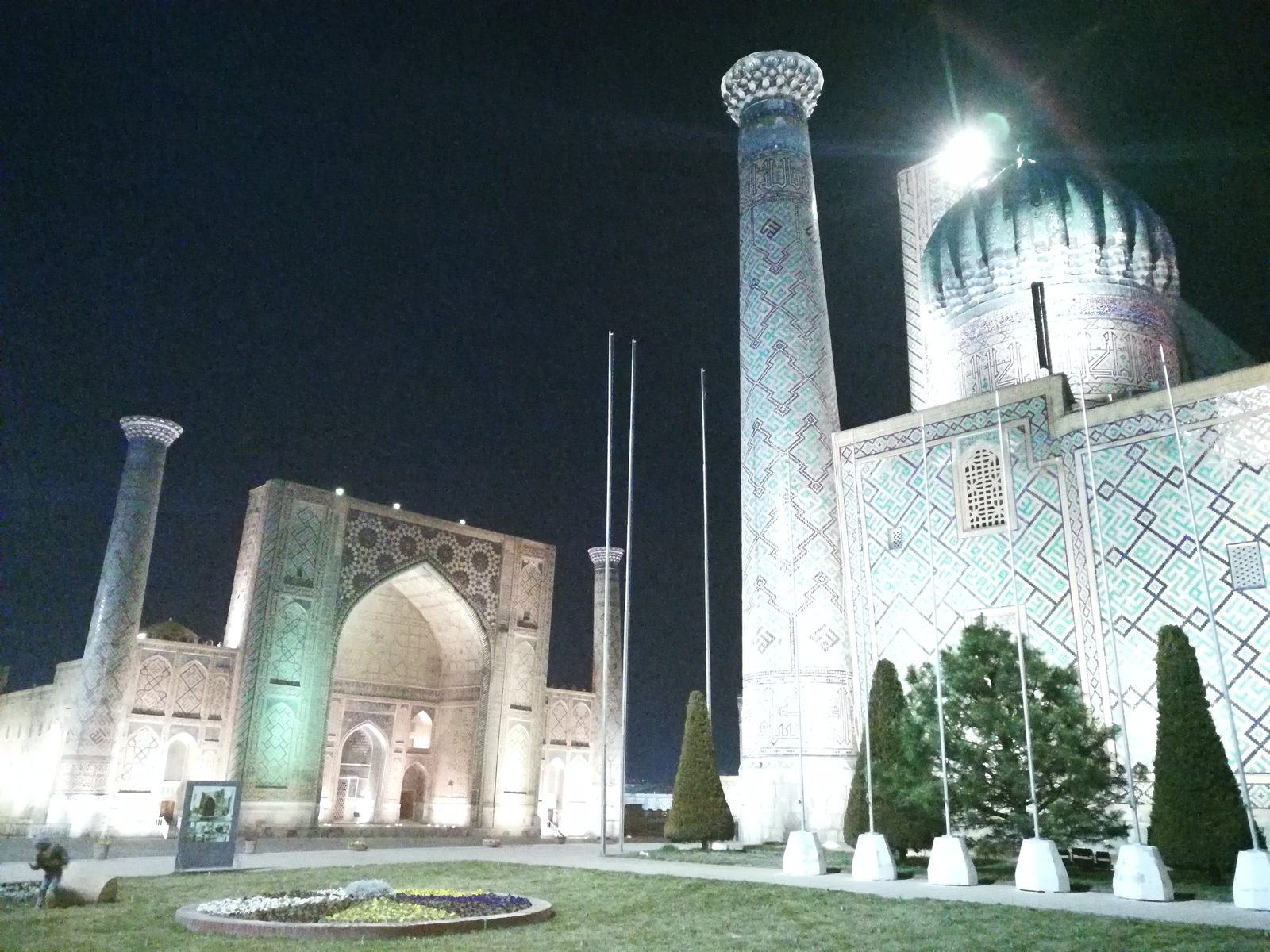
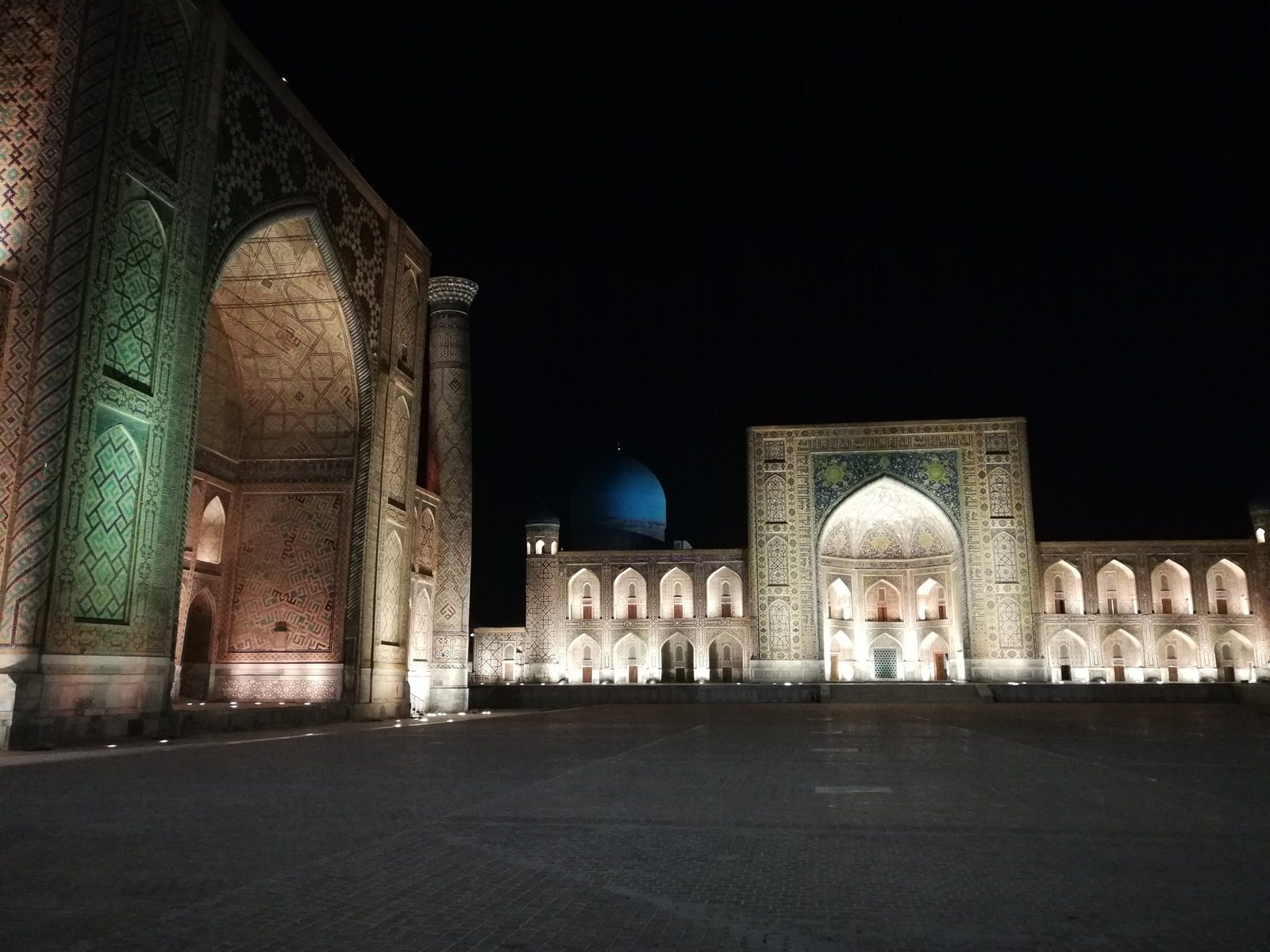
The story begins in town. In 1417–1420 Ulugh Beg built his An Islamic college: student cells and classrooms around a courtyard behind a grand portal. In the old towns many now house museums and craft workshops. on the west side of the Registan, and astronomy was its most important subject, taught alongside mathematics, geometry, logic and theology. He chose the teachers himself; Qadi Zada and al-Kashi taught there, and the ruler lectured in person.
A few years later the work moved to the Kuhak hill on the edge of the city, where the horizon was open. The madrasah and the observatory are two halves of one story, and we tell it that way: start on the ,Did you know? The Registan's sun-carrying lion went on a banknote The Sher-Dor Madrasah (1619–1636) is named for the big cats with the sun on their backs on its portal. The image appeared on the reverse of Uzbekistan's 200-som note of 1997. Read more → finish on the hill.
The great sextant: a building made around one instrument
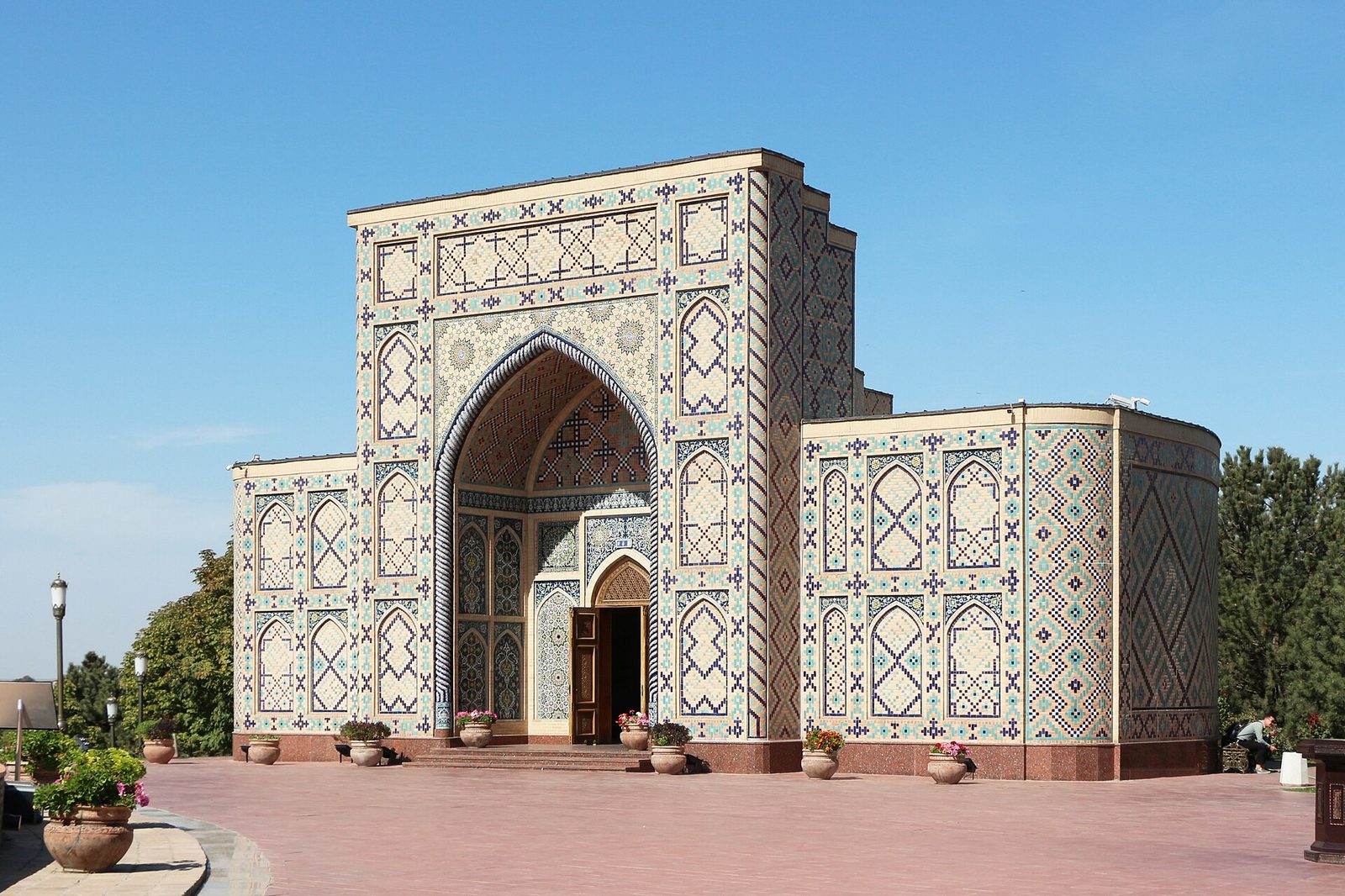
The observatory went up in the 1420s and was finished around 1428–1429. It was a round, three-storey building about 46 metres across and some 30 metres high. Its rooms held smaller instruments, and a horizontal circle on the roof was used to measure bearings along the horizon.
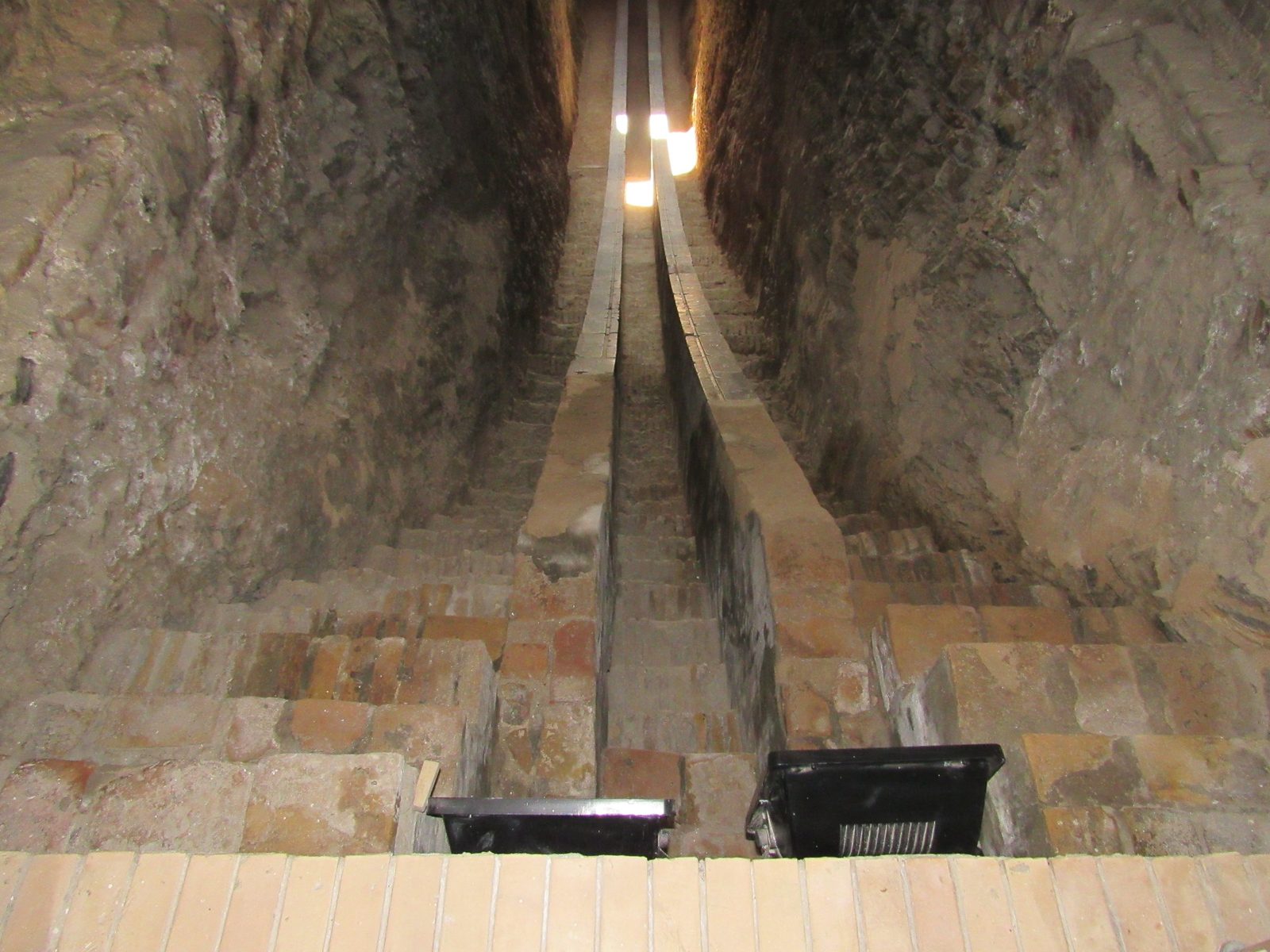
Through the middle of the cylinder, on the north–south line of the meridian, ran the main instrument, the Fakhri sextant. Its radius was about 40 metres. The lower part was cut into the rock of the hill as a trench about 2 metres wide and 11 metres deep; the upper part rose inside the building. Two parallel arcs were faced with marble and marked off in degrees. One degree took up about 70 centimetres, with finer marks for every minute of arc.
Some historians call it a quadrant rather than a sextant: only part of the arc survives, and its full length is still discussed. What you see today is the lower, underground section, roofed over to protect it. Follow the two rails up toward the light, and you are following the line of the meridian.
1,018 stars and a year measured to the minute
The results went into the Zij-i Sultani, also called the Zij-i Gurgani, completed in 1437: a book of astronomical tables in Persian. Its catalogue gives the positions of 1,018 stars, the second such catalogue in seventeen centuries, after that of Hipparchus. The tables also hold trigonometry: sine values for every degree, worked out to nine decimal places.
Ulugh Beg’s team measured the sidereal year, the time the Earth takes to come back to the same place against the stars, as 365 days, 6 hours, 10 minutes and 8 seconds: about a minute longer than the modern value. Their year of the seasons, 365 days, 5 hours, 49 minutes and 15 seconds, was only 25 seconds out; Copernicus, a century later, was out by 30. They put the tilt of the Earth’s axis at 23°30′17″.
Europe met the catalogue in 1665, when Thomas Hyde published it in Oxford. Today a crater on the Moon and the asteroid 2439 Ulugbek carry Ulugh Beg’s name.
How the observatory was lost and found again
The observatory did not long outlive its founder. Its scholars gradually left Samarkand, and by the end of the 16th century the empty building had been taken apart for its bricks. In time even its exact site was forgotten.
It was found by Vasily Vyatkin, a former schoolteacher who from 1903 was the official keeper of Samarkand’s monuments. He located the site with the help of a 17th-century document, a deed granting land for a dervish lodge, and in 1908 his dig on the Kuhak hill uncovered the round foundations and the marble arc of the sextant. He returned in 1909 and 1914, and in 1915 a vault was built over the trench. Later excavations, in 1941 and 1948, cleared the foundations down to the rock.
Vyatkin died in 1932. In 1934 his grave was moved to the observatory he had found.
Legend: the library that was carried away
This is a legend, not a record. In Samarkand they say that after Ulugh Beg’s death his library, said to have held 15,000 books, was in danger, and that Ali Qushji moved most of the books to the village of Hazrat Bashir near the city before he himself left Samarkand.
The museum: what to look for
Next to the excavated arc stands a small museum behind a tiled portal. Inside are copies of pages from the star tables, photographs of the excavations, astronomical instruments that show how the work was done, and European engravings that place Ulugh Beg among the great astronomers.
Our tip: see the museum first, then the arc. Once you know how the instrument worked, the trench stops looking like a staircase into a cellar and becomes what it was: a scale for the sky.
One morning: Shah-i-Zinda, Afrasiyab and the observatory
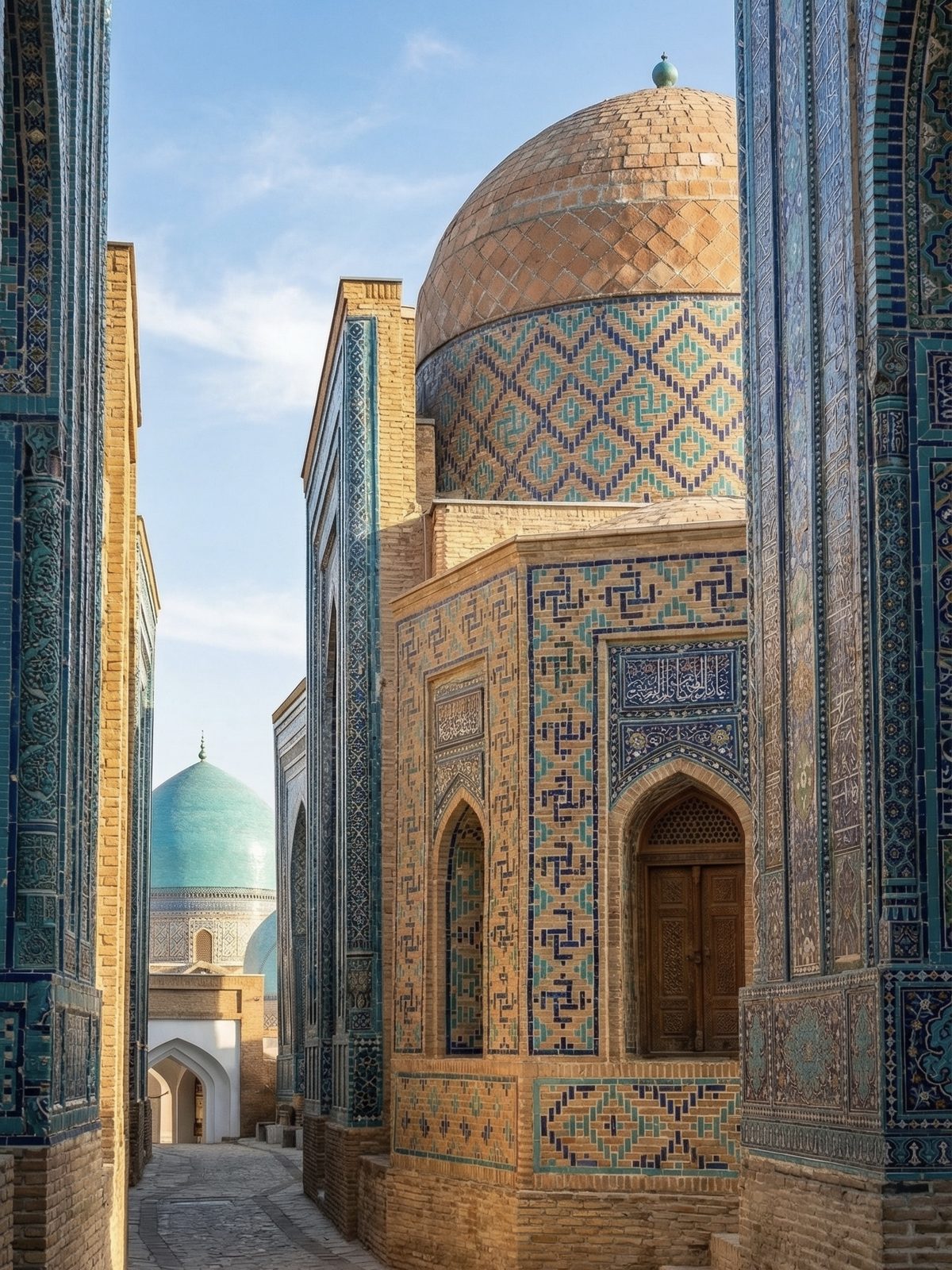
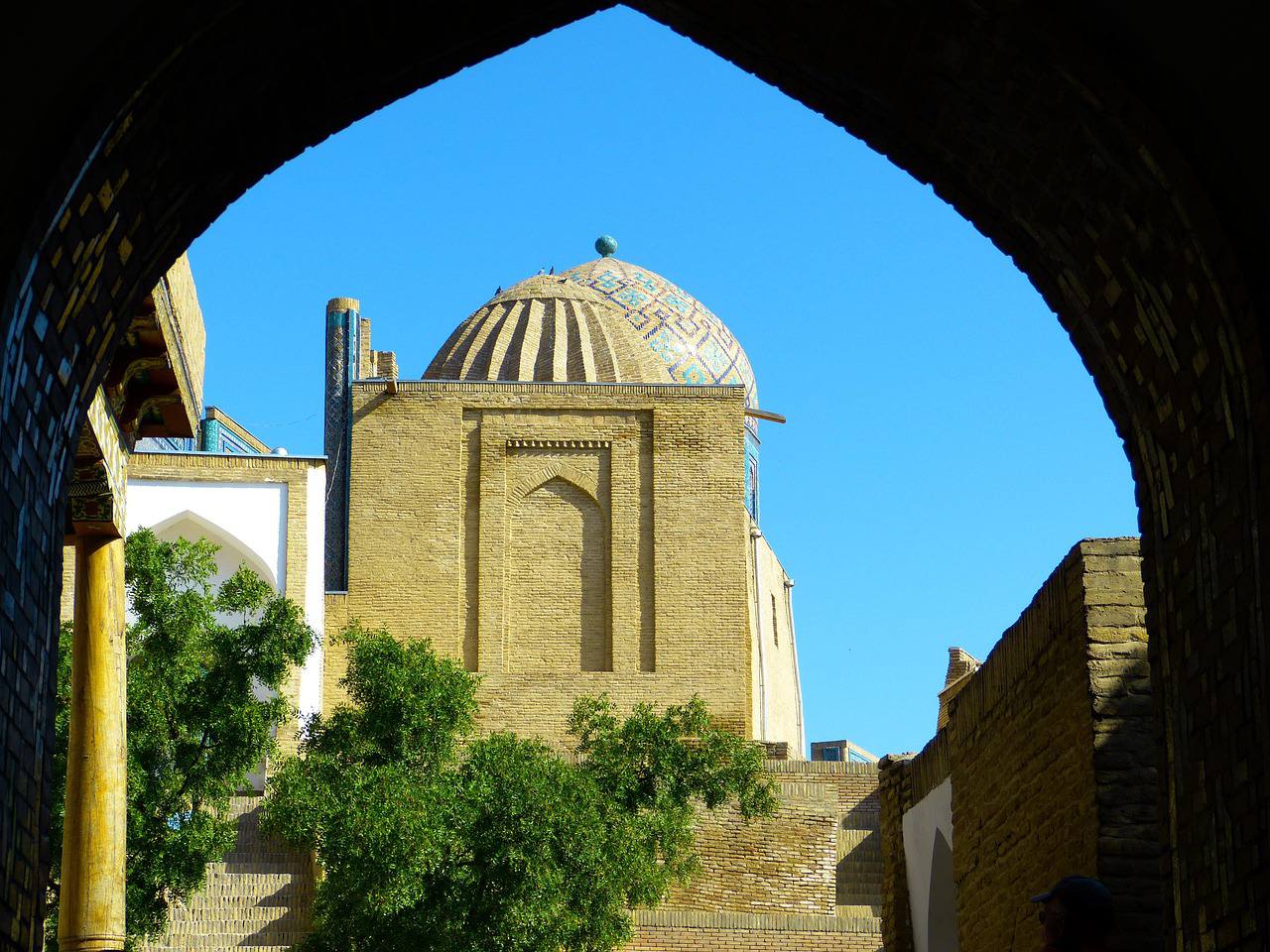
The observatory lies on the same northern edge of town as two other sights, so we put all three into one morning. Start early at Shah-i-Zinda, the lane of tiled tombs on the slope of .Did you know? A 7th-century mural shows envoys from Korea Uncovered by road builders in 1965, the Ambassadors' Painting at Afrasiyab shows delegations bearing gifts, Chinese with silk among them, and two men in feathered hats thought to be envoys from Korea's Goguryeo. Read more →
About a kilometre on is the Afrasiyab museum, on the hill where Samarkand stood from around 500 BC until the Mongols took it in 1220. Go for the 7th-century wall painting of King Varkhuman receiving foreign envoys. The observatory is about 1.5 km further.
That leaves the afternoon for the Registan and .Did you know? Timur's tombstone went to Persia and came back The dark-green jade slab on Timur's grave in Gur-e-Amir was carried off by Nader Shah in 1740. It broke, and on his advisers' urging he sent it back to Samarkand. Read more → For a full plan, see Samarkand in 1, 2 or 3 days.
Visiting the observatory: our tips
- Where: on the Kuhak hill in the north-east of Samarkand, about 3.5 km from the Registan and about 1.5 km past the Afrasiyab museum. A taxi takes a few minutes.
- Time: about an hour for the museum and the sextant.
- Tickets and hours: sold at the desk by the entrance; check the price and hours at the ticket office, and carry some cash in som. Other sites are in our guide to Samarkand sights, tickets and hours.
- When: in the morning, together with Did you know? Why Shah-i-Zinda means 'the Living King' The necropolis grew around the shrine of Qutham ibn Abbas, a cousin of the Prophet Muhammad. Legend says he did not die in battle but went down a deep well to a garden of paradise, where he lives on. Read more → and Afrasiyab. The Afrasiyab museum is open Monday to Saturday, 9:00–17:00.
- With a guide: the arc and the tables come alive when someone explains them. Our guides can add the observatory to any of our Samarkand tours.
Samarkand is 2 hours 30 minutes from Tashkent on the Uzbekistan's high-speed train: Tashkent to Samarkand in 2 hours 30 minutes, Tashkent to Bukhara in about 4 hours. Tickets are tied to your passport. Read more → express: see Tashkent to Samarkand. More on the city in our Samarkand city guide.
In short
- Ulugh Beg, Timur’s grandson, governed Samarkand for forty years and made it a centre of astronomy.
- His madrasah on the Registan (1417–1420) taught astronomy; the observatory on the Kuhak hill followed in the 1420s.
- The sextant had a radius of about 40 metres; the marble-faced lower part of its arc survives in a trench in the rock.
- The Zij-i Sultani (1437) lists 1,018 stars, and the year was measured to within about a minute.
- Vasily Vyatkin found the site in 1908. Allow an hour, and combine it with Shah-i-Zinda and Afrasiyab.