
Khiva in 1 or 2 days: a local plan
Places in this article: Khiva · Bukhara · Tashkent
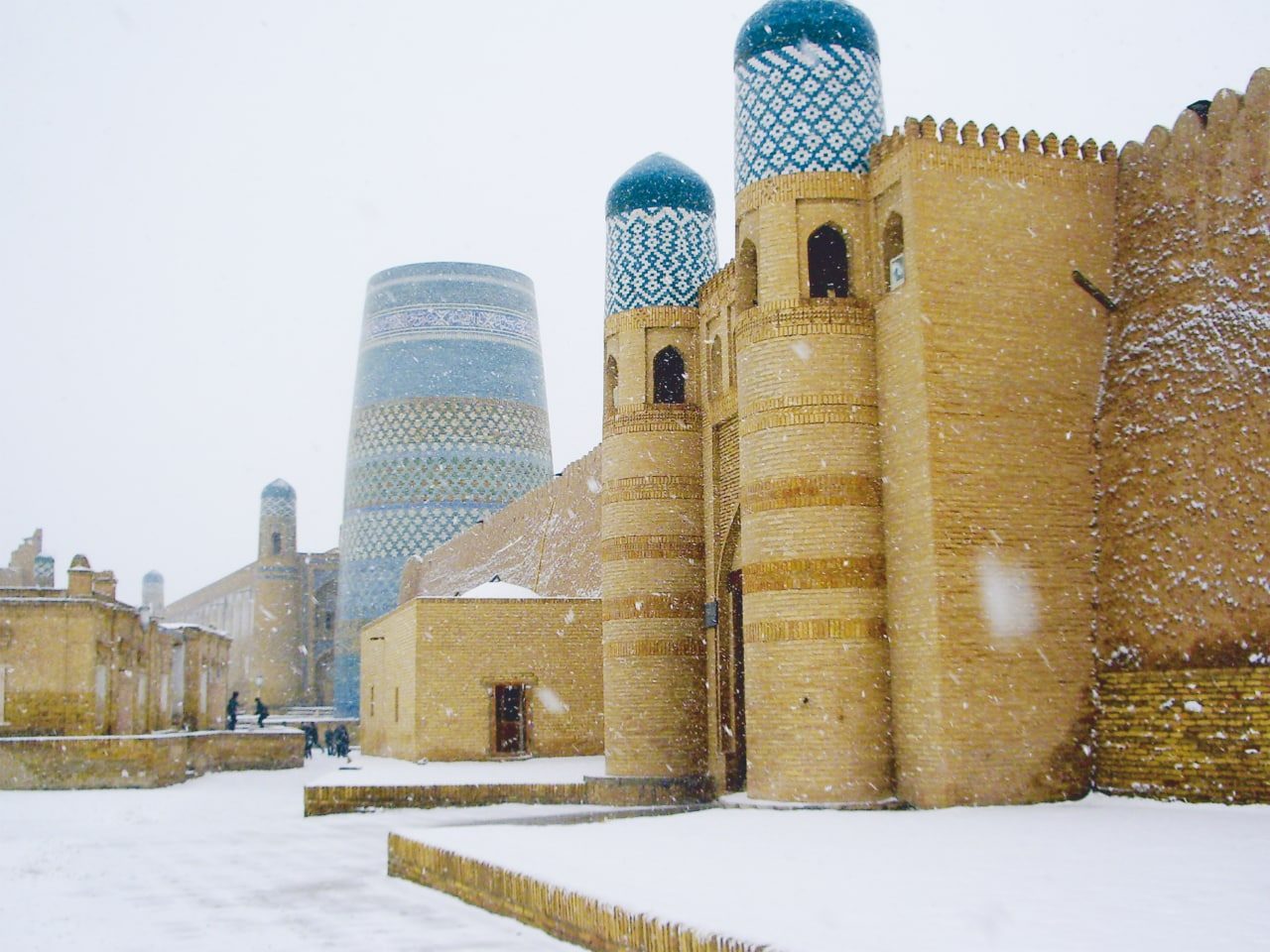
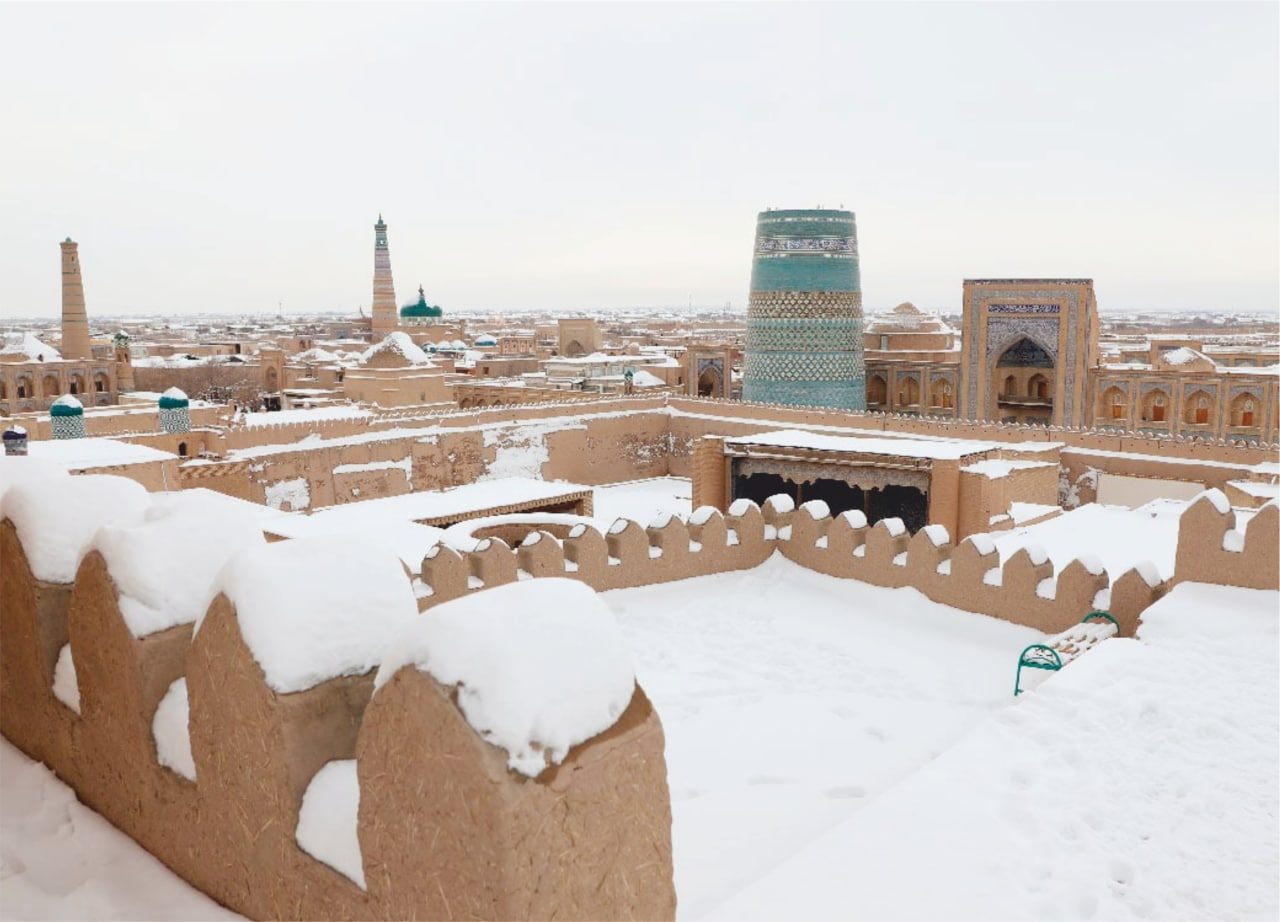
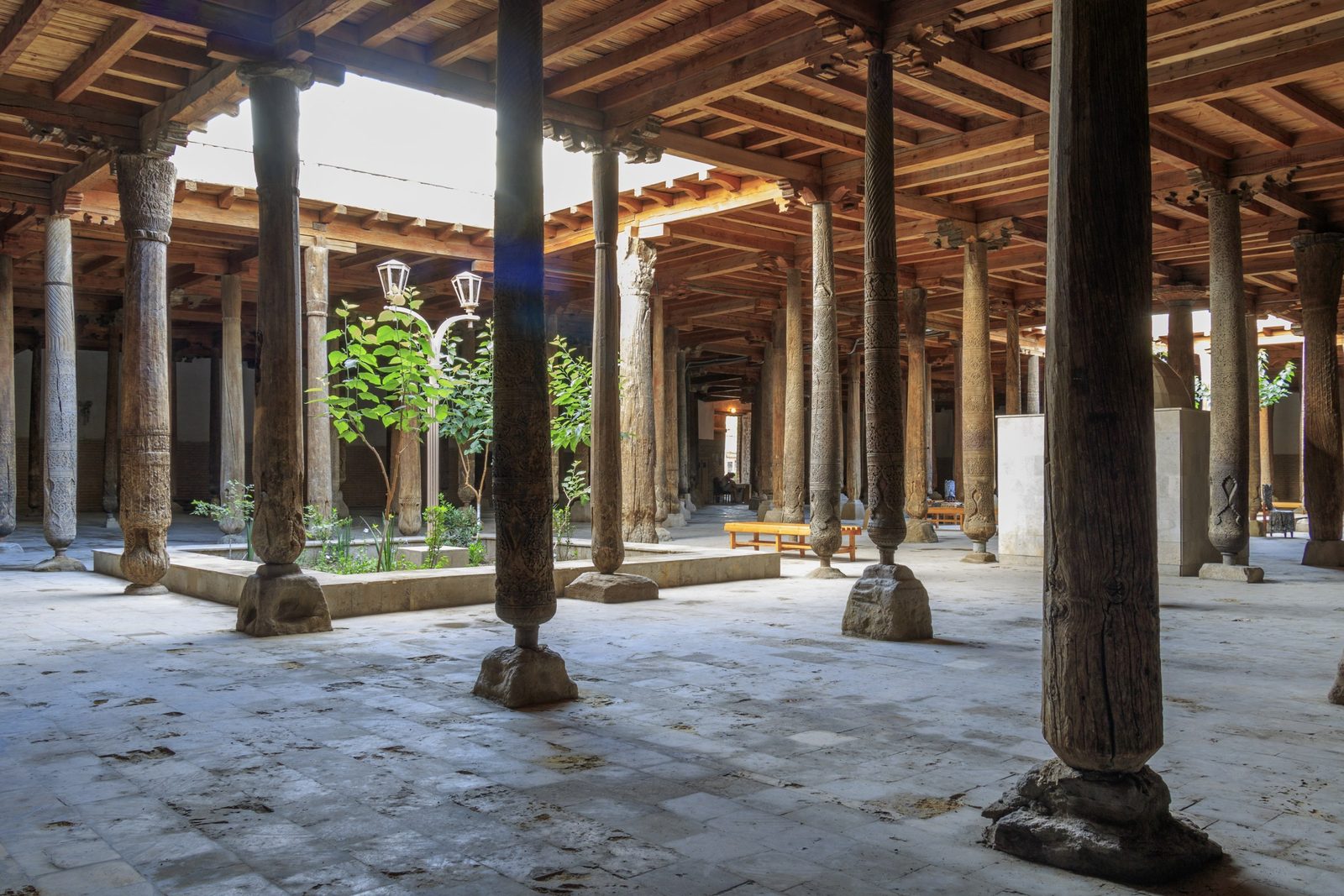
Did you know? People still live inside Khiva's museum city Itchan Kala packs more than 50 historic monuments and about 250 old houses inside clay walls 8–10 m high and 5–6 m thick, and families still live and work in its lanes. Read more →, the walled inner town of Khiva, measures about 650 by 400 metres. You can cross it in twenty minutes. We still never plan it for less than a full day, because in Khiva what changes is the light: soft on the clay walls at sunrise, falling through the roof of the Khiva's Friday mosque: a single hall without a dome, held up by more than two hundred carved wooden columns of different ages. at midday, turning the tiles of the Did you know? A 14-metre-wide base for a tower that stopped at 29 m Kalta Minor was begun in 1852 and meant to reach 70–80 m, but work halted in 1855 at about 29 m when its khan died. It is said to be the only minaret covered entirely in glazed tiles. Read more → turquoise in the last hour.
Here is how we fit Khiva into one or two days, from the moment the train pulls in. Tickets, hours and a short card for each monument are in our guide to Bukhara and Khiva sights; here we put them in order.
What is where
Itchan Kala has four gates, and most visitors come in through the West Gate, Ota Darvoza. Inside, everything is a few minutes’ walk apart. Outside the walls, three places need a taxi or a car.
| Sight | What it is | Where |
|---|---|---|
| West Gate and Kalta Minor | The An Islamic college: student cells and classrooms around a courtyard behind a grand portal. In the old towns many now house museums and craft workshops. of Muhammad Amin Khan (1852–1855) and the unfinished tiled minaret beside it | just inside the West Gate |
| The old fortress-residence of the khans of Khiva, inside the walls of Itchan Kala. | The khans’ citadel, begun in 1686, with the Ak Sheikh Bobo watchtower | by the West Gate |
| Juma Mosque | A hall of 212 carved wooden columns, rebuilt in 1788 | the middle of the old town |
| Tosh Hovli | Allakuli Khan’s palace of the 1830s, with more than 260 rooms | the east side |
| The mausoleum of Pahlavan Mahmud, a poet and wrestler revered as the patron saint of Khiva. and Did you know? Khiva's tallest minaret is barely a century old The Islam Khoja Minaret was begun in 1908, near the very end of the khans' era. At 56.6 m it is one of the tallest in Central Asia; a spiral stair of 175 steps leads up to its windowed top. Read more → | The mausoleum of Khiva’s patron saint; the last madrasah of the khans and its 56.6 m minaret | the south side |
| Nurullaboy Palace | The last khans’ palace, with a reception hall finished in 1912 | outside the north gate |
| A new tourist complex on the shore of Lake Govuk, a short drive from Ichan-Kala, opened in May 2025: 17 hotels and guest houses, a 3,000-seat amphitheatre, restaurants, a bazaar under domes and a canal with gondolas. Read more → | The new quarter on Lake Govuk, opened in May 2025 | north of the walls, by taxi |
| Railway station | Opened in 2018, where the fast train from Tashkent arrives | under 2 km east, a half-hour walk |
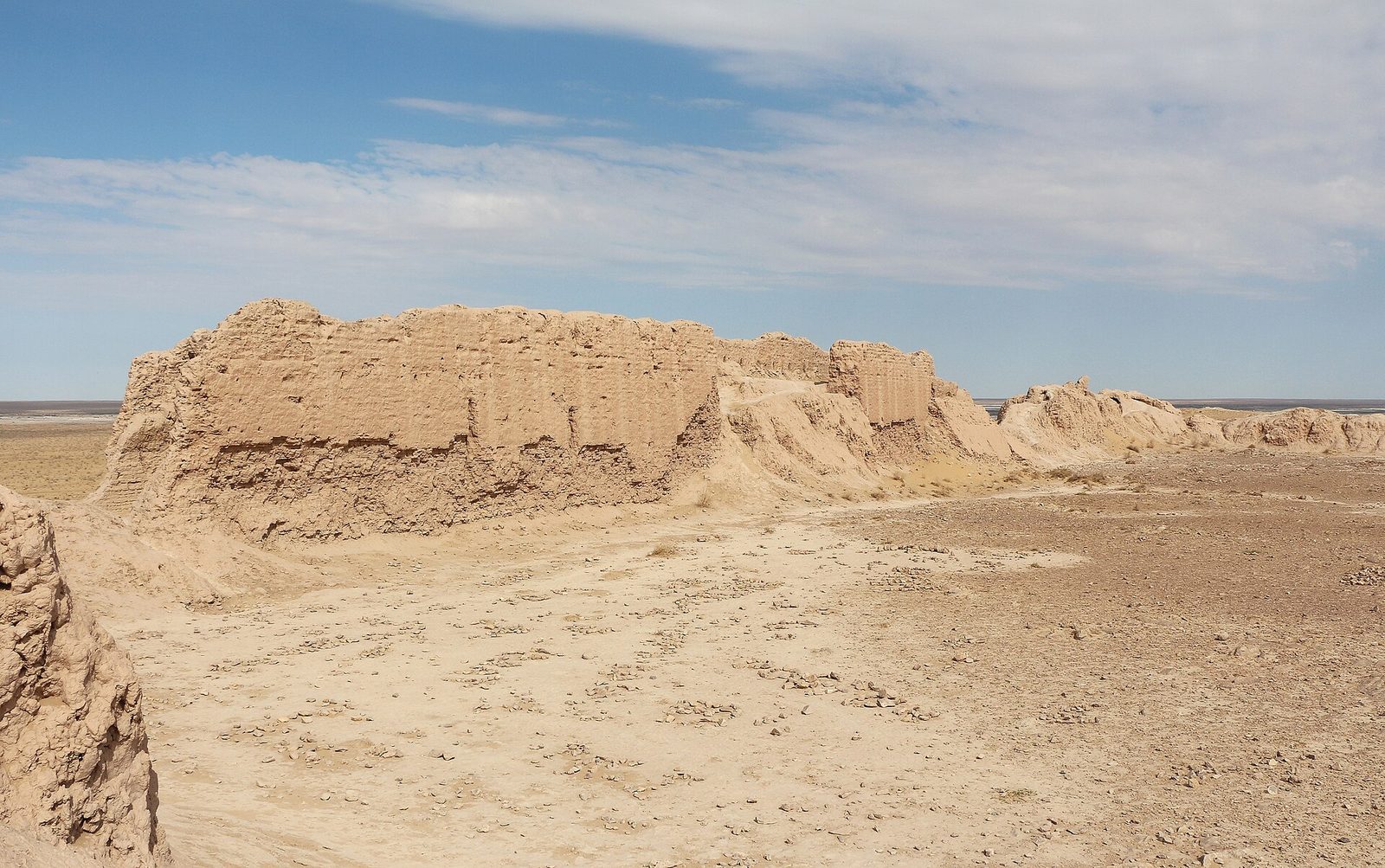
| Ruins of ancient Khorezm fortresses on hills at the edge of the Kyzylkum, in Karakalpakstan. and Toprak-Kala | Ancient clay fortresses above the The Kyzylkum, or Red Sands: the desert between the Amu Darya and Syr Darya rivers that the road and the railway cross on the way to Khiva., in Karakalpakstan | across the Amu Darya, by car |
Walking the lanes of Itchan Kala needs no ticket. The museums and monuments inside are covered by one combined ticket from the office by the West Gate; its price, validity and what it includes are set there, so ask on the spot. Whether the Islam Khoja minaret is open for climbing is decided on the day.
Arriving and leaving
The fast Jaloliddin Manguberdi leaves Tashkent at 7:00, calls at Samarkand and Bukhara and reaches Khiva at 14:31, every day except Sunday. It leaves Khiva at 7:15 or 7:20, every day except Monday. Tickets open 60 days ahead on eticket.railway.uz, and this train sells out first; see trains in Uzbekistan. The overnight trains from Tashkent reach Khiva, or Urgench 30 km away, around midday. Urgench is also where the airport is, with flights to Tashkent.
So most of our guests reach Khiva in the afternoon and leave early in the morning. Sleep inside the walls if you can: you get the lanes to yourself before the groups arrive and after they leave. Yandex Go taxis work in Khiva for the station and for Arda Khiva.
The afternoon you arrive
Drop your bags and walk in through the West Gate. The low sun is now on the Kalta Minor, begun in 1852 and stopped at about 29 m in 1855 when its khan died: the only minaret covered entirely in glazed tiles. Keep the combined ticket for the morning. Wander the lanes towards the Islam Khoja minaret, watch the sunset from the wall or a café terrace above the roofs, and have dinner inside the walls.
One day: Itchan Kala from gate to gate
Early morning. Go out before breakfast. The lanes are almost empty, the light is soft on the walls, and you get the Kalta Minor without a crowd. Buy the combined ticket when the office by the West Gate opens.
Morning. Start at the Kunya Ark beside the gate: the khans’ reception hall and the summer mosque are at their best in the morning light. Then cross the old town along the main street to Tosh Hovli while its courtyards are still cool. In the harem, four loggias belonged to the khan’s four wives and the fifth, the largest, to the khan; look up at the painted wooden ceilings.
Midday. Walk back to the Juma Mosque. Around noon, light falls through the two openings in its roof onto 212 wooden columns, and no two are carved alike. Lunch is shivit oshi, Khiva’s noodles turned green with dill, served with a meat stew and yoghurt. In summer we take guests back to the hotel for the hottest hours.
Afternoon. The south side: the Pahlavan Mahmud mausoleum under its turquoise dome, still a place of pilgrimage, so cover shoulders and knees and bring a scarf. Next door, the Islam Khoja madrasah holds the museum of applied arts: Khorezm woodcarving, metalwork, carpets and tiles. If the minaret is open, its 175 steps lead to windows over the domes; the staircase is narrow and steep.
Sunset. Climb the Ak Sheikh Bobo watchtower of the Kunya Ark in the last hour of light: from above, the domes, minarets and flat clay roofs come together into one picture. Then take a taxi to Arda Khiva for dinner by the lake, or stay inside the walls. On a guided day, this is our Khiva walking tour.
Two days: outside the walls and the desert fortresses
Morning: Dishan Kala. Walk out through the north gate into the outer town, where Khiva lives and works, to the Nurullaboy Palace. Its reception hall, finished in 1912, mixes local carved plaster with mirrors, painted ceilings and tiled stoves brought from Russia. Back in Itchan Kala, look for the exhibition on Did you know? Khiva's court photographer shot the first Uzbek film Khudaibergen Devanov, born in Khiva in 1879, came back from St Petersburg with a Pathé movie camera and in 1910 filmed the khan setting off in a phaeton. An exhibition in Itchan Kala tells his story. Read more →, the Khiva photographer who filmed the khan setting off in a phaeton in 1910, the first Uzbek film.
A half day: Ayaz-Kala and Toprak-Kala. Across the Amu Darya, in Karakalpakstan, clay fortresses stand above the Kyzylkum. Ayaz-Kala is three fortresses; the oldest dates from the end of the 4th or the start of the 3rd century BC, and from the top of its hill the view runs far over the desert. Toprak-Kala, about 32 km away, was the capital of ancient Khorezm in the 2nd–3rd century AD; wall paintings were found in its palace. Ayaz-Kala lies about 70 km from Urgench on a paved road, with a short sandy stretch at the end, so you need a car with a driver and most of the half day goes on the road.
In summer we go early and are back for lunch. In spring and autumn we prefer the afternoon: the best photographs of Ayaz-Kala are taken at sunset. A yurt camp stands by the fortress if you want a night in the desert. Our Khiva in 3 days tour drives out to Ayaz-Kala and passes Toprak-Kala on the way.
Evening: Arda Khiva. If you did not go on the first night, go now: 25 hectares on the shore of Lake Govuk, a canal with gondolas, a bazaar under domes and a 3,000-seat amphitheatre by the water. It has its own copy of the Kalta Minor, so you can compare it with the original you saw in the morning.
One day or two, and what comes next
One full day plus the evening you arrive covers Itchan Kala properly. A second day adds the outer town, the fortresses and an unhurried evening at Arda Khiva. From Khiva, the 7:15 train takes you to Bukhara before 11:00 (not on Mondays): our plan for Bukhara in 1, 2 or 3 days starts from there. The road through the desert is described in Khiva to Bukhara, or you can fly back to Tashkent from Urgench.
On longer routes, Khiva is part of our 8-day classic tour, the 11-day classic tour, the Samarkand, Bukhara and Khiva group tour and the photo tour. For a slower stay there is the yoga retreat in Khiva. More on the Khiva page.
In short
- The fast train arrives at 14:31 (not on Sundays) and leaves at 7:15 or 7:20 (not on Mondays): plan your Khiva days around it.
- First evening: the Kalta Minor in low sun and a walk through the lanes; buy the combined ticket the next morning.
- One day: Kunya Ark and Tosh Hovli in the morning, the Juma Mosque at midday, Pahlavan Mahmud and Islam Khoja in the afternoon, the watchtower at sunset.
- Two days: the Nurullaboy Palace in the morning, Ayaz-Kala and Toprak-Kala as a half day by car, Arda Khiva in the evening.
- Sleep inside the walls, go out early, and cover shoulders and knees at Pahlavan Mahmud and the Juma Mosque.