
Places in this article: Samarkand · Bukhara · Tashkent
The Timurids: what Timur and his descendants left behind, and where to see it
In 1404 an ambassador of the King of Castile stopped in Kesh, Amir Timur (Tamerlane, 1336–1405), founder of the Timurid empire, which had its capital in Samarkand. Born near Shahrisabz.’s home town, and found builders still at work on a palace they had begun some twenty years before. In 1437, in Samarkand, Timur’s grandson finished a catalogue of 1,018 stars. Between that gate and those stars lies the century of the Timurids, and most of what travellers come to Uzbekistan to see.
We live in Tashkent and take guests along this route all year. Here is what Timur and his descendants built, studied and wrote, where you can see it today and how to join it all into one trip. We keep to the buildings, the science and the art; every monument has its own guide on this site, and we link to them.
Who the Timurids were
The Timurids are the dynasty founded by Timur, known in Europe as ,Did you know? Why Europe calls Timur 'Tamerlane' Persian sources called him Timur-i Lang, 'Timur the Lame', after old wounds to his right leg and arm. When his tomb was studied in 1941, anthropologist Mikhail Gerasimov confirmed the injuries and modelled his face from the skull. Read more → in 1370. He was born in 1336 near Kesh, today’s Shahrisabz, and made Samarkand his capital. His family ruled in Central Asia and Iran until 1507.
After Timur’s death in 1405 his son Shah Rukh ruled from Herat, in today’s Afghanistan, while Samarkand was governed from 1409 by Shah Rukh’s son .Did you know? Ulugh Beg measured the year to within 25 seconds Working at his Samarkand observatory, Ulugh Beg put the tropical year at 365 days 5 h 49 min 15 s, about 25 seconds too long, closer than Copernicus a century later. Read more → Under them the 15th century became what historians call the Timurid Renaissance: an age of great building, astronomy and mathematics, poetry and book painting. The style of Timurid domes later travelled with the family as far as India.
Shahrisabz: where Timur began
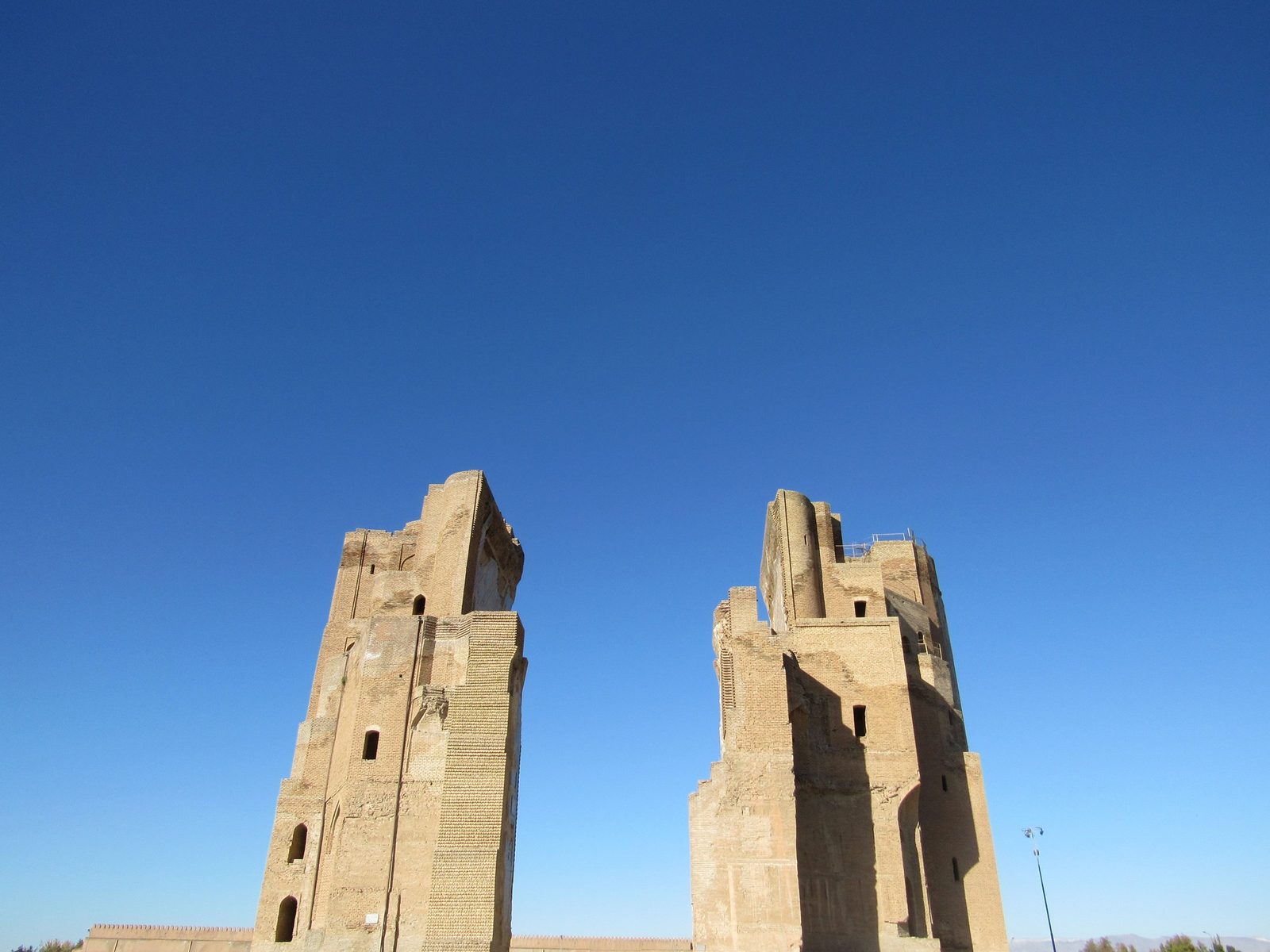
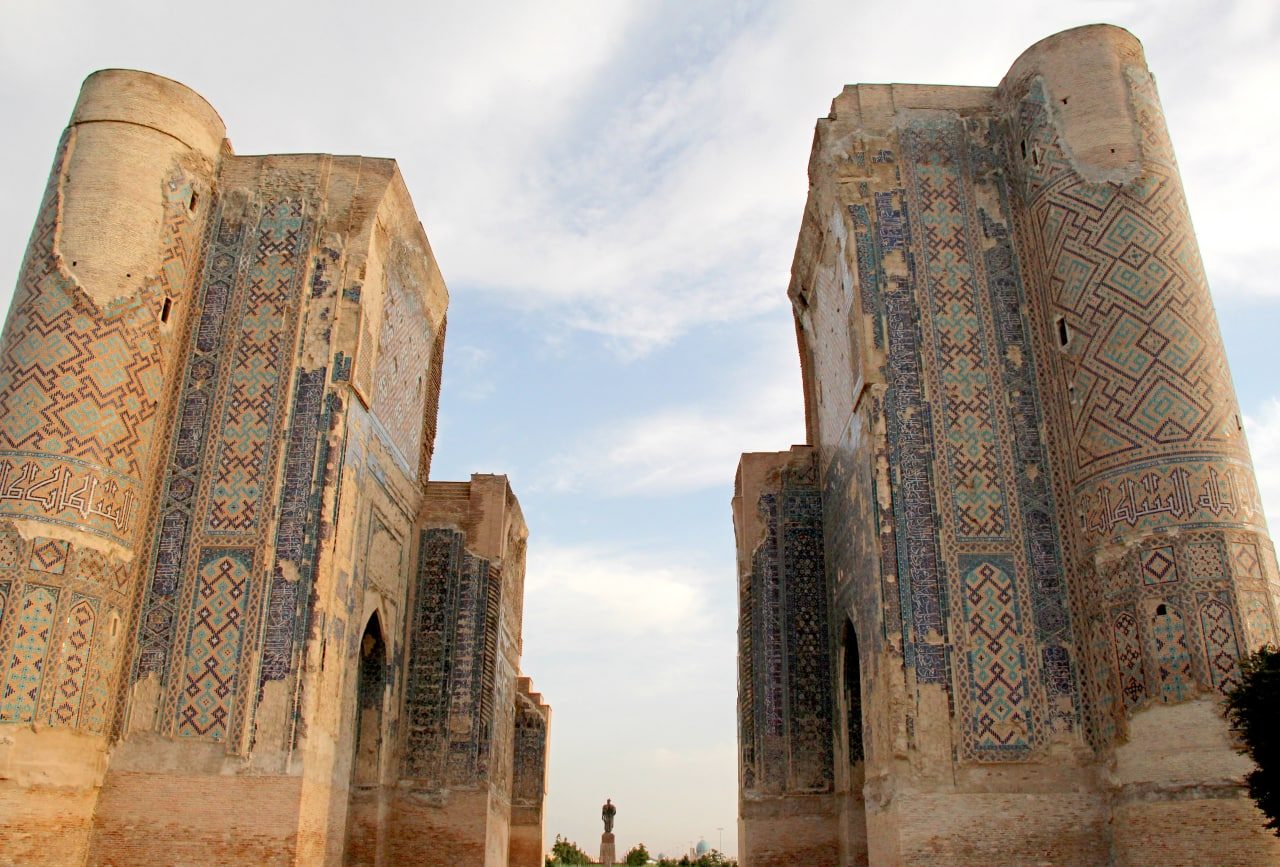
Timur began his White Palace, ,The ruins of Amir Timur's palace in Shahrisabz, his home town. Only parts of the giant entrance arch still stand. Read more → in Kesh in 1380, and a plate on the gate gives 1404 as the year it was finished. Only the front gate survives, and even broken its towers stand about 38 metres high; the arch between them, 22.5 metres wide, had the widest span in Central Asia. What the Castilian ambassador Ruy González de Clavijo saw there is in our guide to Ak-Saray.
A walk south through the old town brings you to Dorus Siadat, with the tomb of Jahangir, Timur’s eldest son, and the underground crypt where a stone casket was prepared for Timur himself. A few minutes west stands Kok Gumbaz, “the blue dome”, the Friday mosque that Ulugh Beg built in 1437 in honour of his father Shah Rukh. The historic centre of Shahrisabz has been on the UNESCO World Heritage List since 2000. Plan the day with Shahrisabz from Samarkand, or book our trip to Shahrisabz.
Samarkand: the capital Timur built
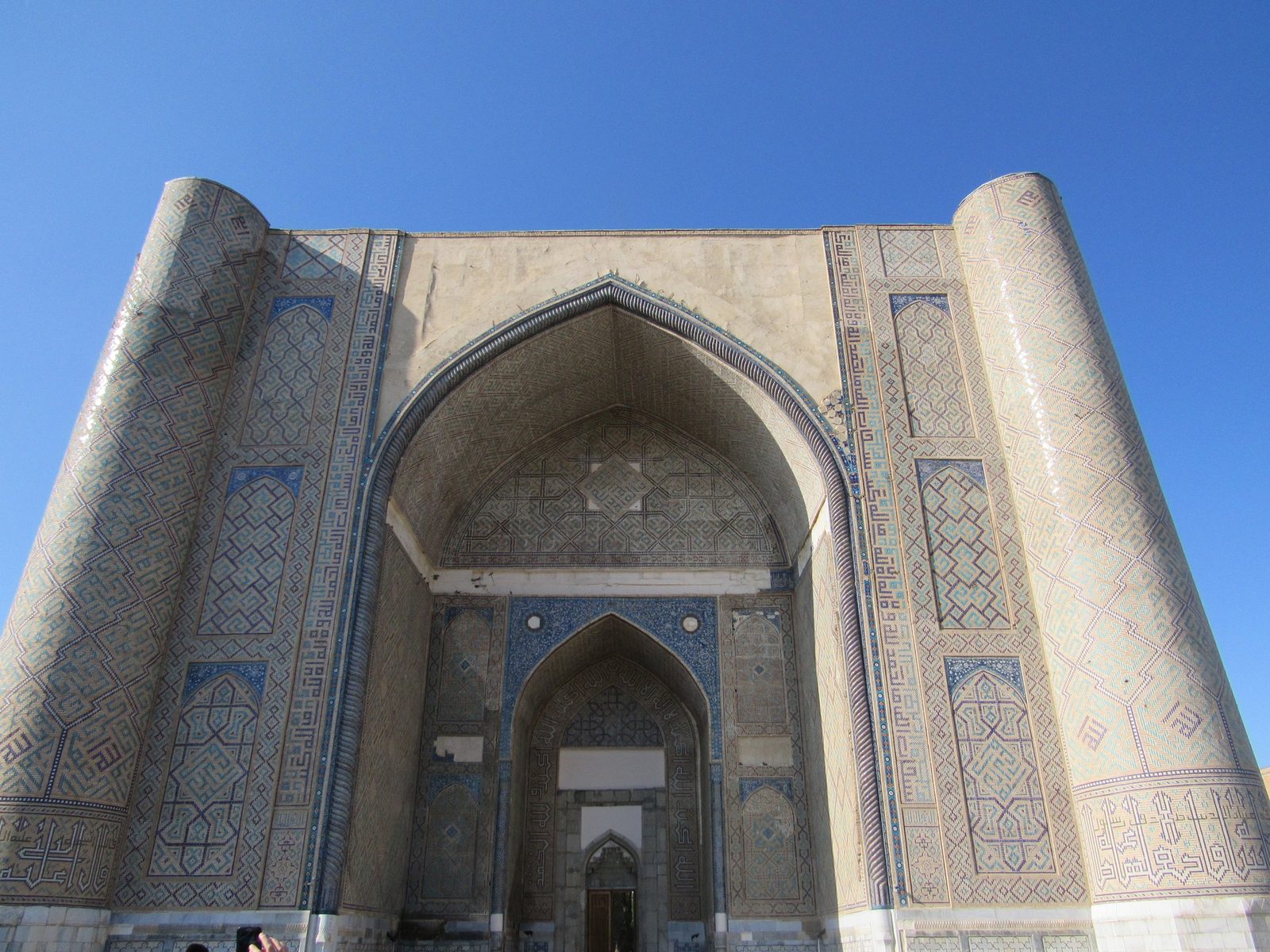
Timur made Samarkand the showcase of his empire and brought craftsmen to it from India, Iran, Khorezm and further afield. Three monuments from his lifetime are on every route.
- Bibi-Khanym, his Friday mosque, begun in May 1399, with a courtyard meant for 10,000 worshippers and a portal 35 metres high. Its domes began to fail within years; much of what you see is 20th-century rebuilding.
- Shah-i-Zinda, the lane of tombs where Timur’s sister, niece and wife and his commanders lie. In the 33 years between the tombs of Shadi Mulk Aka (1372) and Tuman Aka (1405) you can watch Samarkand’s tile-makers move from carving to cut mosaic.
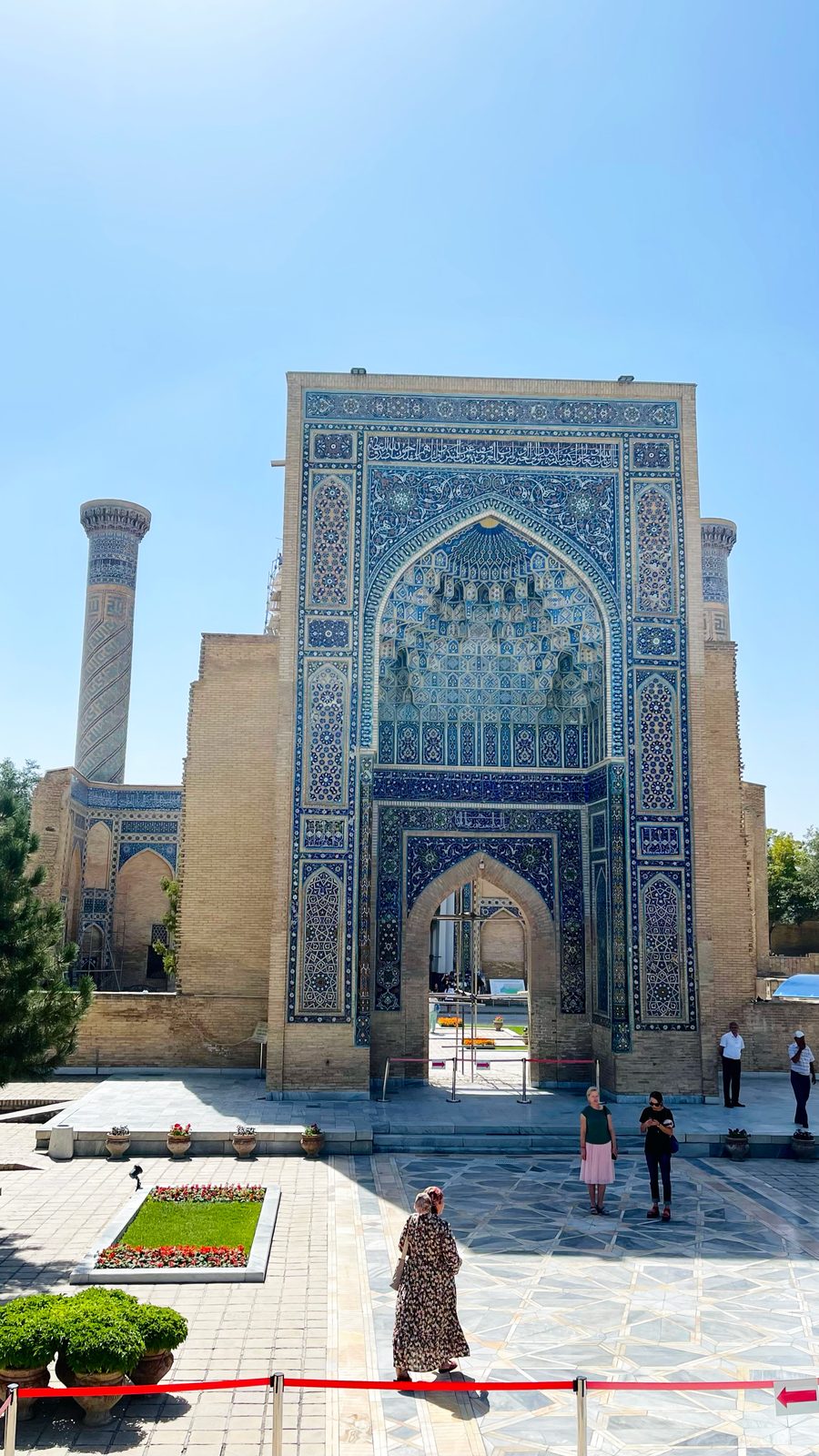
- Gur-e-Amir, begun in 1404 as a tomb for his grandson ,Did you know? Timur's tomb was built for his grandson Gur-e-Amir was begun in 1404 for Muhammad Sultan, Timur's grandson and chosen heir. Timur had a crypt ready in his home town of Shahrisabz, but when he died in 1405 he was laid in Samarkand, in the tomb meant for the young prince. Read more → which became Timur’s own grave in 1405. Shah Rukh and Ulugh Beg lie here too.
How to read their portals, domes and tiles is explained in our guide How to read Uzbek architecture.
Ulugh Beg: the prince who measured the sky
Muhammad Taraghay, known by his title Ulugh Beg, “the great prince”, was born in 1394 and governed Samarkand for forty years, yet he is remembered as a scientist first. Three of his madrasahs still stand: in Bukhara, from 1417; on the Registan in Samarkand, 1417–1420; and in Gijduvan, 1432–1433. In Samarkand astronomy was the main subject, and the ruler lectured in person.
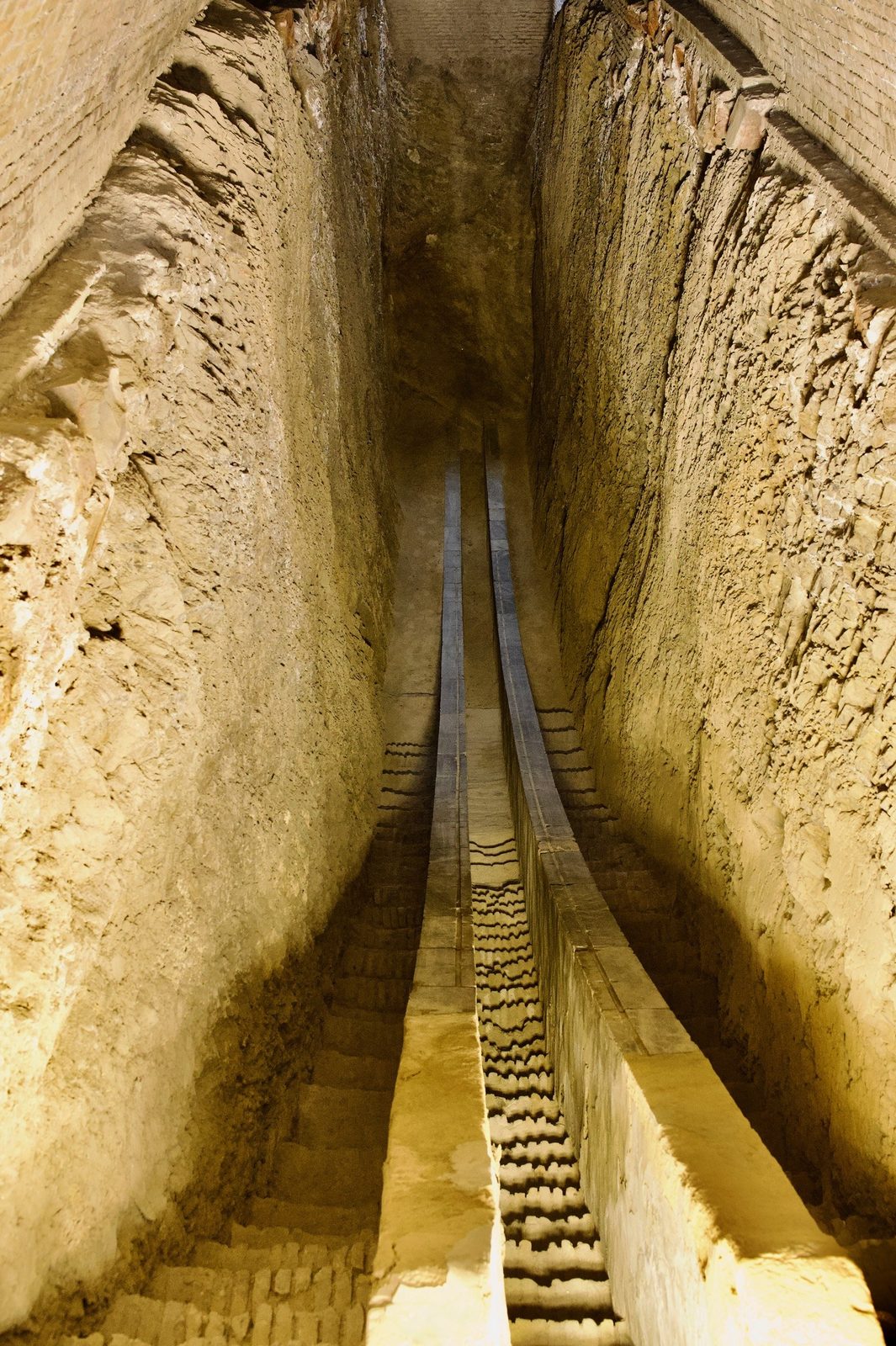
His observatory on the Kuhak hill was finished around 1428–1429: a round building three storeys high, built around a meridian arc of about 40 metres radius on which one degree took up some 70 centimetres. Its results went into the Did you know? A former teacher found the lost observatory in 1908 After Ulugh Beg's death his observatory was taken apart for its bricks and even its site was forgotten. Vasily Vyatkin, keeper of Samarkand's monuments, traced it through a 17th-century land deed and in 1908 dug up the great marble arc. Read more → of 1437, whose catalogue of 1,018 stars was the second such catalogue in seventeen centuries, after that of Hipparchus. His team measured the sidereal year as 365 days, 6 hours, 10 minutes and 8 seconds, about a minute longer than the modern value. The mathematician Jamshid al-Kashi and the astronomer Qadi Zada al-Rumi worked with him.
Ulugh Beg died in 1449 and lies in .Did you know? Timur's tombstone went to Persia and came back The dark-green jade slab on Timur's grave in Gur-e-Amir was carried off by Nader Shah in 1740. It broke, and on his advisers' urging he sent it back to Samarkand. Read more → His star tables reached Europe in print in 1665, when Thomas Hyde published them in .Did you know? Ulugh Beg’s star catalogue was first printed in Oxford Europe first read Ulugh Beg’s star catalogue in print in 1665, when the orientalist Thomas Hyde edited it at Oxford. Ulugh Beg’s astronomers in Samarkand had measured the positions of 992 stars again and added 27 too far south to be seen from the city. Read more → To follow him from the An Islamic college: student cells and classrooms around a courtyard behind a grand portal. In the old towns many now house museums and craft workshops. to the observatory, see our astronomy tour of Uzbekistan.
Shah Rukh and Gawhar Shad: the Herat side of the family
Much of the Timurid 15th century happened outside today’s Uzbekistan. Shah Rukh ruled the empire from Herat from 1405 to 1447, and his wife Gawhar Shad was one of the great patrons of the age: her mosque in Mashhad, of 1416–1418, and her buildings in Herat belong to the most refined Timurid architecture.
In Uzbekistan you meet them through their family. Kok Gumbaz in Shahrisabz honours Shah Rukh, and when he died in 1447 his body was brought to Samarkand and laid in Gur-e-Amir, beside his father.
Poets, painters and astronomers: the culture of the age
The late Timurid court at Herat, under Sultan Husayn Bayqara, was famous for its books. Its school of manuscript painting is often called the high point of Persian painting, and Timurid illustrated manuscripts are known for their rich colour and fine detail.
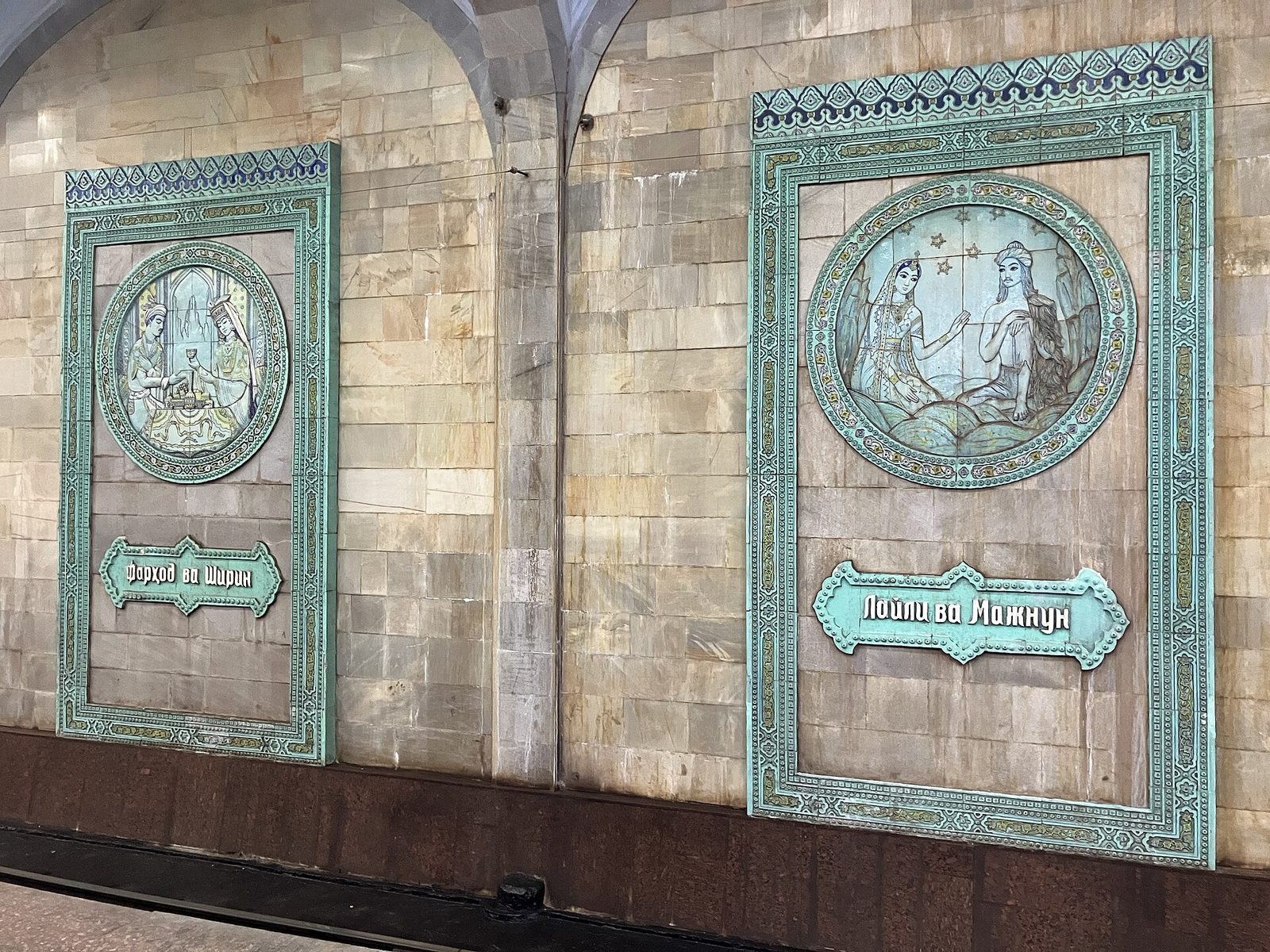
The poet of that court is the one you will meet everywhere in Uzbekistan. Alisher Navoi, born in Herat in 1441, wrote mainly in Chagatai Turkic and helped make it a language of high literature; his Khamsa, five long poems, dates from 1483–1485. He is considered the national poet of Uzbekistan. In Tashkent the opera and ballet theatre, the National Library and a Did you know? A metro designed to ride out a magnitude-9 earthquake The three original lines of the Tashkent Metro were built to withstand an earthquake of magnitude 9.0, and the tunnels lie unusually shallow, only 8–25 m below the street. Read more → station carry his name, and the walls of Alisher Navoi station show scenes from the Khamsa: see our guide to the Tashkent metro.
Science and art grew side by side. In Samarkand, Ulugh Beg’s scholars worked out tables of sines alongside the star catalogue, while the tile-makers perfected cut mosaic and the builders raised double domes on tall drums.
Babur: the Timurid from Andijan
The last great figure of the family came from the Fergana Valley. Zahiriddin Muhammad Did you know? The founder of the Mughal Empire was born in Andijan Babur was born in Andijan on 14 February 1483 and, at twelve, took the throne of Fergana in its capital Akhsikath. Later he founded the Mughal Empire in India; his memoir, the Baburnama, still describes the valley's towns. Read more → was born in Andijan on 14 February 1483, a descendant of Timur on his father’s side, and became ruler of Fergana in 1494, still a boy. In 1526 he founded the Mughal dynasty in India. His descendants built Humayun’s Tomb in Delhi and the Taj Mahal, in which historians trace the influence of Gur-e-Amir.
Babur wrote his memoirs, the ,Did you know? The Baburnama opens in the Fergana Valley with a boy of twelve Babur wrote his memoirs in his native Chagatai Turkic. The book opens: “In the month of Ramadan of the year 899 [1494], in the twelfth year of my age, I became ruler in the country of Farghana.” A Persian translation followed in 1589–90. Read more → in Chagatai Turkic. Among much else he explains why Kesh was called Shahrisabz, “the green city”: in spring its roofs and walls turn green. In Andijan the Bogi Bobur park on Bogishamol hill keeps his memory, with a memorial vault holding earth from his grave in Kabul. See our guide to Andijan and Namangan.
A Timurid route through Uzbekistan
- Tashkent, half a day. Navoi’s metro station and theatre. Then the Uzbekistan's high-speed train: Tashkent to Samarkand in about 2 hours 10 minutes, Tashkent to Bukhara in about 4 hours. Tickets are tied to your passport. Read more → express to Samarkand, about 2 hours 10 minutes: see Tashkent to Samarkand.
- Samarkand, two days. The Did you know? The Registan's sun-carrying lion went on a banknote The Sher-Dor Madrasah (1619–1636) is named for the big cats with the sun on their backs on its portal. The image appeared on the reverse of Uzbekistan's 200-som note of 1997. Read more → and Did you know? Legend says the architect asked the queen for a kiss Legend says the architect of Bibi-Khanym would finish on time only for a kiss from Timur's wife, and Timur punished him. In fact the mosque was Timur's own project; his wife Saray Mulk Khanum built her madrasah across the road. Read more → on the first day; Did you know? Why Shah-i-Zinda means 'the Living King' The necropolis grew around the shrine of Qutham ibn Abbas, a cousin of the Prophet Muhammad. Legend says he did not die in battle but went down a deep well to a garden of paradise, where he lives on. Read more → early on the second, then the observatory, and Gur-e-Amir at dusk. Hour by hour in Samarkand in 1, 2 or 3 days.
- Shahrisabz, one day from Samarkand, about 90 km over a mountain pass: Ak-Saray, Kok Gumbaz, Dorus Siadat and Timur’s crypt.
- Bukhara, two days. Ulugh Beg’s madrasah of 1417 stands a short walk from Poi Kalyan. Half a day out, Gijduvan has his last madrasah and its potters: book Gijduvan: ceramics workshop and lunch. Plan the city with Bukhara in 1, 2 or 3 days.
- ,Did you know? Legend says Fergana's 'heavenly horses' sweated blood Legend says the horses of Dayuan, as Chinese chronicles called Fergana, sweated blood, and around 102 BC Emperor Wu of Han sent an army to bring some home. The 'blood' was most likely a skin parasite that causes tiny bleeding spots. Read more → optional, two days for Babur’s Andijan: see our Fergana Valley guide.
With a guide, three of our private tours follow this story. In the Footsteps of Clavijo spends 8 days in Tashkent, Samarkand, Shahrisabz and Bukhara, in the places the Castilian envoy described. Tiles and Master Builders gives 10 days to the architecture. Turkic Heritage of the Silk Road follows Navoi, Ulugh Beg and Babur through Tashkent, Samarkand, Bukhara and Khiva in 9 days.
In short
- The Timurids ruled from 1370 to 1507; Timur was born near Shahrisabz and made Samarkand his capital.
- Timur’s own buildings: Ak-Saray, Bibi-Khanym, the tombs of his family at Shah-i-Zinda and Gur-e-Amir.
- Ulugh Beg left three madrasahs, an observatory and a catalogue of 1,018 stars.
- Shah Rukh and Gawhar Shad built in Herat and Mashhad; Navoi and Babur wrote in Chagatai Turkic.
- Give the route a week: Tashkent, two days in Samarkand, a day in Shahrisabz, two in Bukhara.