
Places in this article: Khiva · Bukhara
Legends of Khiva: eight stories and where to hear them
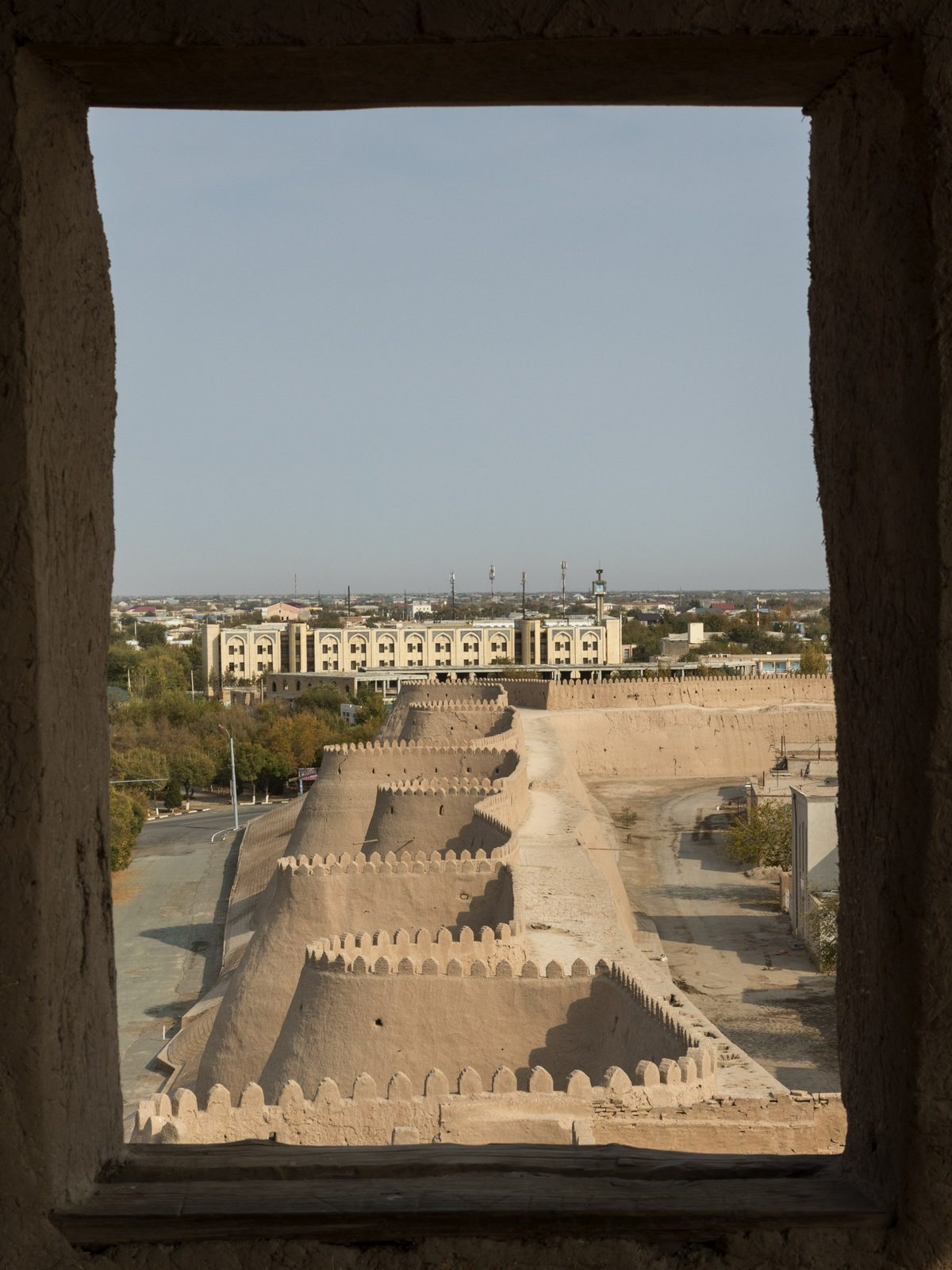
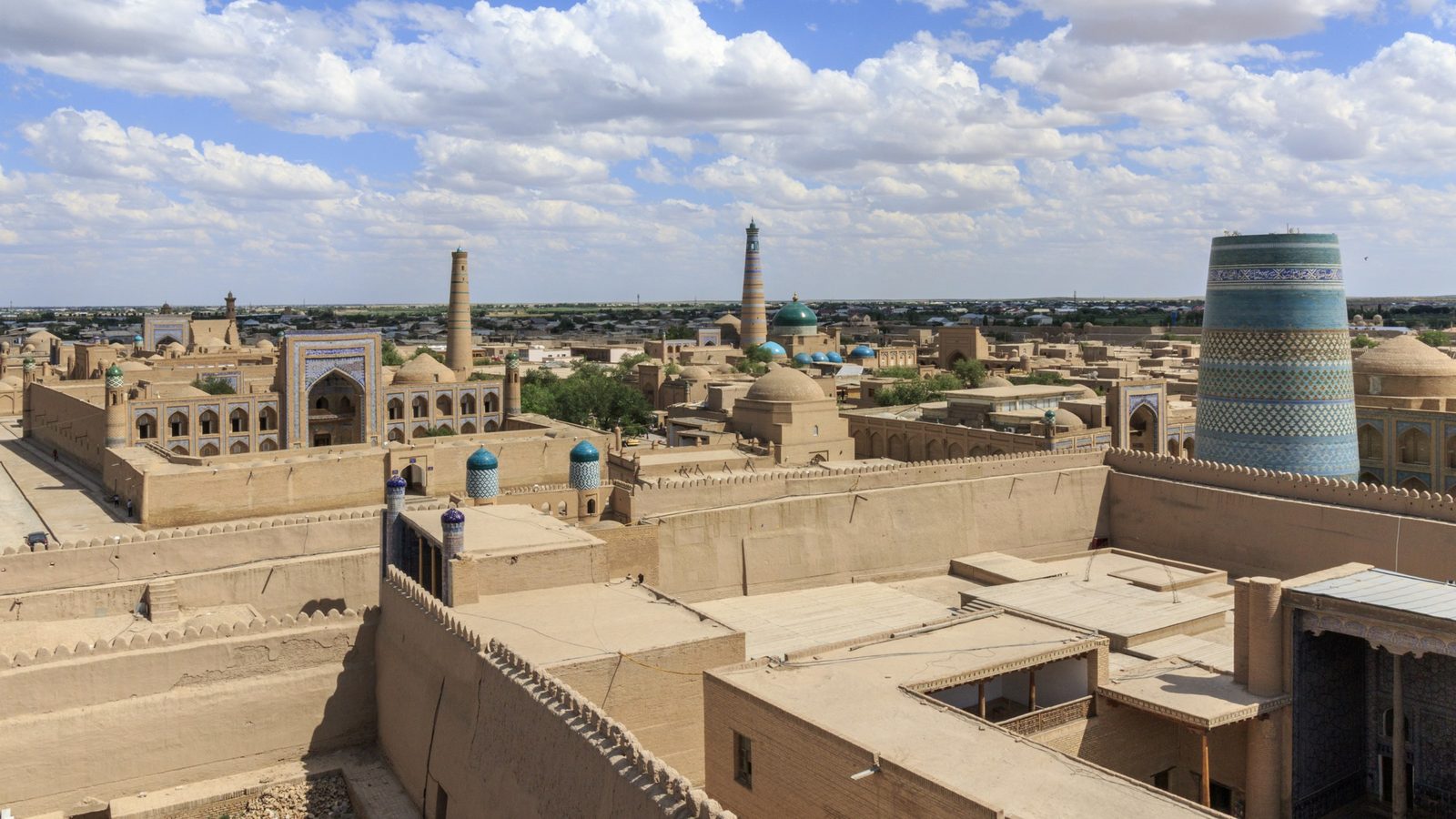
Khiva’s founding story begins with a dream. A man falls asleep in the desert, sees 300 burning torches, and wakes up knowing where to build a town. No archaeologist will sign that, and no Khivan will give it up. Inside the walls of Did you know? People still live inside Khiva's museum city Itchan Kala packs more than 50 historic monuments and about 250 old houses inside clay walls 8–10 m high and 5–6 m thick, and families still live and work in its lanes. Read more → the old town is small enough to cross in twenty minutes, and nearly every corner of it has a story.
Here are the eight we tell our guests most often, as legends, because that is what they are. For each one: the story in a few lines, what is actually known, and where to stand when you hear it. Where we have a full article on the place, we link to it instead of repeating it.
The Kheivak well: Shem’s dream of 300 torches
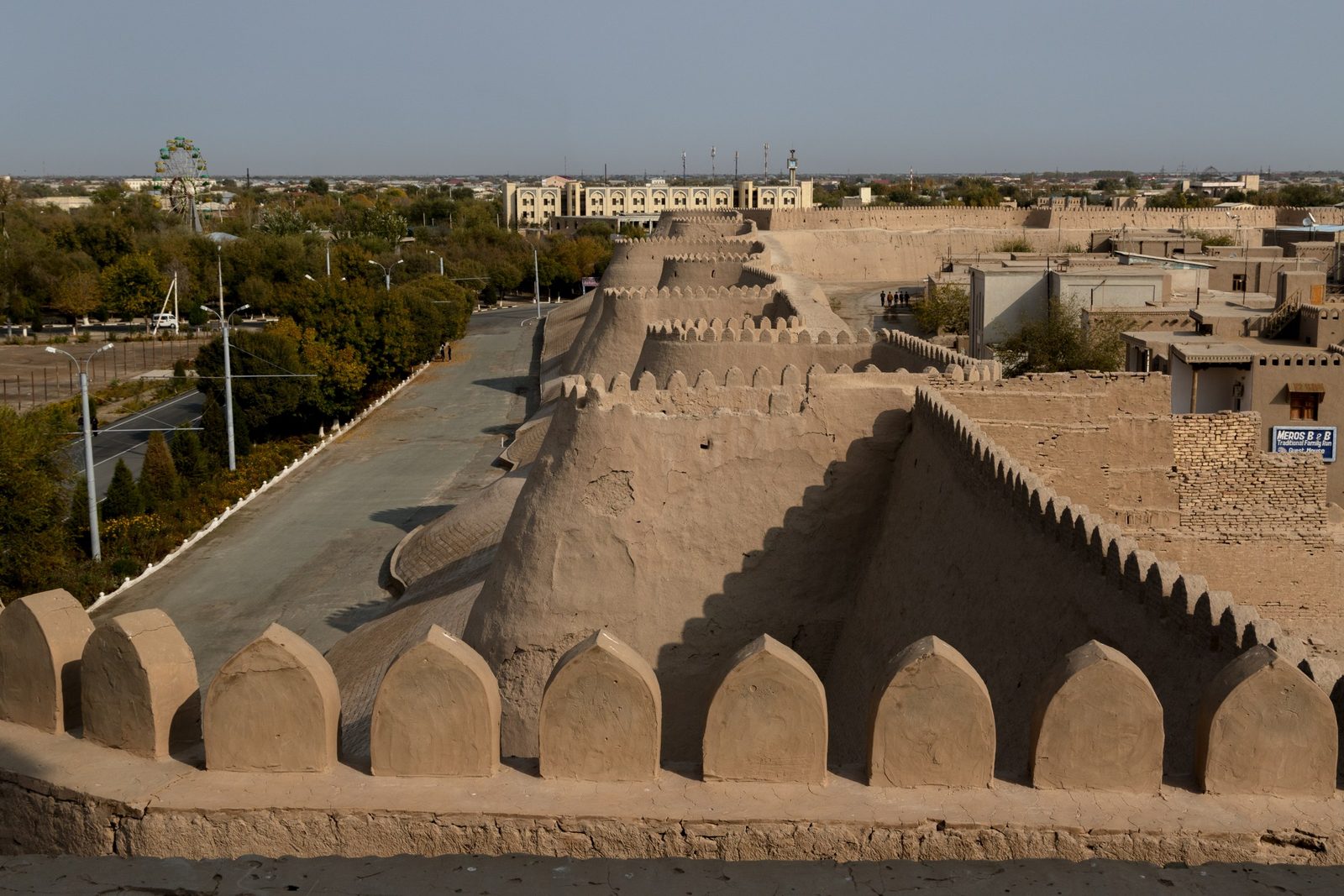
The legend. After the Flood, Shem, son of Noah, known here as Sim, wandered the desert and fell asleep. He dreamt of 300 burning torches. When he woke, he laid out a town where the torches had stood, in the shape of his father’s ark, and dug a well. The water tasted so good that people cried “Khey vakh!”, roughly “What a delight!”, and the well, and then the town, took its name from the cry.
What is known. Where the name Khiva comes from is unknown. The other explanation is drier: it may be a shortened form of Khorezm, the name of the whole region.
Where to hear it. At the Did you know? A town said to have begun with a well dug by Noah's son Legend says Shem, son of Noah, founded Khiva after dreaming of 300 burning torches, and dug the Kheivak well, whose water had a surprising taste. The well can still be seen in Itchan Kala. Read more → itself, in a small courtyard by the north-west wall of Ichan-Kala. The walls, gates and history of the old town are in Ichan-Kala, Khiva.
Kunya-Ark: the saint on the hill
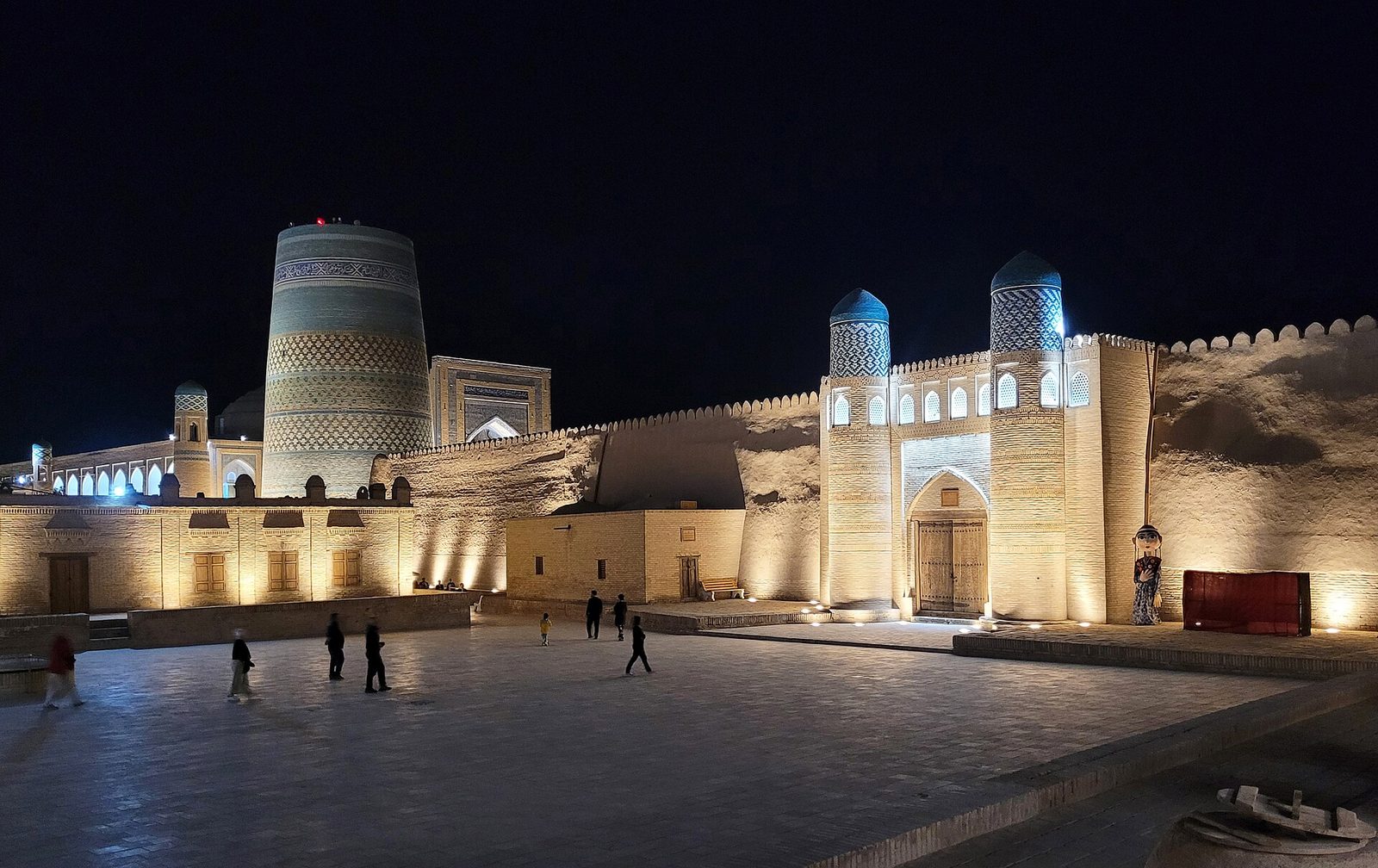
The legend. Long before the khans built their citadel, a holy man called Ak Sheikh Bobo, the White Sheikh, lived in a cell on the highest point of the hill. The tower that rises there still carries his name.
What is known. The ,The old fortress-residence of the khans of Khiva, inside the walls of Itchan Kala. the “old citadel”, was first built in 1686–1688 as the seat of the khans. The cell of Ak Sheikh Bobo later served as a lookout tower and as a store for gunpowder.
Where to hear it. On top of the Ak Sheikh Bobo tower in the last hour of light, when the domes and minarets of the old town turn gold below you.
Kalta-Minor: a tower meant to see Bukhara
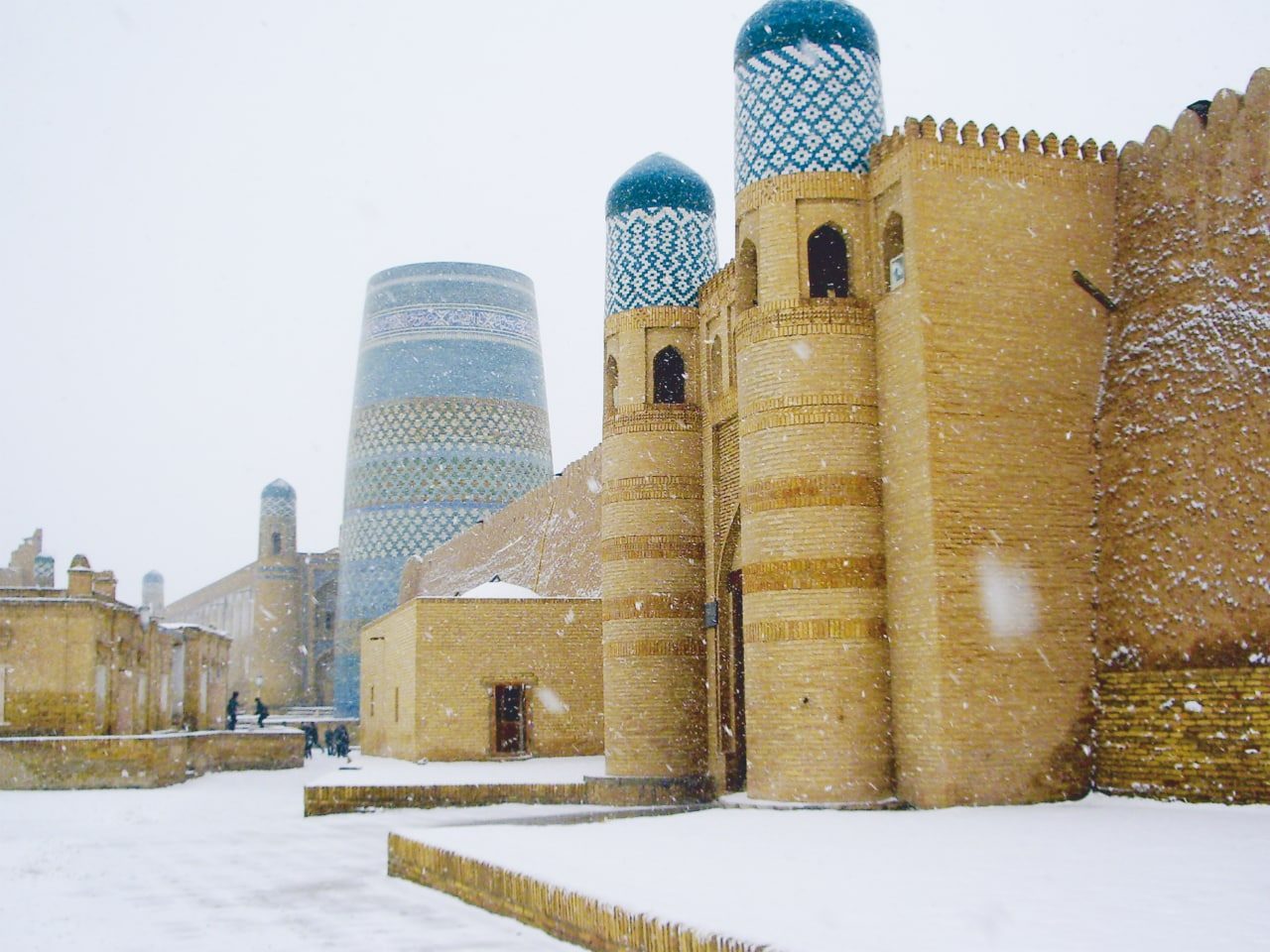
The legend. The khan wanted a minaret so tall that from its top he could see Bukhara, some 450 km away across the desert. His master builder knew that no tower could do that, and slipped out of Khiva before the khan found out. With no one to finish it, the minaret stayed short. Some guides tell a darker version; we prefer this one.
What is known. Muhammad Amin Khan began the minaret in 1852, planning 70 to 80 metres. In 1855 the khan died on a campaign, and the work stopped at 29 metres. It is the only minaret covered entirely in glazed tiles.
Where to hear it. Just inside the West Gate, in front of the wide turquoise drum, ideally in the golden hour. The full story is in Kalta-Minor and Islam Khoja.
The Juma Mosque: columns from a lost capital
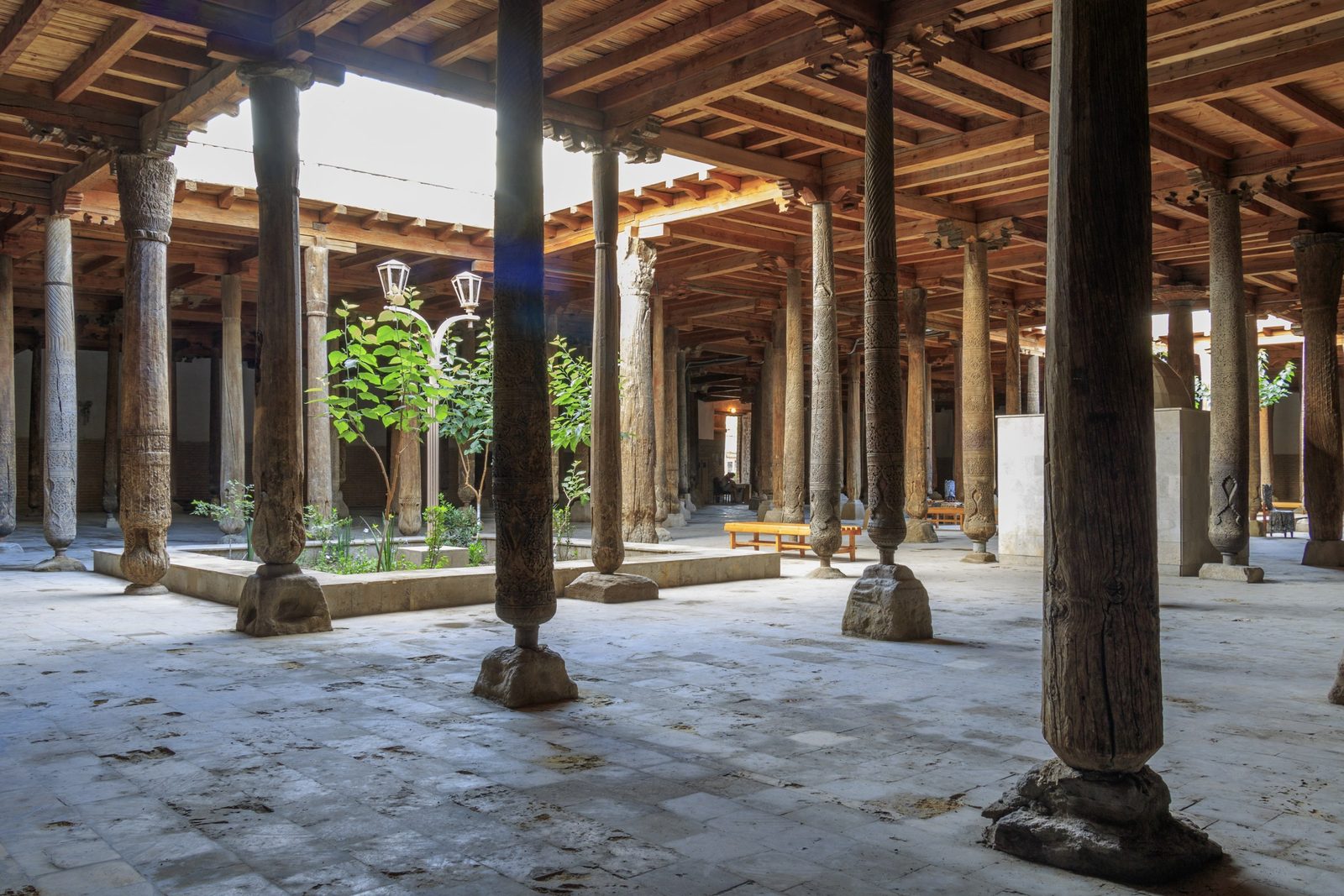
The story. Khiva says that the oldest columns of its Friday mosque came from Kath, the old capital of Khorezm that the waters of the Amu Darya swallowed. When the city was lost, its carved wood was saved and carried here.
What is known. The building you see dates from the 18th century; its south door carries the date 1788. Of its 212 columns, 21 date from the 10th–12th centuries, and four of them carry Kufic inscriptions naming the man who gave them. That they came from Kath is a possibility, not a record.
Where to hear it. In the middle of the column hall around noon, when light falls through the openings in the roof. Ask your guide to point out the four old columns with Kufic lettering.
Pahlavan Mahmud: the poet no one could throw
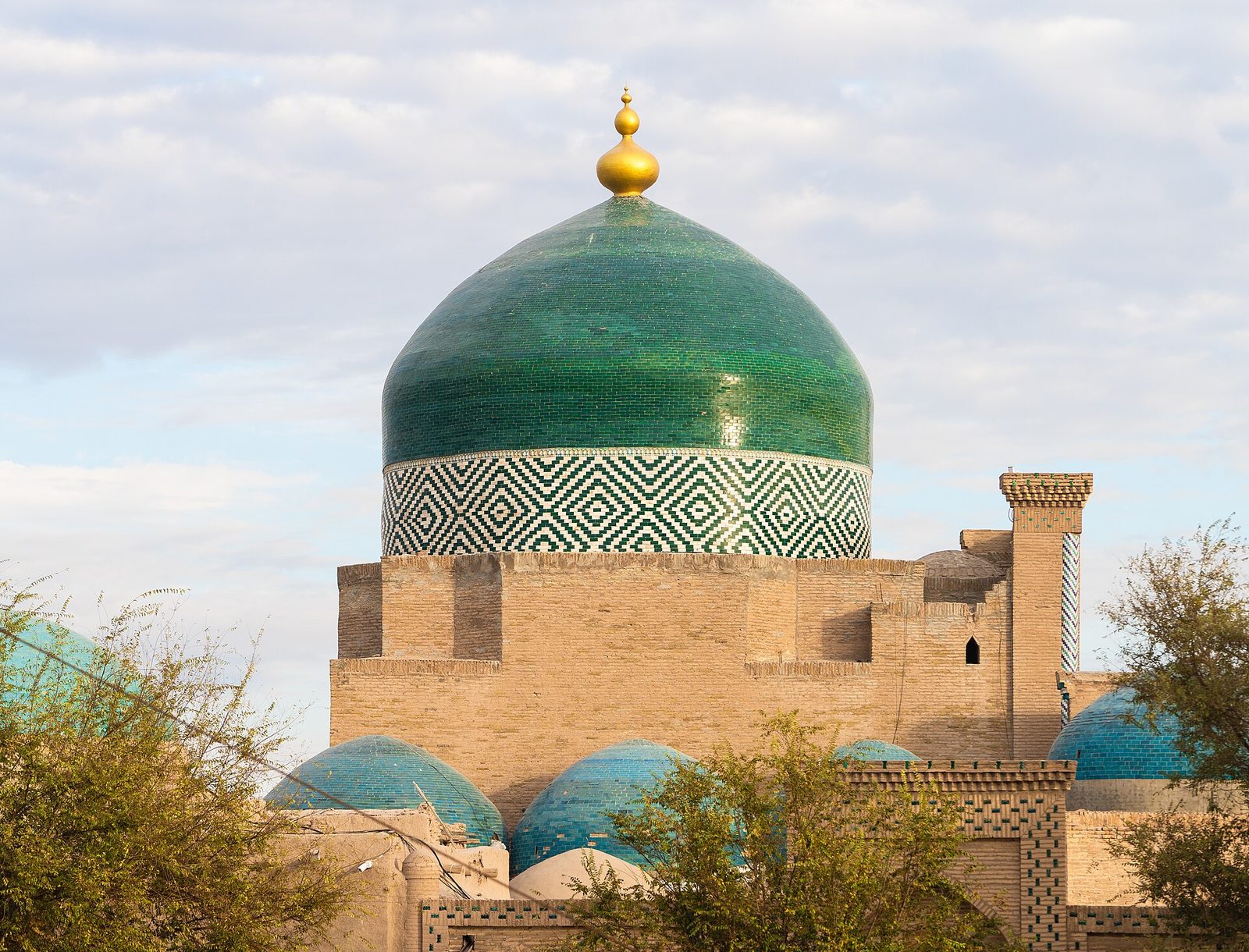
The legend. Did you know? Legend: a wrestler freed captives with a single cowhide Legend says Pahlavan Mahmud won a bout in India and asked to free as many fellow Khorezmians as would fit in a cowhide. He cut it into one long thin strip and encircled them all. The real Mahmud, a poet and wrestler of around 1300, is Khiva's patron saint. Read more → was a wrestler who never lost a bout, a healer and a poet. Once, the story goes, he won freedom for a whole crowd of captive countrymen with a single cowhide; our guides tell that one in Ichan-Kala. Wrestlers in Iran still invoke him before they fight, and visitors to his tomb pray there and drink its holy water.
What is known. He came from a family of craftsmen and died in 1322. By his own wish he was buried in his workshop, and the shrine grew around the grave. His quatrains are written among the ornaments inside, and several khans chose to be buried beside him.
Where to hear it. In the courtyard of the mausoleum, by the well. It is a place of reverence: cover shoulders and knees, women bring a scarf, and keep your voice down.
Islam Khoja: a calendar in tiles
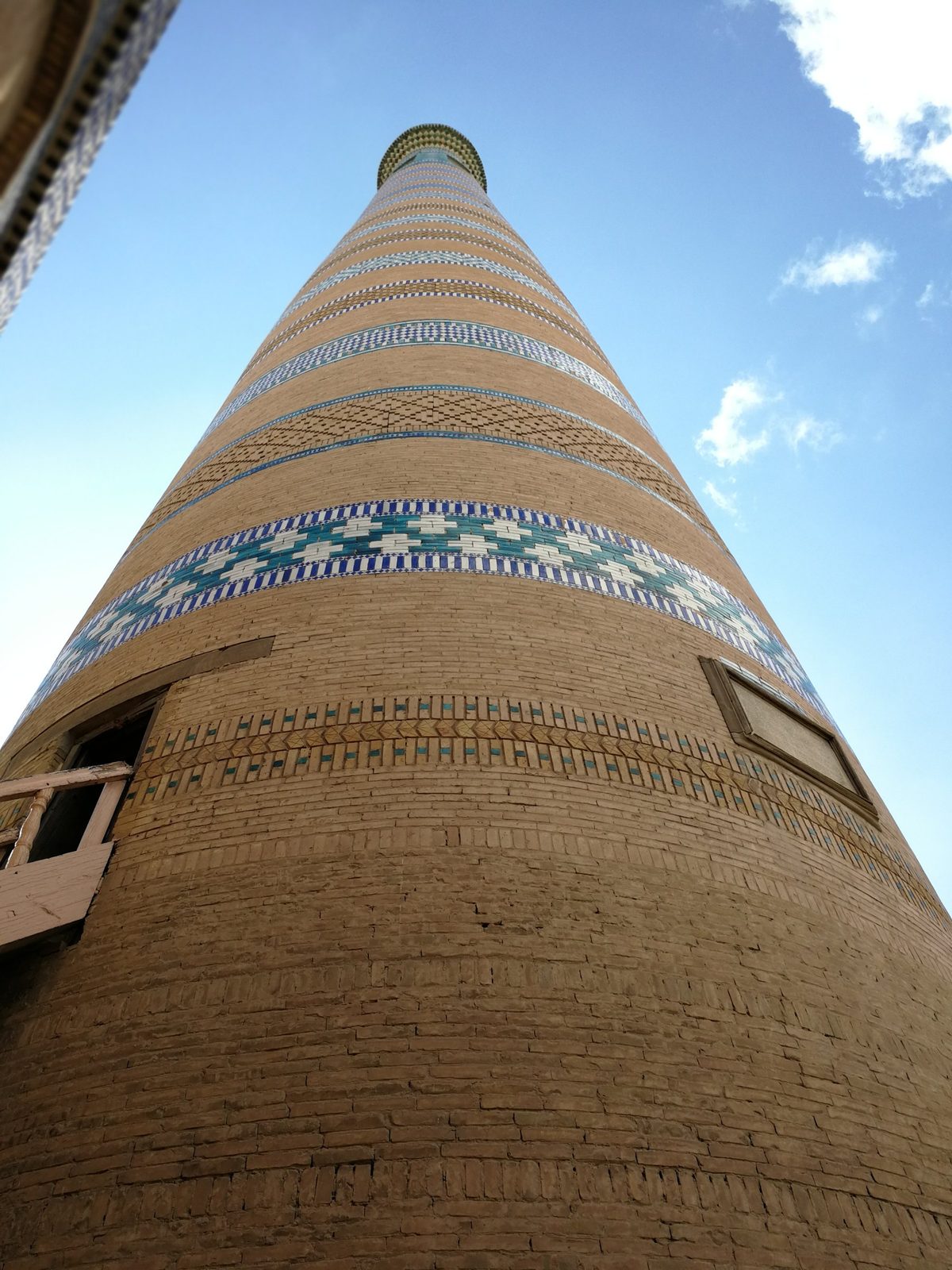
The legend. Count the bands of blue, white and turquoise tiles that ring the tallest minaret in Khiva. Guides say they stand for the turning of the seasons and the months, a calendar written in clay around the tower.
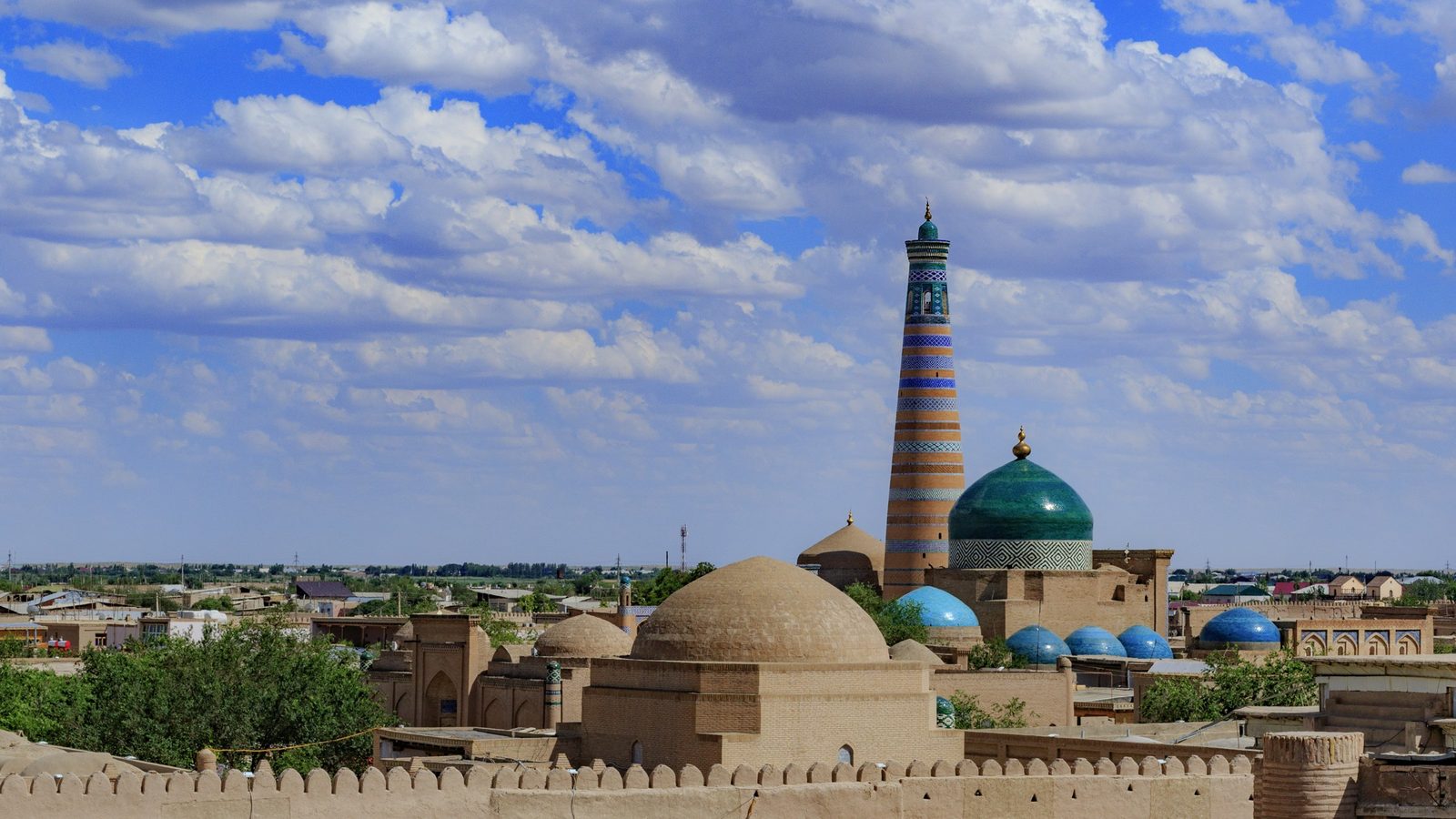
What is known. The minaret and its An Islamic college: student cells and classrooms around a courtyard behind a grand portal. In the old towns many now house museums and craft workshops. were built in 1908–1910 for ,Did you know? Khiva's tallest minaret is barely a century old The Islam Khoja Minaret was begun in 1908, near the very end of the khans' era. At 56.6 m it is one of the tallest in Central Asia; a spiral stair of 175 steps leads up to its windowed top. Read more → the first vizier of Khiva, who also paid for a hospital, a post office and secular schools. At 56.6 metres it is the tallest minaret in the city.
Where to hear it. At the foot of the minaret, then from the top, if it is open for climbing that day: the windows of the lantern are the highest viewpoint in Khiva.
Al-Khwarizmi: Khiva’s claim on algebra
The tradition. Khiva counts the great mathematician Did you know? The word “algorithm” comes from a scholar of Khorezm Muhammad al-Khwarizmi, born in Khorezm around 780, worked at the House of Wisdom in Baghdad. The Latin form of his name gave us “algorithm”, and “algebra” comes from al-jabr in the title of his book. A statue of him stands in Khiva. Read more → as a son of the city, and his statue stands just outside the West Gate, where every visitor passes.
What is known. Muhammad ibn Musa al-Khwarizmi lived from about 780 to about 850. His name means “from Khwarazm”, the region around Khiva; the exact town is unknown. In Baghdad he worked at the House of Wisdom, and two words came from him: algebra, from the title of his book al-Jabr, and algorithm, from the Latin form of his name, Algoritmi.
Where to hear it. Beside the statue by the Ota-Darvoza, the West Gate, before you step inside the walls. Every search engine runs on algorithms, a word that still carries his name.
Ayaz-Kala: a fortress for a princess
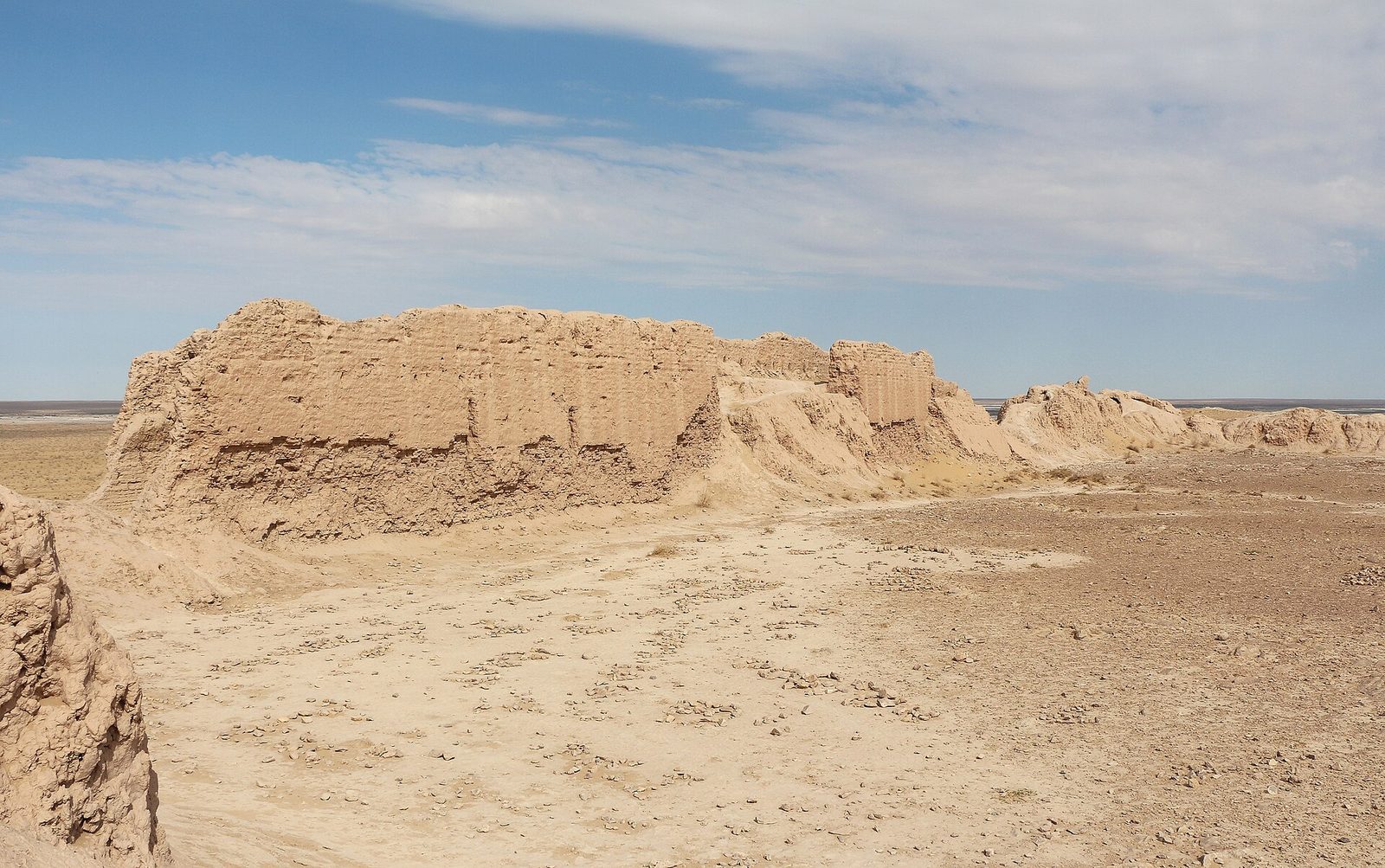
The legend. A ruler of Khorezm promised his daughter to whoever could build a fortress strong enough to guard the frontier. A shepherd named Ayaz took on the task. In one telling the ruler broke his word, and the fortress was left unfinished. In another, Ayaz, a hero of humble birth, wins the hand of the princess who lived with her companions in the fortress of Kyrk-Kyz nearby.
What is known. Did you know? Legend says a shepherd named Ayaz built Ayaz-Kala for a bride Legend says a Khorezm king promised his daughter to whoever built an unassailable fortress; the shepherd Ayaz began, the king broke his word, and the walls stayed unfinished. In fact the oldest fort here dates to the 4th–3rd century BC. Read more → is three fortresses on and around a hill above the .The Kyzylkum, or Red Sands: the desert between the Amu Darya and Syr Darya rivers that the road and the railway cross on the way to Khiva. The oldest dates from the end of the 4th or the start of the 3rd century BC, part of a chain of forts that guarded the farmland of ancient Khorezm from the nomads.
Where to hear it. On top of the hill at sunset, with the desert all around. It lies across the Amu Darya in Karakalpakstan, about 70 km from Urgench, so you need a car; a yurt camp stands nearby. See Khiva in 1 or 2 days.
Hearing the legends on the spot: our route and tips
- Route: start by al-Khwarizmi outside the West Gate, walk in to the Did you know? A 14-metre-wide base for a tower that stopped at 29 m Kalta Minor was begun in 1852 and meant to reach 70–80 m, but work halted in 1855 at about 29 m when its khan died. It is said to be the only minaret covered entirely in glazed tiles. Read more → and the Kheivak well, then through the Kunya-Ark, along the main street to the ,Did you know? Khiva's Juma Mosque stands on 212 wooden columns Recorded as early as the 10th century and rebuilt in 1788, the Juma Mosque has no portal and no domes: its flat roof rests on 212 carved columns in 17 rows, and some of them are older than the building itself. Read more → and south to Pahlavan Mahmud and Islam Khoja. Come back to the Kunya-Ark for sunset on the Ak Sheikh Bobo tower. Ayaz-Kala is a separate half day by car.
- How long: one full day inside the walls; the old town is about 650 by 400 metres, so walking is never the problem.
- Tickets and hours: the lanes are free and never close. The museums and monuments are covered by one combined ticket from the office by the West Gate; ask there what it includes, including the minaret climb. Cards for each monument are in Bukhara and Khiva sights, tickets and hours.
- When: early morning for empty lanes, noon in the Juma Mosque, the last hour of light at the Kalta-Minor and on the watchtower.
- Getting there: the fast train from Tashkent reaches Khiva in the afternoon, every day except Sunday; the station is a half-hour walk from the walls. See trains in Uzbekistan.
With one of our guides, these stories are part of the Khiva walking tour; all our routes are under Khiva tours, and more about the city is on the Khiva page. For the evening, take a taxi to Arda Khiva. Coming from Bukhara? Read the legends of Bukhara too.
In short
- Khiva’s legends start at the beginning: Shem, 300 torches and a well that gave the town its name.
- The Kalta-Minor stayed short because its khan died in 1855; the view of Bukhara is a legend.
- Some stories are possible but unproven, like the Juma Mosque columns from Kath; others, like al-Khwarizmi’s roots in Khwarazm, rest on his very name.
- Hear Pahlavan Mahmud’s story by his tomb and the Ak Sheikh Bobo story on top of his tower at sunset.
- One full day covers the legends inside the walls; Ayaz-Kala and its princess need a half day by car.
© Photos
- Pahlavan Mahmud Mausoleum, Khiva — Panpanchik / Wikimedia Commons · CC BY-SA 4.0