Programme and details
Tashkent · Samarkand · Bukhara · Termez as an option · 7 Days / 6 Nights · Private Tour
Heritage of the Great Scholars
Tashkent – Samarkand – Khartang – Samarkand – Bukhara – Tashkent, with an optional extension to Termez
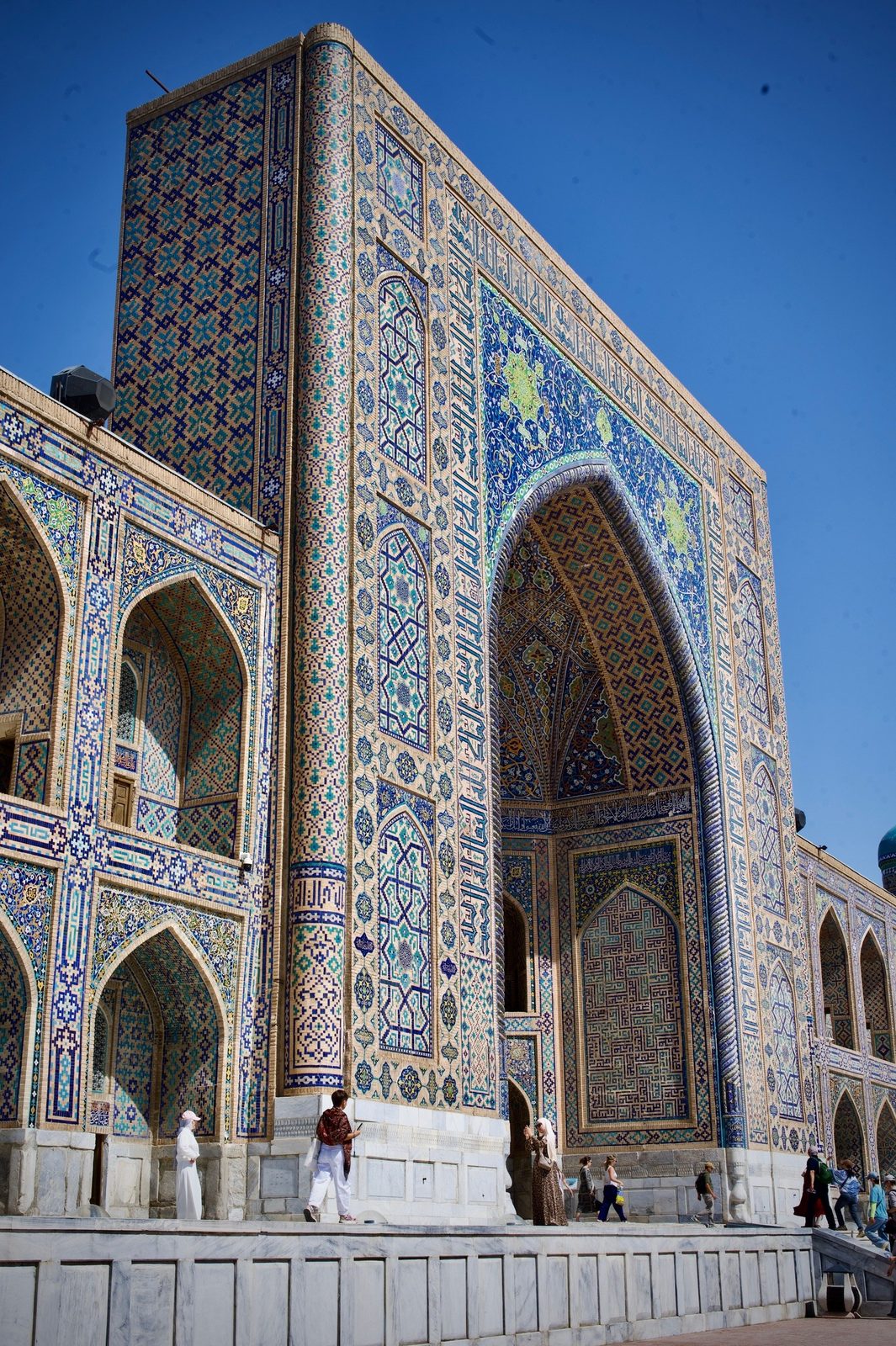
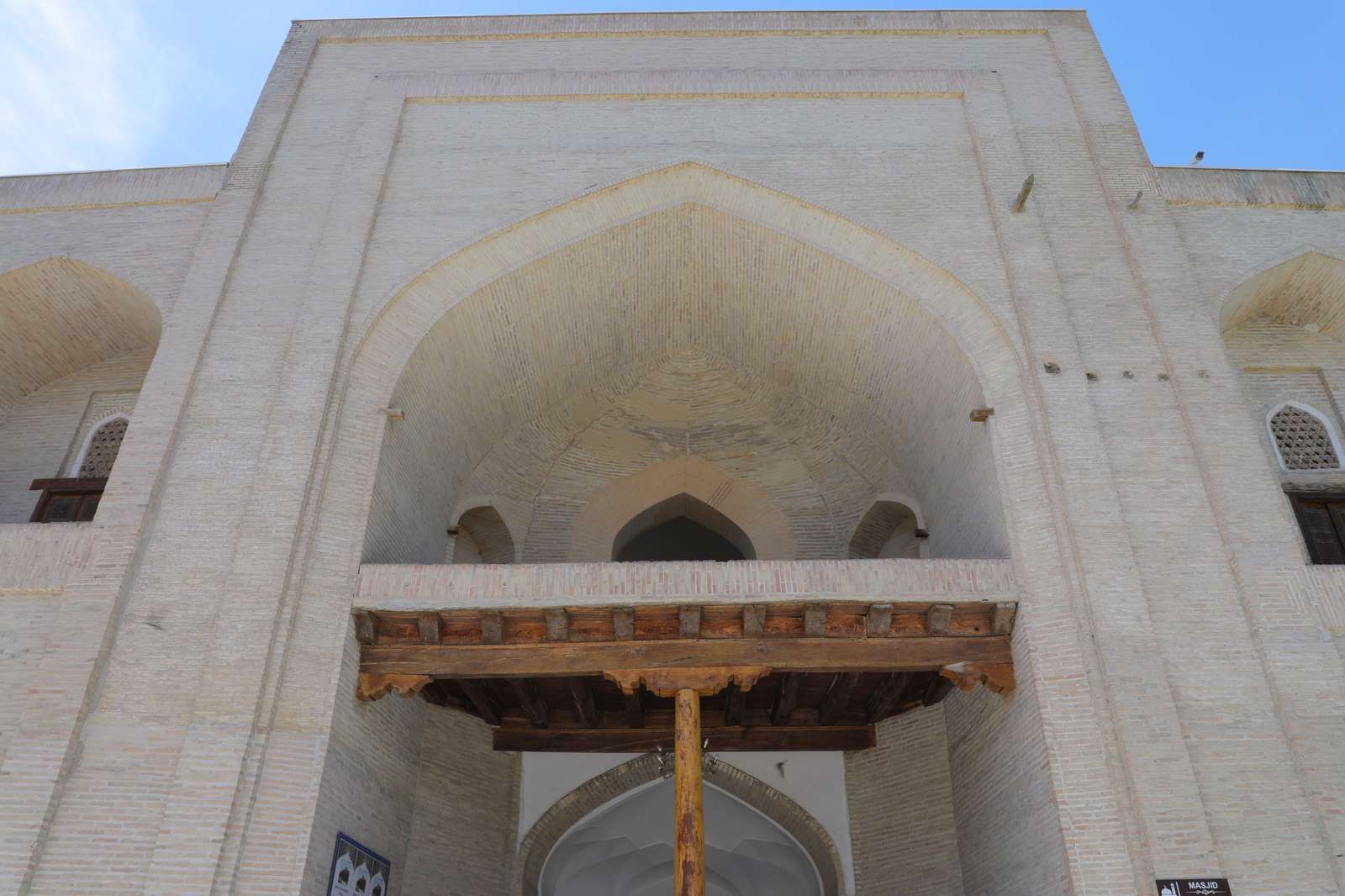
Their names are places. Al-Bukhari means “from Bukhara”, at-Tirmidhi “from Termez”, al-Khwarizmi “from Khwarazm”. In seven days we follow the great scholars of Central Asia through the cities that gave them their names and the places where their heritage is kept: The religious heart of old Tashkent: madrasahs, a Friday mosque and mausoleums. Right next to it stands the new Center of Islamic Civilization, opened in 2026. Read more → and the Center of Islamic Civilization in Tashkent, the rebuilt Imam al-Bukhari complex near Samarkand and the An Islamic college: student cells and classrooms around a courtyard behind a grand portal. In the old towns many now house museums and craft workshops. where Ulugh Beg taught astronomy, the Samanid city of Bukhara and the complex of Bahauddin Naqshband. Two more days add Termez and the mausoleum of at-Tirmidhi. We travel as visitors to history and heritage, with time for prayer in every day.
| Duration | 7 days / 6 nights, or 9 days / 8 nights with Termez |
| Price | on request |
| Format | Private, or a small group on your dates |
| Where | Tashkent, Samarkand and Bukhara; Termez as an option |
| Getting around | Uzbekistan's high-speed train: Tashkent to Samarkand in about 2 hours 10 minutes, Tashkent to Bukhara in about 4 hours. Tickets are tied to your passport. Read more → high-speed trains Tashkent – Samarkand – Bukhara – Tashkent; a car with driver for the stations and the trips out of town; with Termez, flights Tashkent – Termez – Tashkent |
| Guide | A guide who speaks your language; it is included in the price |
| Best time | March–May and September–November |
Ideal for travellers who know the names of al-Bukhari, at-Tirmidhi and al-Khwarizmi and want to see where they came from, for lovers of the history of science and Islamic heritage, and for guests from Malaysia and Indonesia, who reach Tashkent by a nonstop flight from Kuala Lumpur.
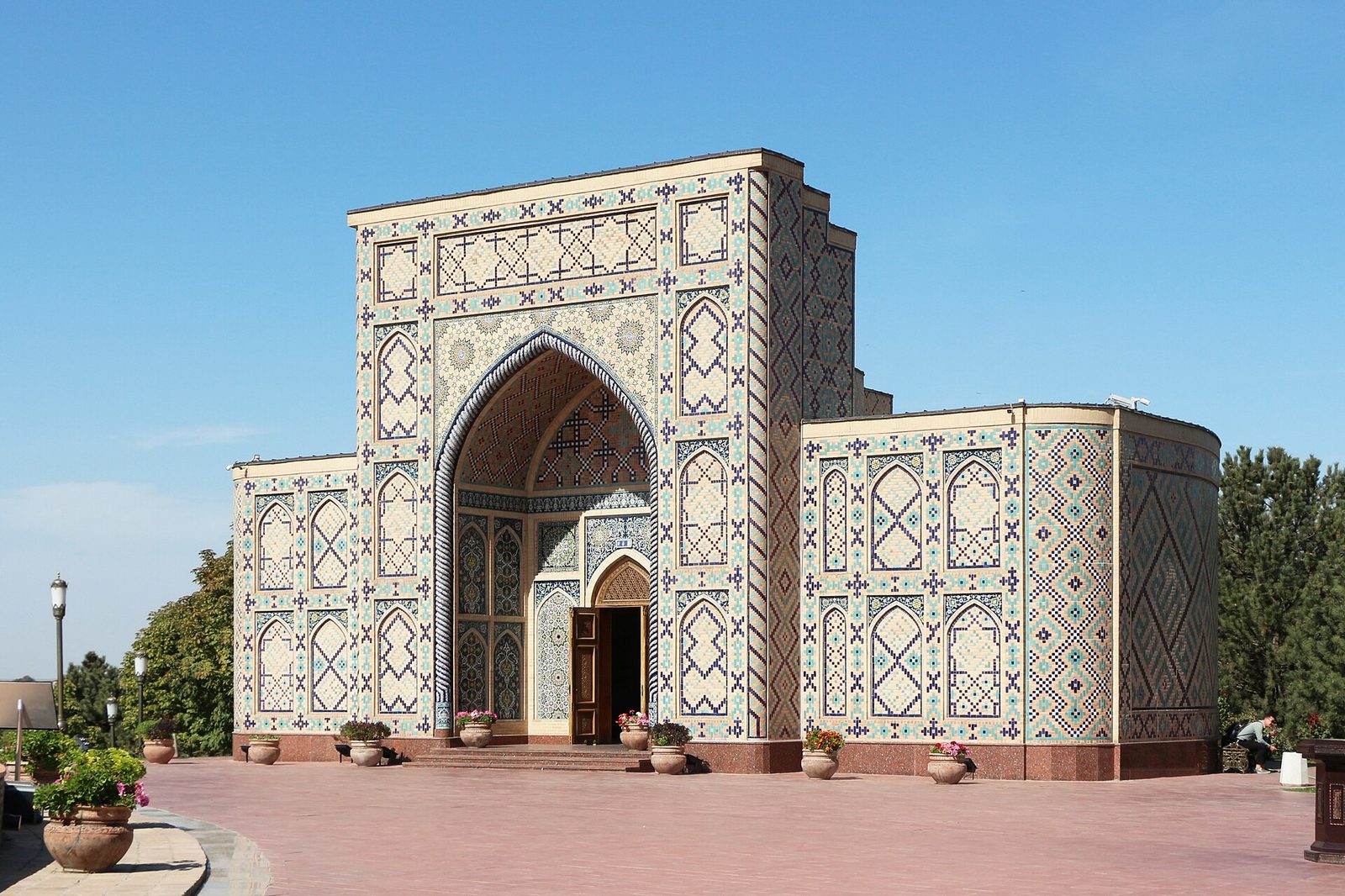
Ulugh Beg’s observatory — the marble arc of the great sextant, where astronomers finished a catalogue of 1,018 stars in 1437.
Bahauddin Naqshband — the complex of the Sufi master near Bukhara, part of a UNESCO World Heritage property since 2023.
Itinerary
Day by Day
Day 1 · Tashkent — Arrival, Hazrati Imam and the Center of Islamic Civilization
Our driver meets you at Tashkent airport and takes you to your hotel. Flights from Kuala Lumpur land at different hours, so we plan the first day around yours.
In the afternoon your guide takes you to Hazrati Imam, the square named after Abu Bakr ,Did you know? Tashkent's patron saint was nicknamed “the locksmith” Abu Bakr Kaffal Shashi, born in Shash, old Tashkent, in 903–904 and died in 976, was a jurist and poet and the son of a locksmith: “kaffal” means locksmith. His mausoleum at Hazrati Imam dates from 1541–1542. Read more → a scholar of Tashkent who died in 976. His mausoleum was built in 1541–42, and around it stand the Did you know? A mausoleum built for a khan who was buried in another city Barak-Khan Madrasah was built in 1531–32. One of its two mausoleums was meant for Barak Khan himself, but he was buried in Samarkand, so the tomb is still called the Nameless Mausoleum. Its cell doors were inlaid with ivory. Read more → and Did you know? Legend says Muyi Muborak keeps a hair of the Prophet Muyi Muborak means “the blessed hair”: by tradition, a hair of the Prophet Muhammad is kept in this building on Hazrati Imam square. That is a matter of faith; what is certain is that for years it housed the library with the Uthman Quran. Read more → madrasahs of the 16th century and the Friday mosque of Hazrati Imam.
Across the square is the Center of Islamic Civilization, which opened in March 2026. In its Hall of Honor, touch panels bring up more than a hundred scholars and thinkers of the region; the halls that follow lead from Sogdiana to the Timurids, and under the 65-metre dome lies the ,Did you know? Legend: Caliph Uthman's own Quran is kept in Tashkent Tradition holds that this huge parchment Quran is the personal copy of Caliph Uthman, and one story says Timur brought it to Samarkand. Radiocarbon dating gives 775–995, so it is more likely an early copy, yet still one of the oldest. Read more → a Qur’an of the 8th or 9th century. Allow two to three hours. The centre is open until 22:00, so on a late arrival we come in the evening and see the façade lit up.
Good to know: Tickets are sold for time slots, and we book yours in advance. The Mushaf itself may not be photographed. Cover shoulders and knees; women bring a scarf. More in our article on the Center of Islamic Civilization.
Overnight in Tashkent
Day 2 · Tashkent – Samarkand — The Afrosiyob and Ulugh Beg’s madrasah
In the morning the Afrosiyob high-speed train takes you to Samarkand in about 2 h 10 min. The station is more than 6 km from the centre, and your car is waiting.
In the afternoon, the Registan. Its oldest building is the madrasah of Ulugh Beg, built in 1417–1420, where astronomy was the most important subject, taught alongside mathematics, geometry and theology. The ruler chose the teachers himself, the mathematician Jamshid al-Kashi and the astronomer Qadi Zada al-Rumi among them, and lectured in person.
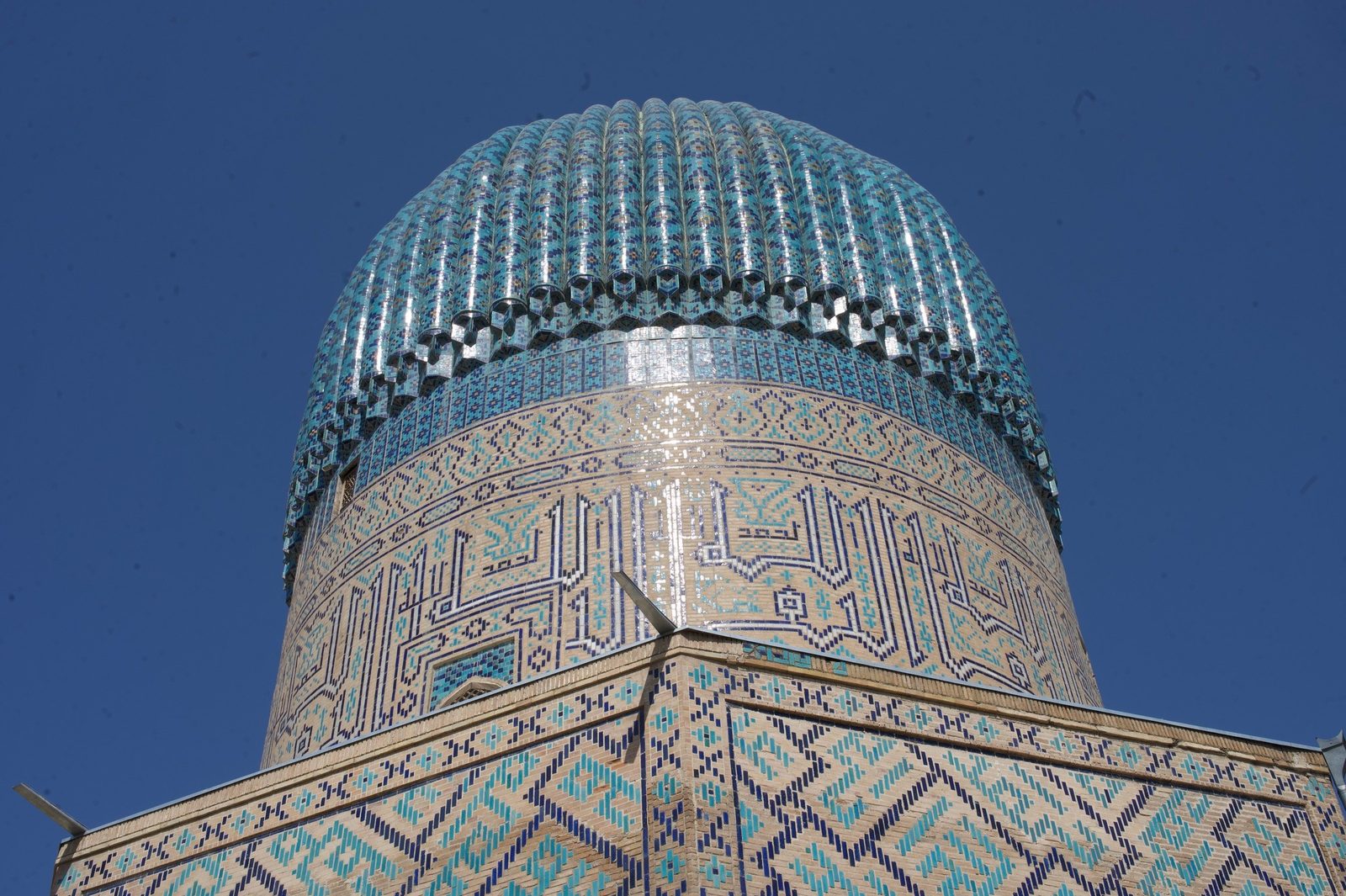
At the end of the day, ,Did you know? Timur's tombstone went to Persia and came back The dark-green jade slab on Timur's grave in Gur-e-Amir was carried off by Nader Shah in 1740. It broke, and on his advisers' urging he sent it back to Samarkand. Read more → the mausoleum completed in 1404, where Ulugh Beg lies a few steps from his grandfather .Amir Timur (Tamerlane, 1336–1405), founder of the Timurid empire, which had its capital in Samarkand. Born near Shahrisabz.
Good to know: Afrosiyob seats sell out, so we book the tickets as soon as your dates are fixed; we need the passport details of every traveller. After dark, if you wish, we take you to see the Registan lit up.
Overnight in Samarkand
Day 3 · Khartang — The Imam al-Bukhari complex
In the morning we drive 25 km to the village of Khartang. Muhammad ibn Ismail al-Bukhari was born in Bukhara in 810 and spent years travelling the cities of the Islamic world to collect hadith. His Sahih, about 7,000 hadith compiled over some sixteen years, is regarded by Sunni Muslims as the most authentic collection. He died here in 870 and was buried in Khartang.
A small mausoleum stood over the grave from the 16th century, and a memorial was built in 1998. From 2021 the site was rebuilt on a much larger scale and reopened in March 2026: 45 hectares, four minarets of 75 metres, a mosque for 10,000 people, an aivan of 154 columns and a museum of nine pavilions. The museum tells the life of Imam al-Bukhari and how hadith were collected and written down. Allow three to four hours.
In the afternoon, back in Samarkand, rest, or walk to Samarkand's main bazaar, right next to Bibi-Khanym: Samarkand bread, dried fruit, nuts and halva. Read more → next to the .Did you know? 95 elephants hauled stone for Timur's great mosque Bibi-Khanym, begun in 1399 after Timur took Delhi, was the largest mosque of his empire. Some 200 stonecutters worked on site and 95 elephants brought from India hauled the loads; the courtyard was meant to hold 10,000 people. Read more →
Good to know: On Friday the midday prayer fills the courtyard, so we plan the visit around it, or for that hour, if you wish to pray Juma here. Do not photograph people at prayer. More in our guide to ziyarat in Uzbekistan.
Overnight in Samarkand
Day 4 · Samarkand — Shah-i-Zinda and Ulugh Beg’s observatory
Early in the morning, before the tour groups, .Did you know? Why Shah-i-Zinda means 'the Living King' The necropolis grew around the shrine of Qutham ibn Abbas, a cousin of the Prophet Muhammad. Legend says he did not die in battle but went down a deep well to a garden of paradise, where he lives on. Read more → By tradition it holds the grave of Qusam ibn Abbas, a cousin of the Prophet Muhammad, who came to Samarkand in the 7th century. Around his tomb grew a street of mausoleums, most of them of the 14th and 15th centuries, and Ulugh Beg added the entrance gateway in 1434–35.
Then the observatory on the Kuhak hill. Walk down a few steps into a trench cut into the rock, and you are standing on the marble arc of the great sextant, with a radius of about 40 metres: one degree took up some 70 centimetres. Here Ulugh Beg’s astronomers measured the positions of the stars for the ,Did you know? A former teacher found the lost observatory in 1908 After Ulugh Beg's death his observatory was taken apart for its bricks and even its site was forgotten. Vasily Vyatkin, keeper of Samarkand's monuments, traced it through a 17th-century land deed and in 1908 dug up the great marble arc. Read more → a book of astronomical tables finished in 1437, with a catalogue of 1,018 stars. Six centuries earlier, in Baghdad, al-Khwarizmi compiled his own zij, and his book al-Jabr gave algebra its name; your guide tells how this line of science runs from him to Samarkand.
Good to know: Shah-i-Zinda is a revered shrine: cover shoulders and knees, women bring a scarf, and speak quietly. Before you go, read our guides to Shah-i-Zinda and Ulugh Beg’s observatory.
Overnight in Samarkand
Day 5 · Samarkand – Bukhara — The city of al-Bukhari and the Samanid Mausoleum
In the morning, the Afrosiyob to Bukhara, under 2 hours. Bukhara’s station is in Kagan, about 12 km from the old town; your driver meets you there.
In the late afternoon, the .Did you know? Buried in mud, this tomb escaped Genghis Khan The 10th-century Samanid Mausoleum, one of the oldest monuments of Islamic Central Asia, was covered by flood mud and sand before the Mongols came in 1220. Hidden for centuries, its brick lacework survived intact. Read more → The Samanids ruled from Bukhara in the 9th and 10th centuries, and their tomb dates from the time of ,Did you know? Legend says Ismail Samani answered requests after death People long believed that Ismail Samani, the ruler buried in the Samanid Mausoleum, still helped his people: a written request slipped through an opening on one side would be answered by the next day. Notes were left here into the 20th century. Read more → who began his reign in 892, the year at-Tirmidhi died. It is a cube of baked brick about ten metres a side, whose patterns shift as the sun moves.
At sunset, :Did you know? Legend: the minaret's foundation was laid with camel milk Legend says master Bako laid the foundations of the Kalyan minaret with ganch plaster mixed with camel milk, then vanished for two years to let them harden, and only then built the tower. Locals still show a grave they say is his. Read more → the Did you know? Diggers went 13 m down and never found its base The Kalyan Minaret of 1127 rises about 46 m, and an excavation reached 13 m without finding the bottom of its foundations. Genghis Khan reportedly ordered it spared. Read more → of 1127 between the Kalyan mosque and the Did you know? A madrasah still teaching after almost 500 years Mir-i-Arab, built in the 1530s opposite the Kalyan Mosque, was one of only three Islamic schools that kept working through the Soviet period, and it still trains students today. Read more → madrasah. When al-Bukhari left his home town in the 9th century, none of it stood yet; the minaret is the landmark of the Bukhara that grew in the centuries after him.
Good to know: More in our articles on the Samanid Mausoleum and Poi Kalyan.
Overnight in Bukhara
Day 6 · Bukhara – Qasri Orifon – Bukhara — Bahauddin Naqshband
In the morning, the complex of Bahauddin Naqshband in Qasri Orifon, about 12 km from the city. Bahauddin Naqshband (1318–1389) was born near Bukhara and gave his name to the Naqshbandi Sufi order. In 1544 Abdulaziz Khan built a tomb over his grave, and the complex kept growing for almost four centuries: a khanqah for Sufi gatherings, mosques, a minaret, a small madrasah and a museum about his life. Since 2023 it has been part of the UNESCO Silk Roads: Zarafshan-Karakum Corridor.
In the afternoon, the old town: ,The fortress-residence of the rulers of Bukhara on a high artificial hill: the oldest structure in the city. Read more → the fortress of the rulers of Bukhara, and the square of Did you know? Bukhara's ponds were once its water supply Pools like Lyabi-Hauz, dug around 1620 and 46 × 36 m, were the city's main source of water. Most were filled in during the 1920s–30s because they spread disease; Lyabi-Hauz survived. Read more → around its pond.
Good to know: On Friday the midday prayer fills the courtyard of the complex, and we plan the day around it. In the evening we can arrange dinner as guests of a local family (on request); tell us about your food requirements. The seven Sufi masters buried around Bukhara are on our two-day Seven Saints of Bukhara tour.
Overnight in Bukhara
Day 7 · Bukhara – Tashkent — Home or onward
A free morning in the old town, then the Afrosiyob back to Tashkent, a little over 4 hours, and the transfer to the airport. Flights to Kuala Lumpur leave late in the evening on several days of the week, so the day fits your flight home.
Before the trip, read our article on Uzbekistan tours from Malaysia and Indonesia: flights, Entry rules depend on your passport. Once you are here, each stay must be registered within three days, and hotels do it for you; customs and registration rules are in our guide. Read more →-free entry, the 2027 holidays and halal food.
Extension · Termez, 2 more days — At-Tirmidhi and Al-Hakim at-Termezi
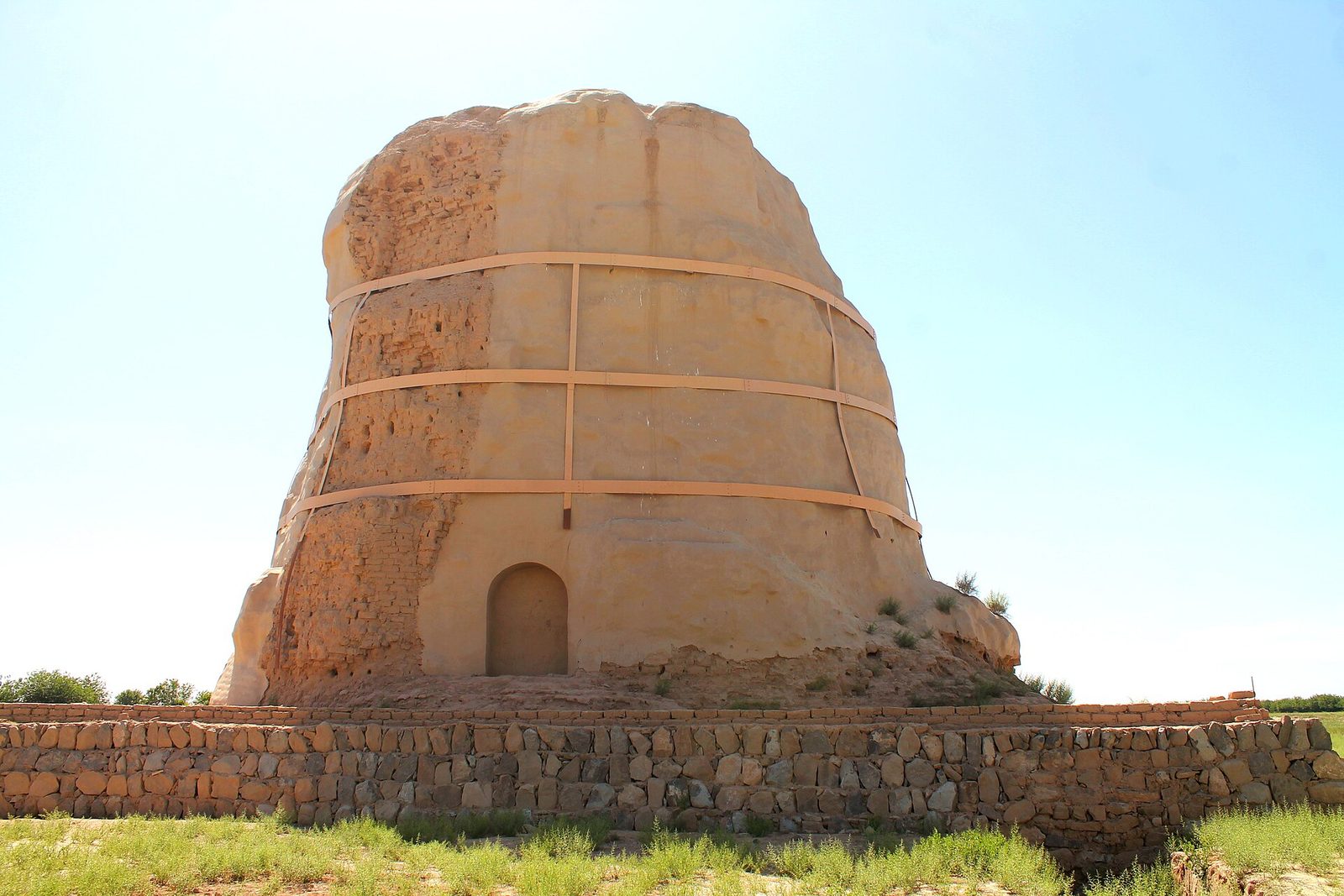
After day 1, take the flight from Tashkent to Termez, about 1 h 20 min; there are several each day. In the afternoon, the Archaeological Museum of Termez, with around 27,000 items, and the shrine of Al-Hakim at-Termezi on the edge of Old Termez, a 9th-century Sufi writer whose tomb lies under a white marble tombstone of the early 15th century.
The next morning we drive about 60 km north to Sherobod, to the mausoleum of Abu Isa at-Tirmidhi. Born near Termez in about 824, he was a pupil of al-Bukhari, and his Jami’ is one of the six canonical hadith collections of Sunni Islam. He died in 892 and lies in a mausoleum of the 11th–12th centuries. On the third morning, the flight back to Tashkent and the Afrosiyob to Samarkand, and the programme goes on from day 2.
Good to know: From June to August afternoons in Termez reach 38–40 °C, so in summer we visit early and late. More in our Termez guide.
Two nights in Termez
Accommodation
Where you stay
| City | Stay |
|---|---|
| Tashkent | A comfortable hotel, 1 night |
| Samarkand | A comfortable hotel, 3 nights |
| Bukhara | A comfortable hotel, 2 nights |
| Termez (extension) | A comfortable hotel, 2 nights |
We confirm the hotels for your dates before booking.
Price
Price
The price is given on request: it depends on the dates, the hotels, the train classes, the size of your group and whether you add Termez.
Good to know
Conditions
- The best months are March–May and September–November. From June to August afternoons in Bukhara reach about 36 °C; in summer we start early and keep the middle of the day for lunch and shade.
- Your guide speaks your language, and that is included in the price. Tell us the language you need when you book, ideally well in advance.
- Citizens of Malaysia and Indonesia can stay in Uzbekistan for up to 30 days without a visa (rules as of October 2026). We check the current entry rules for your passport before booking.
- Your guide plans each day with prayer times in mind. Most dishes in Uzbekistan are cooked with halal meat; tell us about your food requirements, and we take them into account.
- At the mausoleums and mosques, cover shoulders and knees; women bring a scarf, and shoes come off on the carpets. Do not photograph people at prayer.
- Train tickets go on sale 60 days before departure and sell out; tickets need the full name and passport number of every traveller.
- Around Ramazon hayiti and Qurbon hayiti, public holidays in Uzbekistan, trains and hotels fill up, so book early for those dates.
- Read before you go: our article on Uzbekistan tours from Malaysia and Indonesia and our guide to ziyarat in Uzbekistan.
- Reservations are confirmed with passport copies only.
Cancellation policy
| Cancellation timing | Penalty |
|---|---|
| 21 days before the service | 20% |
| 20–7 days | 50% |
| 6–0 days | 100% |
Transportation
| Vehicle | Group size |
|---|---|
| Chevrolet Cobalt | 2 pax |
| Hyundai Starex | 3–4 pax |
| Toyota Hiace / King Long | 5–8 pax |
| Mercedes Sprinter | 9–14 pax |
Vehicles may differ in make and colour.
🌿 Responsible tourism: we allocate part of our profits to good causes and are preparing for GSTC certification.
Expert opinion
Pluses
- The scholars in their places: al-Bukhari near Samarkand, Did you know? Ulugh Beg measured the year to within 25 seconds Working at his Samarkand observatory, Ulugh Beg put the tropical year at 365 days 5 h 49 min 15 s, about 25 seconds too long, closer than Copernicus a century later. Read more → on the Did you know? The Registan's sun-carrying lion went on a banknote The Sher-Dor Madrasah (1619–1636) is named for the big cats with the sun on their backs on its portal. The image appeared on the reverse of Uzbekistan's 200-som note of 1997. Read more → and his hill, Did you know? A village renamed in honour of a Sufi master Bahauddin Naqshband (1318–1389), who gave his name to one of the largest Sufi orders, was born and buried near Bukhara in Qasr-i Hinduvan. The village was later renamed Qasr-i Arifan in his honour; the tomb over his grave dates from 1544. Read more → near Bukhara, at-Tirmidhi near Termez.
- History before the shrines: the Center of Islamic Civilization on day 1 sets out the story before you see the places.
- Time for prayer: each day is planned with prayer times in mind, and Friday around Juma.
Minuses
- No Khiva: the route covers Tashkent, Samarkand and Bukhara; Khiva can be added.
- Hot in summer: from June to August afternoons in Bukhara reach about 36 °C.
- Meals mostly extra: only breakfasts are included; lunches, dinners and drinks are paid on site.
AroundCA numbers
How we counted
By the AroundCA programme: we count only what is written in the day-by-day programme of this tour. If the programme gives no figure, we show nothing.
- Hotel changes
- 2
- Walking
- Medium
Walking: Medium: walks through the old towns of Samarkand and Bukhara and around the memorial complexes, without long hikes.
Best time
Mar–May, Sep–Nov
March–May and September–November: comfortable days for the old towns and the open courtyards of the shrines.
Better to avoid
Jun–Aug
June to August: afternoons in Bukhara reach about 36 °C.
A typical day
On day 3 you drive 25 km from Samarkand to Khartang and spend three to four hours at the rebuilt Imam al-Bukhari complex, with its museum of nine pavilions on his life and on how hadith were collected; in the afternoon you rest in Samarkand or walk to Siab Bazaar.
What the price includes
What is included
- Meeting at Tashkent airport and all transfers on the programme
- Accommodation: 6 nights with breakfast (Tashkent 1, Samarkand 3, Bukhara 2)
- Train tickets: the Afrosiyob Tashkent – Samarkand, Samarkand – Bukhara and Bukhara – Tashkent
- A private car with driver for the stations, the airport and the trips to Khartang and Qasri Orifon
- A local guide in every city on the programme, speaking your language
- Entrance tickets on the programme, including the Center of Islamic Civilization
Not included
- International flights to and from Tashkent
- Lunches, dinners and drinks
- The Termez extension: flights, two nights and the guide (on request)
- Dinner with a local family in Bukhara (on request)
- Photo and video fees at the sites
- Tips and personal expenses
Extra cost on site
- Lunches, dinners and drinks
- The Termez extension: flights, two nights and the guide (on request)
- Dinner with a local family in Bukhara (on request)
- Photo and video fees at the sites
- Tips and personal expenses
Good for
- Travellers who know the names of al-Bukhari, at-Tirmidhi and al-Khwarizmi and want to see where they came from
- Lovers of the history of science and of Islamic heritage
- Guests from Malaysia and Indonesia: a week that fits the nonstop flights from Kuala Lumpur
Maybe not for you if
- Travellers who want mountains and nature: this is a route of cities and heritage
- Anyone who wants Khiva on this trip: it is not on the route, though we can add it
- Summer trips: from June to August afternoons in Bukhara reach about 36 °C
Questions about this tour
How much does the tour cost?
The price is given on request: it depends on the dates, the hotels, the train classes, the size of your group and whether you add Termez.
Do citizens of Malaysia and Indonesia need a visa?
No: citizens of Malaysia and Indonesia can stay in Uzbekistan for up to 30 days without a visa. Travel on a passport with at least three months of validity left. That is the rule as of October 2026; we check it for every booking, and details are in our article on <a href="/blog/uzbekistan-tours-from-malaysia-and-indonesia/">Uzbekistan tours from Malaysia and Indonesia</a>.
Is there time for prayer, and is the food halal?
Yes. Your guide plans each day with prayer times in mind, and on Friday we build the day around Juma; tell us if you want to pray at a particular mosque. Most dishes in Uzbekistan are cooked with halal meat; tell us about your food requirements when you book, and we take them into account.
Is the tour suitable for travellers who are not Muslim?
Yes. The tour is a journey into history and heritage, and the shrines welcome respectful visitors of any faith. Your guide explains the customs at each place.
Where does al-Khwarizmi come in, and can we add Khiva?
In Samarkand, at Ulugh Beg’s observatory, your guide tells the story of astronomical tables and algebra from al-Khwarizmi to Ulugh Beg. His name points to Khwarazm, and his statue stands outside the West Gate of Khiva. We can add Khiva after Bukhara: the high-speed train takes about 3 h 30 min, and you fly back to Tashkent from Urgench.
What should I wear?
Shoulders and knees covered, for men and women alike; women bring a scarf for the mausoleums and mosques. Shoes come off on the carpets, so slip-on shoes are handy.
Didn’t find your answer? Ask about this tour →
Make it your trip
Tick what you’d like to add — it goes into your request, and the manager confirms the final price.
Add a few days
Arrival, departure, transfers
© Photos
Al-Hakim at-Termezi mausoleum, Termez — 4pf3154f7 / Wikimedia Commons · CC BY-SA 4.0