

Nukus and Karakalpakstan
The avant-garde art of the Savitsky Museum, ancient fortresses in the Kyzylkum and the ship cemetery of Muynak on the old shore of the Aral Sea.
- 1–3 days
- About an hour and a half by air from Tashkent, an overnight train, or by road from Khiva
- Starting point for Muynak, the Aral Sea and the desert fortresses
About Nukus and Karakalpakstan
Nukus is the capital of Karakalpakstan, the republic in the north-west of Uzbekistan that stretches from the Amu Darya delta to the Ustyurt plateau. The city is young and planned, with broad avenues and big public buildings, and home to about 350,000 people. Travellers come for the The Karakalpakstan State Museum of Art in Nukus, named after Igor Savitsky, who gathered a large collection of Russian avant-garde art there in Soviet times., and then for the land around it: ancient Khorezm fortresses, Zoroastrian sites and the wide open spaces of the former Aral shore.
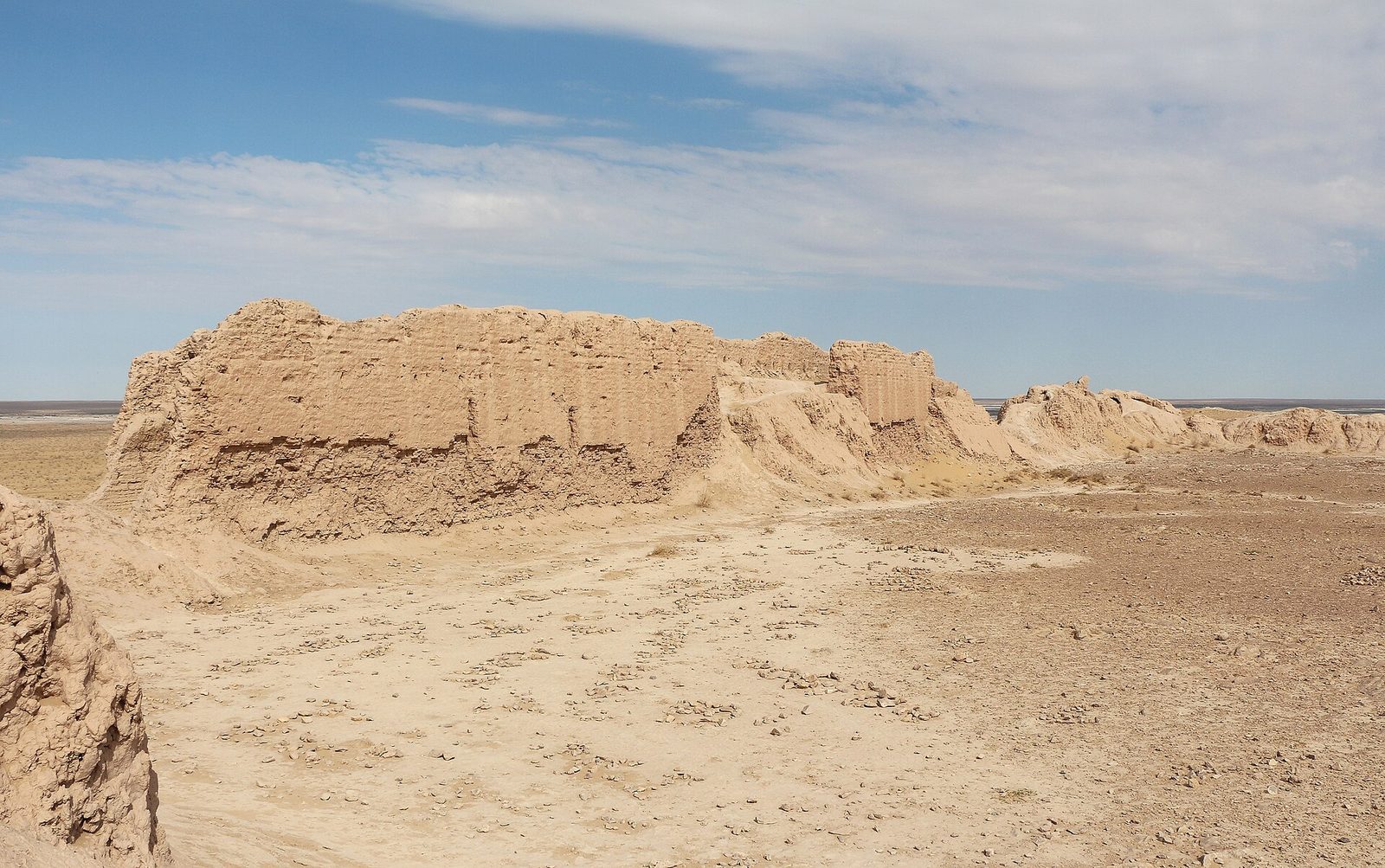
Ancient Khorezm flourished here long before the city: Ruins of ancient Khorezm fortresses on hills at the edge of the Kyzylkum, in Karakalpakstan. was guarding the oasis more than 2,000 years ago, and Toprak-Kala was its capital in the 2nd–3rd centuries AD. Mizdakhan has been a sacred hill for many centuries. Nukus became the capital of Karakalpakstan in 1932, and in 1966 the artist Igor Savitsky founded the museum that made the city famous. From the 1960s the Aral Sea retreated, and today Muynak welcomes travellers who come for the ships, the plateau and the silence.
History in brief
- 4th–3rd c. BCAyaz-Kala 1 is built on a hill above the The Kyzylkum, or Red Sands: the desert between the Amu Darya and Syr Darya rivers that the road and the railway cross on the way to Khiva. to guard the Khorezm oasis.
- 1st–4th c.A town grows on the western hill of Mizdakhan, later one of the most revered burial grounds of the region.
- 2nd–3rd c.Toprak-Kala, a palace city with painted halls, is the capital of Khorezm.
- 9th–11th c.Mizdakhan revives with a fortified citadel, and Islam replaces the old burial customs.
- 1932Nukus becomes the capital of Karakalpakstan.
- 1966Igor Savitsky founds the art museum in Nukus.
- TodayMuynak and the former Aral shore draw travellers on eco-tours and jeep expeditions.
What to see
Map is loading…
Map: © OpenStreetMap contributors
-
1Savitsky Museum
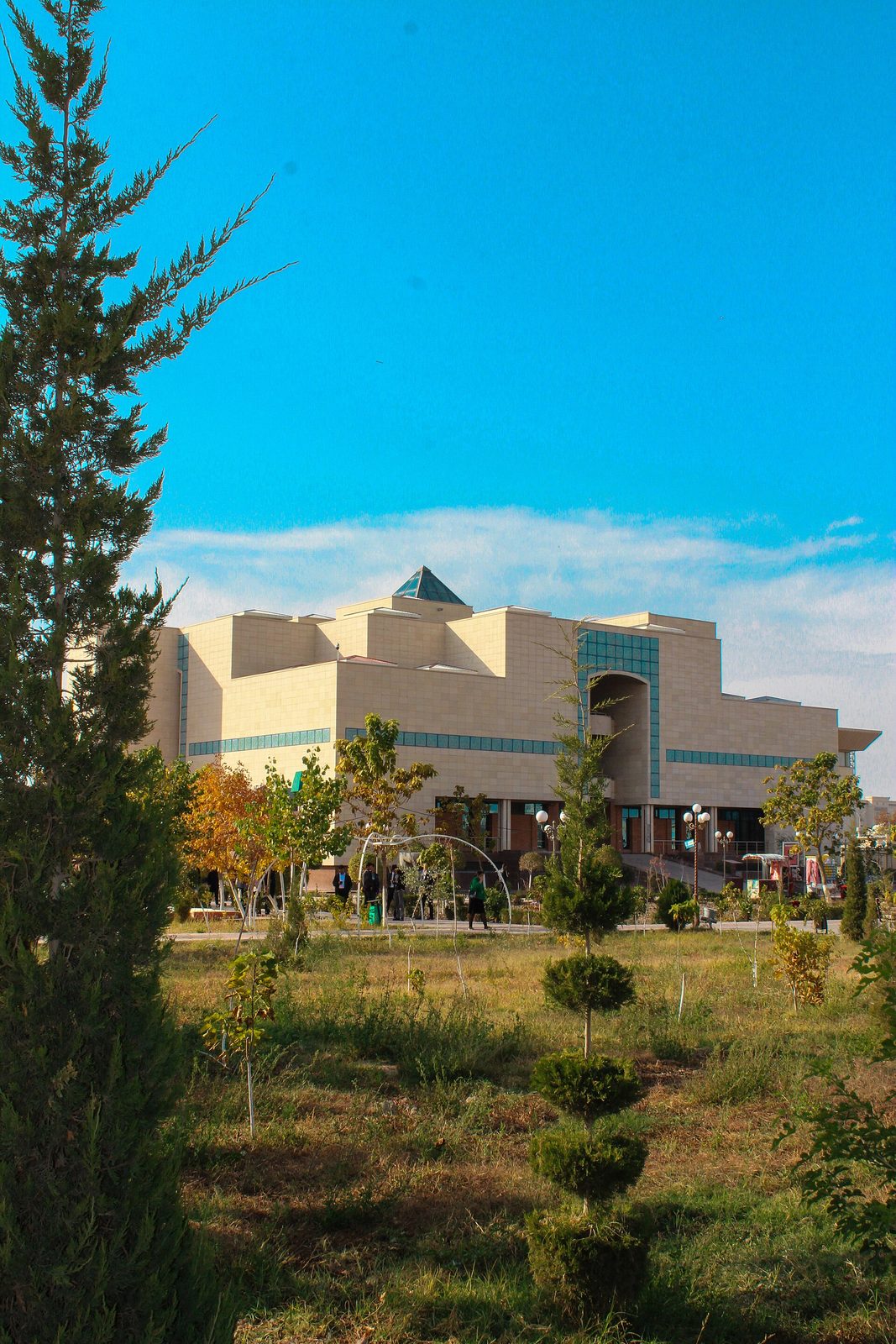
The State Museum of Art of Karakalpakstan, founded in 1966 by Igor Savitsky, holds one of the largest collections anywhere of Russian avant-garde art of the 1920s and 1930s. Alongside it are Karakalpak jewellery and costume and finds from ancient Khorezm. Give it at least half a day; it is usually closed on Mondays.
-
2Mizdakhan
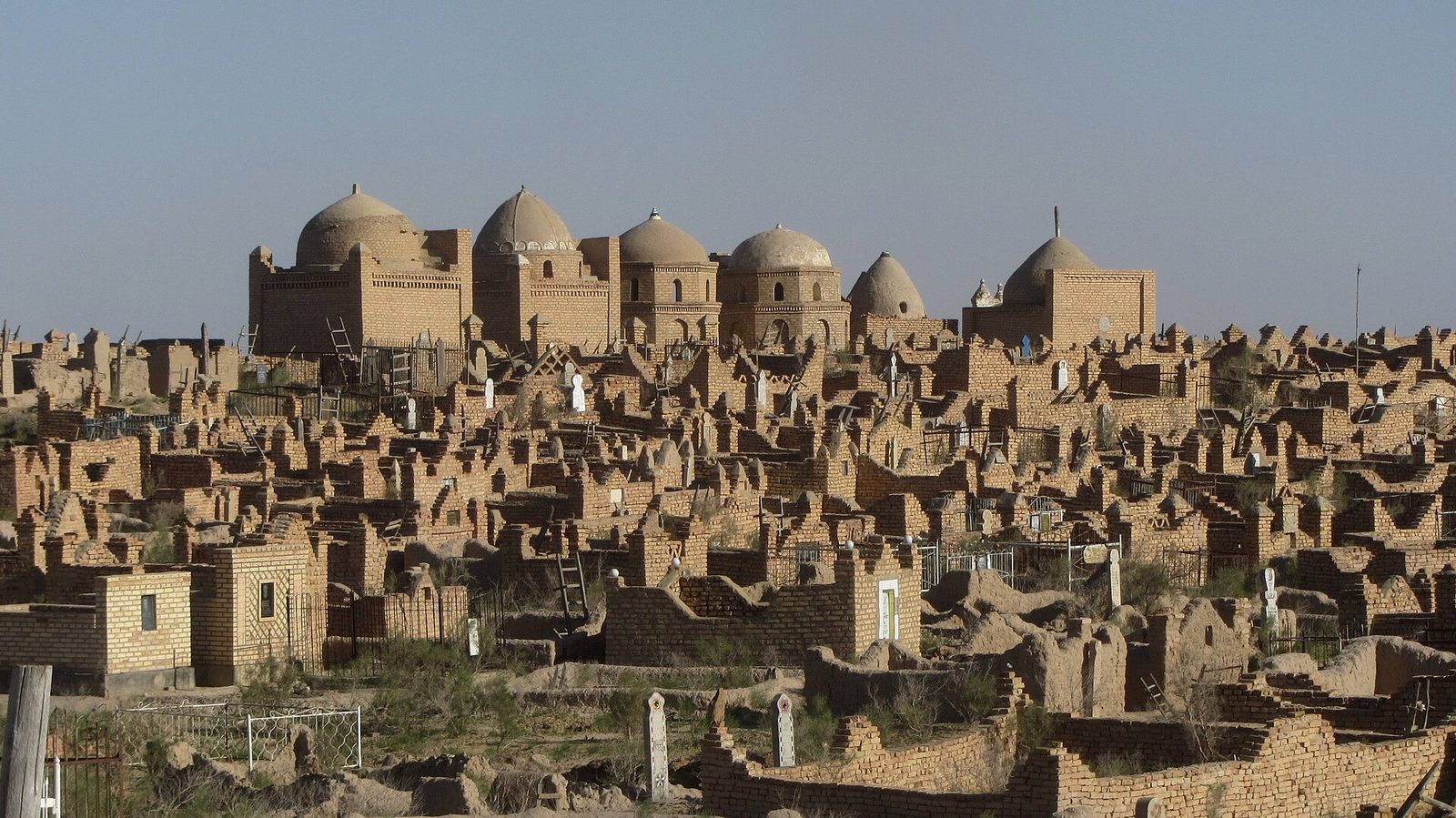
A sacred necropolis on three hills about 20 km west of Nukus, near Khodjeyli. See the half-underground Mazlum-Khan Sulu mausoleum with its tiled interior and the Khalifa Erejep mausoleum, the “clock of the world”: legend says time will end when its last brick falls. The ruins of the Gyaur-Kala fortress stand next to it.
-
3Chilpik
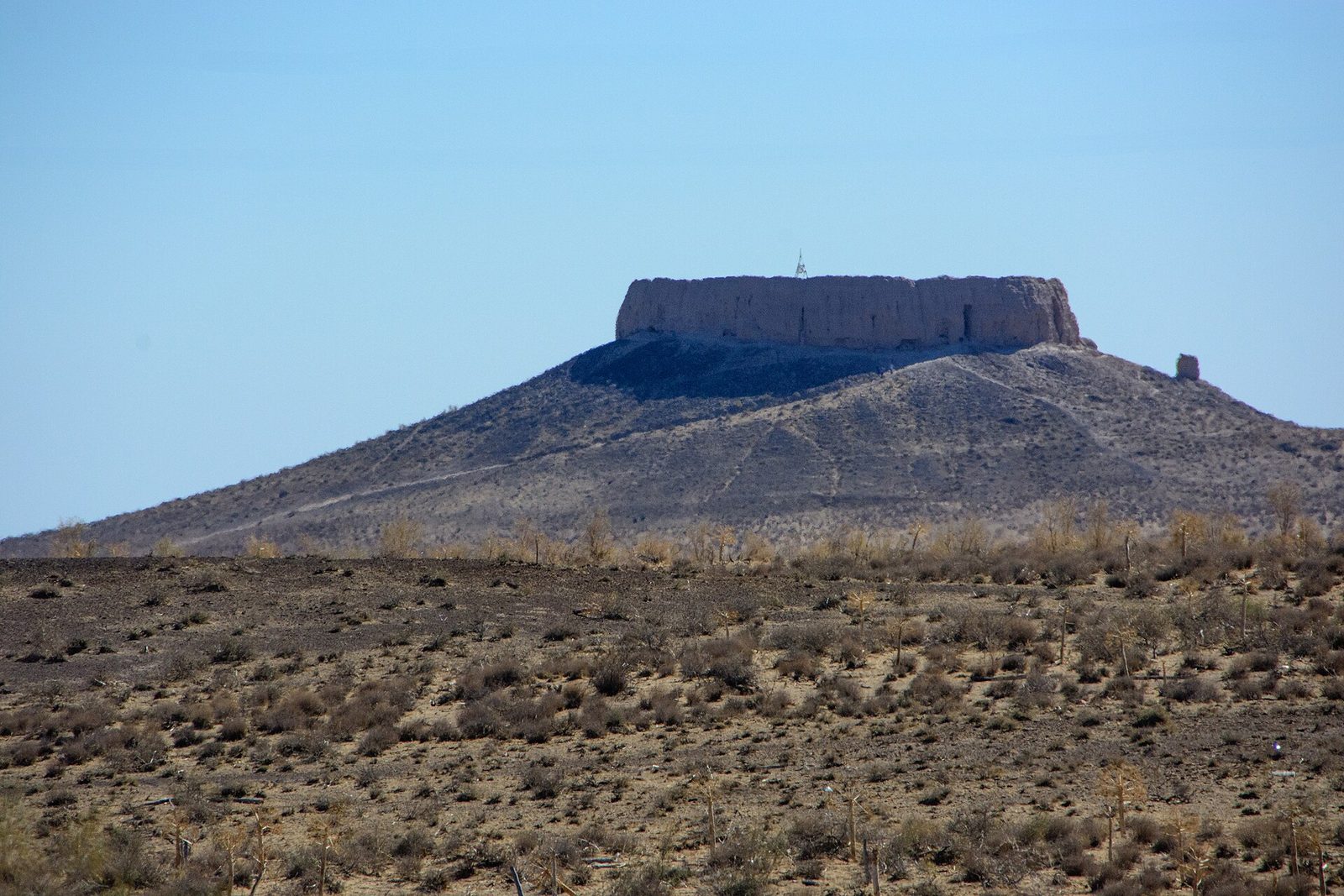
A ring-shaped Zoroastrian dakhma, a “tower of silence”, on a lone hill above the right bank of the Amu Darya, about 45 km south-east of Nukus. Its walls, about 15 metres high, are some two thousand years old. Climb up for the view over the river and the desert, best in the late afternoon.
-
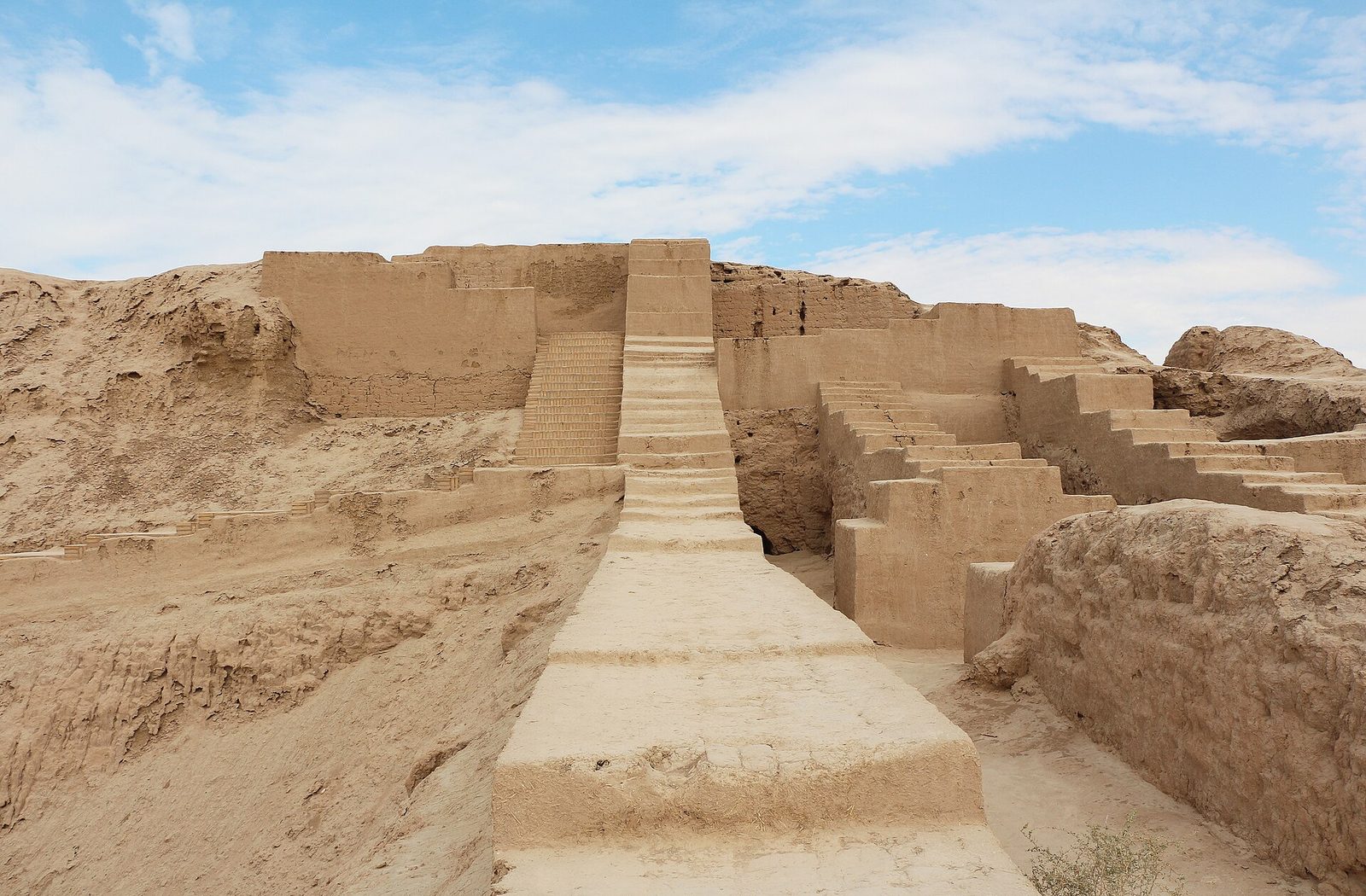
4Toprak-Kala
A palace city that was the capital of ancient Khorezm in the 2nd–3rd centuries AD: a grid of streets inside high mud-brick walls and a palace on a raised platform. Its painted halls and sculptures were studied by Sergey Tolstov’s expedition from 1938. The small Kyzyl-Kala fortress stands about 1 km away.
-
5Ayaz-Kala
Three fortresses on hills at the edge of the Kyzylkum. The oldest, Ayaz-Kala 1, dates from the late 4th or early 3rd century BC and sits on a hill about 100 metres high, its walls about 180 by 150 metres. Climb up at sunset, then stay the night in the yurt camp nearby.
-
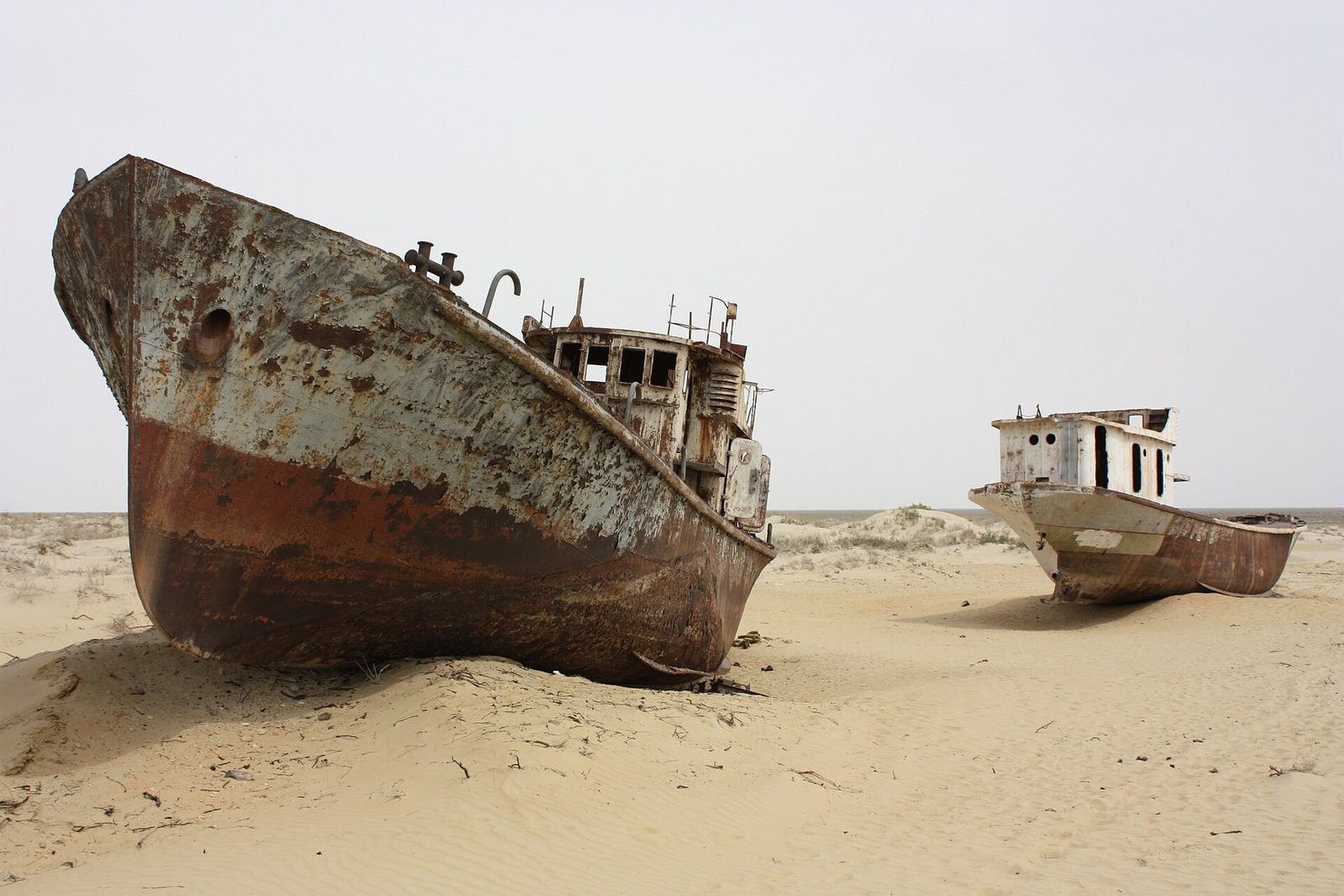
6Muynak ship cemetery
Muynak was once a fishing port on the Aral Sea. Today its rusting ships rest on the sand where the harbour used to be, and the small town museum shows how the shore changed. From here jeep trips continue across the Ustyurt plateau to the sea itself.
Photos: Mizdakhan necropolis near Nukus — Erik Albers / Wikimedia Commons · CC BY-SA 4.0; Chilpik dakhma near Nukus — Bruce Allardice / Wikimedia Commons · CC BY-SA 2.0; Ship cemetery, Muynak — Arian Zwegers / Wikimedia Commons · CC BY 2.0
Neighbourhoods
- Central Nukus Wide avenues with the Savitsky Museum, several smaller museums and the main hotels within walking distance.
- Khodjeyli and Mizdakhan A short drive west of Nukus: the sacred hills of Mizdakhan and the ruins of Gyaur-Kala.
- Elliq-Kala, the “fifty fortresses” The district of ancient fortresses at the edge of the Kyzylkum, on the way to Khiva: Toprak-Kala, Kyzyl-Kala and Ayaz-Kala.
- Muynak and the Aral shore About 200 km north, some three hours by road: the ship cemetery, the museum and the start of the jeep routes over the Ustyurt.
What to eat
- Beshbarmak Boiled meat on wide flat noodles with a rich broth, a festive dish of the Karakalpaks. It is eaten by hand, as the name, “five fingers”, suggests.
- Baursak Small pieces of fried dough served with tea, on the table at almost any Karakalpak meal.
- Khorezm neighbours Khiva is a few hours away, so on the way try its green dill noodles, shivit oshi, and tukhum barak, thin dumplings filled with egg.
Getting around
Central Nukus is compact: the Savitsky Museum and the main hotels are within walking distance, and taxis are easy to find for anything further. Everything else needs a car with a driver: Mizdakhan is about 20 km away, Chilpik about 45 km, Ayaz-Kala about 150 km on the way to Khiva and Muynak about 200 km, three hours by road. For the Aral shore itself you need a 4×4.
Local tips
- Plan Nukus around the Savitsky Museum: it is usually closed on Mondays, so check the day before you book.
- The best months for the desert and the Aral are April–May and September–October; summer is very hot and the open land has little shade.
- Desert nights are cool even after a hot day: bring a warm layer for the yurt camp or the Aral shore.
- Combine Nukus with Khiva: drive via Chilpik and the fortresses, then spend the evening in Arda Khiva, the new evening quarter of Khiva.
- Mizdakhan is still a place of pilgrimage: walk quietly and dress modestly.
Our take: how many days you need
One day covers the Savitsky Museum and the Mizdakhan necropolis. Add a day for Chilpik and the desert fortresses on the way to Khiva, and two days for Muynak and the Aral Sea shore: our 2-day Aral Sea extension starts with a flight from Tashkent to Nukus.
When to go: month by month
Daytime temperature, rainfall, public holidays and our rating for every month.
- Jan6° Cool, fewer people Cold: 6° by day 32 mm of rain ★ 1, 14
- Feb8.6° Cool, fewer people Cold: 8.6° by day 41 mm of rain
- Mar15.5° Great Cool: 15.5° by day 47 mm of rain ★ 8, 21
- Apr22.5° Great Comfortable: 22.5° by day 42 mm of rain
- May28.7° Great Comfortable: 28.7° by day 26 mm of rain ★ 9
- Jun34.1° Good Hot: 34.1° by day 8 mm of rain
- Jul35.9° Hard Hot: 35.9° by day 2 mm of rain
- Aug34.5° Hard Hot: 34.5° by day 2 mm of rain
- Sep29° Great Comfortable: 29° by day 3 mm of rain ★ 1
- Oct21.9° Great Comfortable: 21.9° by day 12 mm of rain ★ 1
- Nov13.4° Great Cool: 13.4° by day 30 mm of rain
- Dec7.5° Cool, fewer people Cold: 7.5° by day 31 mm of rain ★ 8
- 1 Jan — New Year
- 14 Jan — Defenders of the Motherland Day
- 8 Mar — International Women’s Day
- 21 Mar — Navruz
- 9 May — Day of Remembrance and Honour
- 1 Sep — Independence Day
- 1 Oct — Teachers’ Day
- 8 Dec — Constitution Day
- Ramadan Hayit (Eid al-Fitr): the date changes every year
- Kurban Hayit (Eid al-Adha): the date changes every year
Climate source: Википедия, статья «Samarkand», таблица климата (нормы 1991–2020; Pogoda.ru.net, NOAA) — en.wikipedia.org/wiki/Samarkand; Википедия, статья «Bukhara», таблица климата (нормы 1991–2020; NOAA) — en.wikipedia.org/wiki/Bukhara; Википедия, статья «Urgench» (метеостанция в 35 км от Хивы; нормы 1991–2020; Pogoda.ru.net, NOAA) — en.wikipedia.org/wiki/Urgench; Википедия, статья «Tashkent», таблица климата (нормы 1991–2020; Pogoda.ru.net, NOAA) — en.wikipedia.org/wiki/Tashkent
Rating by daytime temperature: great — 18–30°, good — 12–18° or 30–33°, cool, fewer people — below 12°, hard — above 33°; heavy rain (100 mm and more) lowers great to good. For the cities we also follow our expert: the season is March–June and September–November, with March and November the best months (start and end of the season, few people); winter is not marked as a bad time.
Nukus and Karakalpakstan: questions before the trip
How many days do I need in Nukus and Karakalpakstan?
1–3 days
How do I get to Nukus and Karakalpakstan?
About an hour and a half by air from Tashkent, an overnight train, or by road from Khiva More in the article: Uzbekistan tours from Australia: flights, entry, seasons and how many days
When is the best time to go to Nukus and Karakalpakstan?
Spring (April–May) and autumn (September–October) are the most comfortable; summer days are hot. More in the article: Uzbekistan in April: spring weather, long days and tips
What can I add nearby?
Starting point for Muynak, the Aral Sea and the desert fortresses
Before you go
Visa, season, budget and flights — the short answers.
 Uzbekistan tours from Brazil and South America: visa, flights and the best monthsVisa-free entry for Brazil, Argentina and Chile, e-visa for Colombia and Peru, one-stop routes via Istanbul, D…
 Uzbekistan in April: spring weather, long days and tipsAfternoons around 22 °C, sunset after seven and wild tulips in the hills: what Uzbekistan is like in April, ci…
 How much does a trip to Uzbekistan cost? A 1-week budgetUzbekistan is one of the Silk Road’s best-value destinations. Below is a practical 7-day (6-night) cost breakd…
Uzbekistan tours from Australia: flights, entry, seasons and how many daysNo visa for Australian and New Zealand passports, one-stop flights via Seoul, Kuala Lumpur or the Gulf, flippe…
How much does a trip to Uzbekistan cost? A 1-week budgetUzbekistan is one of the Silk Road’s best-value destinations. Below is a practical 7-day (6-night) cost breakd…
Uzbekistan tours from Australia: flights, entry, seasons and how many daysNo visa for Australian and New Zealand passports, one-stop flights via Seoul, Kuala Lumpur or the Gulf, flippe…Didn’t find your trip?
Tell us what you want — a manager will put together a route and price within 24 hours.