Places in this article: Samarkand · Bukhara · Tashkent
Museums of Samarkand and Bukhara: the Ambassadors’ Painting, the Ark and the emir’s palace
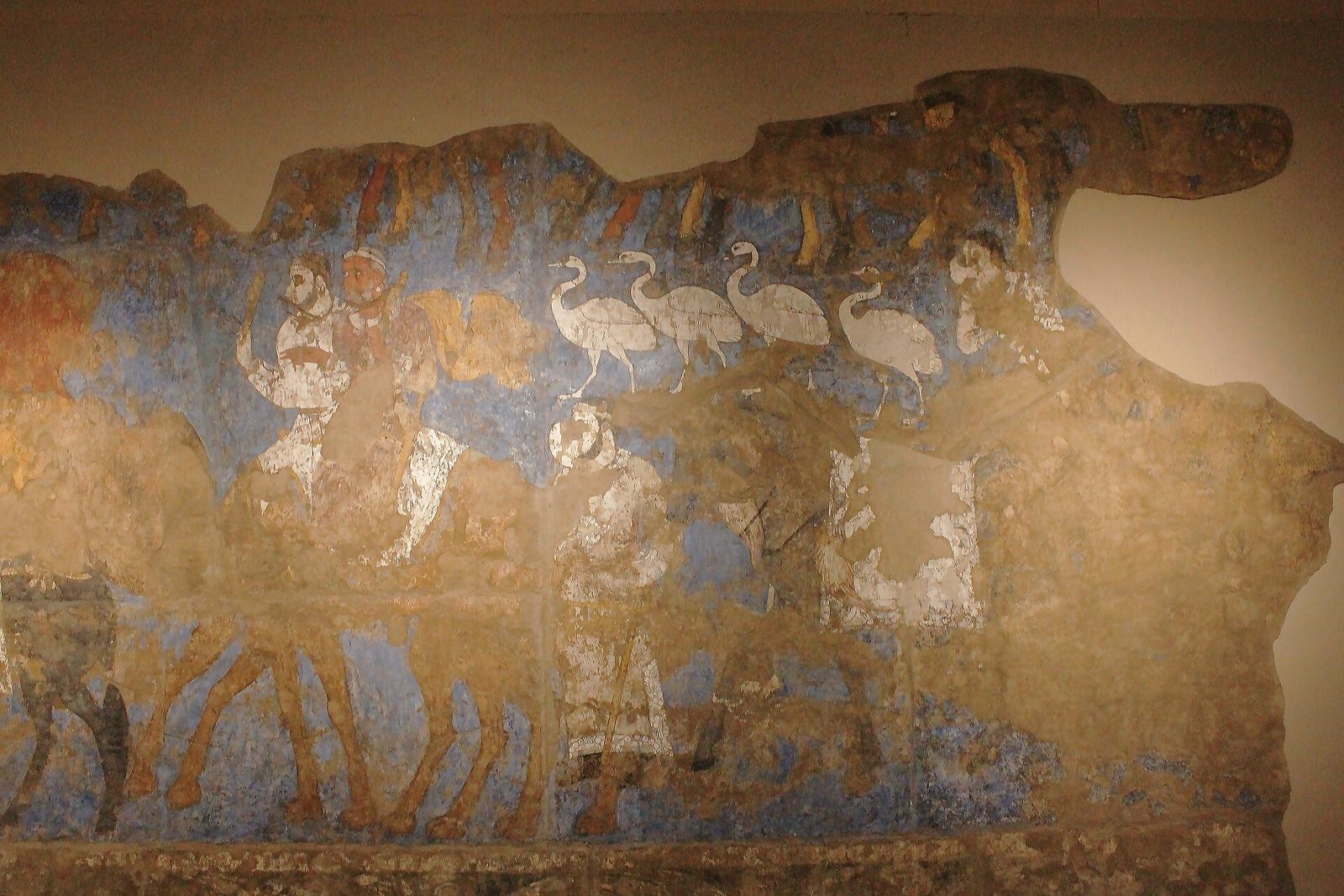
Around 650, a painter in Samarkand covered the walls of a royal hall with envoys bringing gifts to King Varkhuman. Among them stand two men with feathers in their caps, usually identified as envoys from the Korean kingdom of Goguryeo. The hall was found in 1965, when a road was cut through the old city hill, and today the painting is the reason to visit the museums of Samarkand. Bukhara answers with a different idea: its museums live inside the monuments themselves, a fortress, a summer palace, madrasahs, a mosque and a mausoleum over a spring.
We are a Tashkent company and bring guests to both cities every week. Here are the museums worth your time, what to see in each and how long to stay. The great monuments have their own articles, so here we keep them short and send you there.
The Afrasiyab Museum and the Ambassadors’ Painting
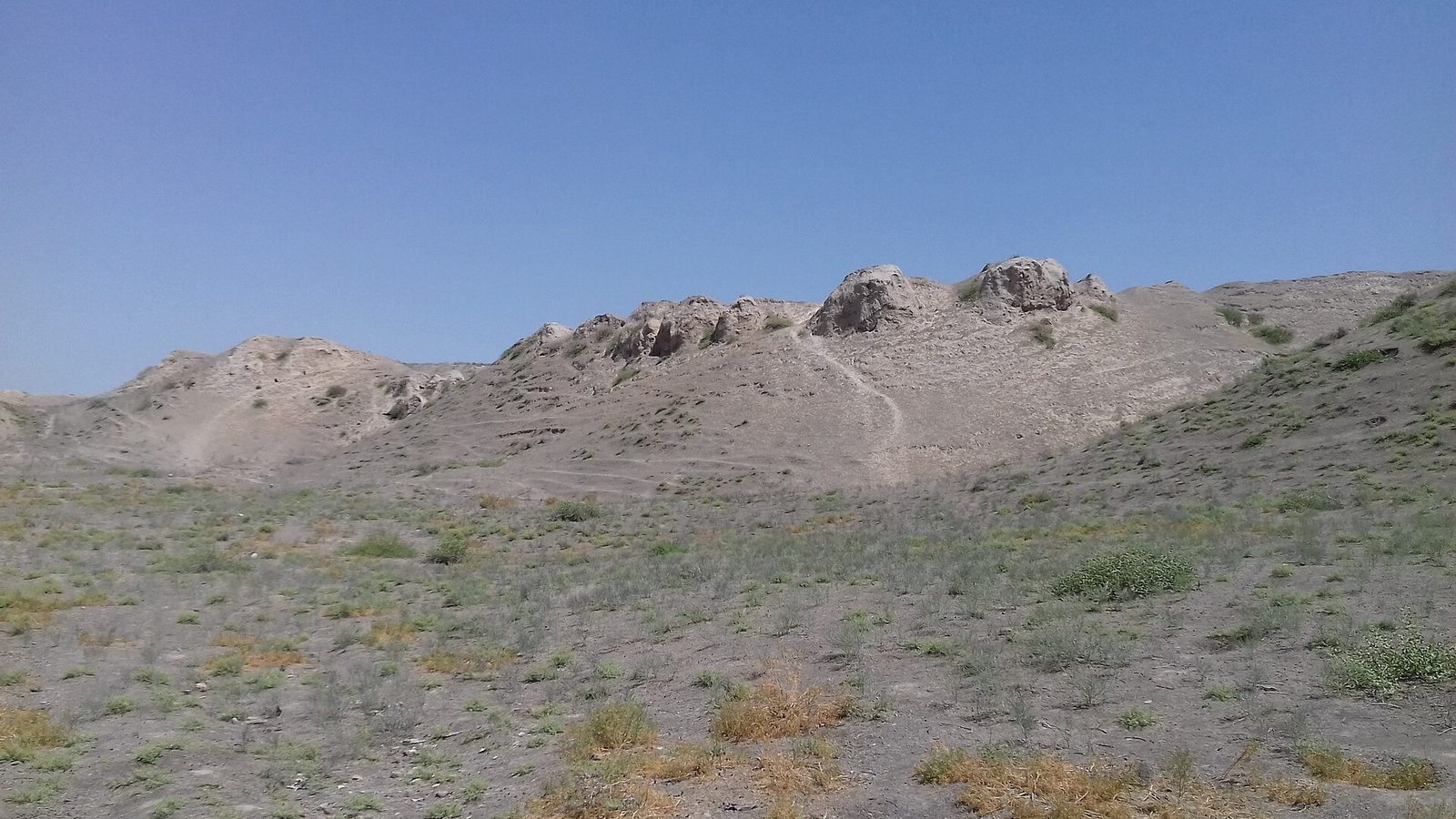
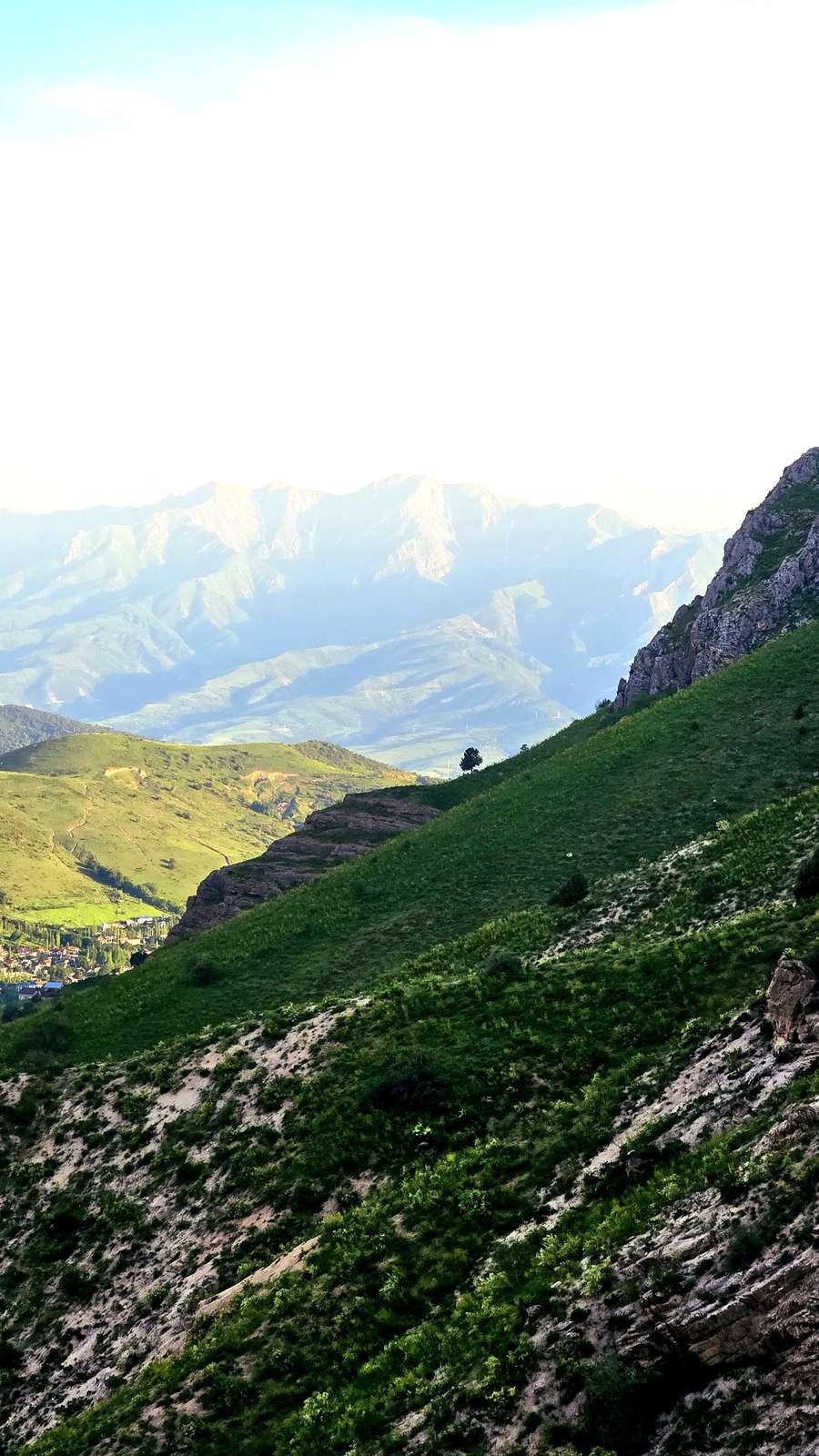
Samarkand stood on the Did you know? A 7th-century mural shows envoys from Korea Uncovered by road builders in 1965, the Ambassadors' Painting at Afrasiyab shows delegations bearing gifts, Chinese with silk among them, and two men in feathered hats thought to be envoys from Korea's Goguryeo. Read more → hill from around 500 BC until the Mongols took it in 1220. The museum, founded in 1970, sits on the hill itself and keeps more than 20,000 finds from the middle of the 1st millennium BC to the early 13th century: ceramics, glass, stone, metal and bone.
Go straight to the painting hall. The murals were probably painted between 648 and 651. On the west wall, ambassadors from many lands come before King Varkhuman, and a Sogdian inscription on one envoy’s robe names him: Pukarzate, chancellor of Chaganian. The north wall shows China: the emperor hunting and the empress in a boat. The south wall shows a funeral procession led by Varkhuman in honour of his predecessor. The upper part of the walls was lost to the bulldozers in 1965, so look for the figures in the lower band.
The halls on the ground floor were renovated and reopened in March 2024. Hours: Monday to Saturday, 9:00 to 17:00. Allow an hour, and come before lunch so that you are not racing the closing time.
The Ulugh Beg Observatory museum
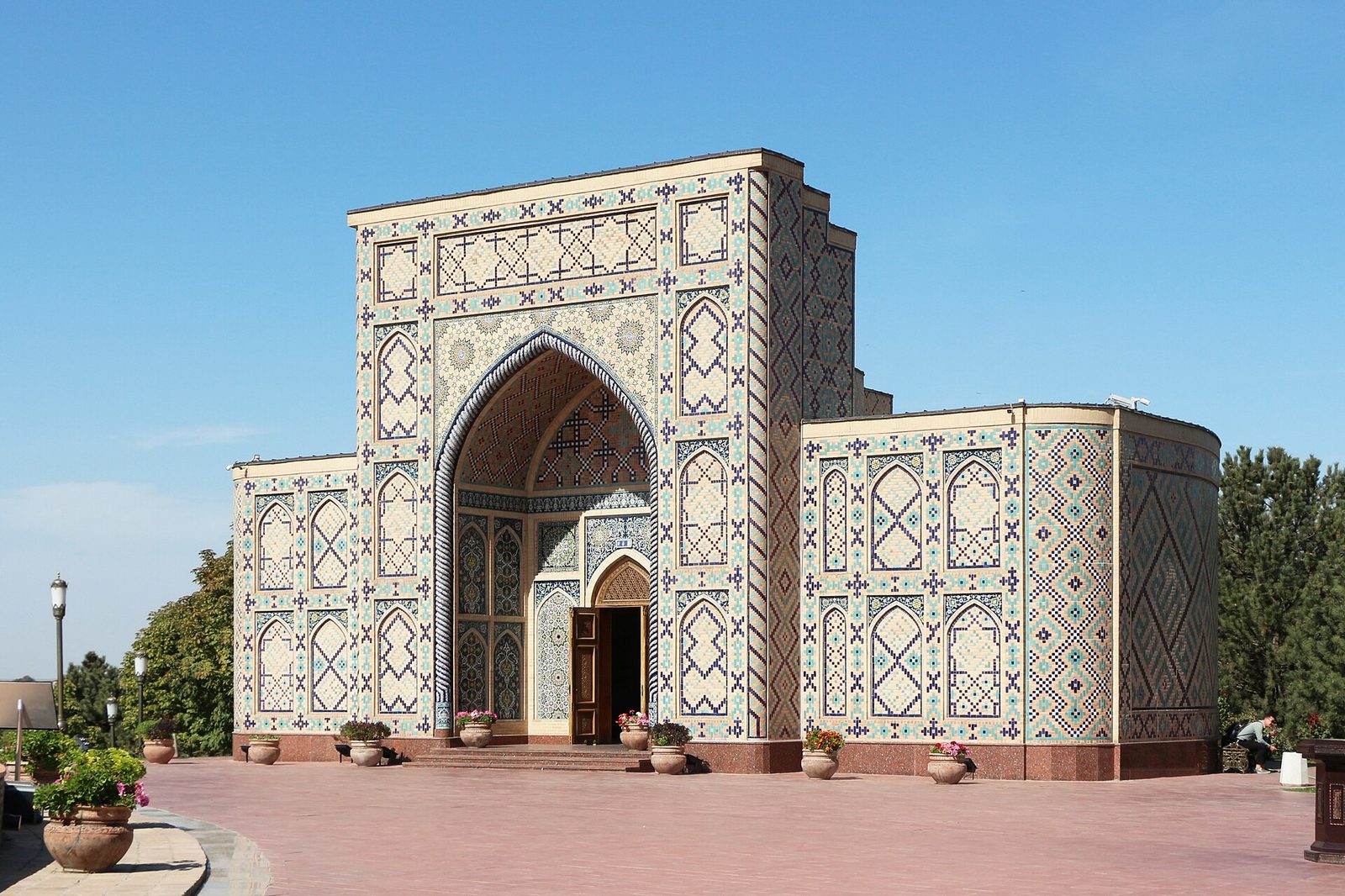
About 1.5 km past Afrasiyab, on the Kuhak hill, the small museum stands next to the trench that holds the marble arc of Did you know? Ulugh Beg measured the year to within 25 seconds Working at his Samarkand observatory, Ulugh Beg put the tropical year at 365 days 5 h 49 min 15 s, about 25 seconds too long, closer than Copernicus a century later. Read more →’s sextant. It explains how an observatory of the 1420s measured the stars and the length of the year. Allow about an hour. The full story, from the sextant to the star catalogue, is in our article on the Ulugh Beg Observatory.
The Museum of the History of Culture of Uzbekistan
Samarkand’s main history museum stood on the Did you know? The Registan's sun-carrying lion went on a banknote The Sher-Dor Madrasah (1619–1636) is named for the big cats with the sun on their backs on its portal. The image appeared on the reverse of Uzbekistan's 200-som note of 1997. Read more → from 1978 to 2010; today it is at 148 Mirzo Ulugbek Street. It is a good rainy-day museum and a quieter one than the monuments. Look for the Bronze Age jewellery, chess pieces of the 8th century, three silver bowls of the 5th–6th century from Chelek and a 1941 film by Malik Kayumov about the opening of Amir Timur (Tamerlane, 1336–1405), founder of the Timurid empire, which had its capital in Samarkand. Born near Shahrisabz.’s tomb. The museum is open from 9:00 to 17:00. Allow about an hour.
Konigil: a paper mill that works like a museum
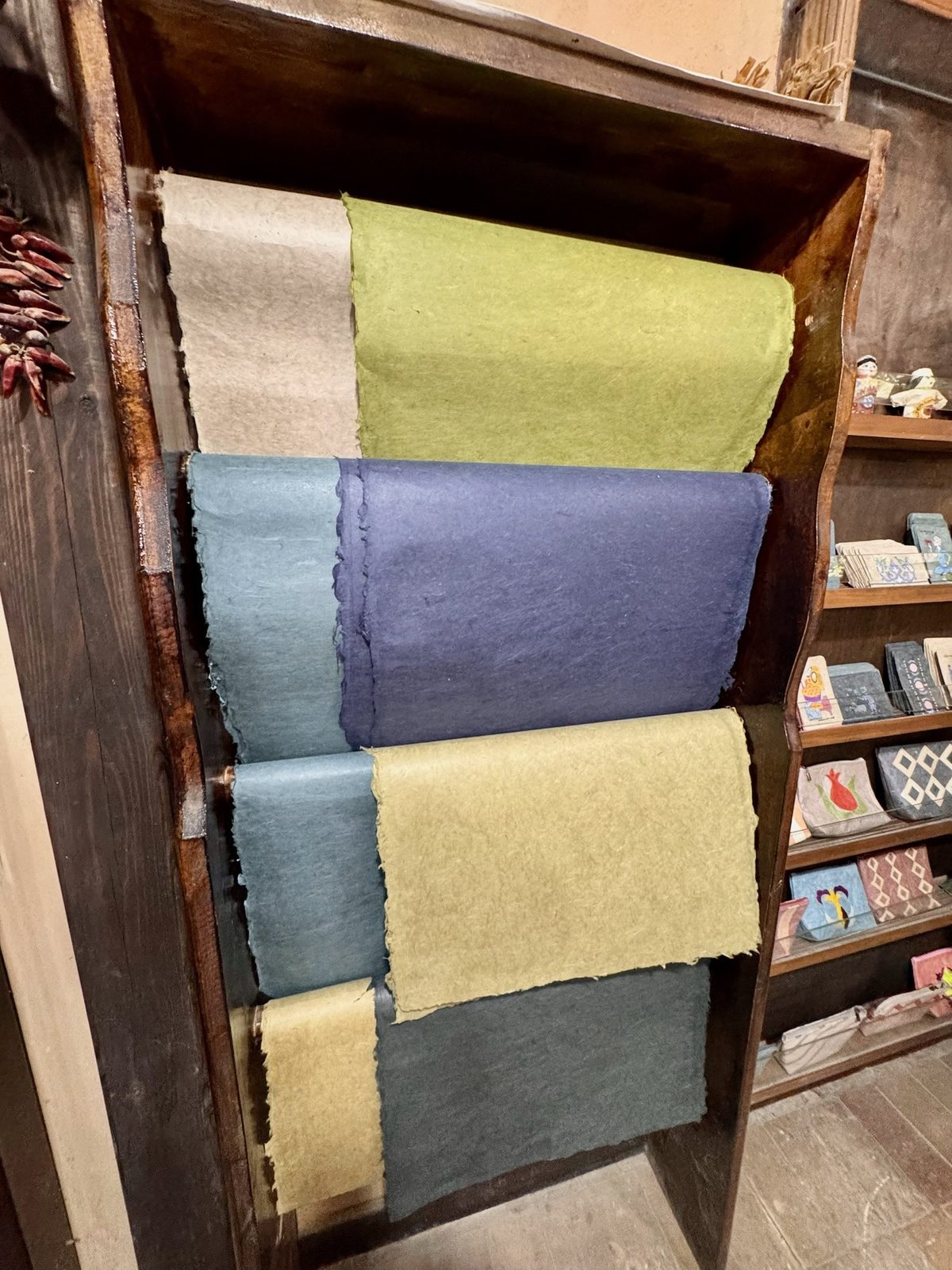
Thirteen kilometres out of the city, in the village of ,A village near Samarkand where paper is made by hand from mulberry bark, the old way, at a working mill on the stream. the Did you know? Paper polished with stone, made to last 400 years At the Meros mill in Konigil, founded in 1996 to revive a craft that had died out, a water wheel beats mulberry bark into pulp, and each sheet is polished for hours with agate, shell or horn. It is made to last some 400 years. Read more → mill makes Did you know? Legend says Chinese prisoners taught Samarkand paper A legend recorded in the 11th century says Chinese prisoners taken at the Battle of Talas in 751 taught Samarkand to make paper. In fact paper was used here earlier, and the craft most likely came gradually along the Silk Road. Read more → from mulberry bark, with a water wheel doing the pounding. It is a working workshop rather than a museum, which is exactly why our guests like it: you watch each step instead of reading about it. Allow half a day with the drive. How the paper is made is in Samarkand paper: the Meros mill in Konigil.
Bukhara: the museums inside the Ark
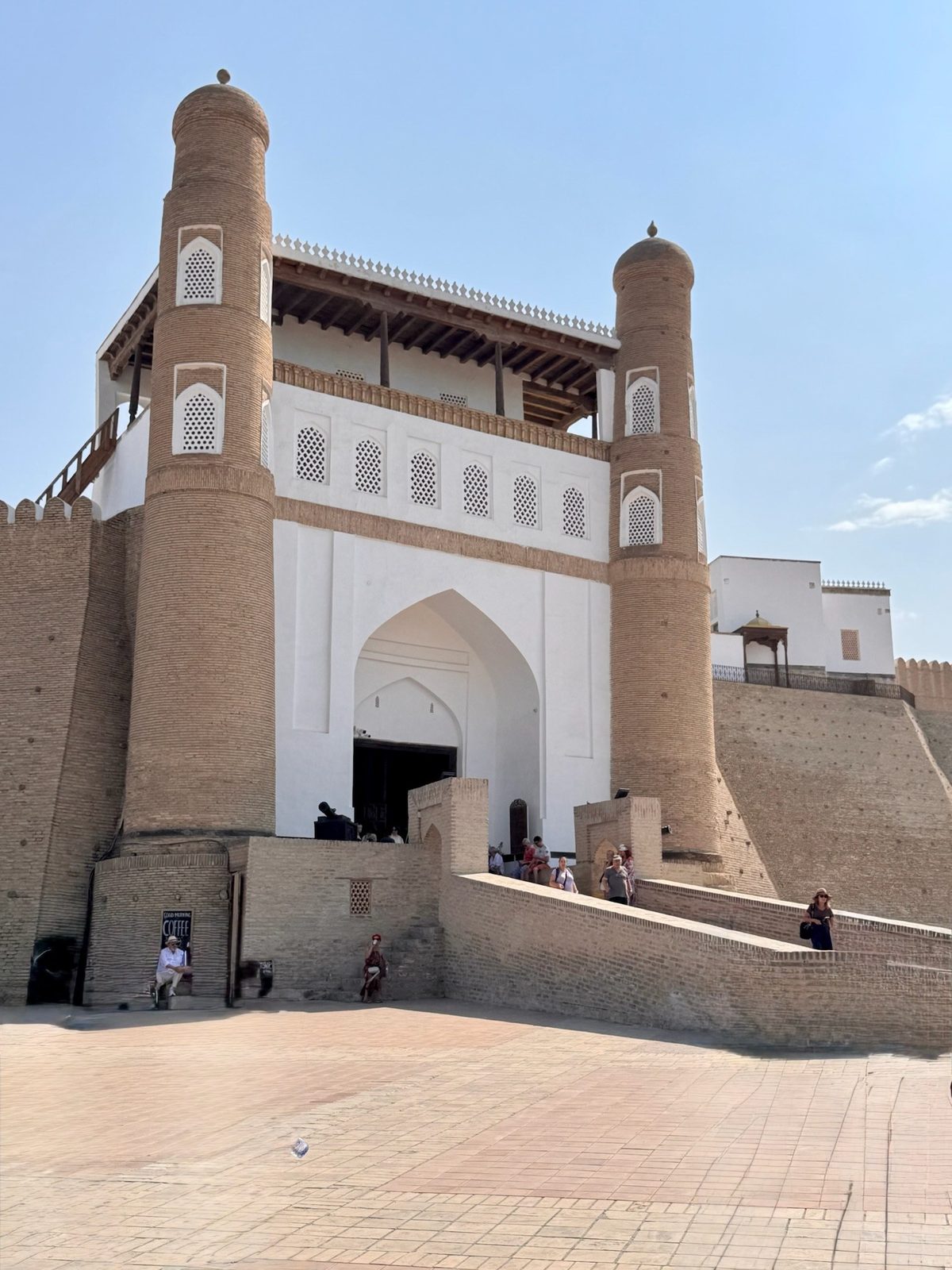
In Bukhara the museums belong to the Bukhara State Museum-Reserve, and its largest is inside The fortress-residence of the rulers of Bukhara on a high artificial hill: the oldest structure in the city. Read more → fortress: the regional museum of history and local lore. Around the old courtyards, rooms show the archaeology of ancient Sogd and Bukhara, coins, weapons, documents and the city’s gold embroidery and silk.
A ticket for a foreign adult costs 60,000 som; a tour in a foreign language costs 120,000 som. Allow an hour and a half. The fortress itself, from its two thousand years of layers to the throne of 1669, is in our article on the Ark of Bukhara.
Sitorai Mohi-Hosa: the emir’s summer palace
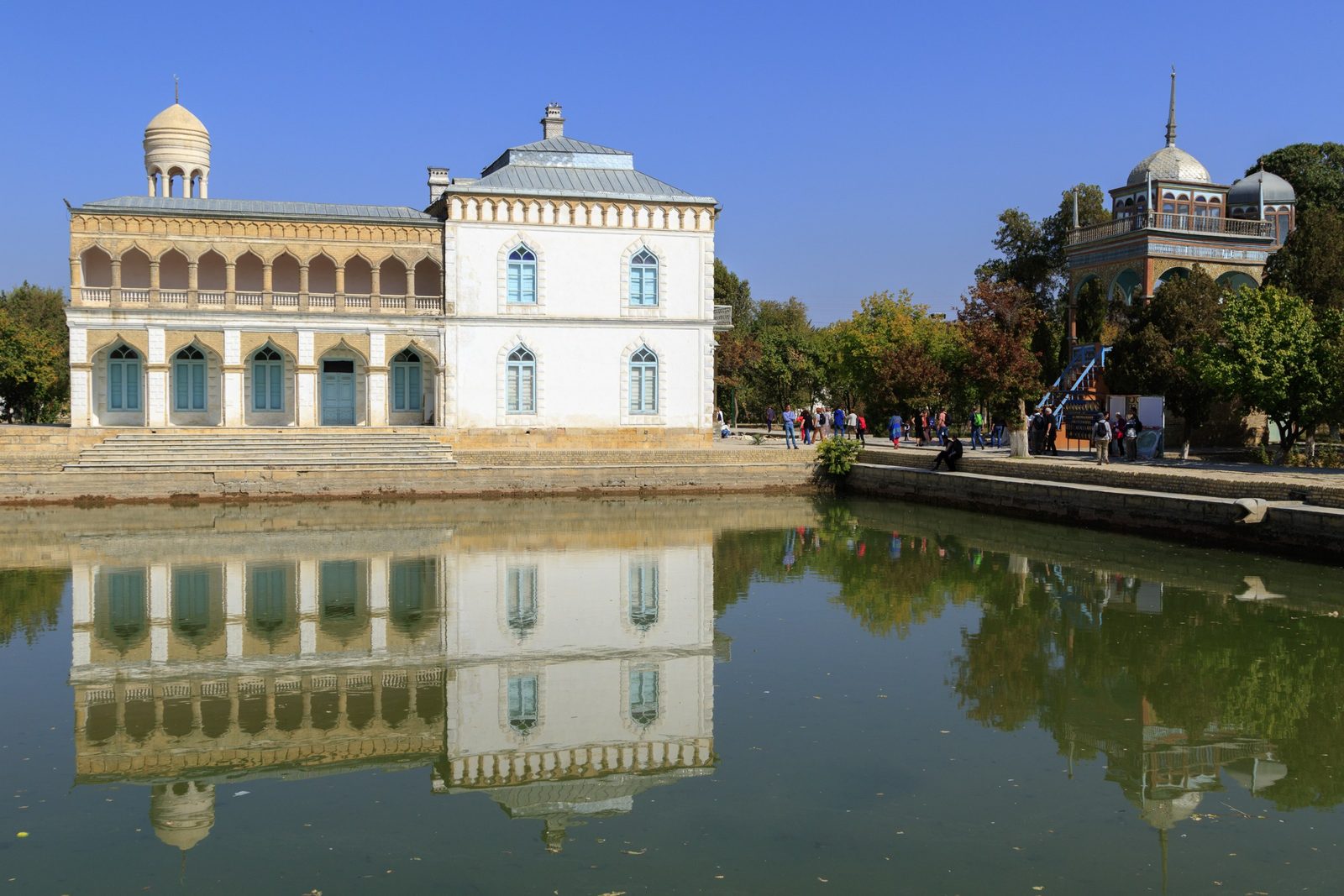
The country residence of the last emir of Bukhara, Alim Khan, was built in 1912–1918: European outside, Bukharan inside, with a garden, a pond and carved iwans. Today it is the museum of decorative and applied arts. The rooms hold embroidered robes, ceramics, jewellery, Chinese and Japanese porcelain, furniture and photographs of the late emirate.
The palace is outside the old town, so take a taxi. A ticket for a foreign adult costs 60,000 som. Allow an hour and a half, and combine it with the Did you know? A village renamed in honour of a Sufi master Bahauddin Naqshband (1318–1389), who gave his name to one of the largest Sufi orders, was born and buried near Bukhara in Qasr-i Hinduvan. The village was later renamed Qasr-i Arifan in his honour; the tomb over his grave dates from 1544. Read more → complex in one drive.
Museums in the monuments of old Bukhara
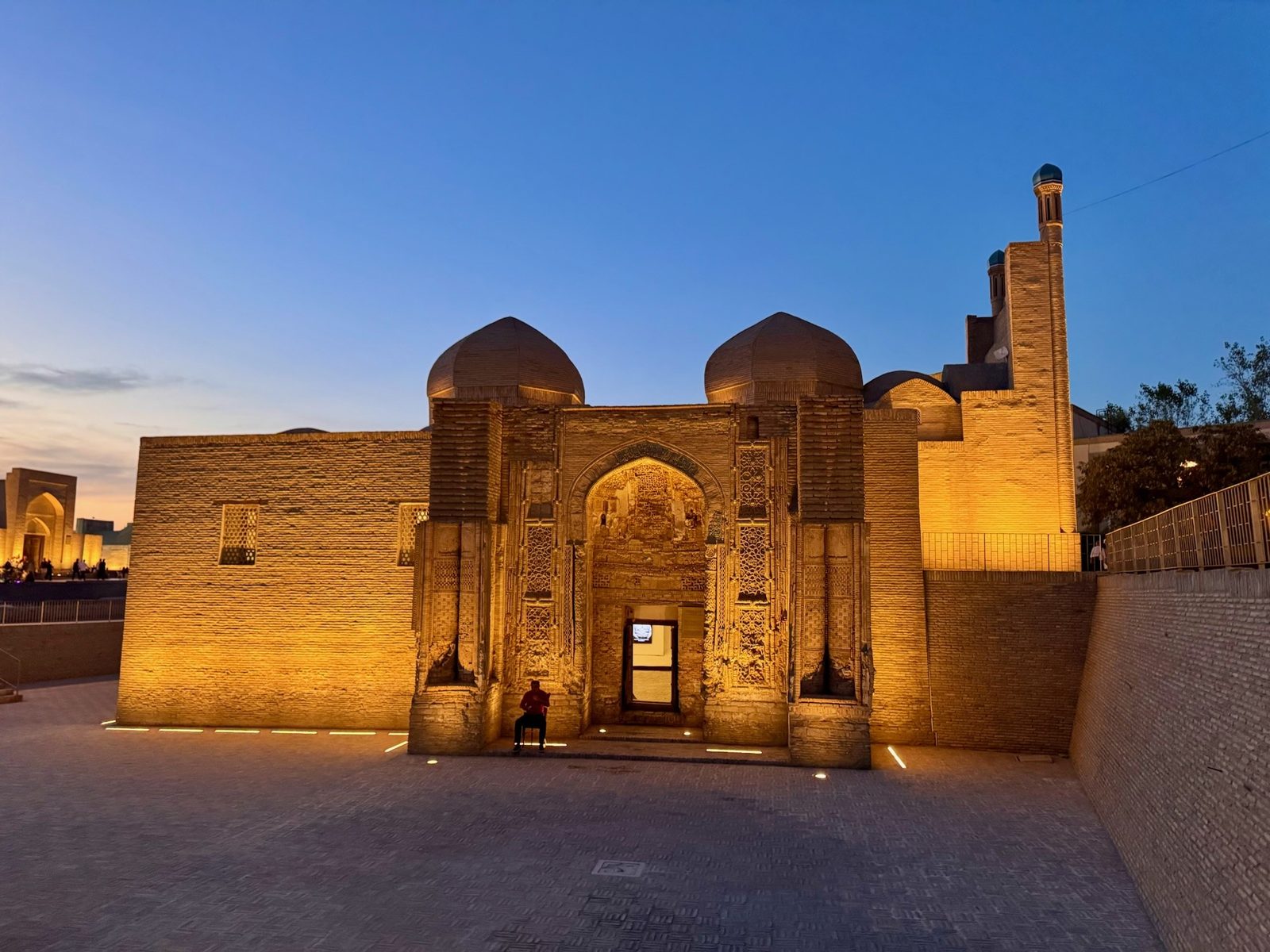
Walk through the centre and you pass museum after museum, each in a building that is worth the ticket on its own. A ticket to each of these costs 20,000 som for a foreign adult.
- The carpet museum is in the Did you know? Magoki-Attori: a mosque 'in the pit' Magoki-Attori means roughly 'in the pit': even in the 10th century it lay below street level. Beneath it lie remains of a pre-Islamic temple. Read more → mosque, with carpets of the 18th–20th centuries from Uzbekistan and the neighbouring countries.
- The museum of the history of water supply is in the Did you know? A cone-shaped dome over Job's spring Chashma-Ayub, 'Job's Spring', has a conical dome in the Khorezm style, rare in Bukhara. Legend says Job struck the ground with his staff and water flowed; inside is a museum of Bukhara's water supply. Read more → mausoleum, built over a spring: leather water bags, ceramic pipes and copper vessels from the 10th to the 20th century.
- The museum of woodcarving fills the 17th-century An Islamic college: student cells and classrooms around a courtyard behind a grand portal. In the old towns many now house museums and craft workshops. of Abdulaziz Khan.
- The museum of the history of calligraphy is in the 15th-century :Did you know? Engineers pulled a leaning minaret back upright By 1920 a minaret of the Ulugh Beg Madrasah on the Registan was tilting. In 1932 engineer Vladimir Shukhov straightened it; the second minaret was set upright in 1965. Read more → 1,743 manuscripts and lithographed and printed books, and 3,570 handwritten documents.
- The museum of Varakhsha and Bukhara ceramics, in the khanqah of Did you know? A caravanserai that became a madrasah by a khan's word Nadir Divan-Begi built his 1622 building by Lyabi-Hauz as a caravanserai. At the opening Imam Quli Khan praised it as a fine madrasah, and a khan's word could not be taken back: a portal and cells were added, and a madrasah it became. Read more → at Lyabi-Hauz, shows ceramics and carved stucco from the palace of Varakhsha.
- The museum of fine arts, named after the miniaturist Kamoliddin Behzod, holds more than 1,000 paintings, drawings, sculptures and miniatures, among them works by Pavel Benkov.
- The blacksmith’s workshop museum is in the 17th-century Kulyuta caravanserai, and the house of a rich merchant of the 19th century shows how a Bukhara family lived (30,000 som).
Outside the city, the museum-reserve also runs the museum of ancient Paykend at the excavations and the memorial museum of Ibn Sina in Afshona, the village where he was born.
How to plan the museums of Samarkand and Bukhara
| Museum | Ticket, foreign adult | Hours | Allow |
|---|---|---|---|
| Afrasiyab Museum, Samarkand | Paid at the desk | Mon–Sat, 9:00–17:00 | 1 hour |
| Ulugh Beg Observatory, Samarkand | Paid at the desk | Confirm on the day | 1 hour |
| Museum of the History of Culture, Samarkand | Paid at the desk | 9:00–17:00 | 1 hour |
| Ark, Bukhara | 60,000 som | 9:00–18:00, in season 8:00–21:00 | 1.5 hours |
| ,Did you know? Legend: the emir's palace site was chosen with meat Legend says that when Emir Nasrullah wanted a summer palace in the mid-19th century, sheep carcasses were hung in several places around Bukhara, and the spot where the meat spoiled last was chosen. Sitorai Mohi-Hosa there today dates from 1912–1918. Read more → Bukhara | 60,000 som | 9:00–18:00, in season 8:00–21:00 | 1.5 hours |
| Museums in the monuments, Bukhara | 20,000 som each | 9:00–18:00, in season 8:00–21:00 | 20–30 minutes each |
The Bukhara museum-reserve works without days off; on Tuesdays, Wednesdays and Sundays its museums close at 17:00. Carry cash in som: photographing the exhibits in Bukhara is a separate fee, and our notes on cards and cash explain the rest.
In Samarkand, put Afrasiyab, the observatory and Konigil into one morning by car: that is the route of our Samarkand Discovery tour. For the monuments in the centre, book a walking tour with a guide. Tickets and hours for everything else are in Samarkand sights, tickets and hours.
In Bukhara, start at the Ark at opening time, walk the centre with its small museums after lunch and leave Sitorai Mohi-Hosa for a separate drive. If the ceramics museum makes you want to see the craft alive, add our trip to the Gijduvan ceramics workshop with lunch. Prices and hours for the monuments are in Bukhara and Khiva sights, tickets and hours.
A trip built around museums. Sogdiana Unearthed spends eight days on the archaeology of Samarkand and Bukhara, from the Museum of History in Tashkent to Afrasiyab and Paykend. Crafts of Bukhara and Samarkand goes from the museums to the workshops. Starting in Tashkent? See Tashkent museums first.
In short
- Samarkand’s museum highlight is the Ambassadors’ Painting of about 650 in the Afrasiyab Museum, open Monday to Saturday, 9:00–17:00.
- Afrasiyab, the Ulugh Beg Observatory and Konigil fit into one morning by car.
- In Bukhara the Ark and Sitorai Mohi-Hosa cost 60,000 som each for a foreign adult.
- The smaller Bukhara museums sit inside madrasahs, a mosque and a mausoleum, at 20,000 som each.
- The Bukhara museum-reserve has no day off; carry cash in som for tickets and photo fees.
© Photos
- The 7th-century Ambassadors' Painting in the Afrasiyab Museum, Samarkand — Nassima Chahboun / Wikimedia Commons · CC BY-SA 4.0
- Afrasiyab ancient settlement, Samarkand — Akhemen / Wikimedia Commons · CC BY-SA 4.0