
Places in this article: Samarkand · Tashkent
Amir Timur (Tamerlane): his life, his capital and where to see his legacy
On 4 September 1404 a party of Castilian envoys reached the outskirts of Samarkand after more than a year on the road from Cádiz. They were received in a garden, in a palace among orchards, by a ruler then close to seventy who had spent thirty-five years at war. His name was .Amir Timur (Tamerlane, 1336–1405), founder of the Timurid empire, which had its capital in Samarkand. Born near Shahrisabz. Read more → Europe called him ,Did you know? Why Europe calls Timur 'Tamerlane' Persian sources called him Timur-i Lang, 'Timur the Lame', after old wounds to his right leg and arm. When his tomb was studied in 1941, anthropologist Mikhail Gerasimov confirmed the injuries and modelled his face from the skull. Read more → and his ambassador-guest, Ruy González de Clavijo, wrote down everything he saw.
Timur is the man behind most of the blue domes travellers come to Uzbekistan for. Here is his life told for travellers, from the town where he was born to the tomb where he lies, with the places where you can still follow him today. We keep to history and to the monuments; each building has its own detailed guide on this site, and we link to them.
Who Timur was
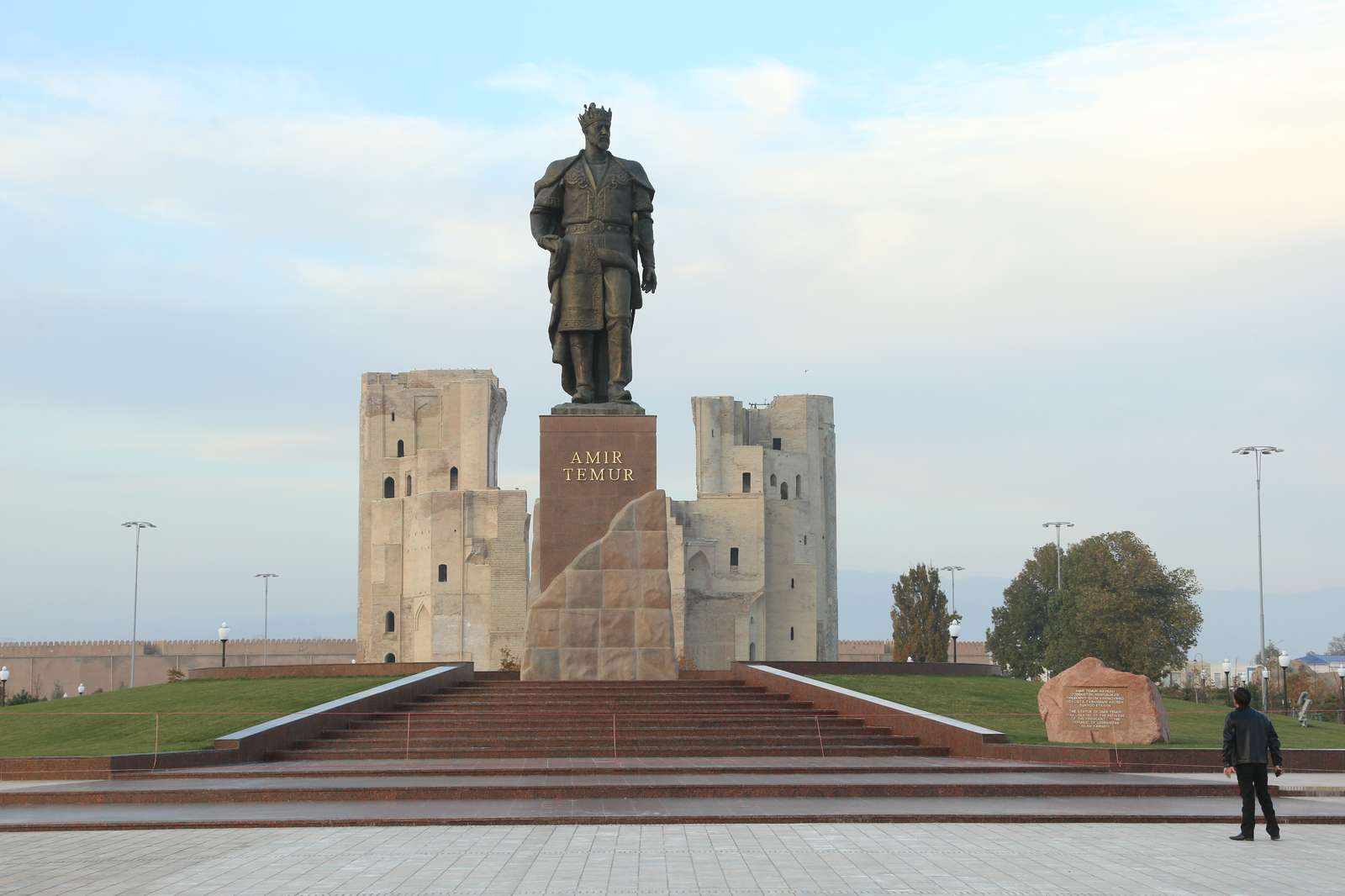
Timur was born near Kesh, the town now called Shahrisabz, about 80 km south of Samarkand. Later court histories give the date as 8 April 1336; sources of his own time point to the late 1320s. His family belonged to the Barlas, a Turkic-speaking tribe of Mongol origin, and his father, Taraghai, was a minor noble. The name Timur means “iron”.
Around 1363, as a young warrior, he was hit by two arrows, in the right leg and the right hand. He lost two fingers and limped for the rest of his life. The Persian nickname Timur-i Lang, “Timur the Lame”, became “Tamerlane” in European languages. In Uzbekistan he is called Amir Timur, or Amir Temur.
From Kesh to the throne
The 1360s were a time of rival princes in the land between the Amu Darya and the Syr Darya. Timur rose as the ally, and then the rival, of Amir Husayn, his brother-in-law. In 1370 Husayn was defeated, and on 9 April 1370 Timur was proclaimed ruler at Balkh. He married ,Did you know? Legend says the architect asked the queen for a kiss Legend says the architect of Bibi-Khanym would finish on time only for a kiss from Timur's wife, and Timur punished him. In fact the mosque was Timur's own project; his wife Saray Mulk Khanum built her madrasah across the road. Read more → Husayn’s widow and a descendant of Genghis Khan.
Timur never called himself khan. That title belonged by custom to the descendants of Genghis Khan, so he kept a khan of that line as a figurehead and ruled as amir, “commander”. Through his marriage he also took the title güregen, “son-in-law” of the royal house. He made Samarkand his capital.
Thirty-five years of campaigns
For the rest of his life Timur was almost always on campaign. He took Khwarazm, with Urgench, in 1379; fought Tokhtamysh, khan of the Golden Horde, in 1391 and again in 1395; reached Delhi at the end of 1398; and on 20 July 1402 defeated the Ottoman sultan Bayezid I at Ankara. His empire reached from Anatolia to the borders of India.
These wars were hard on the cities they reached, and the chroniclers of his time remember him with fear as well as awe. Historians today weigh both sides: the destruction of the campaigns, and the craftsmen, scholars and wealth they brought back to Samarkand. One meeting shows the second side. In 1401, outside Damascus, Timur talked for days with Ibn Khaldun, the great North African historian, who left an account of their conversations.
Samarkand, the capital he built
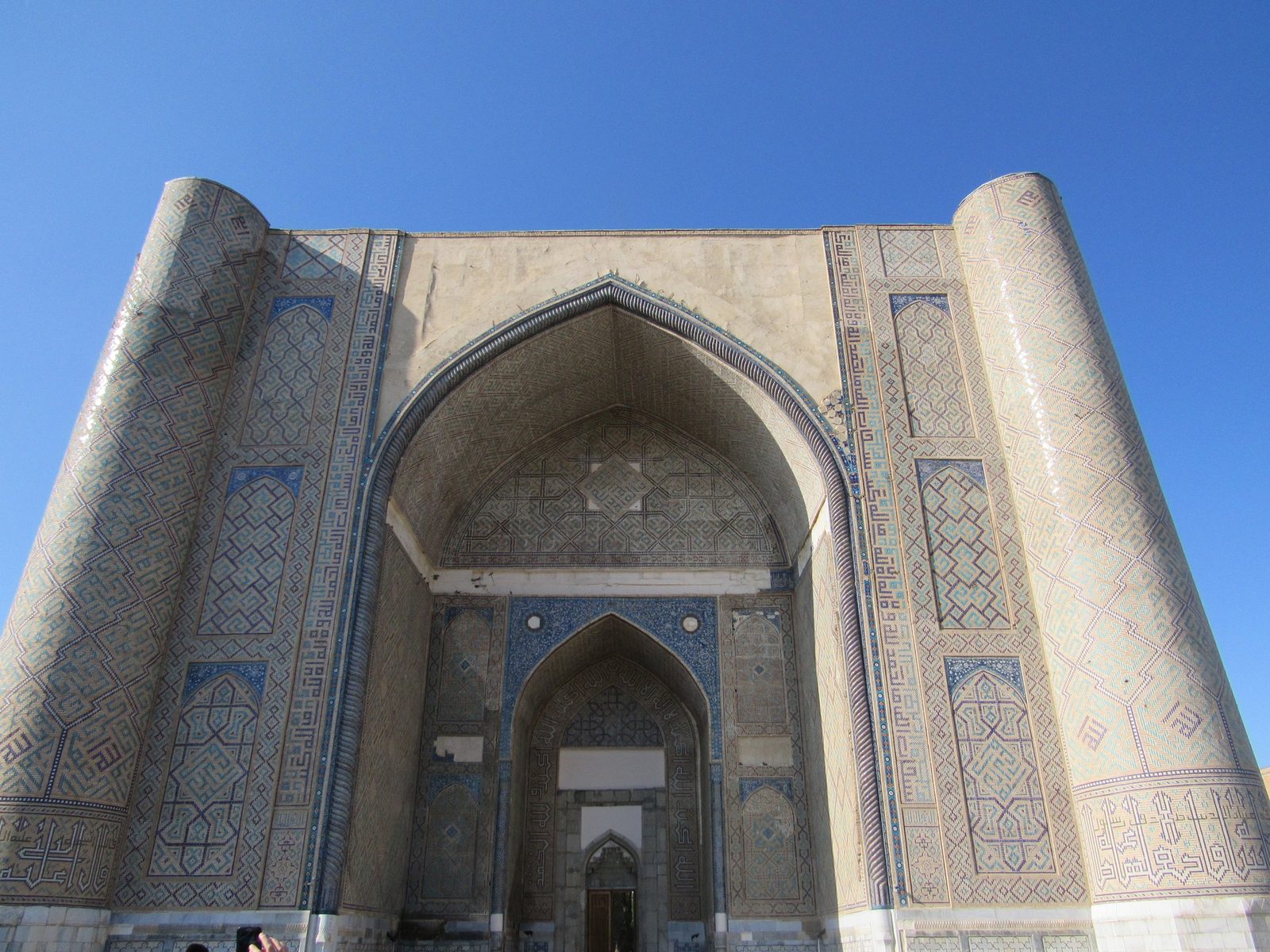
Timur rebuilt Samarkand as the showcase of his empire. Craftsmen came from Iran, India, Khorezm and the Golden Horde, and around the city he laid out garden palaces where he received guests. After the Indian campaign, in May 1399, work began on his Friday mosque, Bibi-Khanym, with a courtyard meant for 10,000 people and a portal 35 metres high.
On the hill of Shah-i-Zinda his sister, his nieces, his wives and his commanders were buried in tiled mausoleums, and walking up its lane you watch the tile-makers of his time perfect their art. In 2001 Samarkand was inscribed on the UNESCO World Heritage List as a crossroad of cultures. How the city grew before and after him is in our guide to ancient Samarkand.
Kesh and the White Palace
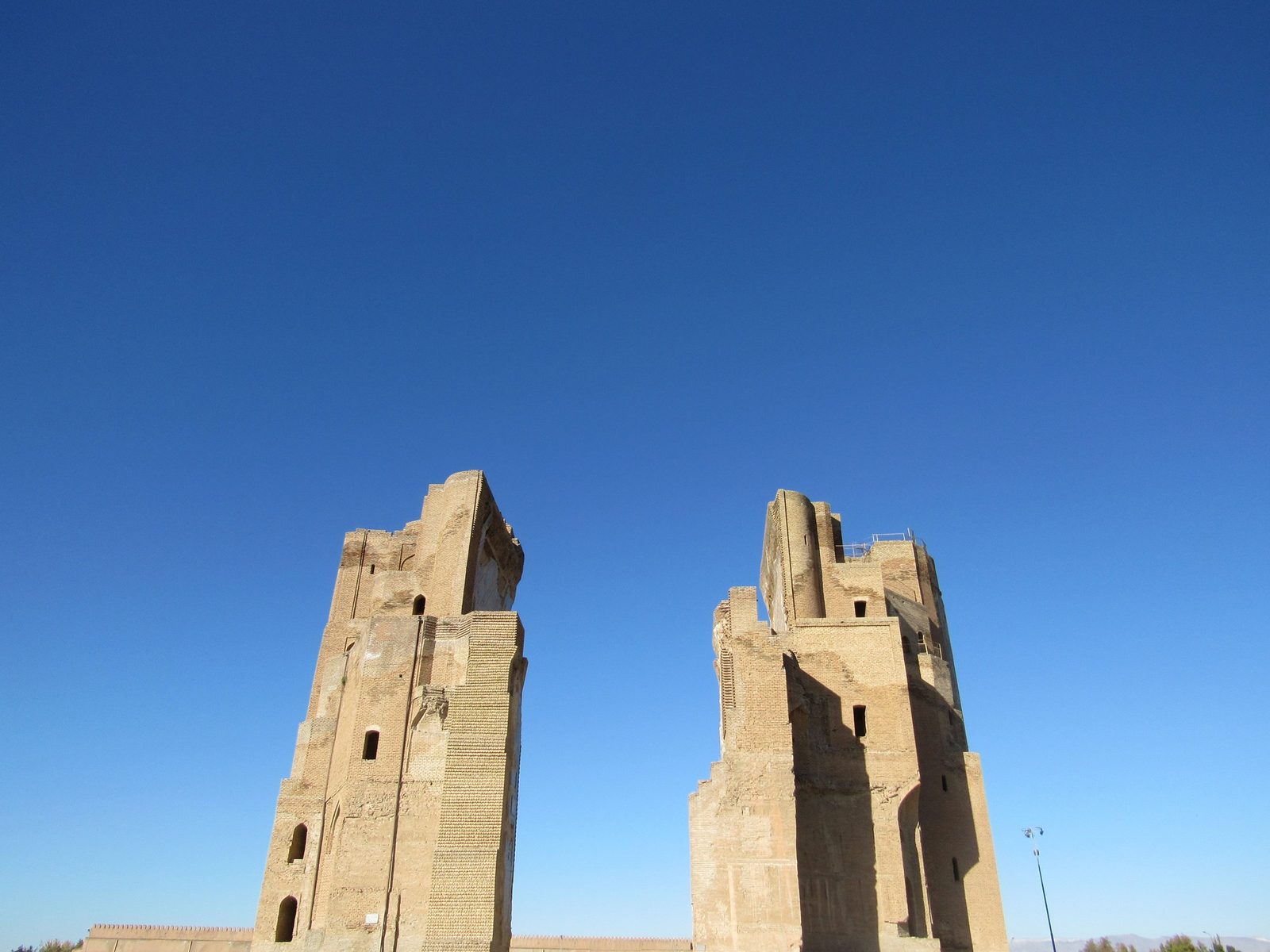
Timur did not forget his home town. In 1380 he began a palace in Kesh, Ak-Saray, the White Palace; the gate gives 1404 as the year it was finished. Only the two towers of its entrance survive, and they still rise about 38 metres, with an arch 22.5 metres wide between them.
In the old town he built Dorus Siadat for his eldest son, Jahangir, who died young in 1376, and prepared a stone crypt there for himself. He was never laid in it. The historic centre of Shahrisabz has been on the UNESCO World Heritage List since 2000; plan the day with Shahrisabz from Samarkand.
Clavijo’s embassy, 1403–1406
Henry III, King of Castile, sent Ruy González de Clavijo to Timur after the victory at Ankara. The embassy left Cádiz on 22 May 1403, wintered in Constantinople, crossed the Black Sea to Trebizond and went overland through Tabriz, Mashhad, Balkh and Termez. In Kesh the envoys saw The ruins of Amir Timur's palace in Shahrisabz, his home town. Only parts of the giant entrance arch still stand. Read more → still being built after twenty years of work.
In Samarkand they stayed from September to 21 November 1404. Clavijo described the feasts held in the gardens, silk pavilions hung with jewels, painted elephants, and a city in constant building and rebuilding: he saw Timur order the too-low gateway of his new mosque pulled down and built again. He was back at his king’s court on 24 March 1406. His account, printed in 1582 as Embajada a Tamorlán, is still the fullest eyewitness picture of Timur’s Samarkand. Our 8-day In the Footsteps of Clavijo tour follows him through Samarkand, Shahrisabz and Bukhara.
The last campaign and Gur-e-Amir
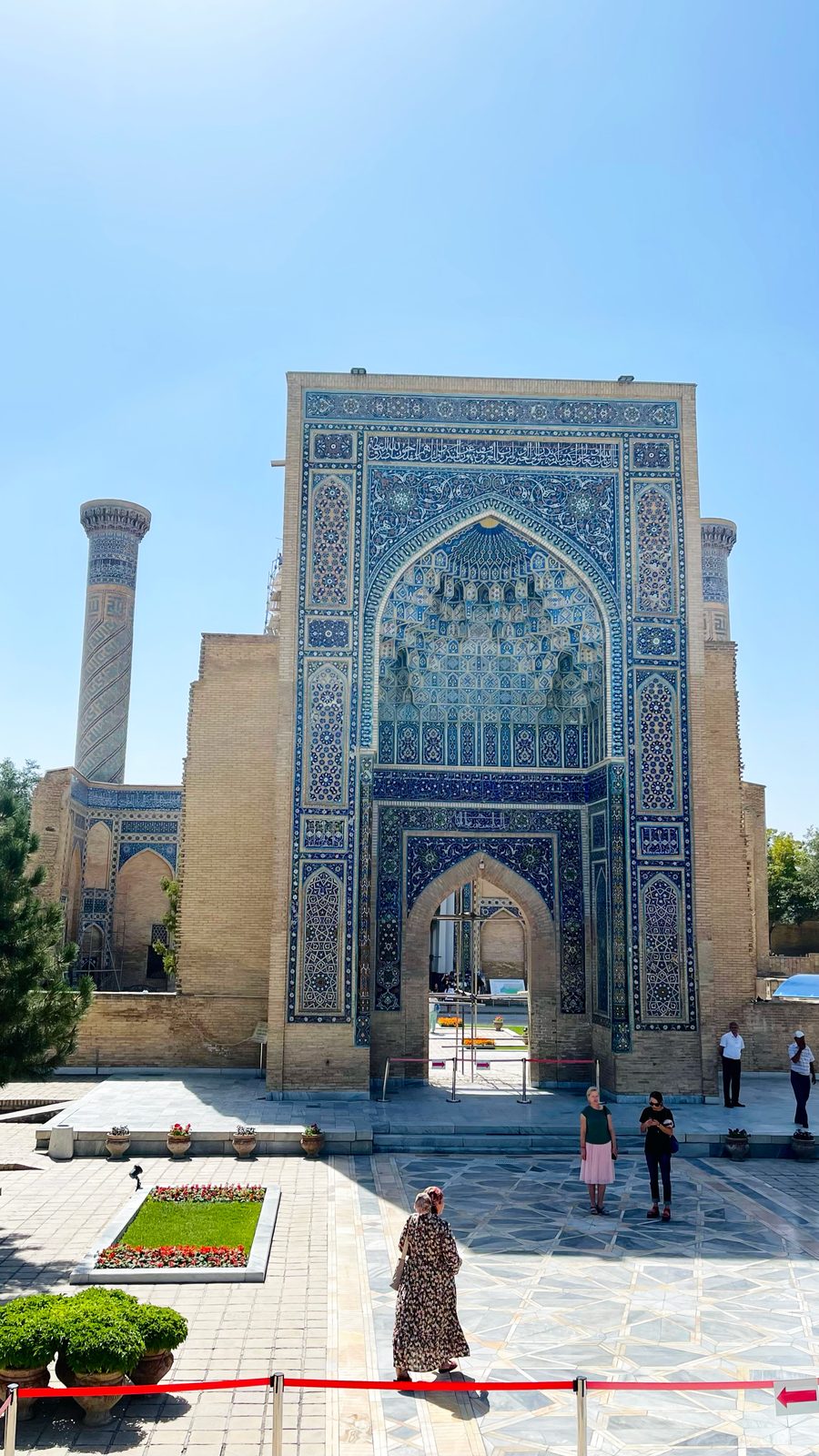
In December 1404, soon after the envoys left, Timur set out east against Ming China, a rare winter campaign. He fell ill beyond the Syr Darya and died at Otrar, called Farab in the sources, on 17 or 18 February 1405. His body was brought back to Samarkand.
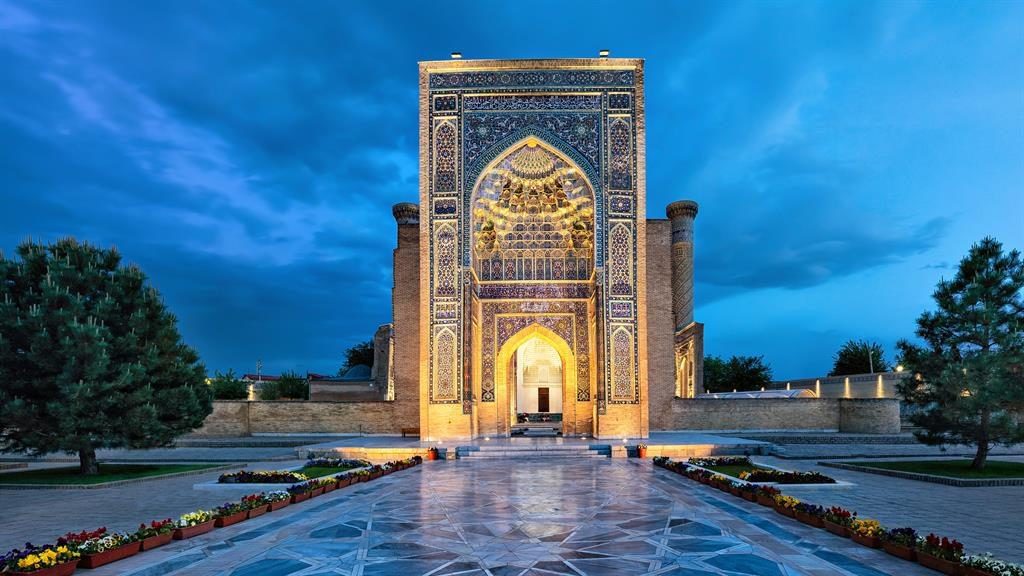
He was laid not in Kesh but in Gur-e-Amir, the mausoleum he had begun for his grandson .Did you know? Timur's tomb was built for his grandson Gur-e-Amir was begun in 1404 for Muhammad Sultan, Timur's grandson and chosen heir. Timur had a crypt ready in his home town of Shahrisabz, but when he died in 1405 he was laid in Samarkand, in the tomb meant for the young prince. Read more → His grandson Did you know? Ulugh Beg measured the year to within 25 seconds Working at his Samarkand observatory, Ulugh Beg put the tropical year at 365 days 5 h 49 min 15 s, about 25 seconds too long, closer than Copernicus a century later. Read more → later set a block of dark green nephrite over his grave. In June 1941 a team led by the anthropologist Mikhail Gerasimov opened the tomb: the bones confirmed the old injuries to the right leg and arm, and showed a man about 172 cm tall, tall for his age. Gerasimov modelled his face from the skull, and Timur was reburied in 1942.
The heirs: Shah Rukh, Ulugh Beg and Babur
The dynasty Timur founded, the Timurids, ruled until 1507. His son Shah Rukh governed the empire from Herat, while Samarkand went to Shah Rukh’s son Ulugh Beg, the astronomer prince who built the An Islamic college: student cells and classrooms around a courtyard behind a grand portal. In the old towns many now house museums and craft workshops. Read more → on the Did you know? The Registan's sun-carrying lion went on a banknote The Sher-Dor Madrasah (1619–1636) is named for the big cats with the sun on their backs on its portal. The image appeared on the reverse of Uzbekistan's 200-som note of 1997. Read more → and the observatory. The 15th century under them is called the Timurid Renaissance: great building, astronomy, poetry and book painting. The astronomers and mathematicians of that age are in great scientists of Uzbekistan.
,Did you know? The founder of the Mughal Empire was born in Andijan Babur was born in Andijan on 14 February 1483 and, at twelve, took the throne of Fergana in its capital Akhsikath. Later he founded the Mughal Empire in India; his memoir, the Baburnama, still describes the valley's towns. Read more → born in Andijan in 1483 and descended from Timur in the fifth generation, founded the Mughal Empire in India in 1526. What the whole family built, studied and wrote is in our guide to the Timurids and their heritage.
Where to see Timur today
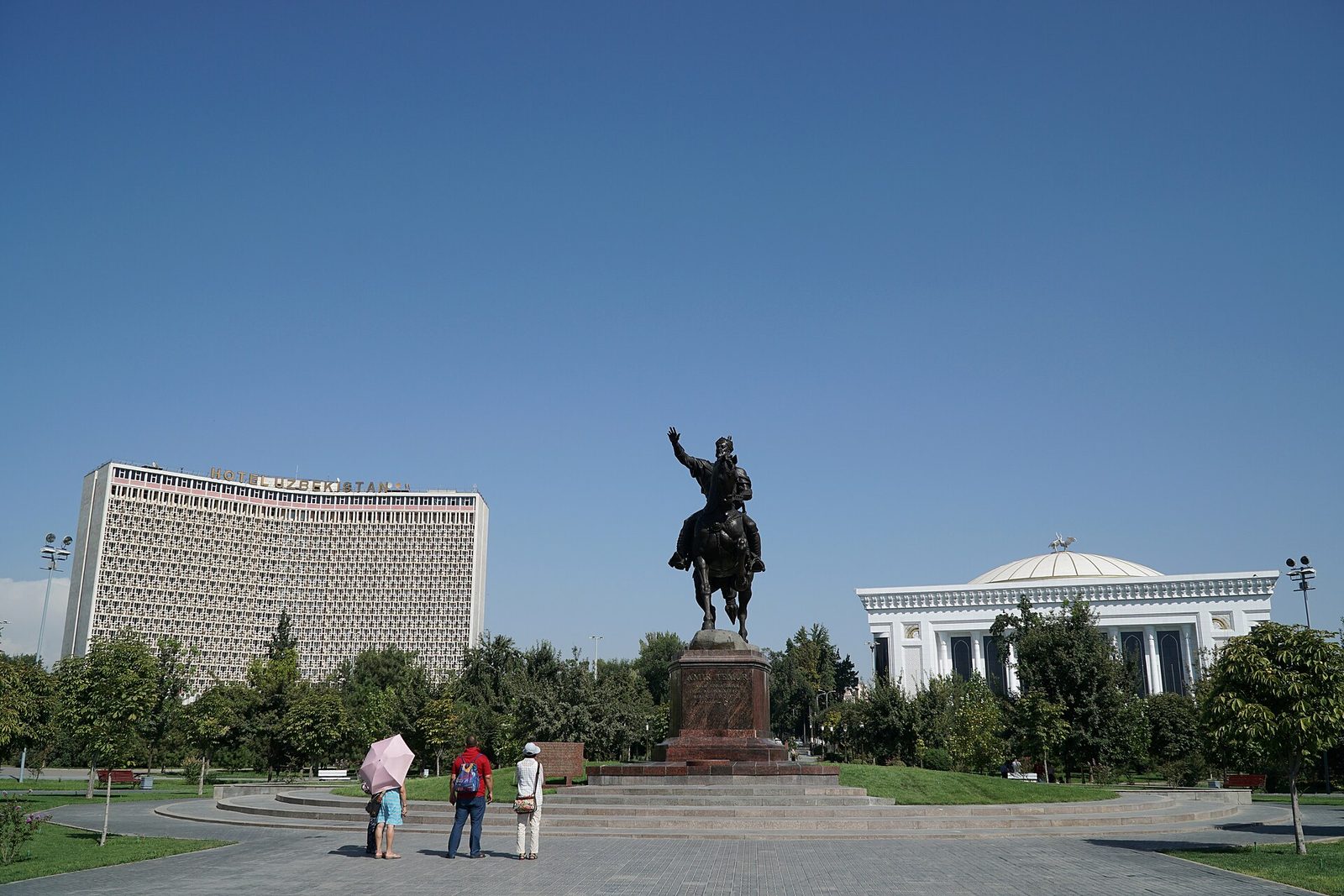
- Tashkent: ,Did you know? Legend: “Strength lies in justice” were Timur's own words The equestrian statue of Amir Timur in central Tashkent, unveiled in 1994, bears the motto “Strength lies in justice” in four languages. Tradition attributes the words to Timur himself, but historians cannot confirm he said them. Read more → with his equestrian statue, and next to it the State Museum of the History of the Temurids, opened in 1996 under a blue dome. It reopened in spring 2026 with a new exhibition on his life and his age; see Tashkent museums.
- Samarkand: ,Did you know? Timur's tombstone went to Persia and came back The dark-green jade slab on Timur's grave in Gur-e-Amir was carried off by Nader Shah in 1740. It broke, and on his advisers' urging he sent it back to Samarkand. Read more → Bibi-Khanym and ,Did you know? Why Shah-i-Zinda means 'the Living King' The necropolis grew around the shrine of Qutham ibn Abbas, a cousin of the Prophet Muhammad. Legend says he did not die in battle but went down a deep well to a garden of paradise, where he lives on. Read more → the three monuments of his lifetime. We see Gur-e-Amir at dusk, when the dome is lit.
- Shahrisabz: Ak-Saray, his statue of 1996 in front of it, Dorus Siadat and the empty crypt, a day trip of about 90 km over the mountains from Samarkand.
Timur on a trip
All the places of his life fit into one week. Our In the Footsteps of Clavijo tour spends 8 days in Tashkent, Samarkand, Shahrisabz and Bukhara, and the guide speaks your language and is included in the price. If you are already in Samarkand, add the Shahrisabz day to any programme, or take the 8-day classic tour, which covers Tashkent, Samarkand, Bukhara and Khiva. The most pleasant months are April–May and September–October, when the walk between the monuments is pleasant all day.
In short
- Timur, called Tamerlane in Europe, was born near Kesh (Shahrisabz), traditionally on 8 April 1336, and ruled from 1370 to 1405 as amir, not khan.
- His campaigns reached from Anatolia to Delhi; he brought craftsmen and wealth to Samarkand, his capital.
- His own buildings: Ak-Saray in Shahrisabz, Bibi-Khanym and the family tombs of Shah-i-Zinda in Samarkand.
- Clavijo, the envoy of Castile, saw his court in 1404 and left the richest eyewitness account.
- Timur died at Otrar in February 1405 and lies in Gur-e-Amir; his museum is in Tashkent.
© Photos
- Amir Timur Square, Tashkent — Adam Harangozó / Wikimedia Commons · CC BY-SA 4.0