

 Deutsch
 English
 Español
 Français
 Italiano
 Polski
 Português
 Suomi
 Svenska
 Türkçe
 Ελληνικά
 Български
 Русский
 עברית
 한국어
 中文
 日本語
Fergana Valley
The craft heartland east of Tashkent: the khan's palace in Kokand, silk looms in Margilan and the blue-glazed pottery of Rishtan.
- 2–3 days
- Daily train from Tashkent at 07:20 through the Kamchik tunnel: Kokand at 10:26, Margilan at 11:02
- Kokand, Rishtan, Margilan and Fergana are a short drive from one another
About Fergana Valley
The Did you know? Legend says Fergana's 'heavenly horses' sweated blood Legend says the horses of Dayuan, as Chinese chronicles called Fergana, sweated blood, and around 102 BC Emperor Wu of Han sent an army to bring some home. The 'blood' was most likely a skin parasite that causes tiny bleeding spots. Read more → is the green, busy east of Uzbekistan: a basin about 300 km long and up to 70 km wide, with the Did you know? The tulip's family tree is said to begin in the Tien Shan Long before Ottoman gardens and Dutch bulb fields, wild tulips grew in Central Asia's mountains, and the Tien Shan is often named as their homeland. In April they flower on the slopes around Chimgan. Read more → to the north and the Alay range to the south. The Andijan, Fergana and Namangan regions alone are home to about ten million people, so towns, orchards and fields run into one another. For travellers the valley means crafts: woodcarving in ,Did you know? Kokand's Friday mosque stands on 98 columns from India Muhammad Umar Khan built Kokand's Juma Mosque in 1812–1818. Its 100-metre iwan rests on 98 carved red-wood columns brought from India, and its minaret is 22 m tall. Inside is a small museum of applied arts. Read more → silk in Did you know? Legend says Margilan is named after chicken and bread Legend says locals greeted Alexander the Great with chicken and bread, 'murg' and 'non', and the dish gave the town its name. In fact Alexander never reached here; the name Margilan is recorded from the 10th century. Read more → and pottery in ,Did you know? Legend says a Rishtan apricot made a great scholar praise God Legend says 12th-century Rishtan folk brought a new apricot to their countryman Burhan al-Din al-Marghinani in Samarkand; he tasted it and said 'Subhanallah' three times, so it is called subhoni. The scholar is real: he wrote al-Hidaya. Read more → much of it made by families who have done it for generations.
Margilan was a settlement more than two thousand years ago and has made silk since antiquity. In 1740 Kokand became the capital of the ,Did you know? Legend says Kokand was named for the warmth of its people Legend says the city owes its name to the hospitality of its people: Arab geographers wrote it as Khavakand, read as “pleasant”. Linguists are more cautious — only “-kand”, “city” in Sogdian, is certain. Kokand was also called the abode of poets. Read more → which ruled the valley until it was abolished in 1876. That same year a new town was founded next to Margilan; since 1924 it has been called Fergana. Today a railway under the Did you know? The Kamchik tunnel is the longest in Central Asia The railway tunnel under the Kamchik pass is 19.2 km long, the longest in Central Asia and the former USSR. China Railway Tunnel Group dug it with Uzbek Railways from September 2013 to February 2016, and the line opened on 22 June 2016. Read more → pass links the valley with Tashkent, and since September 2026 a new fast electric train runs every day.
History in brief
- 2nd–1st century BCA settlement appears on the site of Margilan, a town that has woven silk since antiquity.
- 1740Kokand becomes the capital of the Kokand Khanate, founded in 1709, and the khans rule the valley from here.
- 1870Did you know? Khudoyar Khan's palace once had seven courtyards Finished in the early 1870s, the 'Pearl of Kokand' had seven courtyards and some 114–119 rooms. Five courtyards and 19 rooms survive. The American diplomat Eugene Schuyler called it grander than any other palace in Central Asia. Read more → completes his palace in Kokand, with seven courtyards and more than a hundred rooms.
- 1876The khanate is abolished, and a new town, New Margelan, is founded next to Margilan; it has been called Fergana since 1924.
- 2016The 19.2 km Kamchik railway tunnel opens under the Qurama range, the longest tunnel in Central Asia.
- 2017UNESCO recognises the Margilan Crafts Development Centre's work to keep handmade Did you know? Legend says the first atlas silk copied a rainbow on water Legend says a Margilan khan wanted to marry a weaver’s daughter but promised to give her up for something more beautiful by morning. By a canal the weaver saw clouds and a rainbow reflected after rain — and wove the first khan-atlas. Read more → and Did you know? UNESCO holds up Margilan's silk weavers as a model In 2017 UNESCO added the Margilan Crafts Development Centre, which revives the hand-making of atlas and adras, to its Register of Good Safeguarding Practices. Atlas is pure silk; adras mixes silk and cotton. Read more → silk alive.
- 2026On 10 September a new CRRC electric train starts running every day between Tashkent and the valley.
What to see
Map is loading…
Map: © OpenStreetMap contributors
-
1Khudoyar Khan's palace, Kokand
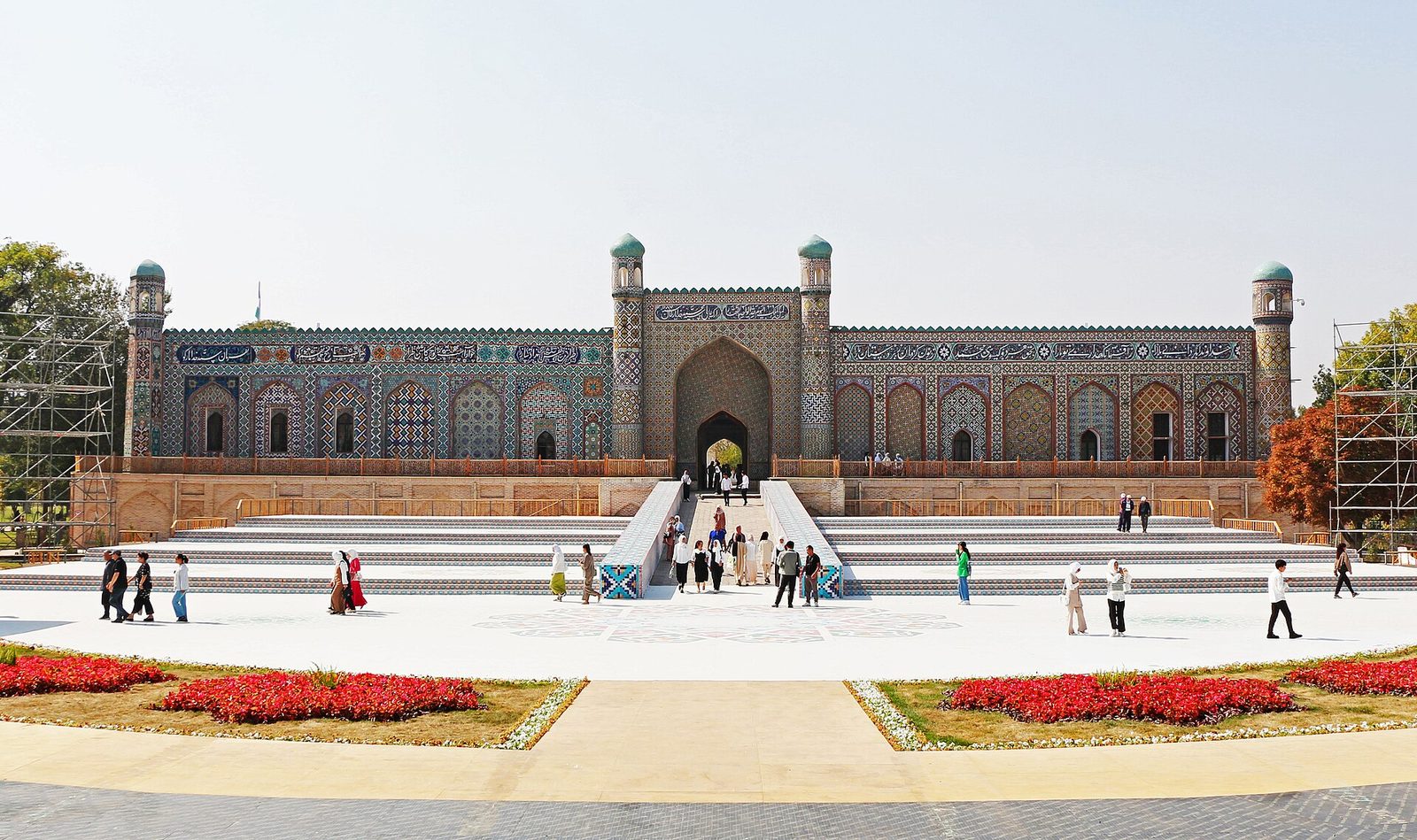
The palace Khudoyar Khan completed around 1870 had seven courtyards; five survive, with 19 rooms. Look at the tiled facade in yellow and green, rare colours in Uzbekistan, and the carved and painted ceilings inside. It has been a museum since 1925.
-
2Juma Mosque, Kokand
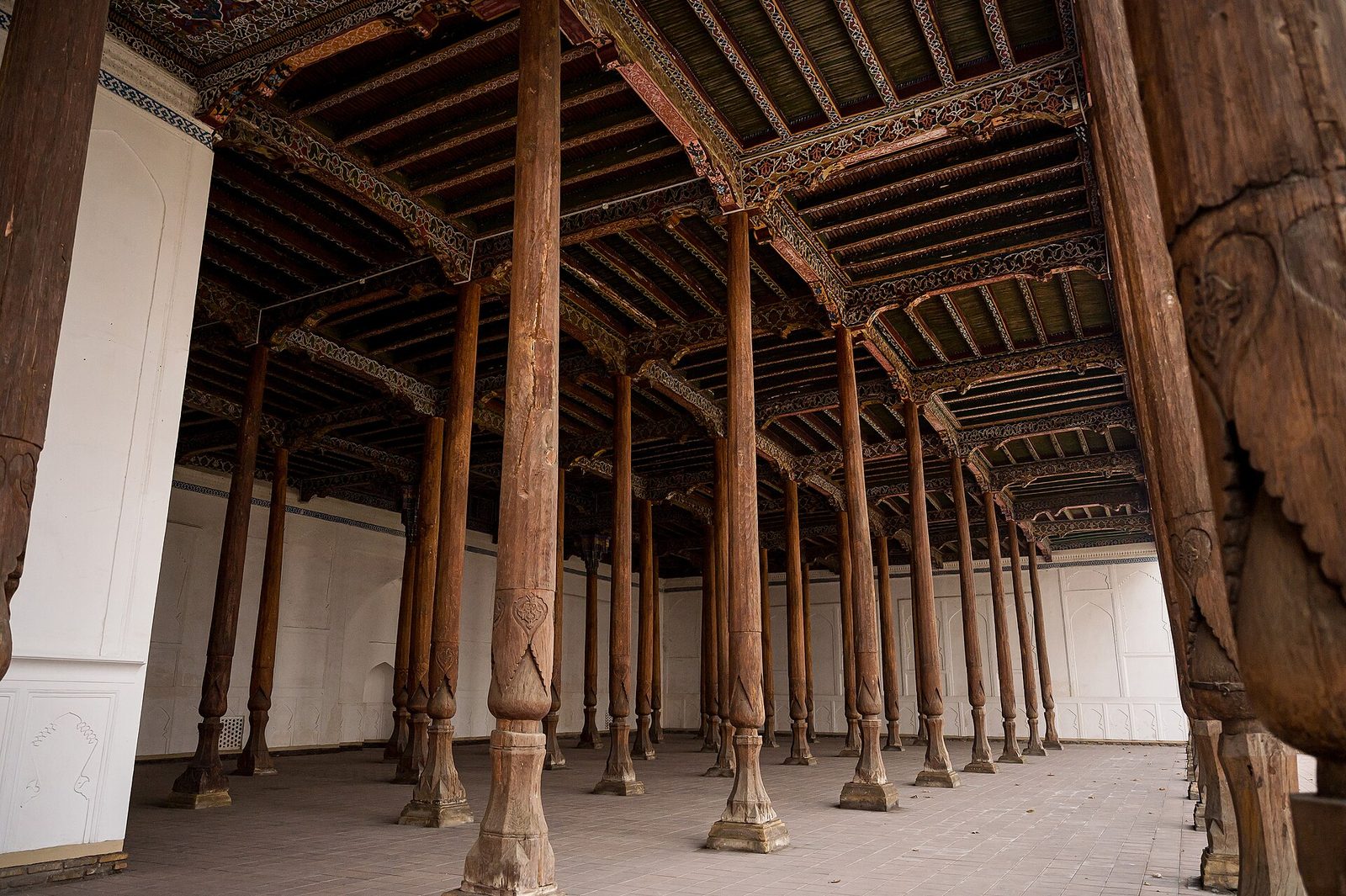
Kokand's Friday mosque from the early 19th century, with a long iwan, a covered porch, on 98 carved wooden columns. Walk its full length: it shows off the woodcarving for which Kokand was named a Did you know? Kokand was the first World Craft City in the CIS In 2019 the World Crafts Council, founded in 1964 and affiliated with UNESCO, named Kokand a World Craft City for woodcarving — the first in the CIS. The carved columns of the Juma Mosque and the palace ceilings show why. Read more → in 2019.
-
3Rishtan potters' workshops
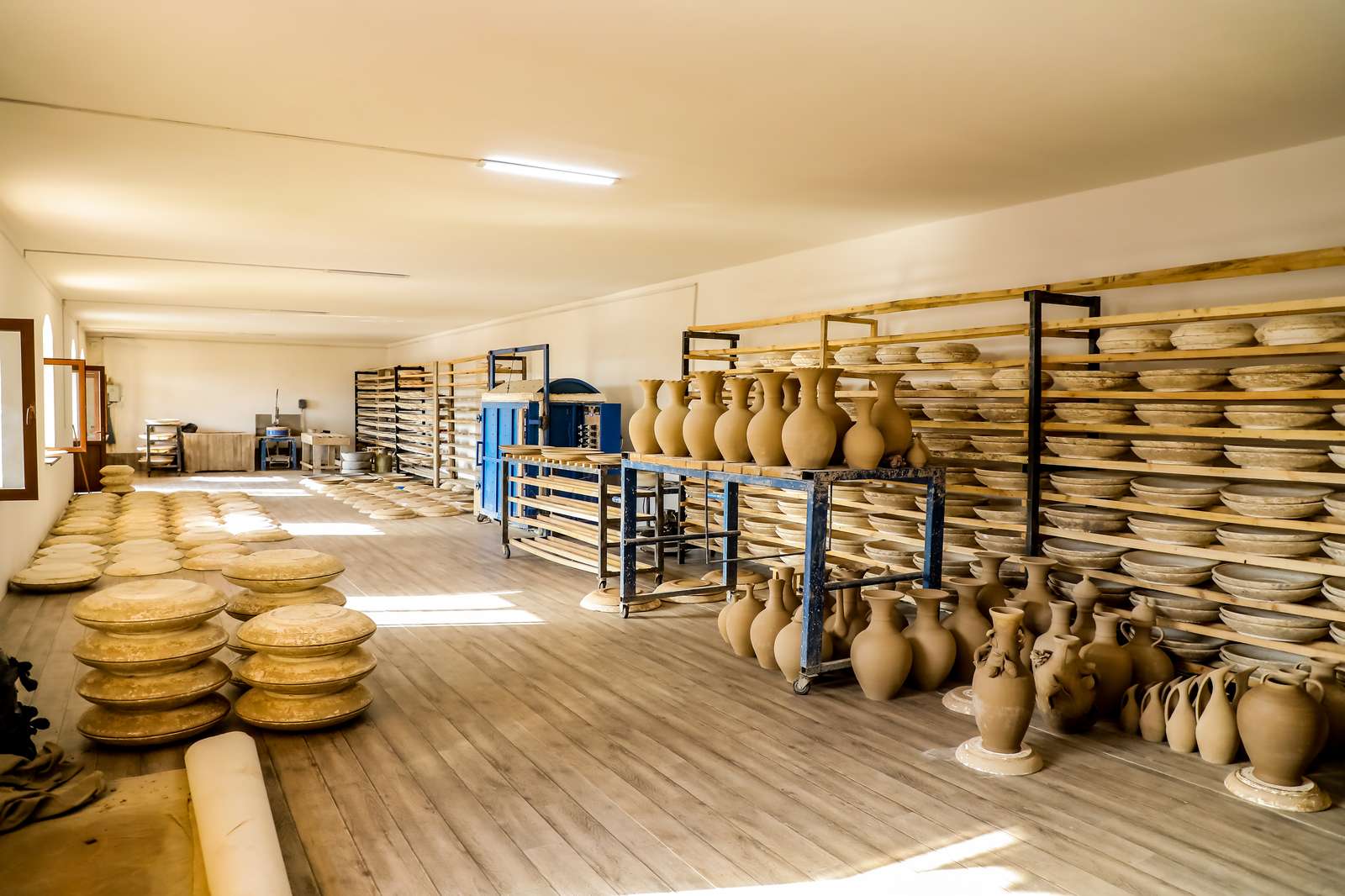
Rishtan has made pottery for about a thousand years from its red local clay, decorated with the blue-green Did you know? Rishtan’s famous blue comes from the ash of steppe plants Rishtan’s traditional glaze, ishkor, is an alkali made from the ash of wild plants gathered in spring and mixed with quartz sand; copper turns it turquoise. Most workshops now use ready-made glazes, but a few masters have revived the old recipe. Read more → glaze. In the workshops you watch the wheel, the painting and the kiln, and buy dishes from the people who made them. The International Ceramics Center in town has a museum of Rishtan.
-
4Yodgorlik silk factory, Margilan
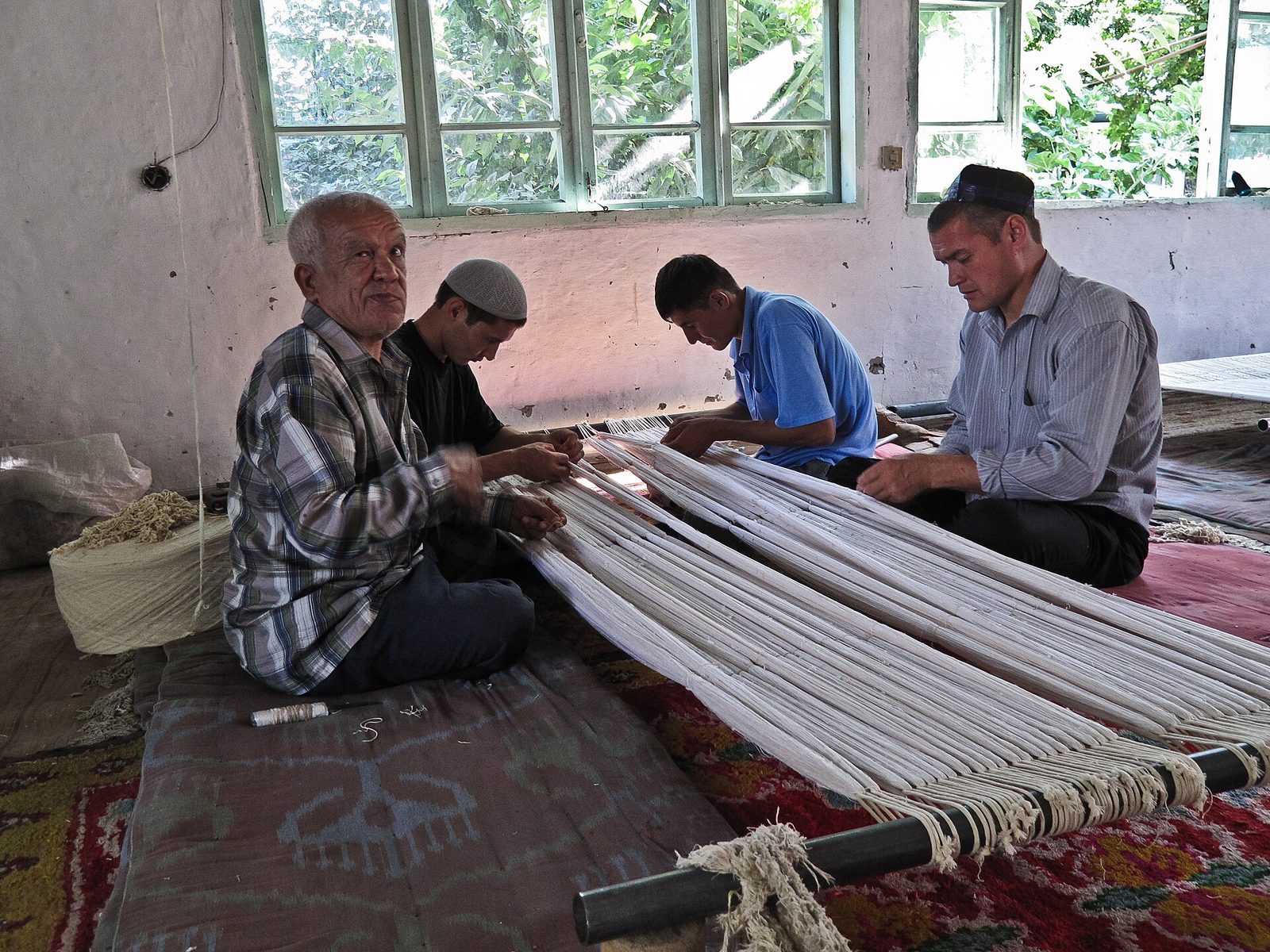
Here the whole chain is done by hand: cocoons are boiled, the thread is reeled and dyed, and ikat is woven on traditional looms. A guided walk takes you through every stage, so give it a morning.
-
5Kumtepa bazaar
A big market about 5 km west of central Margilan, held on Thursdays and Sundays. People come from the surrounding villages for textiles, produce and household goods, so it is a market for living, not for show.
-
6Fergana city
The regional centre of the valley, founded in 1876, with wide tree-lined streets and late 19th-century buildings. The local history museum is in the centre, and the city is a convenient base for the night.
-
7Kamchik pass and tunnel
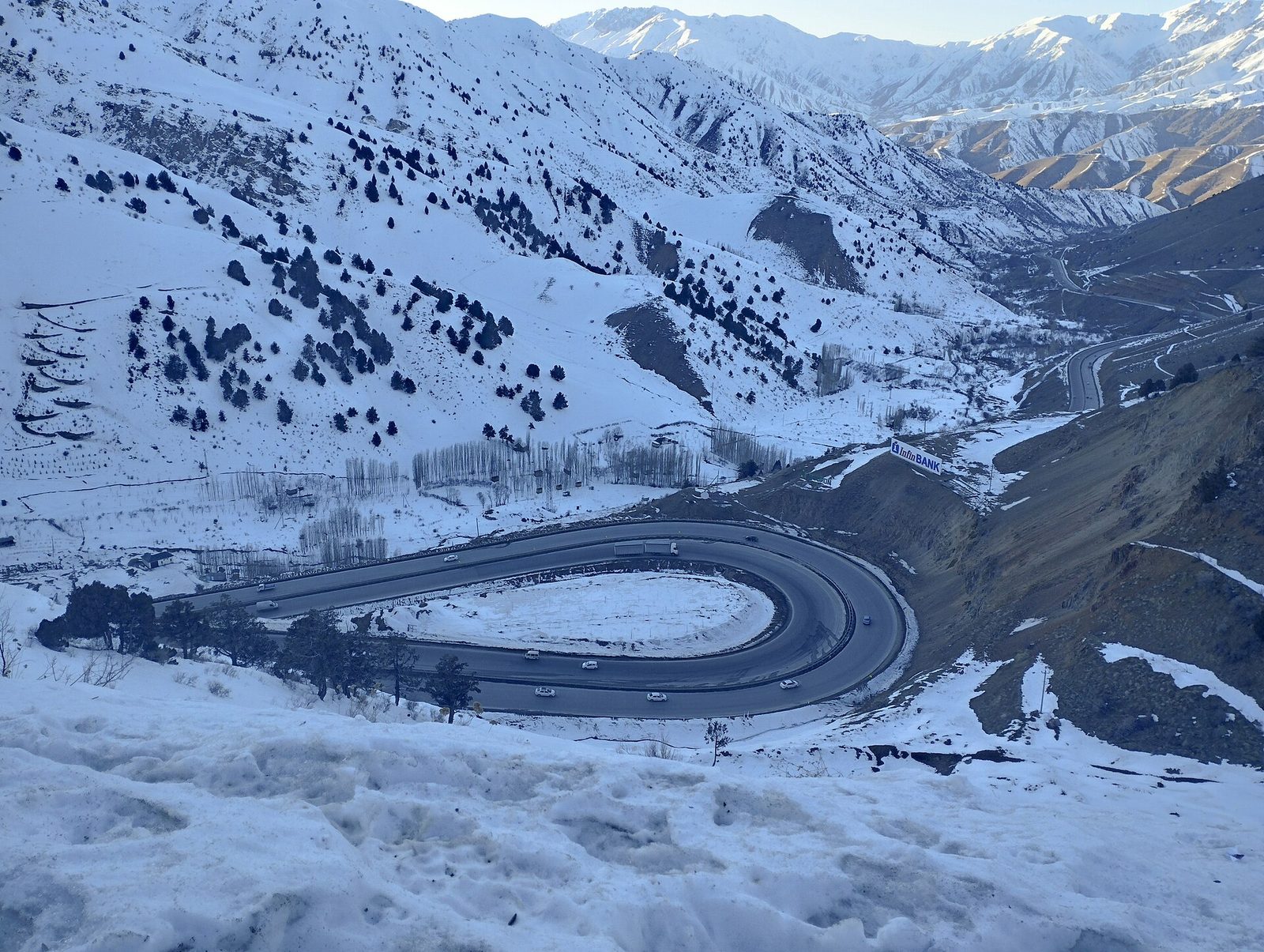
The road from Tashkent crosses the Qurama range at the Kamchik pass, 2,268 m high. The train goes underneath, through a 19.2 km tunnel between Angren and Pap. In winter the road can close because of avalanche risk; the train is the simple choice.
© Photos
Juma Mosque columned hall, Kokand — Arina Pan / Wikimedia Commons · CC BY-SA 4.0; Yodgorlik silk factory, Margilan — Peretz Partensky from San Francisco, USA / Wikimedia Commons · CC BY 2.0
Neighbourhoods
- Old Kokand The khan's palace, the Juma Mosque, the Narbutabey An Islamic college: student cells and classrooms around a courtyard behind a grand portal. In the old towns many now house museums and craft workshops. Read more → of the 1790s and the Did you know? A Kokand khan wrote over 10,000 verses under the name Amiri Umar Khan, who finished Kokand’s Juma Mosque, was also a poet who signed himself Amiri; his divan holds over 10,000 verses in Uzbek and Persian. Lines of his poetry are carved on the doors of Dakhmai Shakhon, the khans’ tomb. Read more → necropolis of the khans, all in the centre of town. Read more →
- Margilan The silk town: the Yodgorlik factory, the Crafts Development Centre in the old Toron mosque and, twice a week, Kumtepa bazaar on the edge of town. Read more →
- Rishtan A small town of potters about 45 km from Kokand. Workshops are spread through its streets, and many are run by families of hereditary masters. Read more →
- Fergana city The modern regional centre with wide streets, hotels and restaurants, right next to Margilan. A good place to spend the night. Read more →
What to eat
- Fergana Valley Rice cooked in a kazan with carrots, onions and meat: the dish of every Uzbek celebration. Each region cooks it its own way. Each district of the valley has its own plov, and the best known is made with devzira, a red-brown local rice. Andijan plov with devzira is registered as a geographical indication. Read more →
- Kokand halva Halva made to old recipes is Kokand's sweet speciality and a good gift to take home. Read more →
- Fruit at the bazaar The valley is farming country, and from summer to autumn the bazaars are piled with grapes, melons, pomegranates and apples.
Getting around
Most trips start with the train: get off in Kokand at 10:26 or Margilan at 11:02 and continue by car. Kokand to Rishtan is about 45 km, Rishtan to Margilan about 50 km, and Margilan and Fergana are next-door neighbours. In town, Yandex Go taxis work in Kokand, Margilan and Fergana; there is no metro.
Local tips
- Check the current train timetable on eticket.uzrailpass.uz before you book anything else. Read more →
- Kumtepa bazaar is held on Thursdays and Sundays: plan your Margilan morning around it if you can.
- Carry cash for bazaars and small workshops.
- Ceramics are heavy and fragile: ask the workshop to wrap them well and keep them in your cabin bag. Read more →
- In winter take the train: the road over the Kamchik pass can close because of avalanche risk. Read more →
Our take: how many days you need
Two days with one night cover Kokand, Rishtan and Margilan: the daily train makes it easy, and this is how our 14-day route does it. Our 3-day Fergana Valley extension from Tashkent adds a second night and a slower pace.
When to go: month by month
Daytime temperature, rainfall, public holidays and our rating for every month.
- Jan6° Cool, fewer people Cold: 6° by day 32 mm of rain ★ 1, 14
- Feb8.6° Cool, fewer people Cold: 8.6° by day 41 mm of rain
- Mar15.5° Great Cool: 15.5° by day 47 mm of rain ★ 8, 21
- Apr22.5° Great Comfortable: 22.5° by day 42 mm of rain
- May28.7° Great Comfortable: 28.7° by day 26 mm of rain ★ 9
- Jun34.1° Good Hot: 34.1° by day 8 mm of rain
- Jul35.9° Hard Hot: 35.9° by day 2 mm of rain
- Aug34.5° Hard Hot: 34.5° by day 2 mm of rain
- Sep29° Great Comfortable: 29° by day 3 mm of rain ★ 1
- Oct21.9° Great Comfortable: 21.9° by day 12 mm of rain ★ 1
- Nov13.4° Great Cool: 13.4° by day 30 mm of rain
- Dec7.5° Cool, fewer people Cold: 7.5° by day 31 mm of rain ★ 8
- 1 Jan — New Year
- 14 Jan — Defenders of the Motherland Day
- 8 Mar — International Women’s Day
- 21 Mar — Navruz
- 9 May — Day of Remembrance and Honour
- 1 Sep — Independence Day
- 1 Oct — Teachers’ Day
- 8 Dec — Constitution Day
- Ramadan Hayit (Eid al-Fitr): the date changes every year
- Kurban Hayit (Eid al-Adha): the date changes every year
Climate source: Wikipedia: Samarkand, 1991–2020 (Pogoda.ru.net, NOAA) — en.wikipedia.org/wiki/Samarkand; Wikipedia: Bukhara, 1991–2020 (NOAA) — en.wikipedia.org/wiki/Bukhara; Wikipedia: Urgench, 1991–2020 (Pogoda.ru.net, NOAA) — en.wikipedia.org/wiki/Urgench; Wikipedia: Tashkent, 1991–2020 (Pogoda.ru.net, NOAA) — en.wikipedia.org/wiki/Tashkent
Rating by daytime temperature: great — 18–30°, good — 12–18° or 30–33°, cool, fewer people — below 12°, hard — above 33°; heavy rain (100 mm and more) lowers great to good. For the cities we also follow our expert: the season is March–June and September–November, with March and November the best months (start and end of the season, few people); winter is not marked as a bad time.
How to see Fergana Valley
Pick the format — we will show the tours that fit it.
Add from here
Extensions that are easy to add to a trip through this place.
Fergana Valley: questions before the trip
How many days do I need in Fergana Valley?
2–3 days
How do I get to Fergana Valley?
Daily train from Tashkent at 07:20 through the Kamchik tunnel: Kokand at 10:26, Margilan at 11:02 More in the article: Uzbekistan tours from Greece: entry, flights from Athens and the Greek trail of Alexander
When is the best time to go to Fergana Valley?
Spring (April–May) and autumn (September–October) are the most comfortable; summer days are hot. More in the article: Weather in Uzbekistan by month: temperatures, what to wear, what to do
What can I add nearby?
Kokand, Rishtan, Margilan and Fergana are a short drive from one another
Before you go
Visa, season, budget and flights — the short answers.
 Uzbekistan tours from Latvia, Lithuania and Estonia: visa-free entry, flights from Riga, Vilnius and Tallinn and the best weeks of 202730 days without a visa on a Latvian, Lithuanian or Estonian passport, a nonstop flight from Riga and one chang…
 Weather in Uzbekistan by month: temperatures, what to wear, what to doDay and night temperatures for Tashkent, Samarkand, Bukhara and Khiva in every month, what to pack, what each …
 Uzbek national costume: doppi, chapan and atlas, and where to see themWhat the skullcap, the chapan and the atlas dress say about the person wearing them, how to tell a Chust doppi…
 Uzbekistan tours from Greece: entry, flights from Athens and the Greek trail of Alexander30 days without a visa on a Greek or Cypriot passport, one change from Athens or Thessaloniki, the Greek holid…
Didn’t find your trip?
Tell us what you want — a manager will put together a route and price within 24 hours.
Why you can trust us

 You talk to real people: Alexandra, Ksenia · Team →
- Tour operator licence No. 853484Tashkent Tourism Committee, 2025, open-ended
- Liability insuredAPEX Insurance, policy EAPD No. 1016716
- You pay only after we confirm the tripBy card through OCTO, a licensed Uzbek payment service
- Our own office in Tashkent100105, 29, Surkhon, Mirabad district, Tashkent, Uzbekistan
Google Maps ↗ · Yandex Maps ↗