

Bukhara
A living old town: the Kalyan minaret, the Ark fortress, trading domes and Lyabi-Hauz, all within walking distance of each other.
- 2–3 days, best on foot
- About 1.5 hours from Samarkand by high-speed train
- Nearby: the Nuratau mountains and village guesthouses
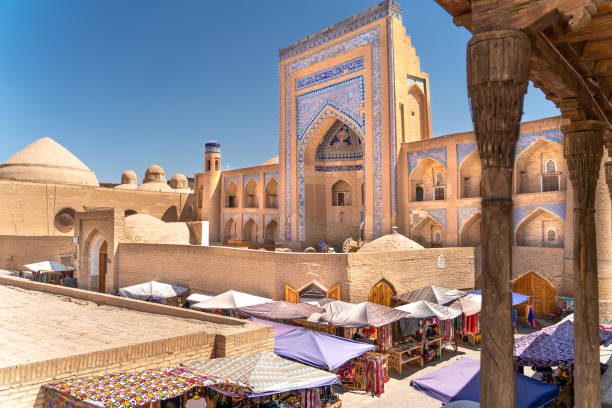
About Bukhara
Bukhara is a city of about 300,000 people, but the part you come for is small enough to walk end to end in half an hour. The historic centre has been on the UNESCO list since 1993, and it is not a museum quarter: people live in its lanes, and the trading domes still trade. The modern city wraps around it, and the railway station is 12 km away, in Kagan.
For most of a thousand years Bukhara was a capital: of the Samanids in the 9th and 10th centuries, of the Uzbek khans from the 16th, and of the emirs until 1920. That is why one small old town holds a fortress, a royal square, a summer palace and buildings from every century between the 10th and the 20th.
History in brief
- 850By the middle of the 9th century Bukhara is the capital of the Samanid state. Their 10th-century family tomb still stands in the city park.
- 1220Genghis Khan besieges Bukhara for 15 days and destroys it. The Samanid tomb survives because floods had already buried it in silt and sand.
- 1562Abdullah Khan II makes Bukhara the permanent capital of his khanate. The Kukeldash An Islamic college: student cells and classrooms around a courtyard behind a grand portal. In the old towns many now house museums and craft workshops. and the jewellers' trading dome date from his reign.
- 1785The Manghit dynasty comes to power, and the state becomes the Emirate of Bukhara.
- 1873After a lost war with the Russian Empire in 1868, the emirate becomes a Russian protectorate, with the emirs still on the throne.
- 1920The emirate ends, and the Bukharan People's Soviet Republic takes its place; in 1924 Bukhara becomes part of Soviet Uzbekistan.
- 1993The historic centre of Bukhara joins the UNESCO World Heritage List.
What to see
Map is loading…
Map: © OpenStreetMap contributors
-
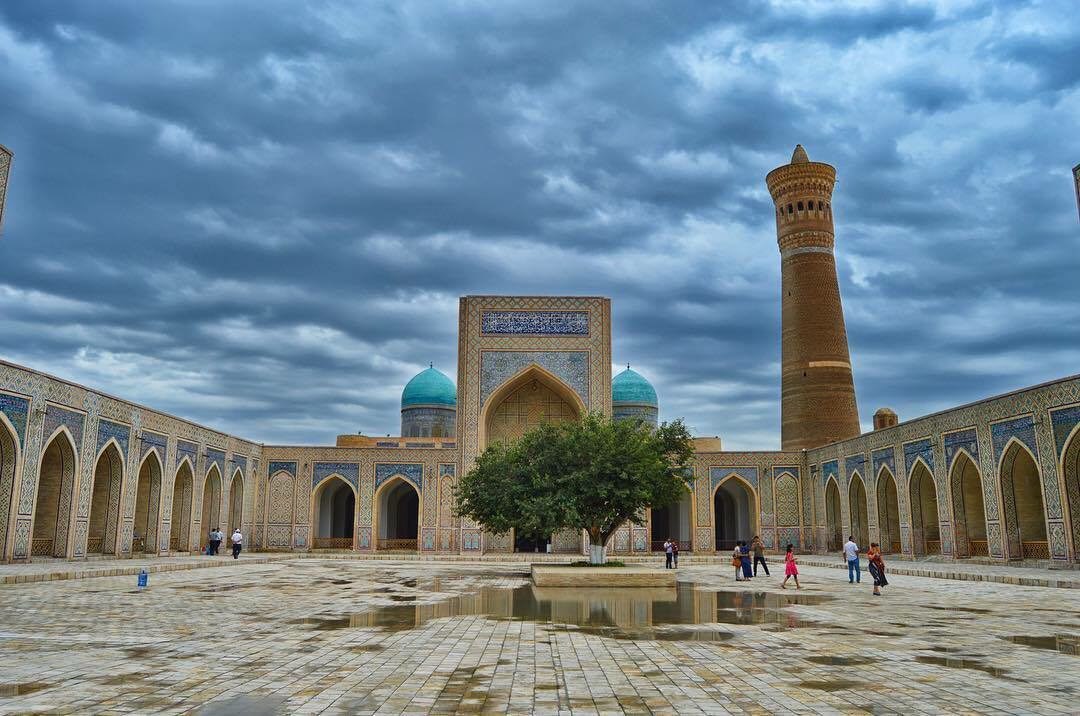
1Poi Kalyan
The Did you know? Diggers went 13 m down and never found its base The Kalyan Minaret of 1127 rises about 46 m, and an excavation reached 13 m without finding the bottom of its foundations. Genghis Khan reportedly ordered it spared. Read more →, the Kalyan Mosque and the Did you know? A madrasah still teaching after almost 500 years Mir-i-Arab, built in the 1530s opposite the Kalyan Mosque, was one of only three Islamic schools allowed to keep working in Soviet times, and it still trains students today. Read more → face each other across one square: the heart of the old town. Look at the bands of patterned brick that run up the minaret. Come at sunset, when the brick turns gold and the terraces around the square fill up.
-
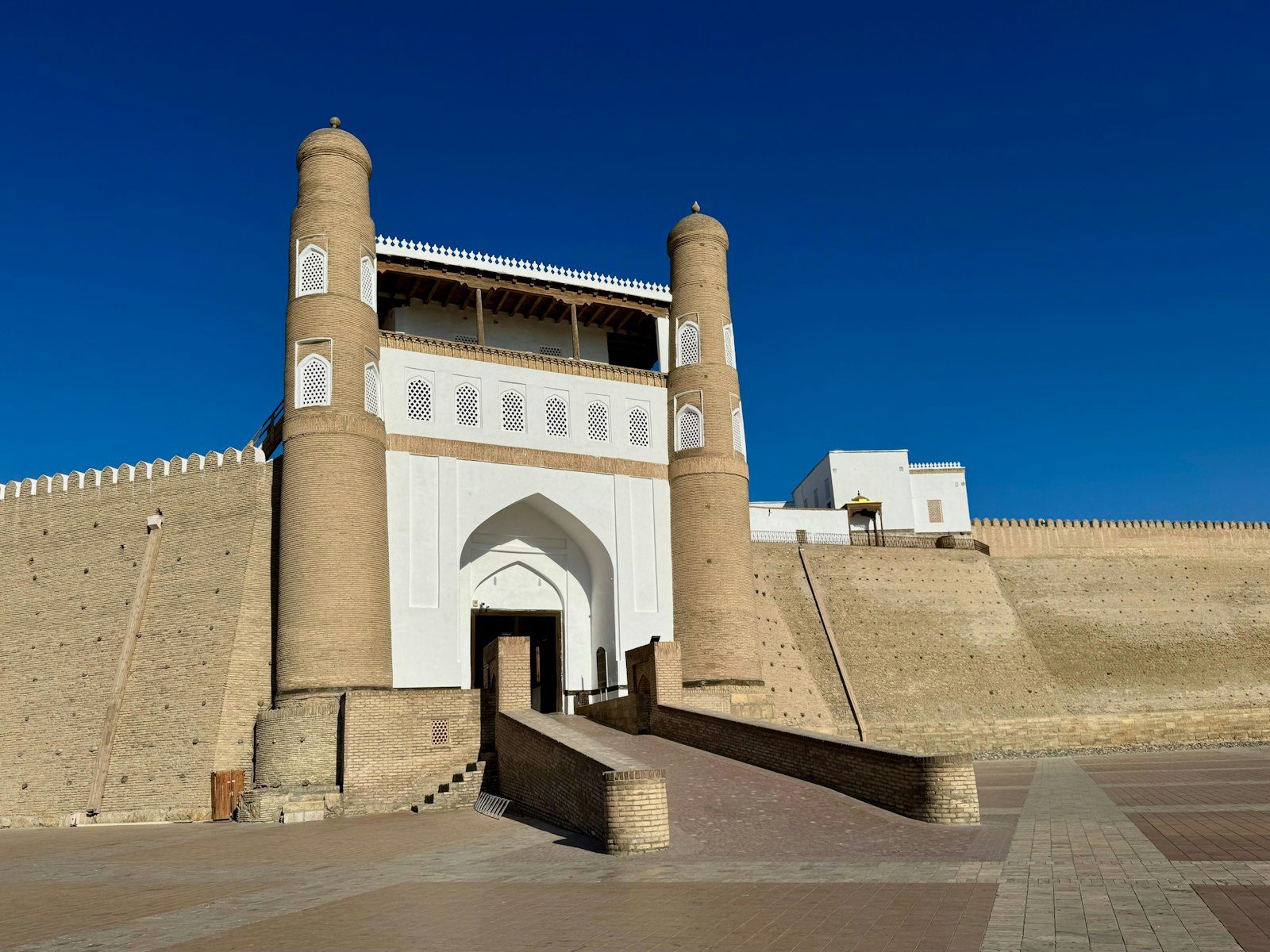
2The Ark and Bolo-Hauz
The fortress of the rulers of Bukhara stands on an artificial hill, behind walls 16 to 20 m high. A ramp leads up through the gate between two 18th-century towers to the throne room, the coronation court and the museums inside. Opposite is the A mosque of 1712 opposite the Ark in Bukhara. Its twenty carved wooden columns reflect in the pond in front. mosque of 1712, its twenty carved wooden columns reflected in the pond.
-
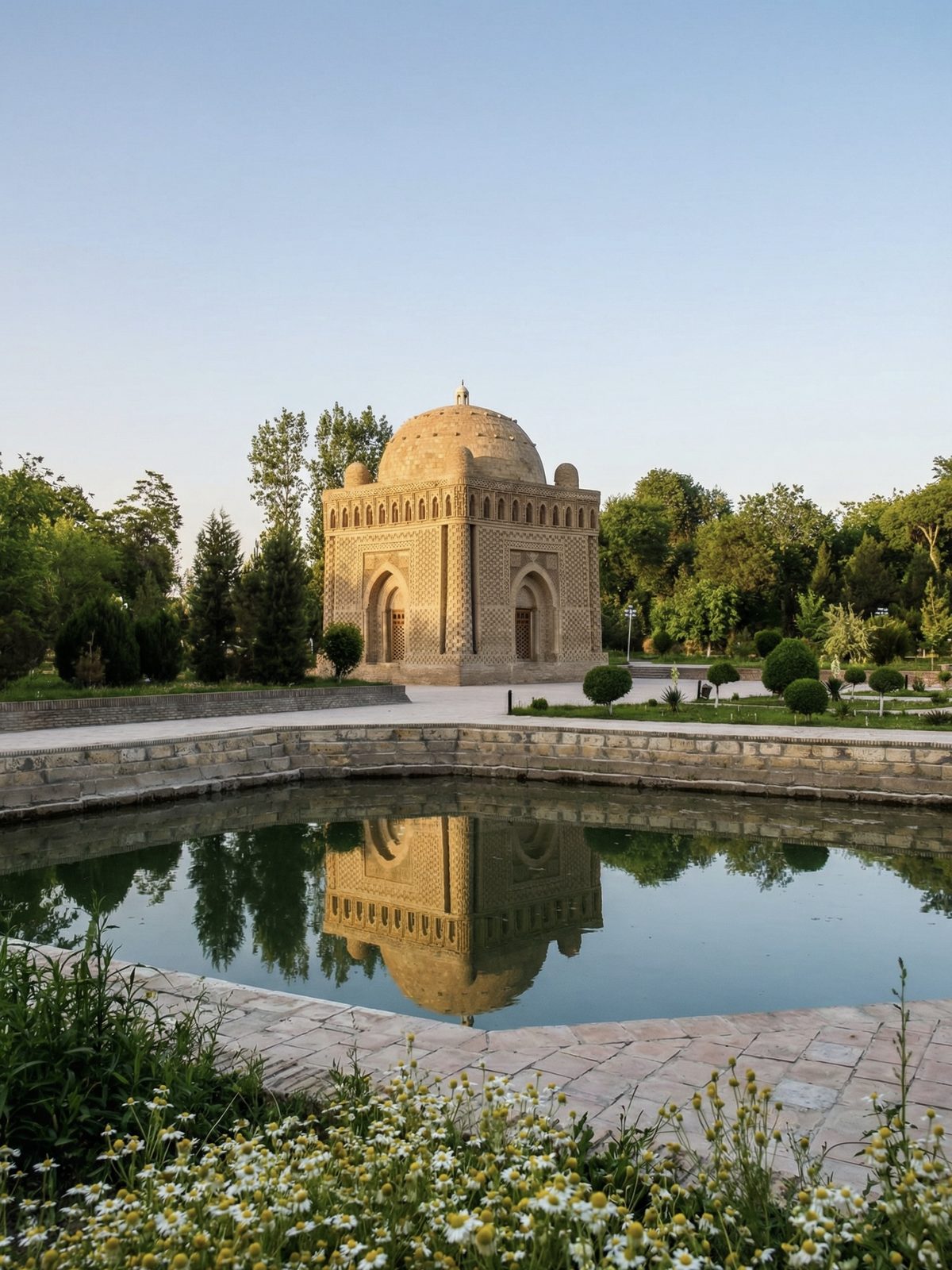
3Samanid Mausoleum
A 10th-century family tomb built entirely of baked brick laid in patterns: basketweave, checkerboard, rosettes. Floods buried it before the Mongols came in 1220, and that is how it survived. Go in the late afternoon, when the low sun brings out the relief; Did you know? A cone-shaped dome over Job's spring Chashma-Ayub, 'Job's Spring', has a conical dome in the Khorezm style, rare in Bukhara. Legend says Job struck the ground with his staff and water flowed; inside is a museum of Bukhara's water supply. Read more → is a short walk away.
-
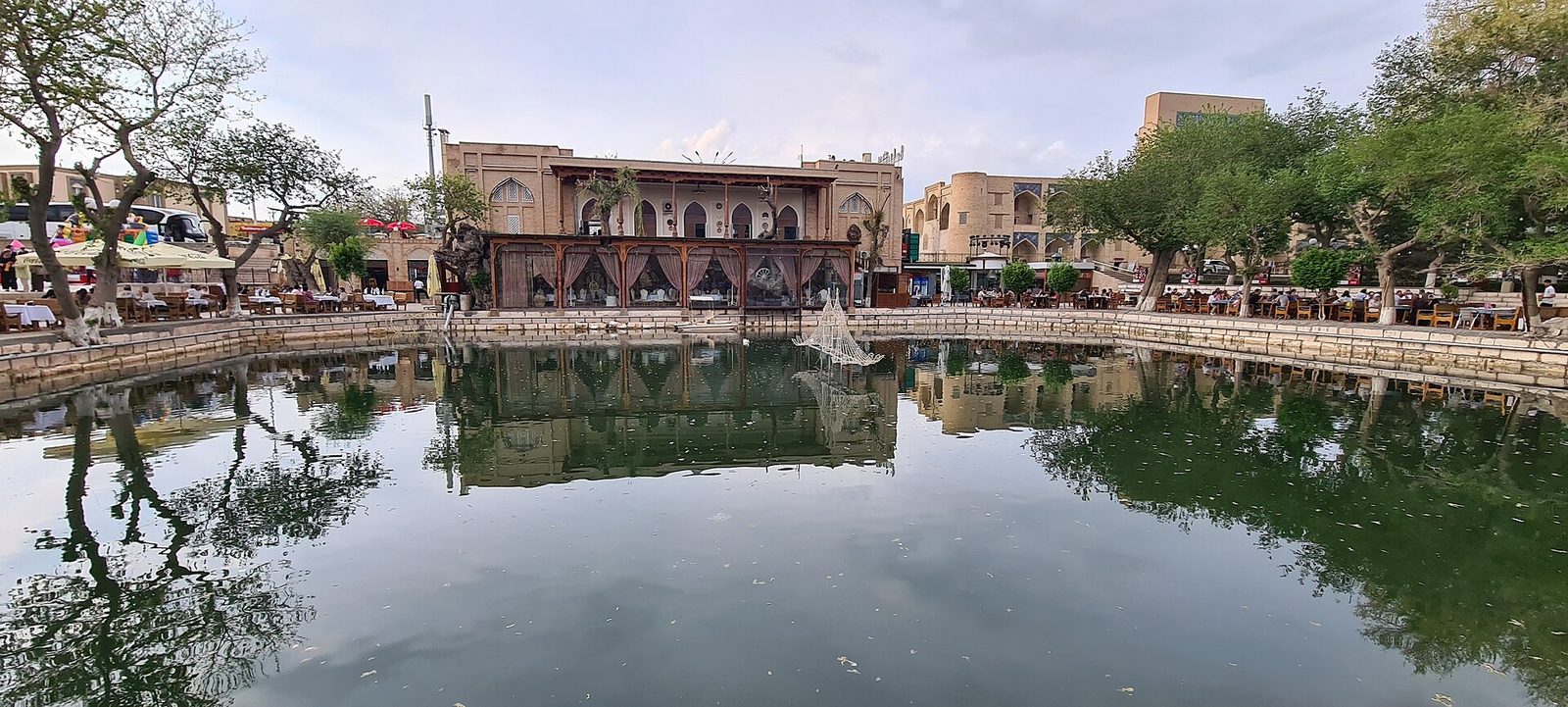
4Lyabi-Hauz
A square around a 17th-century pond, framed by the Kukeldash madrasah of 1568–1569, the largest in Bukhara, and the Nadir Divan-Begi madrasah. On the Nadir Divan-Begi portal two simurgh birds carry white deer towards a sun with a human face. In the evening, sit at the teahouses by the water.
-
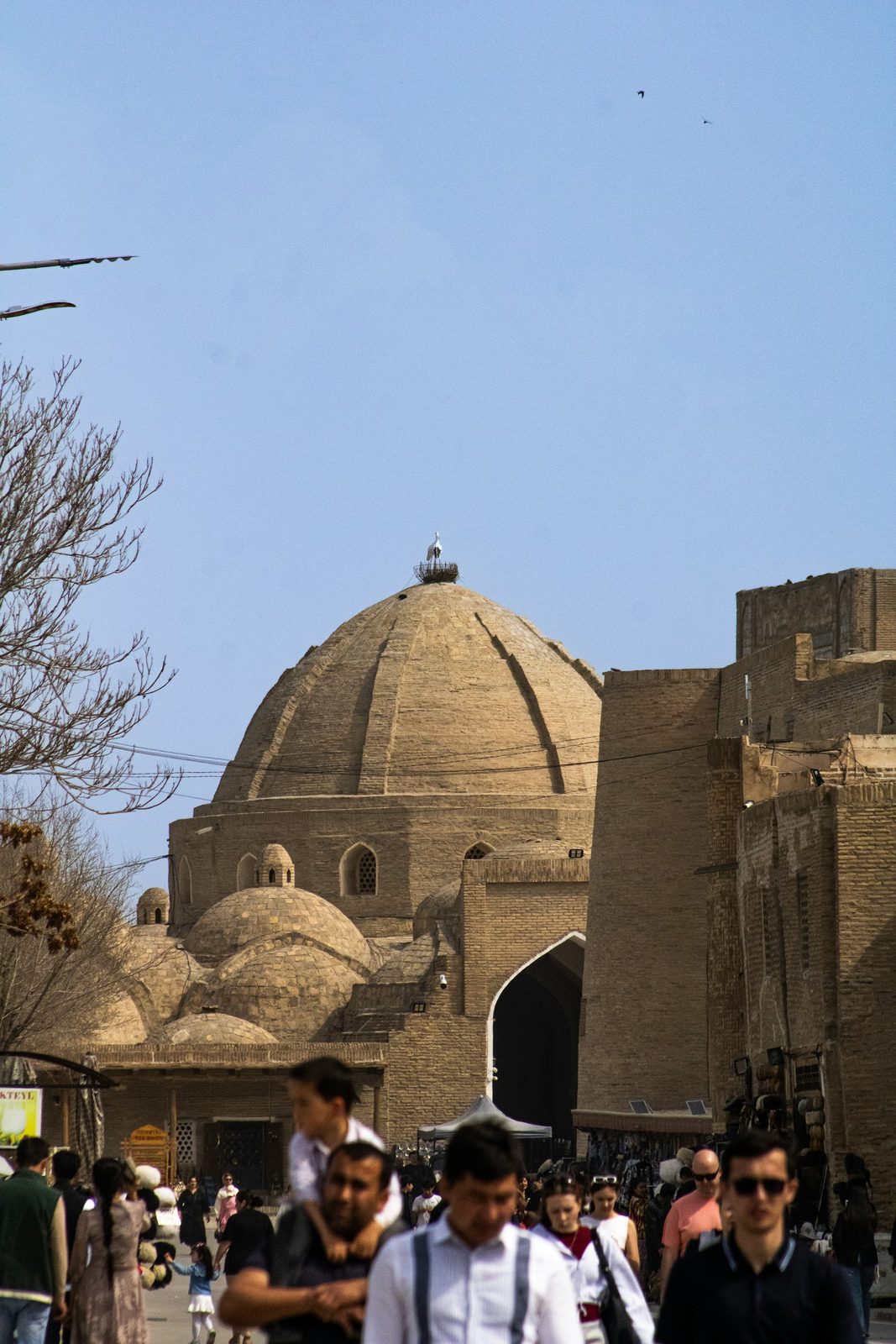
5Trading domes
Covered markets at old crossroads, from the 16th century: Toqi Zargaron for jewellers, Toqi Sarrafon for moneychangers, Toqi Telpak Furushon for hat sellers. Today they sell crafts and souvenirs. Between them, below today's street level, stands the One of the oldest mosques in Central Asia, in the centre of Bukhara. It stands below today's street level: the city has grown up around it. Mosque, one of the oldest in Central Asia.
-
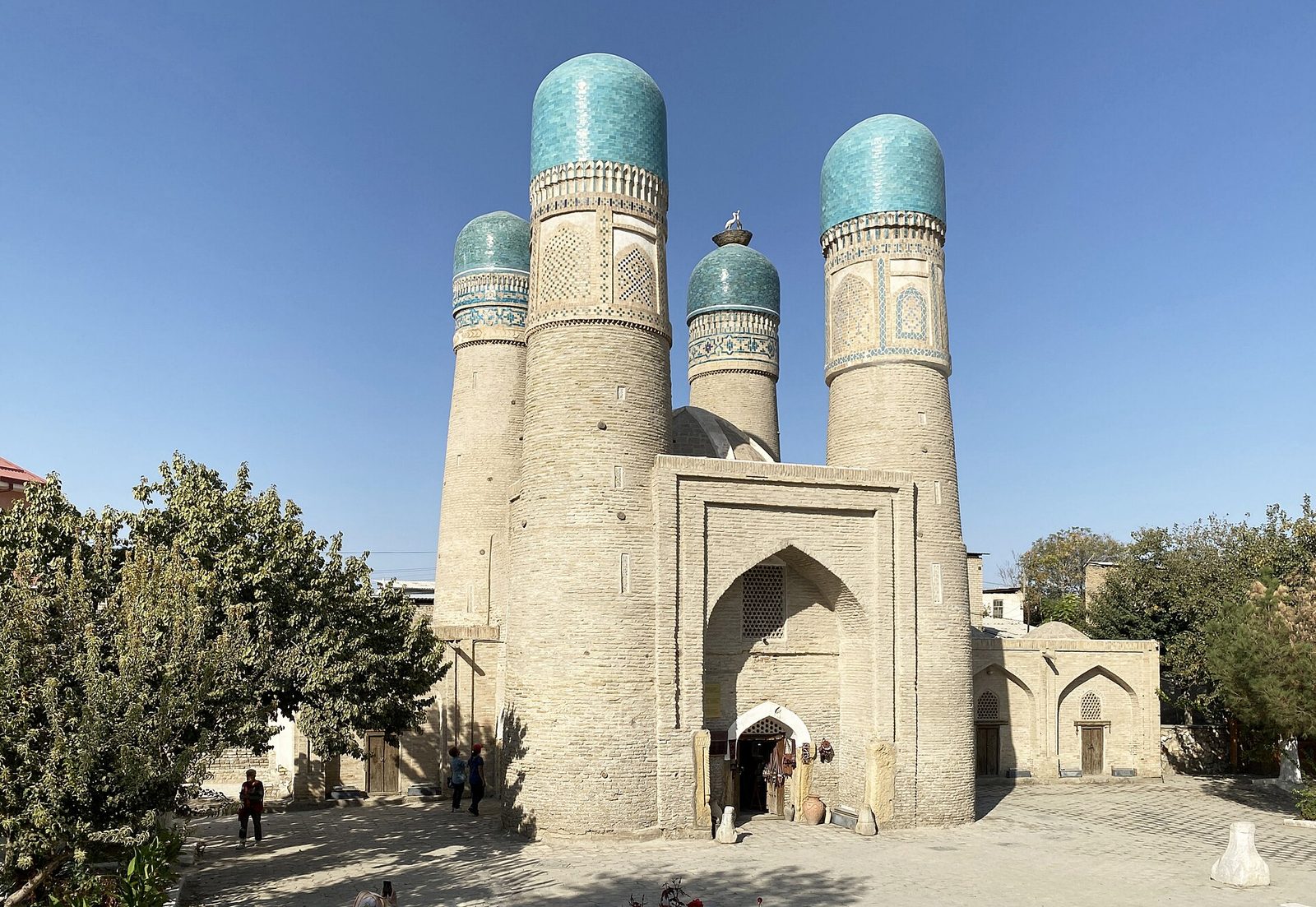
6Chor Minor
A small gatehouse of 1807 with four towers topped by turquoise domes, hidden in the residential lanes about 700 m east of Did you know? Bukhara's ponds were once its water supply Pools like Lyabi-Hauz, dug around 1620 and 46 × 36 m, were the city's main source of water. Most were filled in during the 1920s–30s because they spread disease; Lyabi-Hauz survived. Read more →. The walk there takes ten minutes, and the lanes are part of the visit.
-
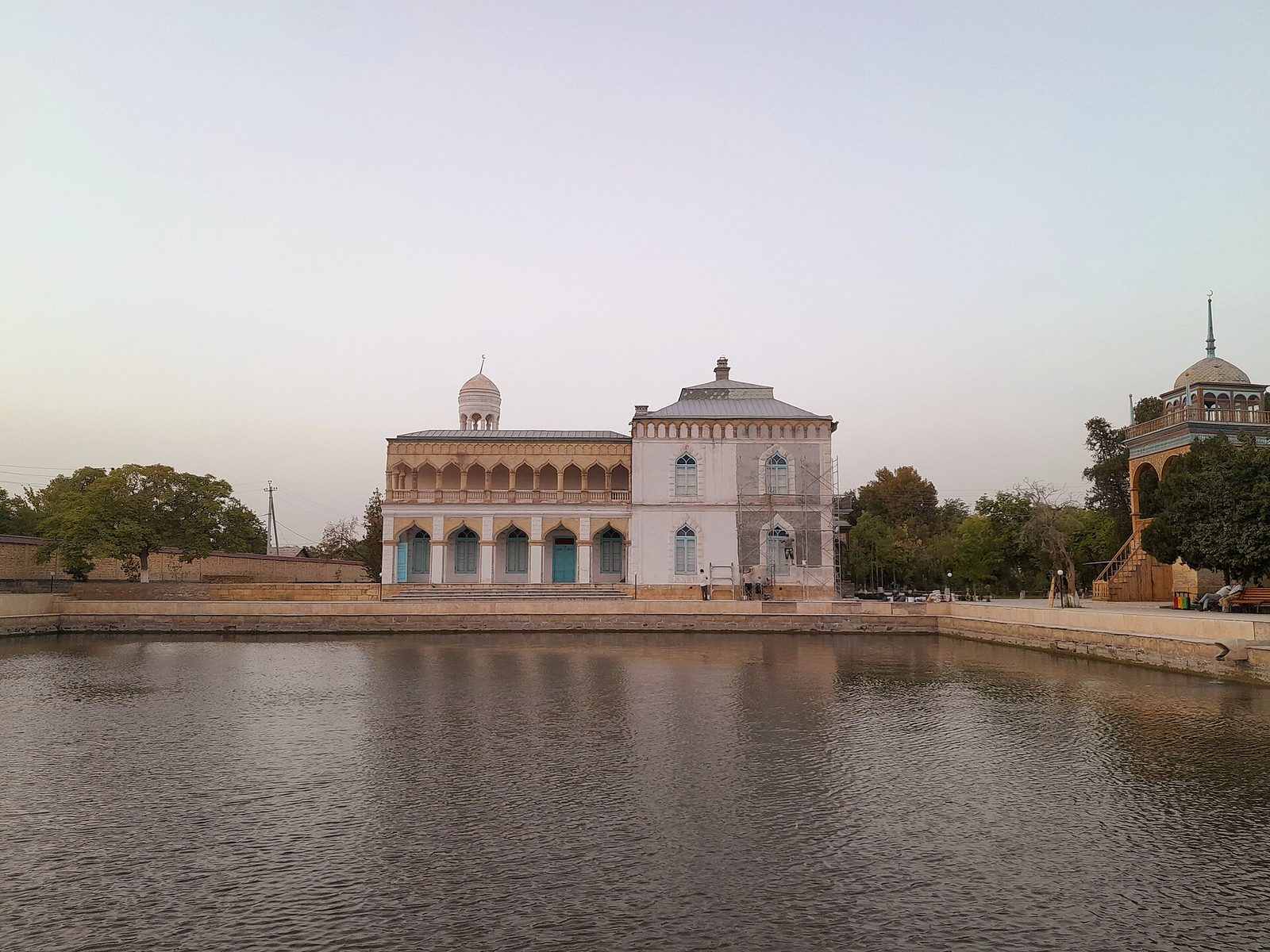
7Sitorai Mohi-Hosa
The summer palace of the last emirs, about 5 km north of the old town. The main complex was built in 1912–1918 under Emir Alim Khan, European outside and Bukharan inside, and now houses a museum of decorative arts: suzani, porcelain, gold embroidery. Take a taxi and allow one to two hours.
-
8Bahauddin Naqshband complex
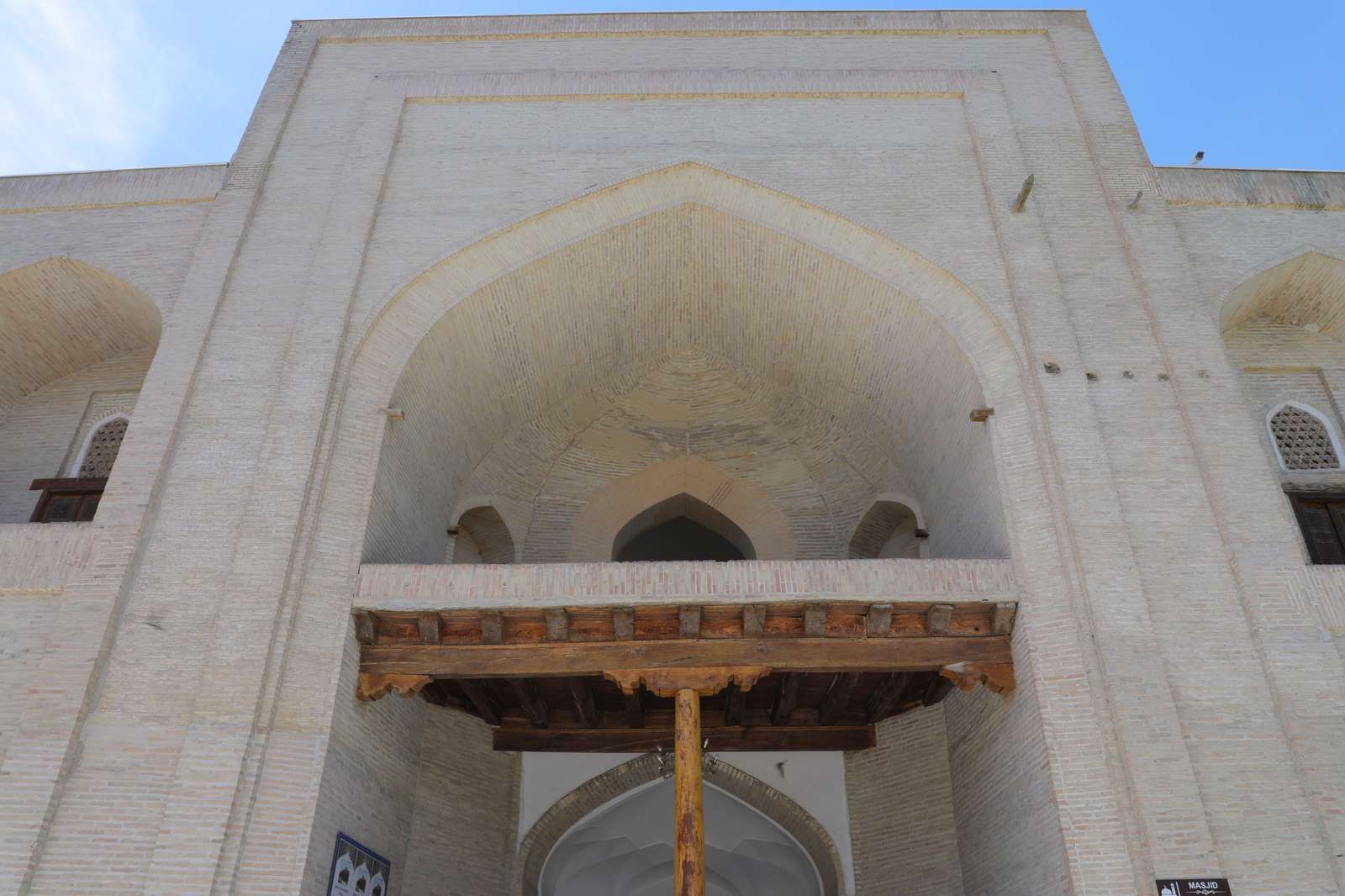
The memorial complex of the founder of the Naqshbandi Sufi order, about 12 km from the city. His tomb dates from 1544, and the complex kept growing for almost four centuries: mosques, a minaret, a khanqah and a museum. It is a place of pilgrimage, so dress as for a mosque.
Photos: Lyabi-Hauz pond, Bukhara — BeshevI / Wikimedia Commons · CC BY-SA 4.0
Neighbourhoods
- Lyabi-Hauz and the trading domes The busiest corner of the old town: the pond, its madrasahs and teahouses, and the domed markets just beyond. A good base, since everything else in the old town is a walk away.
- The heart of old Bukhara: the Kalyan Minaret of 1127, the Kalyan Mosque and the Mir-i-Arab Madrasah facing each other across one square. Read more → and The fortress-residence of the rulers of Bukhara on a high artificial hill: the oldest structure in the city. Read more → Ten minutes' walk west: the minaret square, then the fortress with its own Samarkand's main square, framed by three madrasahs: Ulugh Beg (15th century), Sher-Dor and Tilya-Kori (both 17th century). Read more → square in front of the gate. The terraces around Poi Kalyan are the place for sunset.
- Samanid Park West of the Ark, a park with the A 9th–10th-century family tomb of the Samanid dynasty, one of the oldest surviving monuments of Islamic architecture in Central Asia, built entirely of patterned brick. Read more → and Chashma-Ayub; the Bolo-Hauz mosque stands between the park and the fortress.
- The new town and Kagan The modern city surrounds the old centre, and the railway station is 12 km to the south-east, in the town of Kagan.
What to eat
- Bukhara Rice cooked in a kazan with carrots, onions and meat: the dish of every Uzbek celebration. Each region cooks it its own way. Sweeter than plov elsewhere in the country, with dried fruit, and its ingredients are layered in the kazan rather than stirred. As everywhere in Uzbekistan, it is a midday dish.
- Oshi bakhsh The green plov of the Bukharan Jewish community, coloured with chopped herbs such as coriander. It is rarely on menus, so ask your guide or your guesthouse.
- Tea at Lyabi-Hauz Green tea by the pond, on wide wooden beds under century-old trees, is the classic Bukhara evening.
Getting around
The old town is best on foot: from Lyabi-Hauz it is about 500 m to the Kalyan Minaret, under 1 km to the Ark and under 2 km to the Samanid Mausoleum. For the summer palace, Bahauddin Naqshband and the station in Kagan, 12 km away, take a taxi: Yandex Go works in Bukhara. City buses serve the modern town, but in the old centre you will hardly need them.
Local tips
- The fast train from Bukhara to Khiva does not run on Sundays, and from Khiva to Bukhara not on Mondays: plan that leg around it. Read more →
- The station is in Kagan, 12 km out: arrange a taxi or a transfer for your arrival. Read more →
- See Poi Kalyan twice: in the quiet morning and again at sunset.
- Bahauddin Naqshband and the mosques are places of prayer: shoulders and knees covered, a scarf for women, shoes off on the carpets. Read more →
- Cards work in almost all terminals, but carry cash in som for small stalls in the domes and for the bazaar. Read more →
- Between Bukhara and Samarkand, Aydarkul lake and a night in a yurt camp make a good stop. Read more →
Our take: how many days you need
Two to three days are enough to walk the old town without rushing: Lyabi-Hauz, the Kalyan minaret, the Ark and the trading domes are close to each other. One day gives the highlights; the extra days let you see the summer palace and take a masterclass.
When to go: month by month
Daytime temperature, rainfall, public holidays and our rating for every month.
- Jan7° Cool, fewer people Cold: 7° by day 17 mm of rain ★ 1, 14
- Feb10° Cool, fewer people Cold: 10° by day 24 mm of rain
- Mar17.1° Great Cool: 17.1° by day 25 mm of rain ★ 8, 21
- Apr24.4° Great Comfortable: 24.4° by day 22 mm of rain
- May30.7° Good Warm: 30.7° by day 11 mm of rain ★ 9
- Jun36° Good Hot: 36° by day 2 mm of rain
- Jul37.3° Hard Hot: 37.3° by day 0 mm of rain
- Aug35.6° Hard Hot: 35.6° by day 0 mm of rain
- Sep30° Great Comfortable: 30° by day 1 mm of rain ★ 1
- Oct22.9° Great Comfortable: 22.9° by day 3 mm of rain ★ 1
- Nov14.5° Great Cool: 14.5° by day 15 mm of rain
- Dec8.2° Cool, fewer people Cold: 8.2° by day 13 mm of rain ★ 8
- 1 Jan — New Year
- 14 Jan — Defenders of the Motherland Day
- 8 Mar — International Women’s Day
- 21 Mar — Navruz
- 9 May — Day of Remembrance and Honour
- 1 Sep — Independence Day
- 1 Oct — Teachers’ Day
- 8 Dec — Constitution Day
- Ramadan Hayit (Eid al-Fitr): the date changes every year
- Kurban Hayit (Eid al-Adha): the date changes every year
Climate source: Википедия, статья «Bukhara», таблица климата (нормы 1991–2020; NOAA) — en.wikipedia.org/wiki/Bukhara
Rating by daytime temperature: great — 18–30°, good — 12–18° or 30–33°, cool, fewer people — below 12°, hard — above 33°; heavy rain (100 mm and more) lowers great to good. For the cities we also follow our expert: the season is March–June and September–November, with March and November the best months (start and end of the season, few people); winter is not marked as a bad time.
How to see Bukhara
Pick the format — we will show the tours that fit it.
Add from here
Extensions that are easy to add to a trip through this place.
Read about Bukhara
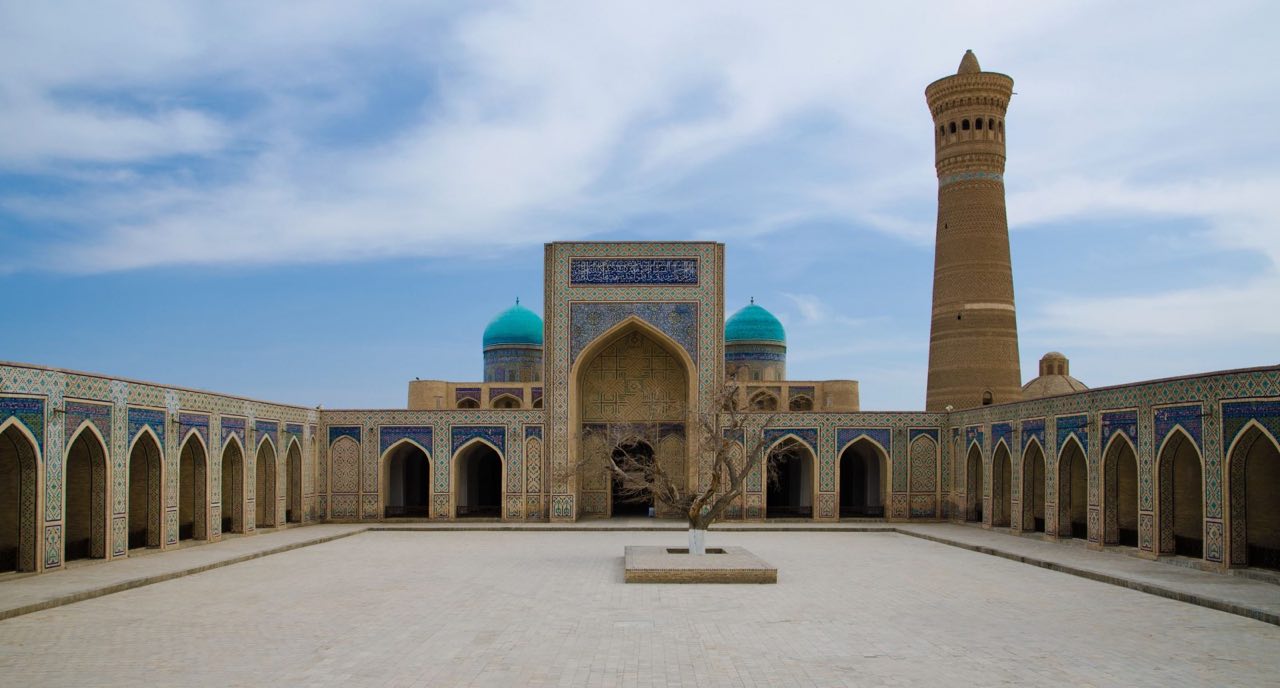 Bukhara and Khiva sights: tickets, opening hours and how long to stayArk and palace ticket prices for foreigners, museum hours, the Itchan Kala combined ticket and how long to all…
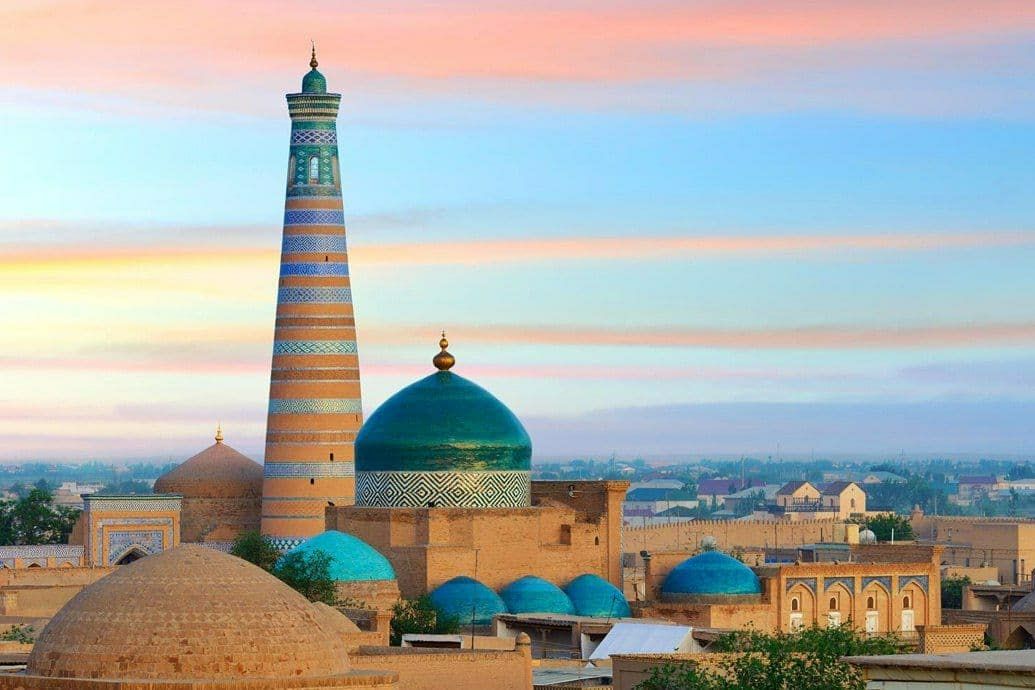 Khiva to Bukhara (and back): train, car and what to see on the wayBukhara to Khiva and back: the fast train times and weekday rules, night trains, the 450 km drive across the K…
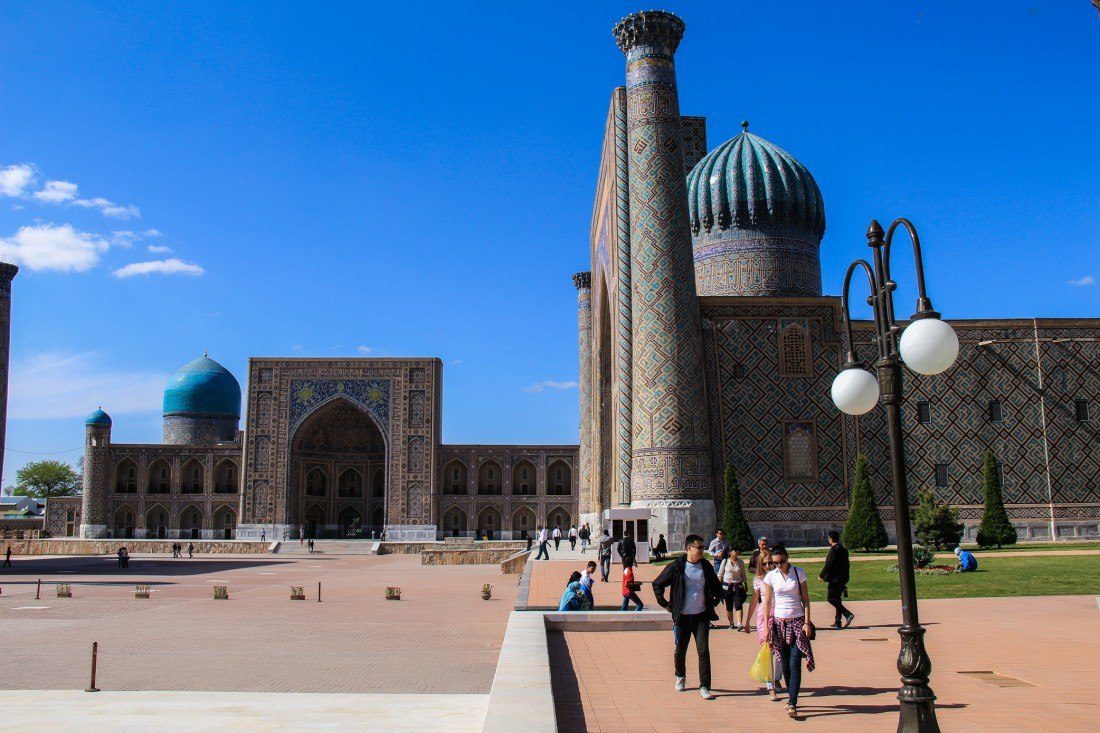 Uzbekistan in 10 days: Tashkent, Samarkand, Bukhara and Khiva at an easy paceA 10-day Uzbekistan itinerary day by day: two nights in Khiva, a day trip to Shahrisabz, an afternoon in Gijdu…
Ziyarat in Uzbekistan: Imam al-Bukhari, Bahauddin Naqshband and the shrines of Bukhara, Samarkand and TashkentThe rebuilt Imam al-Bukhari complex, Shah-i-Zinda, the seven pirs of Bukhara and Hazrati Imam: what each shrin…
Uzbekistan in 7 days: Tashkent, Samarkand, Bukhara, KhivaThe fast train to Khiva now leaves Tashkent every day except Sunday, so one simple rule sets your arrival day.…
Uzbekistan in 10 days: Tashkent, Samarkand, Bukhara and Khiva at an easy paceA 10-day Uzbekistan itinerary day by day: two nights in Khiva, a day trip to Shahrisabz, an afternoon in Gijdu…
Ziyarat in Uzbekistan: Imam al-Bukhari, Bahauddin Naqshband and the shrines of Bukhara, Samarkand and TashkentThe rebuilt Imam al-Bukhari complex, Shah-i-Zinda, the seven pirs of Bukhara and Hazrati Imam: what each shrin…
Uzbekistan in 7 days: Tashkent, Samarkand, Bukhara, KhivaThe fast train to Khiva now leaves Tashkent every day except Sunday, so one simple rule sets your arrival day.…
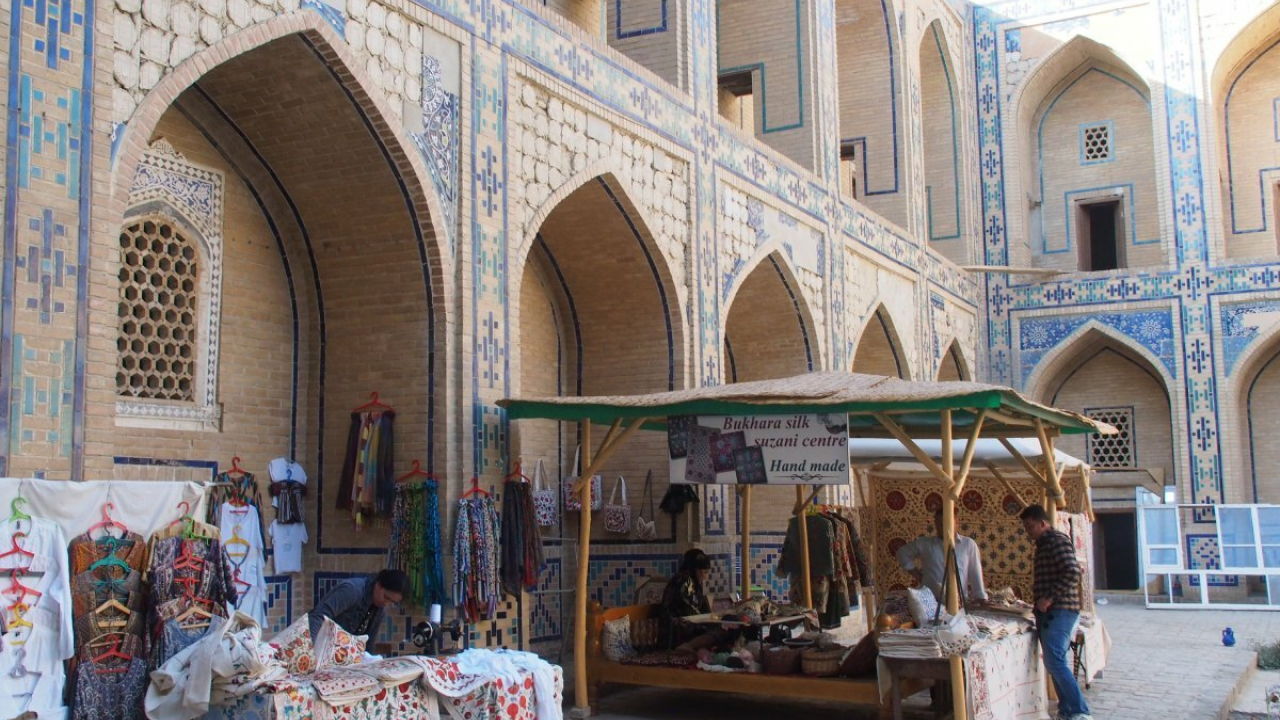 Bukhara — The Open-Air Museum City140-plus protected monuments in one walkable old town. Bukhara isn’t a city with historic sites — it’s a histo…
Bukhara: questions before the trip
How many days do I need in Bukhara?
2–3 days, best on foot
How do I get to Bukhara?
About 1.5 hours from Samarkand by high-speed train More in the article: Uzbekistan tours from Australia: flights, entry, seasons and how many days
When is the best time to go to Bukhara?
Spring (April–May) and autumn (September–October) are the most comfortable; summer days are hot. More in the article: Uzbekistan in April: spring weather, long days and tips
What can I add nearby?
Nearby: the Nuratau mountains and village guesthouses
Before you go
Visa, season, budget and flights — the short answers.
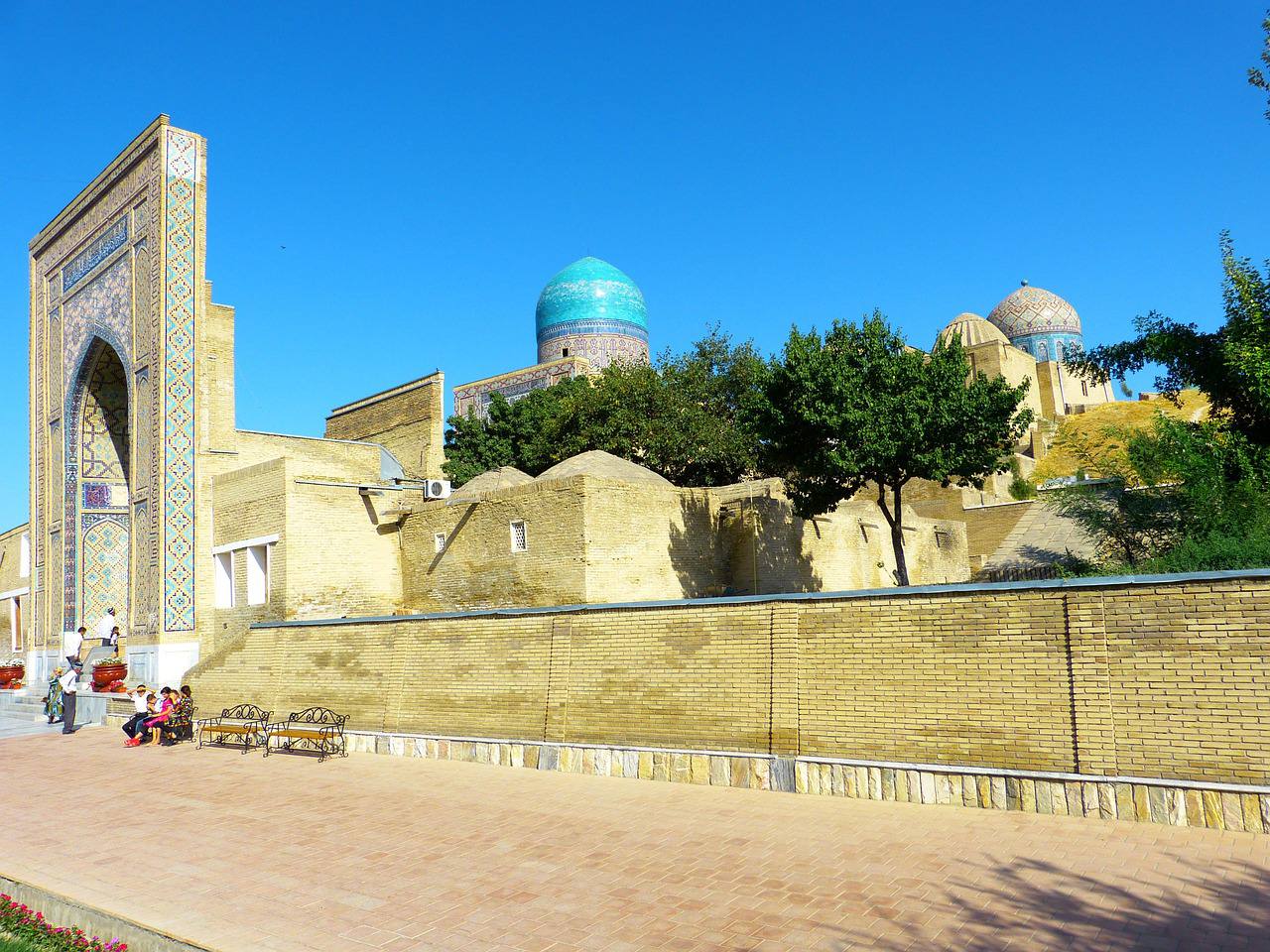 Uzbekistan tours from Brazil and South America: visa, flights and the best monthsVisa-free entry for Brazil, Argentina and Chile, e-visa for Colombia and Peru, one-stop routes via Istanbul, D…
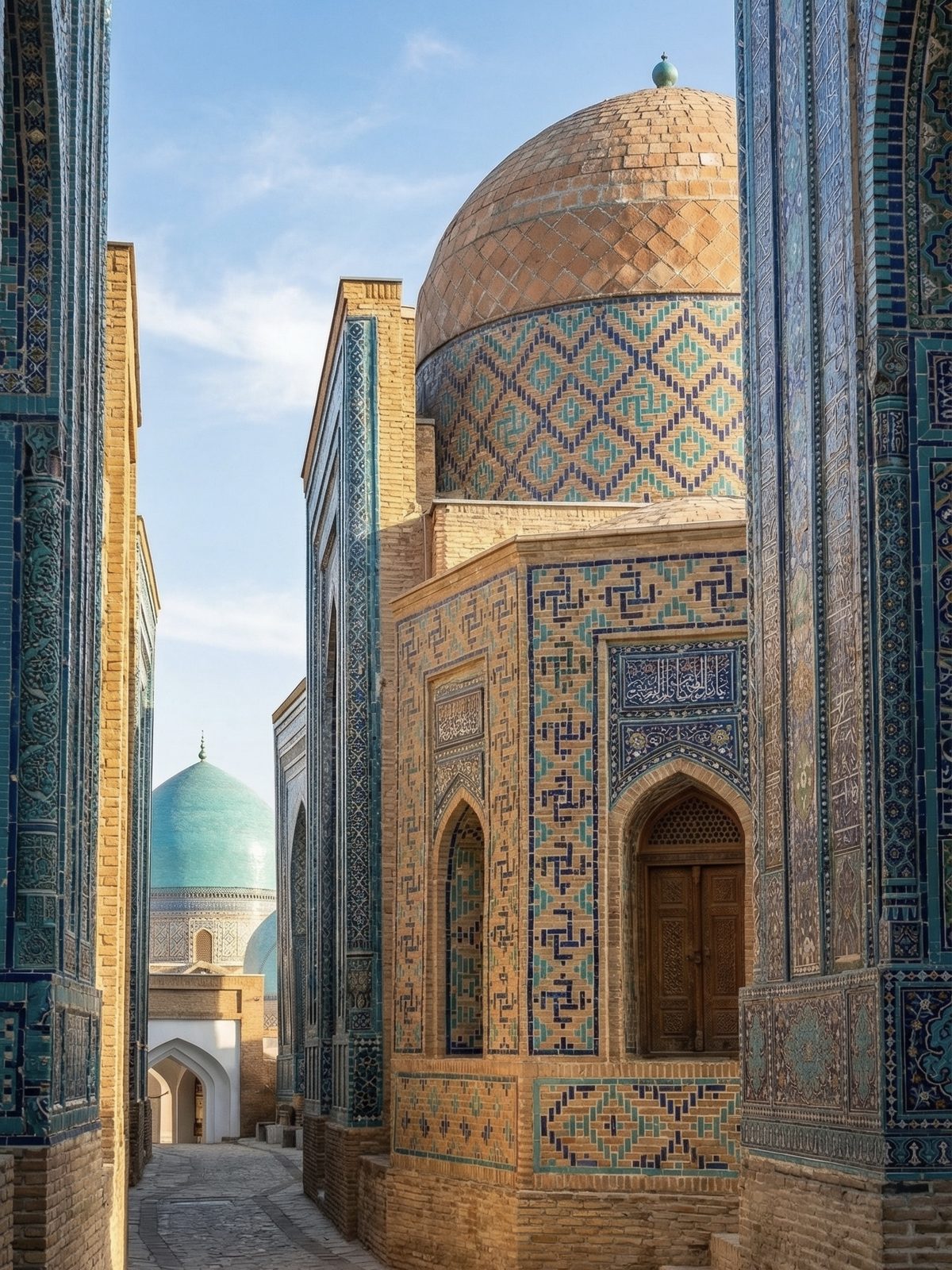 Uzbekistan in April: spring weather, long days and tipsAfternoons around 22 °C, sunset after seven and wild tulips in the hills: what Uzbekistan is like in April, ci…
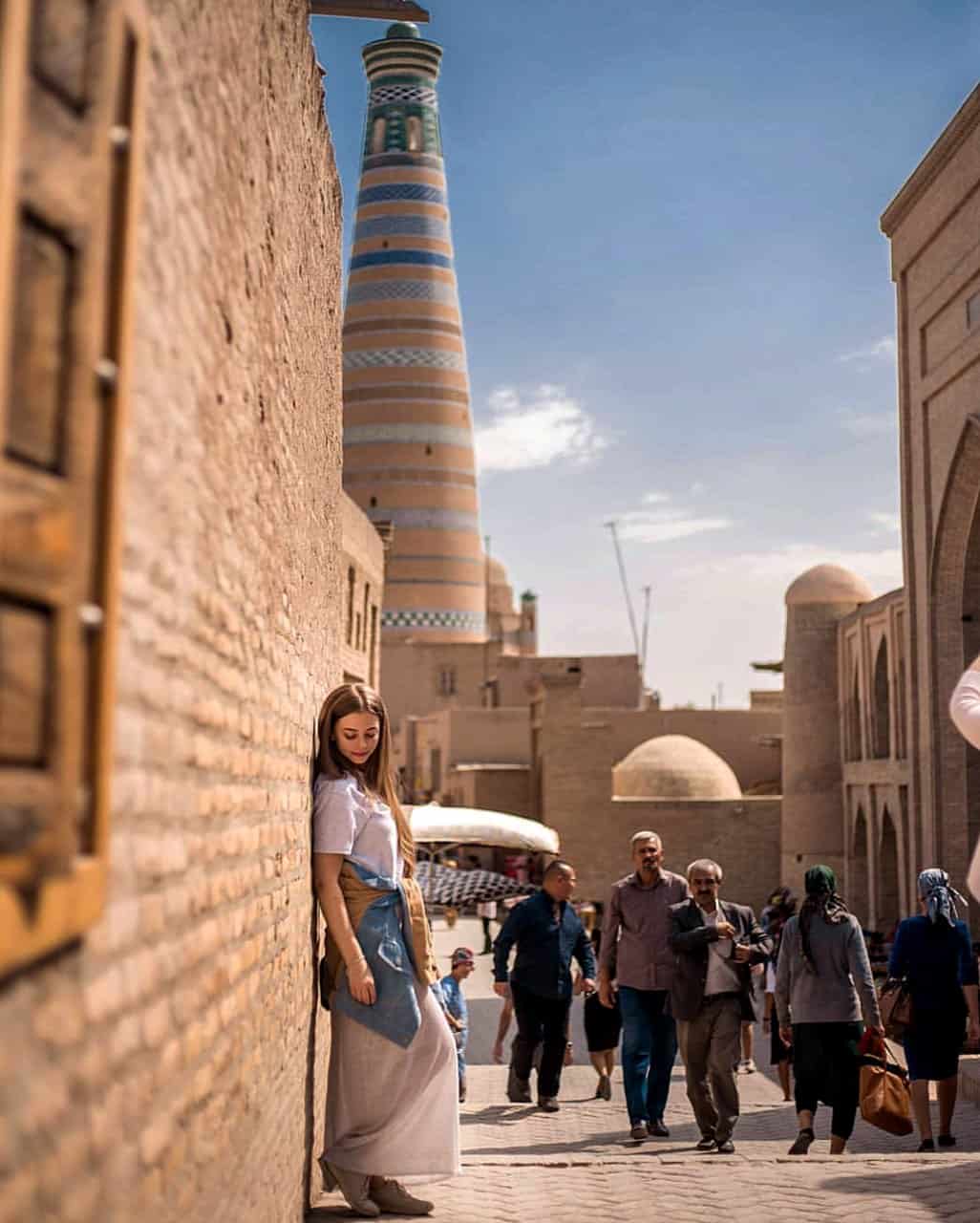 How much does a trip to Uzbekistan cost? A 1-week budgetUzbekistan is one of the Silk Road’s best-value destinations. Below is a practical 7-day (6-night) cost breakd…
Uzbekistan tours from Australia: flights, entry, seasons and how many daysNo visa for Australian and New Zealand passports, one-stop flights via Seoul, Kuala Lumpur or the Gulf, flippe…
How much does a trip to Uzbekistan cost? A 1-week budgetUzbekistan is one of the Silk Road’s best-value destinations. Below is a practical 7-day (6-night) cost breakd…
Uzbekistan tours from Australia: flights, entry, seasons and how many daysNo visa for Australian and New Zealand passports, one-stop flights via Seoul, Kuala Lumpur or the Gulf, flippe…Didn’t find your trip?
Tell us what you want — a manager will put together a route and price within 24 hours.