
Fergana Valley: silk, ceramics and how to get there
Places in this article: Tashkent
At 09:20 a four-car electric train leaves Tashkent for the east. A little over an hour later it passes Angren, then dives into the Qurama range and runs 19.2 km through the Kamchik tunnel. At 12:28 it is in Kokand, at 13:00 in Margilan. That is all it now takes to reach the Fergana Valley, the part of Uzbekistan where the blue Rishtan ceramics and the Margilan ikat silk come from.
Most first trips skip the valley for Samarkand and Bukhara. We think that is a mistake for anyone who cares about crafts: here you see them made, not just sold. This is how we plan a Fergana Valley tour from Tashkent.
How to get to the Fergana Valley
By train. Since 10 September 2026 the Tashkent–Andijan line has a new CRRC electric train. No. 730 leaves Tashkent every day at 09:20 and calls at Kokand at 12:28, Margilan at 13:00 and Andijan at 13:35. No. 729 goes back: Andijan 15:38, Margilan 16:11, Tashkent 19:53. The Kamchik tunnel on the way has been open since 2016 and is the longest in Central Asia. Tickets are sold on eticket.railway.uz; how to buy them is in our guide to trains in Uzbekistan.
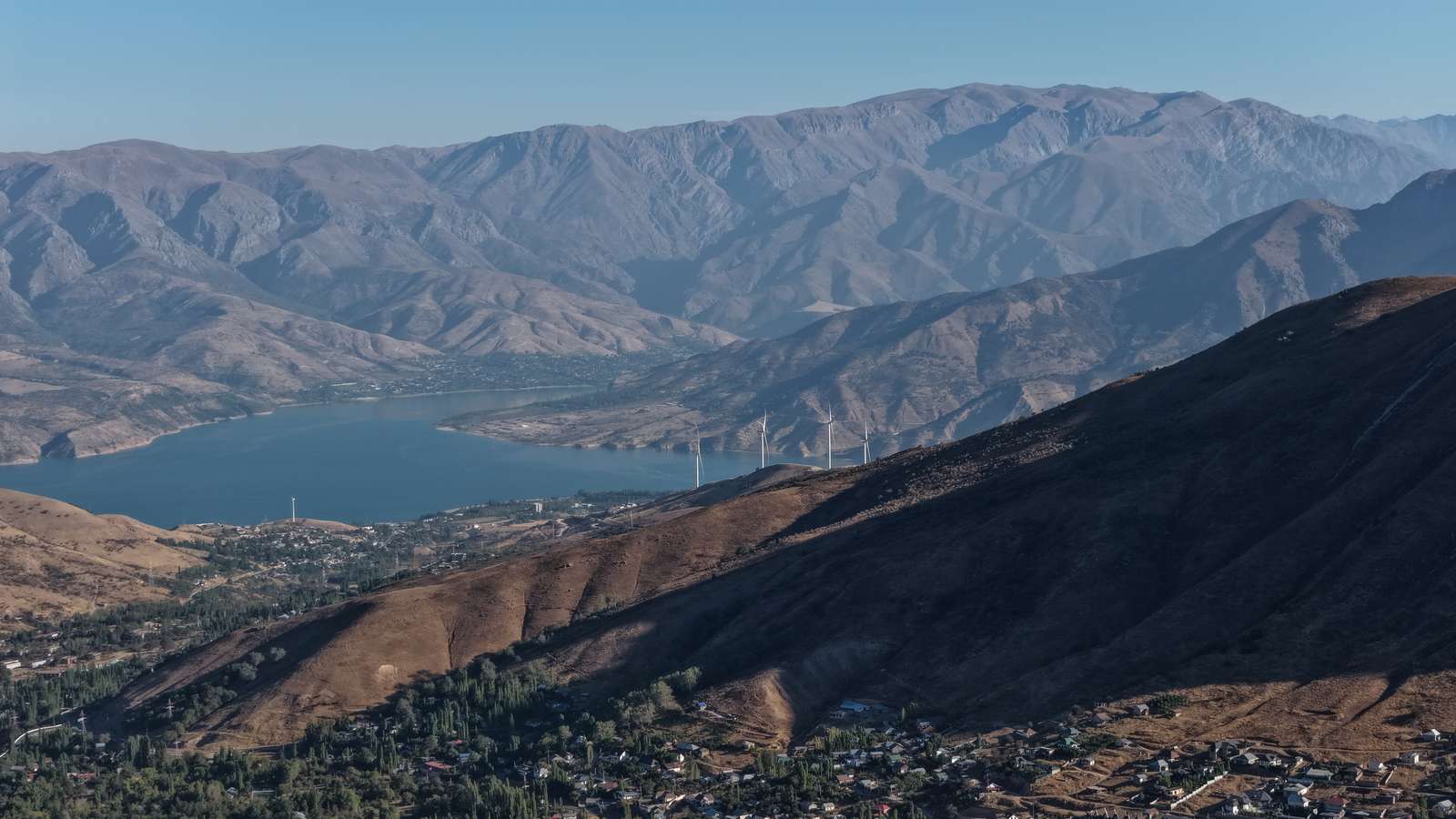
By road. The road takes the pass itself: the A373 climbs to 2,268 m on the Kamchik pass. It is the only road between Tashkent and the valley, and in winter it can close because of avalanche risk. From December to March we put our travellers on the train.
By air. Fergana, Andijan and Namangan all have airports, and Uzbekistan Airways flies to them from Tashkent in about an hour. Not every route is daily, though, so for most trips the train is simpler: it runs every day and drops you in the middle of the valley.
Kokand and Rishtan ceramics
Kokand. Get off the morning train here. The palace of Khudoyar Khan was completed around 1870. Much of it was lost, but what survives has carved and painted ceilings and a facade of glazed tiles, and it has been a museum since 1925. The throne in the throne room is a copy: the original is in the Hermitage in St Petersburg.
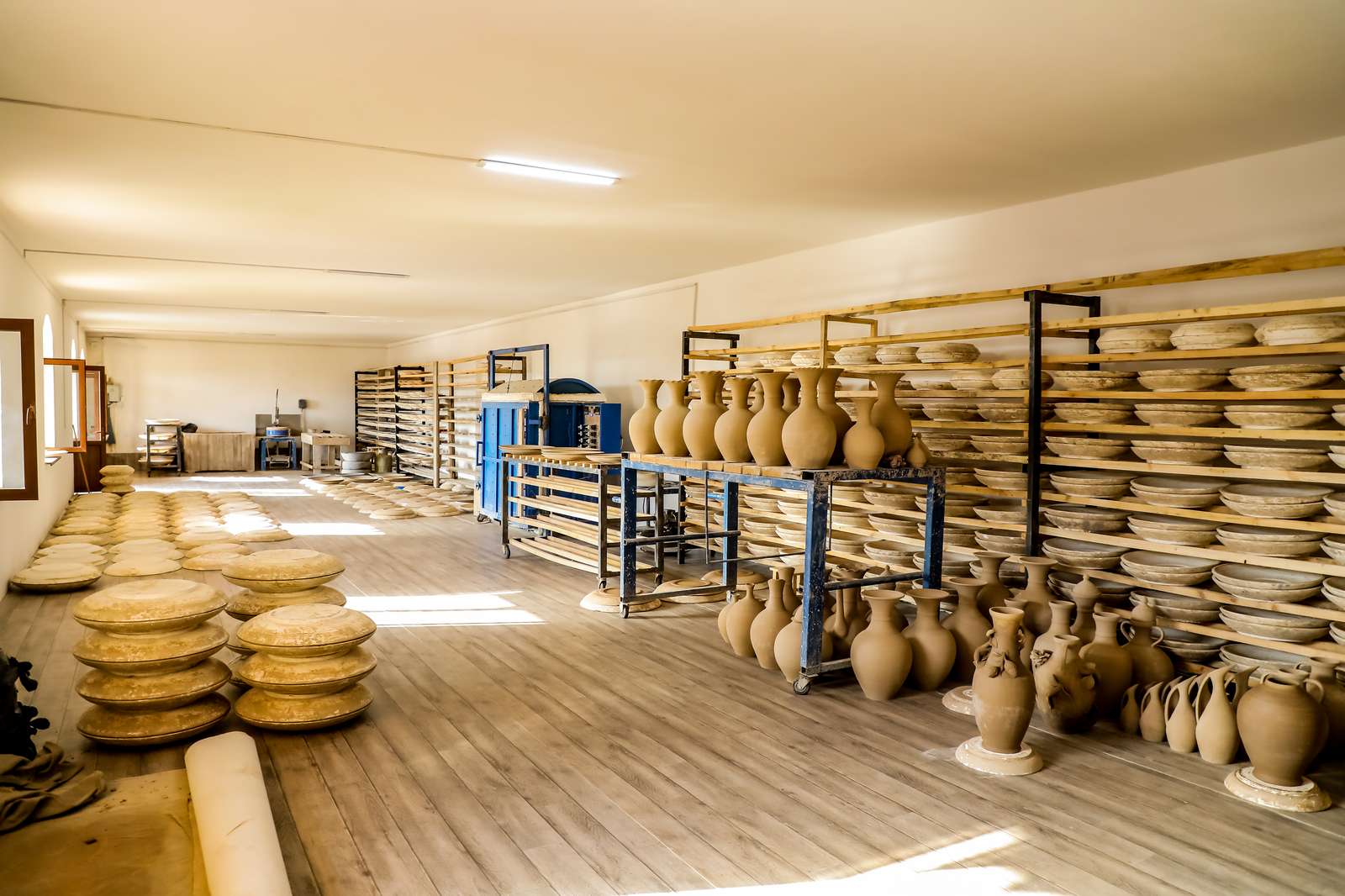
Rishtan. From Kokand it is about 50 km, an hour by car, to the potters’ town of the valley. The local clay is red, and the blue-green glaze called ishkor is made from mineral pigments and the ash of burnt plants; families keep their recipes to themselves. In the workshops you see the whole cycle: the wheel, the white slip, the painting and the kiln.
The best-known address is the workshop of Rustam Usmanov, which doubles as a small museum, about a kilometre west of the centre on the Kokand road. His son Damir works with him and specialises in ishkor glaze. Most workshops sell straight from the shelves, so you buy the bowl from the people who made it. Ask us in advance and we arrange time at the wheel or with a brush, with a master, subject to availability.
Margilan silk: Yodgorlik and the Kumtepa bazaar
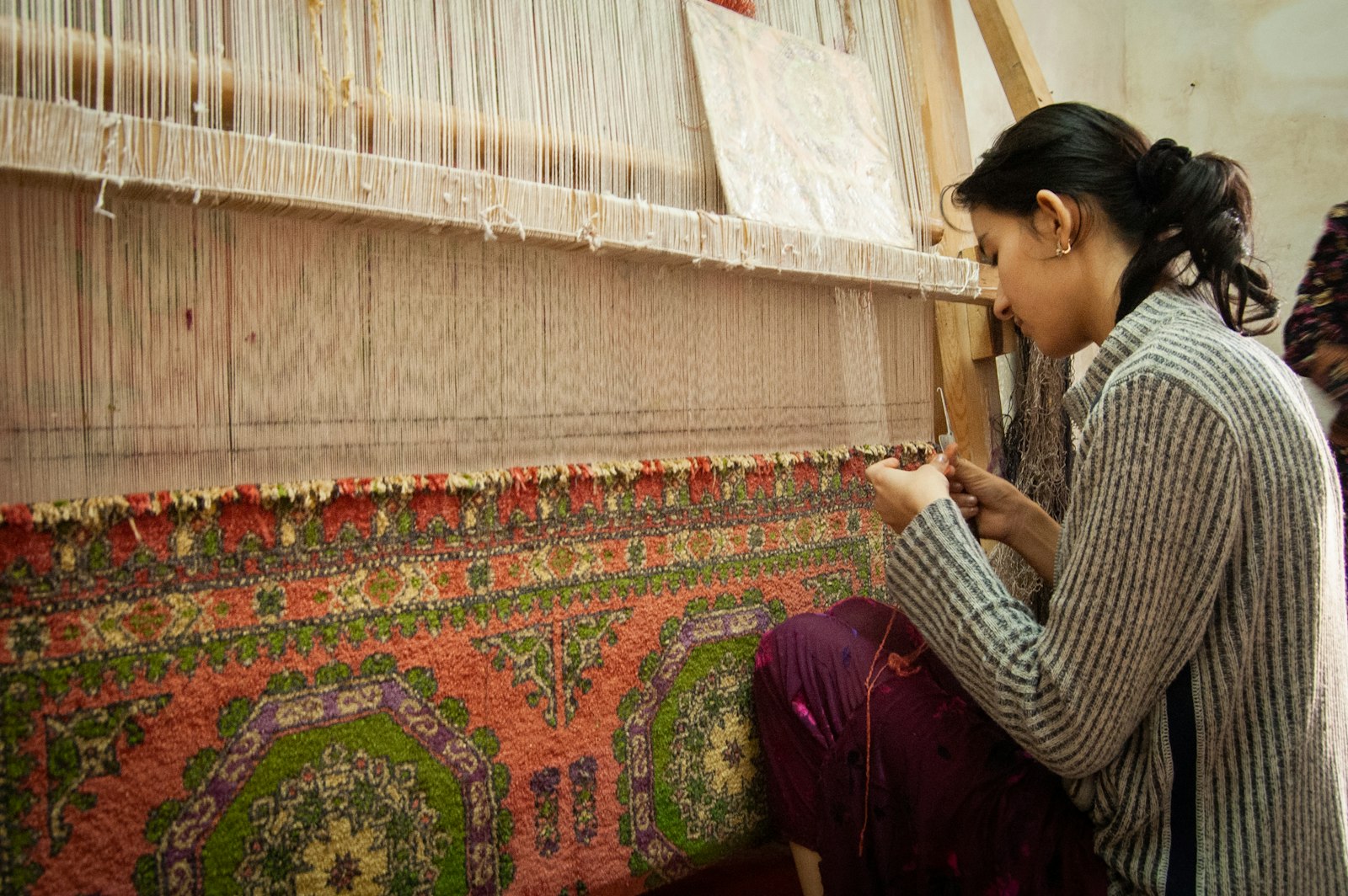
Margilan is about 50 km from Rishtan. The Yodgorlik silk factory has worked here since 1972, and it is the place to see silk go from the cocoon to the cloth. Cocoons are soaked in hot water and the thread is reeled off; the threads are stretched, marked and tied in bundles, then dyed over wood-fired stoves. Only then are they woven on hand looms. Because the pattern is dyed into the threads before weaving, ikat has its soft, blurred edges.
Two fabrics come off these looms: khan-atlas, pure silk, and adras, half silk and half cotton, cheaper and easier to wash. The factory also weaves silk carpets. Most of the workers speak only Uzbek, so this is a place where a guide earns their keep. The shop sells silk by the metre.
About 5 km outside Margilan is the Kumtepa bazaar. It is busiest on Thursdays and Sundays, and it is a market for locals, not for tourists. If your dates allow, we plan the Margilan day around it.
Fergana, Andijan and Namangan
Fergana. The regional capital is young: it was founded in 1876 as New Margelan, about 20 km from the old city, with straight streets fanning out from the centre. It is a good base. We usually put our travellers up here or in Margilan, and evenings are for a walk and dinner.
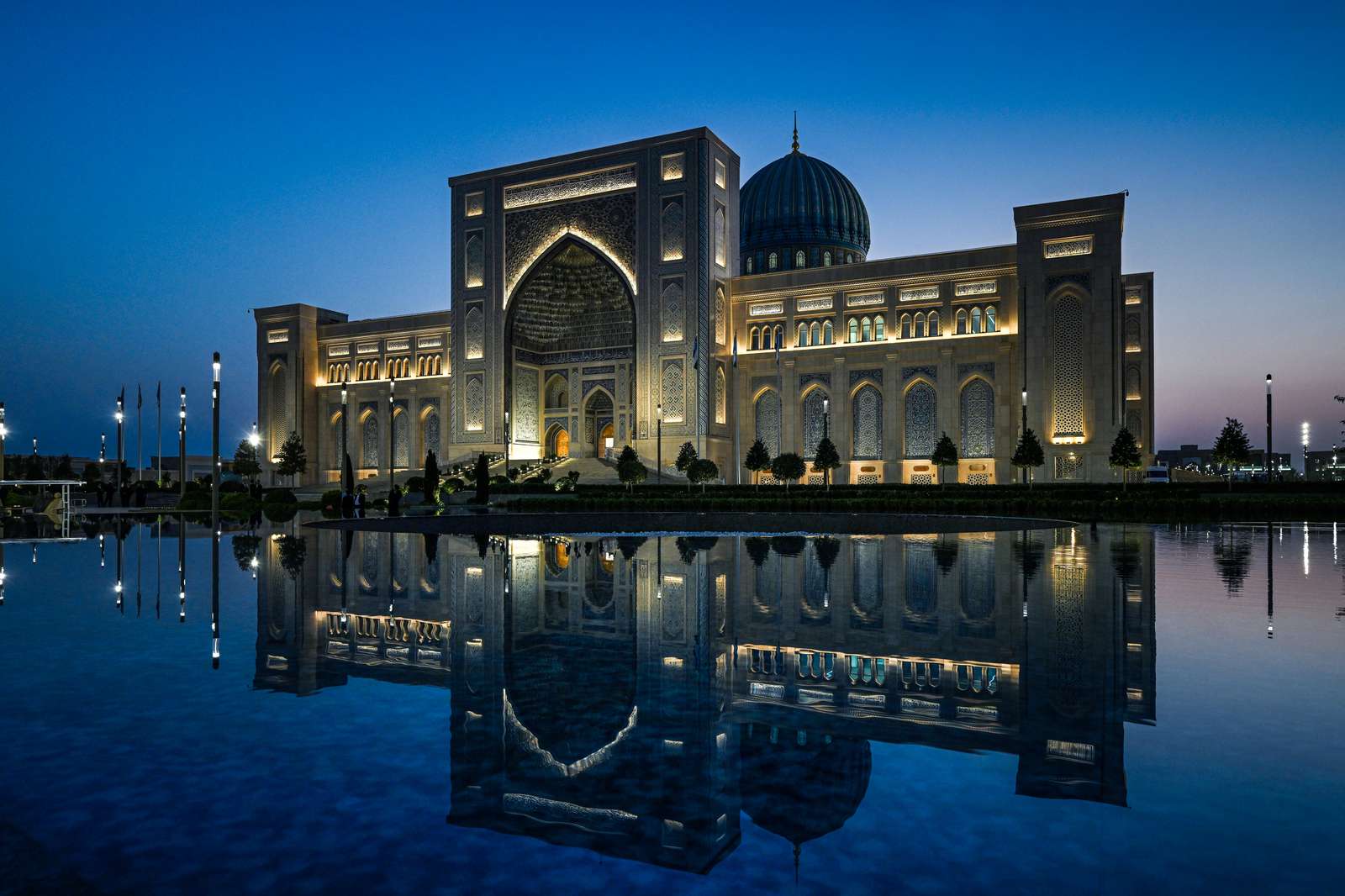
Andijan. Babur, the founder of the Mughal dynasty, was born here in 1483. On Bogishamol hill, 7 km from the city, there is a memorial park to him: a symbolic tomb from 1993 with earth from his grave, a museum with his writings and those of his descendants, and a cable car to the top of the hill. In town, the Jame mosque complex was built in 1883–1890; its An Islamic college: student cells and classrooms around a courtyard behind a grand portal. In the old towns many now house museums and craft workshops. is more than 120 m long. Andijan is about 70 km from Margilan, and the same morning train reaches it at 13:35.
Rice cooked in a kazan with carrots, onions and meat: the dish of every Uzbek celebration. Each region cooks it its own way.. The valley cooks plov with devzira, a reddish, dense rice grown here. In June 2026 Andijan devzira plov was registered as a geographical indication, so the name is now protected.
Namangan. On the north side of the valley. The Mullo Kirgiz madrasah dates from 1910, and the city has held a flower festival in late spring since 1961. We add it on request.
When to go and how many days you need
Spring and autumn. In Fergana the average afternoon is 22.5 °C in April and 28.1 °C in May, 29.2 °C in September and 21.4 °C in October. July averages 35.1 °C, which is hard going in a bazaar at noon. In winter the train keeps running even when the pass is closed.
Two days, one night is the minimum: the morning train to Kokand, the palace and Rishtan, a night in Fergana or Margilan, Yodgorlik in the morning and the 16:11 train back. This is how the valley fits into our 14-day Uzbekistan itinerary. Our Fergana Valley extension gives it three days.
Four days let you slow down: a masterclass in Rishtan, a full day for silk and a day for Andijan. That is our Fergana Valley crafts tour. More on Uzbek crafts is in our article on ceramics, carpets and suzani; if the valley is one part of a longer trip, read how we plan Silk Road tours. All tours and the region at a glance are on the Fergana Valley page.
In short
- The new train No. 730 leaves Tashkent daily at 09:20: Kokand 12:28, Margilan 13:00. No. 729 leaves Margilan at 16:11 and is in Tashkent at 19:53.
- Rishtan is for ceramics: red clay, ishkor glaze, family workshops where you can try the wheel.
- Margilan is for silk: the whole ikat process by hand at Yodgorlik, and the Kumtepa bazaar on Thursdays and Sundays.
- Andijan is Babur’s birthplace, with a memorial park on Bogishamol hill and its own protected devzira plov.
- Give the valley two days at least, four if crafts are why you came; go in April–May or September–October.