
Places in this article: Samarkand · Bukhara · Khiva · Tashkent
What to eat in Uzbekistan in each season: spring, summer, autumn and winter
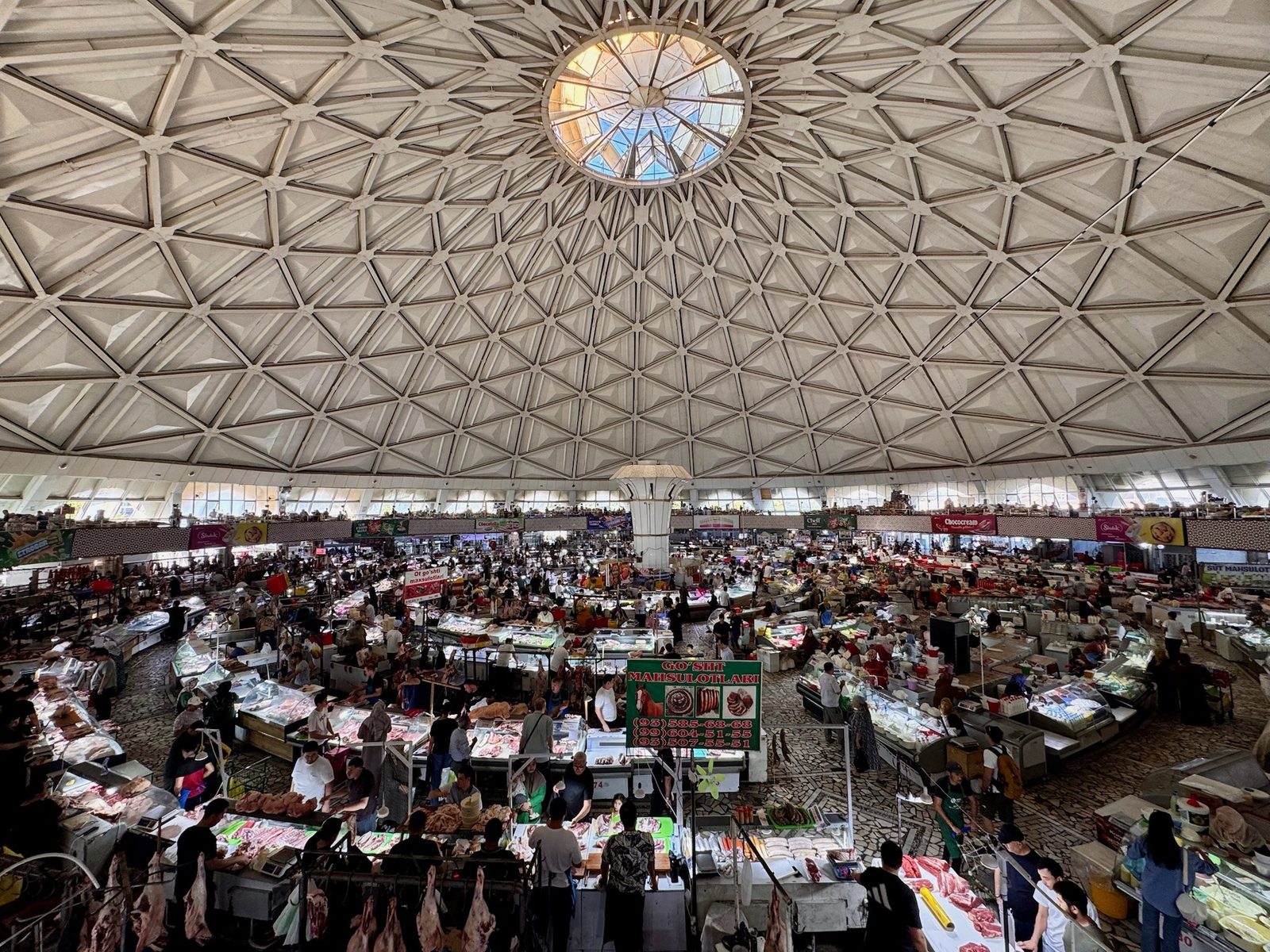
In April and May the mountain village of Sukok, above Tashkent, bakes its samsa with mador, a mountain onion that grows only in those cool weeks. By June the same counters at Did you know? Tashkent’s Chorsu dome is younger than the city’s metro Trade at the old crossroads is centuries old, but the domed building opened only in 1990, thirteen years after the metro. Architects Vladimir Azimov and Sabir Adylov gave it a main dome of 86 m ringed by seven smaller ones. Read more → are heaped with apricots, in October with pomegranates, and in January the teahouses serve naryn with a bowl of hot broth. The Uzbek table changes with the season, and a trip planned with that in mind tastes different.
We live in Tashkent and plan food trips all year round. Here is what is fresh and what to order in spring, summer, autumn and winter, why it is on the table at that time, and how we fit it into your route. Fruit alone, month by month, has its own guide: melons and fruit season in Uzbekistan.
Why the Uzbek table follows the calendar
Uzbek cooking starts at the bazaar, and the bazaar sells what has just been picked nearby: apricots here are sold ripe, not picked green for shipping. So the same dish changes through the year. Samsa is filled with herbs in spring and with pumpkin in autumn, and in summer and autumn breakfast is fruit with hot bread from the tandir.
The dates move with the region and the weather. The south, Surkhandarya and the Fergana Valley, harvests first and the mountain villages last; a hot spring brings everything forward, and in 2025 the heat ended the cherry season by mid-June. The months below are the usual ones for Tashkent, Samarkand and Bukhara, and your guide knows what is really on the stalls that week.
Spring, March to May: greens, sumalak and the first cherries
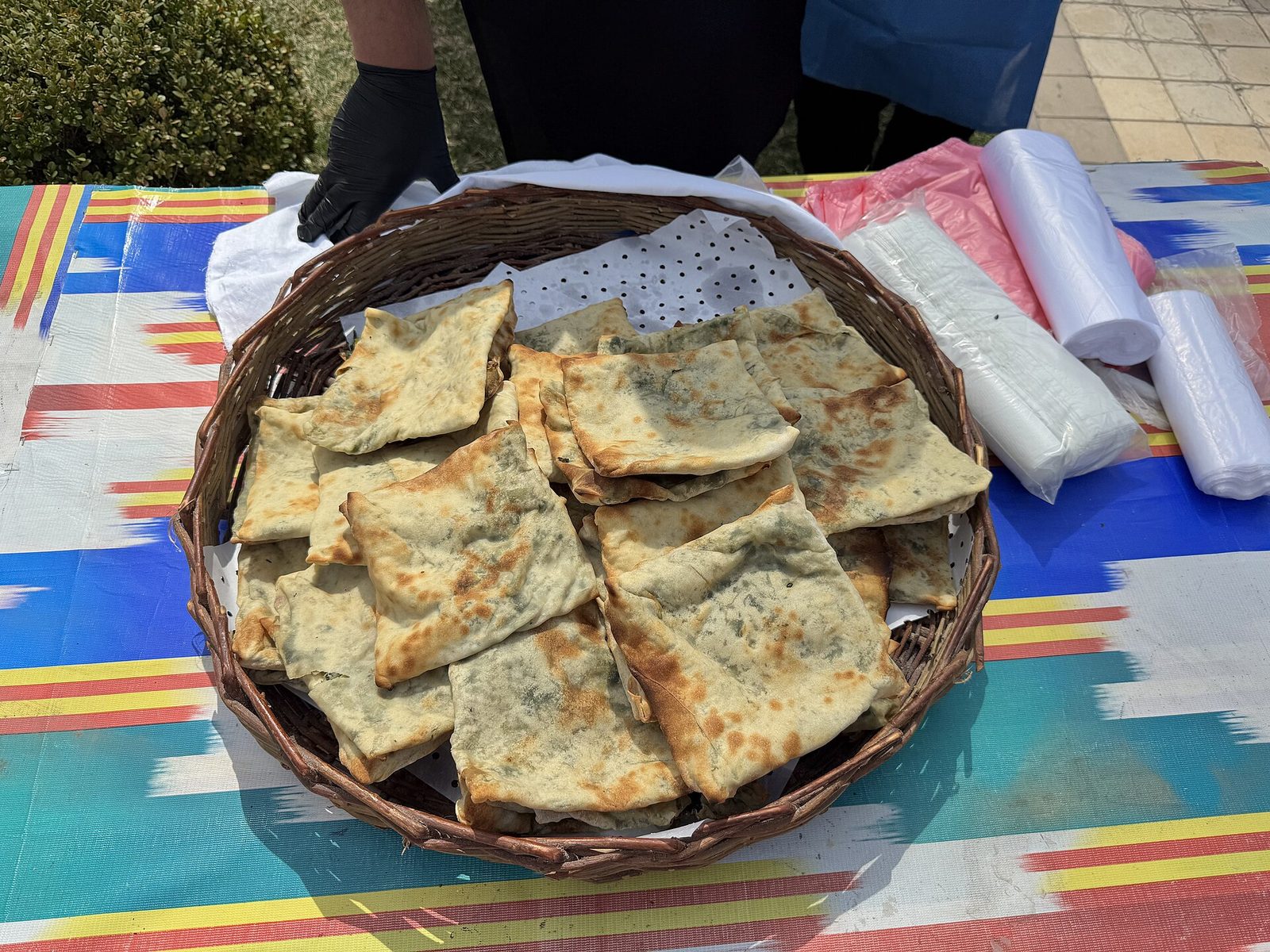
After the winter, the first thing on the table is green. Ko’k somsa, samsa filled with herbs and spinach, is baked in early spring, when the first young shoots appear, and ko’k chuchvara are small dumplings with a herb filling. Both belong to Navruz, the spring new year on 21 March, together with halim, a thick, slow-cooked porridge of wheat and meat, and ,Did you know? Sumalak is sweet, yet nobody adds sugar Traditional sumalak is made of nothing but sprouted wheat and water; its sweetness comes from the sprouts themselves. Add flour to thicken it faster and the paste turns out less sweet. The last night of cooking was traditionally spent singing around the pot. Read more → sprouted wheat stirred all night in a big kazan and shared with the neighbours in the morning. In early spring families also make a salad of radishes and eggs.
In April and May, look for the samsa of Sukok, a mountain village in the Parkent district: its filling of spring greens and mador is so local that the name is on the national register of geographical indications. From Tashkent we organise a trip to Sukok, about five hours with transport and a guide.
Fruit begins at the end of April, when the first cherries usually reach the wholesale markets, with strawberries beside them; the south comes first. Our Navruz in Bukhara tour puts you in Bukhara on 21 March, with a tasting of sumalak and national sweets. More about the holiday is in Navruz in Uzbekistan, and about the season in Uzbekistan in spring.
Summer, June to August: apricots, tomatoes and cold dishes
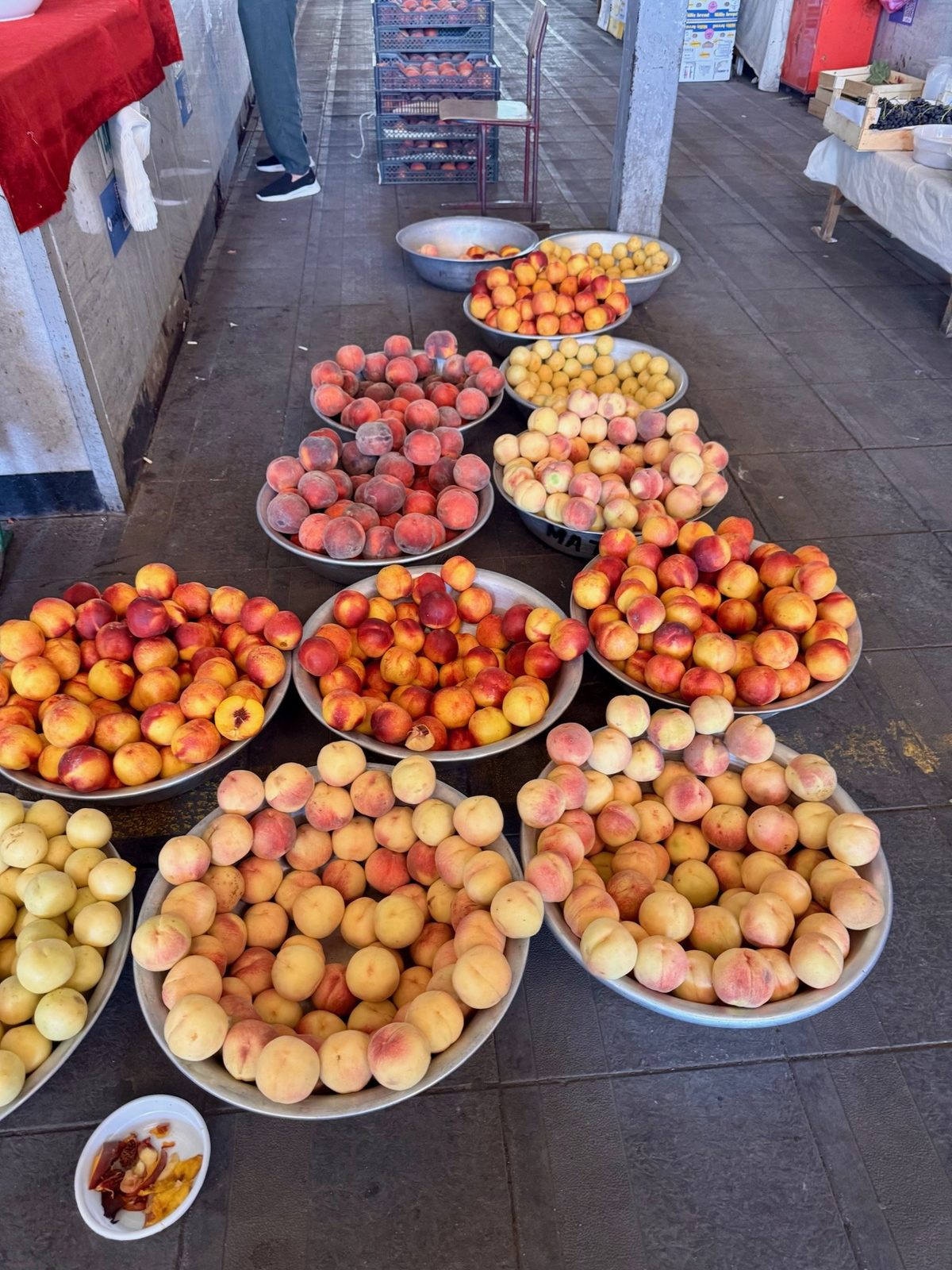
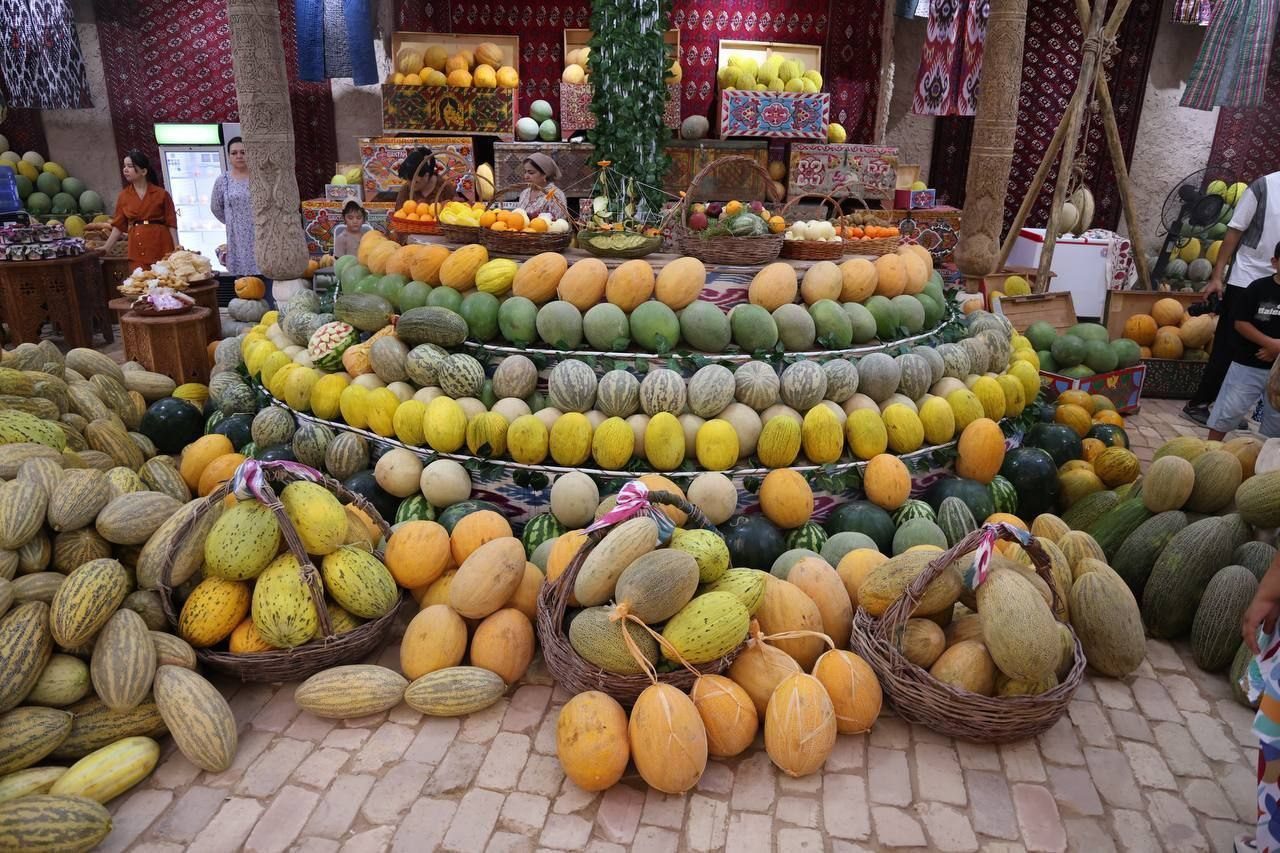
June is the sweetest month at the bazaar. The late cherries last until the middle of the month, and the apricot harvest peaks in its first half: Uzbekistan is the second-largest apricot grower in the world. Peaches follow, with July the busiest month, and then the melons. The first big batches reach Tashkent in early June, and by July they are everywhere. In early August Khiva holds its melon festival, Qovun sayli; in 2026 it ran on 7–9 August.
Sour cherries, olcha in Uzbek, follow the sweet ones in June. Most of them go into compote and jam that families keep for tea in winter, and in June you will see them piled high at the bazaar.
Summer is also when vegetables from the open fields arrive and prices fall: in June 2025 tomatoes became 46.6% cheaper in a single month, and cucumbers 30.9%. This is the season of achchiq-chuchuk, thinly sliced tomato and onion with hot pepper, the salad that comes with Rice cooked in a kazan with carrots, onions and meat: the dish of every Uzbek celebration. Each region cooks it its own way. and shashlik.
In the heat, people here eat cold and sour. Chalop is a cold soup of qatiq, soured milk, thinned with water, with cucumber, dill and coriander. Ayran, suzma diluted with cold water, is the drink of hot days, and kuksu, a cold noodle soup in beef broth with cucumber and egg, is another summer favourite. Plov stays a lunch dish, cooked in the morning and eaten by midday. The fruit calendar, with the melon varieties of Khorezm, is in fruit season in Uzbekistan, and how we plan a hot day is in Uzbekistan in summer.
Autumn, September to November: harvest, weddings and plov
September is the peak of the harvest. Grapes have been coming in since mid-August, one variety after another until late autumn; figs, quince and pomegranates are at their peak, Khorezm melons stay in season into October, and persimmons arrive in October and November. Pumpkin counts as the autumn crop here, and it goes into samsa and manti: ask for qovoqli, “with pumpkin”.
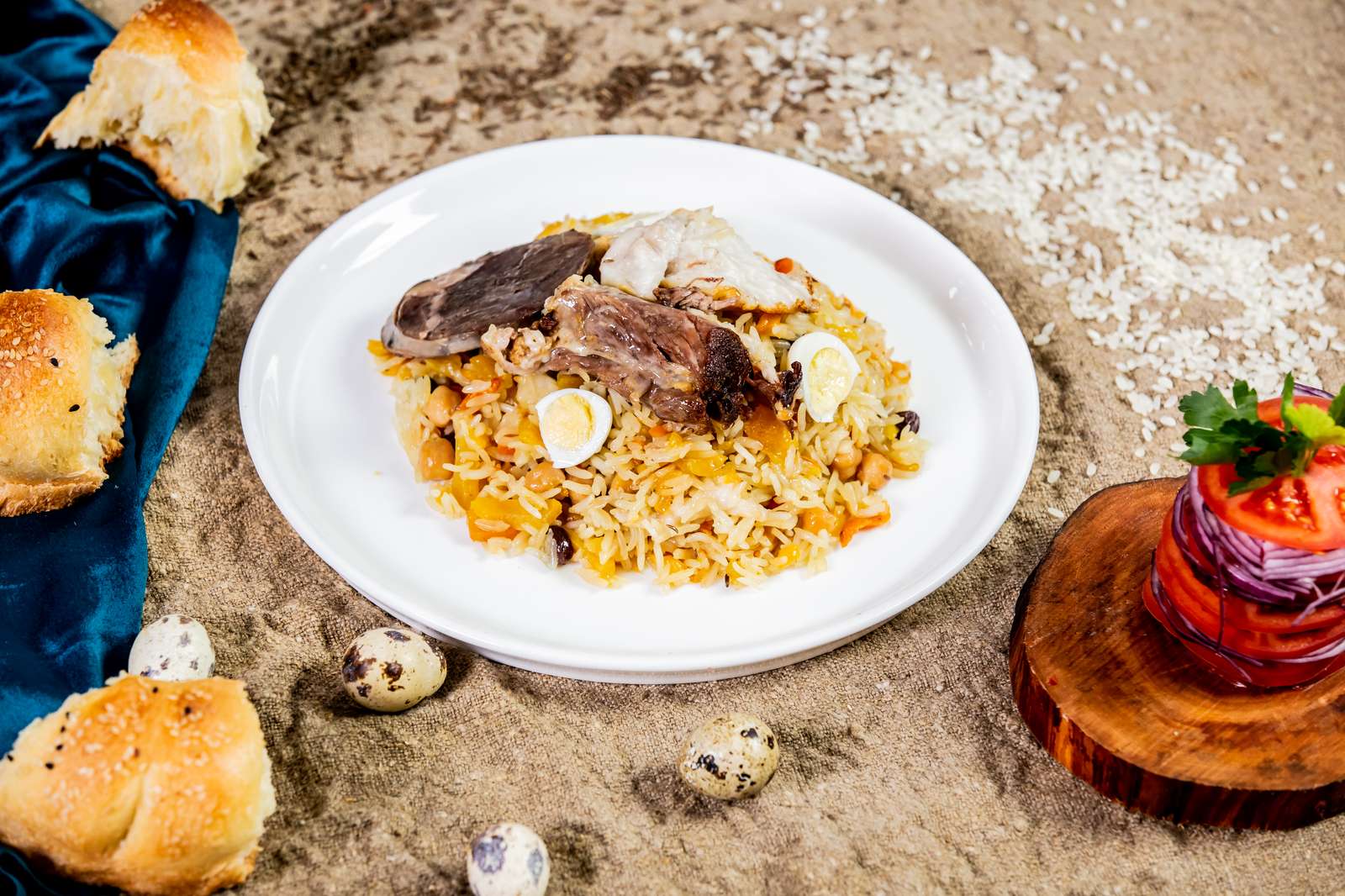
Autumn, like spring, is the season of weddings, and a wedding begins with plov. Nahor oshi, the morning plov, is served to the guests between about 6 and 9 a.m., two people to each large platter. A wedding cannot be booked, but a family table can: in Bukhara and Khiva we arrange a dinner with a local family and a Khiva family evening, and we pass any food restrictions on to the hosts in advance.
When the nights turn cold in October, soups come back: shurpa of mutton and vegetables, mastava, the rice soup served with a spoonful of qatiq, and mashxo’rda of rice and mung beans. September and October are also the months of the grape harvest at the wineries; we arrange tastings at Uzumfermer near Tashkent and Bagizagan near Samarkand for guests of 21 and older. More in plov in Uzbekistan, Uzbek wedding traditions and Uzbekistan in autumn.
Winter, December to February: naryn, stored melons and long tea
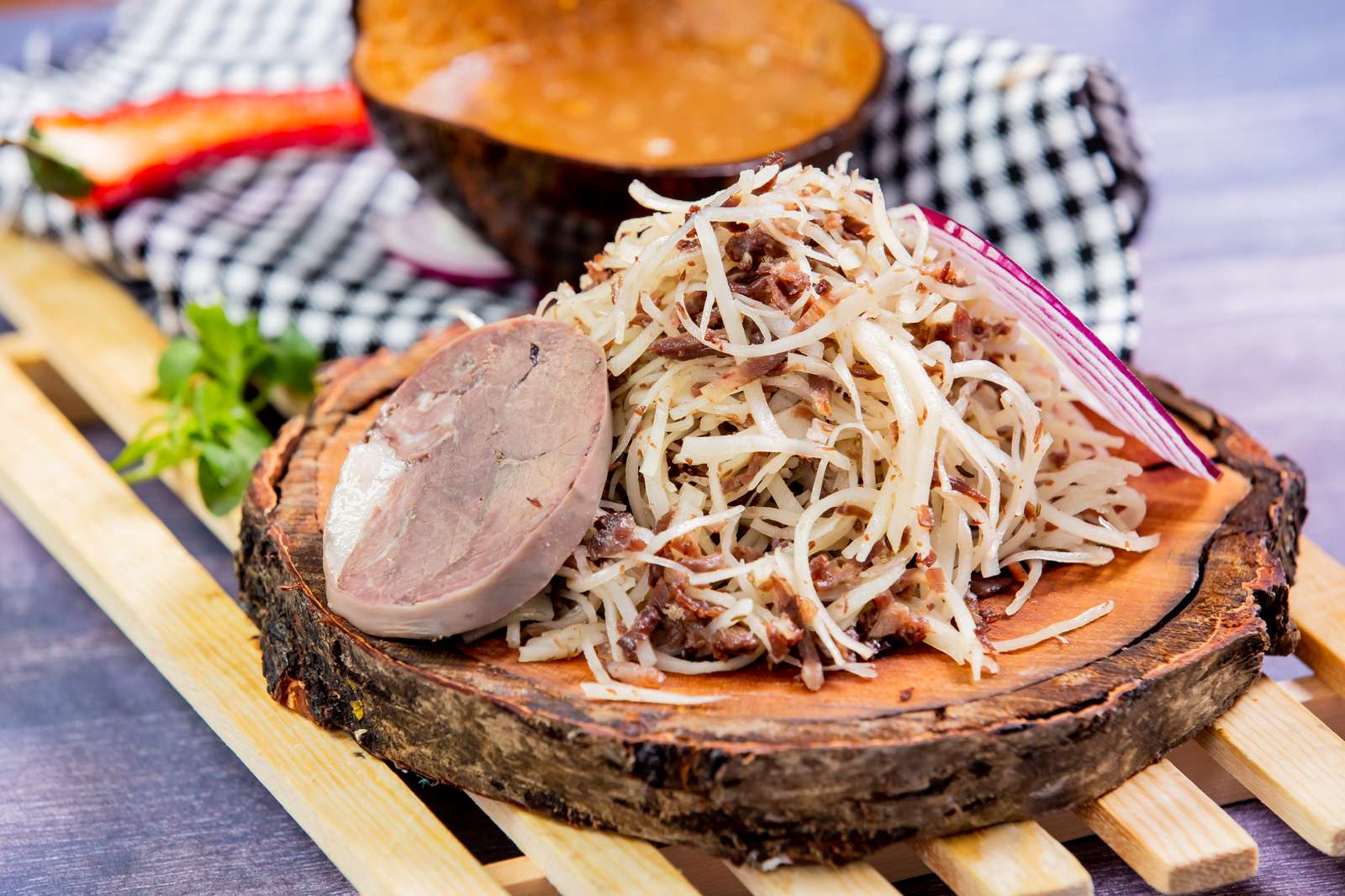
Winter food is food for warmth. Naryn, Tashkent’s dish of fine noodles and horse meat, is cooked mainly in the cold months and for big occasions. It is served cold, with slices of qazi, the horse-meat sausage, and a bowl of hot broth on the side. In the cold season people make salads of Did you know? Legend says Margilan is named after chicken and bread Legend says locals greeted Alexander the Great with chicken and bread, 'murg' and 'non', and the dish gave the town its name. In fact Alexander never reached here; the name Margilan is recorded from the 10th century. Read more → radish, and one winter salad pairs it with pomegranate seeds: anor va turp.
Fresh fruit gives way to what has been stored. Khorezm farmers hang their winter melons from the beams of airy sheds and sell them all winter. Dried apricots, raisins, figs and nuts fill the bazaars, and tea comes with ,Did you know? Navat: sugar grown on threads for your tea Uzbek tea is drunk without sugar in the cup; the sweetness sits beside it. Navat is sugar left to crystallise, often on cotton threads hung in thick syrup, and the crystals go straight into the tea. Threads of navat from the bazaar make a good present. Read more → sugar crystals grown on threads. Plov does not stop for the cold either: on 14 December 2025 Khiva cooked 9 tonnes of it in one cauldron at its plov festival.
New Year’s Eve is a family night with a full table, with Olivier salad and tangerines among the usual dishes; on our New Year tours the festive dinner is included. In 2027 Ramadan is expected to begin around 8 February, the time of nishalda, a white whipped sweet of egg whites and sugar eaten with bread and tea. More in New Year in Uzbekistan, Uzbek sweets and Uzbekistan in winter.
The year at a glance
| Season | Fresh at the bazaar | Dishes to try | Where |
|---|---|---|---|
| Spring, March–May | Herbs and young greens, radishes, strawberries and the first cherries from the end of April | Sumalak, halim, ko’k somsa, ko’k chuchvara, the samsa of Sukok | Navruz celebrations in every city; Sukok in April and May |
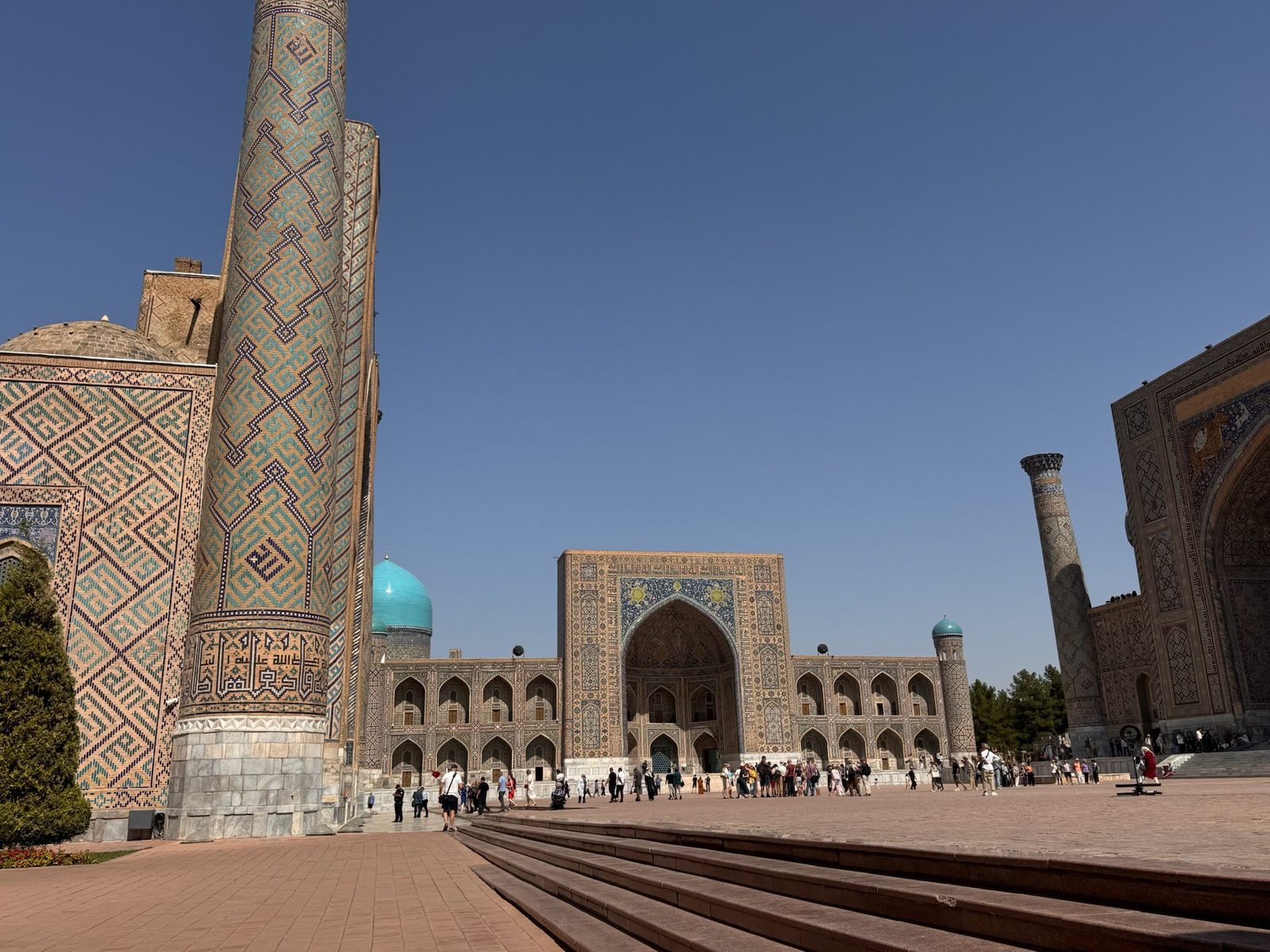
| Summer, June–August | Apricots, cherries until mid-June, sour cherries, peaches, melons, tomatoes and cucumbers | Achchiq-chuchuk, chalop, ayran, kuksu | Tashkent's old bazaar under a big blue-green dome, not far from Hazrati Imam. Bring cash in so'm. Read more → in Tashkent and Samarkand's main bazaar, right next to Bibi-Khanym: Samarkand bread, dried fruit, nuts and halva. Read more → in Samarkand in the morning; Khiva for the melon festival in early August |
| Autumn, September–November | Grapes, figs, quince, pomegranates, persimmons, late melons, pumpkin | Pumpkin samsa and manti, wedding plov, shurpa, mastava | Every bazaar; the wineries near Tashkent and Samarkand |
| Winter, December–February | Stored Khorezm melons, Margilan radish, dried fruit and nuts | Naryn with qazi, radish and pomegranate salad, tea with navat | The teahouses of Tashkent; dried fruit and navat at every bazaar |
How we build a food trip around the season
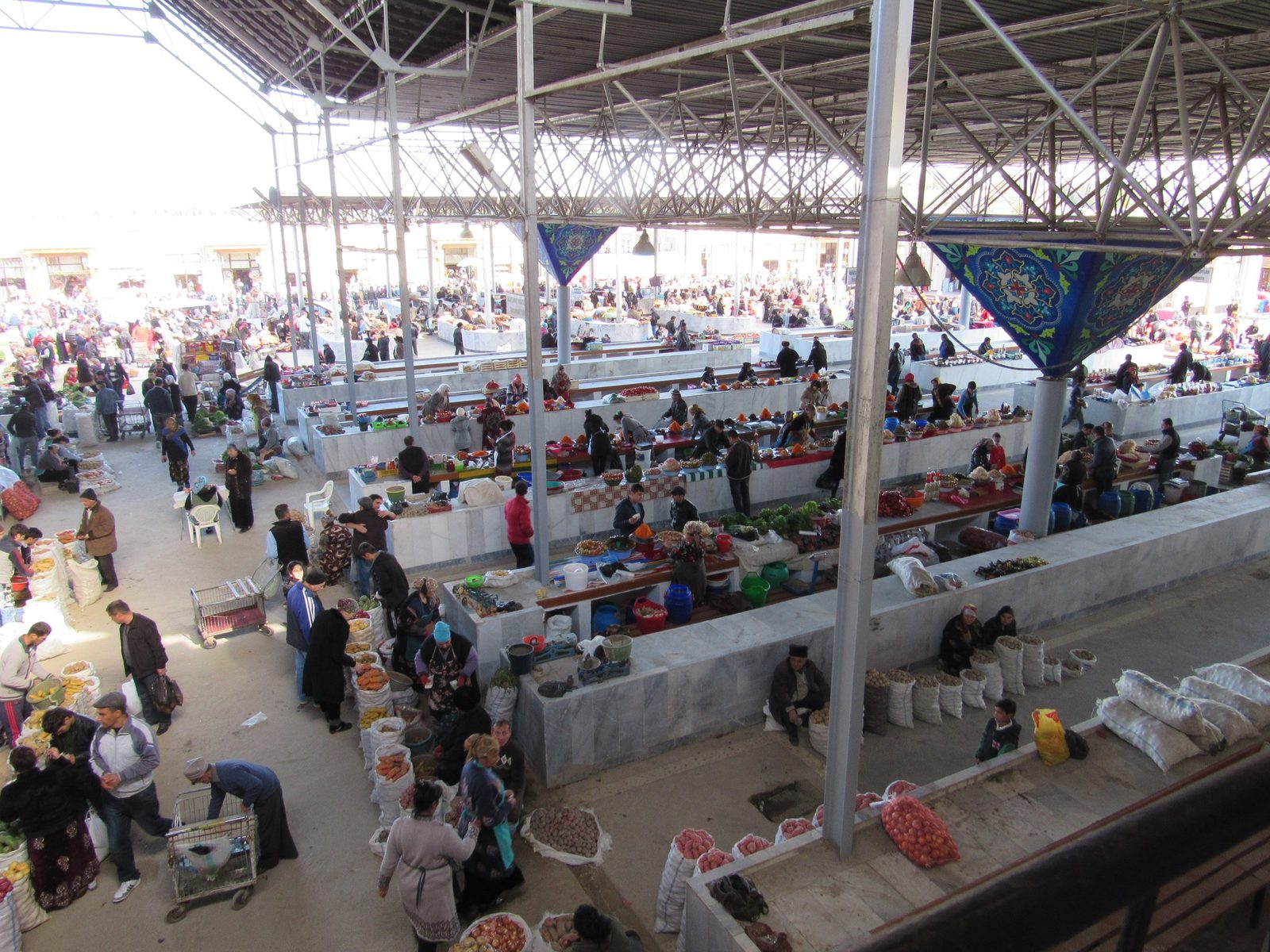
If food is the reason for your trip, our culinary tour Taste of the Road is built for it: eight days from Tashkent to Khiva, Bukhara and Samarkand, a bazaar in every city and three cooking classes, tukhum-barak and shivit oshi in Khiva, bakhsh in Bukhara and plov in Samarkand. It is a private tour, so it starts on the day you choose, and the bazaar walks show whatever the season has brought: apricots in June, pomegranates in October, dried fruit and navat in winter.
On a classic route the season comes to you anyway. Your guide knows the stalls at Chorsu in Tashkent and Siab in Samarkand and takes you along the rows that are worth it that week, in the morning, when the bread is fresh and the fruit has just arrived. On our tours the guide speaks your language and is included in the price. You can add an evening with a family in Bukhara or Khiva or, in April and May, the trip to Sukok; for these services the guide’s language is agreed when you book.
Tell us about your diet in advance. Vegetarians eat well in spring and autumn, with the herb and pumpkin dishes, and we choose the places with that in mind; more in vegetarian in Uzbekistan. Drink bottled water, and wash fruit with it or ask the hotel kitchen to slice it for you.
Tell us when you can travel and what you like to eat, and we will suggest a route for that season. Start with the tour finder, where “Food and markets” is already selected, or send us your dates for a tailor-made tour, and we will reply with a programme and a price.
In short
- Spring: Navruz greens, ko’k somsa, ko’k chuchvara, halim and sumalak; the samsa of Sukok in April and May; cherries and strawberries from the end of April.
- Summer: apricots in June, melons from June to autumn, cheap tomatoes and cucumbers for achchiq-chuchuk, and cold chalop, ayran and kuksu.
- Autumn: grapes, figs, quince, pomegranates, persimmons and pumpkin; wedding season and morning plov; the soups return.
- Winter: naryn with qazi, radish salads, stored Khorezm melons, dried fruit and tea with navat.
- Dates shift with the region and the weather; our Taste of the Road tour starts on any day you choose, so it can follow the season you want.