
 Deutsch
 English
 Español
 Français
 Italiano
 Polski
 Português
 Suomi
 Svenska
 Türkçe
 Русский
 עברית
 한국어
 中文
 日本語
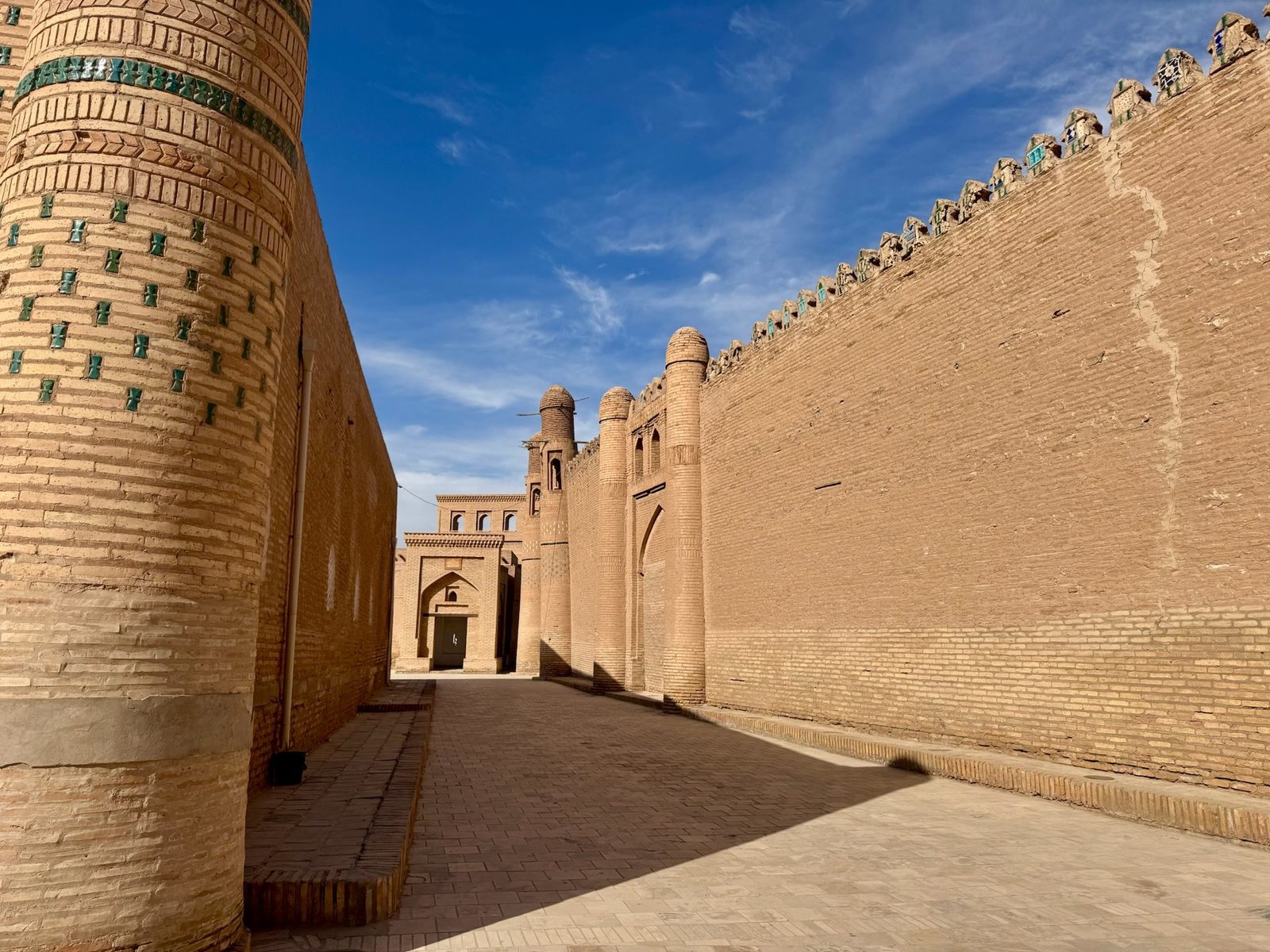
Places in this article: Samarkand · Bukhara · Khiva · Tashkent
Best Tours of Uzbekistan: How to Choose Yours
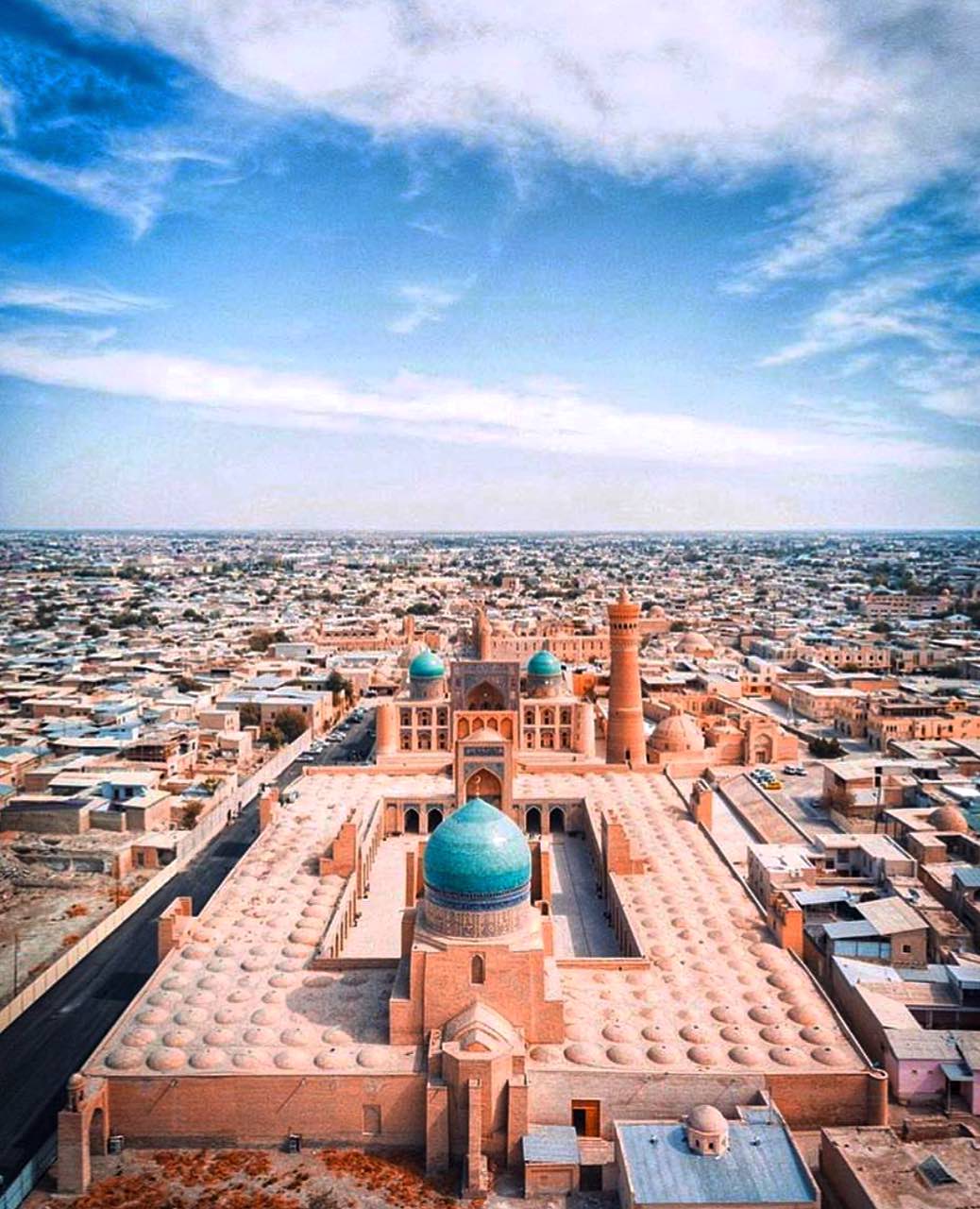
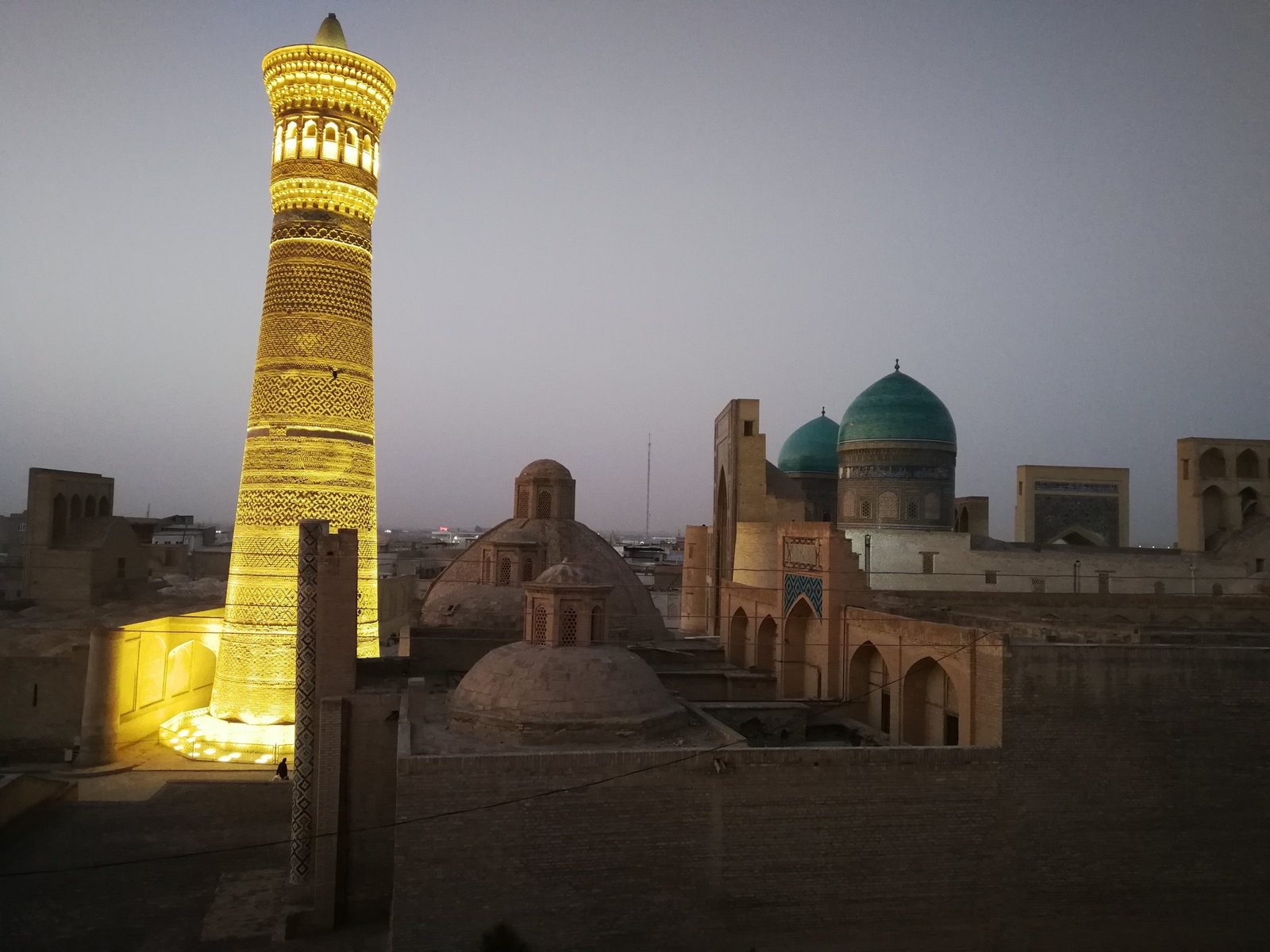
Our catalogue holds more than fifty tours, from a single day inside the walls of Khiva to 23 days across all five countries of Central Asia. So when someone asks us for the best tours of Uzbekistan, we answer with questions: how many days do you have, when are you coming, and what would you rather do with a free afternoon — look at tilework, eat, or walk uphill?
We are a tour operator in Tashkent and plan these trips all year. This guide walks through what is in our catalogue today, how to narrow it down, and how private and group tours work with us. Every tour named here links to its own page with the full programme and what is in the price.
How to choose: days, season, interests, pace
Days. Seven or eight days cover the four classic cities: Tashkent, Samarkand, Bukhara and Khiva. Ten or eleven let you slow down or add a region. Two weeks reach the Fergana Valley or a second country. With three or four days, we would rather show you one city properly than three in a hurry.
Season. Spring and autumn, roughly April–May and September–October, are the main season for the cities and the desert. Summer is the time for the mountains and the yurt camps of Kyrgyzstan; in the cities we move sightseeing to the morning and evening. Winter brings ski weekends near Tashkent and the New Year tours. Month by month, see when to visit Uzbekistan.
Interests and pace. Decide whether you want monuments, crafts, food, nature or a mix, and how much walking a day suits you. Each tour page shows its pace and says who the tour suits and who it does not.
Budget. Prices are on the tour pages; here is what moves them. A group tour covers the same cities for less than a private one. Hotel category, the number of days and whether trains and the flight to Khiva are in the price make the rest of the difference. Not sure where to start? Our tour finder asks six questions and suggests three tours.
The classic route in 7, 10 or 14 days
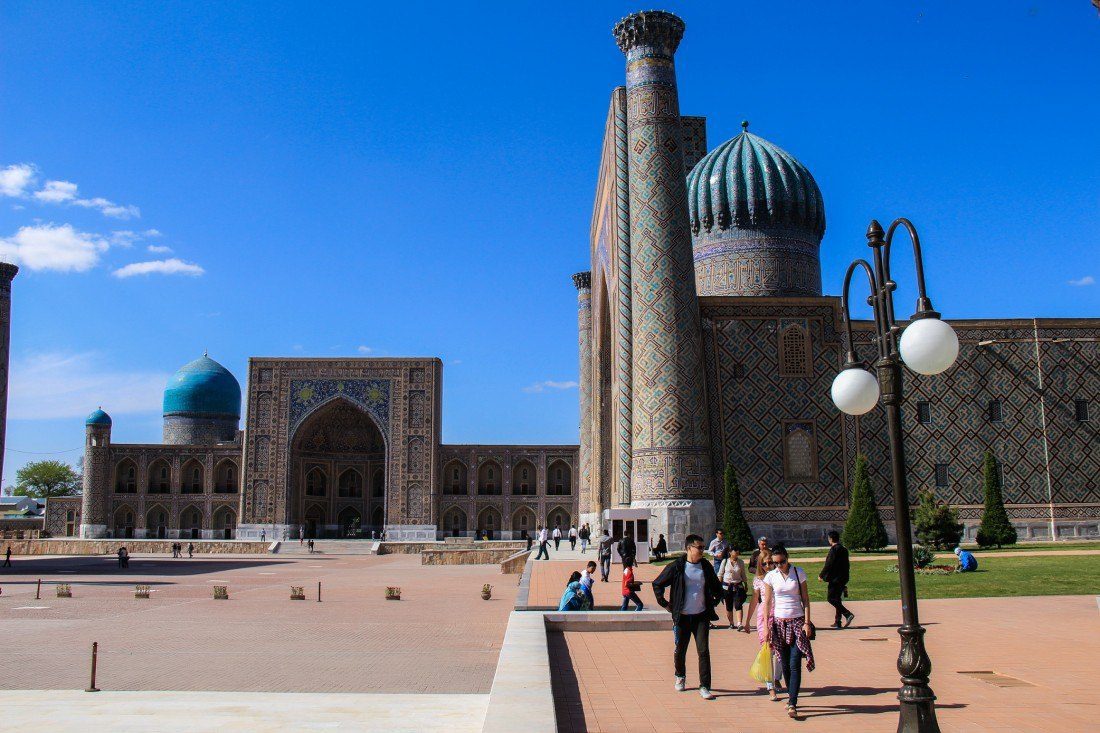
Tashkent, Samarkand, Bukhara and Khiva are the route most first-time visitors want, and we run it in several formats:
- Samarkand, Bukhara and Khiva group tour, 8 days: departures every Friday and a set programme, the simplest first trip.
- 8-day private classic: the same four cities with your own guide, on your own dates.
- 11-day private classic: the same route with more time in each city.
- Classic Uzbekistan at a gentle pace, 10 days: one or two sights each morning, free afternoons and central hotels.
- 10 days off the beaten path: the four cities plus the Mountains of the Western Tien Shan about 80 km from Tashkent: hiking in summer, skiing in winter, the Charvak reservoir nearby. Read more → mountains, craft workshops and dinners in family homes.
- Uzbekistan by train, 8 days: the ,Uzbekistan's high-speed train: Tashkent to Samarkand in about 2 hours 10 minutes, Tashkent to Bukhara in about 4 hours. Tickets are tied to your passport. Read more → the new high-speed train to Khiva and a sleeper back to Tashkent.
- 8-day independent tour: we book the hotels, breakfasts and transfers, and you choose your own excursions. This one has no guide.
Day by day, the routes are laid out in Uzbekistan in 7 days, in 10 days and in 14 days. On the independent tour you can still have a guide for a day: book a walking tour of Samarkand in Travel Moments.
The Fergana Valley and its crafts
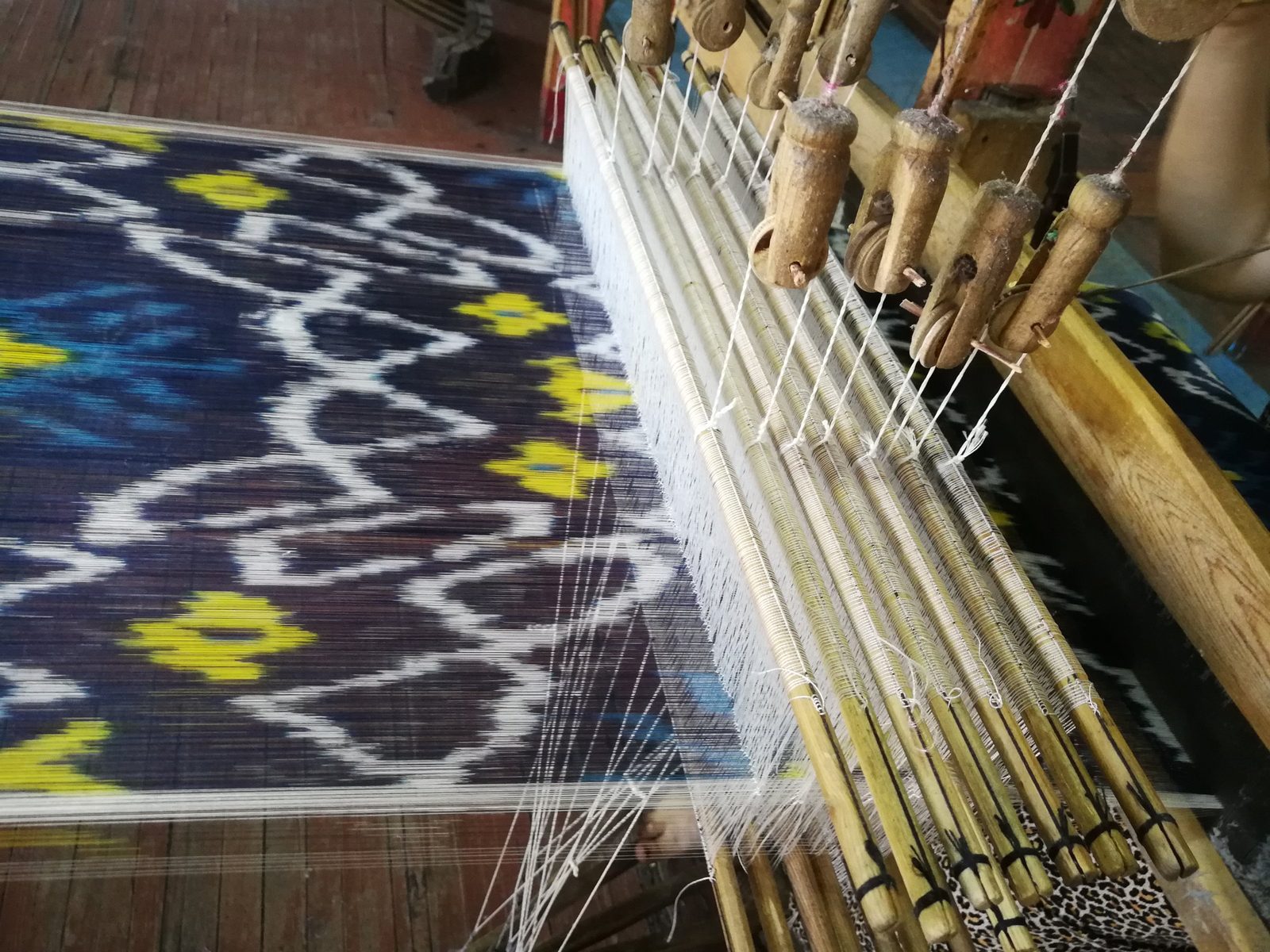
East of Tashkent, over the mountains, lies the valley of silk and ceramics: Did you know? Legend says Margilan is named after chicken and bread Legend says locals greeted Alexander the Great with chicken and bread, 'murg' and 'non', and the dish gave the town its name. In fact Alexander never reached here; the name Margilan is recorded from the 10th century. Read more → weaves ikat, Did you know? Legend says a Rishtan apricot made a great scholar praise God Legend says 12th-century Rishtan folk brought a new apricot to their countryman Burhan al-Din al-Marghinani in Samarkand; he tasted it and said 'Subhanallah' three times, so it is called subhoni. The scholar is real: he wrote al-Hidaya. Read more → glazes its bowls. Our Fergana Valley crafts tour takes four days and goes by train: a ceramics session with a master in Rishtan, Margilan silk from the cocoon to the loom, Did you know? Kokand's Friday mosque stands on 98 columns from India Muhammad Umar Khan built Kokand's Juma Mosque in 1812–1818. Its 100-metre iwan rests on 98 carved red-wood columns brought from India, and its minaret is 22 m tall. Inside is a small museum of applied arts. Read more → and Andijan. With less time, the 3-day Fergana Valley extension covers the khan's palace in Kokand, Margilan and Rishtan.
The old cities have a crafts tour of their own: Crafts of Bukhara and Samarkand, five days with paper made from mulberry bark at ,A village near Samarkand where paper is made by hand from mulberry bark, the old way, at a working mill on the stream. woodcarvers, gold embroidery, Did you know? One suzani was often stitched by several women at once A family member or a pattern drawer, the kalamkash, drew the design across strips of cotton. The strips went to different women of the family or neighbourhood, who embroidered them at the same time; sewn back together, they show slightly mismatched seams. Read more → and the potters of Gijduvan. More on the valley in our Fergana Valley guide.
Food, wine, photography and history
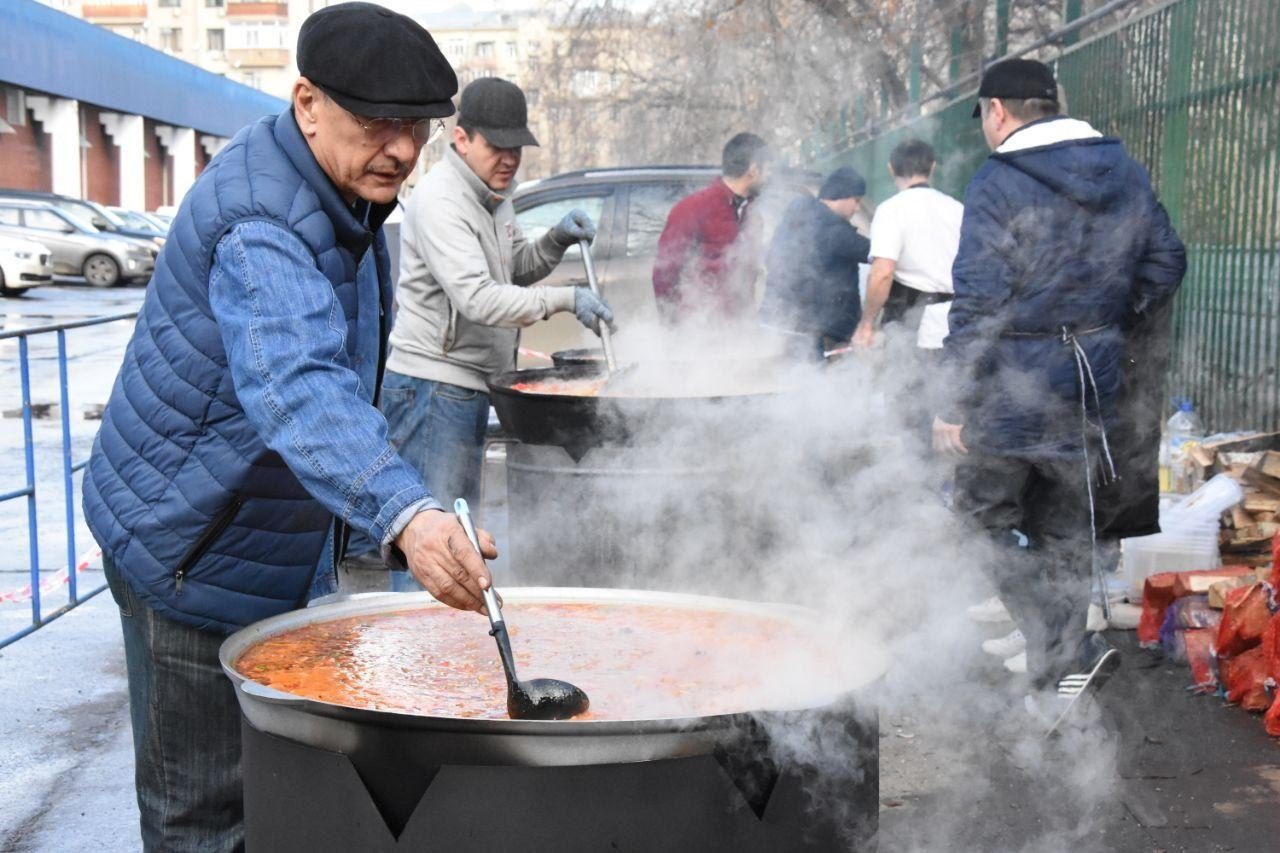
If you have seen the classic cities, or know exactly why you are coming, a themed tour gives the trip its backbone.
- Food: Taste of the Road, eight days with markets in every city and three hands-on cooking classes. Before you go, read about plov in Uzbekistan.
- Wine: Wine Uzbekistan, five days in Tashkent and Samarkand with tastings at a vineyard and in a wine cellar.
- Photography: the 12-day group photo tour, with free afternoons and a photo moment in every city.
- Science and archaeology: Stars of Uzbekistan (the ,Did you know? A solar furnace near Tashkent catches the sun with 62 mirrors The Big Solar Furnace near Parkent, about 45 km from Tashkent, has worked since 1987. A field of 62 heliostats sends sunlight onto a parabolic concentrator of 10,700 small mirrors, and the heat is used to test and make new materials. Read more → Did you know? Ulugh Beg measured the year to within 25 seconds Working at his Samarkand observatory, Ulugh Beg put the tropical year at 365 days 5 h 49 min 15 s, about 25 seconds too long, closer than Copernicus a century later. Read more →’s observatory and a night under the stars by ),Did you know? Aydarkul is a wetland of international importance In 2008 the Aydar-Arnasay lake system, about 527,000 ha, became a Ramsar site. It lies where two great bird flyways cross and shelters Dalmatian pelicans and the rare white-headed duck. Read more → Sogdiana Unearthed and The Ambassadors of Afrasiyab.
- The Buddhist south: Termez and Surkhandarya, the Buddhist Silk Road and In the Footsteps of Xuanzang.
- Heritage and architecture: Turkic Heritage of the Silk Road, the Seven Saints of Bukhara and Tashkent modernism, two days among the city’s modernist buildings on the UNESCO list.
What a A network of caravan routes between China and the Mediterranean. Samarkand, Bukhara and Khiva grew rich as stops along it. journey looks like today is in Silk Road tours in Uzbekistan.
Mountains, hiking, the desert and the Aral Sea
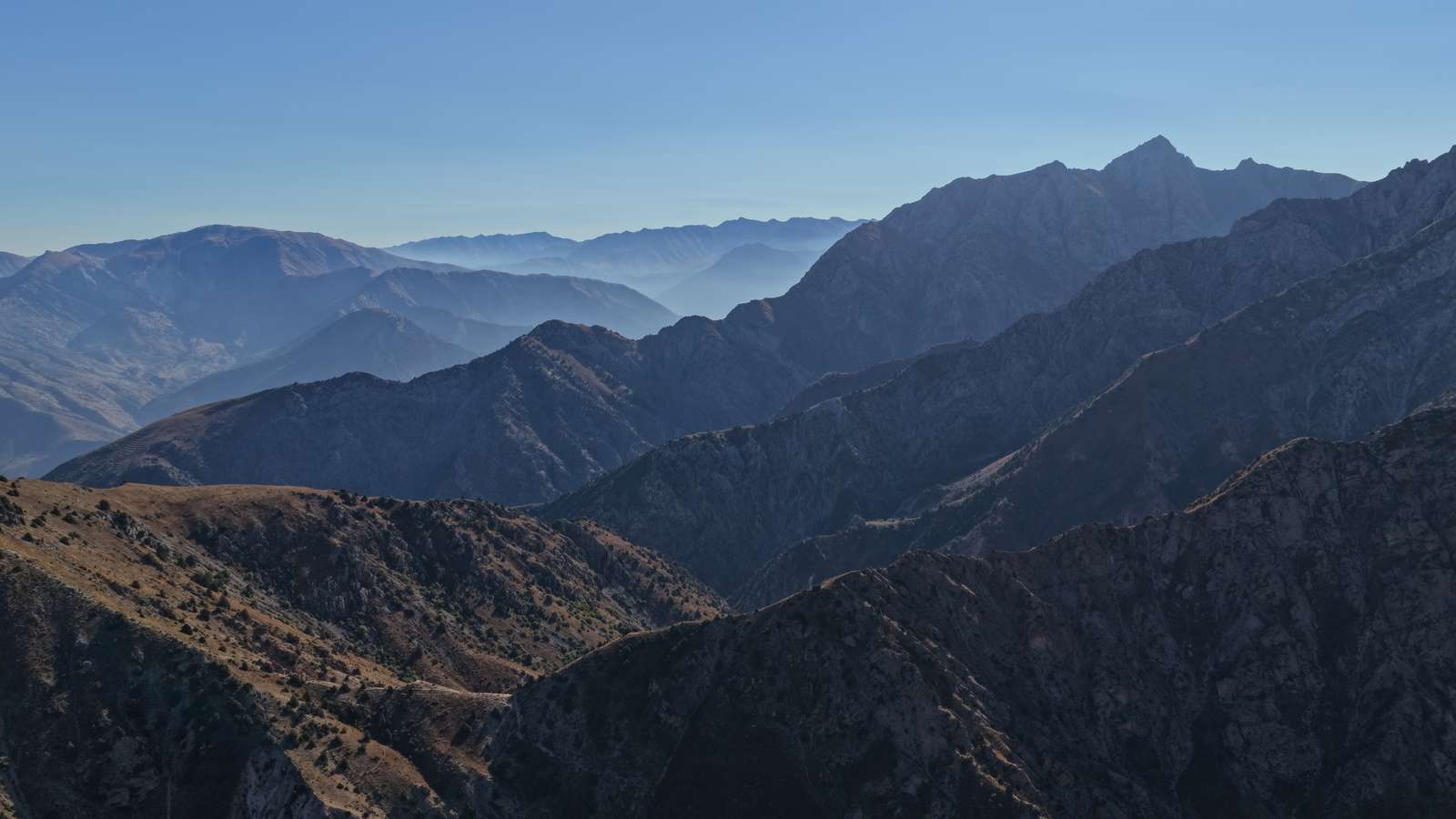
Uzbekistan is not only cities. The mountains begin within a drive of Tashkent:
- Hiking Uzbekistan, 8 days: a day hike at Chimgan, two nights with families in the Did you know? The Nuratau ridge protects a rare wild sheep The Nurata Nature Reserve was set up on the Nuratau ridge in 1975 to protect wild walnut groves and Severtsov's argali, an endemic wild sheep on the Red List. Golden eagles and bearded vultures are protected here too. Read more → villages, a yurt camp by Did you know? Lake Aydarkul appeared by accident in 1969 In the flood year of 1969 the Chardara reservoir on the Syr Darya had to release so much water that it was sent into the Arnasay depression in the desert. The water stayed, and Lake Aydarkul is now a large lake with fish, birds and yurt camps. Read more → and Samarkand at both ends.
- High Tashkent jeep expedition, 4 days: Chimgan, the Pskem valley and the Ugam range.
- Wild expedition to Baysun, 6 days: canyons and mountain villages in the south.
- Ski weekend in the Tashkent mountains, usually from December to March.
- Nuratau Mountains extension: a village homestay and a guided hike on the way from Bukhara to Samarkand.
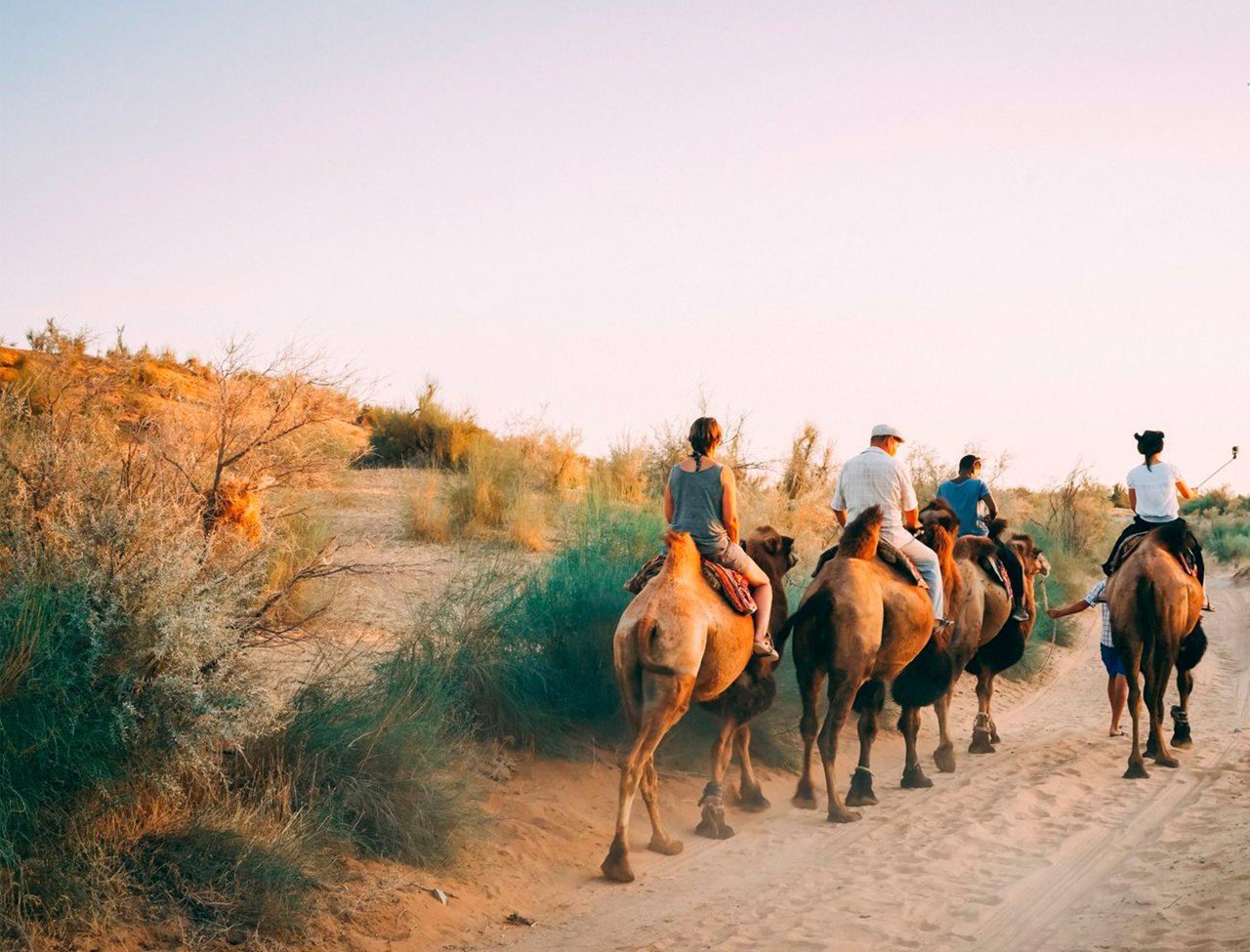
The far west is desert. Karakalpakstan and the desert fortresses of Khorezm takes five days: Khiva, the fortresses of ,Did you know? Toprak-Kala was the palace city of ancient Khorezm's kings In the 2nd–3rd century AD Toprak-Kala was the capital of Khorezm. From 1938 Sergey Tolstov's expedition uncovered its palace, with wall paintings, coins and archives; its sculptures are now in the Hermitage. Read more → Did you know? Legend says a tunnel links Kyzyl-Kala and Toprak-Kala Legend says the small, almost square fortress of Kyzyl-Kala, the “Red Fortress”, is joined to neighbouring Toprak-Kala by an underground passage. No tunnel has been found yet; the fort itself was discovered by S. P. Tolstov’s expedition in 1938. Read more → and Did you know? Legend says a shepherd named Ayaz built Ayaz-Kala for a bride Legend says a Khorezm king promised his daughter to whoever built an unassailable fortress; the shepherd Ayaz began, the king broke his word, and the walls stayed unfinished. In fact the oldest fort here dates to the 4th–3rd century BC. Read more → with a night in a yurt camp, and the Did you know? A desert city keeps one of the great avant-garde collections The Savitsky Museum in Nukus holds tens of thousands of works and is often called the world’s second-largest collection of the Russian avant-garde, after the Russian Museum in St Petersburg. It also keeps Karakalpak crafts and finds from ancient Khorezm. Read more → in Nukus. The 2-day Aral Sea extension goes via Nukus to the ship cemetery at ,Did you know? A music festival is held among Muynak's old fishing boats Since 2018 the Stihia festival of electronic music, art and science has gathered in Muynak, once a port on the Aral Sea, right beside the ships left on the sand. It ends by burning a 10-metre installation of the word SEA. Read more → the Did you know? Giant stone “arrows” on the Ustyurt plateau were hunting traps Along the Ustyurt cliffs run low stone walls called arans, laid out as arrows, triangles and even stars. Saiga and gazelles run along a wall rather than over it, so hunters steered herds into pens. They were used from the Bronze Age on. Read more → and a night in a camp by the sea. Read more in hiking in Uzbekistan and the desert fortresses of Khorezm.
With children, at a gentle pace, or for a few days
Uzbekistan with Kids is seven days in Tashkent, Samarkand and Bukhara built around what children enjoy: the ,Did you know? A metro designed to ride out a magnitude-9 earthquake The three original lines of the Tashkent Metro were built to withstand an earthquake of magnitude 9.0, and the tunnels lie unusually shallow, only 8–25 m below the street. Read more → the Afrosiyob, paper-making at Konigil, puppets by Did you know? Bukhara's ponds were once its water supply Pools like Lyabi-Hauz, dug around 1620 and 46 × 36 m, were the city's main source of water. Most were filled in during the 1920s–30s because they spread disease; Lyabi-Hauz survived. Read more → and the potters of Gijduvan, with short transfers and a rest every afternoon. Our notes on Uzbekistan with kids help with the planning.
If you would rather see less and see it well, the gentle-pace classic keeps sightseeing to the mornings, with Business class on the Afrosiyob and a flight back from Khiva. More in Uzbekistan for older travellers.
Short on time? The 4-day Samarkand group tour arrives every Friday and leaves on Monday. From Tashkent, night trains take you to Bukhara in 2 days or Khiva in 3 days. Private full days with a guide are in the catalogue for Samarkand, Bukhara, Khiva and Tashkent.
Some dates are worth planning around. New Year in Uzbekistan and New Year in Bukhara run on fixed dates, and Navruz in Bukhara is timed for 21 March. We also arrange a birthday in Samarkand.
Uzbekistan and its neighbours
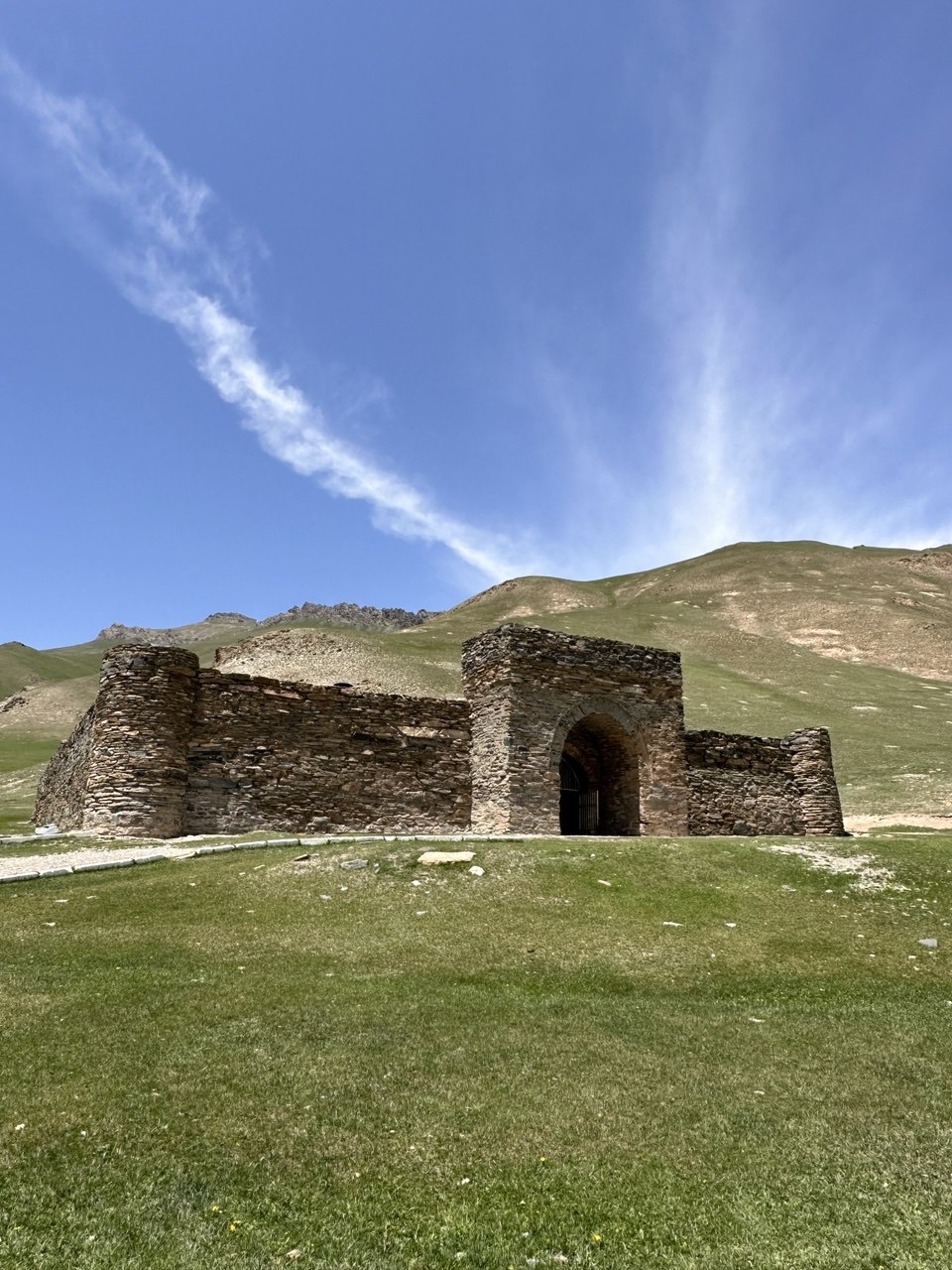
Kazakhstan and Kyrgyzstan are close to Tashkent, so a second country fits easily into a trip.
- Kazakhstan: Turkestan in 2 days by road, Almaty and Astana, and Mangystau on the Caspian.
- Kyrgyzstan: yurts in Chunkurchak and Bishkek in four days, or Kyrgyzstan in summer, nine days with Did you know? Song-Kul, at 3,016 m, is Kyrgyzstan’s largest freshwater lake Song-Kul lies at 3,016 m. It is the second-largest lake in Kyrgyzstan after Issyk-Kul and the largest of fresh water. In winter its ice grows to about a metre thick and melts only by late May; some 190 bird species have been recorded here. Read more → and .Did you know? Issyk-Kul means 'hot lake', and it rarely freezes At 1,607 m, with harsh winters all around, Issyk-Kul rarely freezes because its water is slightly salty. It is 182 km long and up to 668 m deep, the second-largest mountain lake in the world after Titicaca. Read more →
- Tajikistan: the Penjikent and Seven Lakes day from Samarkand, the Seven Lakes jeep expedition, the 5-day Mystic Asia tour and 12 days with hiking in the Fann Mountains.
- Turkmenistan: Merv, Darvaza and Khiva, ten days across the land border.
- Several countries: Tashkent, Bishkek and Almaty in eight days, or the 23-day Silk Road tour through all five countries of Central Asia.
How to combine them is in Central Asia tours.
Private or group, and what is included
Most of our catalogue is private. The tour runs on your dates, with your own guide and driver, and the programme can bend: more time at one site, less at another. On some private tours you also choose the hotel category. A group tour has fixed dates and a set programme, and you share it with other travellers; in return it costs less for the same cities. Our group tours are the weekly departures to Samarkand and the four cities, the night-train weekend to Bukhara, the photo tour and the festive tours at New Year and Navruz.
On our guided tours, a guide who speaks your language is included in the price: tell us your language when you book. Each tour page lists exactly what is in the price and what is not. As a rule, a multi-day programme covers hotels with breakfast, transfers and entrance tickets to the sites on the programme. There is plenty of bottled water everywhere in Uzbekistan. International flights, a Entry rules depend on your passport. Once you are here, each stay must be registered within three days, and hotels do it for you; customs and registration rules are in our guide. Read more → if you need one, photo and video fees at monuments and tips are paid separately, and on some tours so are the trains, the flight to Khiva and meals beyond those listed. If you are weighing up the options, read a private guide in Uzbekistan and on your own or with a local operator.
In short
- Start from your days and your season: 7–8 days for the four classic cities, 10–14 to slow down or add a region.
- Spring and autumn suit the cities and the desert, summer suits the mountains, and winter brings ski weekends and New Year tours.
- Themed tours, from crafts and food to hiking and archaeology, work best as a second trip or a clear first choice.
- Private means your dates and your own guide; group means fixed dates and a lower price.
- On guided tours a guide who speaks your language is included in the price, and each tour page lists everything else.