Programme and details
Uzbekistan · 7 Days / 6 Nights · Private Tour
The Ambassadors of Afrasiyab
Tashkent – Samarkand – Bukhara – Tashkent (Khiva on request)
On a wall in Samarkand, painted in the middle of the 7th century, envoys from many lands come to King Varkhuman with gifts. Two of them wear headdresses with two feathers, and many researchers see in them envoys from Goguryeo. This private tour is built around that wall and around the timetable of the daily flight from Incheon: you land in Tashkent at lunchtime, see the modern capital and its evening fountains, take the fast train to Samarkand and Bukhara, and fly home on the evening flight from Tashkent on day 7. Two more days in Khiva, by the Korean-built high-speed train, on request.
| Duration | 7 days / 6 nights (9 days with Khiva) |
| Price | on request |
| Format | Private, or a small group on your dates |
| Where | Tashkent, Samarkand and Bukhara; Khiva on request |
| Getting around | Afrosiyob high-speed trains between the cities, a car with driver for the airport, the stations and the sights out of walking distance |
| Guide | English or Russian; a Korean-speaking guide on request, if available for your dates |
| Best time | April–May and September–October |
Ideal for travellers from Korea with a week around Chuseok or a long weekend, for history lovers who want to see the Paintings of the Ambassadors with their own eyes, and for first-time visitors to Uzbekistan.
Afrasiyab — the hill where Samarkand stood before the Mongol conquest of 1220.
The Afrasiyab Museum — its first-floor halls reopened in March 2024 after a two-year renovation led by the Cultural Heritage Administration of Korea.
Itinerary
Day by Day
Day 1 · Tashkent — Arrival and the city at night
The flight from Incheon lands in Tashkent at 13:10 on most days. Our driver meets you at the airport and takes you to your hotel.
In the late afternoon your guide takes you into the .Did you know? A metro designed to ride out a magnitude-9 earthquake The three original lines of the Tashkent Metro were built to withstand an earthquake of magnitude 9.0, and the tunnels lie unusually shallow, only 8–25 m below the street. Read more → It opened in 1977, the first in Central Asia, and every station has its own theme; at ,Did you know? A metro station where Ulugh Beg meets Gagarin Kosmonavtlar station, opened in 1984, has ceramic medallions of Ulugh Beg, Galileo, Icarus, Gagarin and Tereshkova, and glass stars in the ceiling that hint at the Milky Way. Read more → ceramic medallions show Yuri Gagarin and Valentina Tereshkova. Photography underground has been allowed since 2018.
After dark, the city’s two fountain parks: Tashkent City park, opened in 2019, with a 200-metre musical fountain on its lake, and Seoul Mun, a new embankment on the Burjar canal named after Seoul Street, where the colour-music fountains play every day until 22:15.
Good to know: On Sundays the flight lands earlier, at 11:00, and we add an hour or two to the afternoon.
Overnight in Tashkent
Day 2 · Tashkent — The old city and the new museum
In the morning, :The religious heart of old Tashkent: madrasahs, a Friday mosque and mausoleums. Right next to it stands the new Center of Islamic Civilization, opened in 2026. Read more → mosques and the 16th-century Did you know? A mausoleum built for a khan who was buried in another city Barak-Khan Madrasah was built in 1531–32. One of its two mausoleums was meant for Barak Khan himself, but he was buried in Samarkand, so the tomb is still called the Nameless Mausoleum. Its cell doors were inlaid with ivory. Read more → An Islamic college: student cells and classrooms around a courtyard behind a grand portal. In the old towns many now house museums and craft workshops. around the tomb of Abu Bakr ,Did you know? Tashkent's patron saint was nicknamed “the locksmith” Abu Bakr Kaffal Shashi, born in Shash, old Tashkent, in 903–904 and died in 976, was a jurist and poet and the son of a locksmith: “kaffal” means locksmith. His mausoleum at Hazrati Imam dates from 1541–1542. Read more → the 10th-century scholar Tashkent honours as its patron. Behind the old domes rises the Center of Islamic Civilization, opened in March 2026, with halls from Sogdiana to the Timurids under a 65-metre dome.
At midday, Tashkent's old bazaar under a big blue-green dome, not far from Hazrati Imam. Bring cash in so'm. Read more → under its blue dome of 1990: spices, dried apricots, nuts and fresh bread. In the afternoon, Did you know? Legend: “Strength lies in justice” were Timur's own words The equestrian statue of Amir Timur in central Tashkent, unveiled in 1994, bears the motto “Strength lies in justice” in four languages. Tradition attributes the words to Timur himself, but historians cannot confirm he said them. Read more → in the centre of the city, rebuilt after the 1966 earthquake.
Good to know: Hazrati Imam is a working religious site: cover shoulders and knees, and women bring a scarf.
Overnight in Tashkent
Day 3 · Tashkent – Samarkand — The Afrosiyob and the Registan
A morning transfer to the station and the Afrosiyob, a Spanish Talgo train: 2 h 30 min to Samarkand. Our driver meets you at the station.
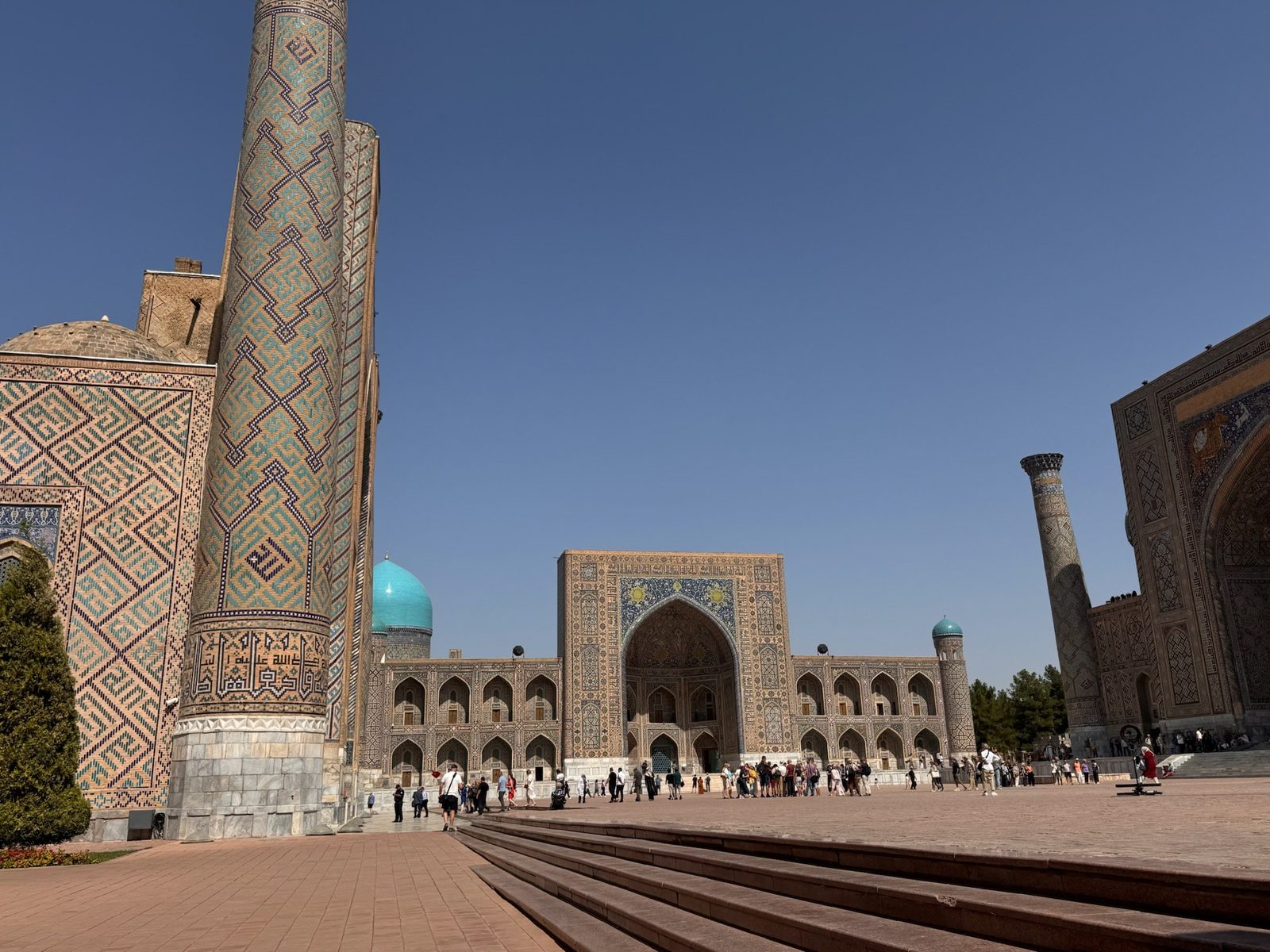
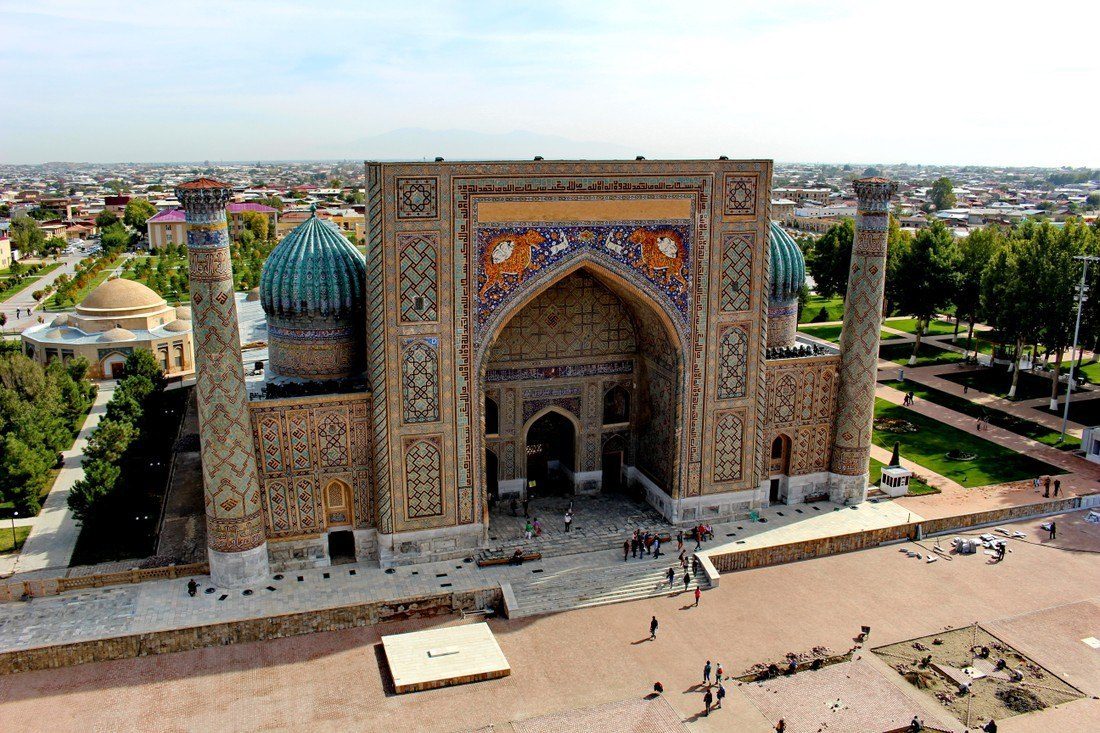
With your guide: the ,Did you know? The Registan's sun-carrying lion went on a banknote The Sher-Dor Madrasah (1619–1636) is named for the big cats with the sun on their backs on its portal. The image appeared on the reverse of Uzbekistan's 200-som note of 1997. Read more → three madrasahs around one square, built between 1417 and 1660; the Did you know? 95 elephants hauled stone for Timur's great mosque Bibi-Khanym, begun in 1399 after Timur took Delhi, was the largest mosque of his empire. Some 200 stonecutters worked on site and 95 elephants brought from India hauled the loads; the courtyard was meant to hold 10,000 people. Read more → and Samarkand's main bazaar, right next to Bibi-Khanym: Samarkand bread, dried fruit, nuts and halva. Read more → next door; and ,Did you know? Timur's tombstone went to Persia and came back The dark-green jade slab on Timur's grave in Gur-e-Amir was carried off by Nader Shah in 1740. It broke, and on his advisers' urging he sent it back to Samarkand. Read more → the mausoleum of ,Amir Timur (Tamerlane, 1336–1405), founder of the Timurid empire, which had its capital in Samarkand. Born near Shahrisabz. at the end of the day.
Overnight in Samarkand
Day 4 · Samarkand — The ambassadors of Afrasiyab
The morning belongs to Afrasiyab, the hill where Samarkand stood until the Mongols took it in 1220. In 1965 a road was being cut across it, and the bulldozers uncovered the walls of a room covered in paintings of the mid-7th century, probably 648–651. A Sogdian inscription on the main, western wall names King Varkhuman of Samarkand, and the wall shows envoys from many lands arriving with gifts.
Your guide shows you two men with two feathers on their headdresses and swords at their belts. Many researchers identify them as envoys from Goguryeo; others think the painters took the image from Chinese art rather than from envoys they saw. You hear both versions and look for yourself. The museum’s first-floor halls reopened in March 2024 after a renovation led by the Cultural Heritage Administration of Korea.
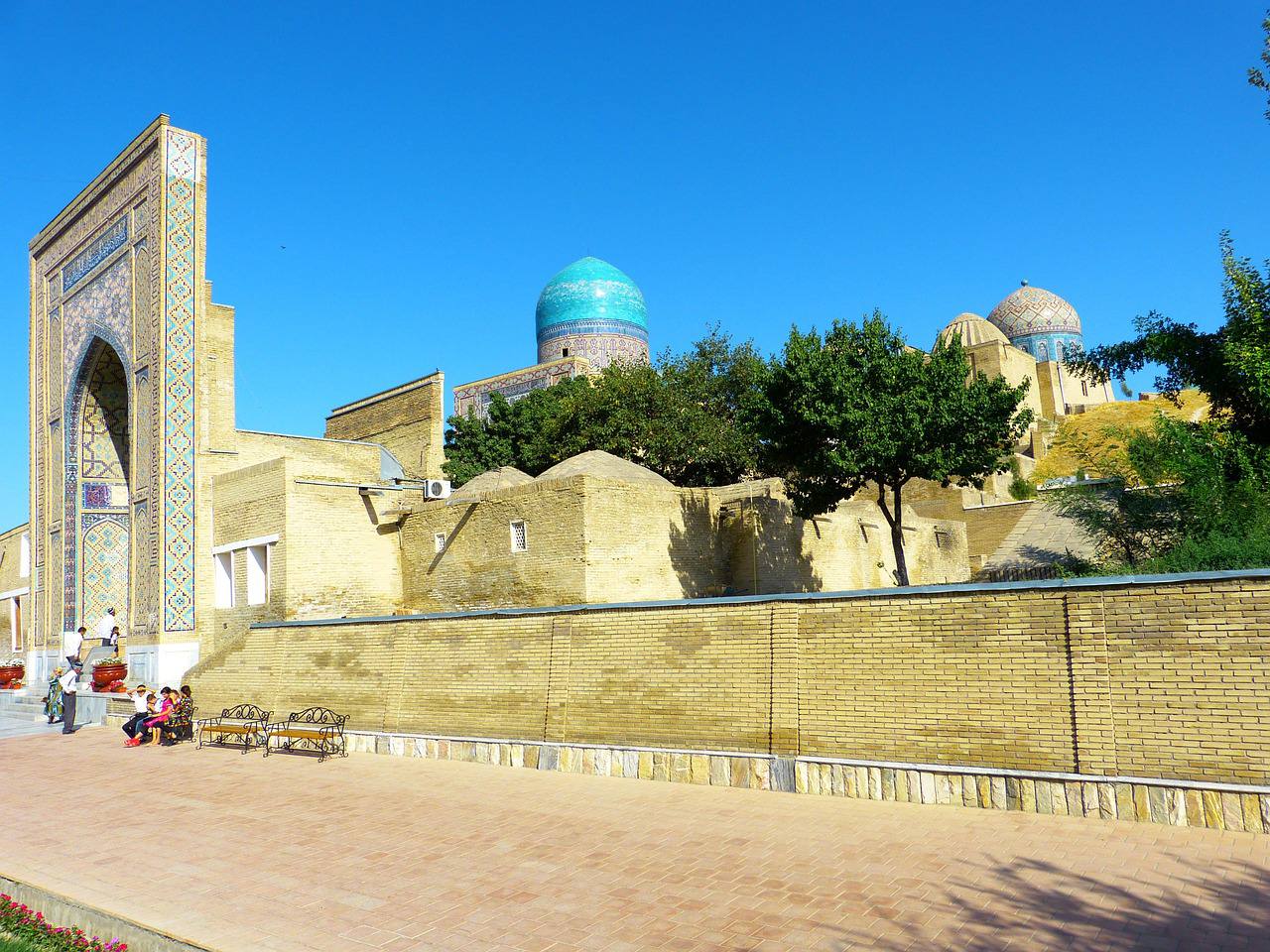
In the afternoon, ,Did you know? Why Shah-i-Zinda means 'the Living King' The necropolis grew around the shrine of Qutham ibn Abbas, a cousin of the Prophet Muhammad. Legend says he did not die in battle but went down a deep well to a garden of paradise, where he lives on. Read more → the street of tiled mausoleums, and the remains of Did you know? Ulugh Beg measured the year to within 25 seconds Working at his Samarkand observatory, Ulugh Beg put the tropical year at 365 days 5 h 49 min 15 s, about 25 seconds too long, closer than Copernicus a century later. Read more →’s observatory of the 1420s, with the arc of its giant sextant.
Good to know: The Afrasiyab Museum closes at 17:00, so we always plan it for the morning.
Overnight in Samarkand
Day 5 · Samarkand – Bukhara — West in under two hours
The Afrosiyob to Bukhara takes under 2 hours. Bukhara’s station is in Kagan, about 12 km from the old city; our driver meets you there.
In the afternoon your guide walks you through the old centre: ,Did you know? Bukhara's ponds were once its water supply Pools like Lyabi-Hauz, dug around 1620 and 46 × 36 m, were the city's main source of water. Most were filled in during the 1920s–30s because they spread disease; Lyabi-Hauz survived. Read more → the pond square, the ,Did you know? Under Bukhara's domes merchants changed money and gold Four 16th-century trading domes still stand over old crossroads. Toki Sarrafon was the money changers' dome, where merchants from India and China swapped coins; Toki Zargaron held jewellers' workshops, Toki Telpak Furushon sold caps. Read more → and ,Did you know? Legend: the minaret's foundation was laid with camel milk Legend says master Bako laid the foundations of the Kalyan minaret with ganch plaster mixed with camel milk, then vanished for two years to let them harden, and only then built the tower. Locals still show a grave they say is his. Read more → where the Did you know? Diggers went 13 m down and never found its base The Kalyan Minaret of 1127 rises about 46 m, and an excavation reached 13 m without finding the bottom of its foundations. Genghis Khan reportedly ordered it spared. Read more → stands between the Kalyan Mosque and the Did you know? A madrasah still teaching after almost 500 years Mir-i-Arab, built in the 1530s opposite the Kalyan Mosque, was one of only three Islamic schools that kept working through the Soviet period, and it still trains students today. Read more → madrasah.
Overnight in Bukhara
Day 6 · Bukhara — The Ark and the Samanids
In the morning, ,The fortress-residence of the rulers of Bukhara on a high artificial hill: the oldest structure in the city. Read more → the fortress of Bukhara’s rulers, and the Did you know? Buried in mud, this tomb escaped Genghis Khan The 10th-century Samanid Mausoleum, one of the oldest monuments of Islamic Central Asia, was covered by flood mud and sand before the Mongols came in 1220. Hidden for centuries, its brick lacework survived intact. Read more → in the park beyond it, then the carved wooden columns of the Did you know? The famous columns of Bolo-Hauz are barely a century old The Bolo-Hauz mosque opposite the Ark was completed in 1712, but its best-known feature, the tall, slender carved columns along the front of the iwan, was added only in 1917, together with the small minaret of 1916–1917. Read more → mosque. In the afternoon, ,Did you know? Legend: four towers for four world religions? Chor Minor, a gatehouse of 1807, has four towers, each decorated differently. Guides say they stand for four world religions and look for a cross, a fish and a prayer wheel in the decor; others say four dynasties. All are interpretations. Read more → the gatehouse with four towers, and free time in the old town.
In the evening you can have dinner with a local family (on request).
Overnight in Bukhara
Day 7 · Bukhara – Tashkent — Home on the evening flight
A free morning in Bukhara, then the Afrosiyob back to Tashkent, a little over 4 hours. Our driver meets you at Tashkent Central and takes you to the airport for the evening flight to Incheon, which leaves at 22:30 on most days and at 20:15 on Saturdays and lands in Seoul the next morning.
Good to know: We choose the train so that you reach the airport with time to spare.
Khiva option (+2 days) · Bukhara – Khiva – Tashkent
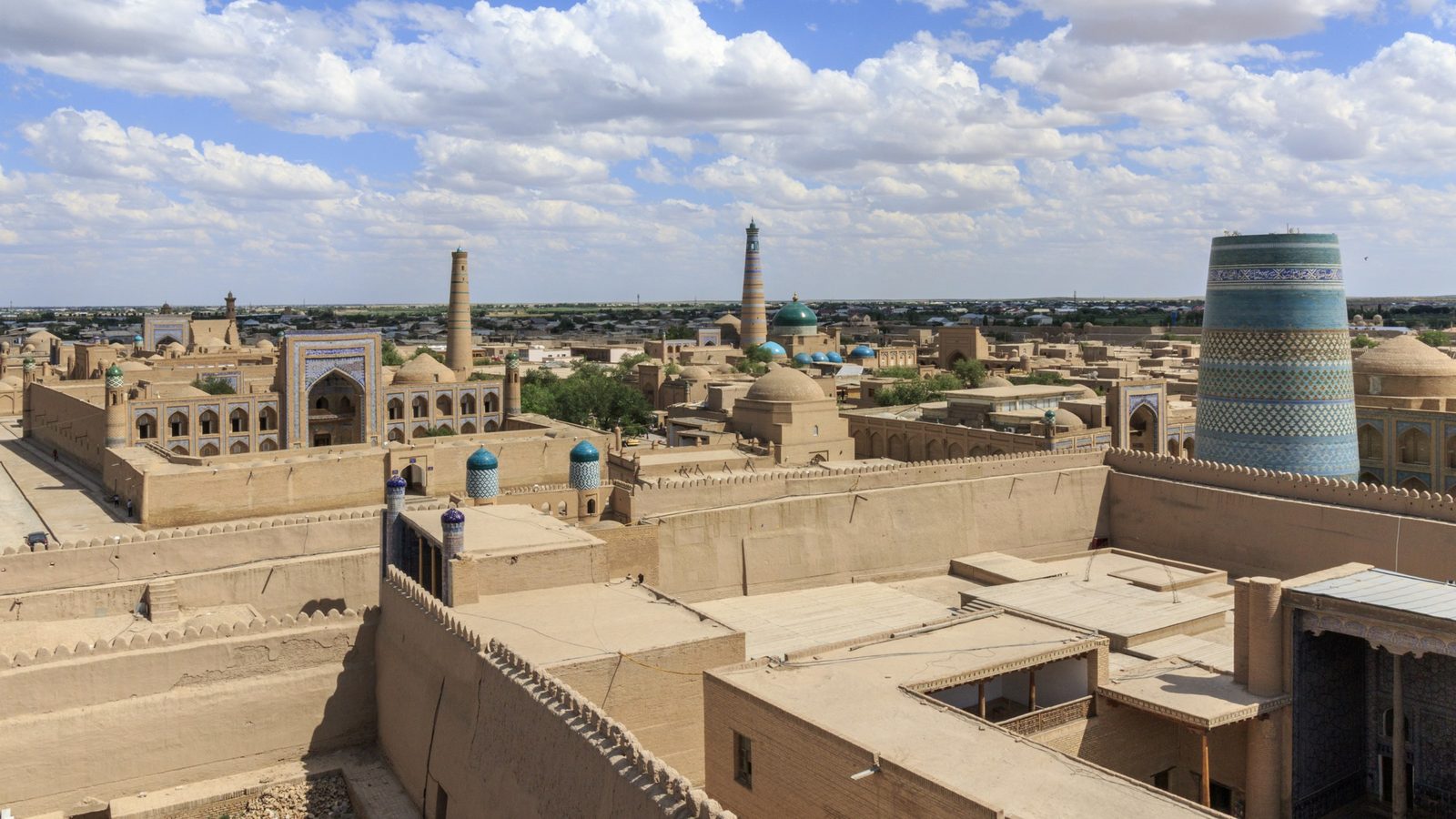
Instead of day 7, the Jaloliddin Manguberdi high-speed train, built by Hyundai Rotem, takes you from Bukhara to Khiva in about 3 h 30 min. Khiva station is the end of the line, a half-hour walk from the walls of Itchan Kala.
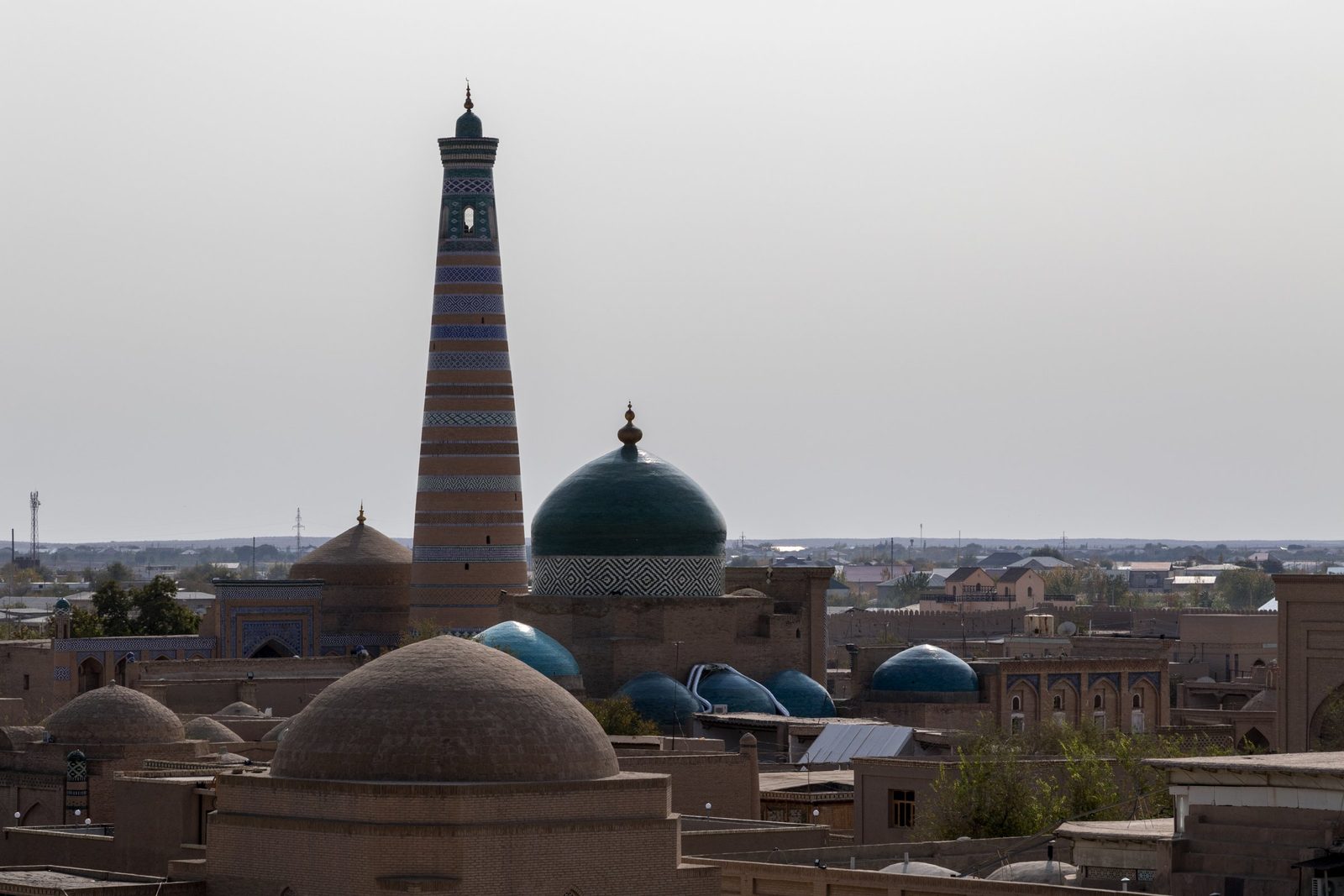
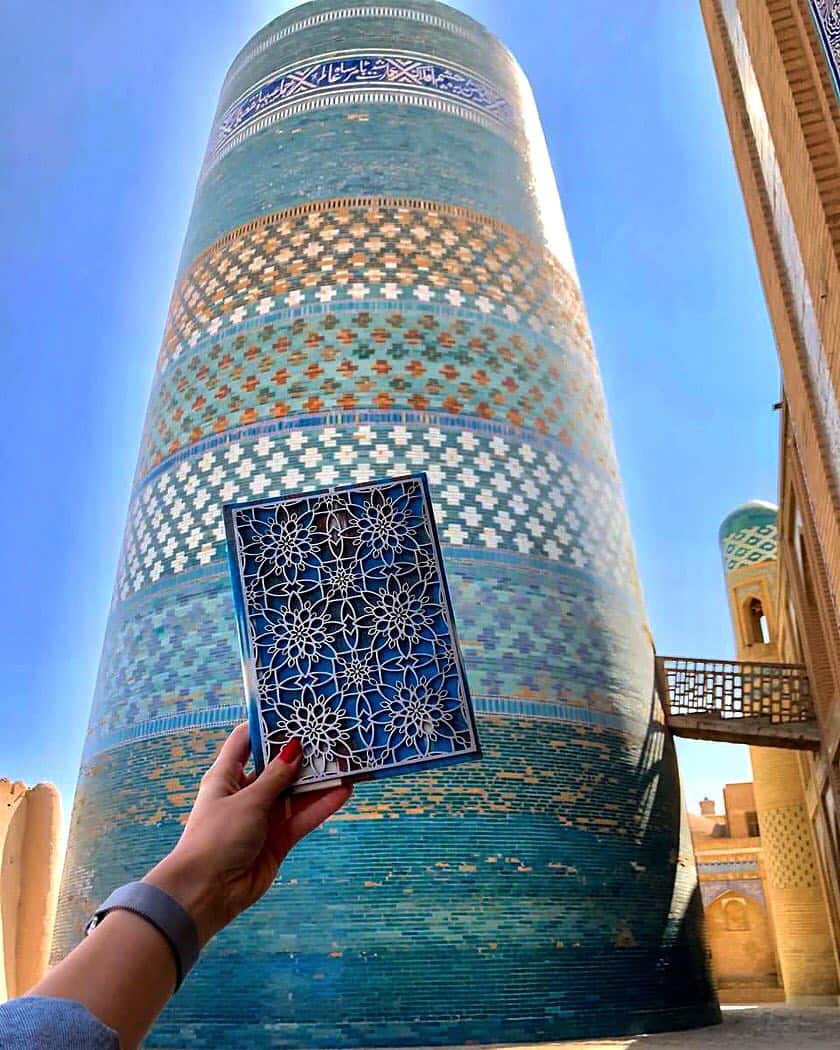
A full day in Itchan Kala with your guide: the Kalta Minor, the Kunya Ark, the Juma Mosque with its hall of carved wooden columns and the Islam Khoja minaret. On the last day, the morning high-speed train to Tashkent (every day except Monday, about 7.5 hours), and the evening flight to Incheon.
Two nights in Khiva
Accommodation
Where you stay
| City | Stay |
|---|---|
| Tashkent | A hotel in Tashkent, 2 nights |
| Samarkand | A hotel in Samarkand, 2 nights |
| Bukhara | A hotel in Bukhara, 2 nights |
| Khiva (on request) | A hotel in Khiva, 2 nights |
We confirm the hotels and the train tickets for your dates before booking.
Price
Price
The price is given on request: it depends on the dates, the hotels, the train classes, the size of your group and the language of the guide.
Good to know
Conditions
- Citizens of the Republic of Korea enter Uzbekistan without a Entry rules depend on your passport. Once you are here, each stay must be registered within three days, and hotels do it for you; customs and registration rules are in our guide. Read more → for up to 30 days (rules as of October 2026). We check the current entry rules for your passport before booking.
- Our guides work in English and Russian. If you would like a Korean-speaking guide, tell us when you book, and we will check availability for your dates.
- Train tickets go on sale 60 days before departure and are issued to your passport: we need the full name and passport number of every traveller, and we book as soon as your dates are fixed.
- Tell us about your food preferences when you book, and we take them into account when we plan the meals.
- Flight and train timetables can change: we check them for your dates before we confirm the programme.
- Read before you go: our guides to travelling to Uzbekistan from South Korea, Samarkand sights, tickets and hours and trains in Uzbekistan.
- Reservations are confirmed with passport copies only.
Cancellation policy
| Cancellation timing | Penalty |
|---|---|
| 21 days before the service | 20% |
| 20–7 days | 50% |
| 6–0 days | 100% |
Transportation
| Vehicle | Group size |
|---|---|
| Chevrolet Cobalt | 2 pax |
| Hyundai Starex | 3–4 pax |
| Toyota Hiace / King Long | 5–8 pax |
| Mercedes Sprinter | 9–14 pax |
Vehicles may differ in make and colour.
🌿 Responsible tourism: we allocate part of our profits to good causes and are preparing for GSTC certification.
Expert opinion
Pluses
- The ambassadors: a full morning at the Did you know? A 7th-century mural shows envoys from Korea Uncovered by road builders in 1965, the Ambassadors' Painting at Afrasiyab shows delegations bearing gifts, Chinese with silk among them, and two men in feathered hats thought to be envoys from Korea's Goguryeo. Read more → Museum with the 7th-century envoys, including the two that many researchers link to Goguryeo.
- Fits the Incheon flight: you land at lunchtime on day 1 and fly home on the evening flight on day 7.
- No long drives: the Uzbekistan's high-speed train: Tashkent to Samarkand in 2 hours 30 minutes, Tashkent to Bukhara in about 4 hours. Tickets are tied to your passport. Read more → takes you between Tashkent, Samarkand and Bukhara.
Minuses
- Guide language: our guides work in English and Russian; a Korean-speaking guide only if one is available for your dates.
- No Khiva in a week: Khiva adds two days and the high-speed train there and back.
- A long last day: the train from Bukhara and the evening flight are on the same day.
AroundCA numbers
How we counted
By the AroundCA programme: we count only what is written in the day-by-day programme of this tour. If the programme gives no figure, we show nothing.
- Hotel changes
- 2
- Longest transfer
- 4 h · by train
- Walking
- Medium
Best time
Apr–May, Sep–Oct
April–May and September–October, including Chuseok: comfortable weather for walking in Tashkent, Samarkand and Bukhara.
Better to avoid
Jul–Aug
July and August: afternoons of 35–37 °C, when the walking parts of the days are tiring.
A typical day
On day 4 you spend the morning on the Afrasiyab hill in Samarkand. In the museum your guide shows you the painted west wall, where envoys from many lands come to King Varkhuman, and the two men with feathered headdresses whom many researchers identify as envoys from Goguryeo. After lunch, Shah-i-Zinda and the observatory of Ulugh Beg. The night is in a hotel in Samarkand.
What the price includes
What is included
- Train tickets: the Afrosiyob Tashkent – Samarkand, Samarkand – Bukhara and Bukhara – Tashkent
- Accommodation: 6 nights in hotels with breakfast
- A private car with driver for the airport and station transfers and the sights on the programme
- A local guide in every city on the programme, in English or Russian
- Entrance tickets on the programme, including the Afrasiyab Museum
- Metro rides with your guide on day 1
Not included
- International flights
- Meals and drinks not on the programme
- Dinner with a local family in Bukhara (on request)
- The Khiva option (on request)
- Photo and video fees at the sites
- Tips and personal expenses
Extra cost on site
- Photo and video fees at the sites
- Tips and personal expenses
Good for
- Travellers from Korea with a week around Chuseok or a long weekend: you land at lunchtime and fly home on the evening flight
- History lovers who want to see the Paintings of the Ambassadors and hear both versions of who the feathered envoys were
- First-time visitors who want Tashkent, Samarkand and Bukhara without long drives
Maybe not for you if
- Anyone who needs a guide in Korean on every day: our guides work in English and Russian, and a Korean-speaking guide depends on availability
- Travellers who want to see Khiva in a week: it adds two days
- Those who prefer beach and resort holidays to long walking days in old towns
Questions about this tour
How much does the tour cost?
The price is given on request: it depends on the dates, the hotels, the train classes, the size of your group and the language of the guide.
Do citizens of the Republic of Korea need a visa?
No, for a stay of up to 30 days, counted from the day you enter Uzbekistan (rules as of October 2026). Rules can change, so we check the current ones for your passport before booking.
Is there a guide who speaks Korean?
Our guides work in English and Russian. If you would like a Korean-speaking guide, tell us when you book, and we will check availability for your dates.
How does the tour fit the flights from Incheon?
Uzbekistan Airways flies from Incheon to Tashkent every day and lands at 13:10 on most days, so day 1 starts after lunch. On day 7 you fly home on the evening flight, which leaves at 22:30 on most days and lands in Seoul the next morning. You book the flights; we plan the programme around them.
Are the envoys on the painting really from Goguryeo?
Many researchers identify the two figures with two feathers on their headdresses as envoys from Goguryeo. Others think the painters took the image from Chinese art. Your guide tells you both versions at the museum.
Can we add Khiva?
Yes. Instead of day 7 you take the high-speed train from Bukhara to Khiva, spend a full day in Itchan Kala, and take the morning high-speed train back to Tashkent for the evening flight. That makes the tour 9 days.
Didn’t find your answer? Ask about this tour →
Make it your trip
Tick what you’d like to add — it goes into your request, and the manager confirms the final price.
Add a few days
Arrival, departure, transfers
© Photos
The 7th-century Ambassadors' Painting in the Afrasiyab Museum, Samarkand — Nassima Chahboun / Wikimedia Commons · CC BY-SA 4.0; The Afrosiyob train at Tashkent Central station — Nikolai Bulykin / Wikimedia Commons · CC BY-SA 4.0; Afrasiyab ancient settlement, Samarkand — Akhemen / Wikimedia Commons · CC BY-SA 4.0