
Margilan silk: Yodgorlik factory, from cocoon to ikat
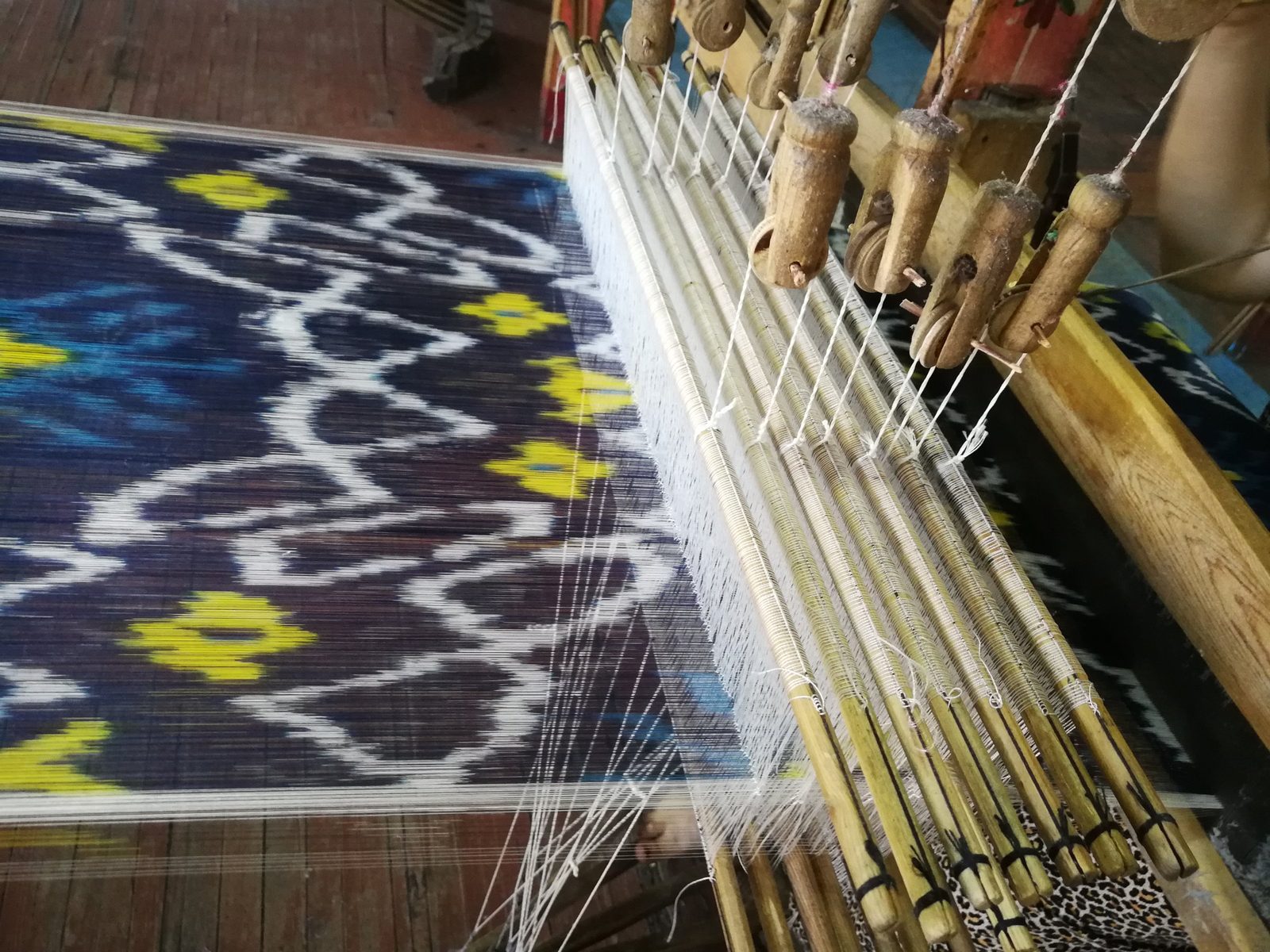
A single silk cocoon holds close to a kilometre of filament, finer than a hair. At the Yodgorlik factory in Margilan you watch that filament come off the cocoon in a basin of hot water, and an hour later you stand beside a loom where it has become cloth with a pattern that looks slightly out of focus. That blur is not a flaw. It is the signature of ikat, and it goes into the thread long before anyone starts to weave.
Our Fergana Valley guide covers how to reach the valley and what else to see there. This article goes inside the silk: what happens at each stage, what to look for in each room of Yodgorlik, how to buy well, and how to fit the visit into a trip with Rishtan and Kokand.
Step one: a cocoon in hot water
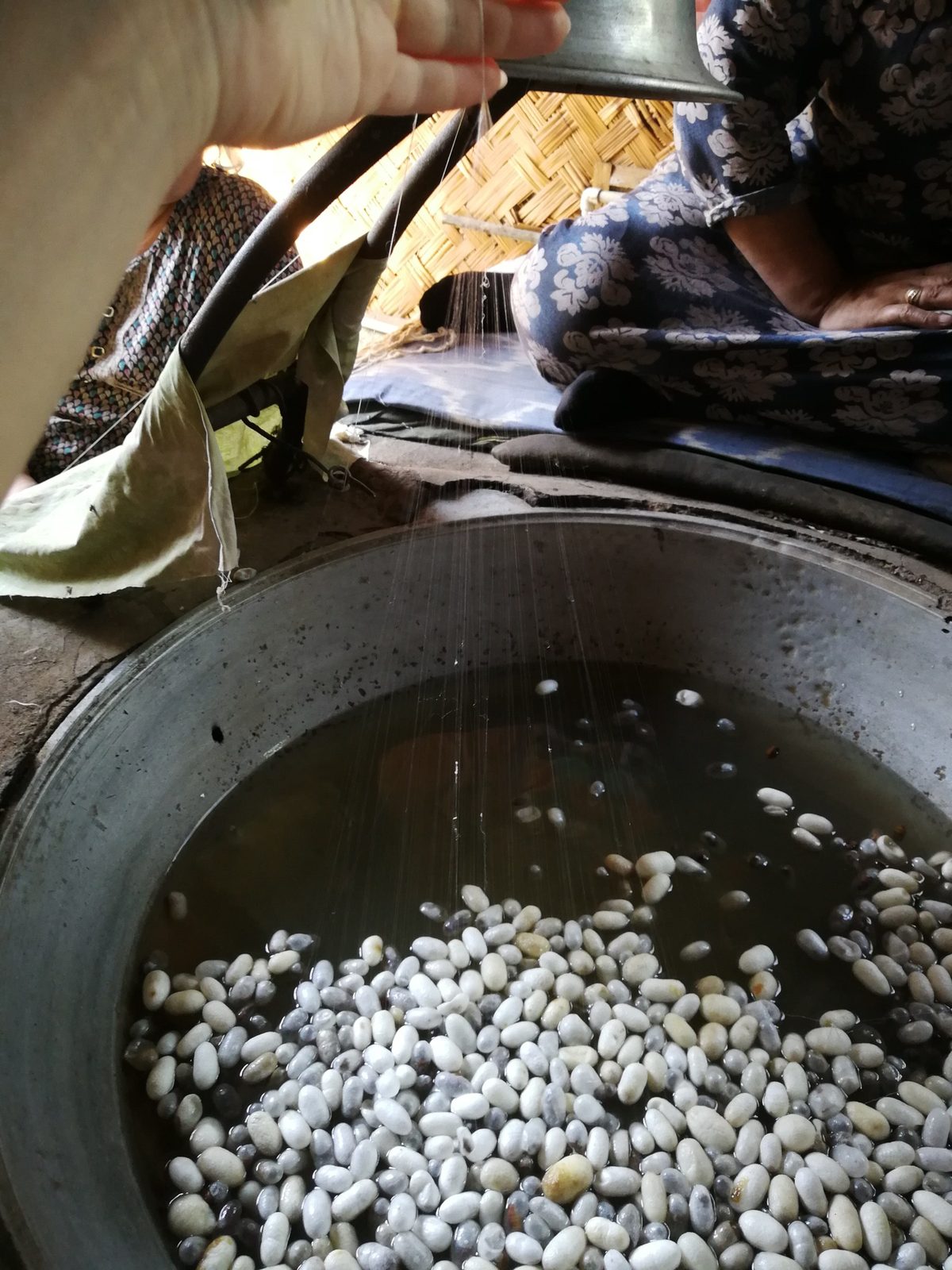
Silk begins with a silkworm spinning itself into a cocoon. In the Fergana Valley the worms feed on spring mulberry leaves and spin their cocoons between mid-April and mid-May. The factory does not raise worms itself: it buys cocoons by the ton.
The filament is held together by a natural gum, sericin, and hot water is what softens it. In the reeling room the cocoons float in basins while a worker finds the loose ends and draws them onto a reel. One filament is far too fine to weave on its own, so several are twisted together into a single thread.
This is the room to linger in. Everything that follows, from the colour to the pattern, depends on a thread that starts here, one cocoon at a time.
From thread to warp
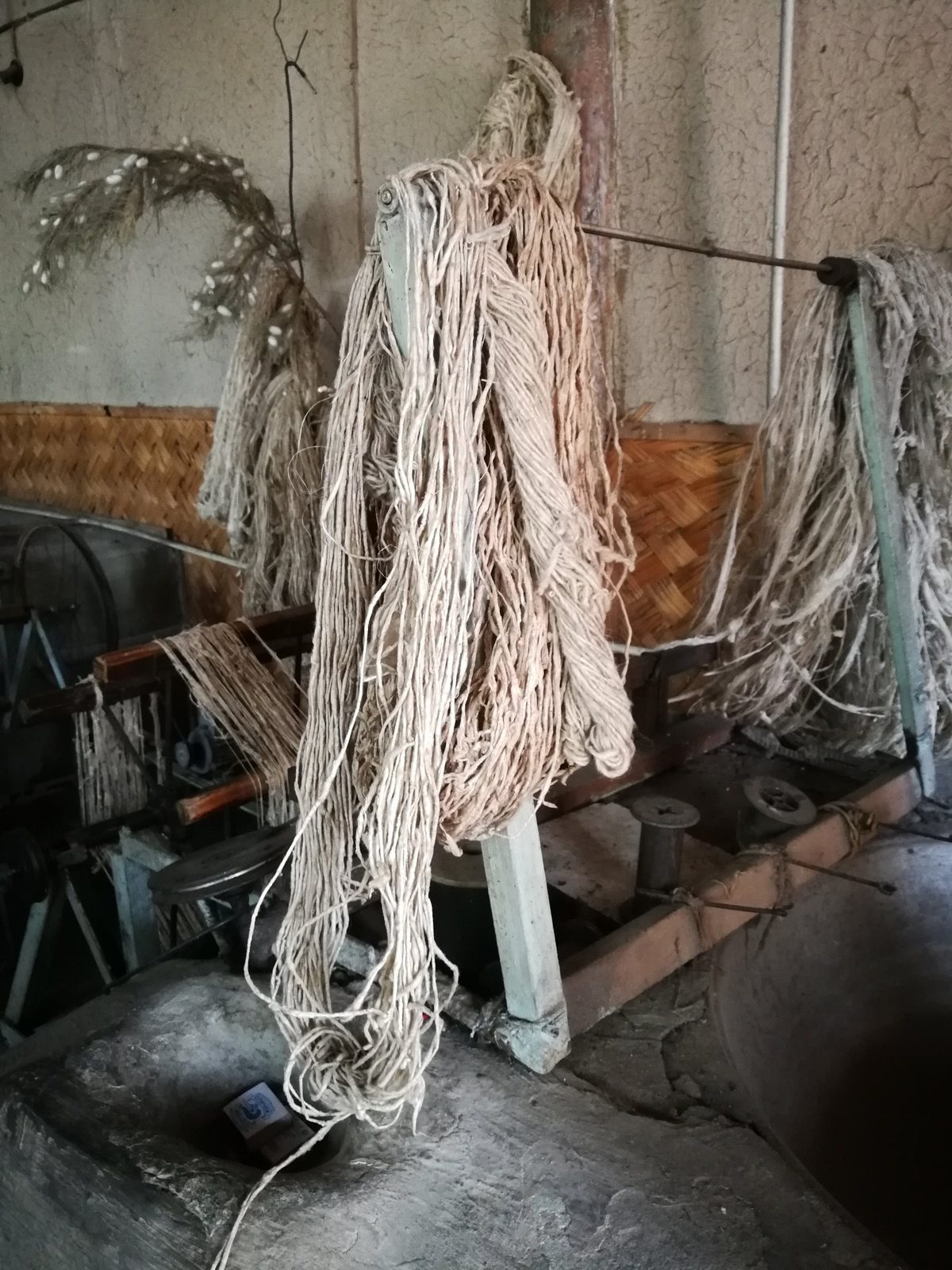
Reeled silk is wound into hanks and hung up by the machines. The thread meant for the warp, the lengthwise threads of the future cloth, then goes onto a large rotating frame and from there onto two rollers, which lay the threads side by side in exact order.
That order matters more here than in almost any other weaving. In Margilan ikat the pattern lives in the warp. Each thread will carry its own sequence of colours, and if one slips out of place, the pattern slips with it.
Much of the equipment in these rooms dates from Soviet times. The factory opened in 1972, worked as a state enterprise from 1982 to 1993 and was privatised in 2000, when it took the name Yodgorlik.
Abr: drawing a cloud on the threads
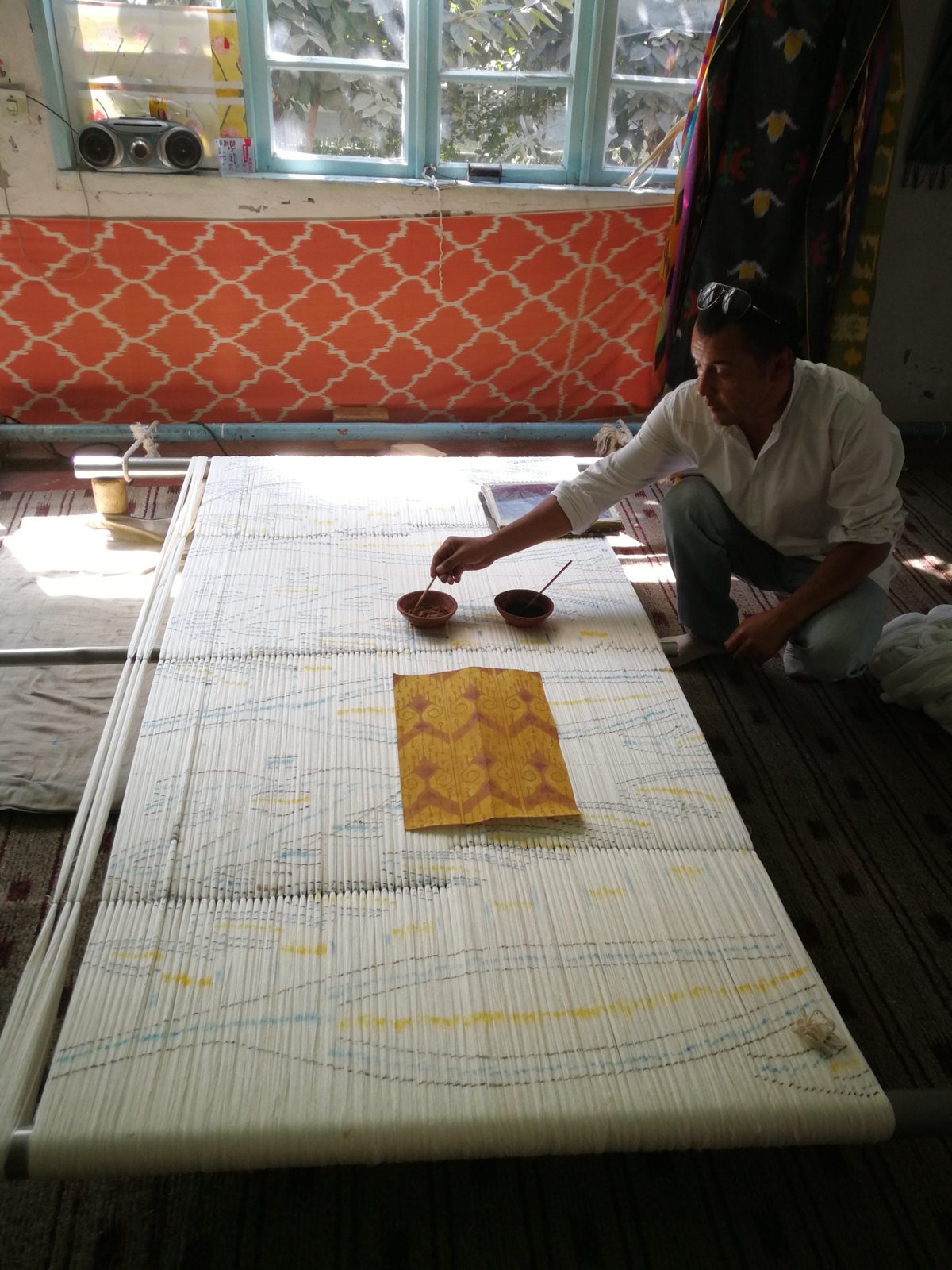
The local word for ikat is abr, Persian for “cloud”, and the craft of tying the pattern is abrbandi. Once the warp is stretched, the pattern is marked across the bundles of thread: where each colour begins and where it ends.
Then the bundles are tied. Thread is wound tightly around every section that must stay undyed, and the warp goes into the dye bath. The bound sections keep their colour. The ties are cut, other sections are bound, and the warp goes into the next colour. Every extra colour means another round of tying and dyeing; complex designs went through six to eight.
The motifs have old names worth asking about: anorcha, the little pomegranate; bodom, the almond; kuchkor shokhi, the ram’s horns; tarok, the comb. Ask your guide to find one on the warp before it is dyed. On the finished cloth you will recognise it at once.
Dyeing: wood fires and natural colours
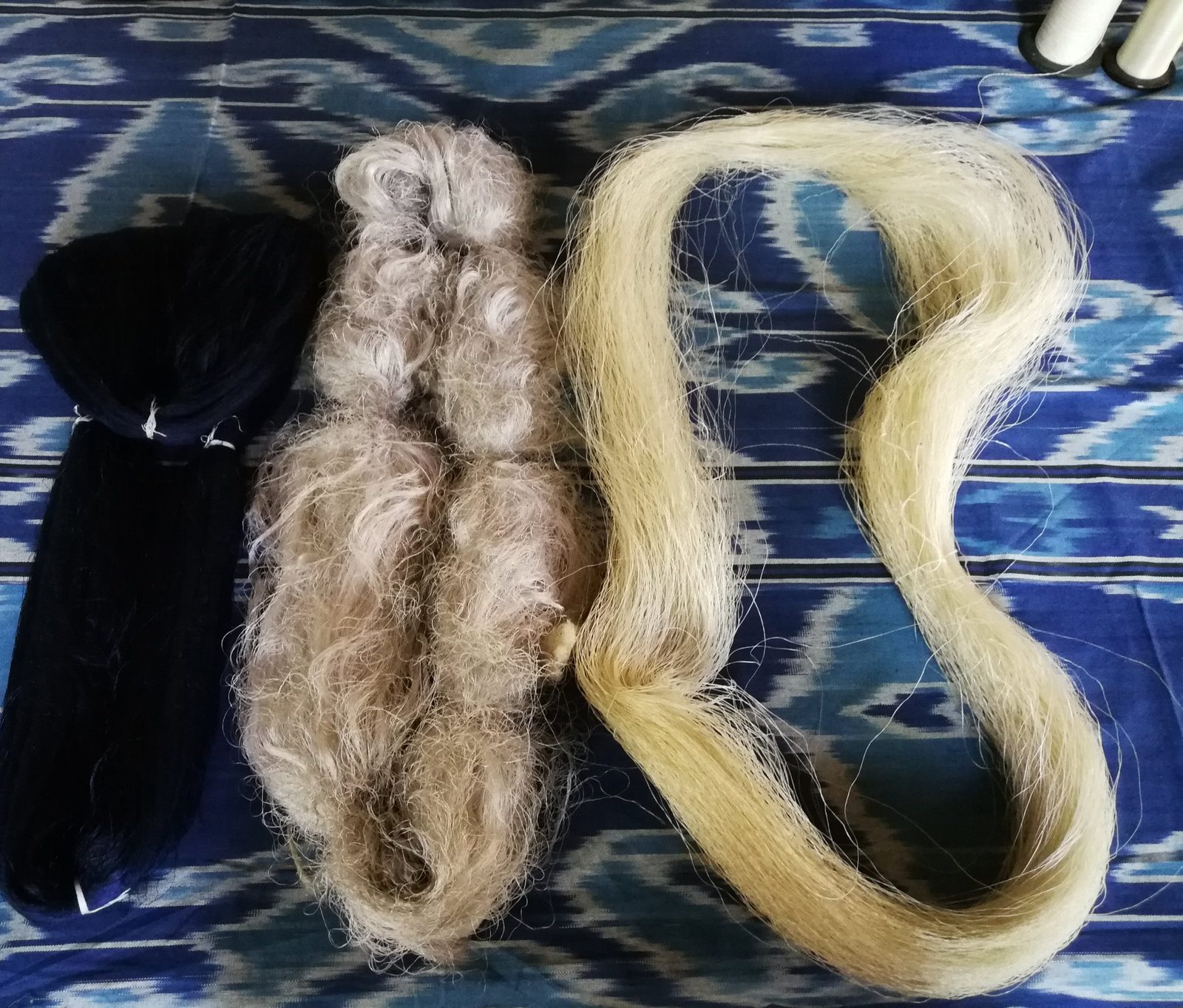
The dye vats are heated over wood-fired stoves. Until the 1880s Central Asian dyers worked only with natural colours: indigo for blue, madder root and cochineal for reds and pinks, walnut and oak bark for browns, saffron and weld for yellows. Synthetic dyes then took over almost everywhere.
Yodgorlik returned to natural dyes in the 1990s. In 1996 four of its best workers went to India to train in natural dyeing, and the factory now uses the method widely; synthetic dyes are kept mainly for the cheaper machine-woven fabric. When you buy, ask which dyes went into the piece.
The same revival runs across town at the Margilan Crafts Development Centre, opened by the local community in 2007, where weaving and natural dyeing are taught master to apprentice. In 2017 UNESCO added its work on atlas and adras to the Register of Good Safeguarding Practices.
At the loom: khan-atlas, adras and their relatives
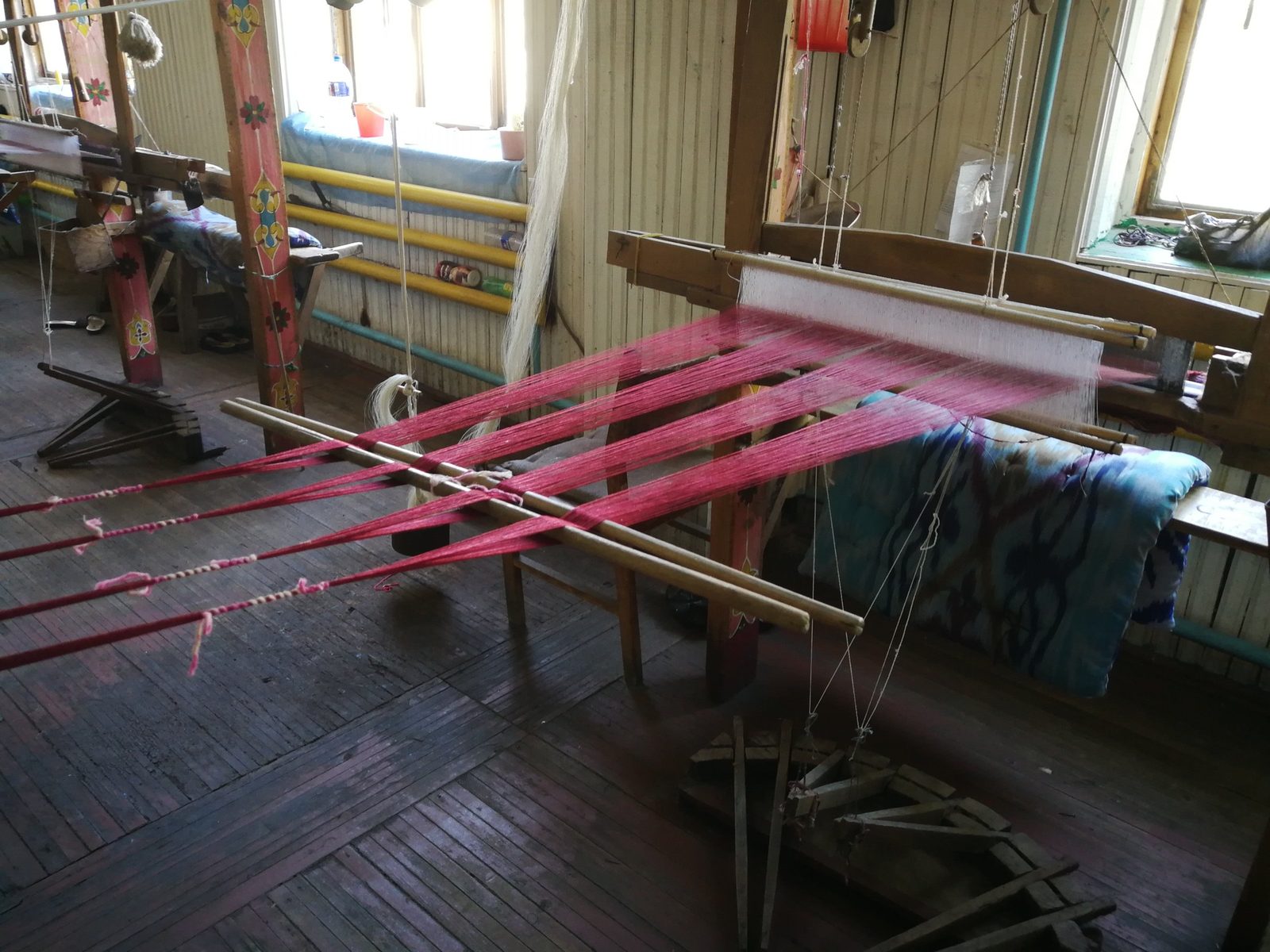
Only now does the weaving begin. The dyed warp is set up on a hand loom and the weft is passed across it. The threads were dyed in bundles and never line up perfectly, so the edge of every motif wavers a little. Central Asian weavers keep that blur on purpose, where other ikat traditions aim for crisp lines.
Two fabrics matter most. Khan-atlas is pure silk, dense and glossy, the cloth for celebrations. Adras has a silk warp and a cotton weft; the thicker cotton gives it a finely ribbed surface, and it is cheaper and easier to wash. Yodgorlik also weaves shoyi, a pure silk, the half-silk bekasam and jujuncha, and a plain cotton called boz.
About 6,000 metres of fabric leave the looms each month: 60% pure silk, 25% silk and cotton, 15% cotton. Of the 450 people who work here, 85 are weavers.
Silk carpets: the quiet room
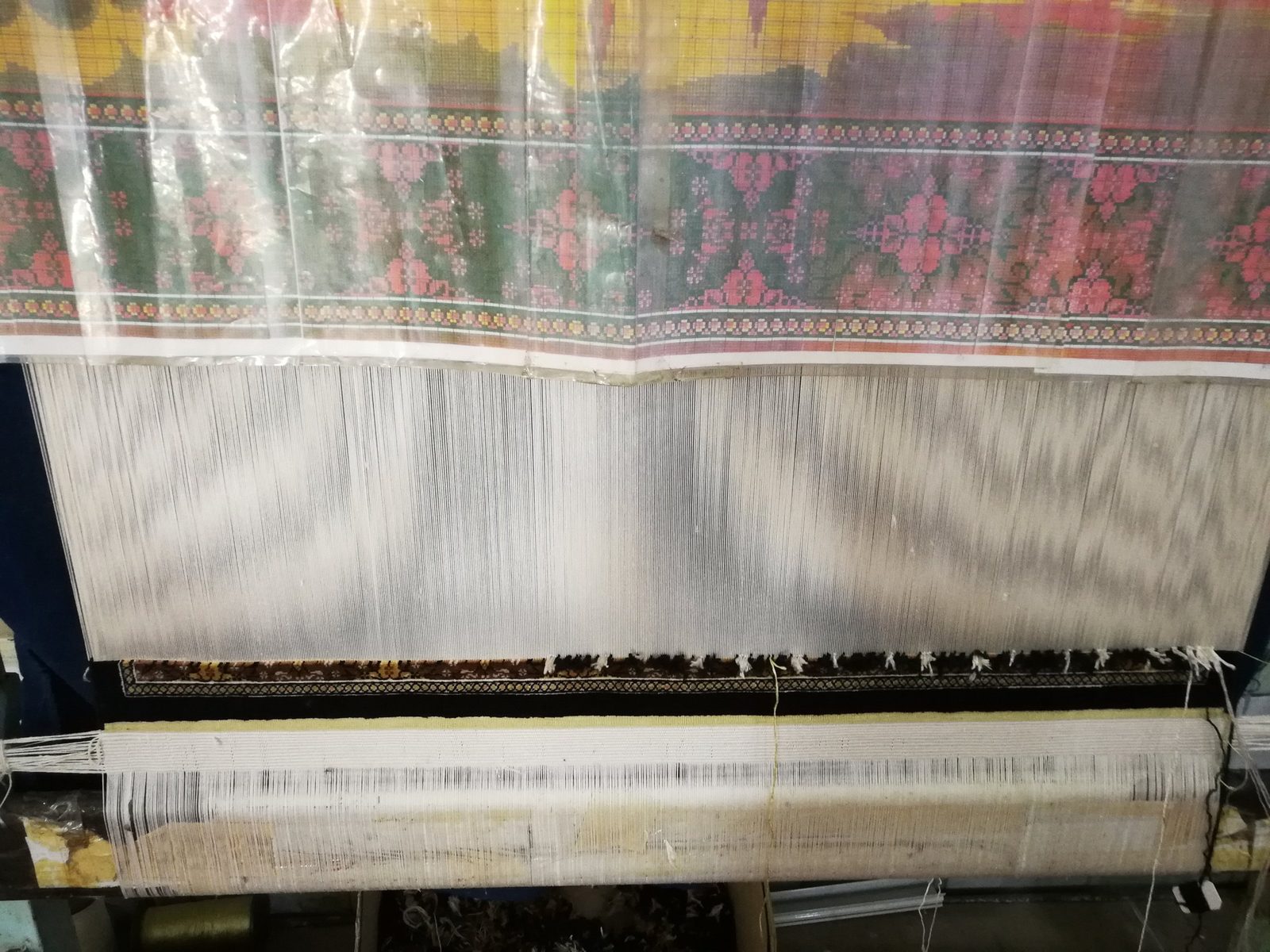
The carpet workshop is easy to miss and worth finding. A team of 26 knots silk carpets here, following a pattern chart hung above the loom. An ikat pattern is dyed into the warp before weaving; a carpet pattern is built during weaving, one knot at a time. Seeing both in one morning is the quickest way to understand the two logics of Uzbek textiles.
If you are thinking about a carpet, look at the work here first. Our guide to what to buy in Uzbekistan explains how to tell a hand-knotted carpet from a machine-made one and what customs will ask when you take it home.
Buying fabric and robes
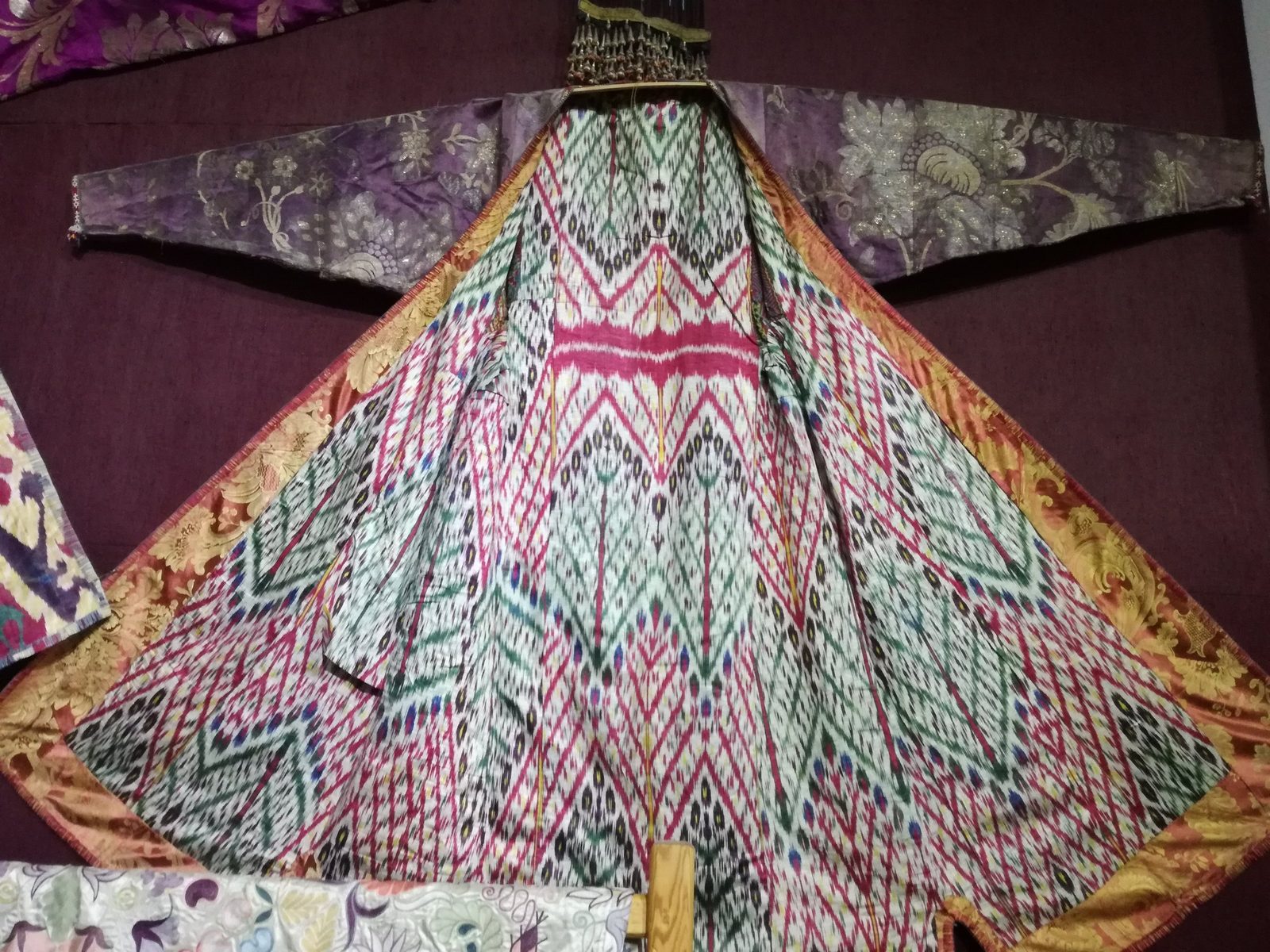
The factory shop sells khan-atlas and adras by the metre, along with scarves, ready-made robes and chapans, and textiles for the home. Check two things before you pay.
First, turn the cloth over. In real ikat the pattern is dyed into the threads, so it shows on both sides; a print is pale on the back. Second, ask how it was made. Yodgorlik also has a mechanical workshop, and its fabric costs about a third less than hand-woven cloth. Both are honest products, but they are not the same thing.
Adras is the practical choice for something you will wear and wash. Khan-atlas is for a piece you will keep for special days. Every hand-dyed length is slightly different, so if you need several metres to match, buy them from the same roll.
Planning your visit: route, timing, festival
Silk and ceramics are a short drive apart. Train No. 730 leaves Tashkent every day at 09:20 and reaches Kokand at 12:28 and Margilan at 13:00. No. 729 leaves Margilan at 16:11 and is in Tashkent at 19:53. Rishtan, the potters’ town, lies between Kokand and Margilan, about 50 km from each.
Our usual order: the morning train to Kokand and the Khudoyar Khan palace, Rishtan’s workshops in the afternoon, and a night in Margilan or Fergana. Yodgorlik is best first thing the next morning, while you are fresh enough to follow every step. That leaves time for the Kumtepa bazaar outside town, busiest on Thursdays and Sundays, before the afternoon train. With a third day, add Andijan or the ruins of Akhsikent, the old capital of the valley on the Syr Darya. Our Fergana Valley crafts tour gives the region four days, with a session at the potter’s wheel in Rishtan and a whole morning at Yodgorlik.
- Where: in central Margilan, about five minutes’ walk from the bus station. Margilan has its own station on the Tashkent–Andijan railway.
- How long: the guided walk through the workshops takes about half an hour; with the carpet room and the shop, allow 1.5 to 2 hours.
- With a guide: most of the workers speak only Uzbek, so come with someone who can explain each step. Walks start at the shop.
- Days: this is a working factory, not a museum, so we confirm the day and time with Yodgorlik when we book your visit.
- When to go: April–May and September–October. July afternoons in the valley average 35 °C.
- Atlas Bayrami: Margilan’s international festival of traditional textiles. The seventh edition opened on 17 September 2026 with a crafts fair, masterclasses in textiles and carpet weaving, and a fashion show. The dates change from year to year; tell us if you want to catch it, and we will plan around them.
In short
- At Yodgorlik you follow silk through every stage by hand: reeling cocoons in hot water, warping, marking, tying, dyeing and weaving.
- Abr means “cloud”: the pattern is tied and dyed into the warp before weaving, which gives ikat its soft edges.
- Khan-atlas is pure silk; adras has a silk warp and a cotton weft and is easier to wash.
- Real ikat shows its pattern on both sides of the cloth; the factory’s machine-woven fabric costs about a third less.
- Pair Yodgorlik with Rishtan and Kokand over two days, and go in spring or autumn.