
Silk Road tours in Uzbekistan: what a Silk Road trip looks like today
Places in this article: Samarkand · Bukhara · Khiva · Tashkent · Tajikistan
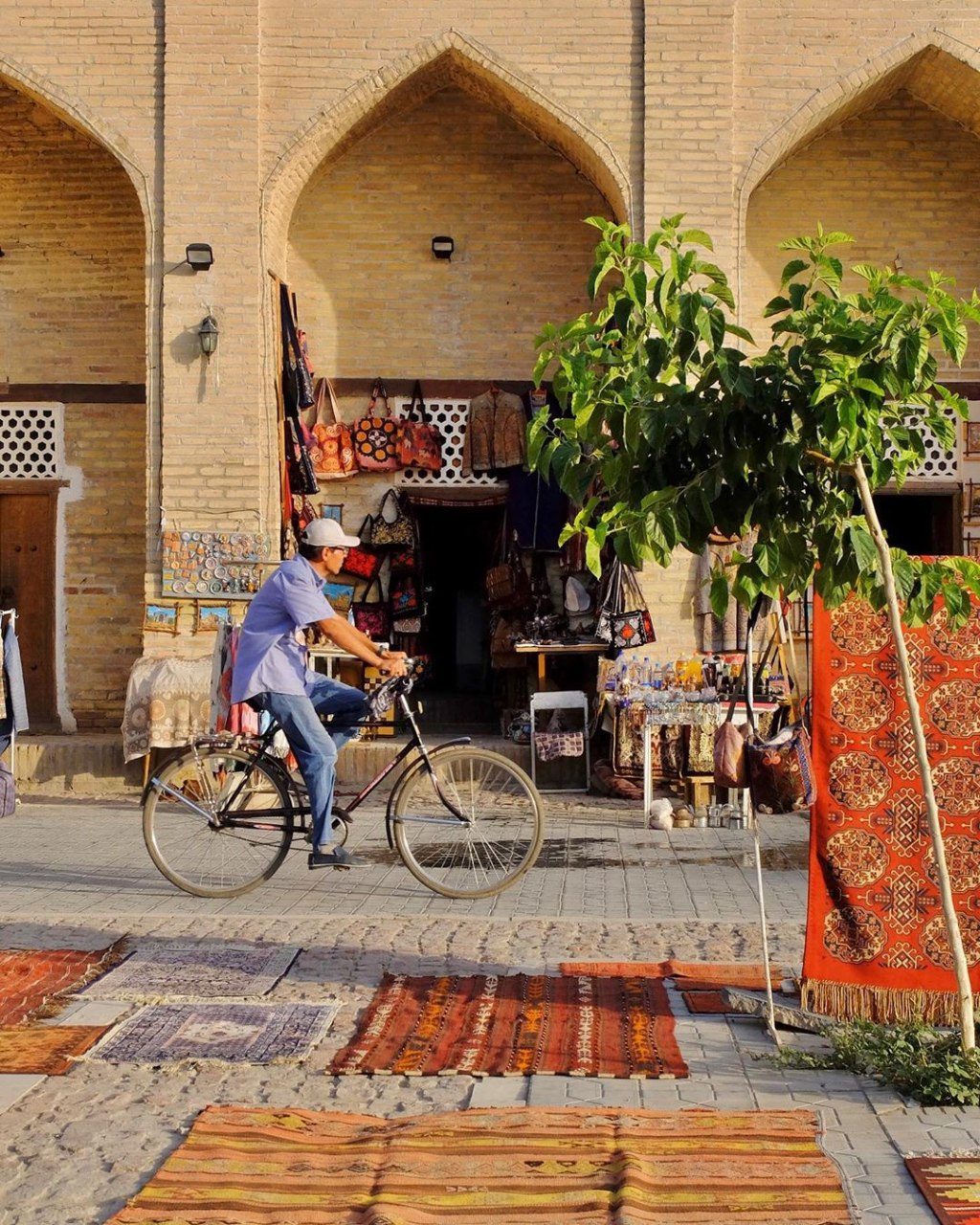
In Bukhara you can still walk under the dome where the money changers worked. Toki Sarrafon was one of the largest currency exchanges in Central Asia; today the same brick vault shelters stalls with carpets and scarves. The goods have changed, the trade has not. That is what a A network of caravan routes between China and the Mediterranean. Samarkand, Bukhara and Khiva grew rich as stops along it. tour of Uzbekistan looks like on the ground: not ruins in an empty field, but caravan towns that are still in business. Here is how we put such a trip together from Tashkent.
Why the caravan routes ran through these oases and what moved along them is in our article What was the Silk Road. This one is about the trip itself.
The caravan stops: a Silk Road tour of Uzbekistan city by city
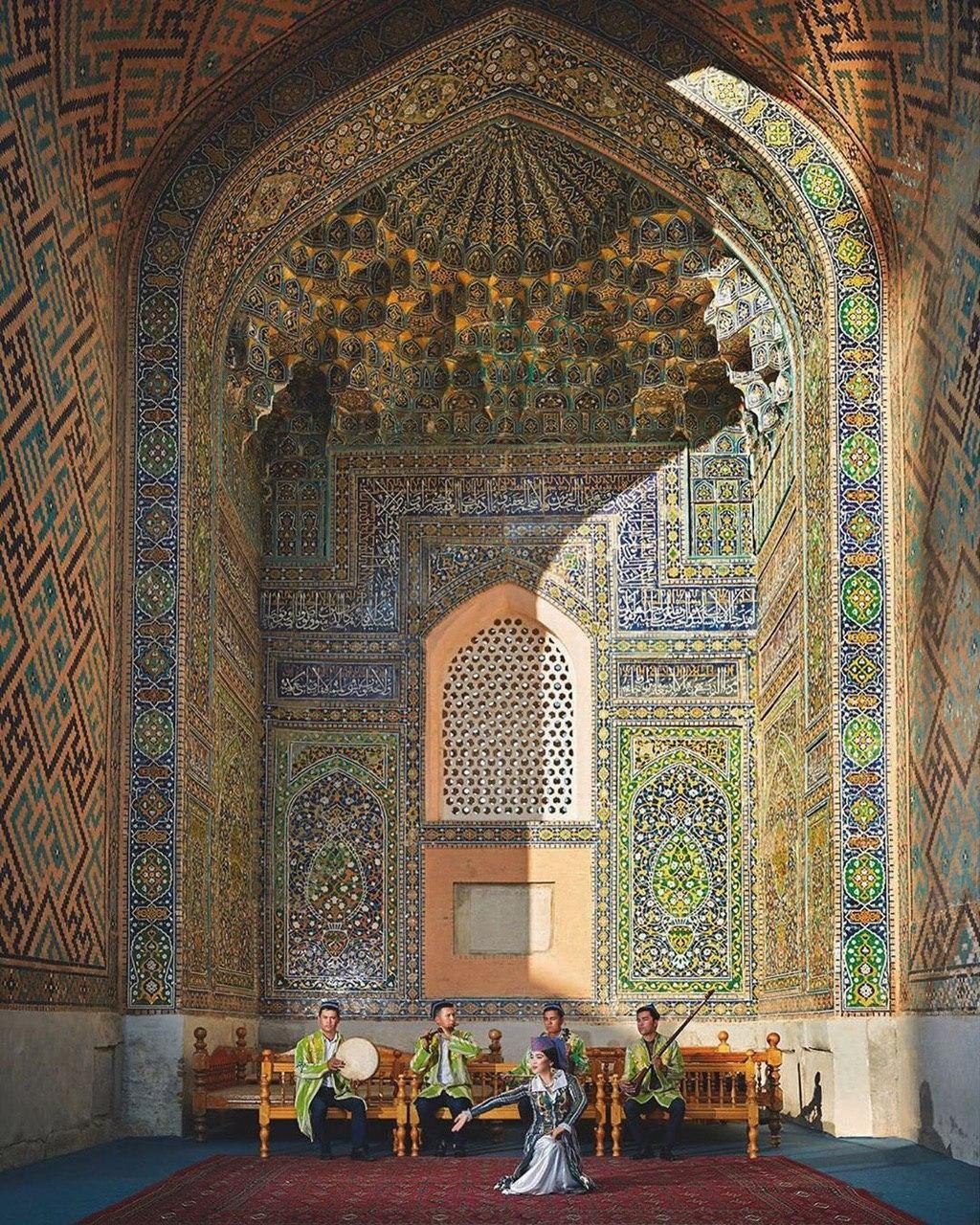
Samarkand. Samarkand's main bazaar, right next to Bibi-Khanym: Samarkand bread, dried fruit, nuts and halva. Read more →, right beside Amir Timur (Tamerlane, 1336–1405), founder of the Timurid empire, which had its capital in Samarkand. Born near Shahrisabz.’s Friday mosque The great mosque Amir Timur ordered after his Indian campaign of 1398–1399, one of the largest of its time. Read more →, trades from first light until dark: dried fruit, nuts, spices and more than seventeen kinds of flatbread. Plan two or three days; our Samarkand in 1, 2 or 3 days shows how to split them.
Bukhara. The best-kept market quarter in the country. Four covered trading buildings survive from the 16th century: the domes of the jewellers (Toki Zargaron), the money changers (Toki Sarrafon) and the hat sellers (Toki Telpak Furushon), and Tim Abdullah Khan, built in 1577 for silk and wool. Give Bukhara at least two nights.
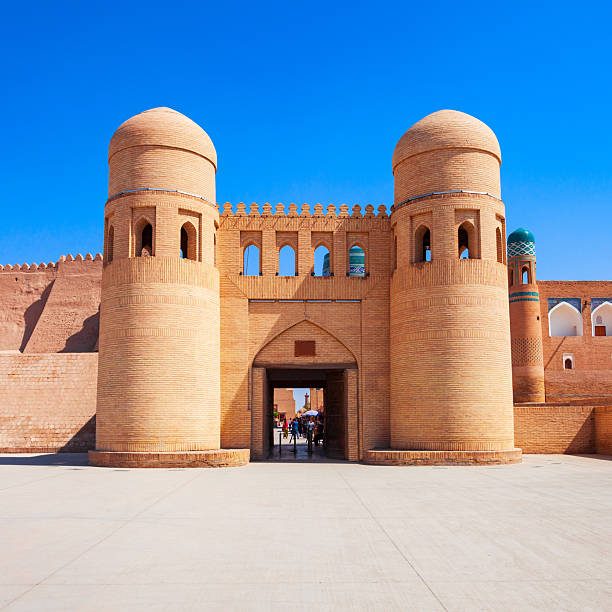
Khiva. The last oasis before the desert crossing to Persia. Inside the walls of Did you know? People still live inside Khiva's museum city Itchan Kala packs more than 50 historic monuments and about 250 old houses inside clay walls 8–10 m high and 5–6 m thick, and families still live and work in its lanes. Read more → stands the caravanserai of Allakuli Khan, built in 1832–1833 with 105 rooms around a courtyard: storerooms and stalls below, merchants’ rooms above. In front of it is the Tim, a domed market added in 1836–1838. It is the only caravanserai left in Khorezm.
Shahrisabz. Timur’s home town, a day trip from Samarkand over the Takhtakaracha pass. Its covered Tashkent's old bazaar under a big blue-green dome, not far from Hazrati Imam. Bring cash in so'm. Read more → at the central crossroads dates from the 18th century. See our Shahrisabz day trip.
Termez, if you have time. In the far south, about an hour and a half by air from Tashkent. Here the Silk Road carried Buddhism: Fayaz Tepe, 15 km west of the town, is a monastery of the Kushan period, and its original stupa is now protected under a new dome.
The Fergana Valley. The crafts end of the route. In Margilan the Yodgorlik factory still makes silk ikat by hand, from boiling the cocoons to weaving on wooden looms. Rishtan, about 50 km from Fergana, glazes its ceramics in every shade of blue. A daily train leaves Tashkent at 09:20 and reaches Margilan in 3 h 40 min. More in our article on traditional crafts.
Between the cities: the road the caravans used
In 2023 UNESCO listed the Silk Roads: Zarafshan-Karakum Corridor, 886 km of the route shared by Uzbekistan, Tajikistan and Turkmenistan. The Uzbek part follows the Zarafshan valley from Samarkand to Bukhara, and several of its sites stand close to the road.
The one we always stop at is Rabati Malik near Navoi: the portal of an 11th-century complex of the Karakhanid rulers, and across the road its sardoba, a domed reservoir once fed by an underground channel from the Zarafshan. Closer to Bukhara are the Vobkent minaret and the Bahauddin Naqshband complex, both part of the same listing.
The Uzbekistan's high-speed train: Tashkent to Samarkand in 2 hours 30 minutes, Tashkent to Bukhara in about 4 hours. Tickets are tied to your passport. Read more → covers Samarkand to Bukhara in under two hours, but you see none of this from the train. By car it becomes a full day, and in exchange you travel the caravan road itself. Gijduvan, a ceramics town about 45 km from Bukhara, fits into the same day.
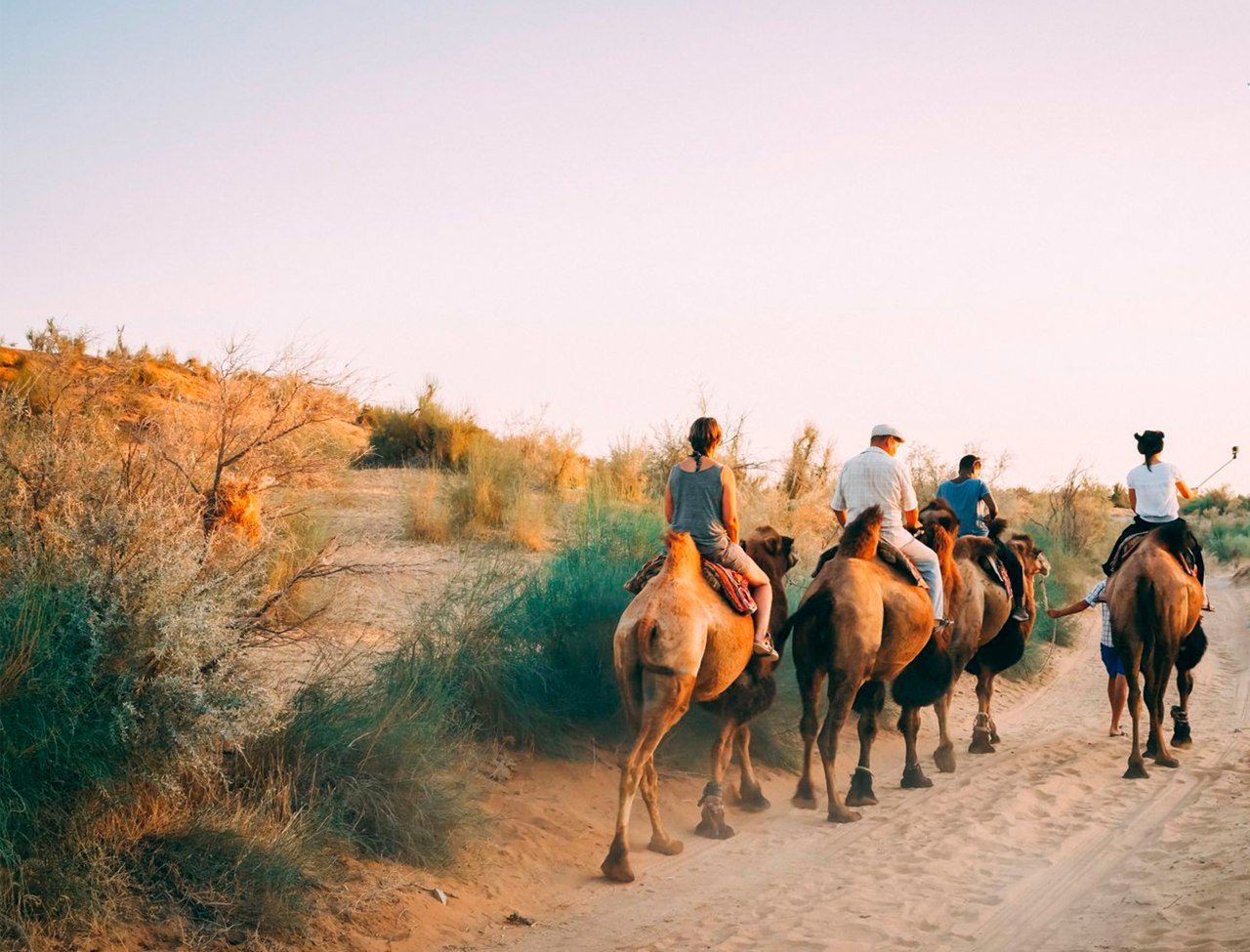
A Central Asia Silk Road itinerary: adding the neighbours
The caravans did not stop at today’s borders, and our longer routes do not either. These are the crossings that work for travellers:
- Tajikistan. Jartepa–Sarazm between Samarkand and Panjakent, the usual way into the Fann Mountains, and Oybek between Tashkent and Khujand. Our 12-day Tajikistan & Silk Road tour crosses at Panjakent straight after Samarkand and stops at Sarazm, a UNESCO site.
- Kyrgyzstan. Dustlik–Dostuk between Andijan and Osh, at the far end of the Fergana Valley.
- Kazakhstan. Since December 2025 a Talgo train has run daily between Tashkent and Almaty, about 17.5 hours. A flight is quicker.
- Turkmenistan. Shavat–Dashoguz near Khiva and Alat–Farap near Bukhara. Turkmenistan requires a Entry rules depend on your passport. Once you are here, each stay must be registered within three days, and hotels do it for you; customs and registration rules are in our guide. Read more → backed by a letter of invitation, so we plan this part weeks ahead.
Visa rules depend on your passport, and crossings sometimes close for works, so we check each one before the trip. For Uzbekistan itself, see do you need a visa. To cover all five countries in one journey, our 23-day Silk Road tour starts in Ashgabat and runs through Khiva, Bukhara, Samarkand, Tajikistan, Tashkent, Bishkek and Almaty to Astana.
How many days a Silk Road trip needs
- 7–8 days: Tashkent, Samarkand, Bukhara and Khiva by fast train. See Uzbekistan in 7 days or our 8-day classic tour.
- 10–12 days: the same four cities at a slower pace, with Shahrisabz, Gijduvan or the road between Samarkand and Bukhara. See Uzbekistan in 10 days, the 11-day classic tour or the 12-day photo tour, which keeps a free morning in Khiva for the first light.
- 12 days with Tajikistan: Bukhara and Samarkand, then hiking days in the Fann Mountains.
- Three weeks or more: all five countries of Central Asia.
Inside Uzbekistan the timetable sets the plan. The fast train to Khiva leaves Tashkent at 07:00 every day except Sunday and leaves Khiva at 07:15 or 07:20 every day except Monday, so we fix the train days before anything else. Details are in trains in Uzbekistan, the seasons in when to go. To narrow the choice by interests, try the tour finder.
In short
- A Silk Road tour of Uzbekistan means Samarkand, Bukhara and Khiva, plus Shahrisabz, Termez or the Fergana Valley if you have time.
- The trade buildings still trade: Bukhara’s 16th-century domes, Khiva’s caravanserai and Tim, Samarkand’s Siab Bazaar.
- Drive from Samarkand to Bukhara at least once: Rabati Malik and other sites of the UNESCO corridor stand by the road.
- Neighbours: Tajikistan via Panjakent or Khujand, Kyrgyzstan via Osh, Kazakhstan by train, Turkmenistan with a visa arranged in advance.
- Seven or eight days cover the core, ten to twelve let you slow down, three weeks take in all five countries.