Programme and details
Turkmenistan · Uzbekistan · 10 Days / 9 Nights · Private Tour
Merv, Darvaza and Khiva
Ashgabat – Merv – Darvaza – Khiva – Bukhara – Samarkand – Tashkent
Merv was a city for some 4,000 years and, in the 11th and 12th centuries, the capital of the Great Seljuks; today its clay walls stand in open steppe outside Mary. Nisa, on the edge of Ashgabat, was one of the first capitals of the Parthians, the empire that kept Rome out of the East. Between them and Khiva lies the Karakum, with a gas crater at its heart. In ten days we cross Turkmenistan by road, spend a night in yurts by the Darvaza crater, cross the land border into Uzbekistan and finish with Khiva, Bukhara and Samarkand.
| Duration | 10 days / 9 nights |
| Price | on request |
| Format | Private, or a small group on your dates |
| Where | Ashgabat, Merv and Darvaza in Turkmenistan; Khiva, Bukhara and Samarkand in Uzbekistan |
| Getting around | A car with driver in Turkmenistan, 4×4 vehicles across the Karakum, the land border at Dashoguz – Shavat, high-speed trains Khiva – Bukhara – Samarkand – Tashkent |
| Guide | A guide who speaks your language, in Turkmenistan and in every Uzbek city, included in the price |
| Best time | April–May and September–October |
Ideal for travellers who have seen Uzbekistan or want more than one country, for lovers of archaeology and the ,A network of caravan routes between China and the Mediterranean. Samarkand, Bukhara and Khiva grew rich as stops along it. and for anyone who wants a night in the desert by the Darvaza crater.
A night in yurts by the Darvaza crater — with a barbecue dinner at the camp.
One trip, two countries — we arrange the Turkmen invitation and meet you on the Uzbek side of the border.
Itinerary
Day by Day
Day 1 · Ashgabat — Arrival
At Ashgabat airport you collect your Turkmen Entry rules depend on your passport. Once you are here, each stay must be registered within three days, and hotels do it for you; customs and registration rules are in our guide. Read more → against the letter of invitation we have arranged for you and pay the visa and migration fees. In the arrivals hall your guide and driver meet you and take you to your hotel.
The rest of the day is for rest. If you land early, we book your room from the night before, so you can check in straight away.
Good to know: The fees are paid in US dollars in cash, and the amount depends on your citizenship. Bring clean, undamaged notes.
Overnight in Ashgabat
Day 2 · Ashgabat — The National Museum, Nisa and the carpets
The morning starts at the National Museum of History, where the halls run from the Bronze Age to the Middle Ages. Look for the ivory rhytons, carved drinking horns from Nisa, the Parthian royal fortress you visit next.
Then Nisa itself, just outside the city: two hills, Old and New Nisa, with the remains of one of the first capitals of the Parthian Empire, which ruled from the mid-3rd century BC to the early 3rd century AD. The fortresses are on the UNESCO World Heritage List. From the walls of Old Nisa your guide shows you the halls and the line of the ramparts.
In the afternoon, the Museum of the Turkmen Carpet, where a carpet of about 301 m² is listed by Guinness as the largest hand-woven carpet in the world, and the Gulistan bazaar for fruit, bread and the everyday life of the city.
Good to know: Museums and historical parks charge a separate fee for photos and video; you pay it on site. We arrange the days around the museum’s day off.
Overnight in Ashgabat
Day 3 · Ashgabat – Mary – Ashgabat — Ancient Merv
An early breakfast and the drive east along the highway to Mary, about 355 km and some 4 hours with stops.
Ancient Merv, a UNESCO World Heritage site, lies about half an hour from Mary. The remains of this oasis span 4,000 years: walled cities built side by side, Erk Kala, Did you know? Shells from the Indian Ocean were found near Nukus Gyaur-Kala near Mizdakhan, a Khorezm fortress of the 4th century BC with walls about 10 m high, stood on a branch of the Silk Road. Finds there include coral beads, Indian Ocean shells and fabrics woven with gold thread. Read more → and Sultan Kala. Sultan Kala was the capital of the Great Seljuks, and its centre is still the mausoleum of Sultan Sanjar, who ruled until 1157. Your guide also takes you to the Great Kyz Kala, a clay building whose ribbed walls look like folds of cloth.
In the late afternoon, the drive back to Ashgabat, again about 4 hours.
Good to know: This is the longest day of the tour on the road. We carry bottled water, and there is shade only at the monuments, so bring a hat.
Overnight in Ashgabat
Day 4 · Ashgabat – Darvaza — Akhal-Teke horses and a night in the Karakum
In the morning, the Ashgabat hippodrome, to see the Akhal-Teke, the Turkmen breed known for its slender build and the metallic sheen of its coat.
After an early lunch the 4×4 vehicles take you north into the Karakum, about 285 km and some 5 hours. Towards evening you reach the Darvaza gas crater, a pit about 70 metres across where gas has burned for decades. In recent years the fire has grown much smaller as the gas runs out: today you see tongues of flame on the floor of the crater rather than the solid ring of older photographs, and we tell you how it looks before your trip.
Dinner is a barbecue at the yurt camp near the crater, and the night is spent in a yurt.
Good to know: Desert nights are cool even in spring and autumn: bring a warm layer. A 4×4 takes up to three guests.
Overnight in a yurt camp near the crater
Day 5 · Dashoguz – Khiva — Across the border into Uzbekistan
Breakfast at the camp and an early start: the 4×4 vehicles take you on to Dashoguz, about 275 km and some 6 hours.
The Dashoguz – Shavat border crossing closes at 17:00, so we plan the day to reach it with time to spare. Your Turkmen guide takes you to the exit control, and on the Uzbek side at Shavat our team meets you and drives you to Khiva.
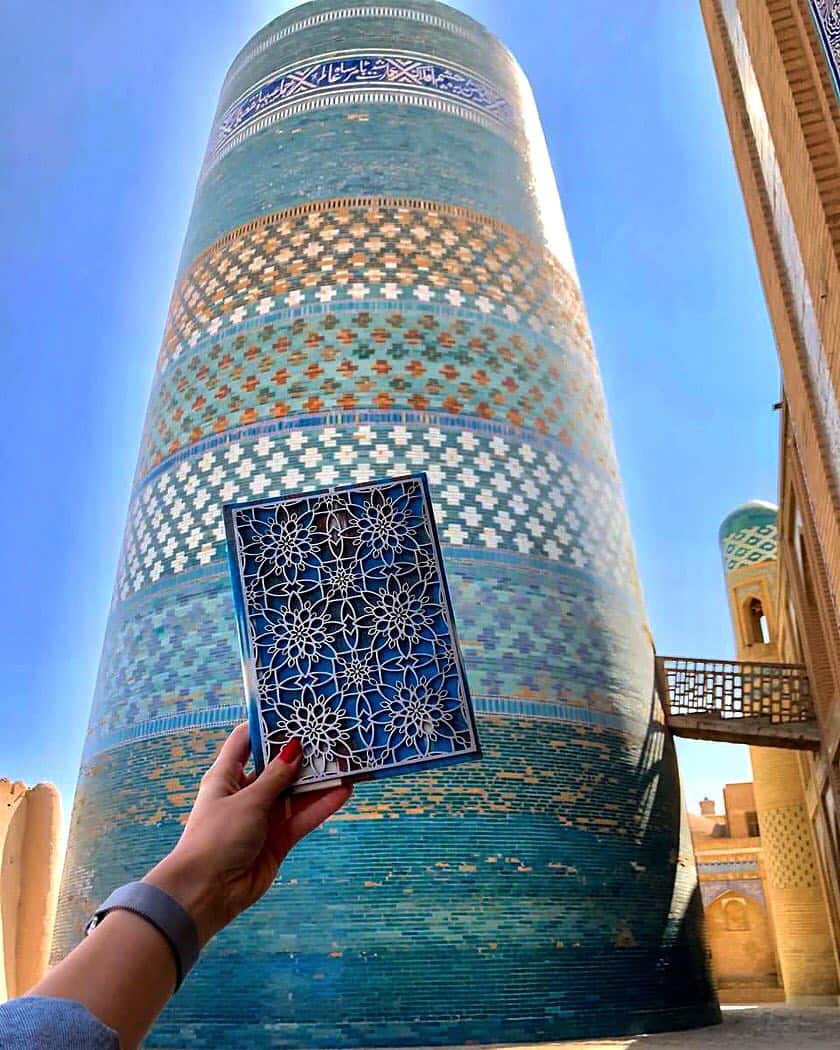
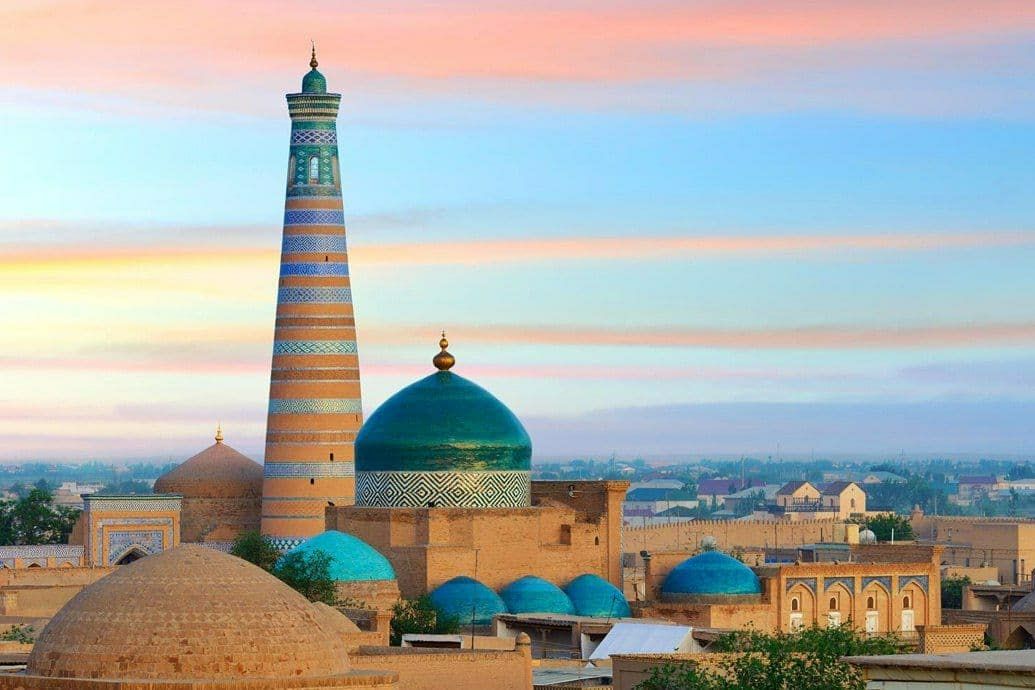
In the evening, check in at a hotel inside or close to the walls of ,Did you know? People still live inside Khiva's museum city Itchan Kala packs more than 50 historic monuments and about 250 old houses inside clay walls 8–10 m high and 5–6 m thick, and families still live and work in its lanes. Read more → and a short walk to the ,Did you know? A 14-metre-wide base for a tower that stopped at 29 m Kalta Minor was begun in 1852 and meant to reach 70–80 m, but work halted in 1855 at about 29 m when its khan died. It is said to be the only minaret covered entirely in glazed tiles. Read more → begun in 1852 and never finished, the only minaret covered entirely in glazed tiles.
Good to know: We check the entry rules for Uzbekistan for your passport before booking; for many nationalities entry is visa-free.
Overnight in Khiva
Day 6 · Khiva — Itchan Kala with your guide
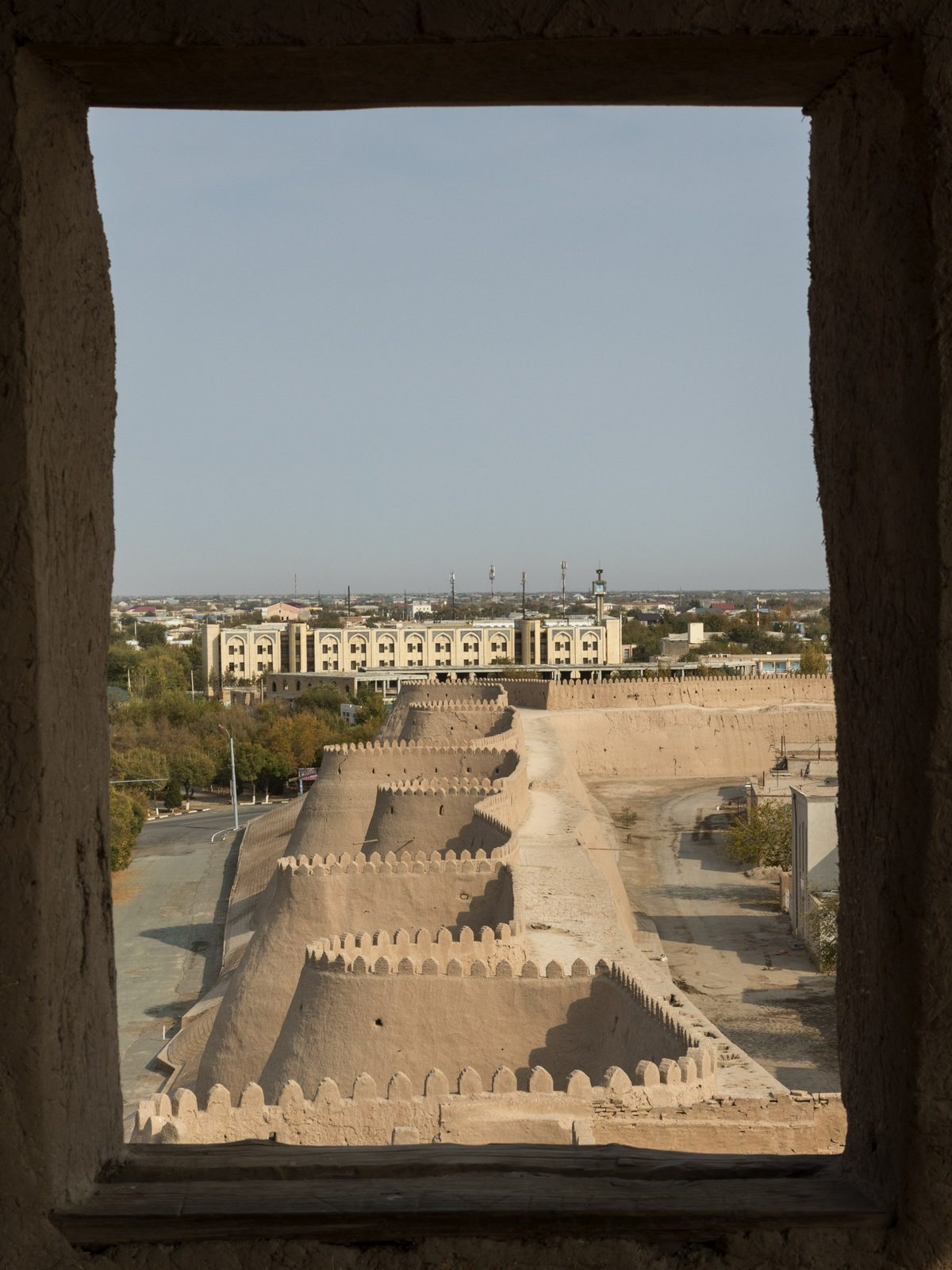
Itchan Kala measures about 650 by 400 metres, and the morning, before the groups arrive, is its quietest hour. With your guide: the ,The old fortress-residence of the khans of Khiva, inside the walls of Itchan Kala. the khans’ citadel, and the Did you know? Khiva's Juma Mosque stands on 212 wooden columns Recorded as early as the 10th century and rebuilt in 1788, the Juma Mosque has no portal and no domes: its flat roof rests on 212 carved columns in 17 rows, and some of them are older than the building itself. Read more → with its hall of 212 carved wooden columns, no two alike.
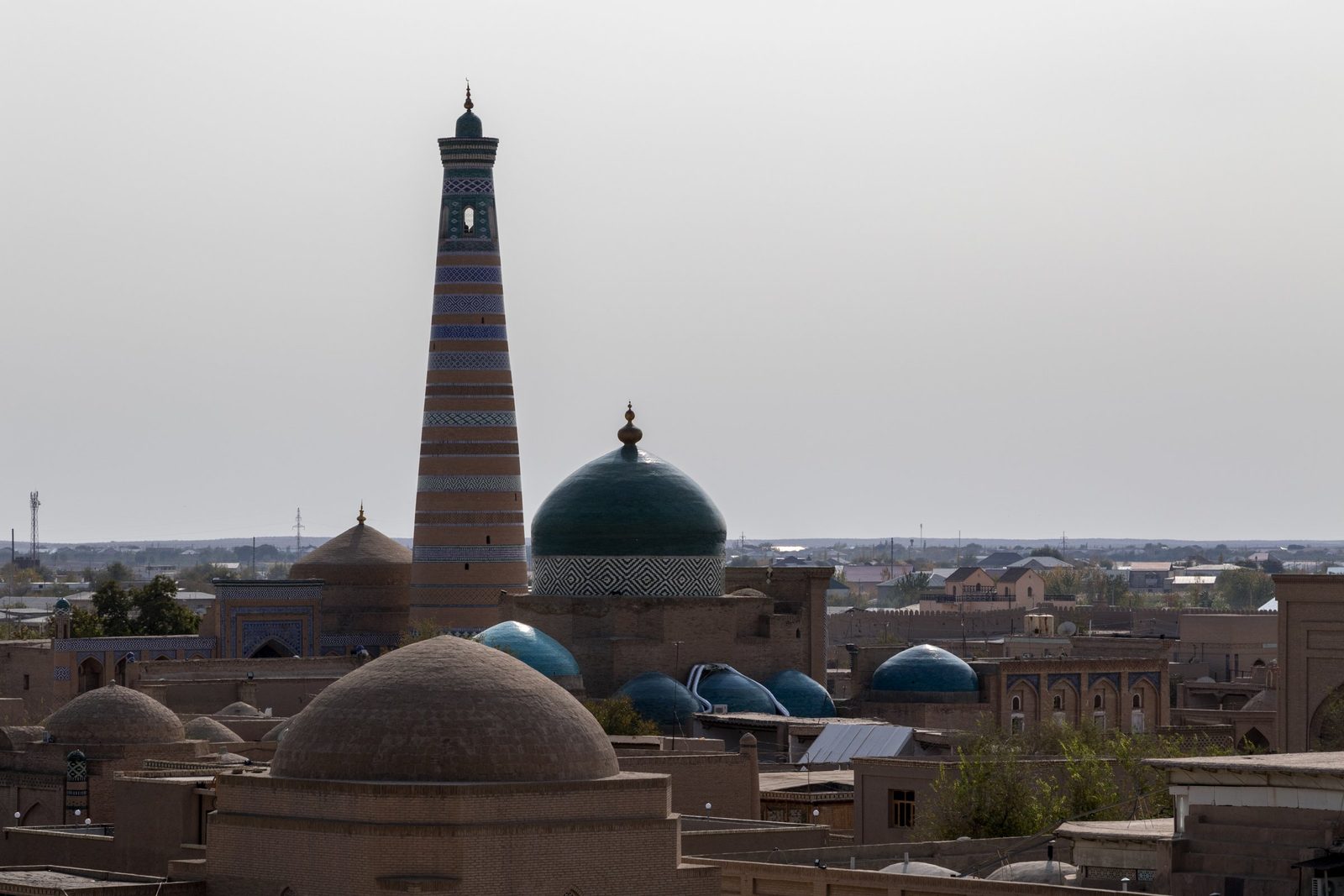
Then the mausoleum of ,Did you know? Legend: a wrestler freed captives with a single cowhide Legend says Pahlavan Mahmud won a bout in India and asked to free as many fellow Khorezmians as would fit in a cowhide. He cut it into one long thin strip and encircled them all. The real Mahmud, a poet and wrestler of around 1300, is Khiva's patron saint. Read more → a wrestler, healer and poet who died in 1322, the Did you know? In Tash-Hauli's harem each of four wives had her own loggia Allakuli Khan built the Tash-Hauli palace in 1830–1838 around three courtyards. In the harem four tall loggias belonged to the khan's four wives and a fifth, the largest, to the khan himself; behind each summer terrace lay a winter room. Read more → palace and the Did you know? Khiva's tallest minaret is barely a century old The Islam Khoja Minaret was begun in 1908, near the very end of the khans' era. At 56.6 m it is one of the tallest in Central Asia; a spiral stair of 175 steps leads up to its windowed top. Read more → of 1908–1910, at 56.6 metres the tallest in Khiva. The evening is free.
Good to know: Read our guide to Itchan Kala before you go.
Overnight in Khiva
Day 7 · Khiva – Bukhara — The morning train and Lyabi-Hauz
The high-speed train leaves Khiva at about 07:15 and reaches Bukhara before 11:00, some three and a half hours across the .The Kyzylkum, or Red Sands: the desert between the Amu Darya and Syr Darya rivers that the road and the railway cross on the way to Khiva. Bukhara’s station is in Kagan, about 12 km from the old town; your driver meets you there.
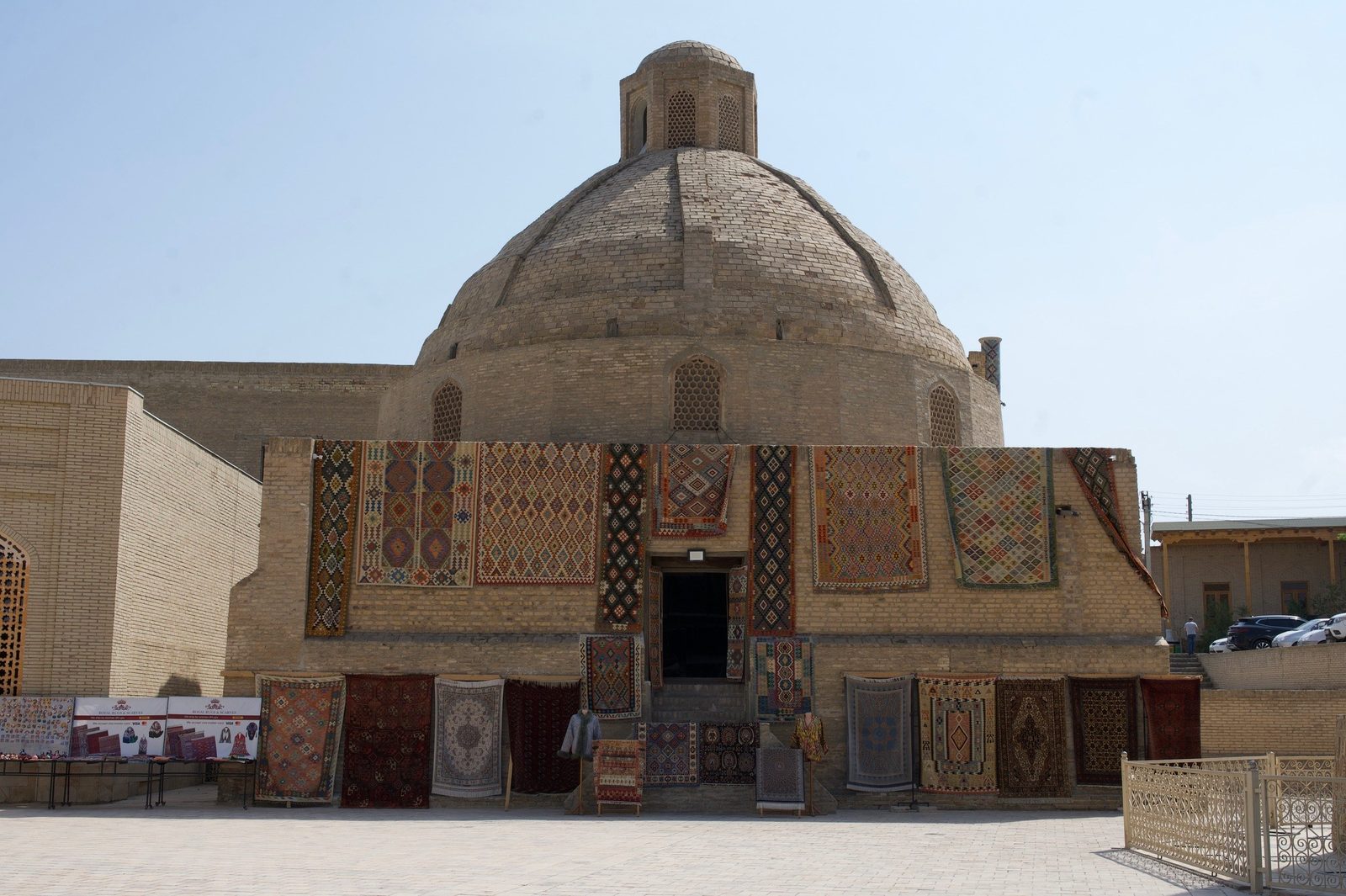
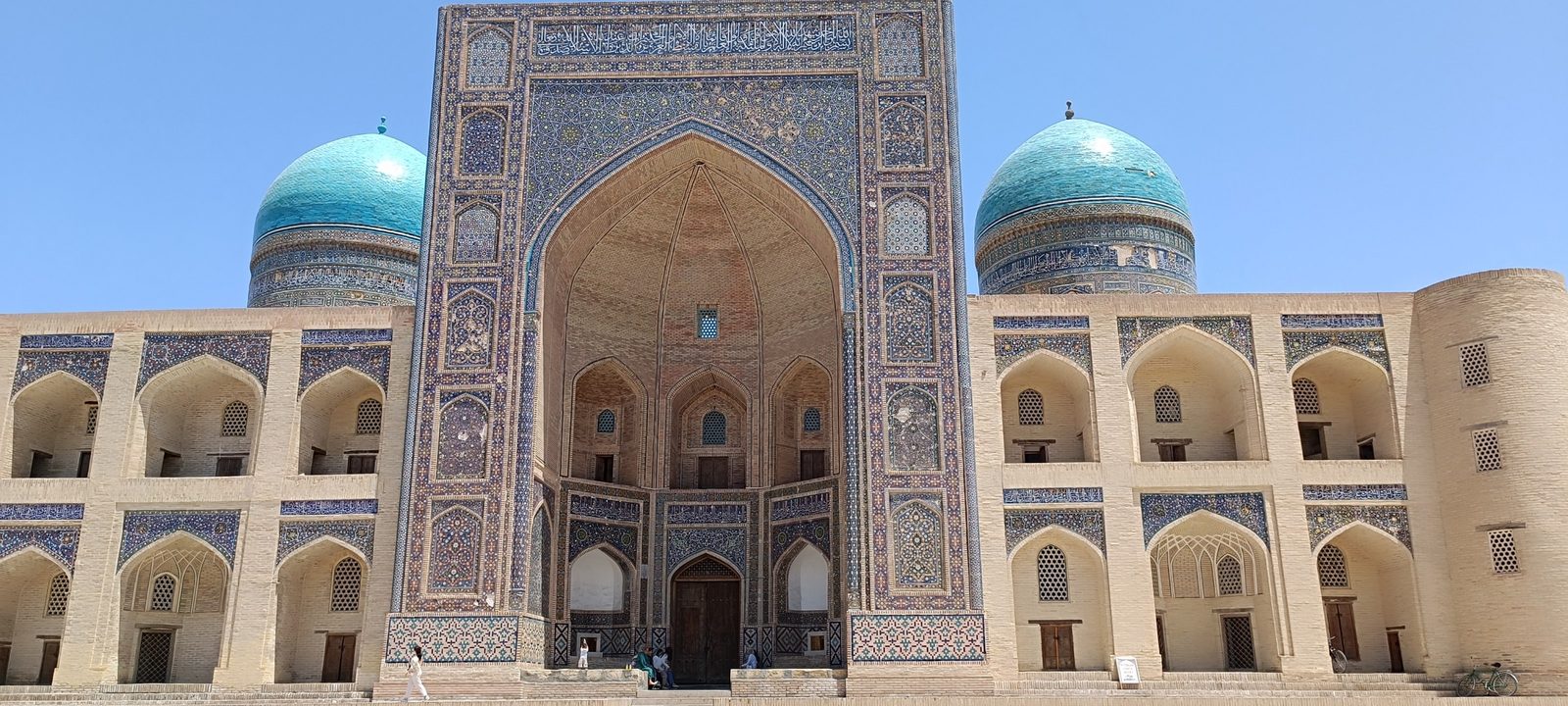
In the afternoon, the old town on foot with your guide: the Did you know? Under Bukhara's domes merchants changed money and gold Four 16th-century trading domes still stand over old crossroads. Toki Sarrafon was the money changers' dome, where merchants from India and China swapped coins; Toki Zargaron held jewellers' workshops, Toki Telpak Furushon sold caps. Read more → and ,Did you know? Legend: the minaret's foundation was laid with camel milk Legend says master Bako laid the foundations of the Kalyan minaret with ganch plaster mixed with camel milk, then vanished for two years to let them harden, and only then built the tower. Locals still show a grave they say is his. Read more → where the Did you know? Diggers went 13 m down and never found its base The Kalyan Minaret of 1127 rises about 46 m, and an excavation reached 13 m without finding the bottom of its foundations. Genghis Khan reportedly ordered it spared. Read more → of 1127 stands between the Kalyan Mosque and the Did you know? A madrasah still teaching after almost 500 years Mir-i-Arab, built in the 1530s opposite the Kalyan Mosque, was one of only three Islamic schools that kept working through the Soviet period, and it still trains students today. Read more → .An Islamic college: student cells and classrooms around a courtyard behind a grand portal. In the old towns many now house museums and craft workshops. In the evening, green tea by the water at ,Did you know? Bukhara's ponds were once its water supply Pools like Lyabi-Hauz, dug around 1620 and 46 × 36 m, were the city's main source of water. Most were filled in during the 1920s–30s because they spread disease; Lyabi-Hauz survived. Read more → the square around a pond of about 1620.
Good to know: This train does not run from Khiva on Mondays, so we set the start date of the tour so that this day never falls on a Monday.
Overnight in Bukhara
Day 8 · Bukhara – Samarkand — The Ark and the Samanid Mausoleum, the Afrosiyob east
The Ark opens at 9:00, or 8:00 in season, and we are there before the heat. A ramp takes you up through the gate to the throne room and the museums. Across the square stands the Did you know? The famous columns of Bolo-Hauz are barely a century old The Bolo-Hauz mosque opposite the Ark was completed in 1712, but its best-known feature, the tall, slender carved columns along the front of the iwan, was added only in 1917, together with the small minaret of 1916–1917. Read more → mosque, whose carved wooden columns are reflected in its pond. Then the Did you know? Buried in mud, this tomb escaped Genghis Khan The 10th-century Samanid Mausoleum, one of the oldest monuments of Islamic Central Asia, was covered by flood mud and sand before the Mongols came in 1220. Hidden for centuries, its brick lacework survived intact. Read more → in the park: a 10th-century cube of patterned brick.
In the afternoon, the Uzbekistan's high-speed train: Tashkent to Samarkand in about 2 hours 10 minutes, Tashkent to Bukhara in about 4 hours. Tickets are tied to your passport. Read more → to Samarkand, under 2 hours. Samarkand station is more than 6 km from the centre, and your car is waiting.
Good to know: Want more of Bukhara? Add a second night here: the tour becomes 11 days.
Overnight in Samarkand
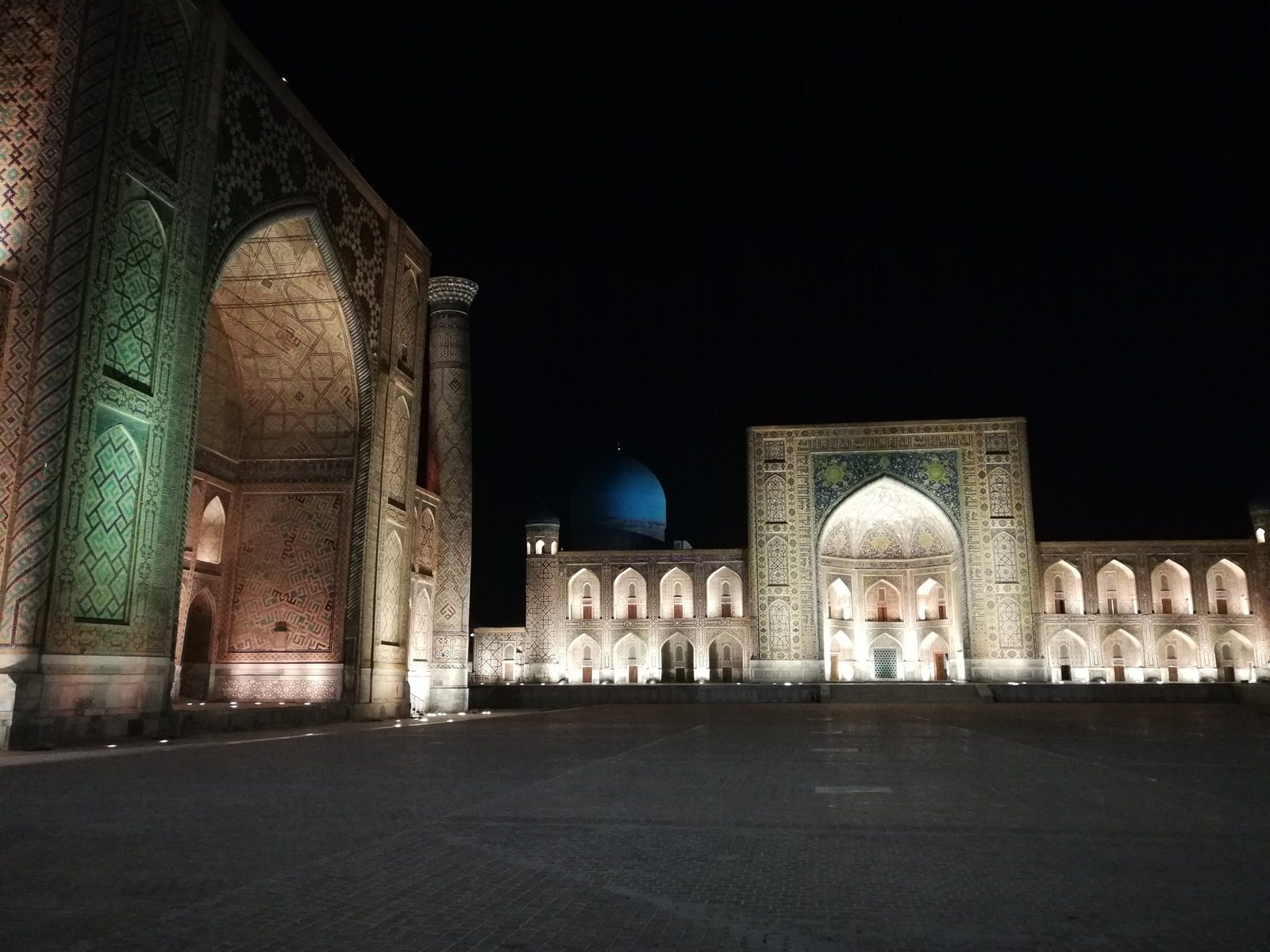
Day 9 · Samarkand — The Registan, Gur-e-Amir and Bibi-Khanym
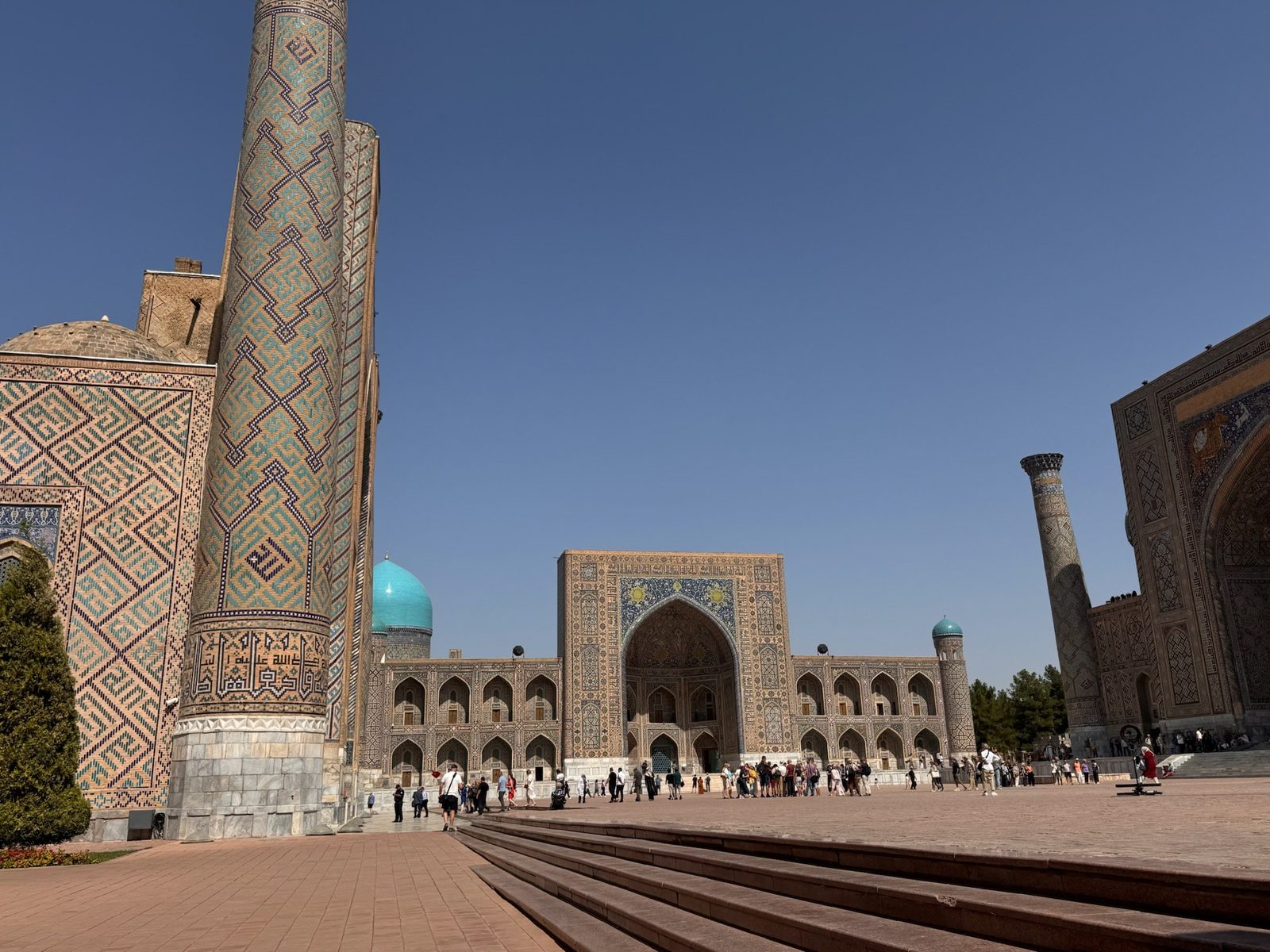
The Did you know? The Registan's sun-carrying lion went on a banknote The Sher-Dor Madrasah (1619–1636) is named for the big cats with the sun on their backs on its portal. The image appeared on the reverse of Uzbekistan's 200-som note of 1997. Read more → opens at 8 a.m.: three madrasahs facing one square, Did you know? Ulugh Beg measured the year to within 25 seconds Working at his Samarkand observatory, Ulugh Beg put the tropical year at 365 days 5 h 49 min 15 s, about 25 seconds too long, closer than Copernicus a century later. Read more → (1417–1420), Sher-Dor (1619–1636) and Did you know? The 'gilded' mosque of the Registan Tilla-Kari, built in 1646–1660, means 'gilded'. With Bibi-Khanym in ruins, it served as Samarkand's main Friday mosque until the 1920s. Its prayer hall glows with kundal, relief painting finished in gold leaf, restored in 1979. Read more → (1646–1660). With your guide you take the square slowly, with shade inside the courtyards.
Then ,Did you know? Timur's tombstone went to Persia and came back The dark-green jade slab on Timur's grave in Gur-e-Amir was carried off by Nader Shah in 1740. It broke, and on his advisers' urging he sent it back to Samarkand. Read more → the mausoleum of ,Amir Timur (Tamerlane, 1336–1405), founder of the Timurid empire, which had its capital in Samarkand. Born near Shahrisabz. completed in 1404, where his sons and grandsons, Ulugh Beg among them, are buried too. In the afternoon, Timur’s Friday mosque of ,Did you know? Legend says the architect asked the queen for a kiss Legend says the architect of Bibi-Khanym would finish on time only for a kiss from Timur's wife, and Timur punished him. In fact the mosque was Timur's own project; his wife Saray Mulk Khanum built her madrasah across the road. Read more → built in 1399–1405, and the Samarkand's main bazaar, right next to Bibi-Khanym: Samarkand bread, dried fruit, nuts and halva. Read more → next door, with dried fruit, nuts and many kinds of flatbread.
Overnight in Samarkand
Day 10 · Samarkand – Tashkent — Shah-i-Zinda and the flight home
In the morning, ,Did you know? Why Shah-i-Zinda means 'the Living King' The necropolis grew around the shrine of Qutham ibn Abbas, a cousin of the Prophet Muhammad. Legend says he did not die in battle but went down a deep well to a garden of paradise, where he lives on. Read more → a street of more than twenty mausoleums from the 11th–15th and 19th centuries. It is still a place of pilgrimage, so shoulders and knees are covered.
Then the Afrosiyob to Tashkent, about 2 h 10 min, and the transfer to the airport for your flight home. If your flight leaves the next day, we book you a night in Tashkent.
Good to know: Afrosiyob seats sell out, so we book the tickets as soon as your dates are fixed; we need the passport details of every traveller.
Accommodation
Where you stay
| City | Stay |
|---|---|
| Ashgabat | A comfortable hotel, 3 nights |
| Darvaza | A yurt camp near the crater, 1 night, a yurt for two |
| Khiva | A comfortable hotel, 2 nights |
| Bukhara | A comfortable hotel, 1 night |
| Samarkand | A comfortable hotel, 2 nights |
We confirm the hotels for your dates before booking.
Price
Price
The price is given on request: it depends on the dates, the hotels, the size of your group and the number of 4×4 vehicles.
Good to know
Conditions
- The best months are April–May and September–October. From June to August the Karakum is very hot, and afternoons in Bukhara reach about 37 °C. In winter, desert nights are cold: ask us about the camp for your dates.
- Turkmenistan issues a visa on arrival only against a letter of invitation. We arrange the invitation; send us your passport copies a few weeks ahead.
- The visa fee and the migration fee are paid in cash at the border; the amount depends on your citizenship.
- In Turkmenistan, bring US dollars in cash, in clean, undamaged notes: bank cards may not be accepted.
- In Turkmenistan some websites and messengers, WhatsApp and Telegram among them, may not work; your guide stays in touch with our team in Tashkent.
- The Dashoguz – Shavat border closes at 17:00, so day 5 starts early.
- Your guide speaks your language, and that is included in the price. Tell us the language you need when you book, ideally well in advance.
- Train tickets in Uzbekistan go on sale 60 days before departure and sell out; tickets need the full name and passport number of every traveller.
- Read before you go: our guide to Silk Road tours and to the road from Khiva to Bukhara.
- Reservations are confirmed with passport copies only.
Cancellation policy
| Cancellation timing | Penalty |
|---|---|
| 21 days before the service | 20% |
| 20–7 days | 50% |
| 6–0 days | 100% |
Transportation
| Vehicle | Group size |
|---|---|
| 4×4 in the Karakum (days 4–5) | up to 3 pax per vehicle |
| Chevrolet Cobalt | 2 pax |
| Hyundai Starex | 3–4 pax |
| Toyota Hiace / King Long | 5–8 pax |
| Mercedes Sprinter | 9–14 pax |
Vehicles in Uzbekistan; in Turkmenistan a car or minibus of the same size. Vehicles may differ in make and colour.
🌿 Responsible tourism: we allocate part of our profits to good causes and are preparing for GSTC certification.
Expert opinion
Pluses
- Parthians and Seljuks: two UNESCO sites in Turkmenistan: the fortresses of Nisa and the cities of Ancient Merv.
- A night in the Karakum: a barbecue and a night in yurts by the Darvaza gas crater.
- Two countries in one trip: the land border at Dashoguz – Shavat, then Khiva, Bukhara and Samarkand by high-speed train.
Minuses
- Long drives in Turkmenistan: about 8 hours on the road on the Merv day, then 5 and 6 hours across the Karakum.
- Limited connection: in Turkmenistan bank cards may not be accepted, and some messengers may not work.
- Hot in summer: from June to August the Karakum and Bukhara are very hot.
AroundCA numbers
How we counted
By the AroundCA programme: we count only what is written in the day-by-day programme of this tour. If the programme gives no figure, we show nothing.
- Hotel changes
- 4
- Longest transfer
- 6 h · by car
- Starts before 7:00
- days 3, 5, 7
- Walking
- Medium
Walking: Medium: walks over the excavations of Nisa and Merv and through the old towns of Khiva, Bukhara and Samarkand, without long hikes.
Best time
Apr–May, Sep–Oct
April–May and September–October: warm days for the ruins of Merv and Nisa and for walking the old towns of Khiva, Bukhara and Samarkand.
Better to avoid
Jun–Aug
June to August: the Karakum is very hot, and afternoons in Bukhara reach about 37 °C.
A typical day
On day 4 you see the Akhal-Teke horses at the Ashgabat hippodrome, then ride north into the Karakum by 4×4 for about 5 hours. In the evening you reach the Darvaza gas crater, have a barbecue at the yurt camp and spend the night in a yurt.
What the price includes
What is included
- Visa support for Turkmenistan: the letter of invitation
- Meeting at Ashgabat airport, all transfers on the programme and the transfer to Tashkent airport
- Accommodation: 9 nights with breakfast (Ashgabat 3, the Darvaza yurt camp 1, Khiva 2, Bukhara 1, Samarkand 2)
- The barbecue dinner at the Darvaza camp
- A private car with driver in Turkmenistan and 4×4 vehicles for the Darvaza and Dashoguz days, up to three guests per vehicle
- Meeting on the Uzbek side of the Shavat border and the transfer to Khiva
- Train tickets: the high-speed train Khiva – Bukhara, the Afrosiyob Bukhara – Samarkand and Samarkand – Tashkent
- A guide speaking your language in Turkmenistan and in every Uzbek city
- Entrance tickets on the programme
- Bottled water on the long drives in Turkmenistan
Not included
- International flights to Ashgabat and from Tashkent
- The Turkmen visa fee and migration fee, paid in cash at the border (the amount depends on your citizenship)
- Lunches, dinners and drinks, except the dinner at Darvaza
- Photo and video fees at museums and historical parks
- Tips and personal expenses
Extra cost on site
- The Turkmen visa fee and migration fee, paid in cash at the border (the amount depends on your citizenship)
- Lunches, dinners and drinks, except the dinner at Darvaza
- Photo and video fees at museums and historical parks
- Tips and personal expenses
Good for
- Travellers who have seen Uzbekistan or want two countries in one trip
- Lovers of archaeology and the Silk Road: the Parthians, the Seljuks and the khans of Khiva
- Anyone who wants a night in the desert by the Darvaza crater
Maybe not for you if
- Travellers who dislike long drives: in Turkmenistan two days have 5–6 hours on the road and one has about 8
- Anyone who needs constant mobile internet and messengers: some of them may not work in Turkmenistan
- Summer trips: from June to August the Karakum and Bukhara are very hot
Questions about this tour
How much does the tour cost?
The price is given on request: it depends on the dates, the hotels, the size of your group and the number of 4×4 vehicles.
How do we get a visa for Turkmenistan?
Turkmenistan issues a visa on arrival only against a letter of invitation. We arrange the invitation for you; send us your passport copies a few weeks ahead. The visa fee and the migration fee are paid in cash at the border, and the amount depends on your citizenship.
What money and connection do we need in Turkmenistan?
US dollars in cash, in clean, undamaged notes: bank cards may not be accepted. Some websites and messengers, WhatsApp and Telegram among them, may not work; your guide stays in touch with our team in Tashkent.
Is there a guide in our language?
Yes: a guide who speaks your language in Turkmenistan and in every Uzbek city, and that is included in the price. Tell us the language when you book, ideally well in advance.
How does the border crossing work?
On day 5 we cross at Dashoguz – Shavat, which closes at 17:00, so we leave the camp early. Your Turkmen guide takes you to the exit control, and our team meets you on the Uzbek side and drives you to Khiva.
When is the best time to go?
April–May or September–October. From June to August the Karakum is very hot, and in winter nights in the desert camp are cold.
Didn’t find your answer? Ask about this tour →
Make it your trip
Tick what you’d like to add — it goes into your request, and the manager confirms the final price.
Add a few days
Arrival, departure, transfers
© Photos
The mausoleum of Sultan Sanjar, Ancient Merv, Turkmenistan — P. Hughes / Wikimedia Commons · CC BY 4.0; The excavated halls of Old Nisa, the Parthian fortress near Ashgabat, Turkmenistan — Hans Birger Nilsen / Wikimedia Commons · CC BY-SA 2.0; The ribbed clay walls of the Great Kyz Kala, Ancient Merv, Turkmenistan — Gai Jorayev / Wikimedia Commons · CC BY-SA 4.0; Flames on the floor of the Darvaza gas crater, Karakum desert, Turkmenistan — Benjamin Goetzinger / Wikimedia Commons · CC BY-SA 4.0