
Places in this article: Khiva
Khorezm’s desert fortresses: Ayaz-Kala, Toprak-Kala and the oasis of fifty fortresses
In 1938 archaeologists began work on a clay mound east of the Amu Darya. Under the sand lay a palace of about 150 halls and rooms, with painted walls and household documents written in black ink on leather and wood. That was ,Did you know? Toprak-Kala was the palace city of ancient Khorezm's kings In the 2nd–3rd century AD Toprak-Kala was the capital of Khorezm. From 1938 Sergey Tolstov's expedition uncovered its palace, with wall paintings, coins and archives; its sculptures are now in the Hermitage. Read more → a capital of ancient Khorezm, and it still stands in the same desert, on the road from Khiva to .Did you know? Legend says a shepherd named Ayaz built Ayaz-Kala for a bride Legend says a Khorezm king promised his daughter to whoever built an unassailable fortress; the shepherd Ayaz began, the king broke his word, and the walls stayed unfinished. In fact the oldest fort here dates to the 4th–3rd century BC. Read more →
If you are looking for things to do around Khiva and Urgench beyond the old town, start here: the desert fortresses of Khorezm, clay walls that have stood above the The Kyzylkum, or Red Sands: the desert between the Amu Darya and Syr Darya rivers that the road and the railway cross on the way to Khiva. for more than two thousand years. We explain what to see at Ayaz-Kala, Toprak-Kala and their neighbours, how to fit them into a day and when to go.
Fifty fortresses on the edge of the Kyzylkum
Ancient Khorezm was an oasis on the lower Amu Darya: fields and canals on one side, open desert on the other. To guard the farmland from the nomads, its rulers built a chain of forts along the edge of the Kyzylkum. The area is traditionally called Elliq Qala, “fifty fortresses”, and the district of Karakalpakstan where Ayaz-Kala stands still carries the name: Ellikqala.
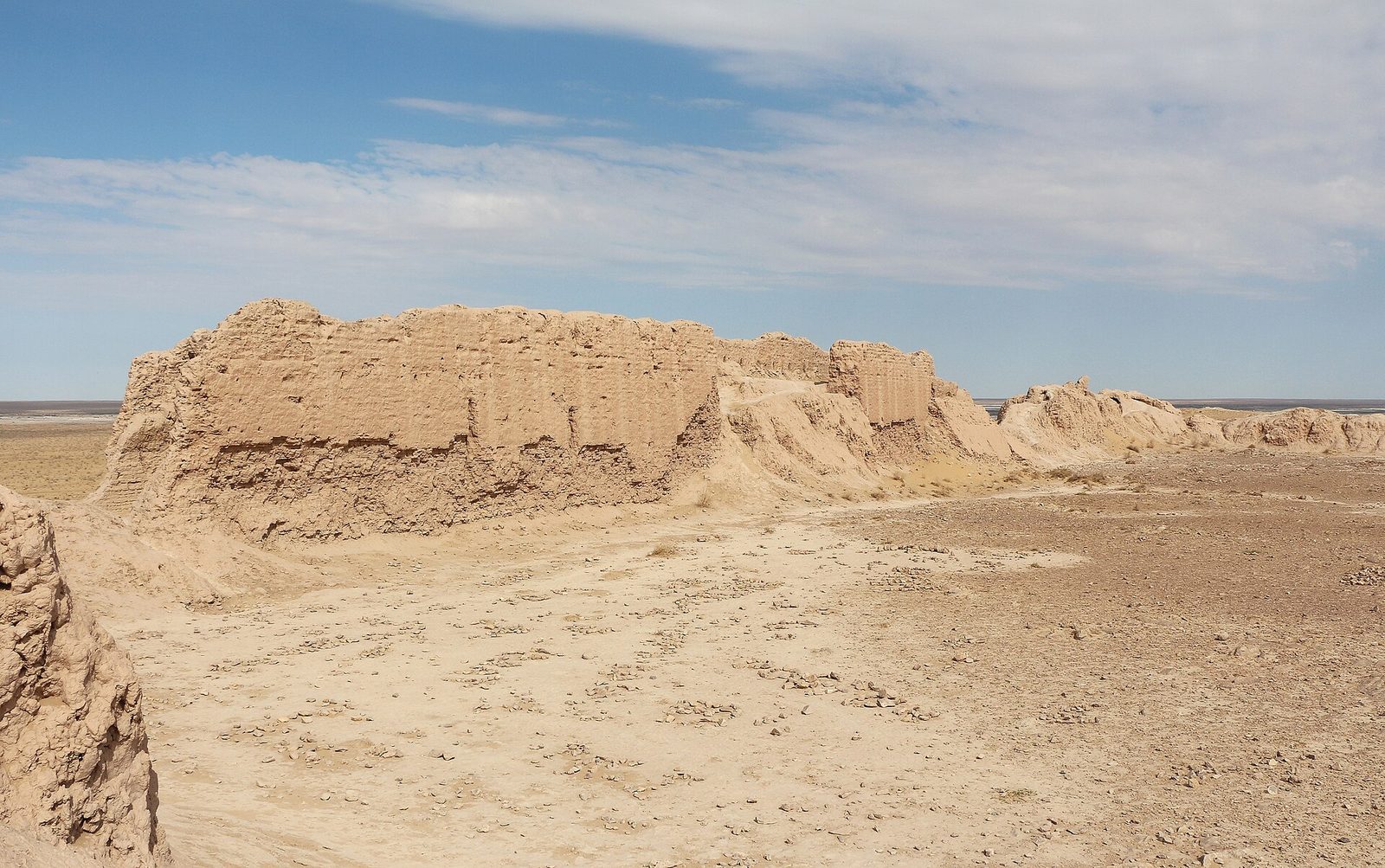
In 2008 Uzbekistan put the “Desert Castles of Ancient Khorezm” on its tentative list for UNESCO World Heritage. The serial nomination names eight sites, among them Toprak-Kala, Ayaz-Kala, Koy-Krylgan-Kala, Big Guldursun and Janbas-Kala. The walls are rammed clay and mud brick, the colour of the desert around them, and the best-known fortresses can be combined in one day by car.
Ayaz-Kala: three fortresses and a view over the desert
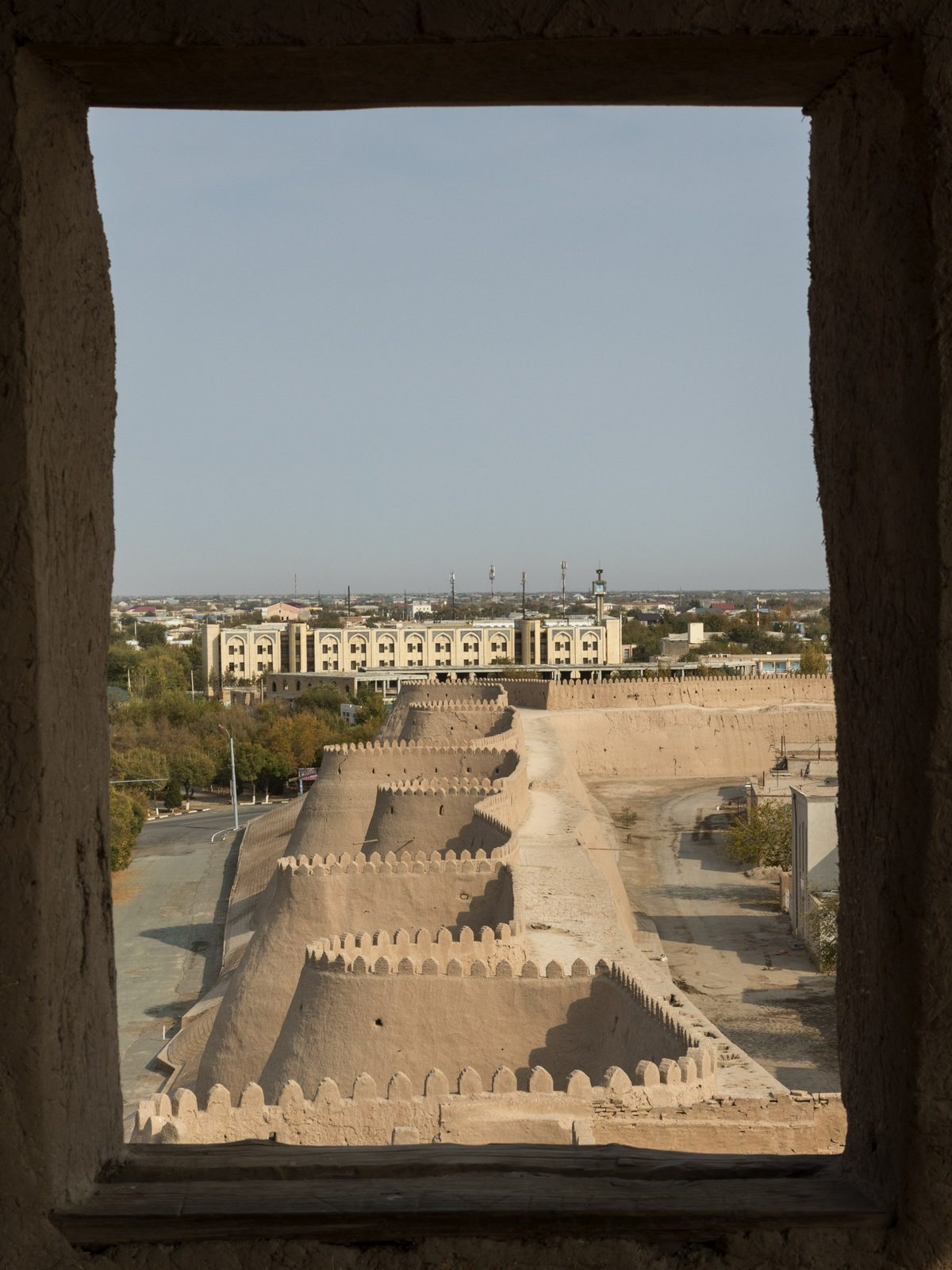
Ayaz-Kala is not one fortress but three. The oldest, Ayaz-Kala 1, crowns a hill about 100 m high and dates from the end of the 4th or the start of the 3rd century BC, when Khorezm had become independent of Persia. It is a rectangle of about 182 by 152 m. Its double walls, up to 10 m high, enclose a vaulted corridor about 2 m wide, and 45 semi-oval towers were added along them.
On a lower conical hill nearby stands Ayaz-Kala 2, a fortress of the early Middle Ages with a palace at its foot, where archaeologists found halls, wall paintings and a fire temple. Ayaz-Kala 3, on the plain, is the largest: about 5 hectares, with a building of some 40 rooms in one corner.
Climb to the top of Ayaz-Kala 1 in the late afternoon. From the walls you see the other two fortresses, the salt lake Ayazkul and the desert running to the horizon. A yurt camp stands on a hill close to the fortresses, so you can stay for sunset and see the walls again at dawn.
The legend of the shepherd Ayaz
Legend says a ruler of Khorezm promised his daughter to whoever could build a fortress strong enough to guard the frontier. A shepherd named Ayaz took on the task. In one telling the ruler broke his word and married his daughter to someone else, and the walls were left unfinished. In another, Ayaz wins the hand of the princess who lived with her companions in the nearby fortress of Kyrk-Kyz.
The legend explains the name; the archaeology tells a longer story. The oldest walls on the hill go back to the 4th–3rd century BC, when they were one link in the chain of forts that guarded the oasis. We tell this and other Khorezm stories in legends of Khiva.
Toprak-Kala: the palace city of Khorezm’s kings
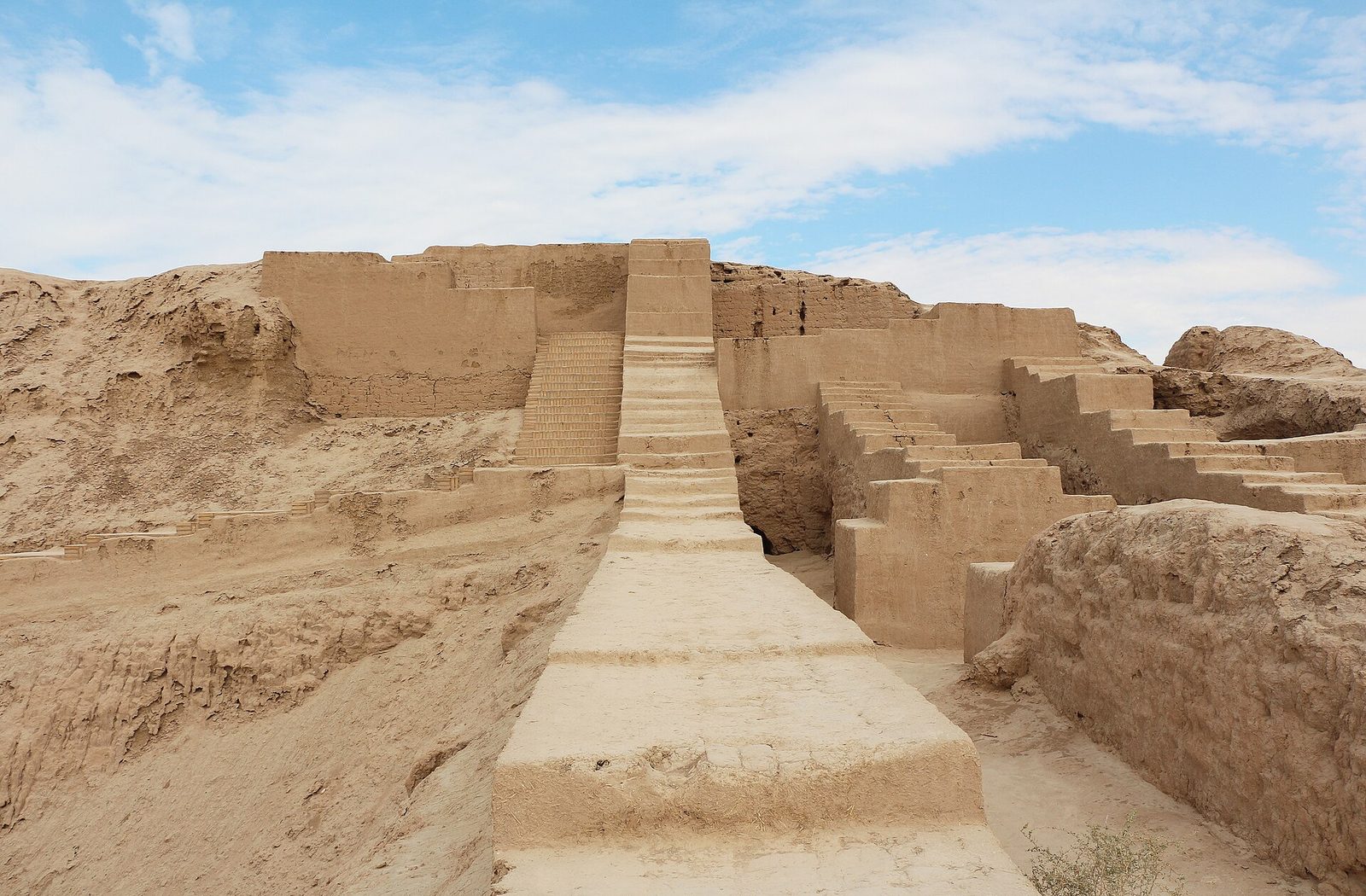
In the 2nd–3rd century AD Toprak-Kala was the capital of Khorezm. The city was a rectangle of about 500 by 350 m, built up with houses in about ten blocks, with a fire temple in the south-east corner and the palace in the north-west.
The palace held a throne hall and about 150 more halls and rooms. Archaeologists named them after what they found inside: the Hall of Kings, the Hall of Victories, the Hall of Dancing Masks. The walls were painted, and in the rooms lay household documents in the old Khorezmian script, written on leather and wood and dated to the 3rd century AD. Coins of the Kushan kings and of the local ruler Artav helped date the building.
The Khorezm expedition led by Sergey Tolstov began work here in 1938. The statues it found are now in the Hermitage in St Petersburg, and more than 15,000 finds from ancient Khorezm, including those from the desert fortresses, are kept in the Savitsky Museum in Nukus.
On site you read the plan of the palace rather than its decoration: clay walls worn into long ridges and the palace mound rising above them. One painting lives on in a different way. When UNESCO inscribed lazgi, the dance of Khorezm, in 2019, it noted that paintings of the dance at Toprak-Kala testify to its centuries-old roots.
Kyzyl-Kala, Big Guldursun and Koy-Krylgan-Kala
Kyzyl-Kala, the “Red Fortress”, stands just west of Toprak-Kala and is the easiest to combine with it. It is a square fort of the 1st–4th century AD, rebuilt in the 12th century, when Khorezm prepared to face the Mongols; some of its walls stand 16 m high. It has been restored in recent years to show what a fortress of Khorezm looked like when whole.
Big Guldursun, about 26 km north-east of Turtkul, is one of the largest fortresses of ancient Khorezm: about 350 by 230 m, with walls and towers that still reach 15 m in places. Its history runs from the 4th–3rd century BC to the 12th–13th century AD, when the Khorezmshahs rebuilt it. The latest coins found there date from about 1220.
Koy-Krylgan-Kala is the odd one out: round, not square. Its first building, a round two-storey structure inside a double ring wall, dates from the 4th–3rd century BC, and scholars believe it was conceived as a sacred building for watching the sky.
How to get there from Khiva or Urgench
The fortresses lie across the Amu Darya, in Karakalpakstan. Ayaz-Kala is about 70 km from Urgench and about 100 km from Khiva, on a paved road with a short sandy stretch at the end; from Nukus it is about 150 km. Toprak-Kala is about 32 km from Ayaz-Kala. The practical way to see them is a car with a driver. From Khiva we arrange a trip to Ayaz-Kala with a guide and entrance tickets.
How much time to allow:
- Half a day: Ayaz-Kala and Toprak-Kala. Most of the time goes on the road. This is how our Khiva in 3 days tour does it.
- A full day: add Kyzyl-Kala and Big Guldursun.
- A night: stay in the yurt camp by Ayaz-Kala for sunset and sunrise on the walls.
- On the way to Nukus: the fortresses fit into the drive between Khiva and Nukus, so you can see the walls first and the finds from them the next day.
Our yoga weekend in Khiva also spends a day at Ayaz-Kala. The ,Did you know? Part of the Aral Sea is coming back In 2005 the 12-km Kokaral dike was completed to keep the Syr Darya's water in the North Aral Sea. The level rose faster than expected, the water grew less salty, and fish and fishing returned. Read more → the Did you know? A music festival is held among Moynaq's old fishing boats Since 2018 the Stihia festival of electronic music, art and science has gathered in Moynaq, once a port on the Aral Sea, right beside the ships left on the sand. It ends by burning a 10-metre installation of the word SEA. Read more → ship cemetery and the Ustyurt plateau are a separate trip further north: see our Aral Sea expedition. For the city itself, read Khiva in 1 or 2 days; more on the region on the Nukus and Karakalpakstan page.
When to go and what to take
The weather decides the plan. In Urgench the average July high is about 36 °C, and the fortresses have no shade, so in summer we set out at first light and are back for lunch. In January the average high is under 3 °C and nights fall below freezing. April and October average about 20–22 °C by day, and spring and autumn are the seasons we recommend for the desert. Rain is rare: about 120 mm a year.
What to take:
- shoes with a firm grip: the paths up to the walls are loose sand and crumbling clay;
- a hat, sunglasses and sunscreen in any season;
- more water than you think you need;
- a warm layer for the evening in spring and autumn, when the desert cools fast;
- a scarf or buff against wind-blown sand.
Keep off the tops of the walls and leave potsherds where they lie: the fortresses are mud brick, and every footstep wears them down.
In short
- The fortresses of ancient Khorezm are a chain of clay forts on the edge of the Kyzylkum, traditionally called Elliq Qala, “fifty fortresses”, and on Uzbekistan’s UNESCO tentative list since 2008.
- Ayaz-Kala gives the widest view and the best sunsets; Toprak-Kala was the royal capital, with a palace of about 150 halls and rooms.
- Ayaz-Kala is about 70 km from Urgench and 100 km from Khiva: half a day by car for two fortresses, a full day for four.
- Go in spring or autumn; in summer, leave at dawn.
- See the walls in the desert and the finds from them in the The Karakalpakstan State Museum of Art in Nukus, named after Igor Savitsky, who gathered a large collection of Russian avant-garde art there in Soviet times. in Nukus.