
Expert opinion
Pluses
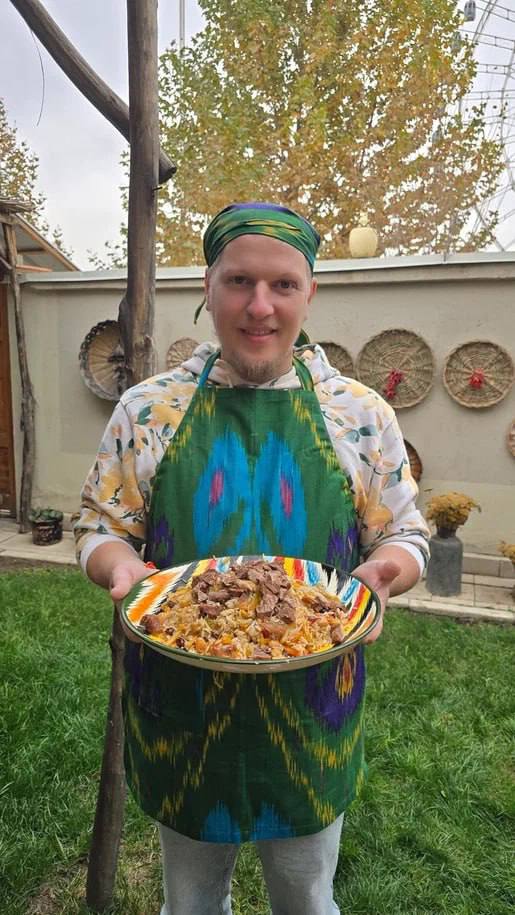
- Three cooking classes: tuxum-barak and shivit oshi in Khiva, bakhsh in Bukhara and Samarkand Rice cooked in a kazan with carrots, onions and meat: the dish of every Uzbek celebration. Each region cooks it its own way., cooked with a chef and eaten at the table.
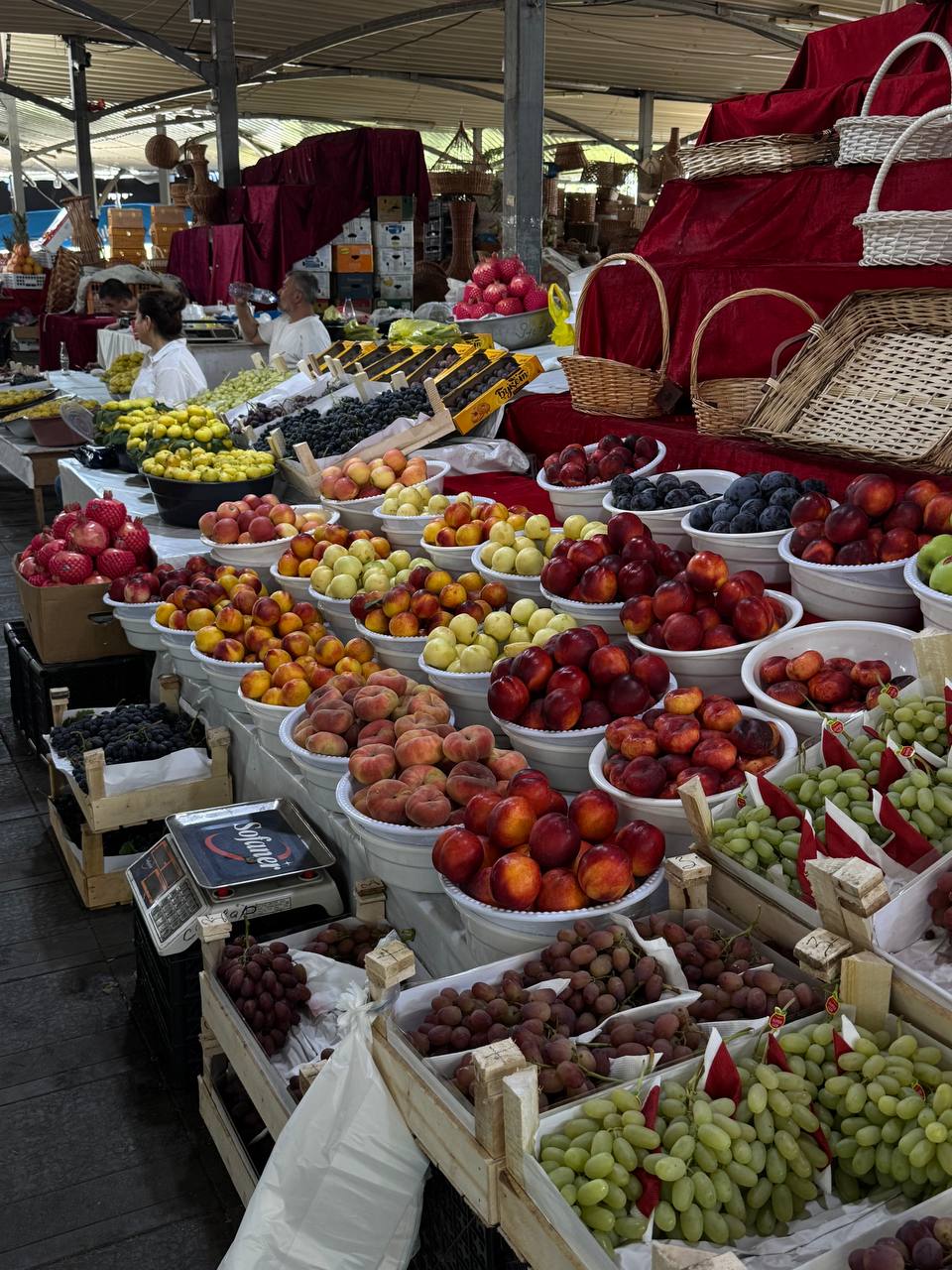
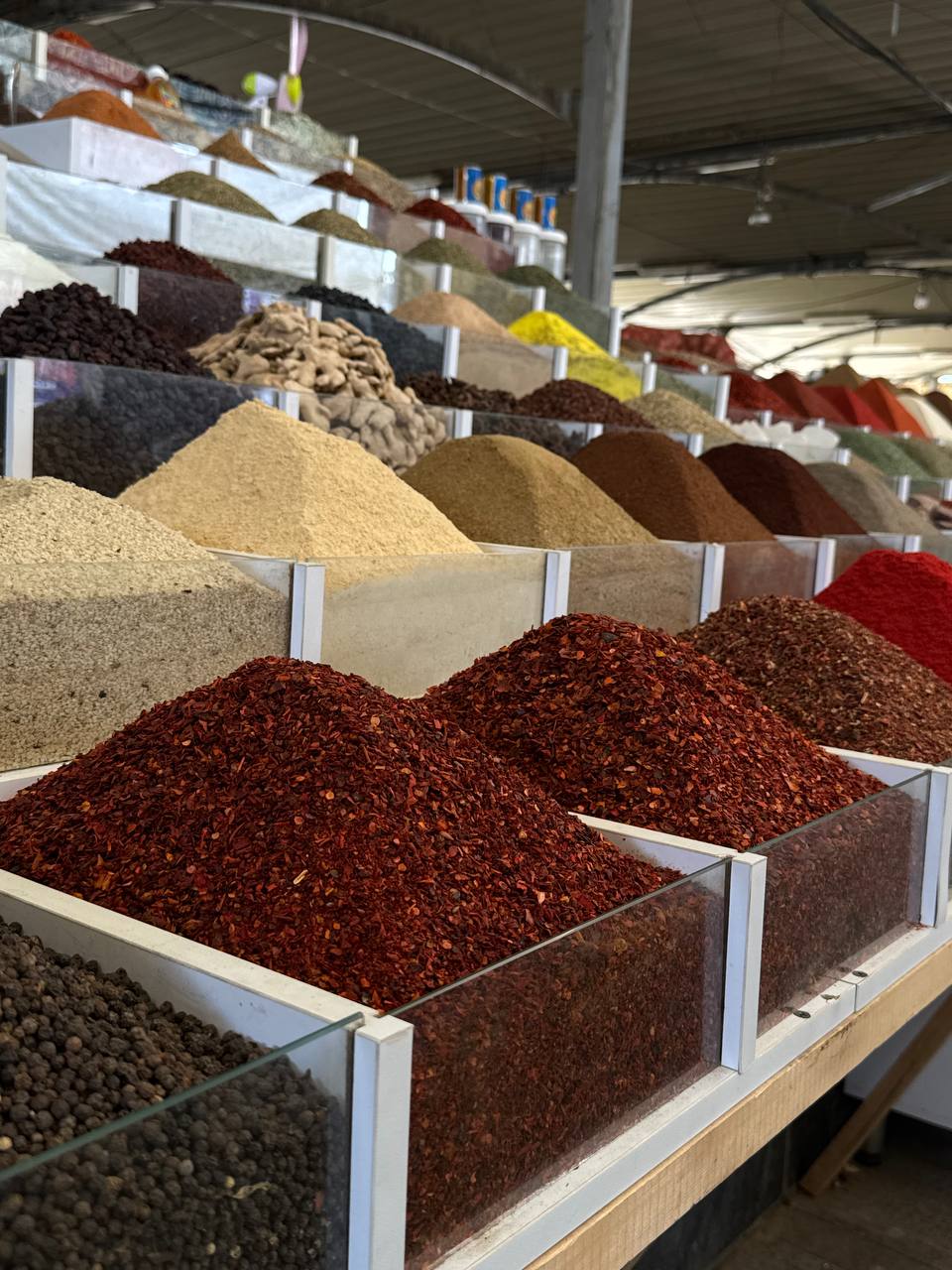
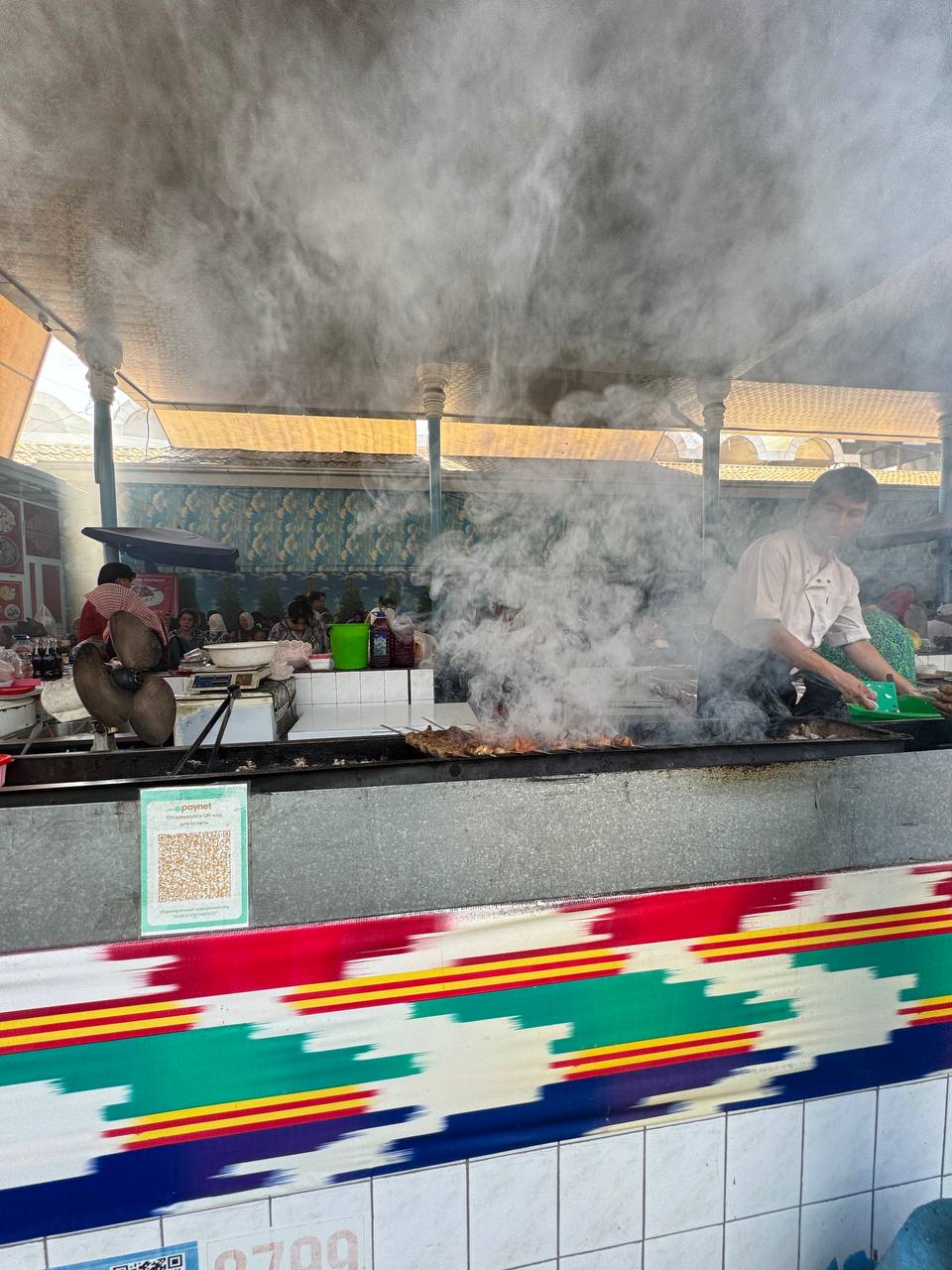
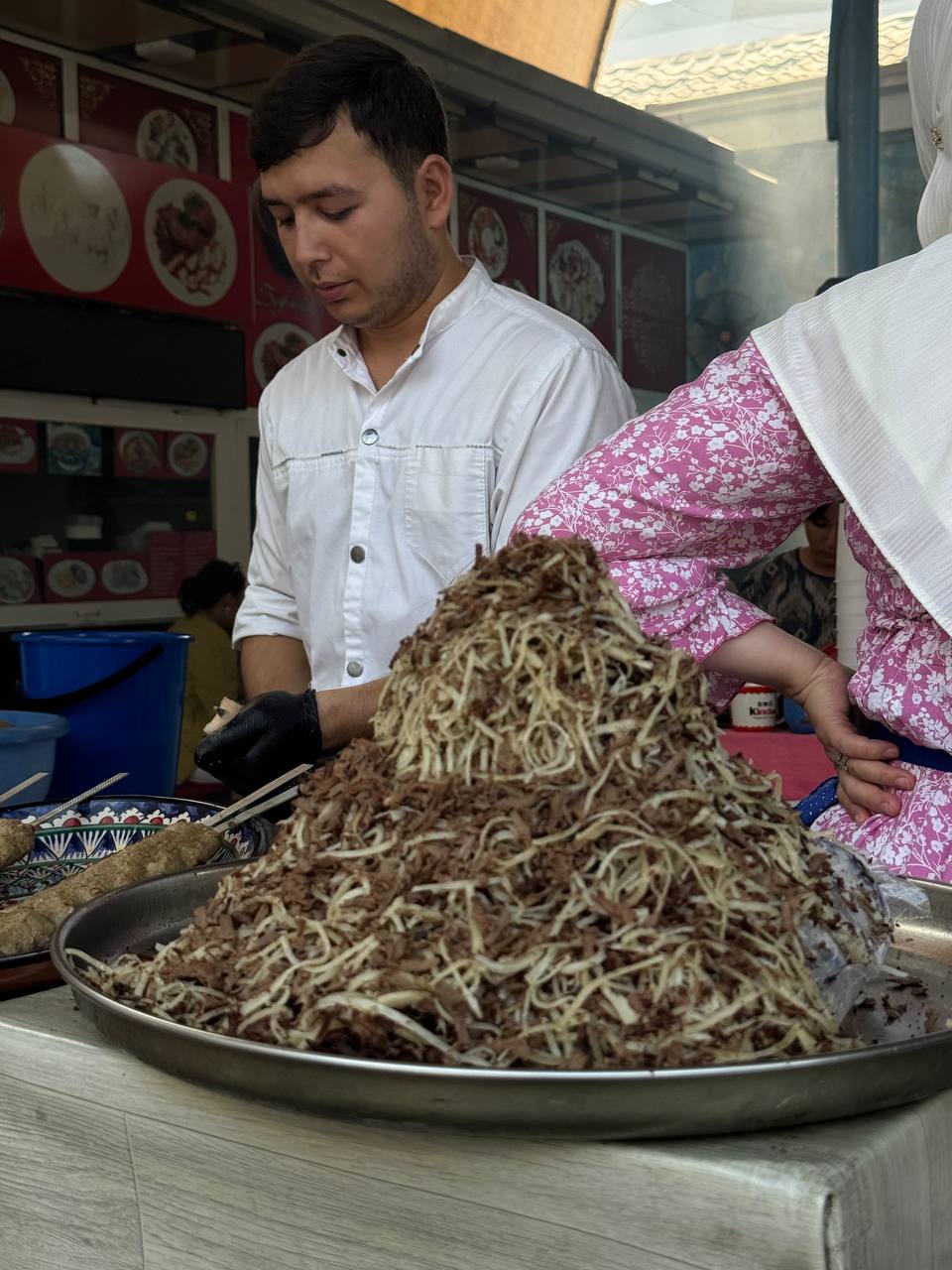
- Markets in every city: Tashkent's old bazaar under a big blue-green dome, not far from Hazrati Imam. Bring cash in so'm. Read more →, the Khorezm market, the Bukhara bazaar and the Samarkand's main bazaar, right next to Bibi-Khanym: Samarkand bread, dried fruit, nuts and halva. Read more →, ending with a farewell food feast in Samarkand.
- Your own start date: a private tour that starts on any day that suits you, with time for the main landmarks in each city.
Minuses
- Lots of moving: a flight to Urgench, a drive across the The Kyzylkum, or Red Sands: the desert between the Amu Darya and Syr Darya rivers that the road and the railway cross on the way to Khiva. desert and two high-speed trains, with three hotel changes in 8 days.
- No inclusions list: the programme does not state what the price covers, so meals, tickets and hotels need to be confirmed.
- Summer heat: in July–August daytime highs reach 34–37 °C in Bukhara, Khiva and Tashkent, and you choose the dates.
AroundCA numbers
How we counted
By the AroundCA programme: we count only what is written in the day-by-day programme of this tour. If the programme gives no figure, we show nothing.
- Hotel changes
- 3
- Walking
- Medium
Walking: Medium: most days have a market or city walk (Chorsu, Itchan Kala, Kunya-Ark, the Ark in Bukhara, Registan, Shah-i-Zinda) plus three cooking classes at the table. No hikes or climbs, and days 4, 6 and 8 are mostly travel.
Best time
Mar–Jun, Sep–Nov
March and November are the start and end of the season: 11–17 °C by day, few crowds and lovely weather. Winters are getting milder, too: very few people, sunny days and pleasant prices.
Cool, fewer people: Jan–Feb, Dec
Better to avoid
Jul–Aug
July–August is outside the season and hot: 33–37 °C by day in all four cities.
A typical day
Day 3 in Khiva: in the morning a market visit, choosing ingredients with the chef, then a cooking class where you make tuxum-barak and learn shivit oshi, and lunch from what you cooked. In the afternoon a walk through Kunya-Ark, Tash-Khauli, the Juma Mosque and craft workshops; in the evening dinner with Khorezm-style chalov plov and local sweets.
Good for
- Food lovers
- Travellers who have seen the classic route
Maybe not for you if
- Those who want a standard sightseeing programme
Questions about this tour
How many cooking classes are there?
Three: tuxum-barak and shivit oshi in Khiva (day 3), bakhsh in Bukhara (day 5) and Samarkand-style plov in Samarkand (day 7). You cook alongside the chef and then eat what you made.
Is it only about food, or is there sightseeing too?
Both: each city includes its main landmarks, such as Itchan Kala, the Ark and Kalyan minaret, and the Registan, but the days are built around markets, cooking classes and shared meals.
When does the tour start, and how much does it cost?
It is a private tour that can start on any day you choose. The price is $1,805 per person in a double/twin room for a group of 2, or $2,053 in a single room; for 4 or more travellers the per-person price is lower.
How do we travel between cities?
A morning flight from Tashkent to Urgench, a drive across the Kyzylkum desert from Khiva to Bukhara, and the train from Bukhara to Samarkand and from Samarkand back to Tashkent.
Didn’t find your answer? Ask about this tour →
Make it your trip
Tick what you’d like to add — it goes into your request, and the manager confirms the final price.
Add a few days
Arrival, departure, transfers
Programme and details
Day-by-day route, prices and terms
Uzbekistan · 8 Days / 7 Nights · Culinary Tour
«Taste of the Road» — A Culinary Tour of Uzbekistan
Tashkent — Khiva — Bukhara — Samarkand — Tashkent
This route shows Uzbekistan not through a list of dishes, but through the character of its regions: green Khorezm, spice-scented Bukhara, bread-famous Samarkand and energetic Tashkent. Three hands-on cooking classes, the markets of every city, and conversations with local cooks — instead of a standard sightseeing programme.
Markets and bazaars in every city — Chorsu, the Khorezm market, the Bukhara bazaar, the Siab bazaar in Samarkand.
A farewell food feast in Samarkand — dishes from every region of the route, all in one evening.
Itinerary
Day-by-Day Route
Day 1. Tashkent: an introduction through the market
Airport pickup, transfer and hotel check-in.
After some rest — a food walk through Chorsu Bazaar. Not just tasting, but a conversation with the city through its produce: qurt, suzma, qazy, dried fruit, navat, spices, hot samsa and tandoor bread.
Dinner — a contemporary take on Uzbek cuisine: seasonal appetizers, chargrilled meat, a tea ceremony and an introduction to local styles of plov.
Overnight: Tashkent
Day 2. Tashkent — Urgench — Khiva: the green noodles of Khorezm
Morning flight to Urgench and transfer to Khiva. Hotel check-in.
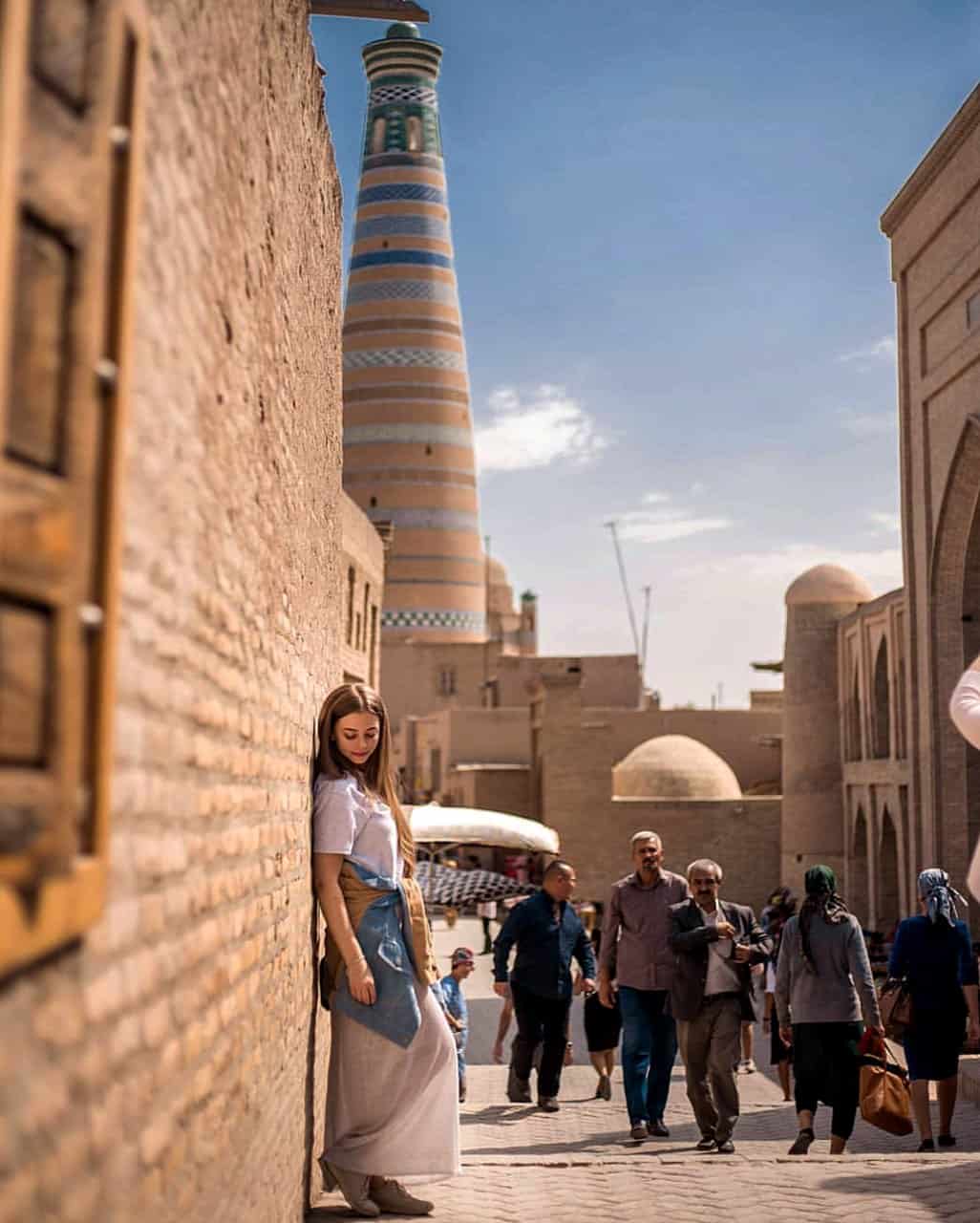
For lunch — Khorezm’s signature dish: shivit oshi, green dill noodles served with a meat sauce and a fermented-milk dressing. In the evening — a walk through Did you know? People still live inside Khiva's museum city Itchan Kala packs more than 50 historic monuments and about 250 old houses inside clay walls 8–10 m high and 5–6 m thick, and families still live and work in its lanes. Read more → and dinner in the old town.
Overnight: Khiva
Day 3. Khiva: a cuisine found nowhere else
In the morning — a market visit, choosing ingredients together with the chef: eggs, herbs, flour, spices, meat and seasonal vegetables.
Cooking class: we make tuxum-barak — thin dough with an egg filling — and learn to make shivit oshi at home. Lunch is what we’ve cooked ourselves.
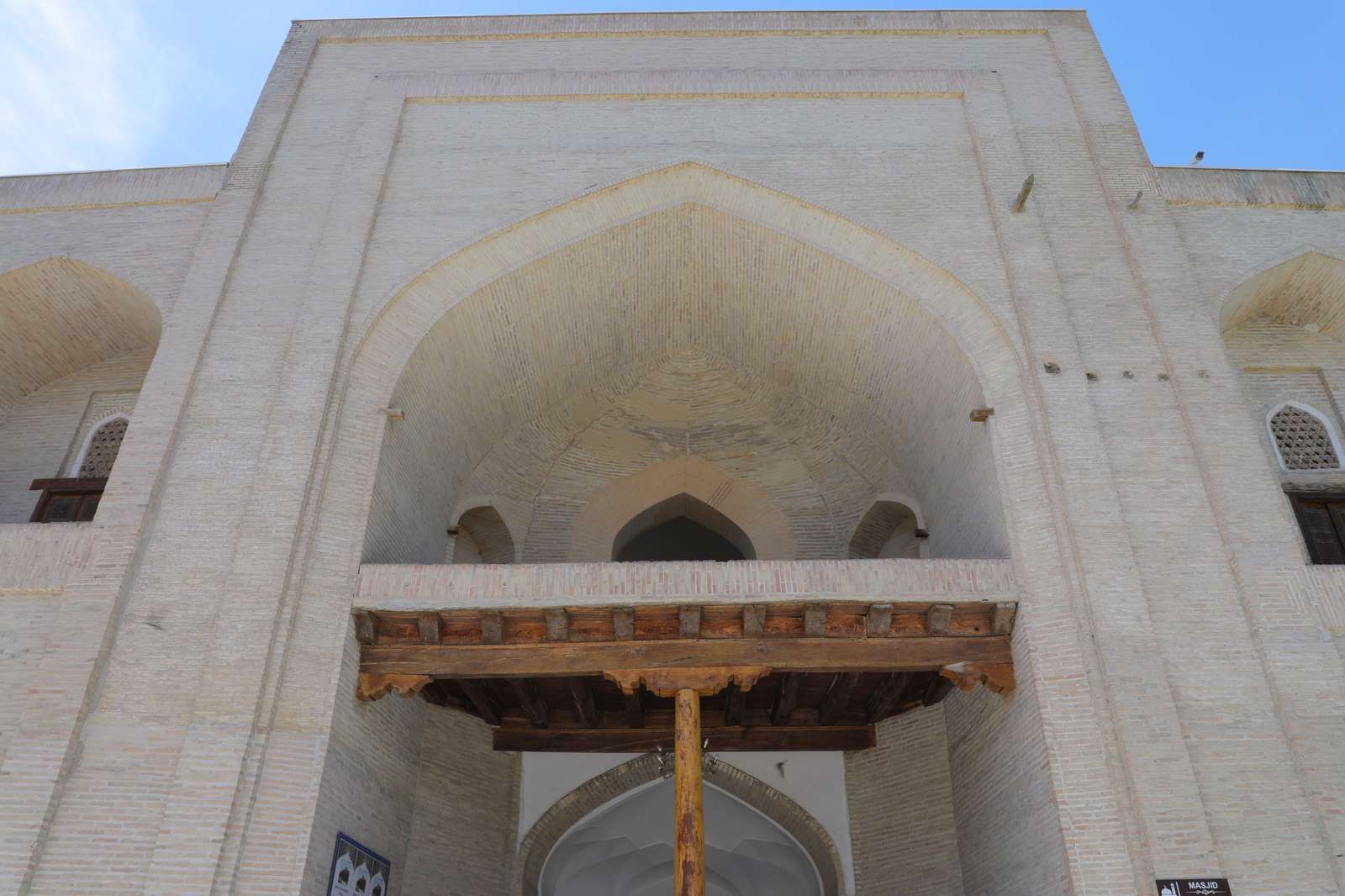
In the afternoon — a walk through Khiva: The old fortress-residence of the khans of Khiva, inside the walls of Itchan Kala., Tash-Khauli, the Khiva's Friday mosque: a single hall without a dome, held up by more than two hundred carved wooden columns of different ages., craft workshops. In the evening — dinner with Khorezm-style chalov plov and local sweets.
Overnight: Khiva
Day 4. Khiva — Bukhara: crossing the Kyzylkum desert
Drive to Bukhara across the Kyzylkum desert. An unhurried day: roadside stops, tea, dried fruit, flatbread, conversation and desert horizon out the window.
Arrival in Bukhara towards evening and check-in. Dinner by Did you know? Bukhara's ponds were once its water supply Pools like Lyabi-Hauz, dug around 1620 and 46 × 36 m, were the city's main source of water. Most were filled in during the 1920s–30s because they spread disease; Lyabi-Hauz survived. Read more →: Bukhara-style dastarkhan appetizers, meat, vegetables, pastries and tea with halva.
Overnight: Bukhara
Day 5. Bukhara: the bazaar, plov and an old cooking tradition
In the morning — the market: spices, rice, legumes, herbs, dried fruit and Bukhara sweets. Together with the chef, we look at how the same dish, plov, changes from city to city.
Cooking class and lunch: bakhsh — the green plov of Bukhara’s Jewish community, made with herbs, rice and meat; served in the traditional style whenever possible.
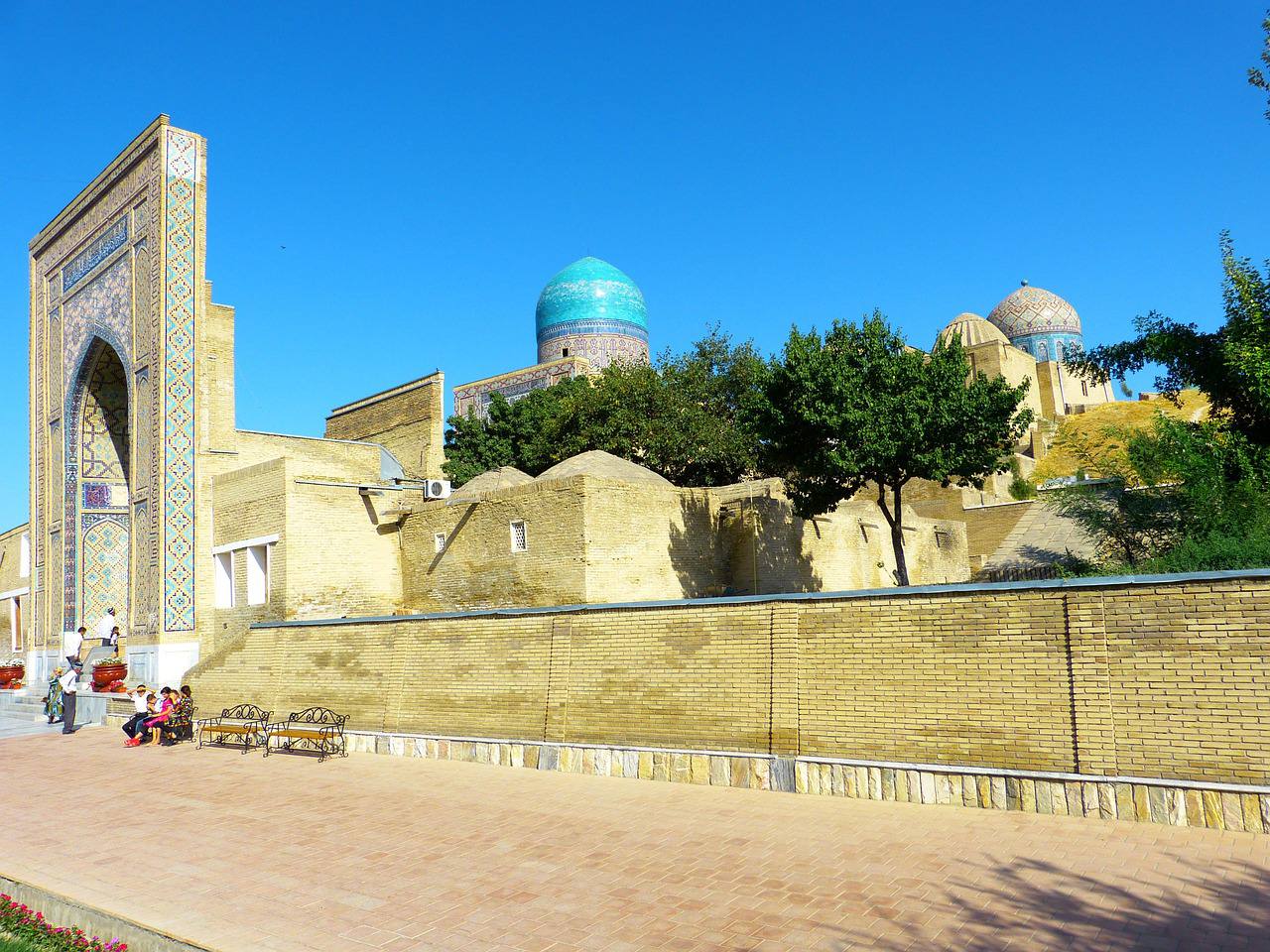
After lunch — a walk through Bukhara: The fortress-residence of the rulers of Bukhara on a high artificial hill: the oldest structure in the city. Read more →, Did you know? Diggers went 13 m down and never found its base The Kalyan Minaret of 1127 rises about 46 m, and an excavation reached 13 m without finding the bottom of its foundations. Genghis Khan reportedly ordered it spared. Read more →, the trading domes. In the evening — dinner at a home or a small local restaurant, with dishes that rarely make it onto a standard tourist menu.
Overnight: Bukhara
Day 6. Bukhara — Samarkand: bread, fire and big cauldrons
High-speed train to Samarkand.
After check-in — an evening introduction to the city and dinner. On the menu — Samarkand-style plov, where the ingredients are layered and cooked without stirring, chargrilled meat, fresh salads and tea.
Overnight: Samarkand
Day 7. Samarkand: flatbread, the bazaar and plov
In the morning — the Siab bazaar. Here we buy the famous Samarkand flatbread, halva, nuts, dried fruit and spices.
Next — a Samarkand plov masterclass: from preparing the rice and zirvak to serving it on a large lyagan platter. Lunch is served family-style, at one table.
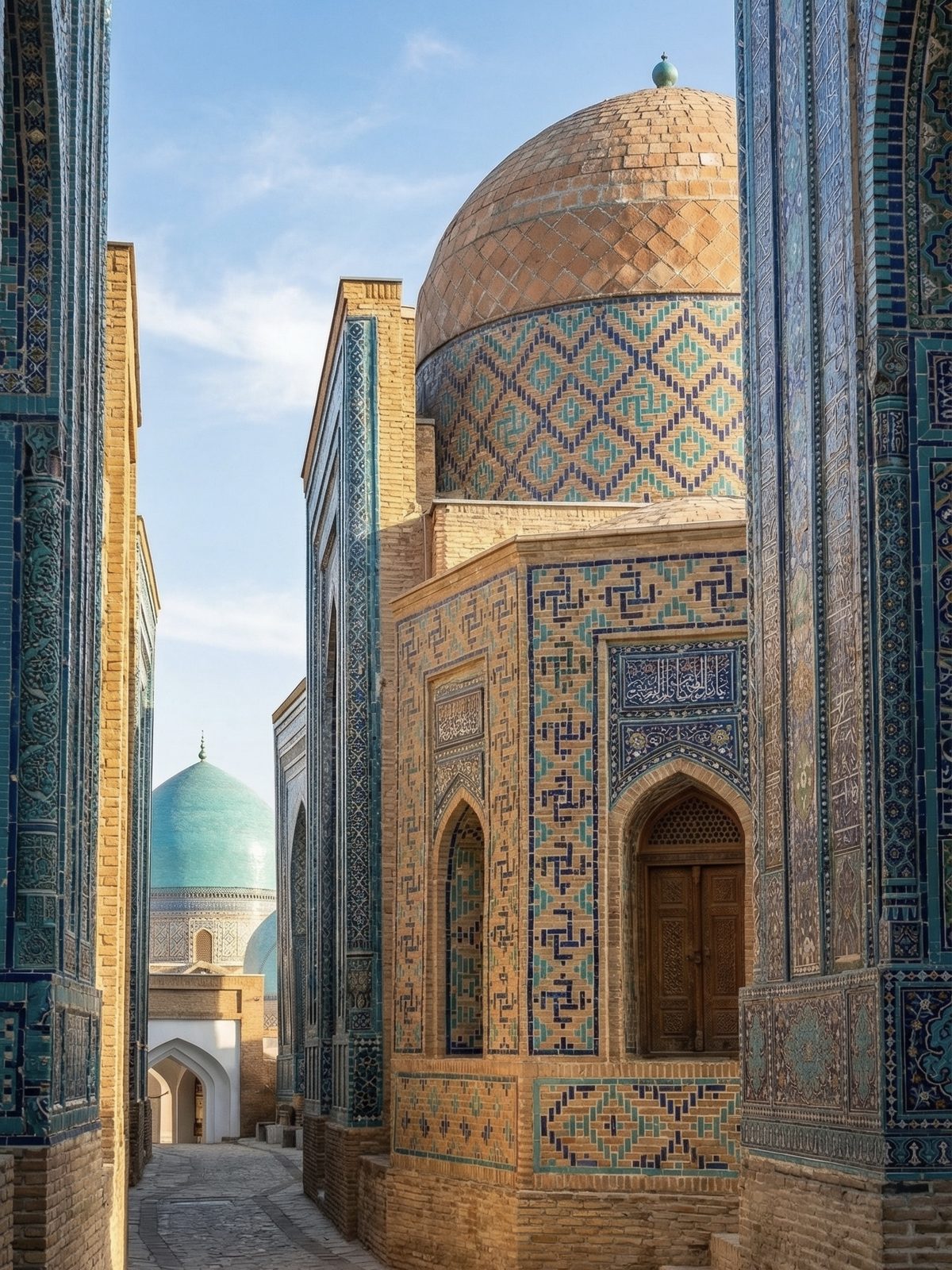
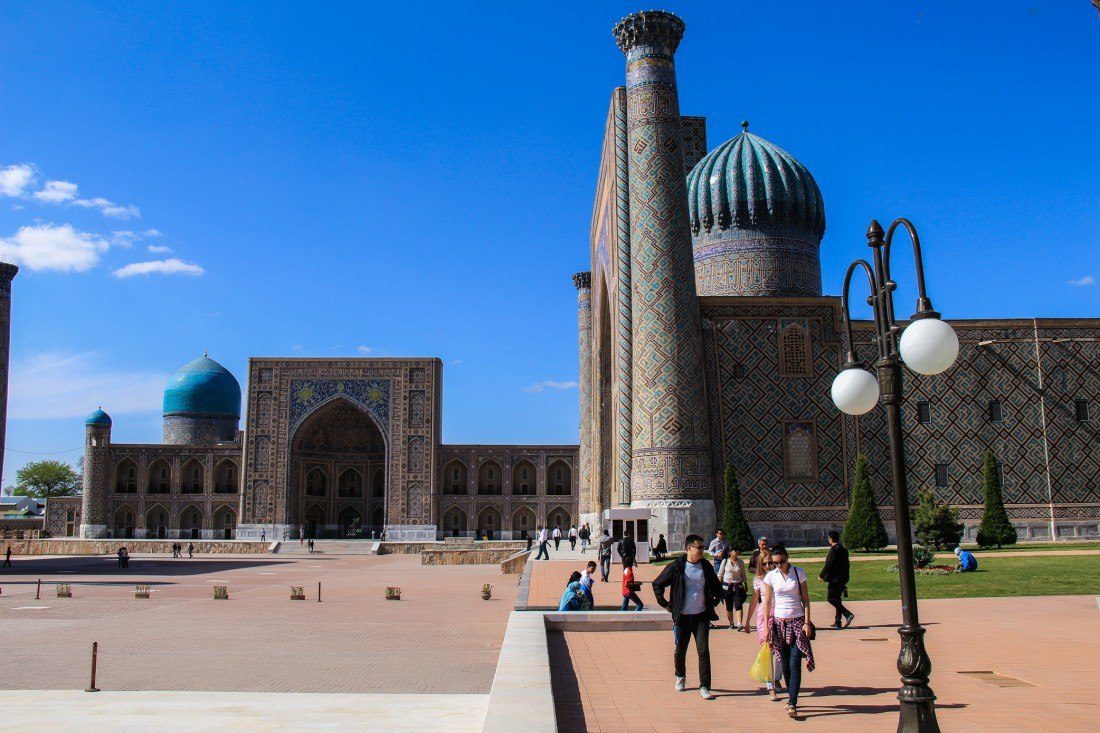
In the afternoon — a walk through Did you know? The Registan's sun-carrying lion went on a banknote The Sher-Dor Madrasah (1619–1636) is named for the big cats with the sun on their backs on its portal. The image appeared on the reverse of Uzbekistan's 200-som note of 1997. Read more →, Did you know? Timur's tombstone went to Persia and came back The dark-green jade slab on Timur's grave in Gur-e-Amir was carried off by Nader Shah in 1740. It broke, and on his advisers' urging he sent it back to Samarkand. Read more → and Did you know? Why Shah-i-Zinda means 'the Living King' The necropolis grew around the shrine of Qutham ibn Abbas, a cousin of the Prophet Muhammad. Legend says he did not die in battle but went down a deep well to a garden of paradise, where he lives on. Read more →. In the evening — a farewell food feast: dishes from every region we’ve tasted on the trip, plus a short tasting of Uzbek sweets.
Overnight: Samarkand
Day 8. Samarkand — Tashkent: departure
Breakfast and a high-speed train to Tashkent. Transfer to the airport and flight home.
Price
Price per person for the whole tour
| Occupancy | Price per person |
|---|---|
| Double / Twin room | $1805 |
| Single room | $2053 |
Private tour: dates on client request, we start on any day that suits you. Single supplement — +$248. The price shown is for a group of 2; for 4+ travellers the per-person price is lower — send your dates and party size and we’ll quote an exact price.
FAQ