Programme and details
Bukhara · 2 Days / 1 Night · Private Tour
Seven Saints of Bukhara
Bukhara – Gijduvan – Shofirkon – Anjirbog – Romitan – Simas – Sukhar – Qasri Orifon – Bukhara
Bahauddin Naqshband, who gave his name to the Naqshbandi Sufi order, is buried about 10 km from Bukhara. The masters who came before him lie in towns and villages around the oasis: Abdulkhaliq Gijduvani, who died in 1179, the weaver Ali Romitani, the potter Sayyid Amir Kulal, who taught the young Bahauddin, and three more. In Uzbekistan their shrines are known together as Yetti Pir, the Seven Pirs, and the circuit is made in order, from Gijduvan to Qasri Orifon. In two days with your own guide and car you visit all seven, with time in each courtyard and a potters’ workshop in Gijduvan on the way.
| Duration | 2 days / 1 night |
| Price | on request |
| Format | Private, or a small group on your dates |
| Where | The Bukhara oasis: Gijduvan, Shofirkon, Vobkent, Romitan and Kogon districts |
| Getting around | By car with driver; Gijduvan, the farthest shrine, is about 45 km from Bukhara |
| Best time | March–May and September–November; the tour runs all year |
Ideal for travellers drawn to Sufi heritage and the history of Islam in Central Asia, and for anyone who has seen the old town of Bukhara and wants the quiet country shrines around it.
Sayyid Amir Kulal — a potter by trade and the teacher of Bahauddin; potters still regard him as their patron.
Bahauddin Naqshband — the last stop: a complex that grew from the 16th century, part of a UNESCO World Heritage property since 2023.
Itinerary
Day by Day
Day 1 · Gijduvan – Shofirkon – Anjirbog — The first three masters and the potters of Gijduvan
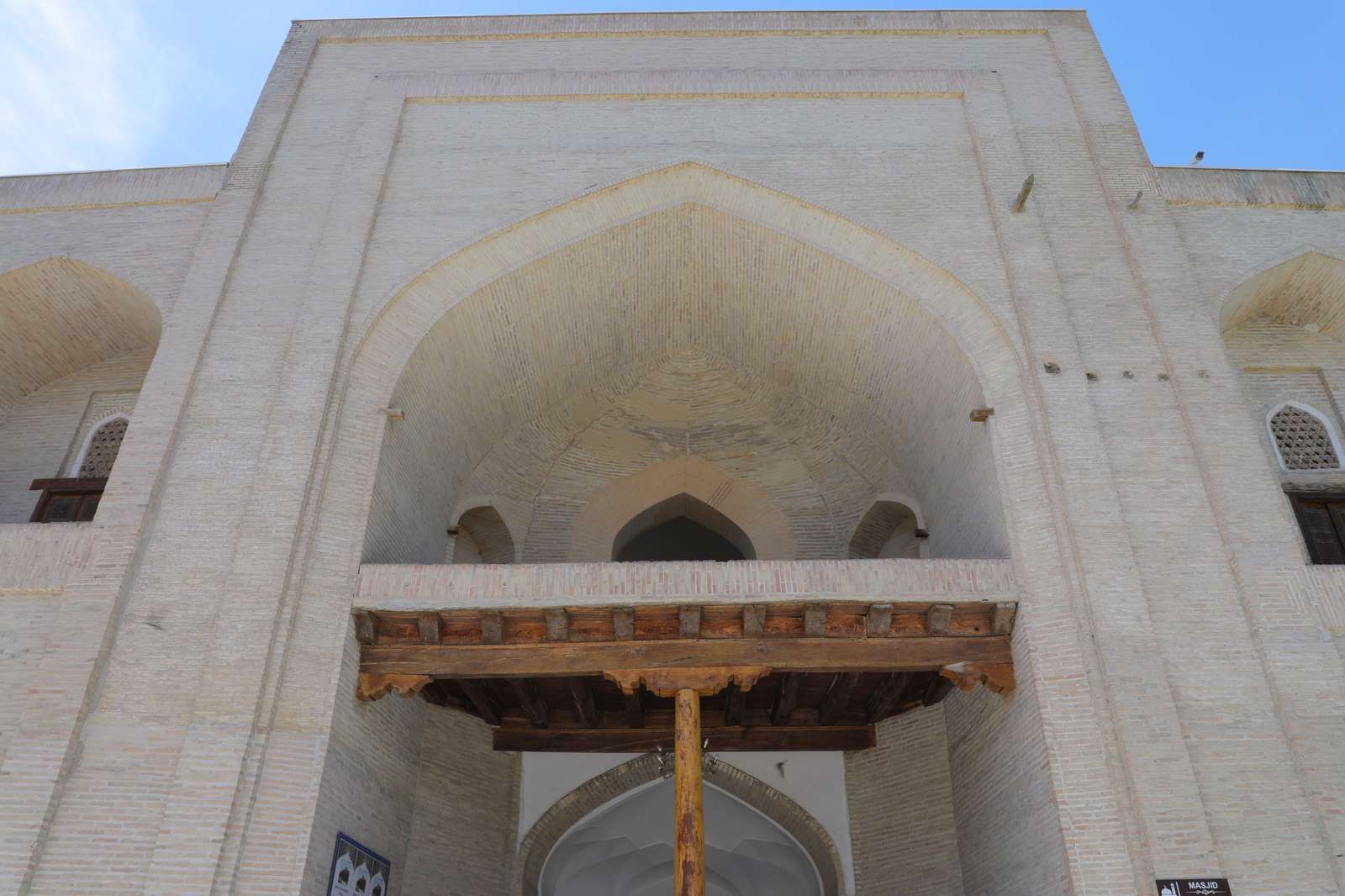
Your guide and driver meet you at your hotel in the morning, and we drive north-east to Gijduvan, about 45 km from Bukhara. The circuit traditionally begins here, with Abdulkhaliq Gijduvani. He was born in Gijduvan, studied with the Sufi master Yusuf Hamadani and died in 1179; the line of the Khwajagan, “the masters”, starts with him. Around his tomb stand a mosque, rebuilt in 2003, and a pool. Facing the shrine is the madrasa Ulugh Beg built in 1433, the third and last of his madrasas after Bukhara and Samarkand, with blue and turquoise glazed brick on its portal.
Gijduvan has its own school of ceramics, known for flower ornament set among geometric patterns. In the town’s best-known family workshop the sixth generation of potters is at work, and their museum holds ceramics from many centres of Central Asia. You see the whole process, from clay to the kiln. Lunch is in Gijduvan, a town known across the region for its fried fish and shashlik.
In the afternoon we drive to Shofirkon district, to Muhammad Arif Revgari. He was born in the village of Revgar in the 12th century, became a disciple of Gijduvani and led the Khwajagan after his teacher’s death. His complex holds the mausoleum, a mosque and rooms for visitors around a garden courtyard.
On the way back we stop in Anjirbog, the home village of Mahmud Anjir Faghnavi. Born near Vobkent, he worked as a carpenter before he became a teacher. His mausoleum stands with a mosque, a pool and a well whose water visitors regard as blessed, in a garden of fig trees: anjir means “fig”. In the evening we drive you back to your hotel.
Good to know: If you like, we stop at the Vobkent minaret, about 40 m tall and built in 1196–1198, on the road between Gijduvan and Bukhara.
Overnight in Bukhara
Day 2 · Romitan – Simas – Sukhar – Qasri Orifon — From Ali Romitani to Bahauddin Naqshband
In the morning we drive to Romitan district, to the memorial complex of Ali Romitani. Born at the end of the 12th century, he was a weaver who kept working at his loom all his life, and he is honoured with the name Azizon, “the venerable”. His teaching passed to his student Muhammad Baba Samasi.
Baba Samasi rests nearby, in the village of Simas. He died in 1354 at the age of 95. Tradition says he foretold the birth of Bahauddin in the village of Qasri Hinduvon. His complex has a mausoleum, a mosque, a well and a garden.
Next comes Sukhar, today Yangi Hayot in Kogon district, the native village of Sayyid Amir Kulal. Kulol means “potter”, and he came from a family of potters. On Baba Samasi’s instruction he took the young Bahauddin as his student and taught him the basics of the Sufi path, the traditions of the Khwajagan and dhikr. He died in 1370 and was buried here. Potters still come to his grave, and after the Gijduvan workshop the day before, the link is easy to see.
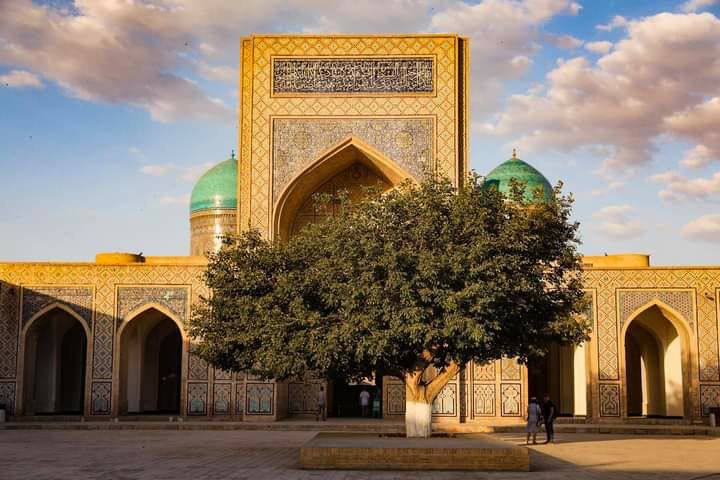
In the afternoon we reach the last of the seven: Bahauddin Naqshband (1318–1389), in Qasri Orifon, about 10 km north-east of Bukhara. The complex grew around his grave over the centuries. The khanqah for Sufi gatherings was built under Abdulaziz Khan in 1544–1545, the small brick minaret in 1885; there are two mosques, a small madrasa and the Dahma-i-Shahon, the burial ground of Bukhara’s rulers, and since 2004 a museum has told the story of the order. Since 2023 the complex has been part of the UNESCO World Heritage property Silk Roads: Zarafshan-Karakum Corridor. From here it is a short drive back to your hotel.
Good to know: On Friday the midday prayer fills the courtyards of Bahauddin Naqshband. If your second day falls on a Friday, we plan the order of the day around it.
Accommodation
Where you stay
| City | Stay |
|---|---|
| Bukhara | A comfortable hotel in Bukhara, 1 night |
We confirm the hotel for your dates before booking. If you already have a hotel in Bukhara, we plan the tour without one.
Price
Price
The price is given on request: it depends on the dates, the hotel, the size of your group and the language of the guide.
Good to know
Conditions
- All seven shrines are places of prayer: cover shoulders and knees, women bring a scarf, and take your shoes off on the carpets.
- Speak quietly, do not walk in front of people at prayer, and photograph the buildings, not the people praying.
- From June to August afternoons in Bukhara reach about 37 °C: in summer we start early and keep the middle of the day for lunch and shade.
- Read before you go: our guides to the shrines of Uzbekistan, what to see around Bukhara and what to wear in Uzbekistan.
- Programme details, times and the hotel are confirmed for your dates.
- Reservations are confirmed with passport copies only.
Cancellation policy
| Cancellation timing | Penalty |
|---|---|
| 21 days before the service | 20% |
| 20–7 days | 50% |
| 6–0 days | 100% |
Transportation
| Vehicle | Group size |
|---|---|
| Chevrolet Cobalt | 2 pax |
| Hyundai Starex | 3–4 pax |
| Toyota Hiace / King Long | 5–8 pax |
| Mercedes Sprinter | 9–14 pax |
Vehicles may differ in make and colour.
🌿 Responsible tourism: we allocate part of our profits to good causes and are preparing for GSTC certification.
Expert opinion
Pluses
- All seven, in order: from Abdulkhaliq Gijduvani in Gijduvan to ,Did you know? A village renamed in honour of a Sufi master Bahauddin Naqshband (1318–1389), who gave his name to one of the largest Sufi orders, was born and buried near Bukhara in Qasr-i Hinduvan. The village was later renamed Qasr-i Arifan in his honour; the tomb over his grave dates from 1544. Read more → the way the circuit is traditionally made.
- Two unhurried days: time to sit in each courtyard and garden instead of one long day in the car.
- The potters’ thread: a family ceramics workshop in Gijduvan and the shrine of Amir Kulal, the potter who taught Bahauddin.
Minuses
- Time on the road: the shrines are spread over five districts of the oasis, so there are drives between every stop.
- Hot in summer: in July afternoons in Bukhara average about 37 °C.
- Meals mostly extra: only breakfast is included; lunches, dinners and drinks are paid on site.
AroundCA numbers
How we counted
By the AroundCA programme: we count only what is written in the day-by-day programme of this tour. If the programme gives no figure, we show nothing.
- Hotel changes
- none — one hotel
- Walking
- Light
Walking: Easy: courtyards and gardens of the shrines, a short walk from the car each time.
Best time
Mar–May, Sep–Nov
March–May and September–November: warm, mild days for time in courtyards and gardens.
Cool, fewer people: Jan–Feb, Dec
Better to avoid
Jul–Aug
July–August: afternoons in Bukhara average about 37 °C.
A typical day
On day 2 you drive to Romitan district for Ali Romitani, then to the village of Simas for Baba Samasi and on to Sukhar, the village of the potter Amir Kulal. In the afternoon you reach the Bahauddin Naqshband complex, 10 km from Bukhara, and are back at your hotel soon after.
What the price includes
What is included
- A private car with driver on both days
- A guide speaking your language on both days
- Accommodation in Bukhara: 1 night with breakfast
- A visit to a family ceramics workshop in Gijduvan
- Entrance tickets on the programme
Not included
- Lunches, dinners and drinks
- Photo and video fees at the sites
- Ceramics you buy in the workshop
- International flights
- Tips and personal expenses
Extra cost on site
- Lunches, dinners and drinks
- Photo and video fees at the sites
- Ceramics you buy in the workshop
- Tips and personal expenses
Good for
- Travellers drawn to Sufi heritage and the history of Islam in Central Asia
- Anyone who has seen the old town of Bukhara and wants the country shrines around it
- Travellers who prefer quiet courtyards and gardens to crowded squares
Maybe not for you if
- Travellers with only one day in Bukhara: the old town comes first
- Anyone who does not enjoy several hours a day in the car between villages
- Summer trips in the heat: from June to August afternoons in Bukhara reach about 37 °C
Questions about this tour
How much does the tour cost?
The price is given on request: it depends on the dates, the hotel, the size of your group and the language of the guide.
Can we visit all seven shrines in one day?
Yes, as a long day: we leave early, spend less time at each shrine and leave out the ceramics workshop. We recommend two days, so you can sit in each courtyard without watching the clock.
Is the tour suitable for travellers who are not Muslim?
Yes. The shrines welcome respectful visitors of any faith, and the tour is a journey into the history and heritage of Bukhara. Your guide explains the customs at each place.
What should I wear?
Shoulders and knees covered, for men and women alike; women bring a scarf for the mausoleums and mosques. Shoes come off on the carpets, so slip-on shoes are handy.
Can we combine it with a tour of Bukhara?
Yes. The tour starts and ends at your hotel in Bukhara, so it fits before or after a day in the old town. Tell us your dates and we plan the days together.
When is the best time to go?
March–May and September–November. From June to August afternoons in Bukhara reach about 37 °C, so in summer we start early. On a Friday the midday prayer fills the courtyard of Bahauddin Naqshband, and we plan the day around it.
Didn’t find your answer? Ask about this tour →
Make it your trip
Tick what you’d like to add — it goes into your request, and the manager confirms the final price.
Add a few days
Arrival, departure, transfers
© Photos
Gijduvan ceramic bowls in green, yellow and brown glazes — Ekaterina Kvelidze / Wikimedia Commons · CC BY-SA 4.0