Programme and details
Samarkand & Bukhara · 5 Days / 4 Nights · Private Crafts Tour
Crafts of Bukhara and Samarkand
Samarkand – Konigil – Samarkand – Bukhara – Gijduvan – Bukhara
In Konigil a water wheel on the Samarkand's main bazaar, right next to Bibi-Khanym: Samarkand bread, dried fruit, nuts and halva. Read more → turns wooden poles that beat mulberry bark into pulp, and a few minutes later you lift a sheet of paper out of the vat yourself. This tour takes the things that fill the bazaars of Samarkand and Bukhara back to the people who make them: paper and woodcarving in Samarkand, silk carpets knotted by hand, the blacksmiths, gold thread and suzani of Bukhara, and the potters of Gijduvan. It is the pair to our Fergana Valley crafts tour: there, ceramics and silk; here, paper, metal and embroidery.
| Duration | 5 days / 4 nights |
| Price | on request |
| Format | Private, or a small group on your dates |
| Where | Samarkand, Konigil, Bukhara and Gijduvan |
| Getting around | A car with driver in Samarkand and Bukhara; the Uzbekistan's high-speed train: Tashkent to Samarkand in 2 hours 30 minutes, Tashkent to Bukhara in about 4 hours. Tickets are tied to your passport. Read more → high-speed train from Samarkand to Bukhara |
| Best time | April–May and September–October |
Ideal for travellers who want to see how the things in the bazaars are made, for lovers of paper and textiles, and for families with children who like to make things with their hands.
The Eternal City — 11 hectares of workshops in Samarkand: woodcarvers, potters, jewellers, carpet weavers and paper makers.
Gijduvan — a potters’ town about 45 km from Bukhara, where a family workshop is in its sixth generation.
Itinerary
Day by Day
Day 1 · Samarkand — The Eternal City and its workshops
Our driver meets you at Samarkand station or airport and takes you to your hotel. From Tashkent the Afrosiyob high-speed train takes about 2 h 30 min, and we book the ticket on request.
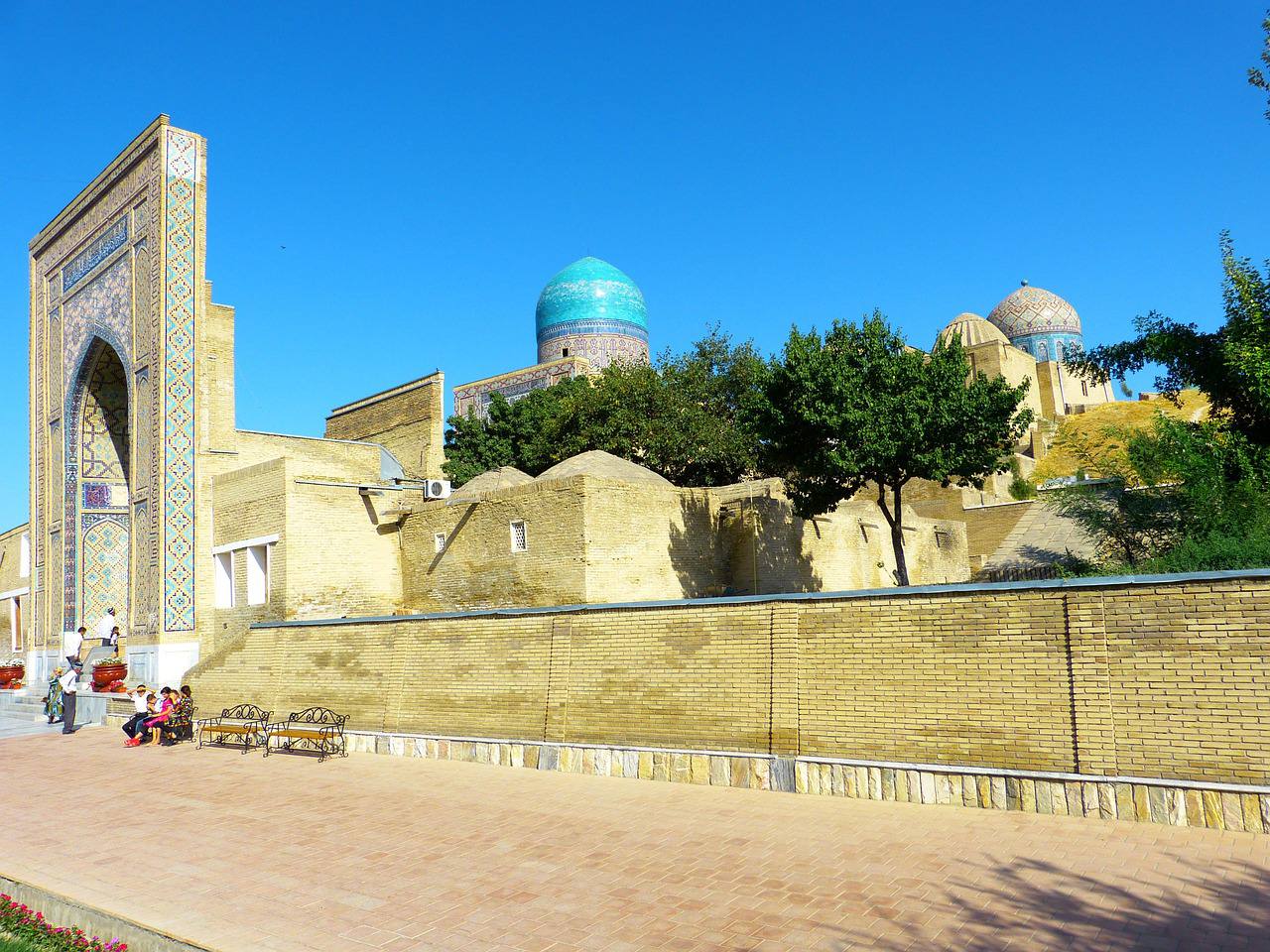
In the afternoon your guide takes you to the Eternal City, an 11-hectare quarter of the A network of caravan routes between China and the Mediterranean. Samarkand, Bukhara and Khiva grew rich as stops along it. Samarkand complex built as an old town of narrow streets. More than 50 workshops work here: woodcarvers, potters, jewellers, carpet weavers and paper makers, and you watch them at work. Look for the woodcarvers, who cut doors, columns and boxes by hand in the manner of the Samarkand school.
Good to know: Master classes in the Eternal City are booked in advance. Tell us which craft you would like to try, and we arrange it for your dates.
Overnight in Samarkand
Day 2 · Samarkand – Konigil — Paper from mulberry bark, silk knotted by hand
Konigil is about 13 km from Samarkand, on the Siab stream. At the Meros mill, founded in 1996 by the brothers Zarif and Islam Mukhtarov, Did you know? Legend says Chinese prisoners taught Samarkand paper A legend recorded in the 11th century says Chinese prisoners taken at the Battle of Talas in 751 taught Samarkand to make paper. In fact paper was used here earlier, and the craft most likely came gradually along the Silk Road. Read more → is made the way it was before the craft died out in the 19th century. Young mulberry bark is soaked, scraped and boiled, then beaten into pulp by wooden poles that a water wheel lifts and drops. You follow the whole cycle and lift a sheet out of the vat yourself. The dried sheets are polished with a stone until they shine; the mill makes 100–120 of them a day.
Lunch in the A teahouse: green tea, plov and conversation on wide wooden beds called topchan. by the stream, with Samarkand ,Rice cooked in a kazan with carrots, onions and meat: the dish of every Uzbek celebration. Each region cooks it its own way. and time in the mill shop for notebooks, postcards and miniatures painted on the paper. The story of the paper is in our article on Samarkand paper at Konigil.
In the afternoon, back in town, a workshop where silk carpets are knotted by hand. The silk is dyed with plants such as pomegranate peel, walnut shells and onion skins, and a large carpet can keep a weaver busy for a year or more.
Good to know: Meros is a working mill, so we agree the time of your visit and the paper-making session with the masters in advance. Ask before you film them.
Overnight in Samarkand
Day 3 · Samarkand – Bukhara — The Afrosiyob, then the trading domes
A free morning: Siab Bazaar is the place for Did you know? Legend: Samarkand bread can't be baked anywhere else Legend says a Bukhara ruler brought Samarkand's best baker to his court with his oven, flour and water, yet the bread came out different. The missing ingredient, the baker said, was the air of Samarkand. The round loaves keep for a long time. Read more → and halva to take with you. Then to the station for the Afrosiyob to Bukhara, under two hours. Bukhara station is in Kagan, about 12 km from the old town, and our driver meets you there.
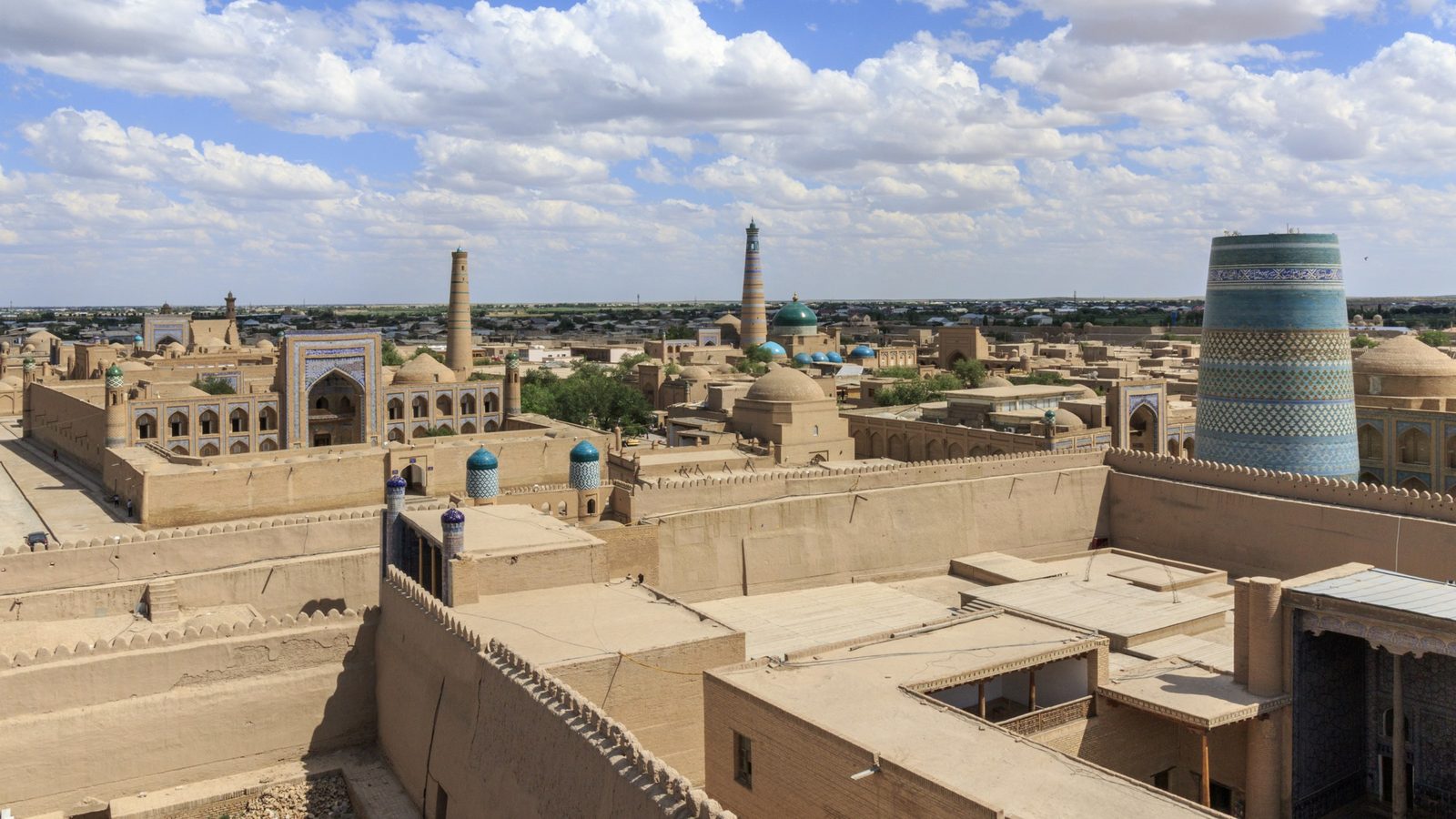
In the afternoon, the Did you know? Under Bukhara's domes merchants changed money and gold Four 16th-century trading domes still stand over old crossroads. Toki Sarrafon was the money changers' dome, where merchants from India and China swapped coins; Toki Zargaron held jewellers' workshops, Toki Telpak Furushon sold caps. Read more → with your guide. Four covered bazaars of the 16th century still stand over the old merchant crossroads: Toki Sarrafon of the money changers, Toki Zargaron of the jewellers, Toki Telpak Furushon, where caps were sold, and Tim Abdullakhan, the hall of silk and carpets. Today they sell caps, knives, jewellery, carpets and souvenirs, and next to Telpak Furushon a blacksmith forges knives in front of you. How the domes work is in our guide to the bazaars of Uzbekistan.
In the evening, ,Did you know? Bukhara's ponds were once its water supply Pools like Lyabi-Hauz, dug around 1620 and 46 × 36 m, were the city's main source of water. Most were filled in during the 1920s–30s because they spread disease; Lyabi-Hauz survived. Read more → a few steps from the domes, where Bukhara spends its evenings by the pond: see Lyabi-Hauz and Did you know? Legend: four towers for four world religions? Chor Minor, a gatehouse of 1807, has four towers, each decorated differently. Guides say they stand for four world religions and look for a cross, a fish and a prayer wheel in the decor; others say four dynasties. All are interpretations. Read more →.
Overnight in Bukhara
Day 4 · Bukhara — Stork scissors, gold thread and suzani
In the morning, the blacksmiths’ museum of the Kamalov family, smiths in Bukhara for six generations. Here the Bukhara scissors are forged in the shape of a stork: open them, and the beak becomes the two blades. The long curved beak was made for trimming raised gold embroidery, which ordinary scissors cannot do.
Gold embroidery is the next thread. Under the emirs it was a court art: robes of silk velvet were embroidered with gold thread in the court workshops, and almost everything went to the court. At ,Did you know? Legend: the emir's palace site was chosen with meat Legend says that when Emir Nasrullah wanted a summer palace in the mid-19th century, sheep carcasses were hung in several places around Bukhara, and the spot where the meat spoiled last was chosen. Sitorai Mohi-Hosa there today dates from 1912–1918. Read more → the summer palace 4 km north of the old town and a museum since 1927, you see gold-embroidered robes next to Bukhara suzani. A suzani is the large embroidered cloth a bride prepared for her dowry, and your guide shows you how to read the back of one before you buy.
The afternoon is yours for the workshops of the old town. On request we arrange a session with a Bukhara miniature painter or a visit to a gold-embroidery workshop, and for the evening, dinner with a local family.
Overnight in Bukhara
Day 5 · Bukhara – Gijduvan — The potters of Gijduvan
Gijduvan is about 45 km north-east of Bukhara, a working town with its own school of ceramics: flower ornament combined with geometric patterns, with green and blue prevailing. In the town’s best-known family workshop the sixth generation of potters is at work, and their museum holds ceramics from many centres of Central Asia. You see the whole process, from the clay to the kiln, and then sit at the wheel or paint a plate with a master, subject to the master’s schedule.
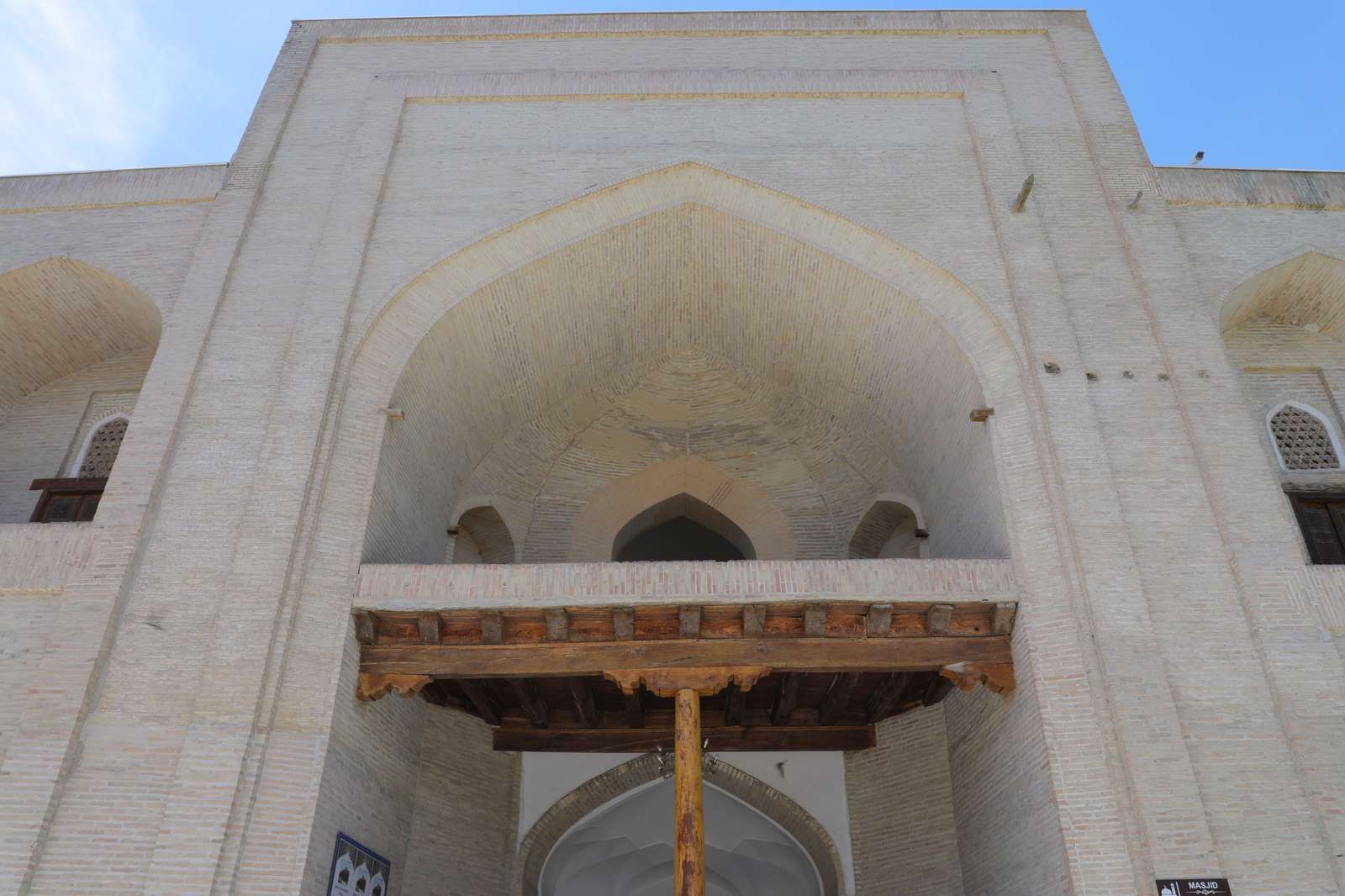
In Gijduvan also stands the small An Islamic college: student cells and classrooms around a courtyard behind a grand portal. In the old towns many now house museums and craft workshops. that Did you know? Ulugh Beg measured the year to within 25 seconds Working at his Samarkand observatory, Ulugh Beg put the tropical year at 365 days 5 h 49 min 15 s, about 25 seconds too long, closer than Copernicus a century later. Read more → built in 1433, the third and last of his madrasahs after Samarkand and Bukhara. Lunch is in town, known across the region for its fried fish and its shashlik. More on the town is in our article on day trips around Bukhara.
In the afternoon, back to Bukhara and a transfer to the station or the airport, or to your hotel if you stay on.
Good to know: Ask the workshop to wrap your plates well and carry them in your hand luggage.
Accommodation
Where you stay
| City | Stay |
|---|---|
| Samarkand | A hotel in Samarkand, 2 nights |
| Bukhara | A hotel in Bukhara, 2 nights |
We confirm the hotels for your dates before booking. In Bukhara we choose a hotel within walking distance of the trading domes.
Price
Price
The price is given on request: it depends on the dates, the hotels, the size of your group, the master classes you choose and the language of the guide.
Good to know
Conditions
- A session with a master depends on the master’s schedule; we agree it for your dates in advance.
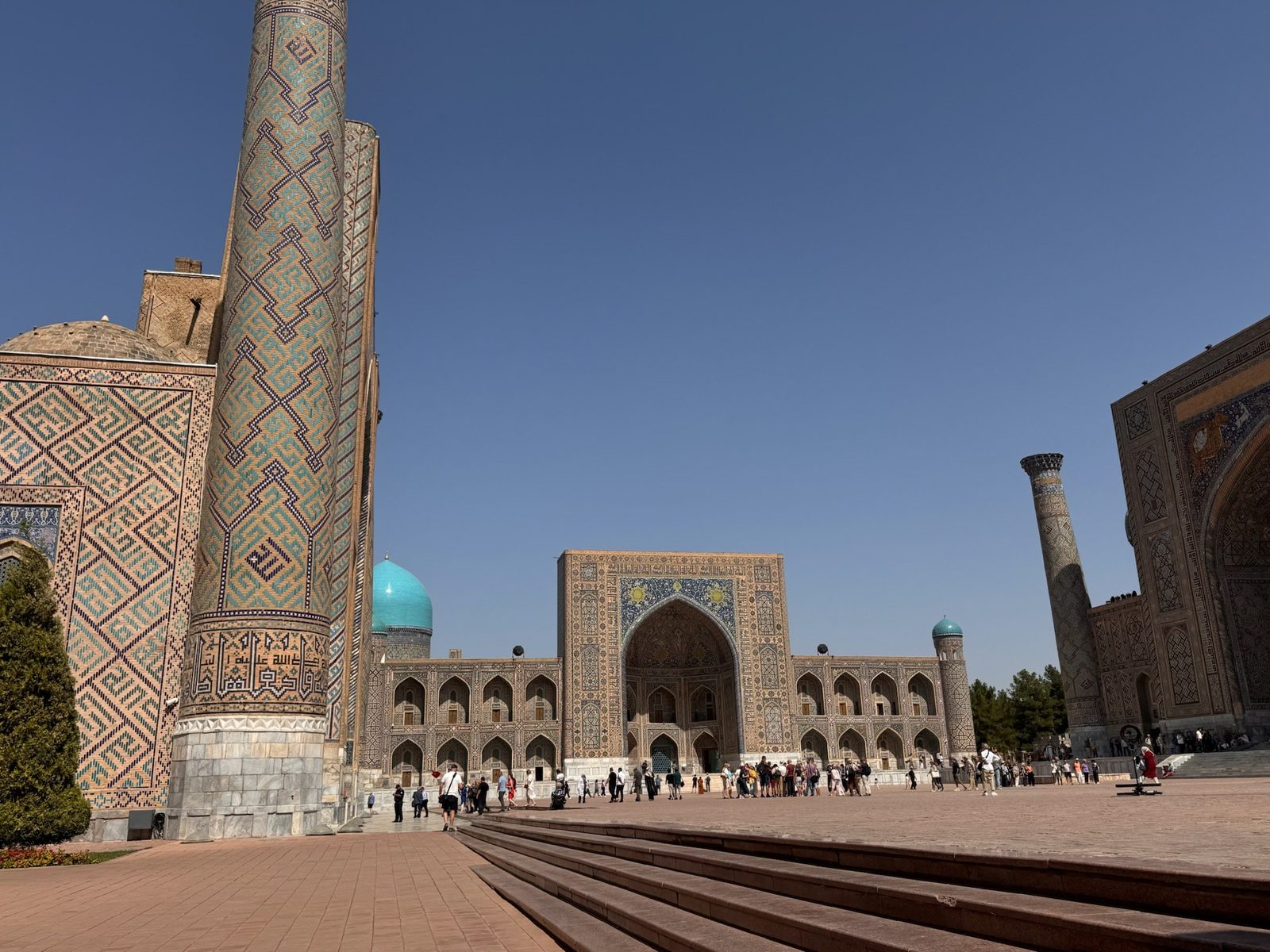
- This tour is about crafts. If it is your first time in Samarkand and Bukhara, add a day in each city for the Registan and Poi Kalyan, and we fit it in.
- Pieces 50 or more years old generally may not leave the country: keep receipts for carpets and suzani, and see what to buy in Uzbekistan.
- Train tickets need the full name and passport number of every traveller.
- Reservations are confirmed with passport copies only.
Cancellation policy
| Cancellation timing | Penalty |
|---|---|
| 21 days before the service | 20% |
| 20–7 days | 50% |
| 6–0 days | 100% |
Transportation
| Vehicle | Group size |
|---|---|
| Chevrolet Cobalt | 2 pax |
| Hyundai Starex | 3–4 pax |
| Toyota Hiace / King Long | 5–8 pax |
| Mercedes Sprinter | 9–14 pax |
Vehicles may differ in make and colour.
🌿 Responsible tourism: we allocate part of our profits to good causes and are preparing for GSTC certification.
Expert opinion
Pluses
- Hands-on crafts: your own sheet of paper at the A village near Samarkand where paper is made by hand from mulberry bark, the old way, at a working mill on the stream. mill and a session with a potter in Gijduvan.
- Masters, not stalls: woodcarvers in the Eternal City, silk carpet weavers, the Kamalov blacksmiths and the Gijduvan potters at work.
- Short distances: under two hours by train between the cities; Konigil is 13 km and Gijduvan about 45 km out of town.
Minuses
- Meals mostly extra: breakfasts and lunch in Gijduvan are included; other meals are paid on site.
- Depends on the masters: sessions with masters are subject to their schedules and agreed for your dates in advance.
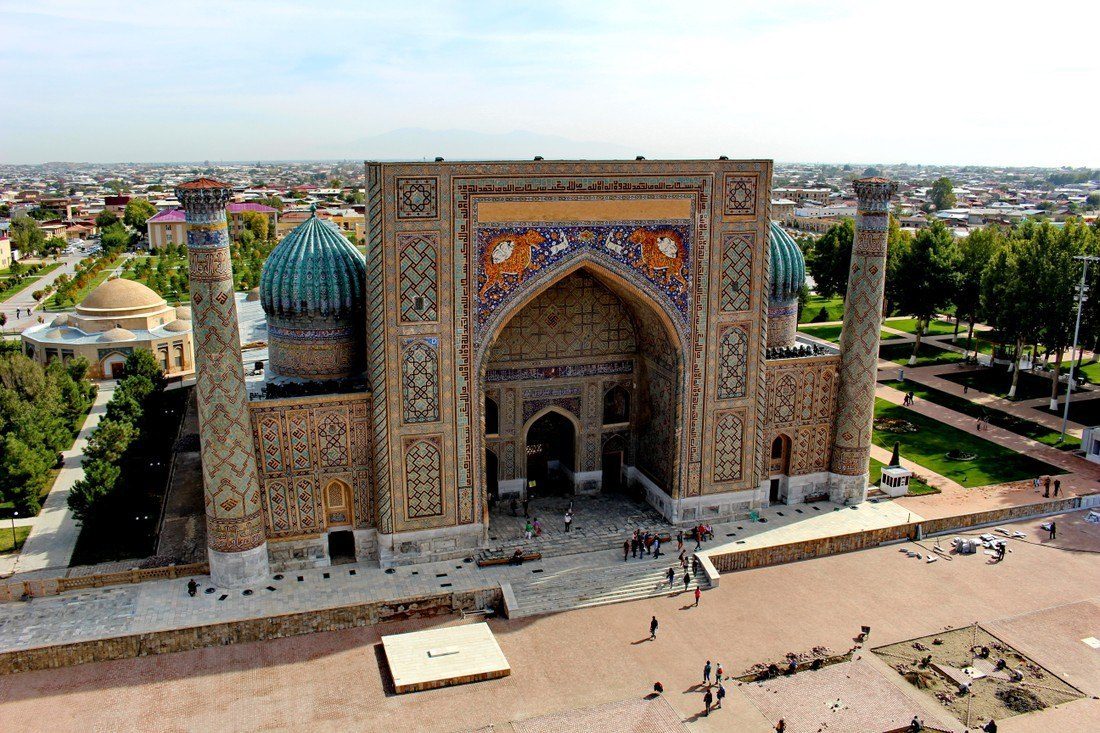
- Not a sightseeing tour: the Did you know? The Registan's sun-carrying lion went on a banknote The Sher-Dor Madrasah (1619–1636) is named for the big cats with the sun on their backs on its portal. The image appeared on the reverse of Uzbekistan's 200-som note of 1997. Read more → and Did you know? Legend: the minaret's foundation was laid with camel milk Legend says master Bako laid the foundations of the Kalyan minaret with ganch plaster mixed with camel milk, then vanished for two years to let them harden, and only then built the tower. Locals still show a grave they say is his. Read more → are not in the programme unless you add a day.
AroundCA numbers
How we counted
By the AroundCA programme: we count only what is written in the day-by-day programme of this tour. If the programme gives no figure, we show nothing.
- Hotel changes
- 1
- Longest transfer
- 2 h · by train
- On the road in total
- 6 h
- Walking
- Light
Walking: Easy: workshops, the trading domes and Lyabi-Hauz, short walks in Bukhara’s old town.
Best time
Apr–May, Sep–Oct
April–May and September–October: afternoons of about 23–31 °C in Bukhara, before and after the summer heat.
Better to avoid
Jul–Aug
July and August: afternoons in Bukhara average 36–37 °C, hard for walking between the domes.
A typical day
On day 2 you drive 13 km to Konigil, watch the water wheel beat mulberry bark into pulp at the Meros mill and lift your own sheet of paper out of the vat. After lunch in the teahouse by the stream, back in Samarkand, you visit a workshop where silk carpets are knotted by hand.
What the price includes
What is included
- A private car with driver on all five days, including Konigil, Gijduvan and the arrival and departure transfers
- The Afrosiyob train ticket Samarkand – Bukhara
- Accommodation: 4 nights with breakfast, 2 in Samarkand and 2 in Bukhara
- A guide speaking your language on all five days
- Entrance tickets on the programme
- A paper-making session at the Meros mill in Konigil
- A ceramics session with a master in Gijduvan (subject to availability) and lunch in Gijduvan
Not included
- Other lunches, dinners and drinks
- Purchases in workshops, the mill shop and bazaars
- Master classes outside the programme: the Eternal City, miniature painting, gold embroidery (on request)
- The train or flight from Tashkent to Samarkand (on request)
- Photo and video fees at the sites
- International flights and visa fees (if applicable)
- Tips and personal expenses
Extra cost on site
- Other lunches, dinners and drinks
- Purchases in workshops, the mill shop and bazaars
- Master classes outside the programme
- Photo and video fees at the sites
Good for
- Travellers who want to see how carpets, suzani, knives and ceramics are made before they buy them
- Lovers of paper, textiles and embroidery, and anyone who wants to make something with their own hands
- Those who have done the Fergana Valley crafts tour and want the crafts of the two old cities
Maybe not for you if
- First-time visitors who want the big monuments: the Registan and Poi Kalyan are not in this programme (we can add a day in each city)
- Anyone who needs lunches and dinners in the price: apart from breakfasts and lunch in Gijduvan, meals are paid on site
Questions about this tour
How much does the tour cost?
The price is given on request: it depends on the dates, the hotels, the size of your group, the master classes you choose and the language of the guide.
How do we get to Samarkand?
The tour starts in Samarkand: our driver meets you at the station or the airport. From Tashkent the Afrosiyob high-speed train takes about 2 h 30 min, and we book the ticket on request.
Can I really make something myself?
Yes: at the Meros mill in Konigil you lift your own sheet of paper out of the vat, and in Gijduvan we arrange a session at the wheel or painting a plate with a master. Sessions with masters depend on their schedules, so we agree them for your dates in advance.
What is included?
Everything that is and isn’t included, and what you pay on site, is in one list: What the price includes
What is paid on site?
Other lunches, dinners and drinks, purchases in workshops and bazaars, master classes outside the programme, the train or flight to Samarkand, photo and video fees, tips and personal expenses.
Can I combine it with the Fergana Valley crafts tour?
Yes. The two tours are a pair: the Fergana Valley gives you Rishtan ceramics and Margilan silk, this one paper, metal and embroidery. The Fergana tour starts and ends in Tashkent, so we join them by train.
Didn’t find your answer? Ask about this tour →
Make it your trip
Tick what you’d like to add — it goes into your request, and the manager confirms the final price.