
Plov in Uzbekistan: how it differs by city, where to eat it and where to learn to cook it
Places in this article: Samarkand · Bukhara · Khiva · Tashkent
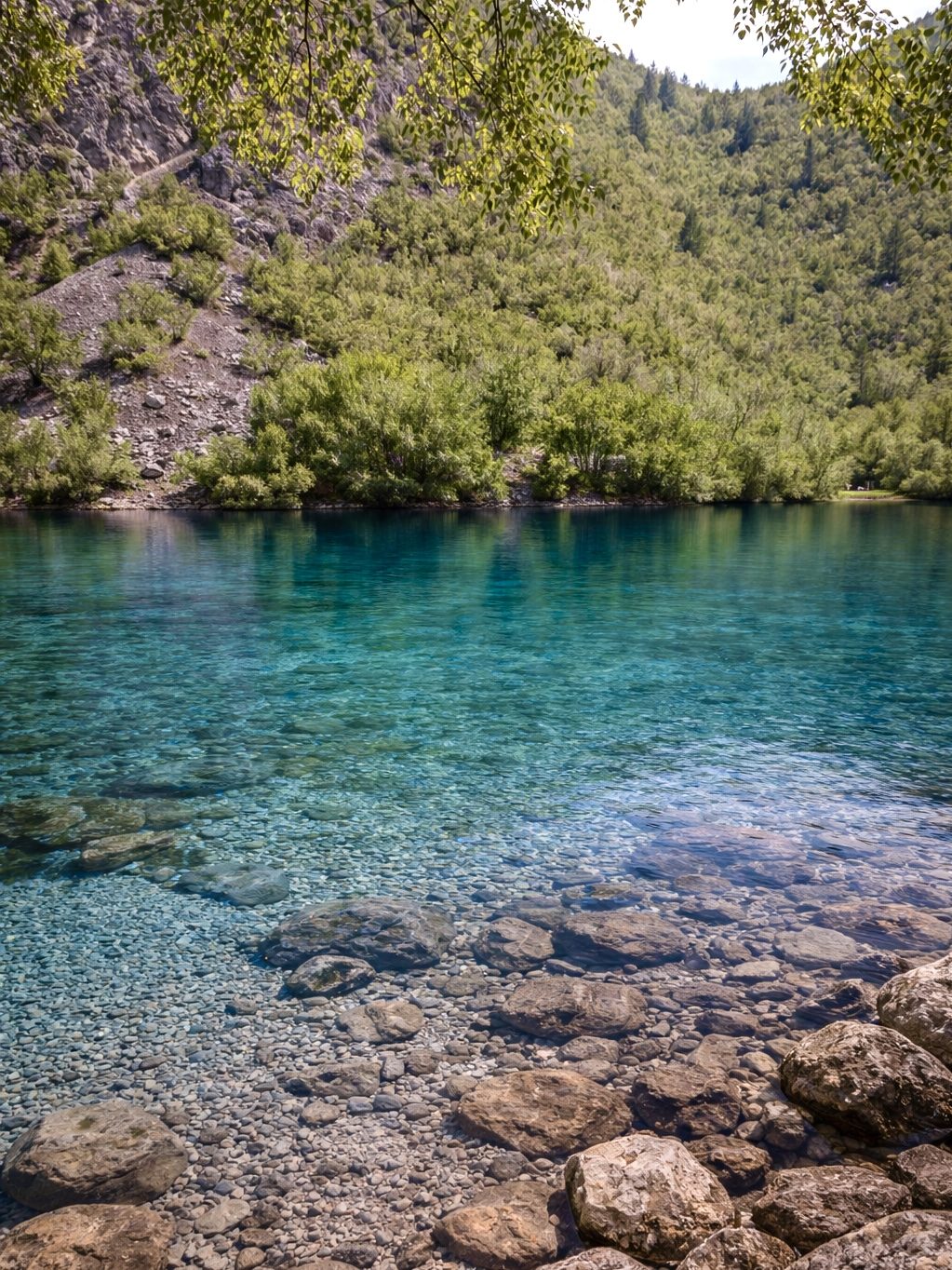
On 14 December 2025, cooks at A new tourist complex on the shore of Lake Govuk, a short drive from Ichan-Kala, opened in May 2025: 17 hotels and guest houses, a 3,000-seat amphitheatre, restaurants, a bazaar under domes and a canal with gondolas. Read more → filled a single cauldron with 2.5 tonnes of beef, 3 tonnes of carrots, 2.5 tonnes of rice and 750 litres of cottonseed oil. The result was 9 tonnes of Rice cooked in a kazan with carrots, onions and meat: the dish of every Uzbek celebration. Each region cooks it its own way.. The plov you will eat in Uzbekistan comes in smaller pots, but the method is the same, and so is the order in which everything goes in.
We live in Tashkent and eat plov every week. Here is how it changes from city to city, when and where to eat it, and where you can cook it yourself in Samarkand, Bukhara or Tashkent.
Why plov matters here
In 2016 UNESCO added "Palov culture and tradition" of Uzbekistan to its list of the intangible cultural heritage of humanity. Plov is everyday food, but it is also the dish of weddings, New Year, help for a family in need and the remembrance of the dead. One custom sums it up: a guest leaves the house only after plov has been offered.
A master plov cook is called an oshpaz, and the skill passes from master to apprentice. The big plov for a wedding or a neighbourhood is usually cooked by men; at home, women cook it for the family.
The most ceremonial version is nahor oshi, the morning plov of a wedding. The evening before, men gather to chop carrots together. Guests arrive at dawn, between 6 and 9 a.m., and each large platter, a lagan, is shared by two people. By the time hotel breakfasts open, the wedding plov has been eaten.
A dish for lunch, not for dinner
For everyday plov, we go at lunchtime. Plov centres light the fires under their kazans in the morning, and the busiest hours are around midday. Come between late morning and early afternoon: all the cauldrons are open and the choice is widest. Later in the day some kazans are already empty, and the plov that is left has been waiting a long time.
So plan plov for lunch and keep dinner for kebabs, soups or a restaurant. Your guide will know which place nearby is cooking that day.
How plov is cooked
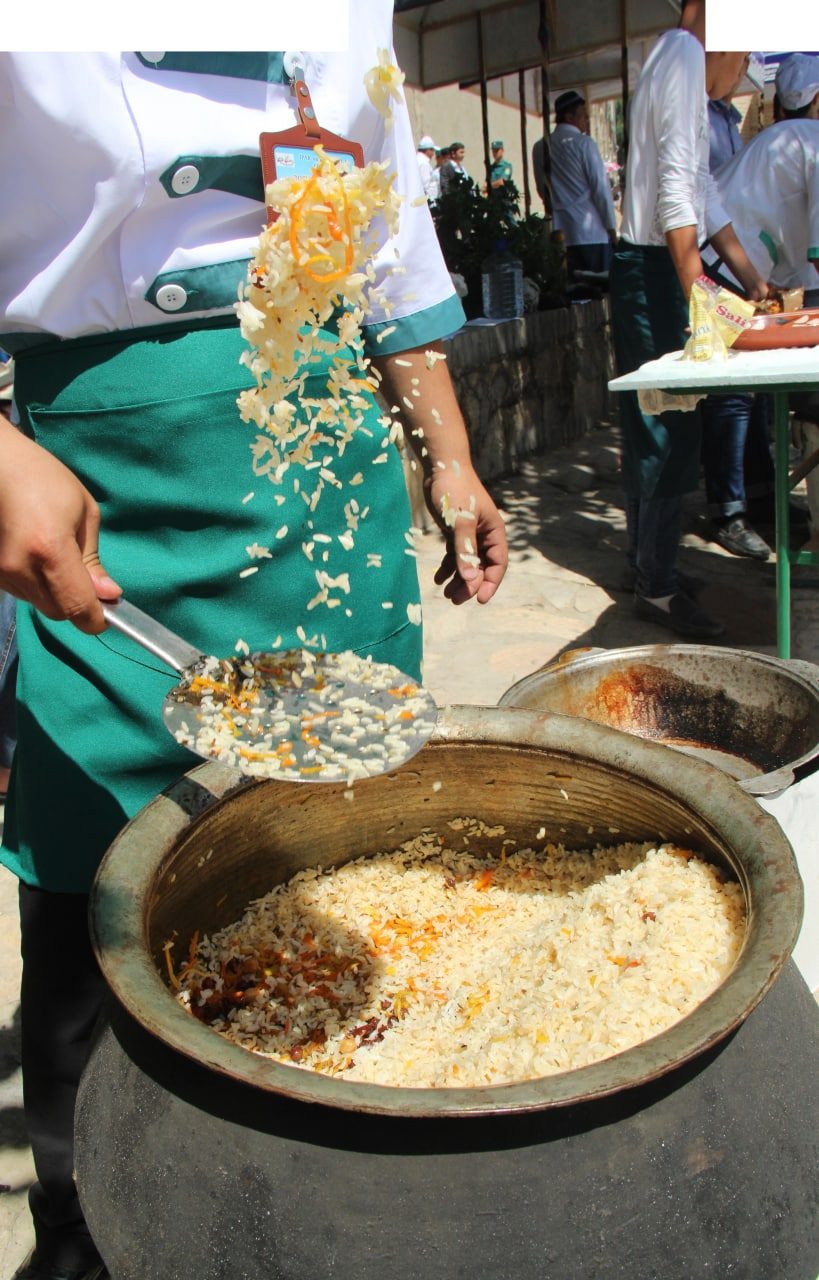
Everything happens in one heavy cast-iron kazan over a fire. The classic A teahouse: green tea, plov and conversation on wide wooden beds called topchan. plov starts with cottonseed oil heated in the kazan until it smokes; this burns off the oil's bitterness. We explain where that oil comes from in our article on the cotton season.
Then come onions, meat and carrots cut by hand into long strips, never grated. Water and spices, cumin above all, turn this into zirvak, the base of the dish. Rice goes on top in an even layer and is not stirred. The cook covers the kazan and lets the rice steam until it has taken in the fat and the juices from below.
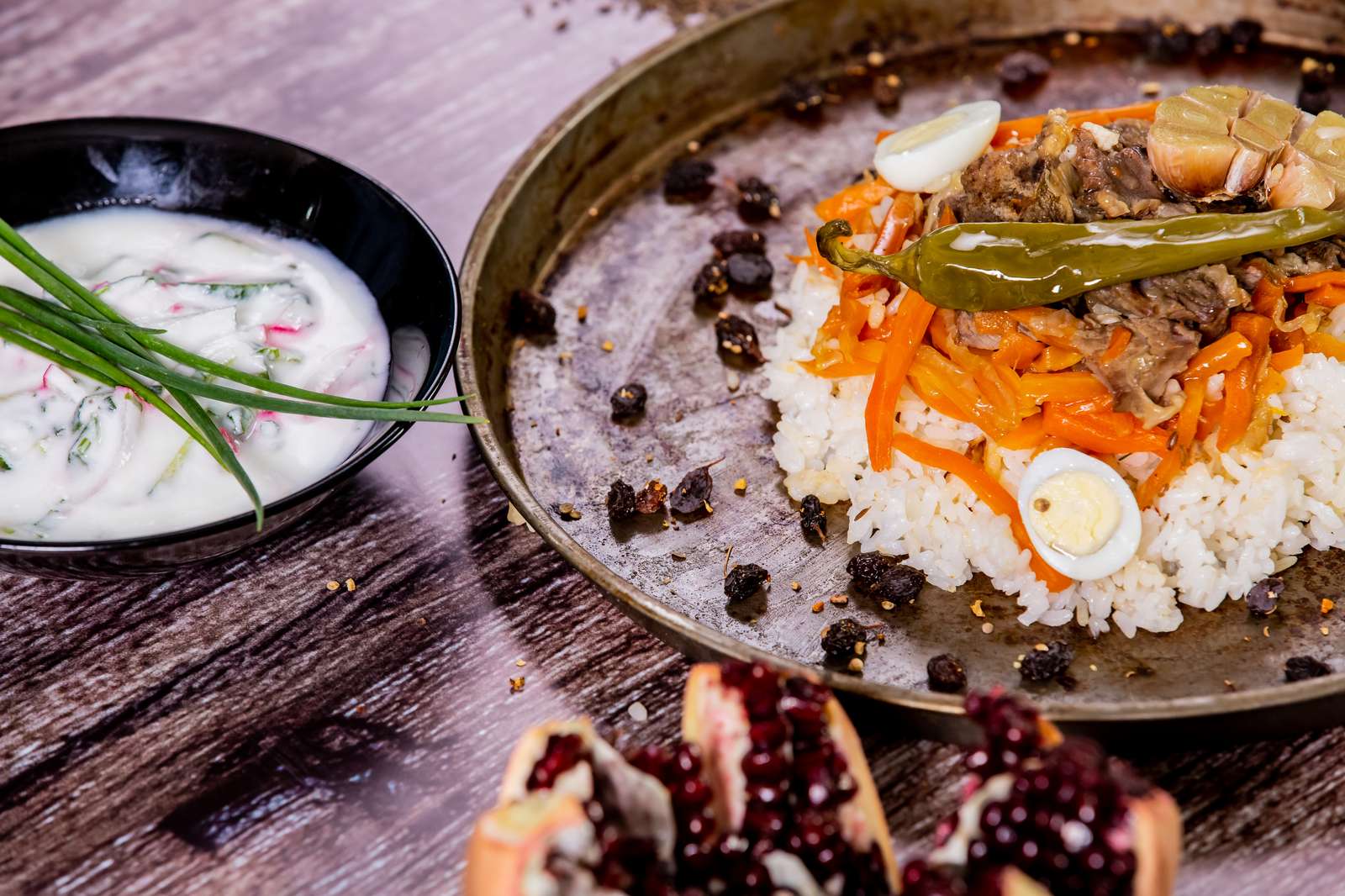
At the end the oshpaz heaps the plov onto a lagan, rice first, with carrots and meat cut into pieces on top.
Plov by city: how it differs
Every region, and often every family, has its own plov. These are the versions you will meet on menus.
Tashkent
Two plovs rule the capital. To'y oshi, wedding plov, is made with long-grain rice, chickpeas, dried fruit and boiled horse meat, often topped with quail eggs. Choyxona oshi, teahouse plov, is the everyday one, usually on devzira rice and cottonseed oil.
Samarkand
Samarkand plov is cooked in layers and is not mixed before serving, so on the platter you see the rice, the yellow carrots and the meat separately. Menus also list Samarqand zig'ir oshi, plov on linseed oil.
Bukhara
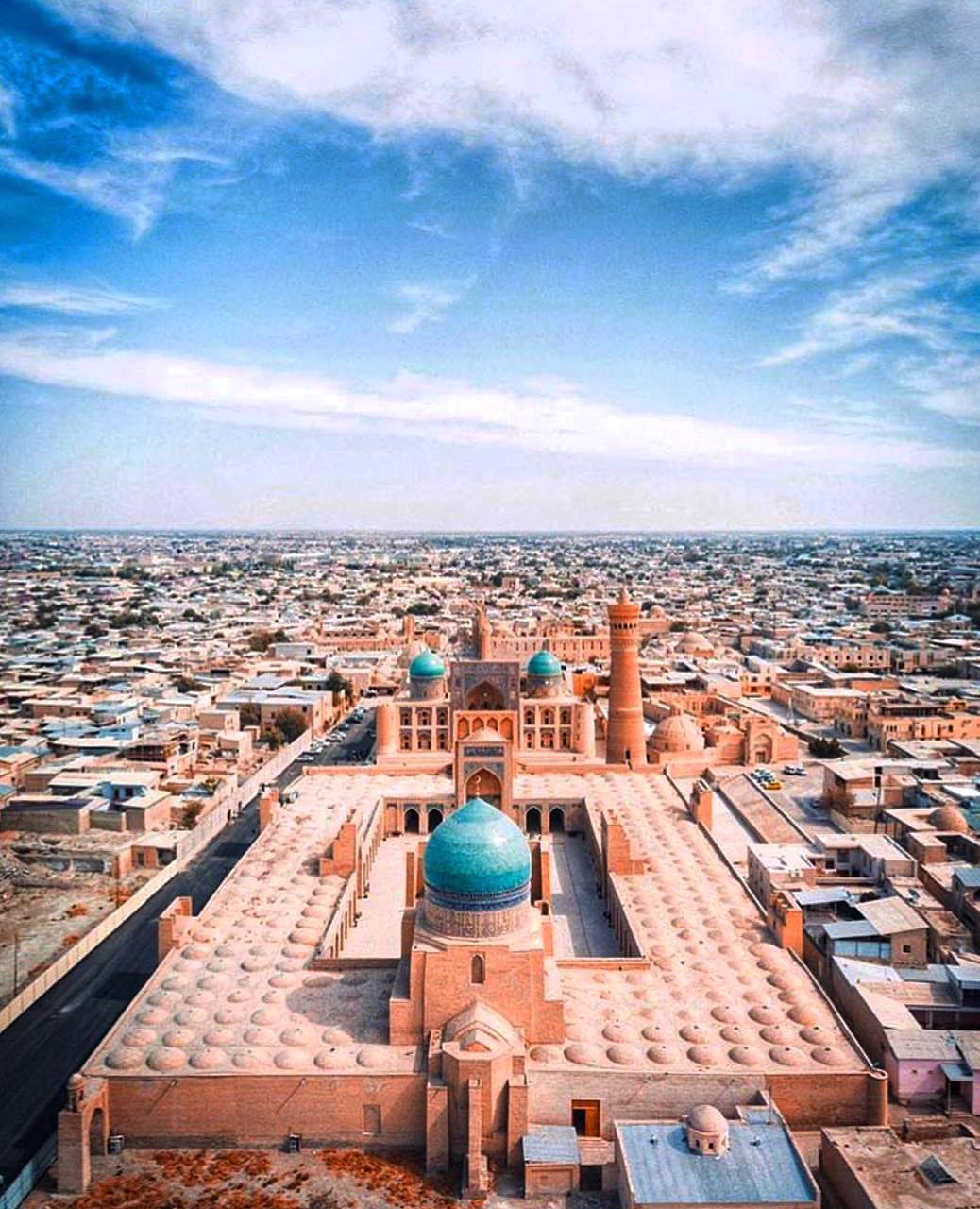
Bukhara's plov is sweeter, with raisins and dried fruit. Its classic is oshi sofi, "pure plov", valued as a lighter dish; you find it in the teahouses around Did you know? Bukhara's ponds were once its water supply Pools like Lyabi-Hauz, dug around 1620 and 46 × 36 m, were the city's main source of water. Most were filled in during the 1920s–30s because they spread disease; Lyabi-Hauz survived. Read more →. Bukhara also keeps bakhsh, the green plov of the city's Jewish community, made with herbs.
Khorezm and Khiva
In the west, plov is lighter, with fewer spices and less oil. Khiva takes it seriously all the same: the 9-tonne cauldron of 2025 stood at Arda Khiva, during the Khorezm Plov festival.
Fergana Valley and Andijan
The valley's plov is rich and generous with oil, sometimes with hot chilli. It is cooked on devzira, a reddish, dense rice grown here. In June 2026 Andijan devzira plov was registered as a geographical indication. More in our Fergana Valley guide; on our Fergana Valley crafts tour it is lunch in Andijan.
Where to eat plov
The easiest answer is a plov centre, osh markazi: a large canteen built around a row of kazans. In Tashkent the best known is the Central Asian Plov Centre, Besh Qozon, at the foot of the Did you know? A 375-metre tower with a viewing deck at 97 m The Tashkent TV Tower, begun in 1978 and operating since January 1985, rises 375 m to the tip of its spire. Its observation deck at about 97 m looks out over the whole city. Read more →. You can watch the plov being cooked in huge cauldrons over fire, and the menu runs from to'y oshi and choyxona oshi to devzira oshi and Samarkand plov on linseed oil.
In Bukhara, look for oshi sofi in the teahouses around Lyabi-Hauz. Elsewhere, ask your guide or your hotel which teahouse nearby cooks plov that day. Nobody cooks plov to order for two: the kazan needs volume, so it is made once, for everyone.
For the other dishes worth trying, see our article on Uzbek cuisine.
Plov cooking class in Samarkand, Bukhara and Tashkent
Watching is good; cooking is better. These of our tours include a plov class:
- Taste of the Road, our culinary tour. In Samarkand, after the Samarkand's main bazaar, right next to Bibi-Khanym: Samarkand bread, dried fruit, nuts and halva. Read more →, you cook Samarkand plov from preparing the rice and the zirvak to serving it on a lagan. In Bukhara the class is bakhsh, the green plov, and in Khiva dinner is Khorezm chalov plov.
- Samarkand, Bukhara and Khiva group tour: an evening plov class in a family guesthouse in Bukhara.
- 11-day classic tour: dinner with a plov class in Bukhara.
- Birthday tour in Samarkand: the guest of honour becomes the head plov cook.
At the table
Plov arrives on a shared lagan, and everyone eats from it. Eating plov by hand is the old way, but you will always be given a spoon, so use it freely. Green tea comes with it, and bread is never put face down. The rest of our table manners, from the tea pour to shoes at the door, are in our article on etiquette in Uzbekistan.
In short
- Palov culture and tradition of Uzbekistan has been on the UNESCO intangible heritage list since 2016.
- Eat plov at lunch: plov centres cook in the morning, and by evening the choice is smaller.
- Tashkent cooks wedding and teahouse plov, Samarkand serves it in layers, Bukhara makes it sweeter and lighter, Khorezm keeps it light, the Fergana Valley cooks it rich on devzira rice.
- In Tashkent, start at the Central Asian Plov Centre by the TV Tower; in Bukhara, at the teahouses around Lyabi-Hauz.
- To cook it yourself, choose a tour with a plov class in Samarkand or Bukhara, or ask us to add one.