
Places in this article: Tashkent
Kyrgyzstan in summer from Uzbekistan: Song-Kul, Tash Rabat, Issyk-Kul and yurt camps
In July, Bukhara averages 37 °C in the afternoon. At Song-Kul, a high lake in the Kyrgyz mountains, the average for the whole of July is 11 °C, and the shepherds' yurts stand on grass that runs right down to the water. That contrast is why we add Kyrgyzstan to summer trips in Uzbekistan. Bishkek is an hour and ten minutes from Tashkent by air. Here is what summer Kyrgyzstan adds, how to get there from Uzbekistan and how to be a good guest in a yurt camp.
What summer Kyrgyzstan adds to an Uzbekistan trip
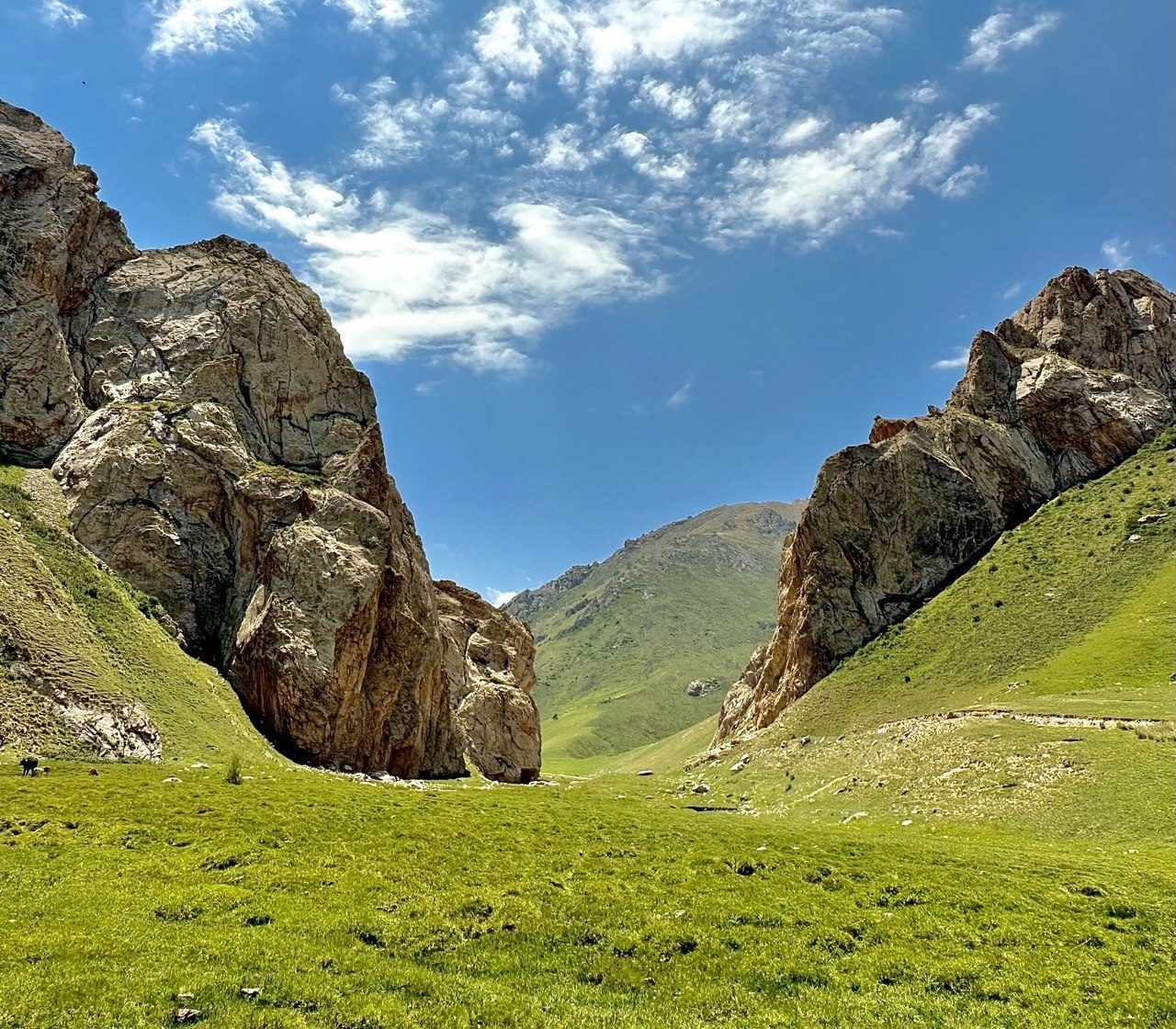
Uzbekistan gives you the A network of caravan routes between China and the Mediterranean. Samarkand, Bukhara and Khiva grew rich as stops along it. cities. Kyrgyzstan gives you the jailoo, the summer pasture. In summer, families take their herds up from the valleys and live in yurts on the high grass until autumn. Officially recognised summer pastures cover some 3.9 million hectares of the country.
For a traveller, that means four things the cities cannot offer:
- High lakes: Song-Kul at 3,016 m and Issyk-Kul at 1,607 m.
- Nights in a yurt in a herders' camp, with kymyz, fermented mare's milk, the drink of the summer pastures.
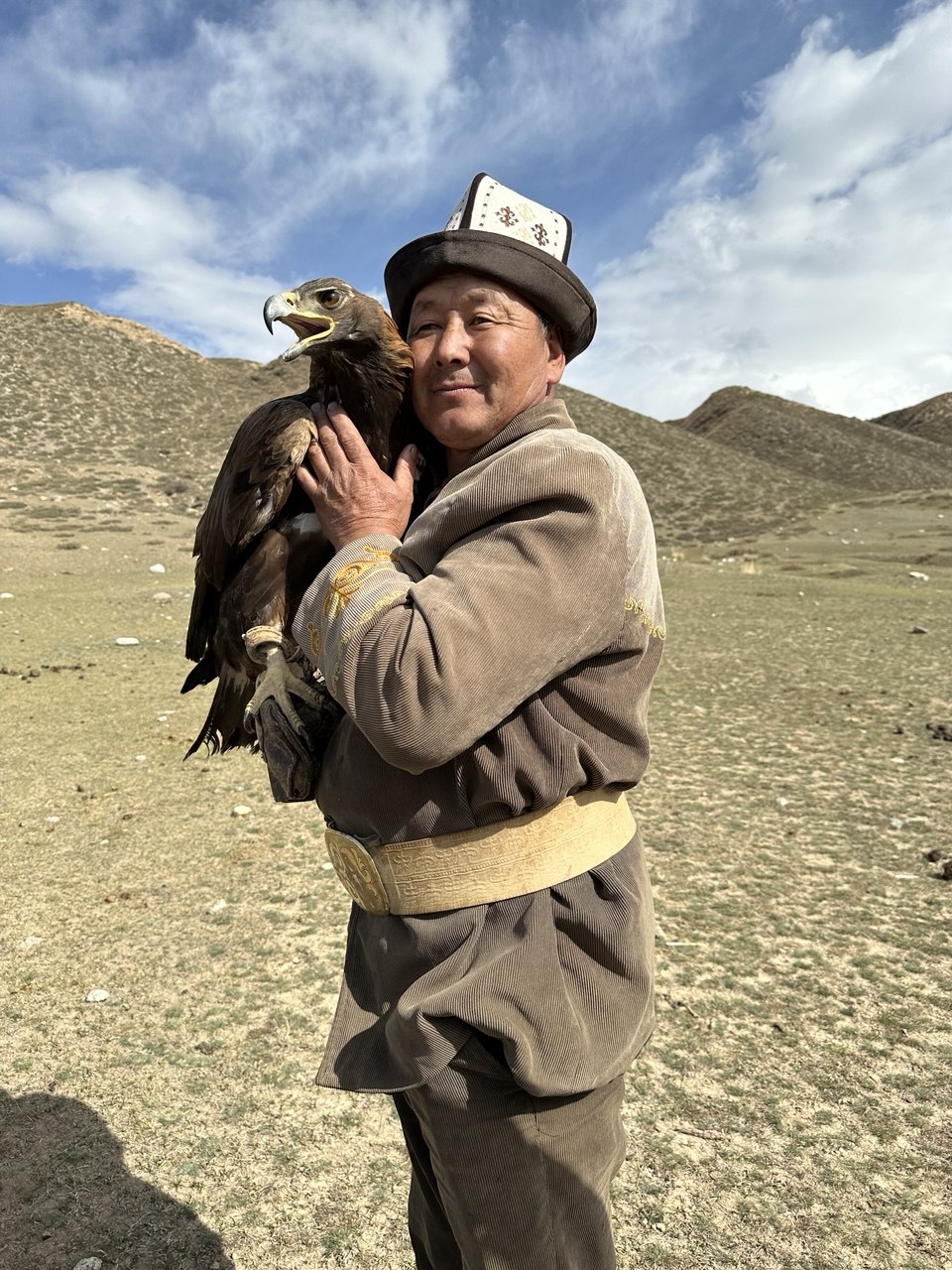
- Eagle hunters who show visitors how a golden eagle is trained.
- Tash Rabat, a stone caravanserai on the old road towards China.
How Kyrgyzstan fits with Tajikistan and Kazakhstan is in our overview of Central Asia tours from Uzbekistan.
Song-Kul: a night in a yurt at 3,016 metres
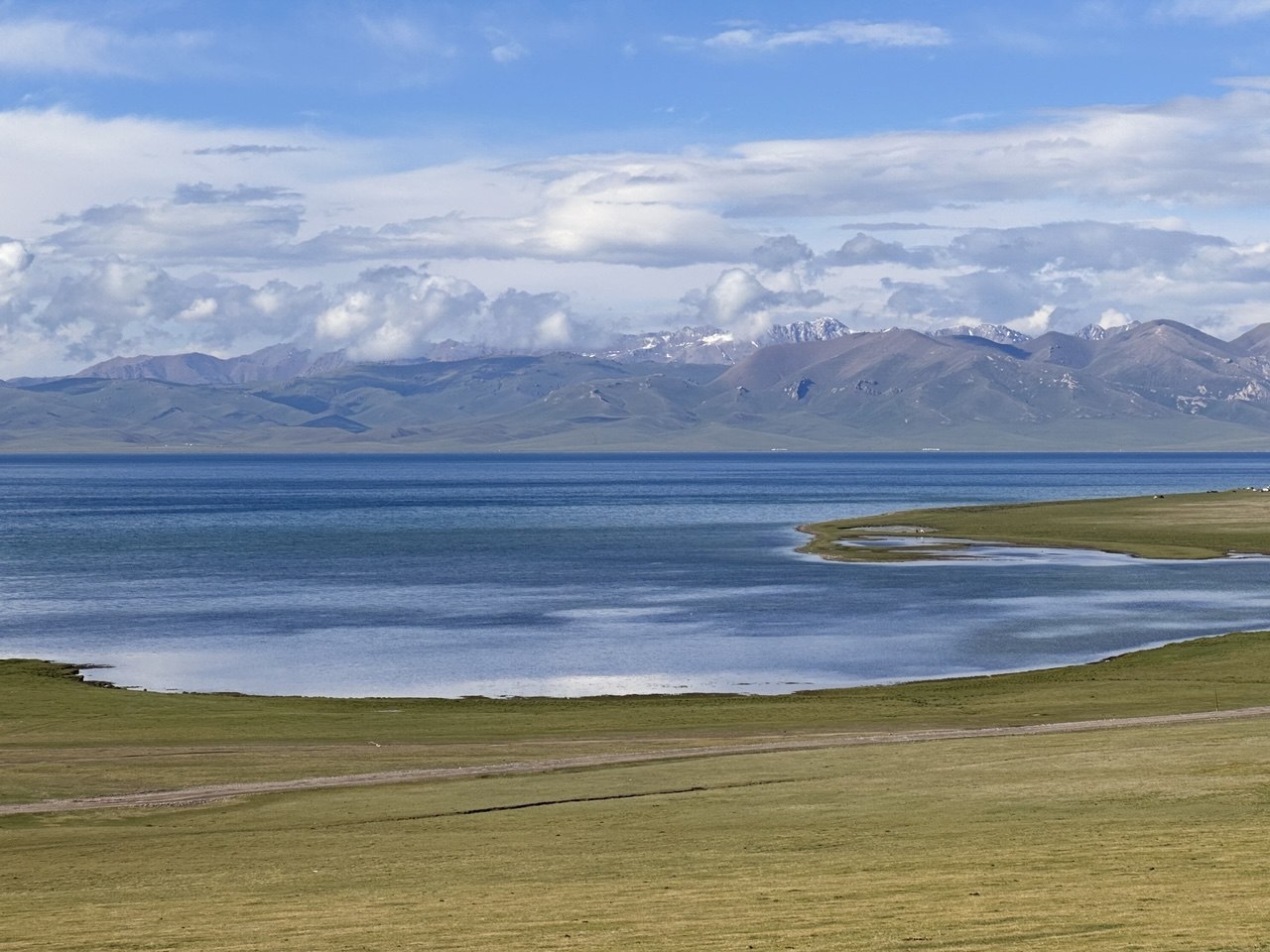
Song-Kul is about 29 km long and lies at 3,016 m. There are no permanent buildings on its shores, only summer yurt camps. The ice goes by late May, the camps stand from mid-June to mid-September, and part of the lake is a protected wetland for birds.
The way up starts in Kochkor, about 200 km from Bishkek. The village is known for shyrdak felt carpets: the women's cooperative Altyn Kol, "Golden Hands", has worked there since the late 1990s. From Kochkor the shortest road, about 90 km, climbs over the Kalmak-Ashuu pass at almost 3,500 m. Snowploughs open it at the end of May, and it closes with the first snow in late October.
Plan two nights at the lake rather than one. The day in between is for a horse ride along the shore and for watching the herds come in at dusk. Nights are cold even in July, so pack a warm layer and a hat.
Tash Rabat: a stone caravanserai on the road to China
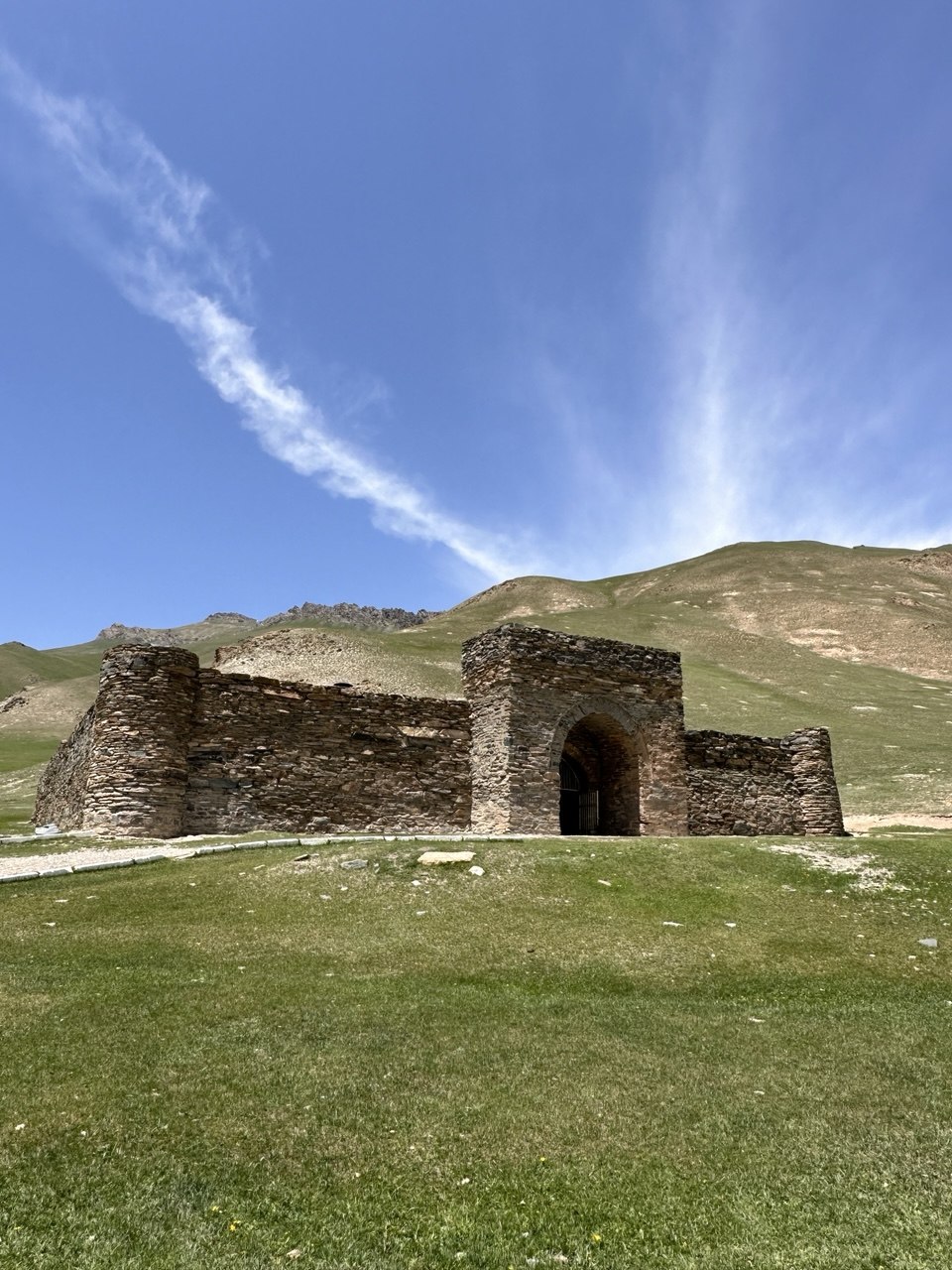
Tash Rabat means "stone lodging". It stands at 3,200 m in a side valley of the At-Bashy district, a squat building of rubble stone set in clay, with 31 rooms under small domes. Historians date it to the 10th or the 15th century and still argue whether it began as a monastery. South of it lies the Torugart pass to China, the route the caravans took.
From Naryn it is about 115 km; Kochkor to Naryn is another 120 km, so Tash Rabat pairs naturally with Song-Kul. The road is rough in places but fine in summer in a proper car. June to September is the time to go, and a night in the yurt camp near the caravanserai is worth it.
The Issyk-Kul loop
North shore: the Cholpon-Ata petroglyphs
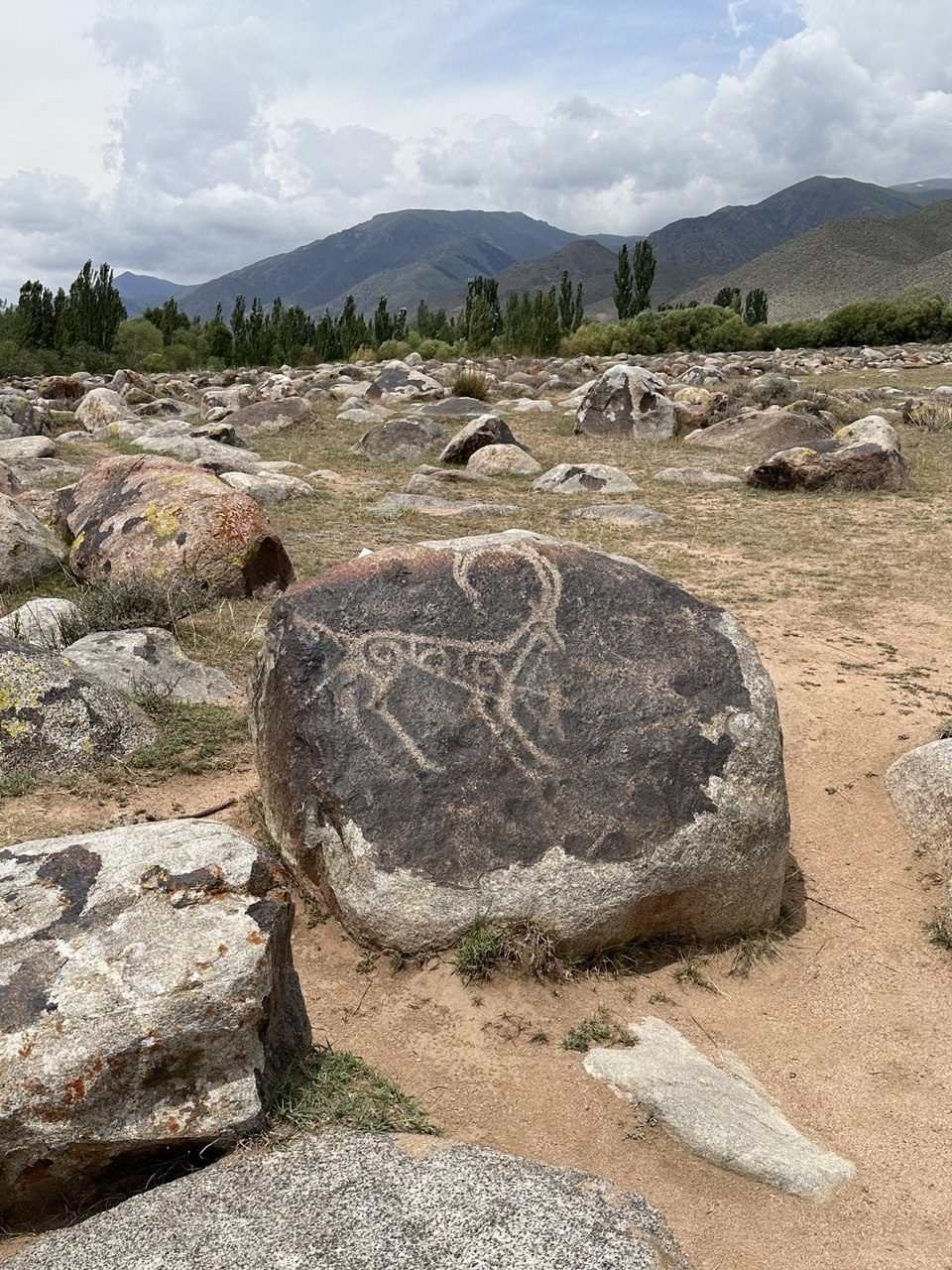
Issyk-Kul lies at 1,607 m and is the second-largest mountain lake in the world. In summer the north shore is the beach side of Kyrgyzstan. On the edge of Cholpon-Ata is a field of boulders with about 2,000 ,Did you know? Mountain goats carved on rocks thousands of years ago Near the village of Khodjikent, about 70 km from Tashkent, more than 90 petroglyphs line the rocks above the Chirchik River, mostly mountain goats. The finest date from the 4th–3rd millennia BC. Read more → carved between around 800 BC and 1200 AD; most of them are ibex. Come in the late afternoon, when the low sun makes the lines stand out. We drove the lake in November too: that colder version, with Kazakhstan, is our Kazakhstan and Kyrgyzstan loop from Tashkent.
Karakol and the Jeti-Oguz red rocks
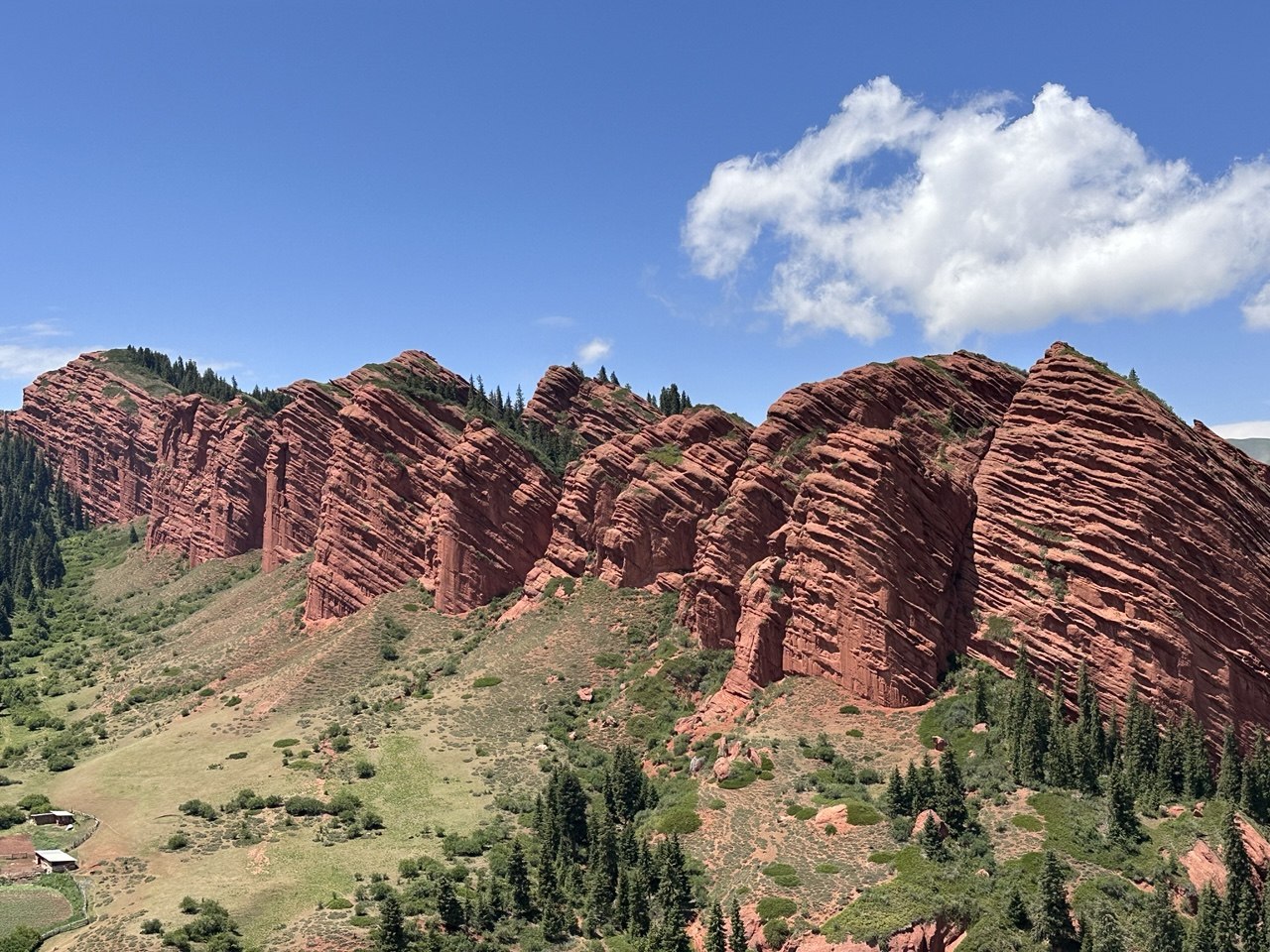
Karakol, at the eastern end of the lake, is 380 km from Bishkek. South-west of the town, the Jeti-Oguz valley opens with a ridge of red conglomerate, the Seven Bulls, and a cliff called the Broken Heart; the rocks have been protected since 1975. In summer the slopes below them are green, with spruce forest higher up.
South shore: eagle hunters at Bokonbaevo
On the quieter south shore, around Bokonbaevo, eagle hunters, the berkutchi, show visitors their golden eagles: how the bird sits on the glove, how it is called back, how it strikes a lure. Real hunting is a winter affair, when prey has thick fur; in summer you see the training. Bokonbaevo also hosts the Salburun festival, with eagle trials, mounted archery and races of taigan hounds.
Felt, kalpaks and etiquette in a yurt camp
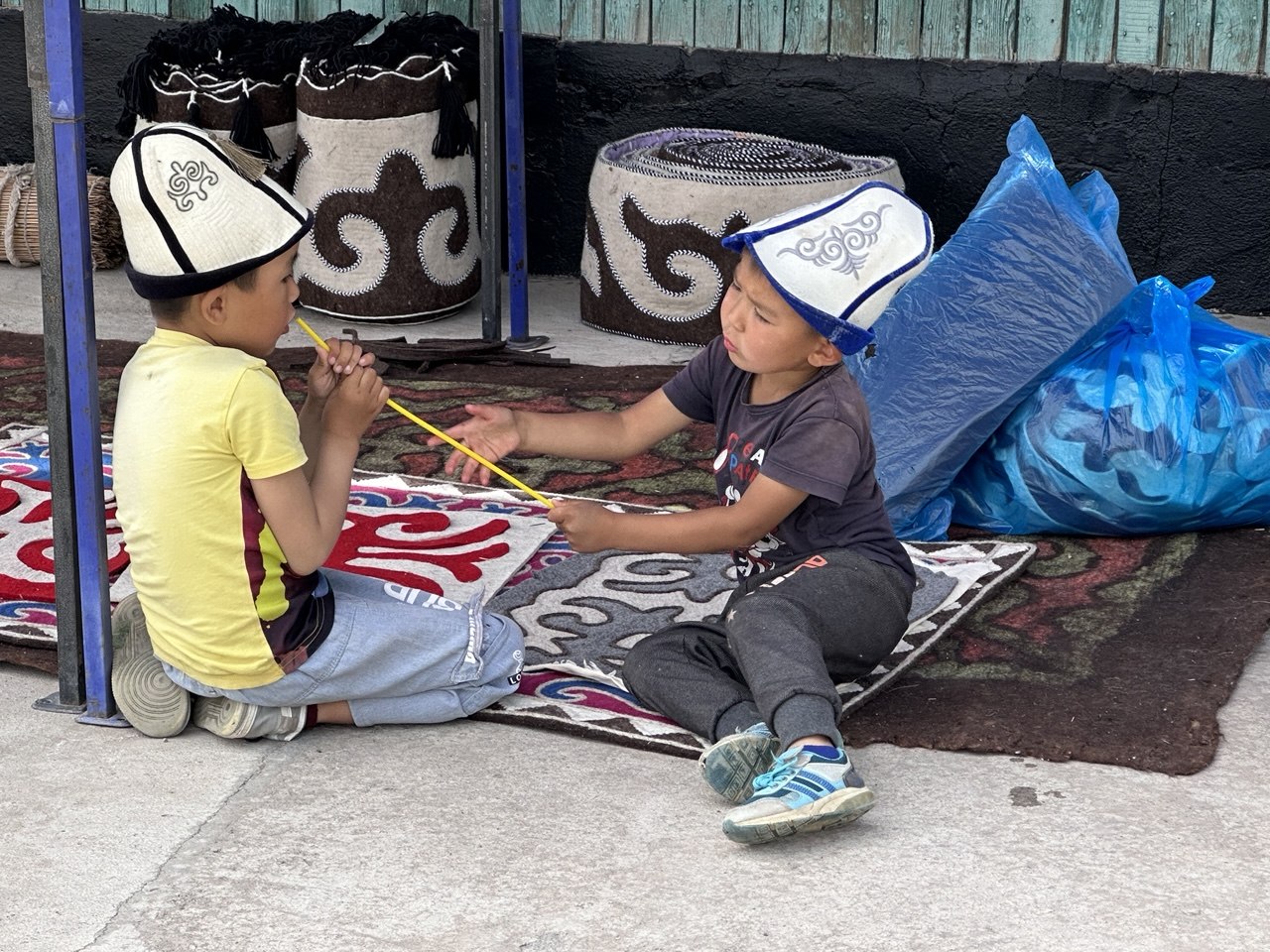
You will see the white felt kalpak hat everywhere, on herders, on boys and at every celebration. The shyrdak, a carpet of cut and stitched felt, is on UNESCO's intangible heritage list since 2012, and the craft of making Kyrgyz and Kazakh yurts since 2014. Both skills pass from the older generation to the younger, mostly within families.
In a yurt camp you are a guest in someone's home. A few customs help:
- The tör, the place opposite the door, is the seat of honour. Wait for your host to show you where to sit.
- At the start or end of a meal, hosts hold their palms up in front of their face for a blessing, omin. Join in; it is appreciated.
- If you are offered kymyz, take at least a sip. It is sour and only slightly alcoholic.
- Small gifts for the children are welcome, and do not be surprised if your host sends you off with a gift.
- Ask before you photograph people.
Uzbekistan and Kyrgyzstan tour: routes from Uzbekistan
There are two natural ways in.
- Tashkent to Bishkek by air, an hour and ten minutes. Book into Tashkent and out of Bishkek and you save a day of backtracking.
- Through the Fergana Valley to Osh. After the silk and ceramics of the Fergana Valley, you cross at Dustlik, near Andijan, to Osh. From Osh the road to Bishkek is about 600 km over the Too-Ashuu and Ala-Bel passes, past the Toktogul reservoir: a full day, best split in two.
Here is an 8-day summer add-on after the Uzbek cities:
| Day | Where |
|---|---|
| 1 | Flight Tashkent → Bishkek |
| 2 | Kochkor and its felt workshops, then over Kalmak-Ashuu to Song-Kul |
| 3 | Song-Kul: horses, herds, a second night in the yurt |
| 4 | Naryn and on to Tash Rabat, night in a yurt camp |
| 5 | To the south shore of Issyk-Kul, the longest drive of the trip |
| 6 | Eagle hunters at Bokonbaevo, Jeti-Oguz, Karakol |
| 7 | North shore: the Cholpon-Ata petroglyphs |
| 8 | Back to Bishkek and fly home |
Our 23-day Silk Road tour through all five countries includes Bishkek, the Burana tower and the Ala-Archa gorge. A Kyrgyzstan add-on like the one above we put together individually: tell us your dates in the tour finder.
Practical notes: visas, altitude, weather
- Kyrgyzstan entry: since 1 January 2026, citizens of 55 countries enter without a Entry rules depend on your passport. Once you are here, each stay must be registered within three days, and hotels do it for you; customs and registration rules are in our guide. Read more → for up to 30 days in any 60-day period; other passports use the official e-visa portal. Check the rules for your passport before you book.
- Back into Uzbekistan: if you travel on an Uzbek e-visa and return after Kyrgyzstan, apply for a double- or multiple-entry one. Start with our guide do you need a visa for Uzbekistan.
- Altitude: Song-Kul is at 3,016 m, Tash Rabat at 3,200 m, and the passes on the way are higher. Go slowly on the first day up, drink plenty of water and skip alcohol that evening.
- Weather: pack for two climates. The Uzbek cities are hot in summer (see Uzbekistan in July and Uzbekistan in August), while at Song-Kul you need a fleece, a hat and a rain jacket, because clouds build up fast over the mountains.
- Season: the yurt camps work from mid-June to mid-September. In June we do the Uzbek cities first and finish in the mountains; in September, mountains first.
In short
- Summer Kyrgyzstan adds what Uzbekistan cannot: high lakes, jailoo pastures and nights in a yurt.
- Bishkek is an hour and ten minutes from Tashkent by air; from the Fergana Valley you can cross at Dustlik to Osh.
- Song-Kul and Tash Rabat are for mid-June to mid-September; Issyk-Kul is easy all summer.
- Check the entry rules for your passport, and take a multiple-entry Uzbek e-visa if you come back.
- Pack a warm layer: July nights at 3,000 m are cold.