
Places in this article: Samarkand · Bukhara · Khiva · Tashkent
Uzbekistan by car with a driver: a road trip along the Silk Road
The high-speed train from Bukhara to Khiva takes about three and a half hours and shows you sand through a window. The car takes 6 to 7 hours, and at the end of the day you cross the Amu Darya into Khorezm and see canals and melon fields appear after the desert. Which one is better? It depends on the leg. On some roads the car gives you a day you would never get from a train; on others it only gives you traffic.
We are a Tashkent company and we plan routes like this every week. Here is our 10-day Uzbekistan road trip with a driver: which legs we drive and why, which ones we still give to the train, what the roads are like and when to go.
Car or train: where each one wins
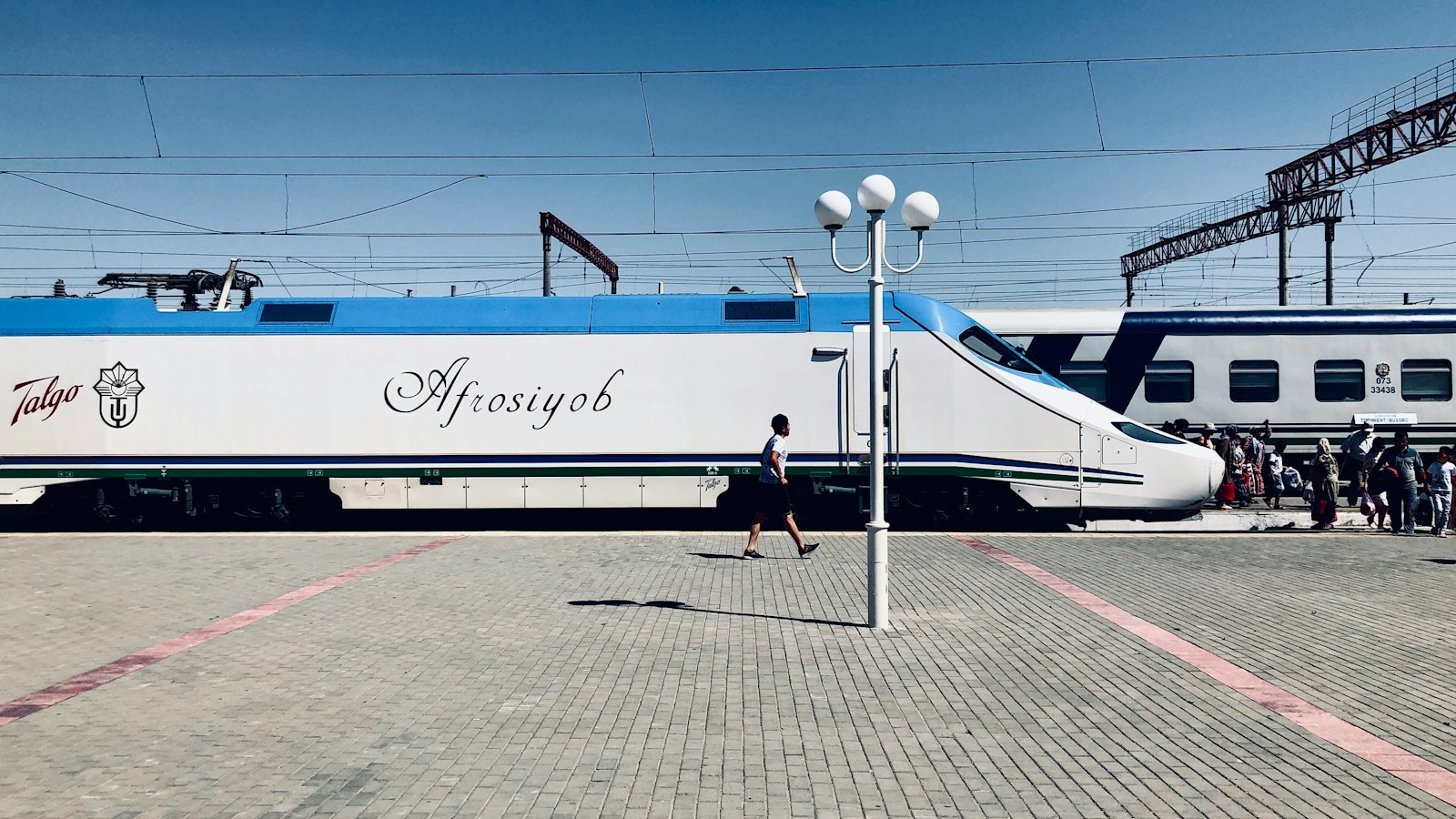
The rule is simple: take the car where the road has something to stop for, and the train where it does not.
- Tashkent to Samarkand: the train. The Uzbekistan's high-speed train: Tashkent to Samarkand in about 2 hours 10 minutes, Tashkent to Bukhara in about 4 hours. Tickets are tied to your passport. Read more → takes about 2 h 10 min. The road is about 270 km through Jizzakh, 4 to 5 hours, and busy, with nothing on the way that would change your day.
- Samarkand to Bukhara direct: the train. About 1 h 40 min to 2 h, against 4 to 5 hours on the road. If you are not stopping, there is no reason to drive.
- Samarkand to Shahrisabz: the car. The train does not go there, and the road over the Takhtakaracha pass is part of the day.
- Samarkand to Bukhara the long way: the car. Through Did you know? Legend credits Alexander with Nurata's underground canals Legend says Alexander the Great founded Nur in 327 BC and laid its kariz, underground channels with wells dug a few metres apart for cleaning. Whoever built them, parts of the kariz near Nurata still carry water today. Read more → and a night at ,Did you know? Aydarkul is a wetland of international importance In 2008 the Aydar-Arnasay lake system, about 527,000 ha, became a Ramsar site. It lies where two great bird flyways cross and shelters Dalmatian pelicans and the rare white-headed duck. Read more → then Did you know? Legend says a nomad chief built Rabat-i Malik Local tradition, recorded by a traveller in the 19th century, remembered the ruin as the castle of a khan and his heirs, built by a nomad chief called Malik Khan. What is known: the Karakhanids raised it around 1078–1079 on the road from Bukhara. Read more → and Gijduvan. None of this is on the railway.
- Bukhara to Khiva: either. The car when the fast train does not run on your day, when you travel with a lot of luggage, or when you want the desert and the river crossing. The train in the summer heat.
The timetables, classes and how to buy tickets are in our guide to trains in Uzbekistan.
The 10-day route at a glance
The route runs from east to west, mixes train and car, and comes back from Khiva by air.
| Day | Where | How |
|---|---|---|
| 1 | Tashkent | Arrival, an evening walk in the centre |
| 2 | Tashkent → Samarkand | Morning Afrosiyob; the Did you know? The Registan's sun-carrying lion went on a banknote The Sher-Dor Madrasah (1619–1636) is named for the big cats with the sun on their backs on its portal. The image appeared on the reverse of Uzbekistan's 200-som note of 1997. Read more → in the afternoon |
| 3 | Samarkand | A full day in the city, on foot |
| 4 | Samarkand → Shahrisabz → Samarkand | Car, about 90 km each way over the pass |
| 5 | Samarkand → Nurata → Aydarkul | Car, about 240 km; a night in a yurt camp |
| 6 | Aydarkul → Rabat-i Malik → Gijduvan → Bukhara | Car, a full day with stops |
| 7 | Bukhara | A full day in the old town |
| 8 | Bukhara → Khiva | Car, about 450 km across the ,The Kyzylkum, or Red Sands: the desert between the Amu Darya and Syr Darya rivers that the road and the railway cross on the way to Khiva. or the fast train |
| 9 | Khiva | Did you know? People still live inside Khiva's museum city Itchan Kala packs more than 50 historic monuments and about 250 old houses inside clay walls 8–10 m high and 5–6 m thick, and families still live and work in its lanes. Read more → and half a day at the desert fortresses |
| 10 | Khiva → Tashkent | Flight from Urgench; the flight home |
Eight days? Drop the full days in Samarkand and Bukhara. An eleventh? Spend it in the mountains east of Tashkent: Mountains of the Western Tien Shan about 80 km from Tashkent: hiking in summer, skiing in winter, the Charvak reservoir nearby. Read more → is about 85 km from the city, about an hour and a half each way, and our Chimgan and Charvak day trip shows how we plan it.
Over the Takhtakaracha pass to Shahrisabz
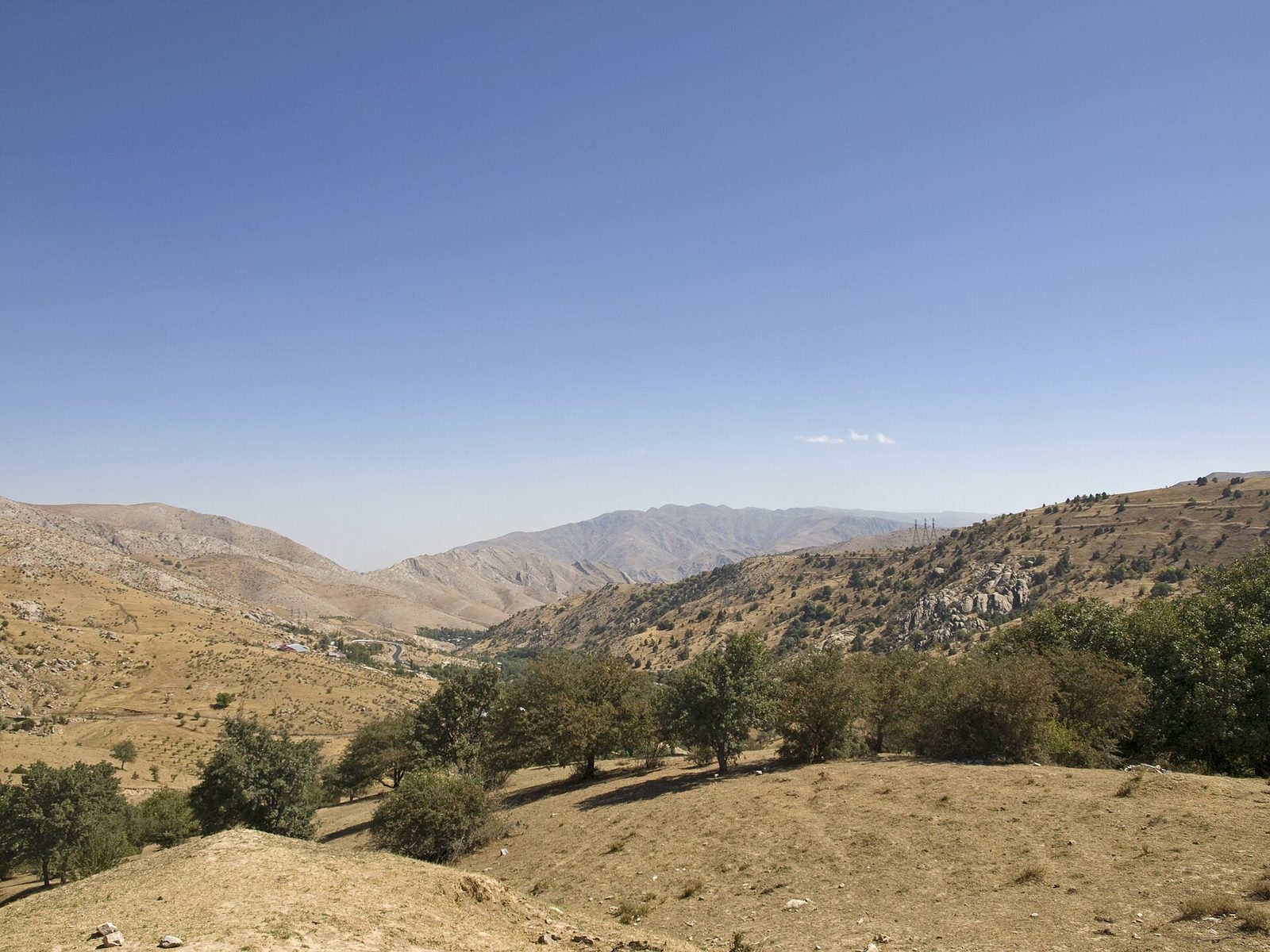
From Samarkand the M39 climbs out of the Zarafshan valley, crosses the Takhtakaracha pass at around 1,700 m and drops into Kashkadarya. It is only about 90 km, but the mountain section sets the pace: an hour and a half to two hours without stops. Stop at the top. The view is a good part of the reason to drive.
In Shahrisabz, Amir Timur (Tamerlane, 1336–1405), founder of the Timurid empire, which had its capital in Samarkand. Born near Shahrisabz.'s home town, you have the gate towers of ,The ruins of Amir Timur's palace in Shahrisabz, his home town. Only parts of the giant entrance arch still stand. Read more → Kok Gumbaz and the crypt prepared for Timur. Lunch in town and you are back in Samarkand by evening. From December to March snow can close the pass for a while, and the detour around the mountains takes about three hours one way, so we check the road the day before. The full plan is in our Shahrisabz day trip; from Samarkand we also run the trip to Shahrisabz with a guide, transfer and entrance tickets.
Samarkand to Aydarkul through Nurata
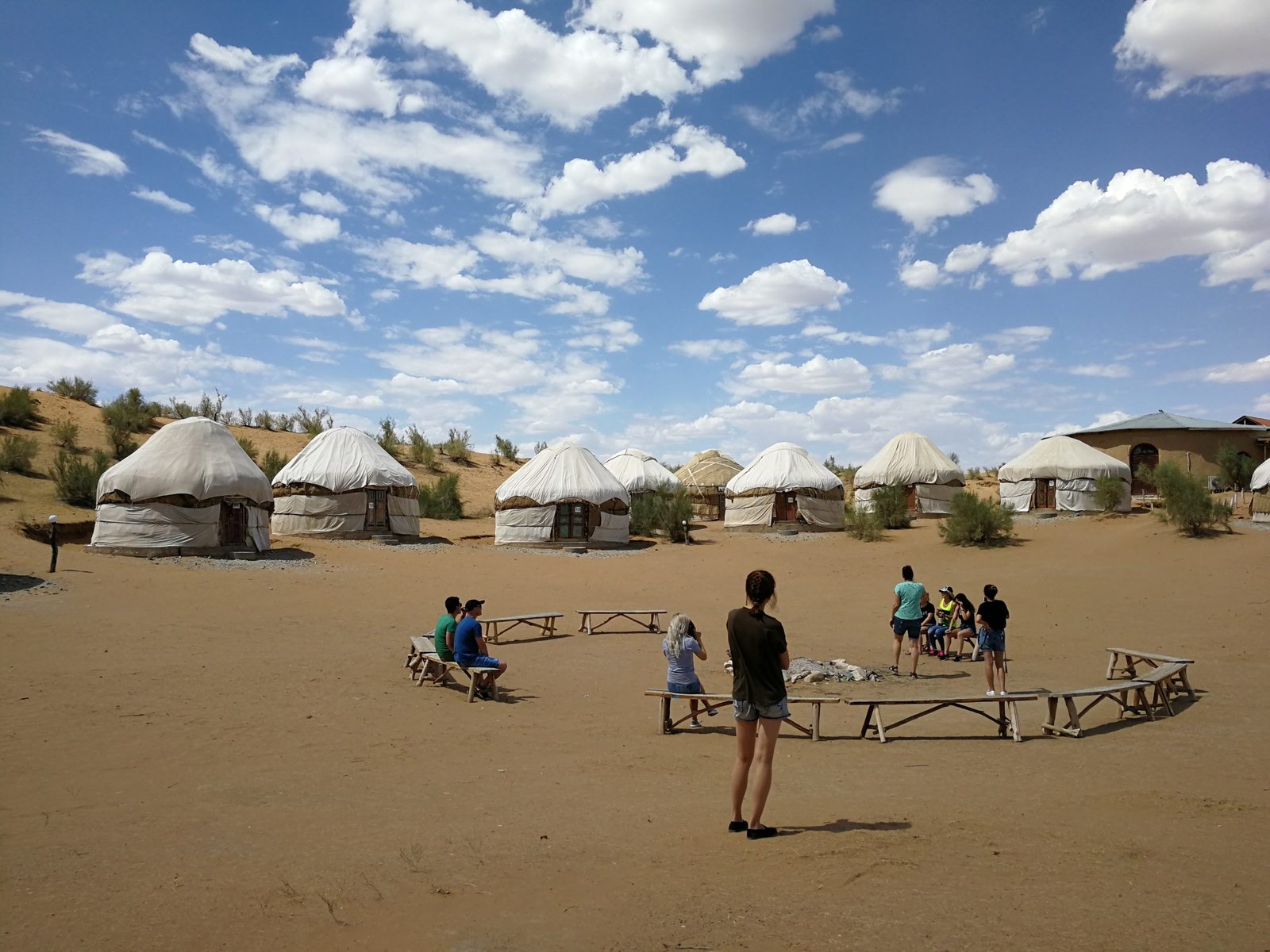
This is the day the car was made for. Nurata is about 180 km from Samarkand, and the yurt camps on Did you know? Lake Aydarkul appeared by accident in 1969 In the flood year of 1969 the Chardara reservoir on the Syr Darya had to release so much water that it was sent into the Arnasay depression in the desert. The water stayed, and Lake Aydarkul is now a large lake with fish, birds and yurt camps. Read more → are about 60 km further north. In Nurata, give an hour to the :Did you know? Legend says Nurata’s spring was born of a falling star Legend says a meteorite fell here and shone with light, and a healing spring rose where it struck — hence Nur, “light”, in the town’s name. The Chashma spring is real enough: it is full of sacred marinka fish that nobody catches. Read more → a holy spring that stays at about 20 °C all year, full of fish that nobody may catch, with the Friday mosque standing directly above the water. Opposite rises the hill of the Nur fortress, which local tradition credits to Alexander the Great. Our Nurata guide has the details.
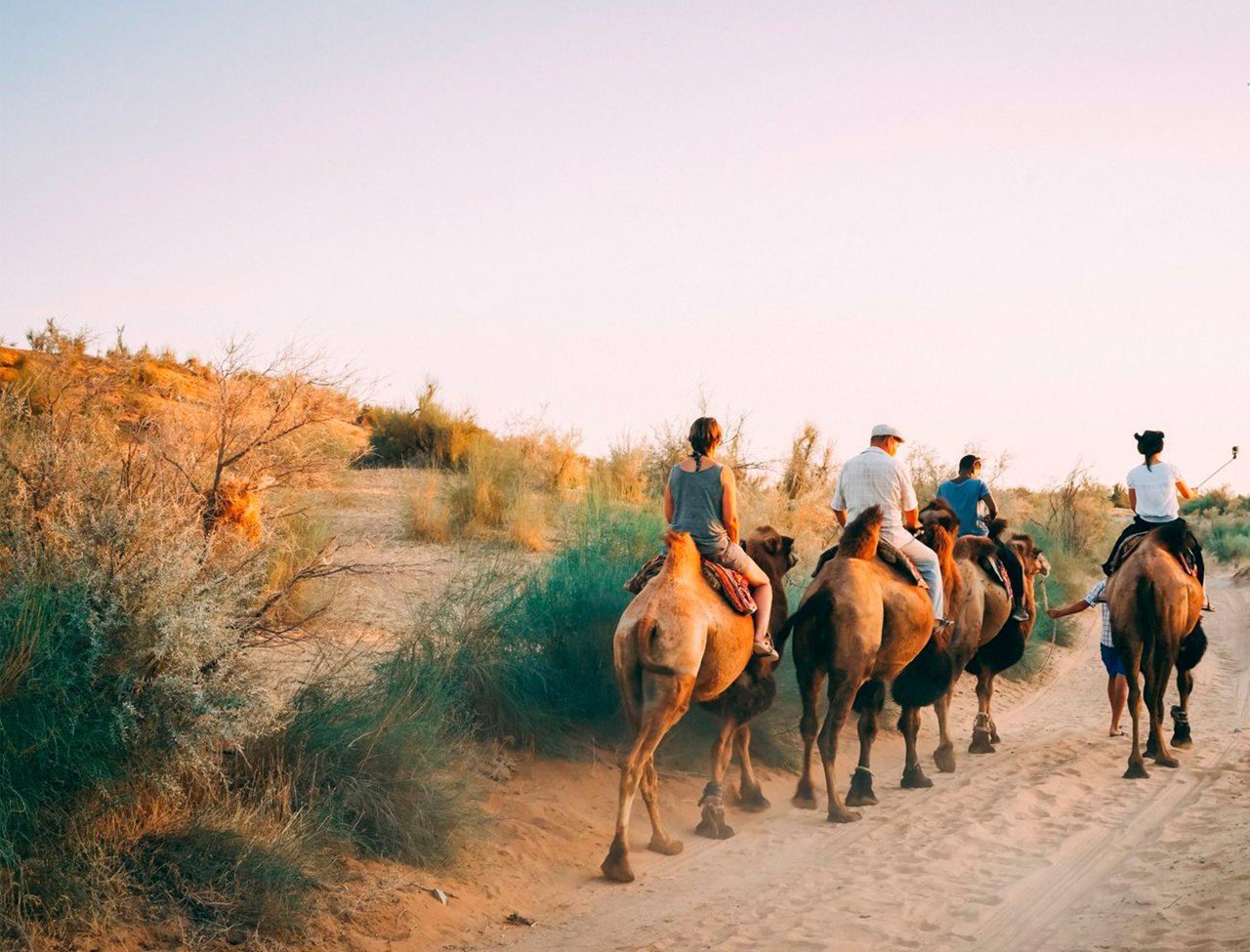
You reach the camp in the afternoon: a camel ride on the sand, dinner by the fire and a night in a felt yurt. Aydarkul itself only appeared after a flood on the Syr Darya in 1969, and today it is nearly 250 km long. Conditions in the camps are basic, and the camps do not work in winter. What to expect and what to pack is in our Aydarkul yurt camp guide.
Aydarkul to Bukhara: Rabat-i Malik and Gijduvan
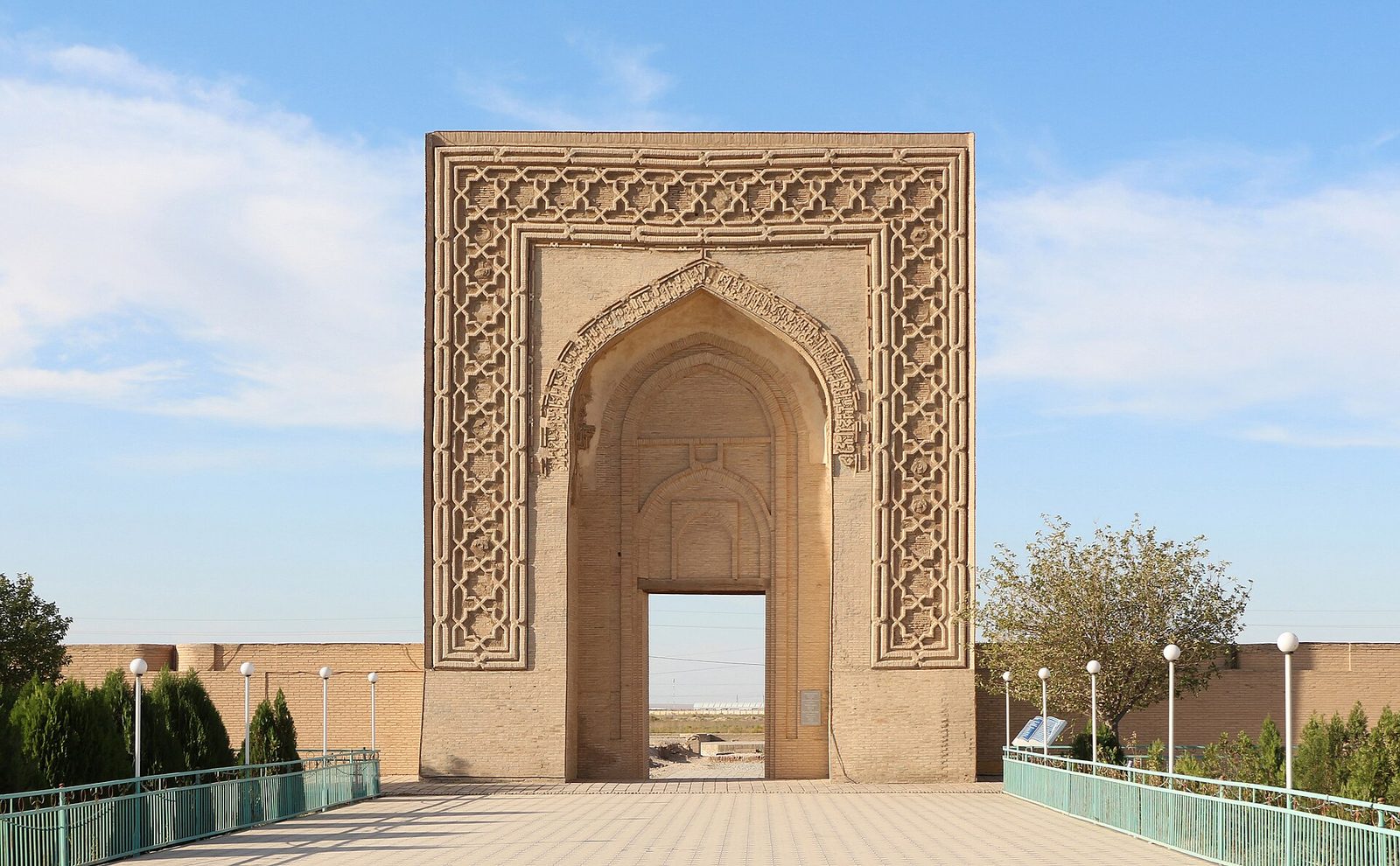
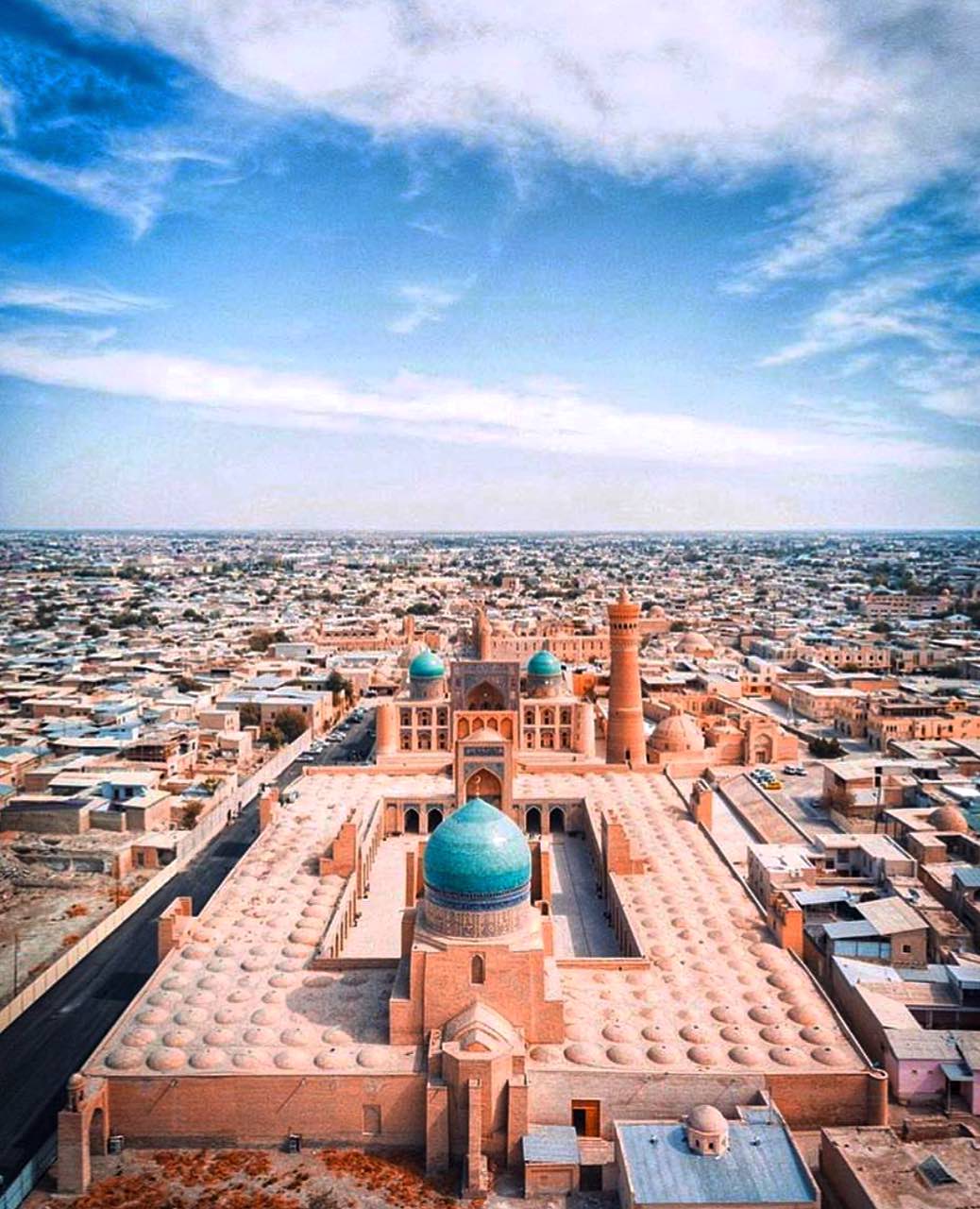
The next morning the road goes back through Nurata and south to Navoi, about 50 km from Nurata, then west towards Bukhara. A short drive past Navoi stands Rabat-i Malik, a caravanserai built in the 1070s that sheltered travellers until the early 18th century. Its brick portal still carries a Kufic inscription, and across the road steps lead down into the ,Did you know? A domed cistern by Rabat-i Malik is named “cold water” Across the road from Rabat-i Malik stands the Malik sardoba, a covered cistern of the same period; the Persian name means “cold water”. An underground channel brought water from the Zarafshan, and steps lead more than 10 m down under the dome. Read more → a domed cistern of the same period. Since 2023 both belong to the UNESCO World Heritage site Silk Roads: Zarafshan-Karakum Corridor. This is the A network of caravan routes between China and the Mediterranean. Samarkand, Bukhara and Khiva grew rich as stops along it. as a road, not as a slogan.
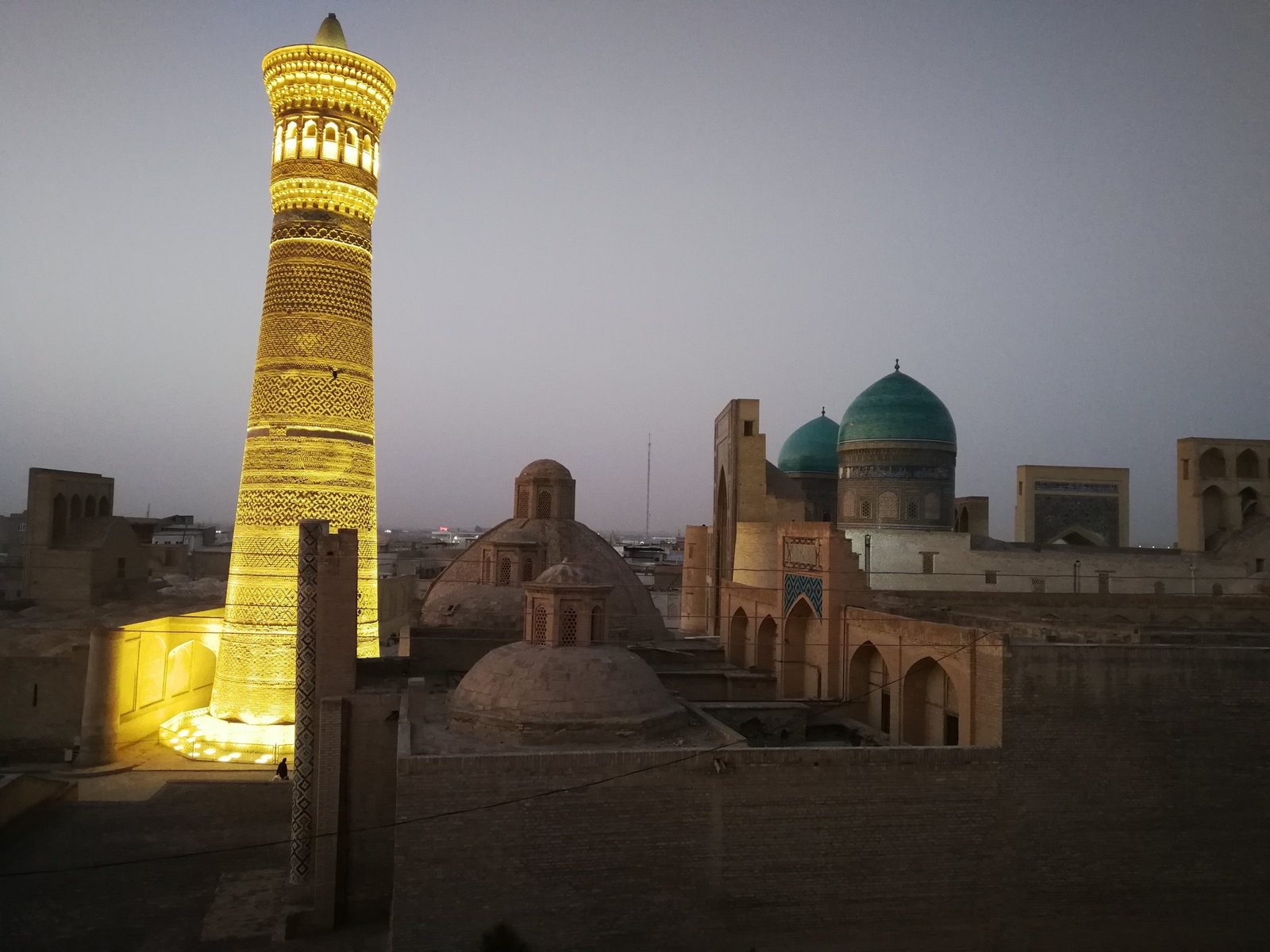
The last stop is Gijduvan, about 40–45 km before Bukhara: a potters' town known for ceramics in green, yellow and brown glazes, with a An Islamic college: student cells and classrooms around a courtyard behind a grand portal. In the old towns many now house museums and craft workshops. that Did you know? Ulugh Beg measured the year to within 25 seconds Working at his Samarkand observatory, Ulugh Beg put the tropical year at 365 days 5 h 49 min 15 s, about 25 seconds too long, closer than Copernicus a century later. Read more → built in 1433. Our outing Gijduvan: ceramics workshop and lunch is the natural lunch stop. You reach Bukhara in time for an evening walk around .Did you know? Bukhara's ponds were once its water supply Pools like Lyabi-Hauz, dug around 1620 and 46 × 36 m, were the city's main source of water. Most were filled in during the 1920s–30s because they spread disease; Lyabi-Hauz survived. Read more → More on this road is in Samarkand to Bukhara.
Bukhara to Khiva across the Kyzylkum
By road it is about 450 km, and the drive takes 6 to 7 hours with short stops. Almost all of it is the Kyzylkum, the "Red Sand", and for long stretches you will not pass a single town, so drivers fill up before the desert. At the Khiva end the road meets the Amu Darya, and the change after the crossing is sudden: canals, cotton fields, orchards and melon plots.
The fast train covers the same leg in about three and a half hours, but it does not run westbound on Sundays or eastbound on Mondays, and its tickets sell out first. That is when the car is the answer. We send guests across the desert with a driver, in a private transfer between Bukhara and Khiva, and plan the day to finish in daylight. Both options in detail: Khiva to Bukhara.
Khiva and the fortresses of Khorezm
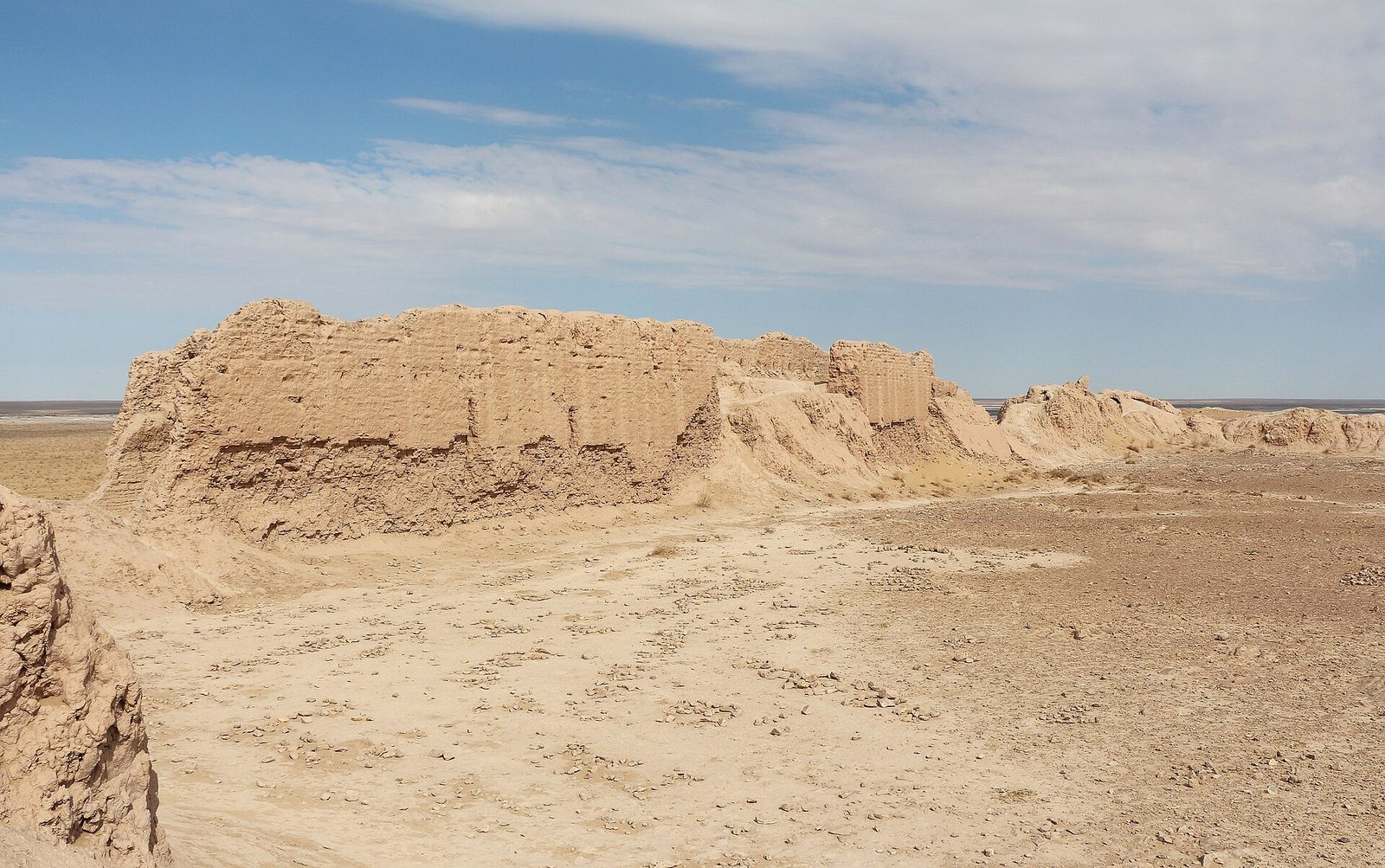
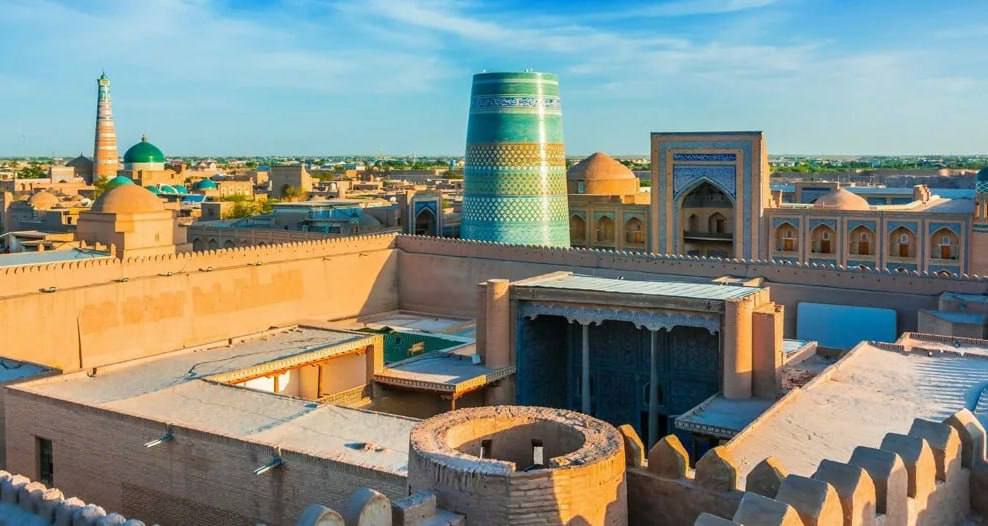
In Khiva the car rests: Itchan Kala is compact and you walk everywhere. It comes back out for the desert fortresses across the Amu Darya. Did you know? Legend says a shepherd named Ayaz built Ayaz-Kala for a bride Legend says a Khorezm king promised his daughter to whoever built an unassailable fortress; the shepherd Ayaz began, the king broke his word, and the walls stayed unfinished. In fact the oldest fort here dates to the 4th–3rd century BC. Read more → is about 100 km from Khiva on a paved road with a short sandy stretch at the end, and ,Did you know? Toprak-Kala was the palace city of ancient Khorezm's kings In the 2nd–3rd century AD Toprak-Kala was the capital of Khorezm. From 1938 Sergey Tolstov's expedition uncovered its palace, with wall paintings, coins and archives; its sculptures are now in the Hermitage. Read more → once the capital of ancient Khorezm, is about 32 km from it. The two make half a day, most of it on the road; in summer we leave at first light, because the fortresses have no shade. From Khiva we arrange the trip to Ayaz-Kala with a guide and entrance tickets, and the fortresses themselves are in fortresses of ancient Khorezm.
For the way back we do not drive. It is about 1,000 km to Tashkent by road, while Urgench airport is about 30 km from Khiva and the flight takes about 1 h 20 min to 1 h 30 min. We can book the flight from Urgench to Tashkent. Why we never drive the whole way in one go is explained in Tashkent to Khiva.
Roads, stops and seasons: what to expect
The roads between the cities are paved, and the long desert road is part of the A380, the Guzar–Bukhara–Nukus–Beyneu highway, where long sections have been rebuilt with concrete pavement in recent years. Work on it goes on, so expect the occasional detour around a construction site; on the M39 the mountain bends, not the distance, decide the time. Fuel stations and roadside cafes are easy to find near towns; in the desert we fill up and buy bottled water before we set off, and plan lunch where there is something to see, in Nurata or Gijduvan.
The season matters more than the asphalt. April–May and September–October are the best months for this route. In the Kyzylkum the heat lasts from mid-May to mid-September, and July afternoons in Navoi and Urgench average about 36 °C: in summer we start early and often give the desert leg to the train. In winter the Takhtakaracha pass can close for a while and the yurt camps are shut, so Nurata becomes a stop on the way to Bukhara rather than an overnight. With a local driver who knows these roads, this is a relaxed way to see the country, and our office in Tashkent is on call 24/7 while you travel.
How we put it together
We arrange each leg with a car and a driver: from Tashkent through our transfer to another city, from Samarkand with a transfer with a driver, and the trains in between. Tell us how many of you there are, how many suitcases you have and where you want to stop; child seats are available on request: tell us your children's ages when you book.
If you would rather have it ready-made, two of our tours already use the road this way. In the Footsteps of Clavijo takes the fast trains between the cities and drives one mountain road, over the pass to Shahrisabz. Uzbekistan with Kids has an option to drive from Samarkand to Bukhara through the desert with a night in a yurt camp at Aydarkul. In every tour a guide who speaks your language is included in the price.
In short
- Drive where the road has stops: Shahrisabz over the Takhtakaracha pass, Nurata and Aydarkul, Rabat-i Malik and Gijduvan, the Khorezm fortresses.
- Take the train where it does not: Tashkent to Samarkand in about 2 h 10 min, Samarkand to Bukhara in under 2 hours.
- Bukhara to Khiva is about 450 km and 6 to 7 hours by car, or about three and a half hours by fast train.
- Fly back from Urgench rather than drive about 1,000 km to Tashkent.
- Go in spring or autumn; in summer start early, and from December to March check the pass and remember that the yurt camps are closed.
© Photos
- View from the Takhtakaracha pass near Shahrisabz — Ymblanter / Wikimedia Commons · CC BY-SA 4.0