
Places in this article: Samarkand · Bukhara
What to buy in Uzbekistan: suzani, ikat, ceramics, knives and how to tell handmade
Turn a suzani over before you pay for it. On the back of hand embroidery you see uneven stitches, knots and threads carried from one flower to the next. A machine leaves a neat, repeating grid, and a printed copy leaves almost nothing. In Uzbek bazaars the handmade and the mass-produced often hang side by side on the same stall.
We take guests through these bazaars and workshops all year. Here is what is worth bringing home, where it is made, how to recognise handwork, and what customs will ask about a carpet.
Suzani: embroidery from a bride’s dowry
The name comes from the Persian word for needle. A suzani is a large embroidered cloth that a bride prepared for her dowry and presented on the wedding day. Bukhara, Nurata, Samarkand, Shahrisabz and Tashkent each had their own style, so a good seller will tell you where a piece comes from.
Look at the back: the stitches of handwork vary in length and tension, and you may still see the drawn outline of the pattern. Smaller hand-stitched pieces such as cushion covers are the easiest way to own real needlework at a sensible price. For a feel of what fine work looks like, visit the Museum of Applied Arts in Tashkent before you shop: it holds more than 7,000 pieces of folk craft.
Ikat silk: atlas and adras from Margilan
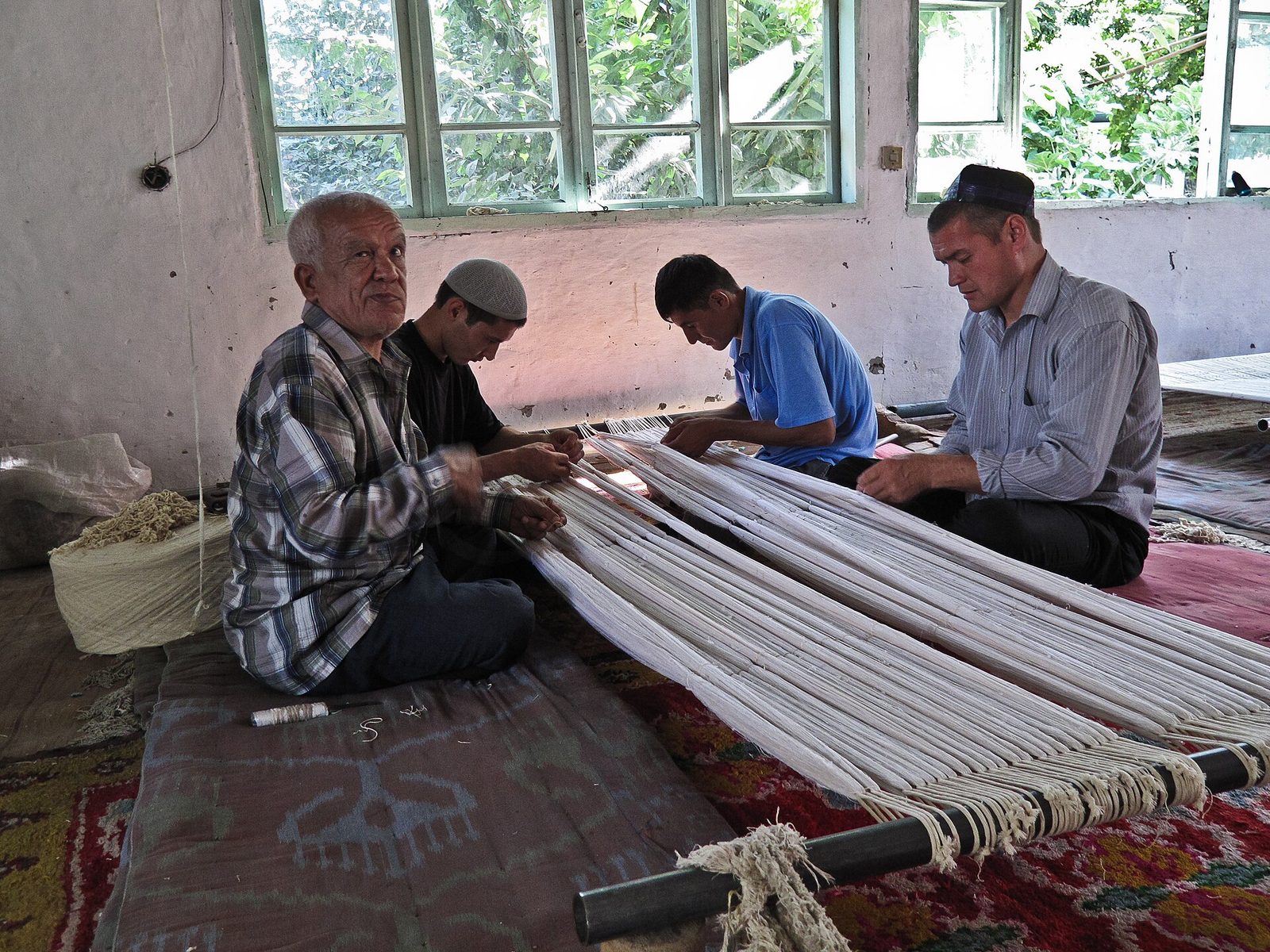
In ikat the pattern is dyed into the threads before weaving, which gives it soft, blurred edges. Two fabrics come off the looms: khan-atlas, pure silk, and adras, half silk and half cotton, cheaper and easier to wash. The home of both is Margilan in the Fergana Valley, and since 2017 the Margilan Crafts Development Centre has been on UNESCO’s Register of Good Safeguarding Practices for keeping atlas and adras alive.
At the Yodgorlik factory, working since 1972, you watch the silk go from cocoon to cloth and buy it by the metre. Because the threads are dyed, real ikat shows the pattern on both sides of the fabric; a print is pale on the back. How we plan the valley is in our Fergana Valley guide.
Ceramics: Rishtan and Gijduvan
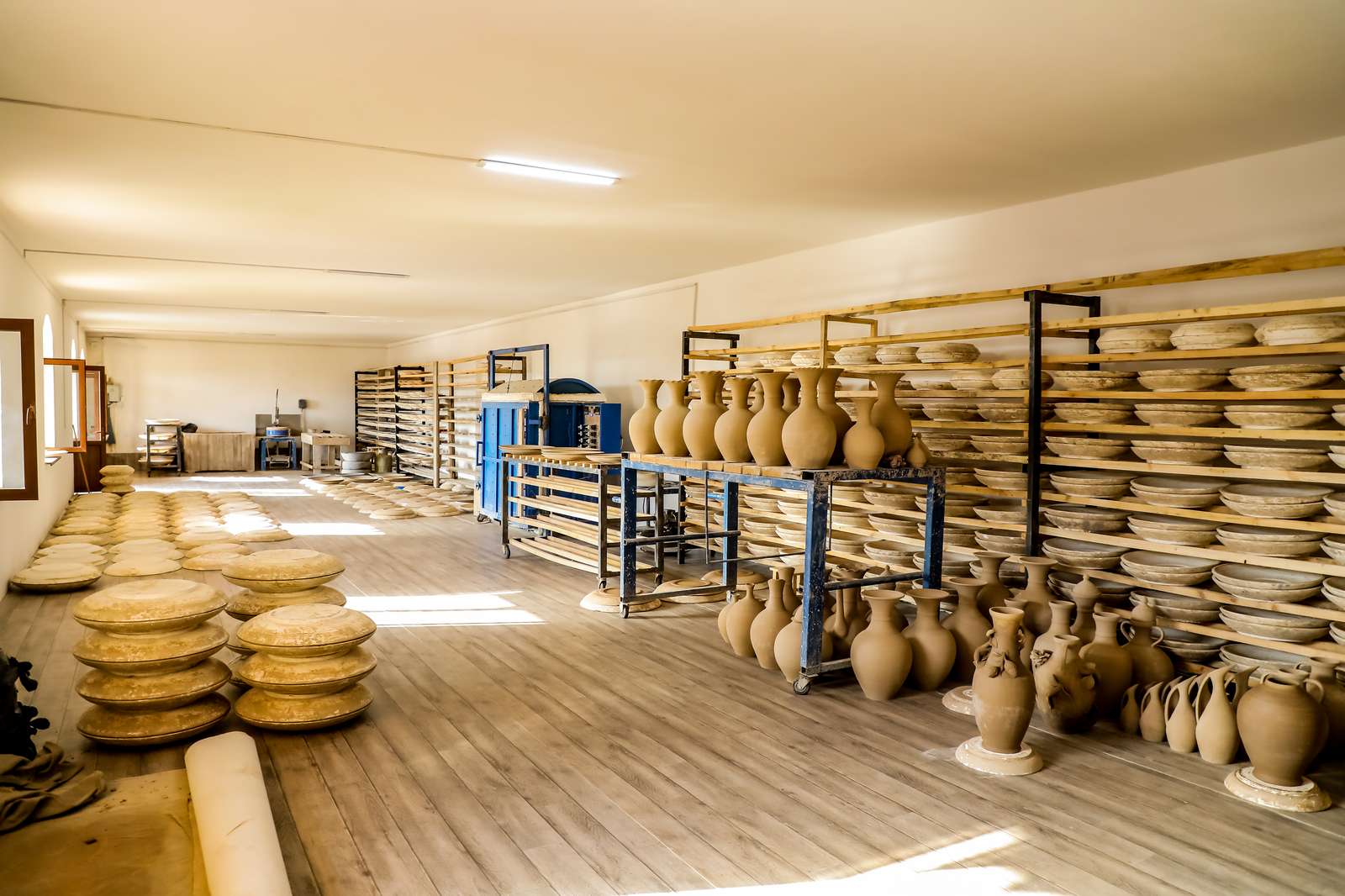
Rishtan, in the Fergana Valley, works with red local clay and the blue-green ishkor glaze, made from mineral pigments and the ash of burnt plants; families keep their recipes to themselves. Rishtan-style bowls are also made in volume for the bazaars, so if you want handmade, buy in a workshop, from the people at the wheel. Masters often put their mark on the base.
Gijduvan, about 40 km from Bukhara, has its own school. The Narzullaev family has potted here for six generations, and Abdullo Narzullaev opened a ceramics museum in his workshop in 1992. The patterns are geometric and floral, with green and blue prevailing. Ask the workshop to wrap your plates well and carry them in your hand luggage.
Bukhara gold embroidery
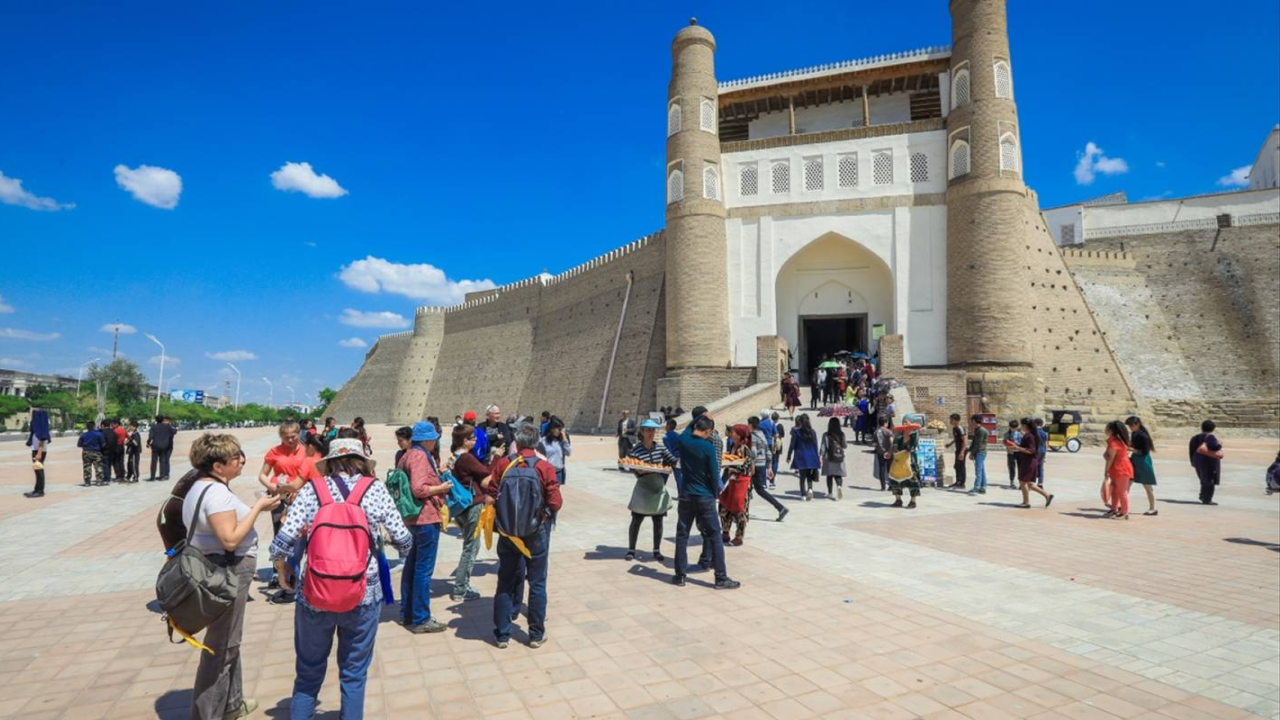
Under the emirs, gold embroidery was a court art: workshops in The fortress-residence of the rulers of Bukhara on a high artificial hill: the oldest structure in the city. Read more → embroidered robes of silk velvet with gold thread, and almost everything went to the court. In 1960 the craft was gathered into the Bukhara Gold Embroidery Factory. To see the emir’s own pieces, go to the museum of the The summer palace of the last emirs of Bukhara, built in the late 19th and early 20th century in a mix of European and Central Asian styles. summer palace (see Bukhara in 1, 2 or 3 days). Today you buy gold-embroidered caps, bags and small panels in the old town.
Knives and scissors: Chust and Bukhara
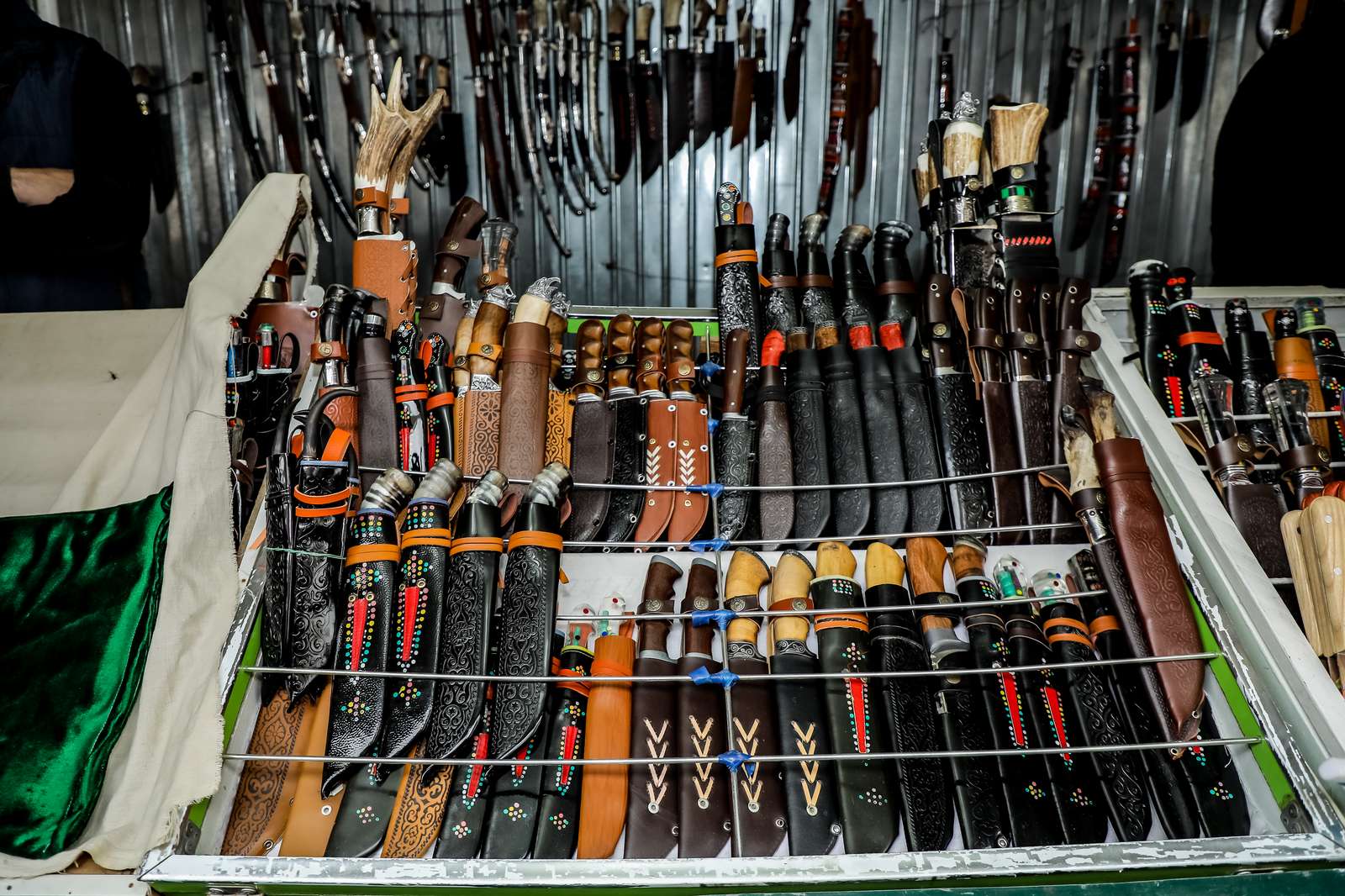
A pichoq from Chust, in the Namangan region of the Fergana Valley, is widely regarded as one of the finest traditional knives in Uzbekistan. It has a straight, wide blade and a handle of horn, bone or antler, and the blade carries the stamp of Chust. The town’s old blacksmiths’ quarter is still called Suzangaron.
In Bukhara, the trading dome of Telpak Furushon sells knives, jewellery and musical instruments, and next to it is a blacksmith’s workshop where you can watch knives forged. Look for the bird-shaped scissors of the Bukhara smiths: open them, and the beak becomes the two blades. Shavkiddin Kamalov, a sixth-generation blacksmith, runs a blacksmith’s museum in the city. Pack every blade in your checked luggage.
Konigil paper
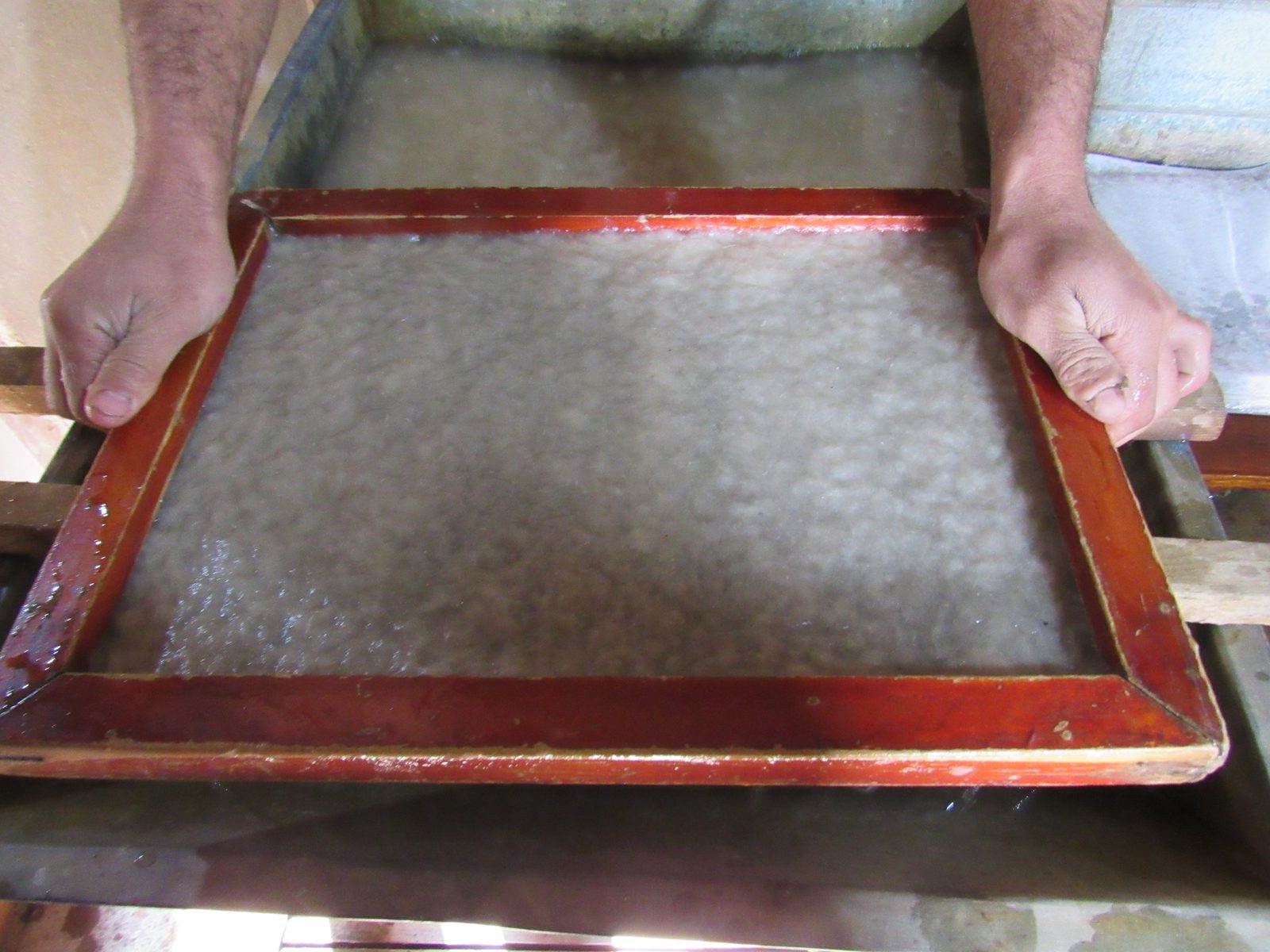
At the Meros mill in A village near Samarkand where paper is made by hand from mulberry bark, the old way, at a working mill on the stream., 13 km from Samarkand, paper is made by hand from mulberry bark. The method had been lost by the 19th century; the Mukhtarov brothers brought it back in the 1990s. The paper is slightly yellow, because nobody bleaches it, and is used to restore old manuscripts. The shop sells notebooks, postcards and miniatures, all light enough for any suitcase. It fits into the third day of our Samarkand plan.
Carpets
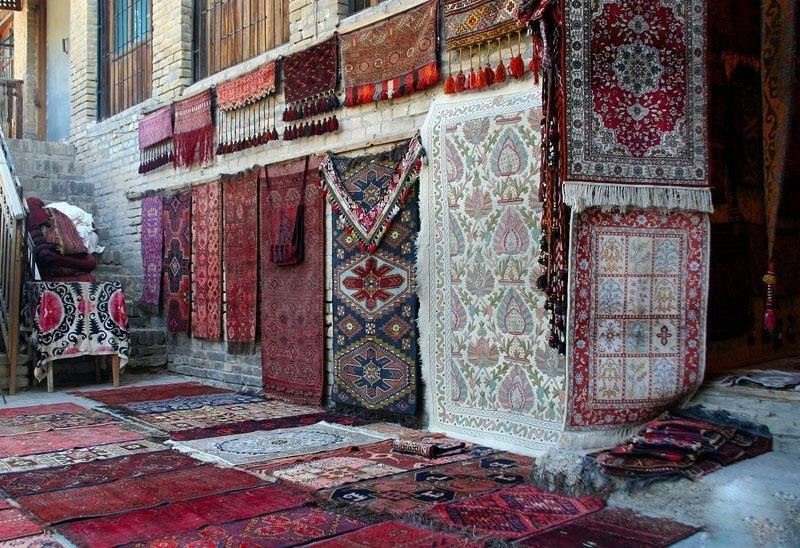
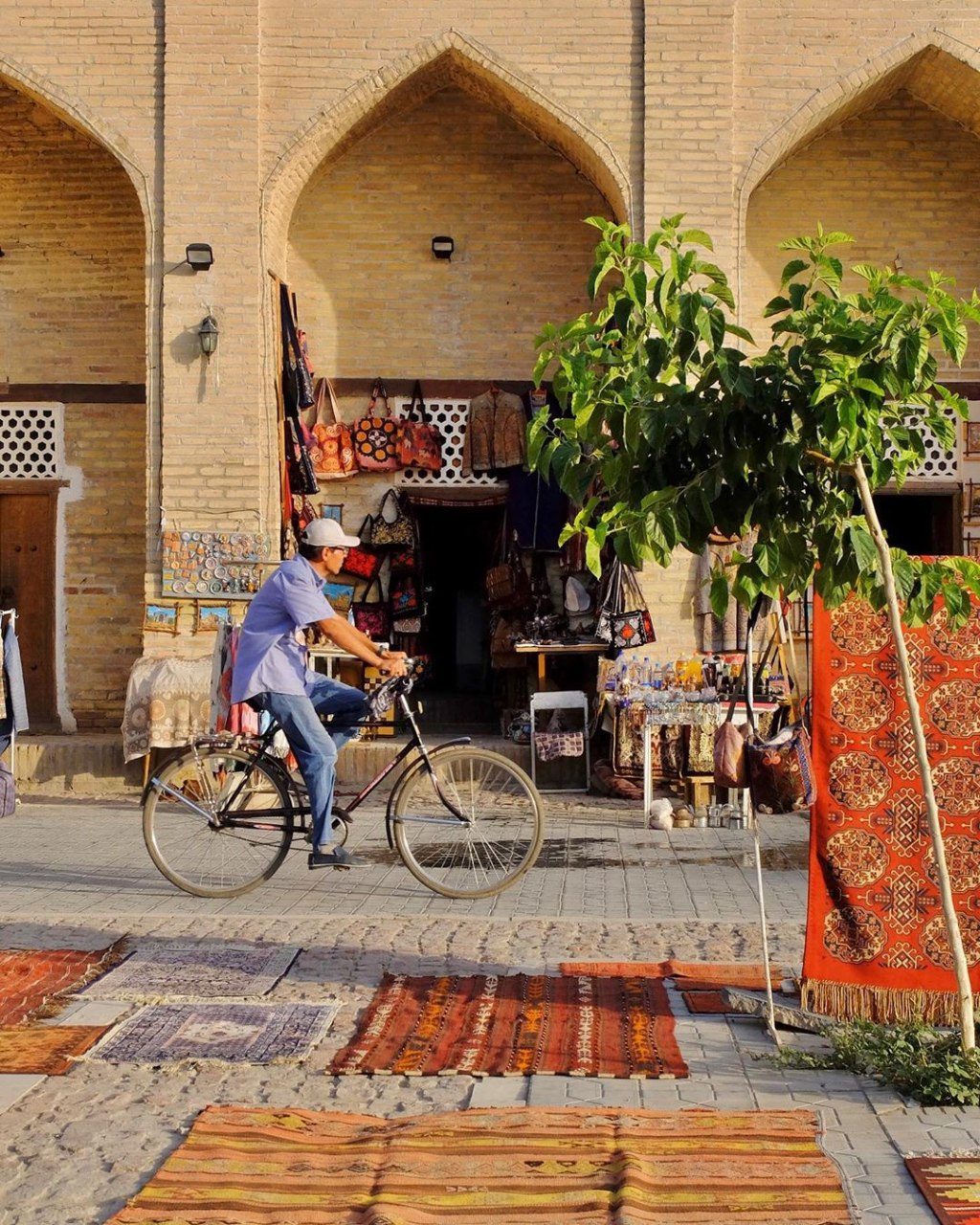
In Khiva, inside Itchan Kala, you can step into workshops and watch silk carpets being woven. The dyes are natural: pomegranate peel, walnut husk, madder root and indigo. A single carpet can take months. In Bukhara, carpets are sold under the domes of Toki Sarrafon and Tim Abdullakhan.
To check a carpet, turn it over. On a hand-knotted carpet the pattern shows on the back as rows of individual knots, slightly uneven, and the fringe is the end of the warp threads the carpet was woven on. A stiff grid, a glued backing or a fringe sewn on afterwards means a machine.
Customs: carpets, suzani and antiques
The line is fifty years. Pieces made 50 or more years ago count as cultural heritage and generally may not leave the country. Newer pieces of artistic value can need an export certificate from the Ministry of Culture; the examination takes up to ten days. Machine-made carpets, embroidery and suzani made within the last 50 years need no certificate, and neither do modern handmade folk crafts.
Take a receipt for every carpet or suzani. If a seller calls something antique, ask for the certificate before you pay. The full rules are in registration and customs in Uzbekistan.
Spices, dried fruit and nuts
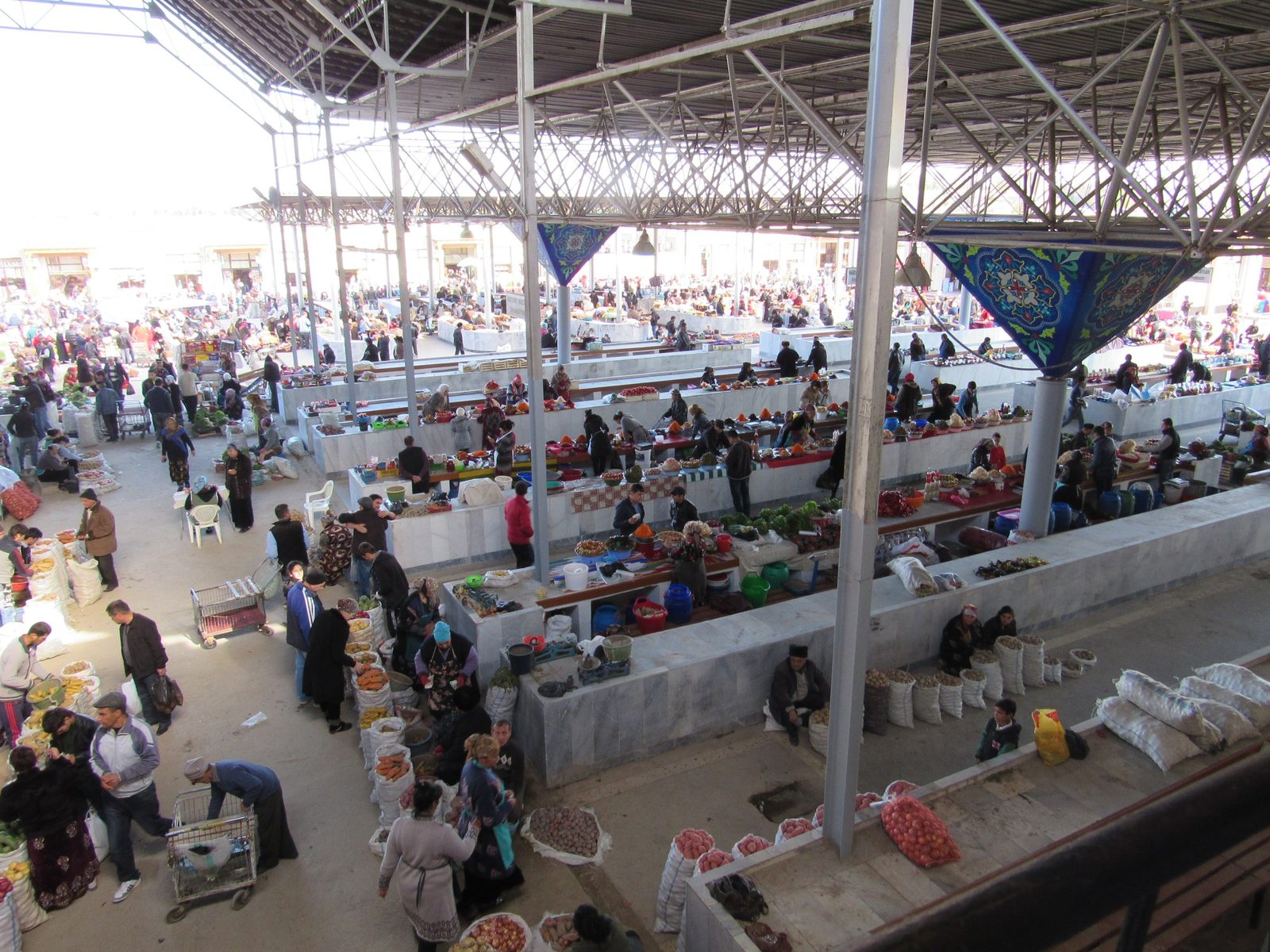
The easiest gifts come from Chorsu in Tashkent and Samarkand's main bazaar, right next to Bibi-Khanym: Samarkand bread, dried fruit, nuts and halva. Read more → in Samarkand: dried apricots, raisins, almonds, pistachios, spices and kurt, small balls of salted dried yoghurt. Taste before you buy. Check the rules of your home country before you pack food: Australia, for example, requires you to declare dried fruit, nuts, spices and wooden items on the Incoming Passenger Card, and declared goods of low risk are returned after inspection.
Where to buy, and how to bargain
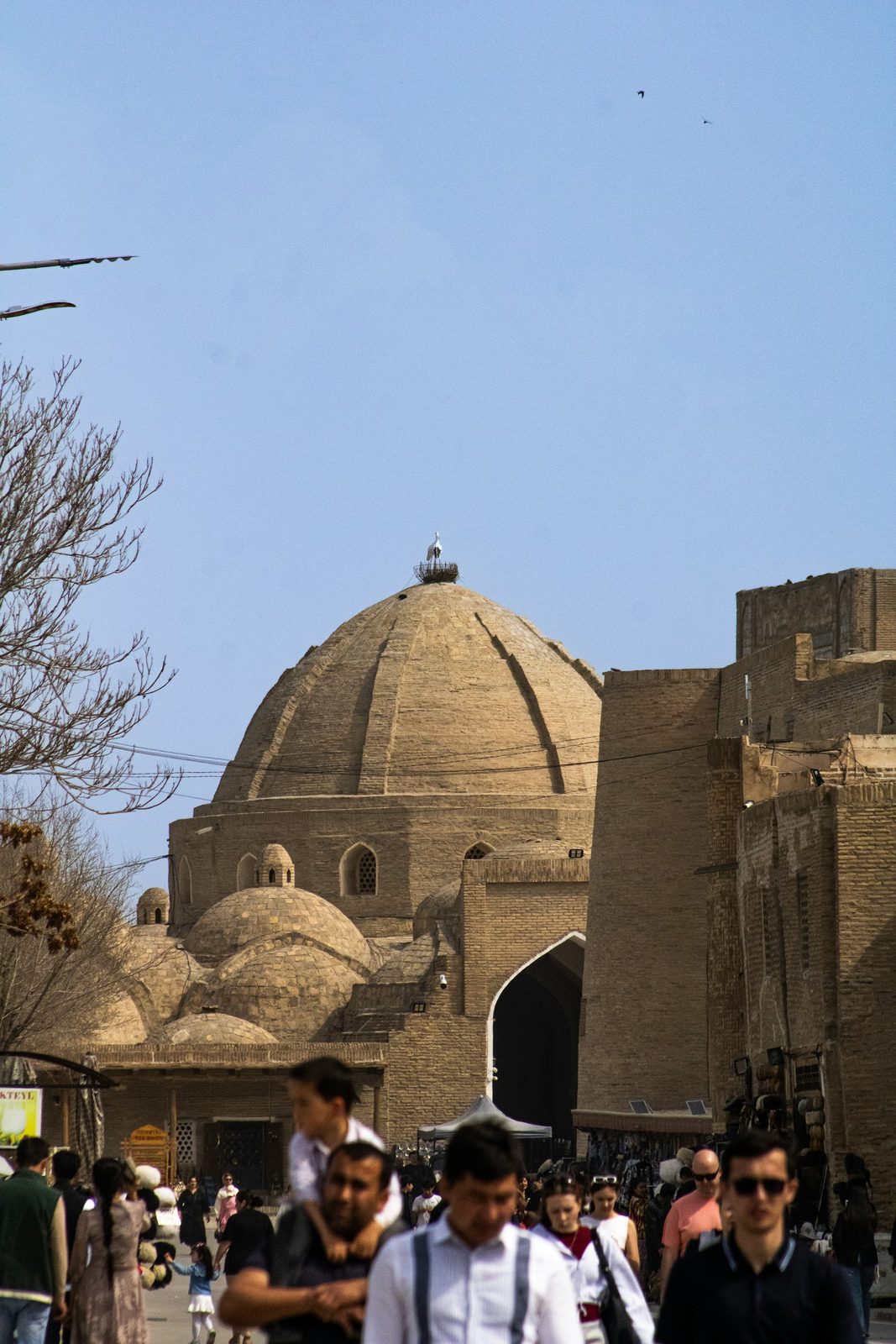
Buy at the source when you can: the workshops of Rishtan and Gijduvan, the looms of Margilan, the Meros mill, the domes of Bukhara, the workshops of Khiva. Bazaars like Chorsu and Siab are best for food, spices and everyday ceramics.
In bazaars and under the domes, bargaining is part of the deal. Ask the price, offer less with a smile and meet in the middle. Do not start if you do not mean to buy: once you agree a price, the deal is done. Bring som in small notes. Cards work wherever there is a terminal, but bazaar stalls want cash; see cards, cash and tipping. A guide helps more than you might think, especially where masters speak only Uzbek; see a private guide in Uzbekistan.
If crafts are why you travel, our Fergana Valley crafts tour gives four days to Rishtan, Margilan, Kokand and Andijan, with a ceramics session with a master in Rishtan. The older crafts story is in traditional crafts of Uzbekistan.
In short
- Turn it over: the back of a suzani or a carpet shows whether it is handmade.
- Silk ikat is from Margilan, ceramics from Rishtan and Gijduvan, knives from Chust, paper from Konigil, gold embroidery from Bukhara.
- Buy in workshops when you can; bazaars are best for spices, dried fruit and everyday pieces.
- Bargain in bazaars and under the domes, with cash in som, and only if you mean to buy.
- Pieces 50 years old or more stay in the country; keep receipts, and ask for the certificate before paying for anything “antique”.
© Photos
- Yodgorlik silk factory, Margilan — Peretz Partensky from San Francisco, USA / Wikimedia Commons · CC BY 2.0