
Places in this article: Samarkand
Samarkand paper: the Meros mill in Konigil, from mulberry bark to polished sheet
Hold a sheet of A village near Samarkand where paper is made by hand from mulberry bark, the old way, at a working mill on the stream. paper up to the window and you see a faint web of fibres, the colour of tea with milk. Nothing has been bleached and nothing added: it is mulberry bark and water, beaten by a wooden mill that a stream turns outside the wall. For about a thousand years, paper like this carried the name of Samarkand across the East.
The workshop that makes it is called ,Did you know? Paper polished with stone, made to last 400 years At the Meros mill in Konigil, founded in 1996 to revive a craft that had died out, a water wheel beats mulberry bark into pulp, and each sheet is polished for hours with agate, shell or horn. It is made to last some 400 years. Read more → “heritage”, and it stands in the village of Konigil, about 13 km from Samarkand. Here is what we tell our guests on the way: where Did you know? Legend says Chinese prisoners taught Samarkand paper A legend recorded in the 11th century says Chinese prisoners taken at the Battle of Talas in 751 taught Samarkand to make paper. In fact paper was used here earlier, and the craft most likely came gradually along the Silk Road. Read more → came from, how it was lost and brought back, how a sheet is made, and how to fit the visit into your days in the city.
A paper the East knew by name
Paper reached Sogdiana along the A network of caravan routes between China and the Mediterranean. Samarkand, Bukhara and Khiva grew rich as stops along it. long before the city made its own. Letters in Sogdian written on paper for merchants of Samarkand are dated to 313. By the 8th century Samarkand had a paper industry of its own, at about the same time as Baghdad.
Paper soon became what the city was known for. The Hudud al-Alam, a Persian geography of the 10th century, describes Samarkand as famous for it. Over the following centuries it replaced papyrus and parchment for manuscripts and miniatures: it was lighter, easier to store, and a burnished sheet kept the calligrapher’s line sharp. In the 15th century Simi Nishapuri, writing for calligraphers, ranked Samarkand with Damascus and Baghdad among the great paper centres, and Zayn al-Abidin, sultan of Kashmir, granted land to papermakers from Samarkand, which started Kashmir’s own paper industry.
Two kinds were made: rag paper for religious texts and mulberry paper for everyday use. People still call it “silk paper”. One explanation is the mulberry, the tree whose leaves feed silkworms; the other is the sheen of a well-polished sheet, smooth as silk.
Legend: the prisoners who knew the secret
The best-known story about Samarkand paper is a legend. In the 11th century the writer al-Tha’alibi recorded that Chinese prisoners, brought to Samarkand after the Battle of Talas in 751, taught the city to make paper. Historians are more cautious: paper was known and used in Samarkand decades before 751, and the craft most likely arrived gradually along the trade routes. We tell the legend as a legend; the fame that followed is history.
How the craft was lost and brought back
Samarkand made paper into the 19th century. Then factory paper arrived, the workshops could not compete, and the craft faded until the mulberry-bark method was forgotten.
Its return began at a conference. In 1994 an international meeting in Bukhara, held on UNESCO’s initiative, discussed Samarkand paper, which by then had not been made in the city for nearly two centuries. Zarif Mukhtarov, a craftsman from Konigil, read through old books and encyclopaedias and spent about five years experimenting at home before the sheets came out right. In 1996 he and his brother Islam founded the Meros workshop and built a mill to repeat the whole cycle by hand.
Foreign specialists later examined the paper under a microscope and concluded that the old Samarkand paper had been fully reconstructed. About twenty people work at Meros today. Their paper is used to restore old manuscripts and is ordered from across Uzbekistan and abroad.
Bark, water and four hours of boiling
Everything starts with young mulberry branches, one year old. This is the order the workshop follows:
- Soaking. The cut branches lie in water for four days.
- Stripping. The bark is peeled off the wood.
- Scraping. A knife takes off the dark outer skin and leaves the pale inner bark, the fibre the paper is made of.
- Boiling. The inner bark boils for about four hours, until it softens and pulls apart into strands.
Nothing goes to waste. Offcuts of the branches become frames for miniatures and lattice work, and the hard outer layer is turned into cardboard.
The water wheel that does the beating
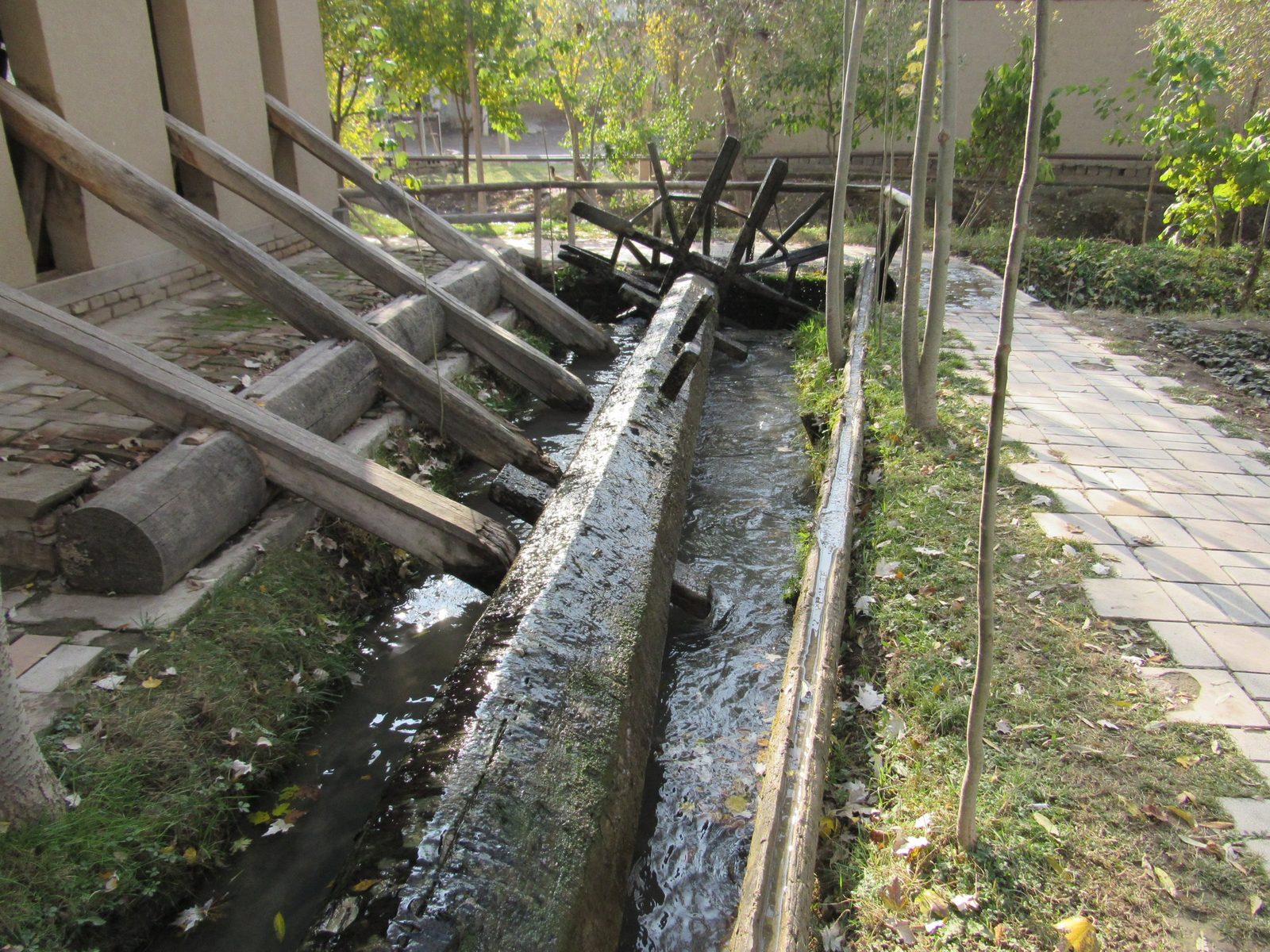
Walk round to the stream before you go inside. A charkhpalak, a wooden water wheel, turns a thick log that lies along the channel. Spokes on the log catch long wooden poles, which pivot through openings in the workshop wall. Inside, wooden stakes on the far ends of the poles rise and fall into small wooden basins, where the boiled bark is beaten into pulp.
The beating lasts eight to ten hours, while a worker stirs the mass with a wooden stick. No chemicals and no binders go in: only fibre and water. Water power may have beaten paper pulp in Samarkand as early as the 8th century, so this is one of the oldest machines of the craft.
Making a sheet, and polishing it
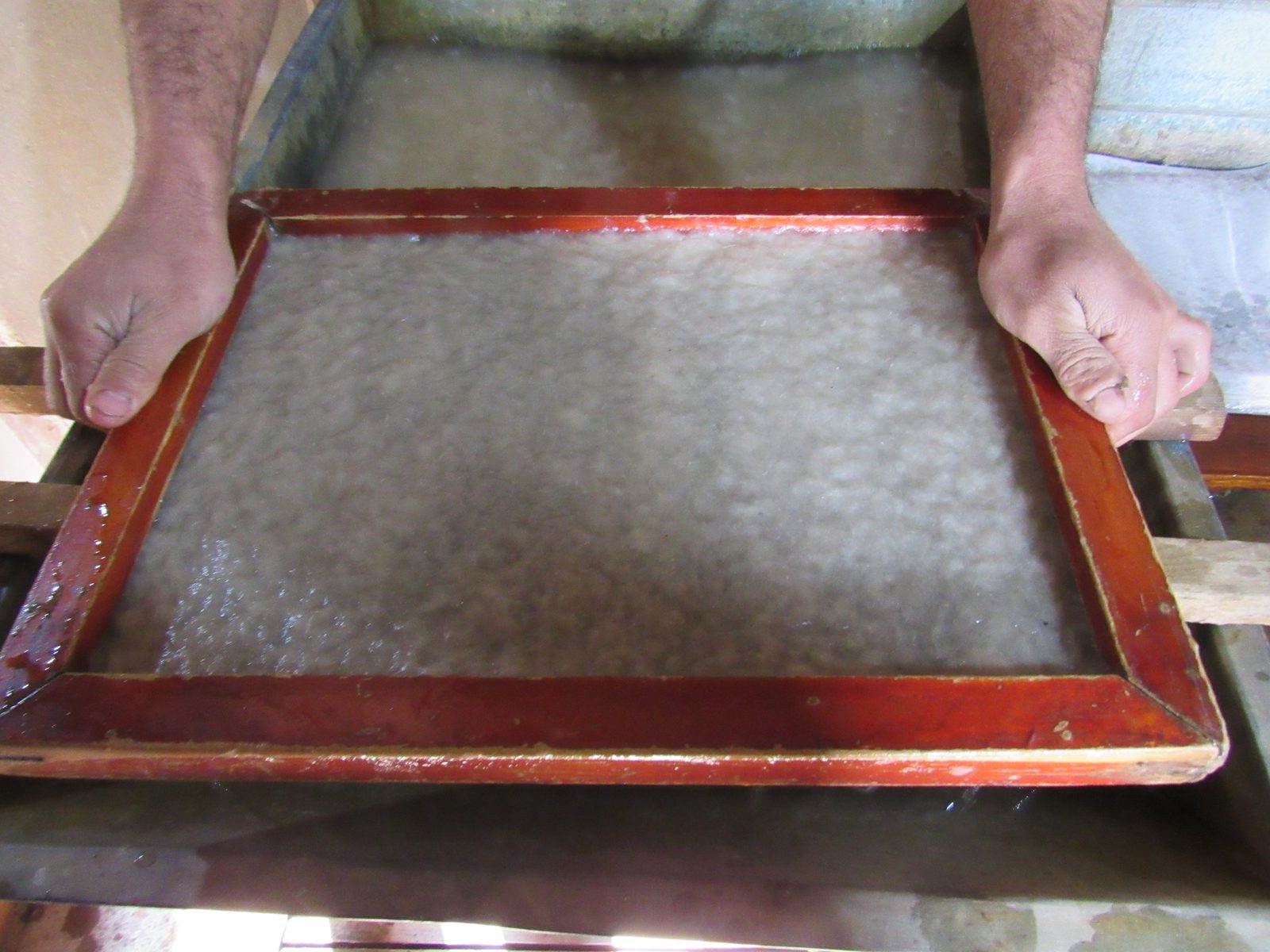
The pulp goes into a vat of water and is stirred. The master dips a frame with a fine mesh, lifts it level and lets the water drain away: the fibres settle and interlace into a sheet. This is the moment visitors watch most closely, and the step you can try yourself.
The wet sheets are stacked under a wooden board weighted with stones to squeeze out the last water, then stuck to a board or a pane of glass to dry: a few hours in summer, almost a full day in winter.
Then comes the finish that made Samarkand paper famous. Each sheet is polished on both sides for two to three hours with a smooth stone such as agate, a sea shell or a piece of horn. Burnishing closes the surface, so ink sits on it instead of spreading, and gives the paper its soft shine. Meros makes 100–120 sheets a day, in different sizes, thicknesses and colours.
The finished paper is warm ivory, because it is never bleached. It is strong, takes writing on both sides and crackles when you shake it. An ordinary sheet lasts about forty years in storage; Samarkand paper is made to last some four hundred.
The teahouse, the pottery and the shop
Meros is more than a workshop. Its yard is a small park of trees and running water on the ,Samarkand's main bazaar, right next to Bibi-Khanym: Samarkand bread, dried fruit, nuts and halva. Read more → and after the tour you can sit in the A teahouse: green tea, plov and conversation on wide wooden beds called topchan. by the river, where guests are served Samarkand Rice cooked in a kazan with carrots, onions and meat: the dish of every Uzbek celebration. Each region cooks it its own way. and local fruit.
Konigil has long been a village of crafts; its name is usually explained as “clay mine”. Next to the paper workshop there is a pottery studio where you can try the wheel, and the village makes linseed oil, so ask about cooking plov with it. It works well with children: they follow every stage and can take home a sheet they made themselves.
The shop sells what the mill makes: notebooks bound in the national style, postcards, miniatures painted on Samarkand paper, bags, dolls and even dresses made of paper. Paper weighs almost nothing and does not break, which makes it the easiest craft to carry home next to a bowl from Rishtan. More ideas, and where to find them, are in what to buy in Uzbekistan.
The mulberry links Konigil to another craft. Its leaves feed the silkworms whose cocoons become ikat in the Fergana Valley, the story we tell in Margilan silk.
Planning your visit
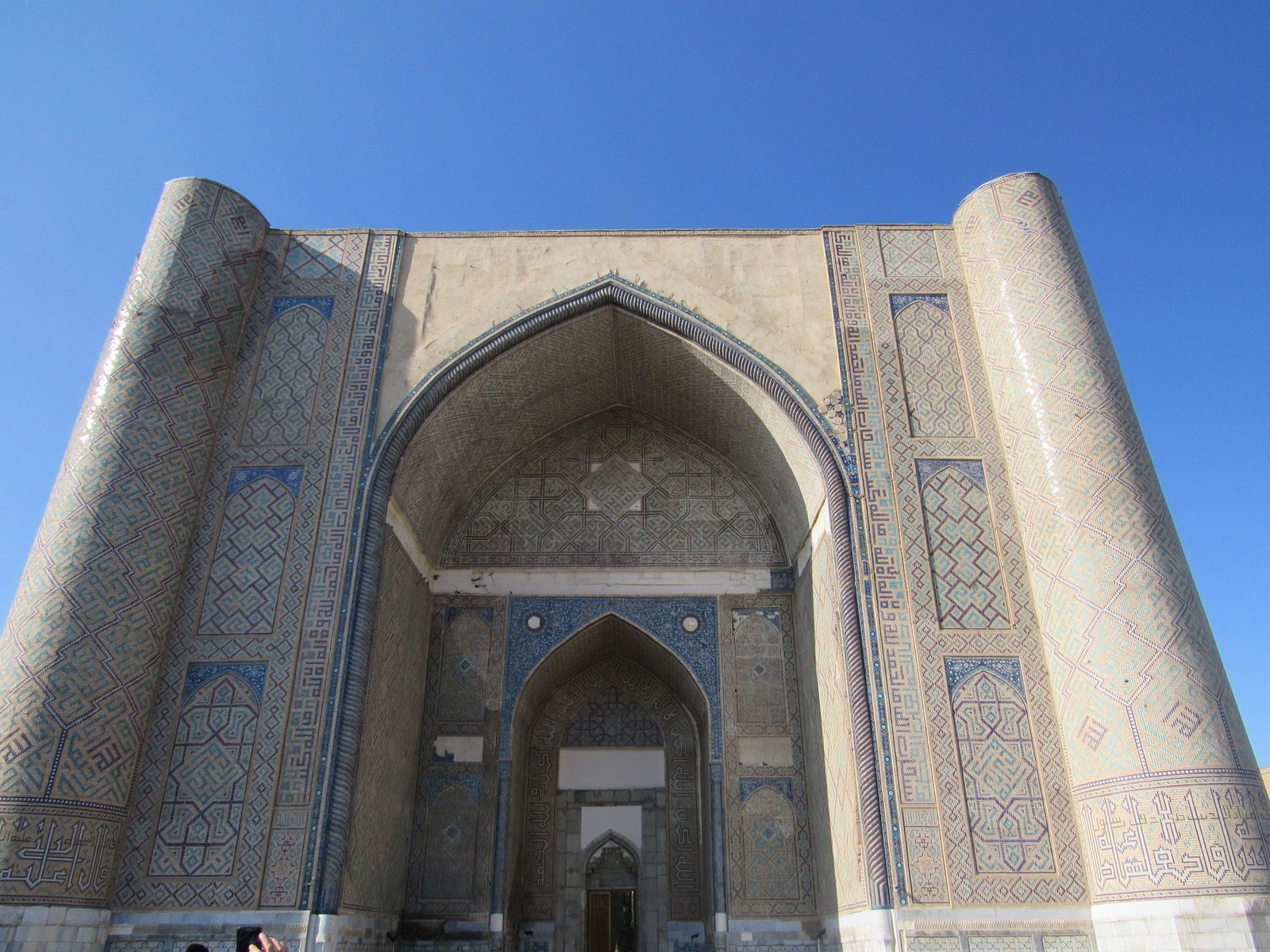
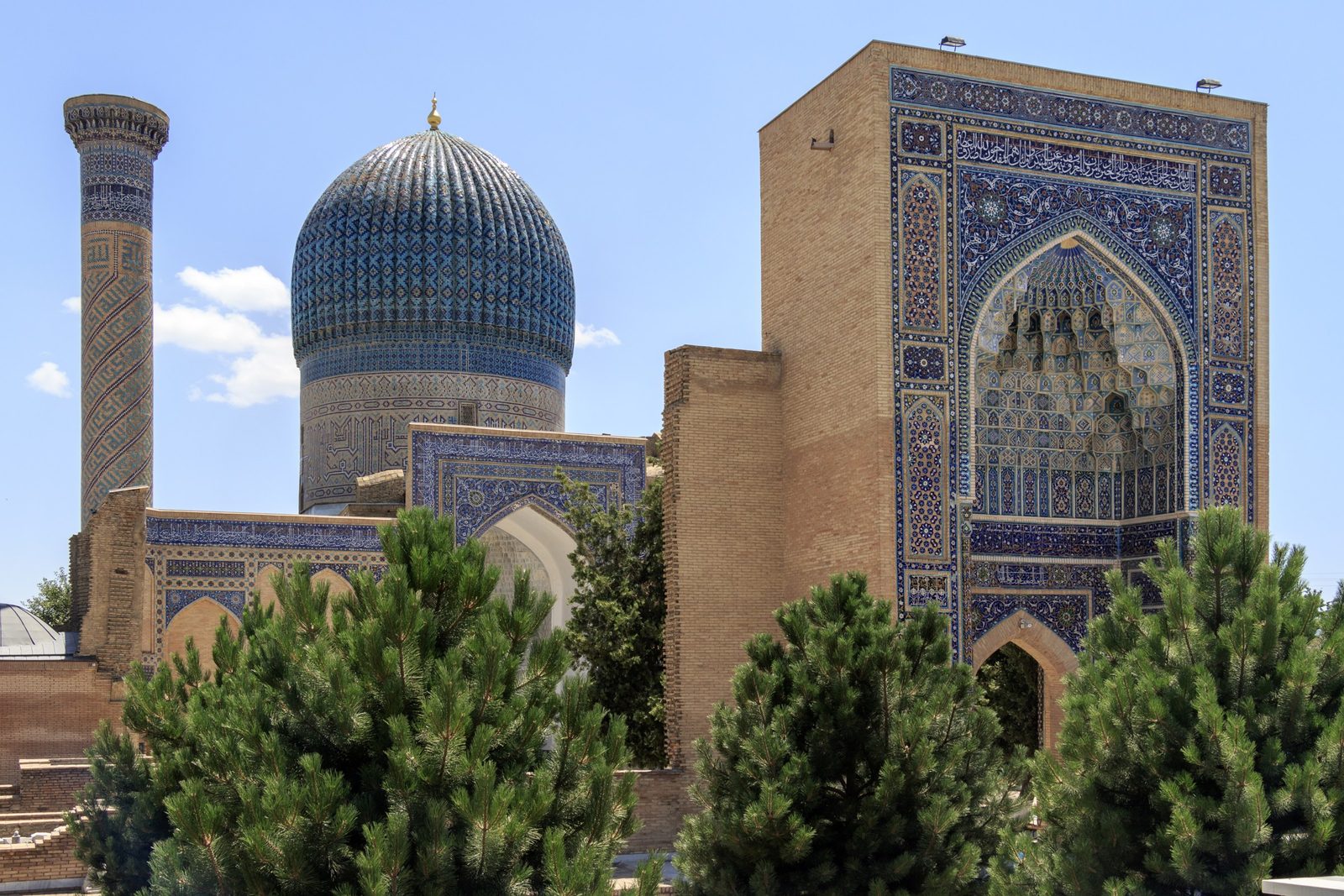
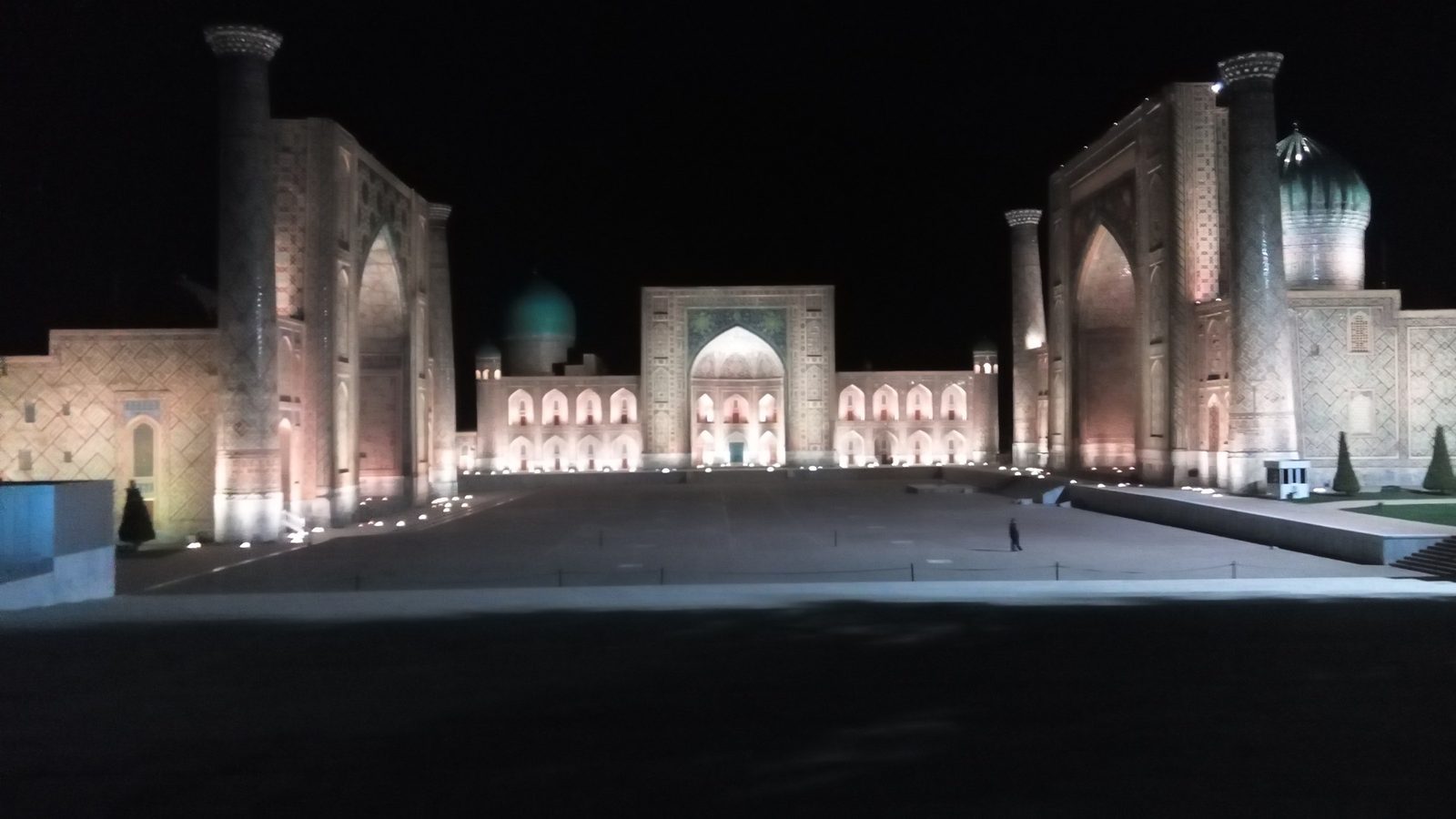
Konigil fits best into a third day in Samarkand, once you have seen the Registan and the tiled mausoleums and want a slower morning. Pair it with the Ulugh Beg Observatory, as in our plan for Samarkand in 1, 2 or 3 days.
Our private Samarkand Discovery tour covers the ,Did you know? Ulugh Beg measured the year to within 25 seconds Working at his Samarkand observatory, Ulugh Beg put the tropical year at 365 days 5 h 49 min 15 s, about 25 seconds too long, closer than Copernicus a century later. Read more → the Konigil paper mill, the mausoleum of Did you know? Legend says Saint Daniel's tomb keeps growing The tomb of Saint Daniel by the Siab stream is about 18 m long. Legend says Timur brought the relics back from a campaign in the west and that the body keeps growing, so the tomb had to be lengthened. Who lies here is still debated. Read more → and the Uzbekistan's high-speed train: Tashkent to Samarkand in 2 hours 30 minutes, Tashkent to Bukhara in about 4 hours. Tickets are tied to your passport. Read more → museum in one day with a guide and a car. A paper-making master class at Meros is arranged on request: tell us when you book.
- Where: the village of Konigil, about 13 km from Samarkand, on the Siab. You need a car or a taxi.
- How long: about an hour and a half on site, half a day with the drive; more with a master class or lunch in the teahouse.
- When: spring and autumn are the most pleasant; in summer, come in the morning, before the heat.
- Visiting: Meros is a working mill, so we agree the time in advance. Ask before you film the craftsmen, and carry some cash in som for small purchases; see cards, cash and tipping.
In short
- Samarkand made paper from the 8th century and was famous for it across the East; the story of Chinese prisoners after 751 is a legend.
- The craft died out in the 19th century; Zarif and Islam Mukhtarov revived it at the Meros mill in Konigil in 1996.
- A sheet takes mulberry bark, four days of soaking, four hours of boiling, eight to ten hours under a water-driven mill and two to three hours of polishing with stone, shell or horn.
- The paper is unbleached, ivory-coloured and used to restore old manuscripts.
- Konigil is 13 km out of town: half a day, best on your third day in Samarkand, with a master class on request.