
 Deutsch
 English
 Español
 Français
 Italiano
 Polski
 Português
 Suomi
 Svenska
 Türkçe
 Русский
 עברית
 한국어
 中文
 日本語
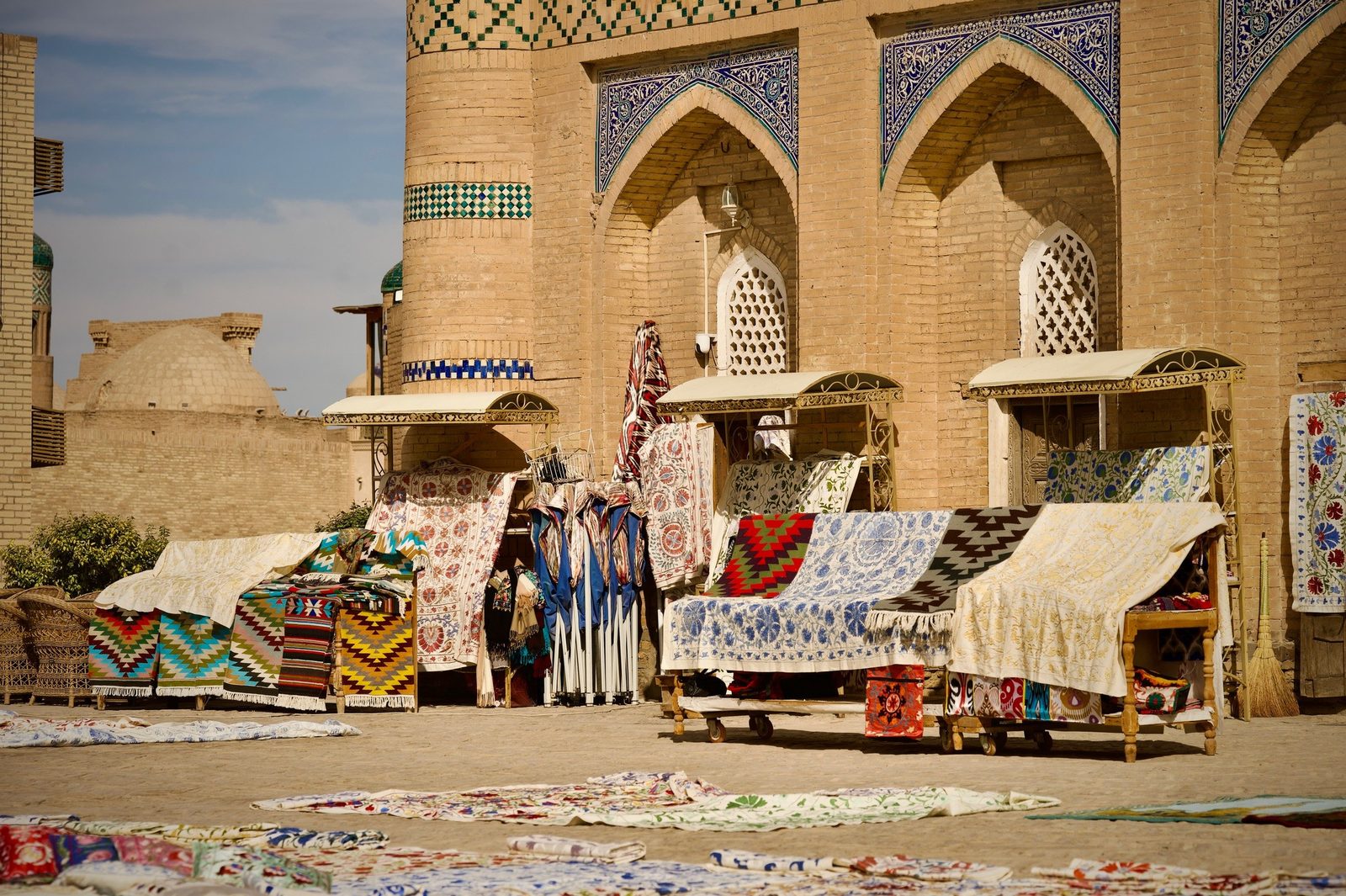
Places in this article: Samarkand · Bukhara · Khiva
Uzbek carpets: where to watch them woven in Khiva, Samarkand, Bukhara and Margilan
In the silk carpet workshop in Samarkand, a weaver ties about 25 knots a minute. One square centimetre of carpet holds about 150 of them, so a single carpet stays on the loom for a year, often longer. You can stand beside the loom and watch the pattern grow knot by knot.
We are a tour operator from Tashkent, and we take travellers into the workshops where Uzbek carpets are made. This article covers the main kinds of carpet, the four towns worth a visit for them and what to check before you pay.
Gilam, julkhyr and palas: three kinds of Uzbek carpet
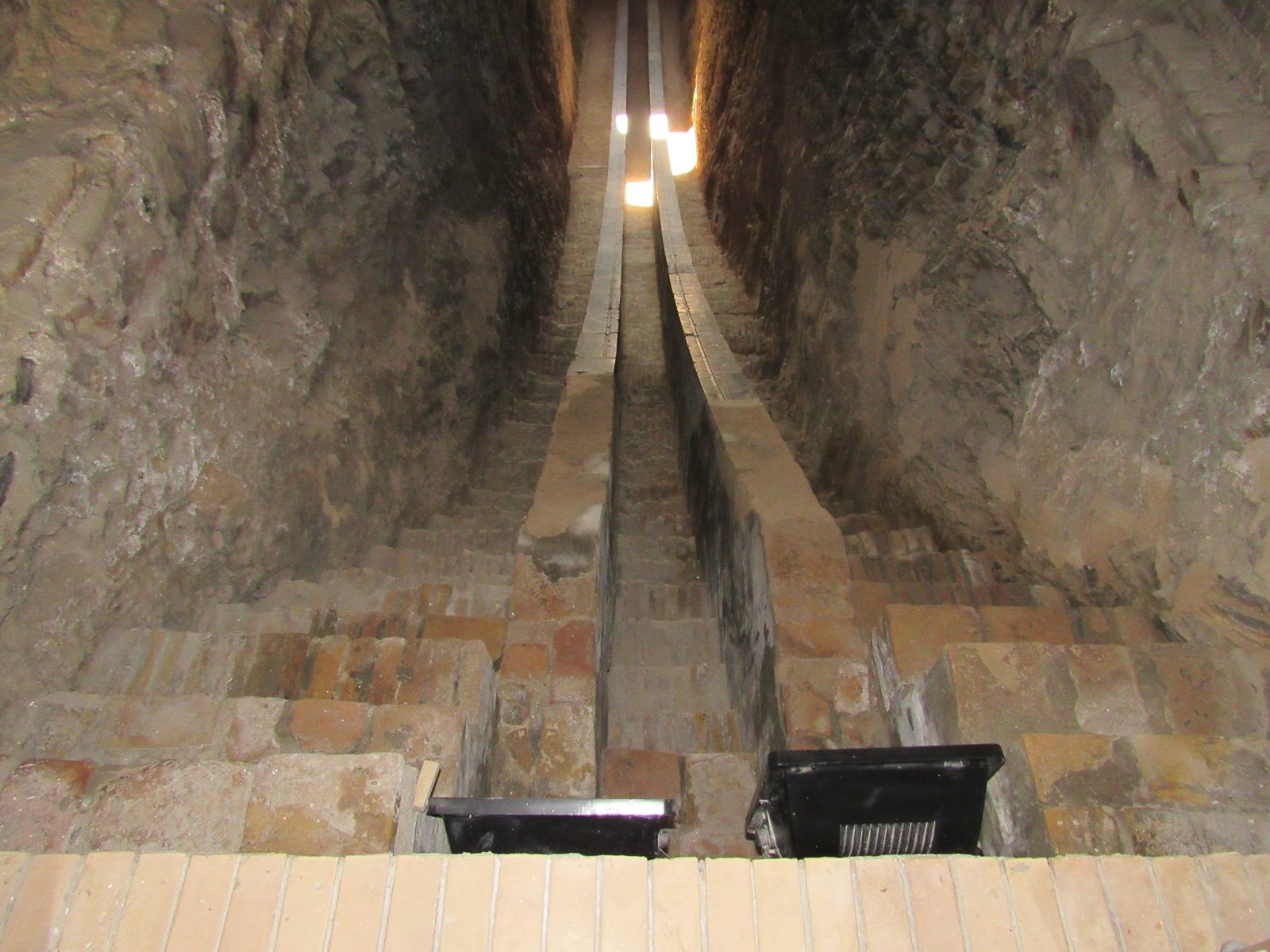
Uzbek carpets fall into three families. The gilam is the familiar pile carpet, of wool or silk, with a short, dense pile. The julkhyr is its rough country cousin. Its pile is up to 25 mm long, it is woven on a narrow loom in long panels, usually four, which are then sewn together, and the wool is sheep’s, camel’s and goat’s. The name means “bear skin”. In the 19th and early 20th centuries julkhyrs were woven in the Samarkand and Jizzakh regions and around ,Did you know? Legend credits Alexander with Nurata's underground canals Legend says Alexander the Great founded Nur in 327 BC and laid its kariz, underground channels with wells dug a few metres apart for cleaning. Whoever built them, parts of the kariz near Nurata still carry water today. Read more → and they served as bedding and floor covers.
The palas has no pile at all. It is flat-woven, warp and weft only, and it is light enough to roll up and take home. One more name you will meet in shops is “Bukhara”: the red carpet with rows of octagonal medallions. That design comes from the Turkmen weaving tradition and took its name from the Bukhara market, where it was traded. We explain the medallions and other motifs in symbols in Uzbek ornament.
Khiva: carpets drawn from tiles
Khiva’s silk carpet workshop opened in 2001, set up by UNESCO and the development organisation Operation Mercy. The looms stand inside ,Did you know? People still live inside Khiva's museum city Itchan Kala packs more than 50 historic monuments and about 250 old houses inside clay walls 8–10 m high and 5–6 m thick, and families still live and work in its lanes. Read more → in a An Islamic college: student cells and classrooms around a courtyard behind a grand portal. In the old towns many now house museums and craft workshops. Read more → built in 1873, and more than 40 women take turns at them. Their designs come from Khiva’s own tilework and carved doors and from the star, interlace and floral forms of Timurid art.
All the dyes are natural. Onion skins, vine and quince leaves give yellow, pomegranate skins give gold, walnut husks give brown and madder root gives red, pink and peach. Indigo for the blues is brought in. In Khiva we arrange a visit to a silk factory with a car and an escort, and a private guide can add the carpet workshops to a walk through Itchan Kala.
Samarkand: a year for one silk carpet
The Samarkand factory, known by the name of Hujum street where it stands and officially called Samarkand-Bukhara Silk Carpets, opened in 1992. Here you follow the whole process: silk unwound from the cocoons, threads dyed in big pots in the courtyard with pomegranate peel and green walnut, then the looms, where weavers work the knots with scissors and a hook. The average is 150 knots per square centimetre, and the factory’s finest piece has 600. You can order a carpet from a sketch or a photograph.
Samarkand also has the Eternal City, 11 hectares of craft workshops where carpet weavers work next to woodcarvers, potters and paper makers. The Eternal City and a workshop where silk carpets are knotted by hand are both in our Crafts of Bukhara and Samarkand tour, five days with a private guide. If you only have an afternoon, we can book a visit to a silk workshop on its own.
Bukhara: a carpet museum and a silk hall
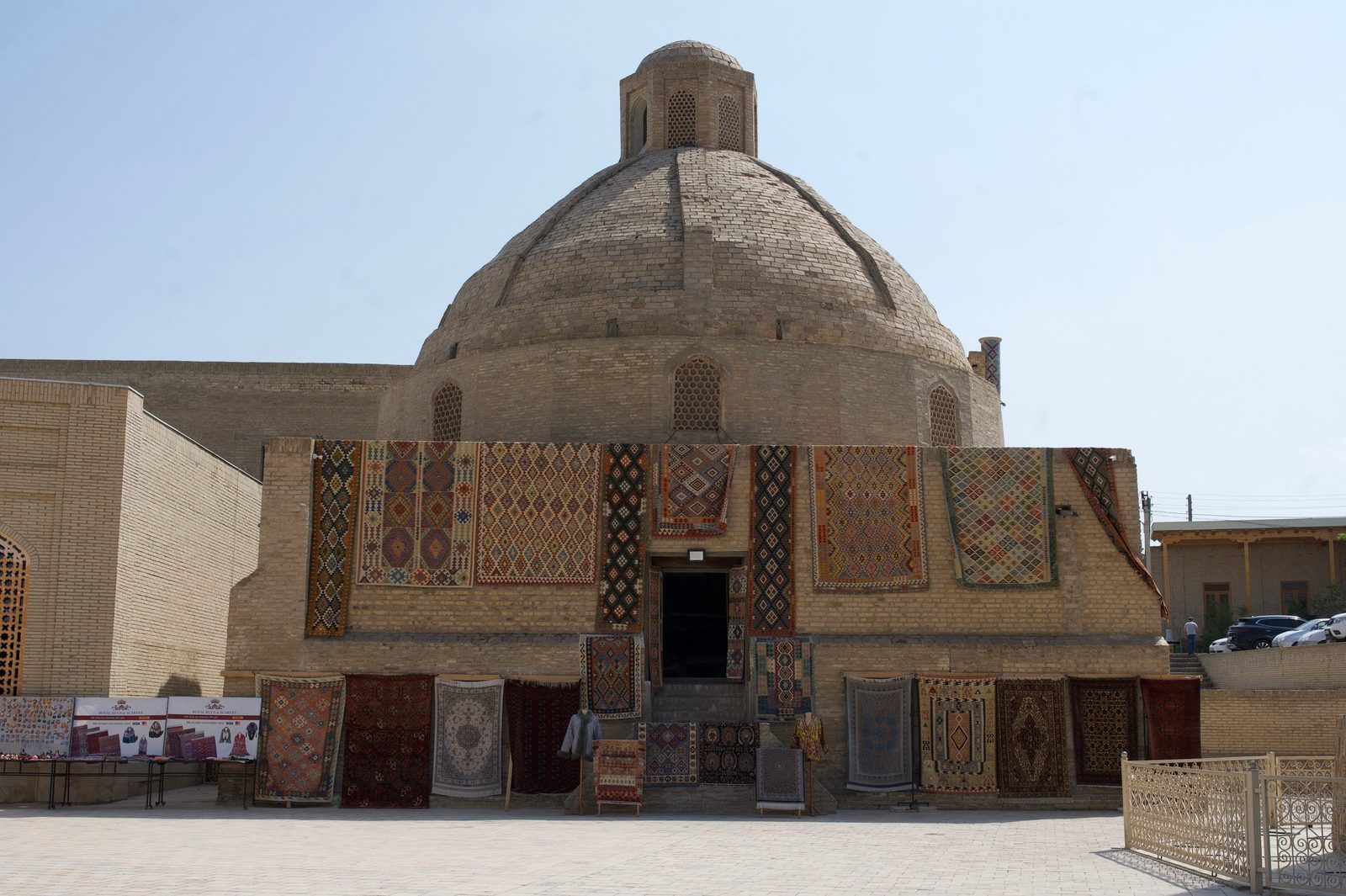
Start in the Did you know? Magoki-Attori: a mosque 'in the pit' Magoki-Attori means roughly 'in the pit': even in the 10th century it lay below street level. Beneath it lie remains of a pre-Islamic temple. Read more → mosque. It holds a carpet museum with pieces from the 18th to the 20th century, from Uzbekistan and the neighbouring countries, and after an hour there you will read the patterns in the shops much better. Then walk to the Tim Abdullah Khan, a covered hall built in 1577 for the silk trade. Today carpet sellers have it, and you can look at gilams, palas and Did you know? One suzani was often stitched by several women at once A family member or a pattern drawer, the kalamkash, drew the design across strips of cotton. The strips went to different women of the family or neighbourhood, who embroidered them at the same time; sewn back together, they show slightly mismatched seams. Read more → slowly, out of the sun. The other domes are in our guide to the trading domes of Bukhara. A guide for the day helps with both the history and the bargaining.
Margilan: silk carpets at Yodgorlik
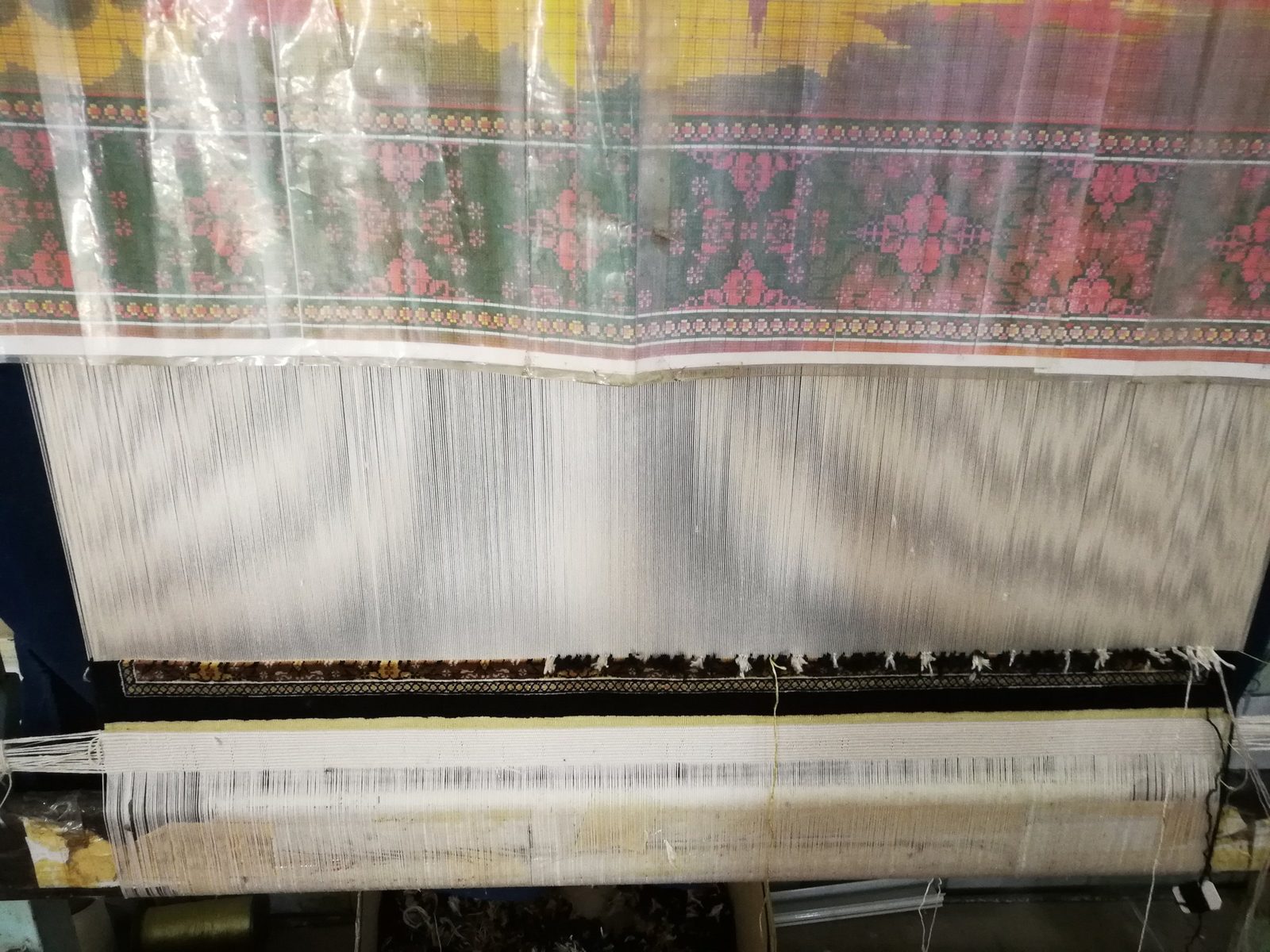
In the Fergana Valley the Yodgorlik factory in Margilan, working since 1972, is best known for ikat, but it also weaves silk carpets. The weaver works from a squared pattern chart hung above the loom, one square for one knot. Our Fergana Valley crafts tour spends a whole morning there, and on the same trip you sit at the potter’s wheel in Rishtan. More about the factory is in Margilan silk and Yodgorlik.
Before you buy: the back and the paperwork
Turn the carpet over. On a hand-knotted carpet the pattern shows on the back as rows of separate, slightly uneven knots, and the fringe is the end of the warp threads. A stiff grid, a glued backing or a fringe sewn on later means a machine.
For customs the line is fifty years. Pieces made 50 or more years ago count as cultural heritage and generally may not leave the country, while modern handmade carpets need no export certificate. Keep the receipt, and if a seller calls a carpet antique, ask for the Ministry of Culture certificate before you pay. More on souvenirs in what to buy in Uzbekistan.
In short
- Uzbek carpets come in three families: short-pile gilam, long-pile julkhyr and flat-woven palas.
- In Khiva the silk carpet workshop has woven designs taken from Timurid tiles, with natural dyes, since 2001.
- In Samarkand one silk carpet takes about a year, at about 150 knots per square centimetre.
- In Bukhara see the carpet museum in Magoki-Attori and the Tim Abdullah Khan; in Margilan, the looms at Yodgorlik.
- Keep the receipt. Our crafts tour takes you to the workshops with a guide, and the price is on request.