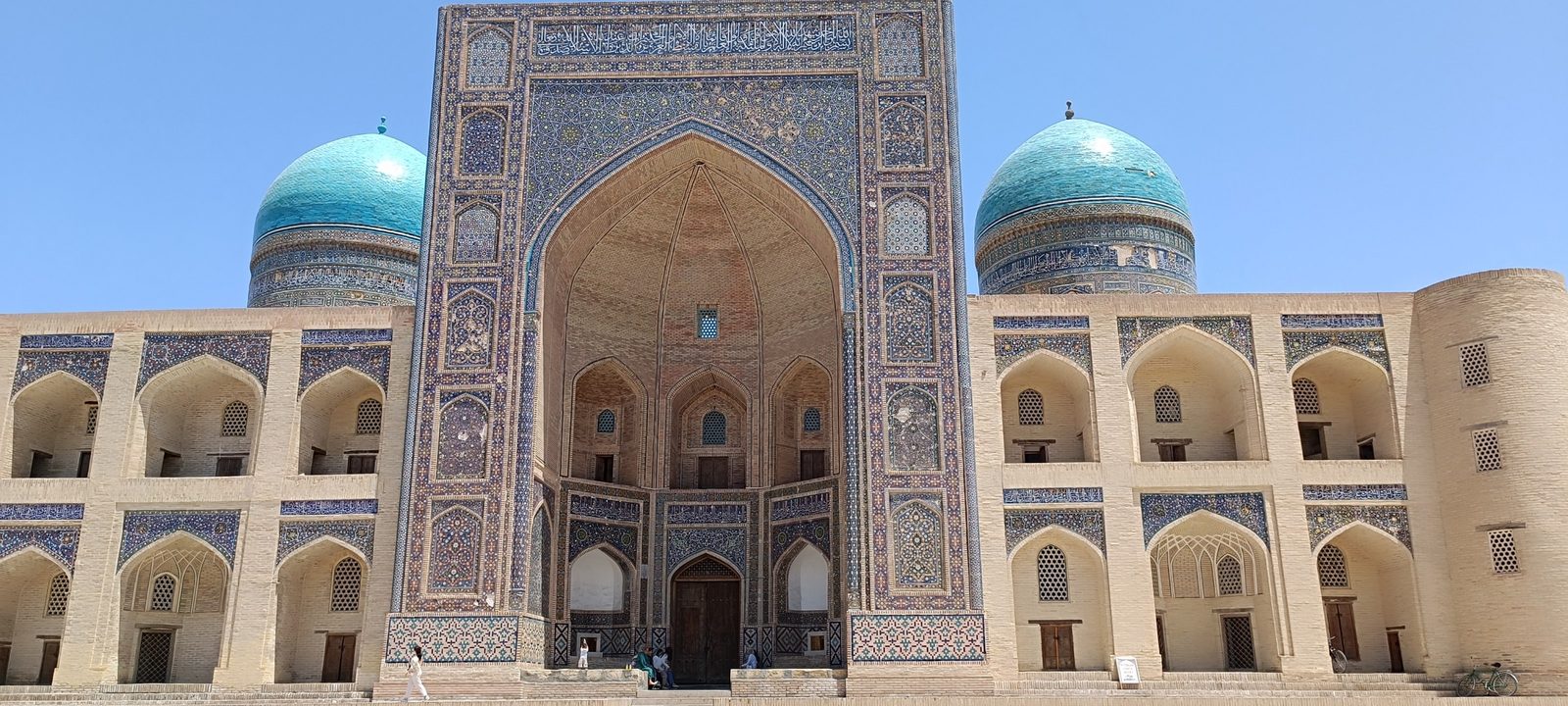

Places in this article: Samarkand · Bukhara
Nurata: the holy spring, Alexander’s fortress and suzani on the way to Aydarkul
In the middle of Did you know? Legend credits Alexander with Nurata's underground canals Legend says Alexander the Great founded Nur in 327 BC and laid its kariz, underground channels with wells dug a few metres apart for cleaning. Whoever built them, parts of the kariz near Nurata still carry water today. Read more → there is a pool full of fish that nobody catches. They are marinka, a fish of Central Asian mountain rivers, and they crowd the water of a spring that stays at about 20 °C in July and in January. Feeding them, fishing for them or eating them is forbidden, and the town keeps the rule.
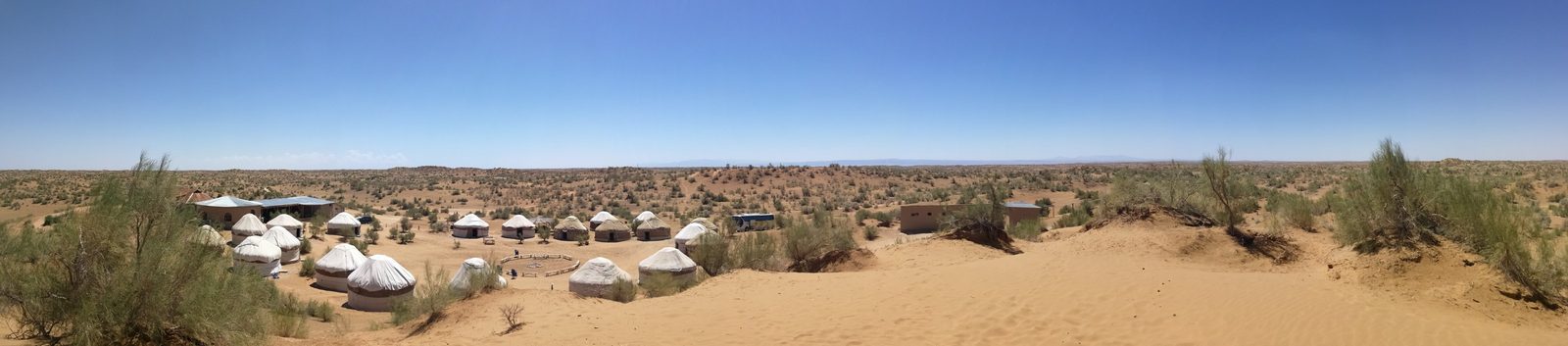
Most travellers see Nurata through a car window on the way to the yurt camps at .Did you know? Aydarkul is a wetland of international importance In 2008 the Aydar-Arnasay lake system, about 527,000 ha, became a Ramsar site. It lies where two great bird flyways cross and shelters Dalmatian pelicans and the rare white-headed duck. Read more → We think it deserves a proper stop: a holy spring, a mosque with one of the widest domes in Central Asia, a hill that tradition ties to Alexander the Great, and the embroidery that made the town's name known to textile collectors. Here is what to see and how to fit it into a route.
The Chashma spring and its sacred fish
Chashma simply means “spring”, and the whole town grew around this one. A tenth-century history of Bukhara already describes Nur as a village with a cathedral mosque, and pilgrims were coming to its holy graves at that time.
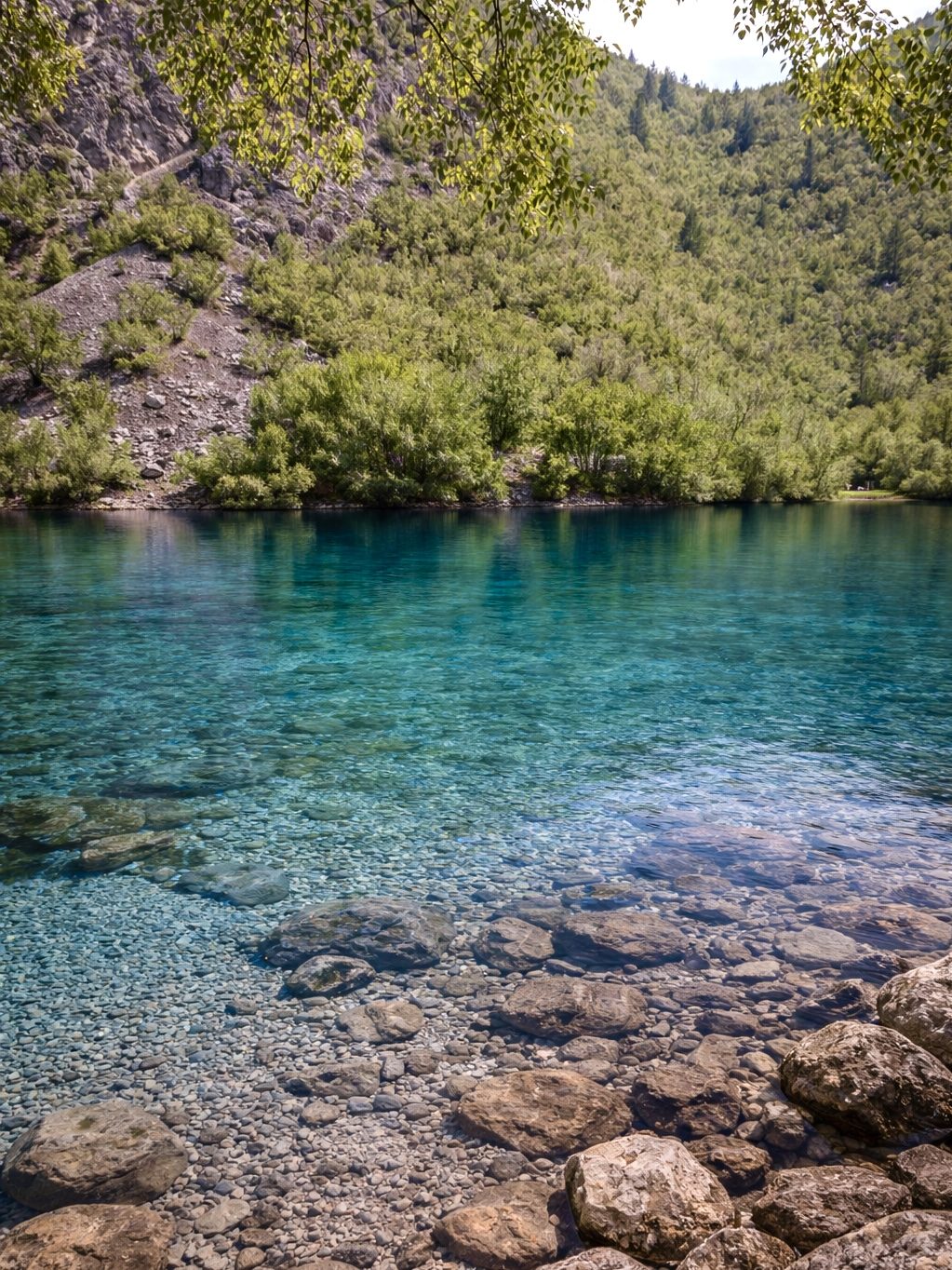
Local legend explains the spring with light. A glowing stone fell from the sky, the story goes, and where it struck the ground a spring of healing water appeared. Nur means “light”, and the legend adds that a glow is sometimes seen over the spring at night. Treat it as the town treats it: a legend, told with affection.
The facts are just as pleasant. The water stays at about 19.5–20 °C all year and the fish are easy to watch from the edge of the pool. A well called Besh Panja, about 6 m deep, stands nearby and feeds into the spring. Behind the complex is a cemetery with the grave of a revered saint, and families still come here on ziyarat, the visit to holy places. Our guide to ziyarat in Uzbekistan explains how such visits work.
The Juma mosque and its 16-metre dome
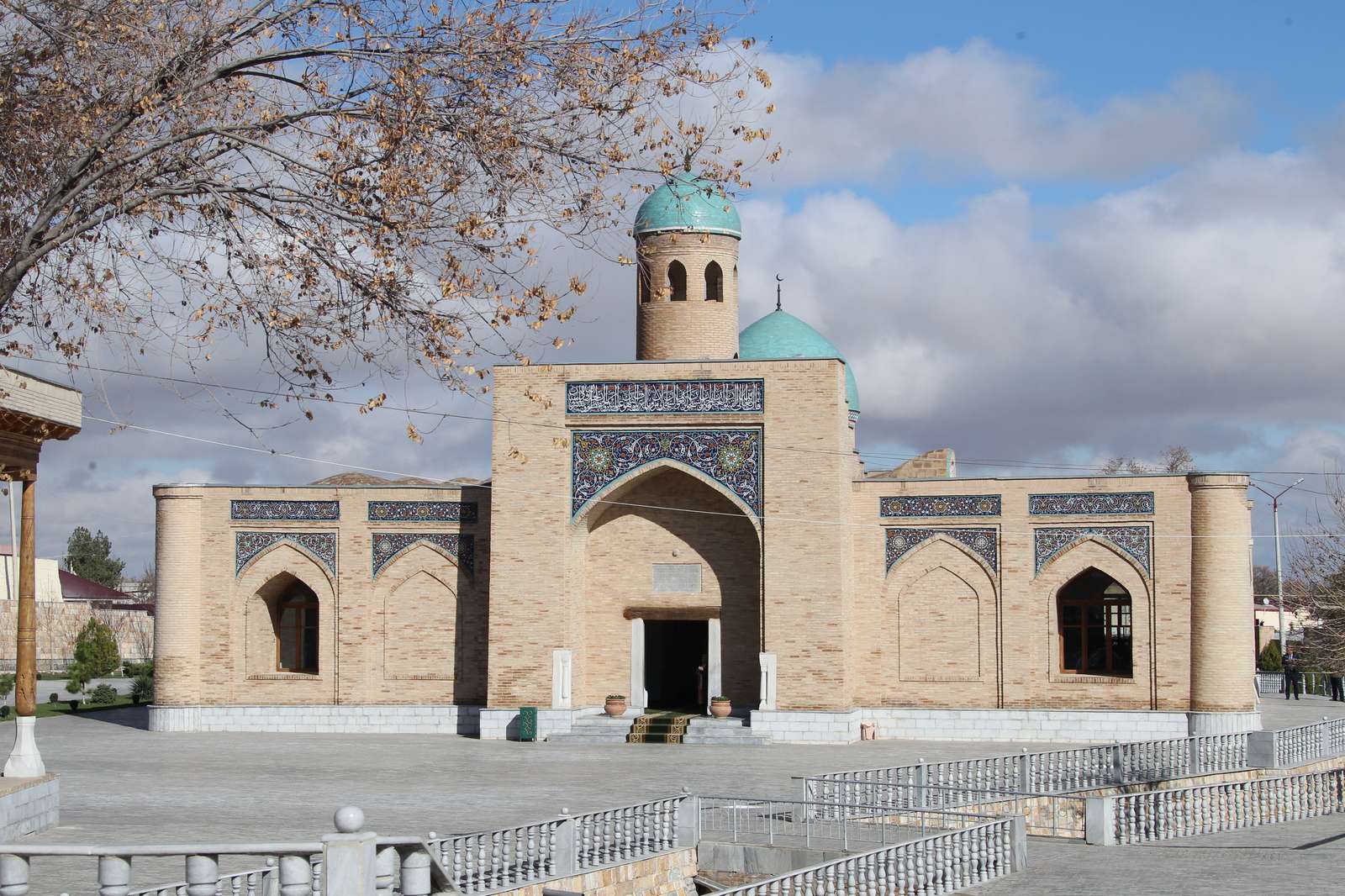
The Friday mosque stands directly above the spring. Inside, the prayer hall rests on wooden columns, forty of them, and is covered by a dome 16 m across, one of the largest in Central Asia.
Next to it is the smaller Panjvakta mosque. The name means “five times”, after the five daily prayers that are still held here, and it is usually counted as the oldest building of the complex, from the 16th century. The ensemble as you see it took shape in the 16th–17th centuries, when Nurata belonged to the Bukhara khanate. A bathhouse completes it.
This is a working place of worship. Cover shoulders and knees, women bring a scarf for the mosques, and avoid the time of Friday midday prayer if you want to look inside. More on this in what to wear and etiquette in Uzbekistan.
The Nur fortress and the kariz under the town
Opposite the spring rises a long earthen hill with the remains of a rampart: the Nur fortress. Local tradition says Alexander the Great founded it in 327 BC, when his army was campaigning in Sogdiana around ,Did you know? Legend: Alexander found Samarkand more beautiful than told Alexander the Great took Maracanda, ancient Samarkand, in 329 BC. Legend credits him with saying that all he had heard of the city was true, except that it was even more beautiful. No ancient author records the words. Read more → today's Samarkand. No inscription settles the question, so we present it as the town does: Alexander's fortress, according to tradition.
The same tradition credits Alexander's engineers with the kariz, Nurata's underground water channels. A kariz is a tunnel that carries water from a source under the ground, with wells dug every few metres along its line so that people could climb down and clean it. Such channels could run for several kilometres. On the edge of Nurata sections have been restored and are still used by local people, one of the few such systems in the region that still work.
Nurata suzani: embroidery with a centre
For textile lovers, the name Nurata means suzani. A suzani is a large embroidered cloth that a bride prepared for her dowry, and every embroidery centre had its own style. Nurata pieces are recognised by a large round centre surrounded by flowering branches; one traditional pattern is called chor shohu, yak moh, “four branches, one moon”.
The classic pieces were worked in silk on light cotton, in soft colours. Museums in Tashkent and abroad keep Nurata suzani mostly from the 19th century, and early 20th-century work from the town has become rare. New suzani are sold across the country; our guide to what to buy in Uzbekistan shows how to tell handwork from machine work and what customs ask about older pieces.
The Nuratau ridge and its reserve
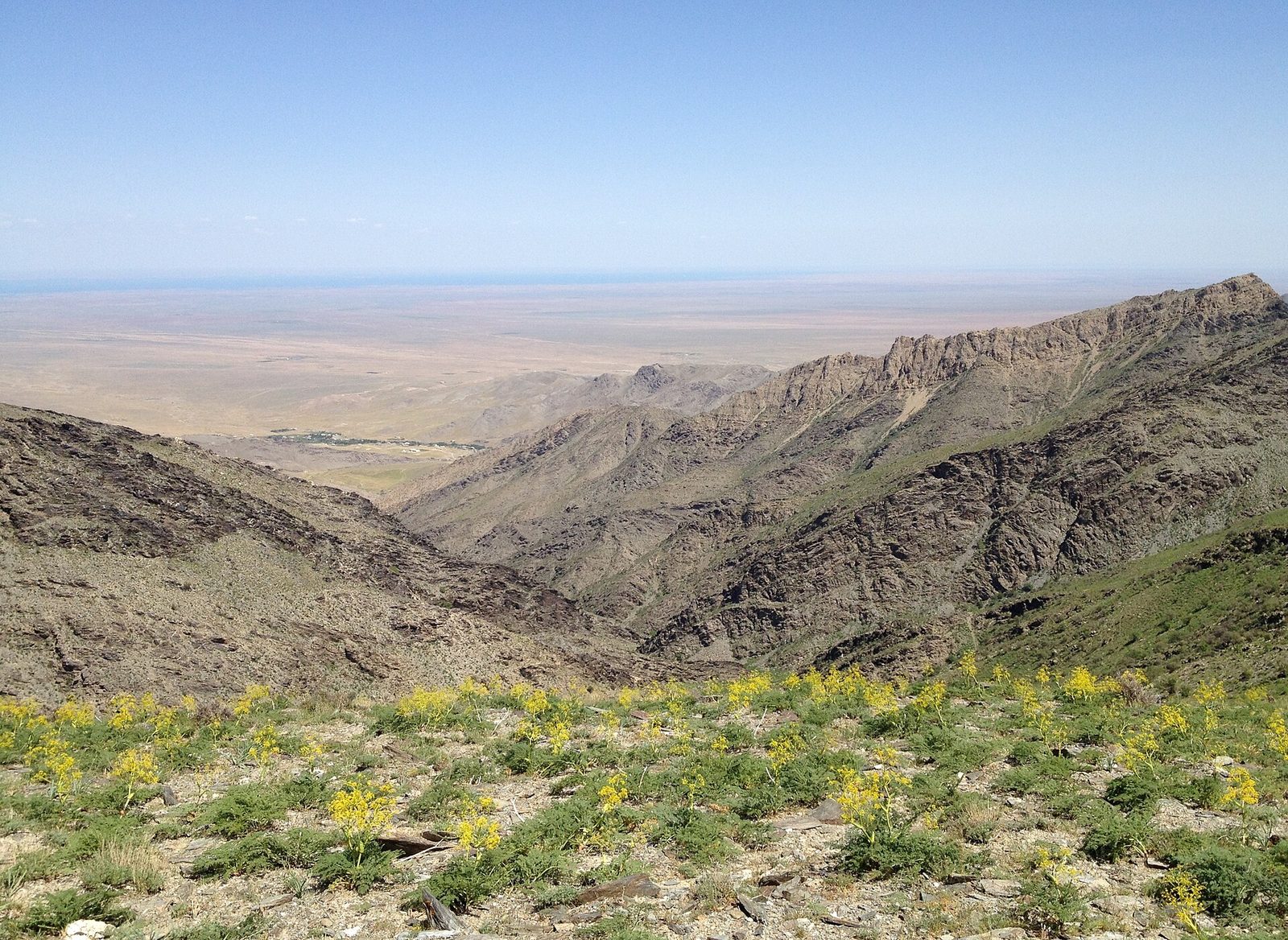
Nurata sits at the western end of the Did you know? The Nuratau ridge protects a rare wild sheep The Nurata Nature Reserve was set up on the Nuratau ridge in 1975 to protect wild walnut groves and Severtsov's argali, an endemic wild sheep on the Red List. Golden eagles and bearded vultures are protected here too. Read more → ridge, which runs for more than 170 km east to west; its highest point, Mount Zargar, is 2,169 m. On the northern slopes is the Nurata State Nature Reserve, created in 1973. Its best-known resident is the The Kyzylkum, or Red Sands: the desert between the Amu Darya and Syr Darya rivers that the road and the railway cross on the way to Khiva. argali, also called Severtzov's argali, a wild mountain sheep listed in the Red Book of Uzbekistan. In February 2026 the reserve counted about 1,700–1,800 of them.
You will not see argali from the road, but the villages of the ridge are open to visitors. Sentob, Asraf and Uhum have stone houses, walnut and fruit trees and family homestays, and the gorge below Sentob holds Bronze Age .Did you know? Mountain goats carved on rocks thousands of years ago Near the village of Khodjikent, about 70 km from Tashkent, more than 90 petroglyphs line the rocks above the Chirchik River, mostly mountain goats. The finest date from the 4th–3rd millennia BC. Read more → Walking between them is easy to moderate; our hiking guide has the details. Our Nuratau Mountains extension adds a night with a family in Uhum and a morning hike with a local guide on the road between Bukhara and Samarkand.
Add a night in a yurt at Aydarkul
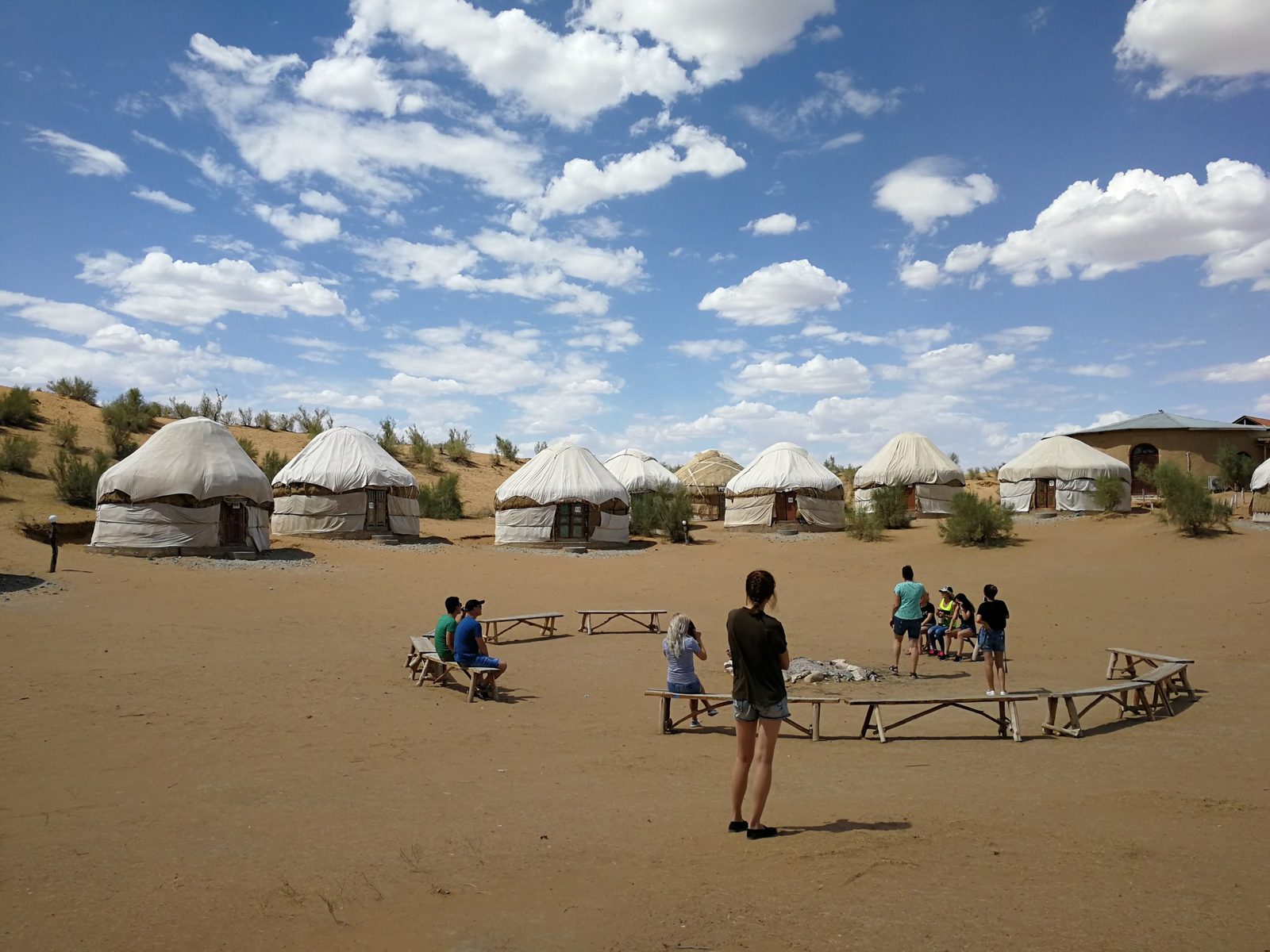
From Nurata the yurt camps on Lake Aydarkul are about 60 km further north, in the Kyzylkum. That is why we rarely plan Nurata on its own: leave Samarkand or Bukhara in the morning, spend an hour or two in town, reach the camp in the afternoon for a camel ride, dinner by the fire and a night in a felt yurt. Our Aydarkul yurt camp guide covers the camps, the lake and what to pack.
The desert night is also the reason for our five-day astronomy tour. It goes from Did you know? A former teacher found the lost observatory in 1908 After Ulugh Beg's death his observatory was taken apart for its bricks and even its site was forgotten. Vasily Vyatkin, keeper of Samarkand's monuments, traced it through a 17th-century land deed and in 1908 dug up the great marble arc. Read more → in Samarkand through Nurata and the Chashma complex to a yurt camp at Aydarkul, far from city lights, timed close to the new moon.
Getting there, when to go and how long to stay
- From Samarkand: about 180 km by road.
- From Bukhara: about 175 km by road. Nurata lies between the two cities, so it works best as a stop on the way from one to the other.
- From Navoi: the regional capital is about 50 km to the south and has the nearest railway station.
- To Aydarkul: about 60 km more to the yurt camps.
- Time in town: an hour for the Chashma complex and the fortress hill, two if you also want to see the kariz.
- When: April–May and September–October. In nearby Navoi July afternoons average about 36 °C, and January afternoons about 7 °C with frost at night.
We arrange the car, the driver and a guide who knows the town, and fit Nurata into a longer route through Samarkand and Bukhara.
In short
- Nurata grew around the Chashma spring: about 20 °C all year, full of sacred marinka that nobody may catch or feed.
- The Juma mosque stands over the spring under a 16 m dome; the Panjvakta mosque is the oldest building of the complex.
- The Nur fortress and the kariz are tied to Alexander the Great by tradition; restored kariz sections are still in use.
- Nurata suzani are known for a large round centre and soft colours.
- Plan it as a stop between Samarkand and Bukhara, ideally with a night at Aydarkul or in a Nuratau village.
© Photos
- Aydarkul lake seen from the Nuratau ridge — Carpodacus / Wikimedia Commons · CC BY-SA 4.0