
Places in this article: Bukhara · Samarkand · Tashkent
Bazaars of Uzbekistan: Chorsu, Siab, Bukhara and the Fergana Valley as locals shop them
At ,Tashkent's old bazaar under a big blue-green dome, not far from Hazrati Imam. Bring cash in so'm. Read more → the bread arrives before most visitors do. Round loaves come stacked on carts and in the arms of sellers, still warm from the tandir, and by the time hotel breakfasts close, the best of them have gone. A bazaar here is not a souvenir stop. It is where Tashkent, Samarkand and Bukhara buy their food every day, and the reason we bring guests in the morning rather than the afternoon.
We live in Tashkent and shop at these bazaars ourselves. Here is how the four we know best are laid out, what to taste in each, how to bargain and pay, and what you can and cannot take home.
Chorsu, Tashkent: under the blue dome
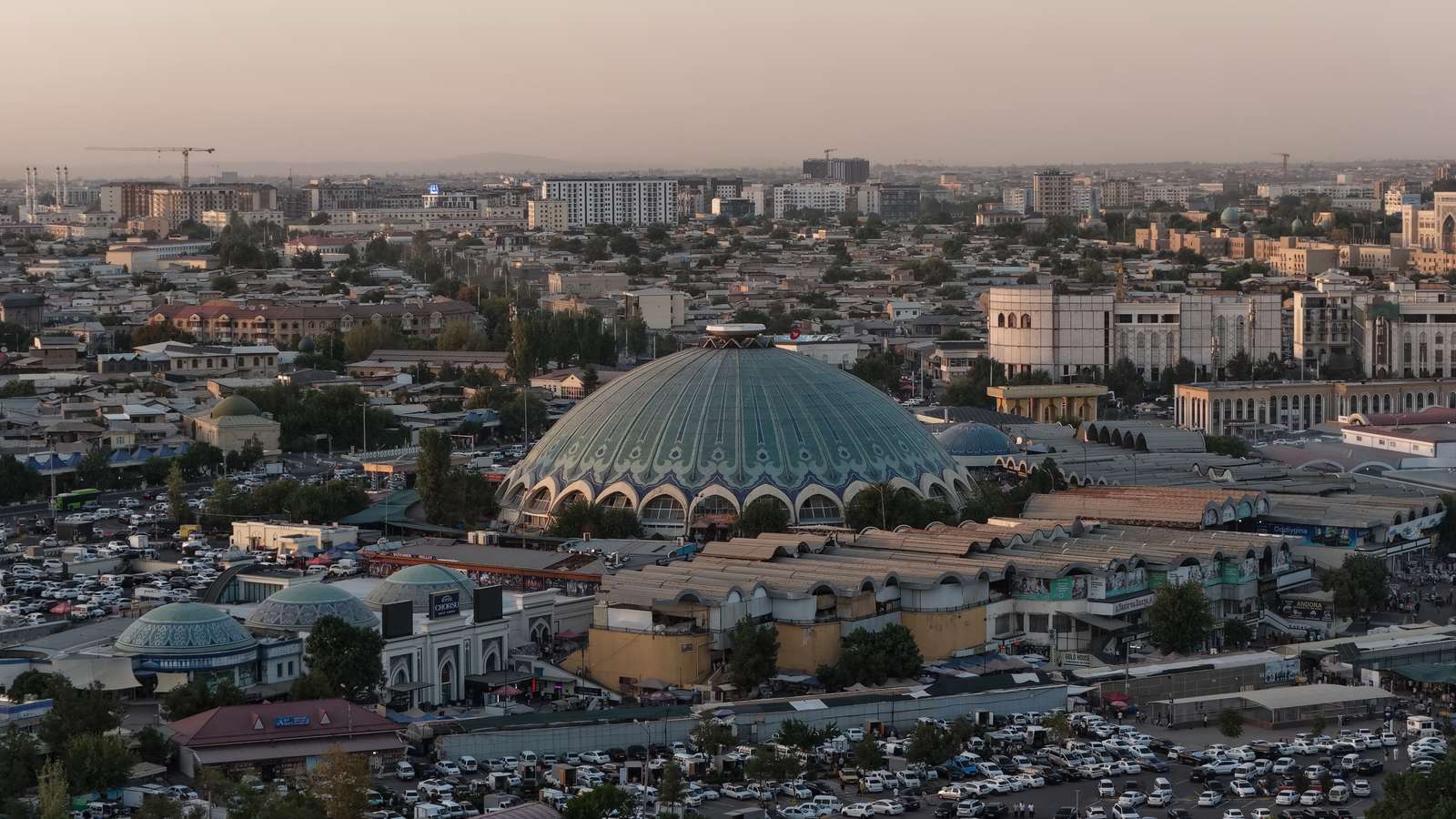
Chorsu means “crossroads”, and the bazaar stands where the old city’s roads met. The building you see today is modern: the project dates from 1980, by the architects Vladimir Azimov and Sabir Adylov, and the complex opened in 1990, with a main dome of 86 metres ringed by seven smaller ones. Tiling the big dome took until 1993. In July 2026 Chorsu became one of the ten buildings of Tashkent’s modernist architecture inscribed on the UNESCO World Heritage List.
Inside, the plan is easy to learn. Meat and dairy fill the ground floor under the dome. The spice sellers work on the gallery that runs around it upstairs. Clothes, household goods and crafts have their own pavilions outside, and the covered rows next to the dome sell fruit, vegetables, herbs, bread and sweets. At the edge of the bazaar stands the Did you know? A madrasah that was an inn, a fort and a museum Tashkent's Kukeldash Madrasah, built around 1570, became a caravanserai in the 18th century, later a fortress and then a museum, before returning to teaching in the 1990s. Read more → An Islamic college: student cells and classrooms around a courtyard behind a grand portal. In the old towns many now house museums and craft workshops. of about 1570, and Chorsu Did you know? A metro designed to ride out a magnitude-9 earthquake The three original lines of the Tashkent Metro were built to withstand an earthquake of magnitude 9.0, and the tunnels lie unusually shallow, only 8–25 m below the street. Read more → station is across the street. How we fit Chorsu into a city day is in Tashkent in one or two days.
What to taste at Chorsu
Non. The round flatbread, thinner in the centre than at the rim, is on every Uzbek table. Buy one warm, tear it by hand and never put it face down: bread is treated with respect here.
Kurt. Small white balls of salted, dried sour milk. They are very sour and very salty, which surprises many people the first time. Ask for one to try before you buy a bag.
Dried fruit and nuts. Dried apricots, raisins in several colours, almonds and pistachios. Sellers expect you to taste, so take one and compare stalls.
Spices. Upstairs on the gallery: cumin for Rice cooked in a kazan with carrots, onions and meat: the dish of every Uzbek celebration. Each region cooks it its own way. and other spices, sold by weight. If you want to know what the cumin is for, our plov guide explains how the dish is cooked.
Siab, Samarkand: the bazaar beside Bibi-Khanym
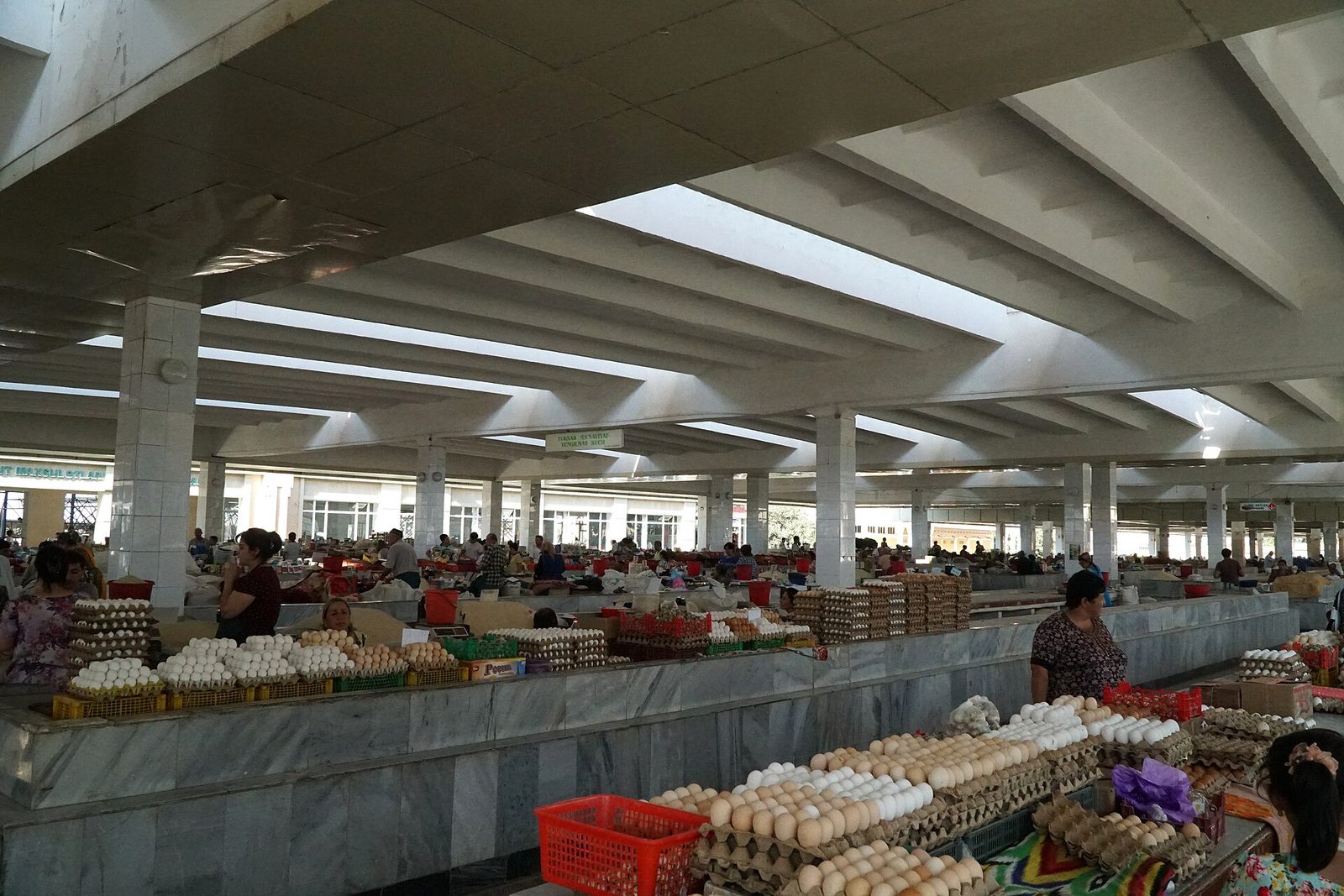
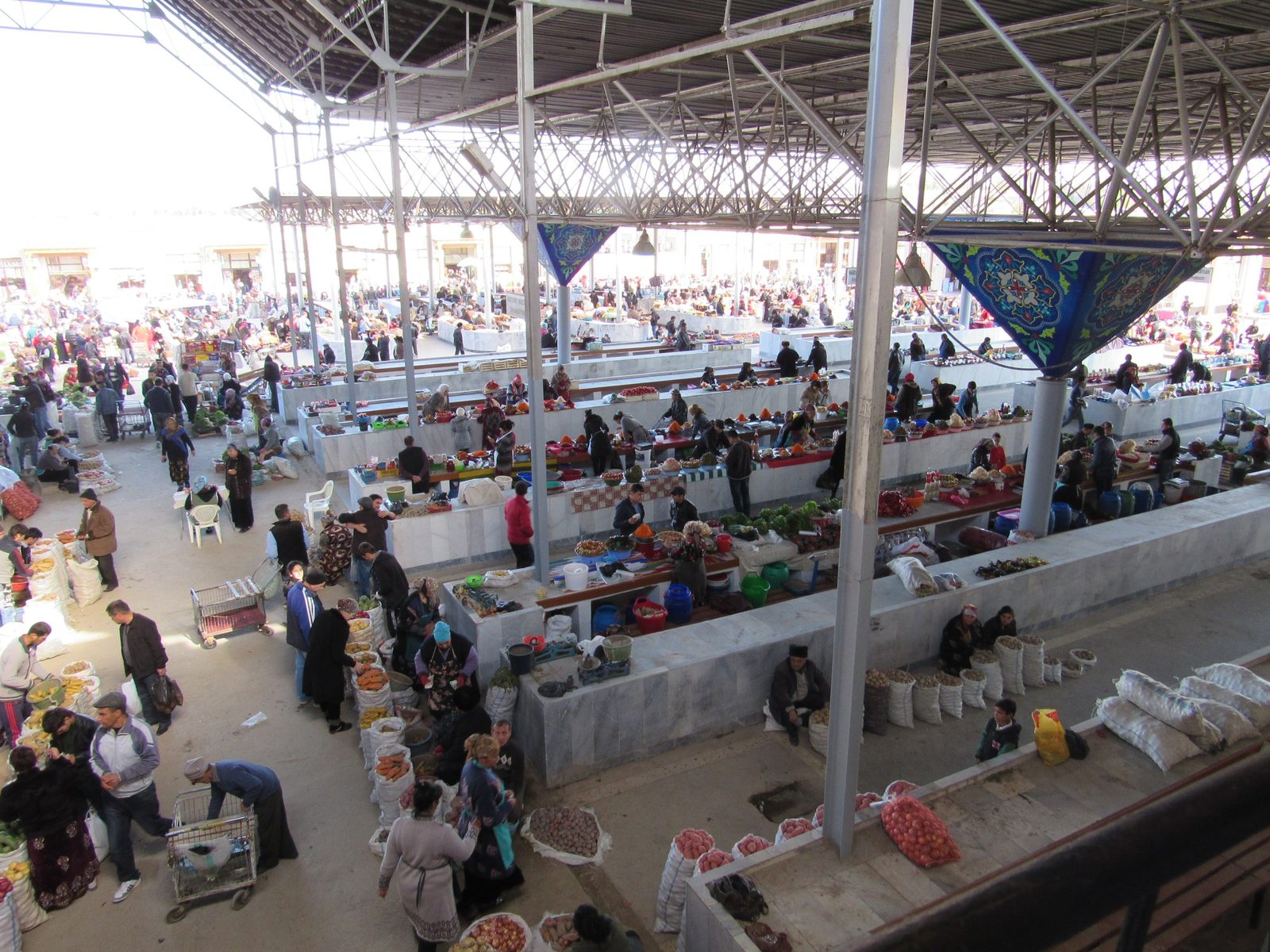
Samarkand's main bazaar, right next to Bibi-Khanym: Samarkand bread, dried fruit, nuts and halva. Read more → is Samarkand’s largest bazaar: more than seven hectares, with seven large covered pavilions of long counters and more pavilions of shops around them. The name comes from the Siab, the “black water” stream nearby. The main entrance is a triple arch faced with blue majolica, and right beside it rises the The great mosque Amir Timur ordered after his Indian campaign of 1398–1399, one of the largest of its time. Read more → Mosque, Amir Timur (Tamerlane, 1336–1405), founder of the Timurid empire, which had its capital in Samarkand. Born near Shahrisabz.’s Friday mosque. The Did you know? The Registan's sun-carrying lion went on a banknote The Sher-Dor Madrasah (1619–1636) is named for the big cats with the sun on their backs on its portal. The image appeared on the reverse of Uzbekistan's 200-som note of 1997. Read more → is about a kilometre to the south, Did you know? Why Shah-i-Zinda means 'the Living King' The necropolis grew around the shrine of Qutham ibn Abbas, a cousin of the Prophet Muhammad. Legend says he did not die in battle but went down a deep well to a garden of paradise, where he lives on. Read more → about 500 metres to the east, so the bazaar fits naturally between them; our Samarkand plan shows how.
Under the roofs you find what Samarkand eats: fruit and vegetables in season, dried figs, raisins, barberries, walnuts and almonds, herbs, eggs by the tray. Entry is free.
Samarkand non and halva
Samarkand’s bread is the one people carry home to other cities. It is baked in a tandir, thinner in the centre and glossy on top, and it keeps for a long time: a sprinkle of water and a few minutes of heat bring it back.
There is a legend about it, and it is only a legend. A khan of Bukhara brought Samarkand’s best baker to his court, with his oven, his flour and his water. The bread still came out different. The baker explained that one ingredient could not be moved: the air of Samarkand.
Look for halva too. In Samarkand it looks more like a cake, decorated with nuts and dried fruit, and it is traditionally bought for weddings and engagements. Next to it you will see navat, crystals of sugar grown on threads, which people here put in their tea.
Bukhara: the trading domes and the central bazaar
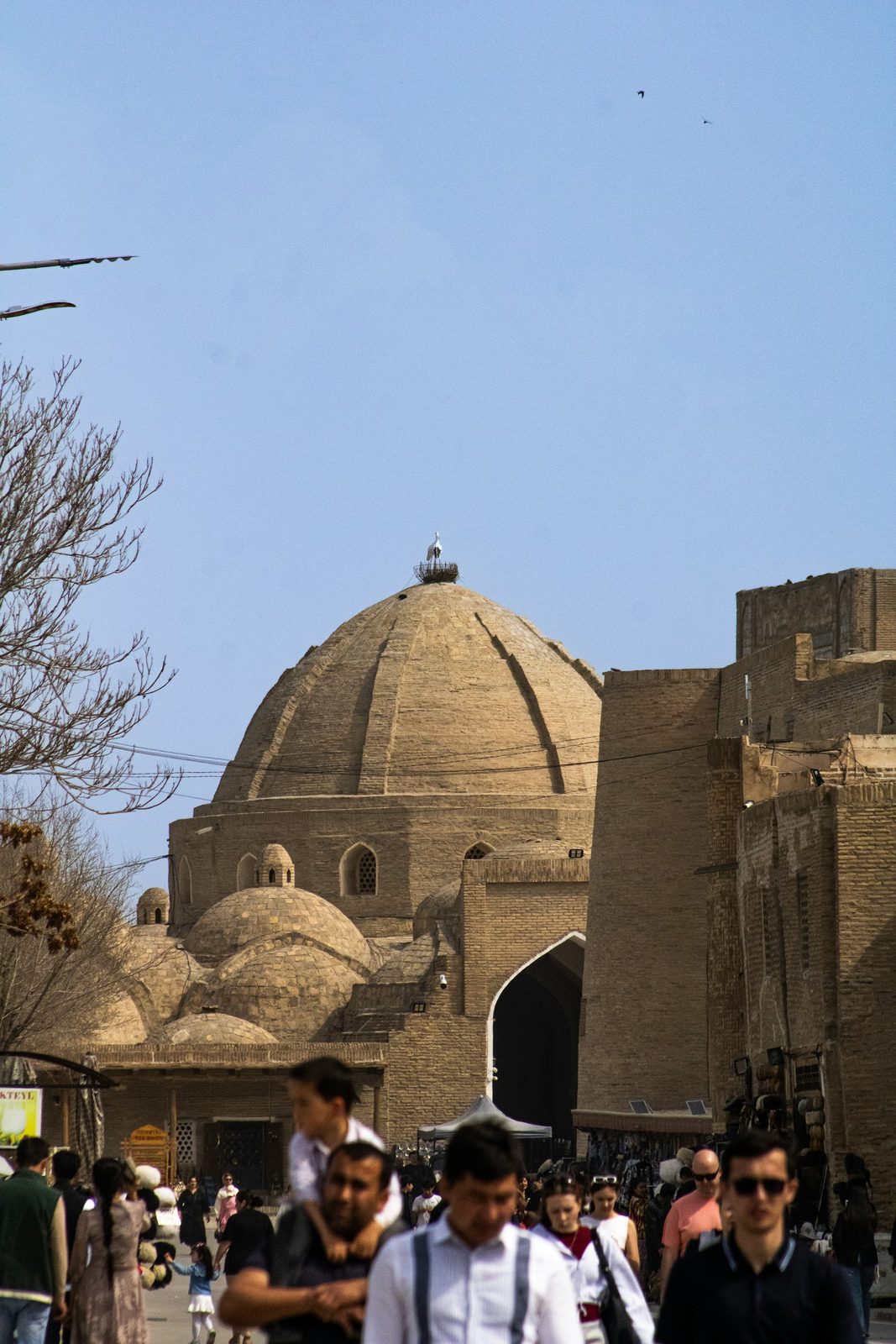
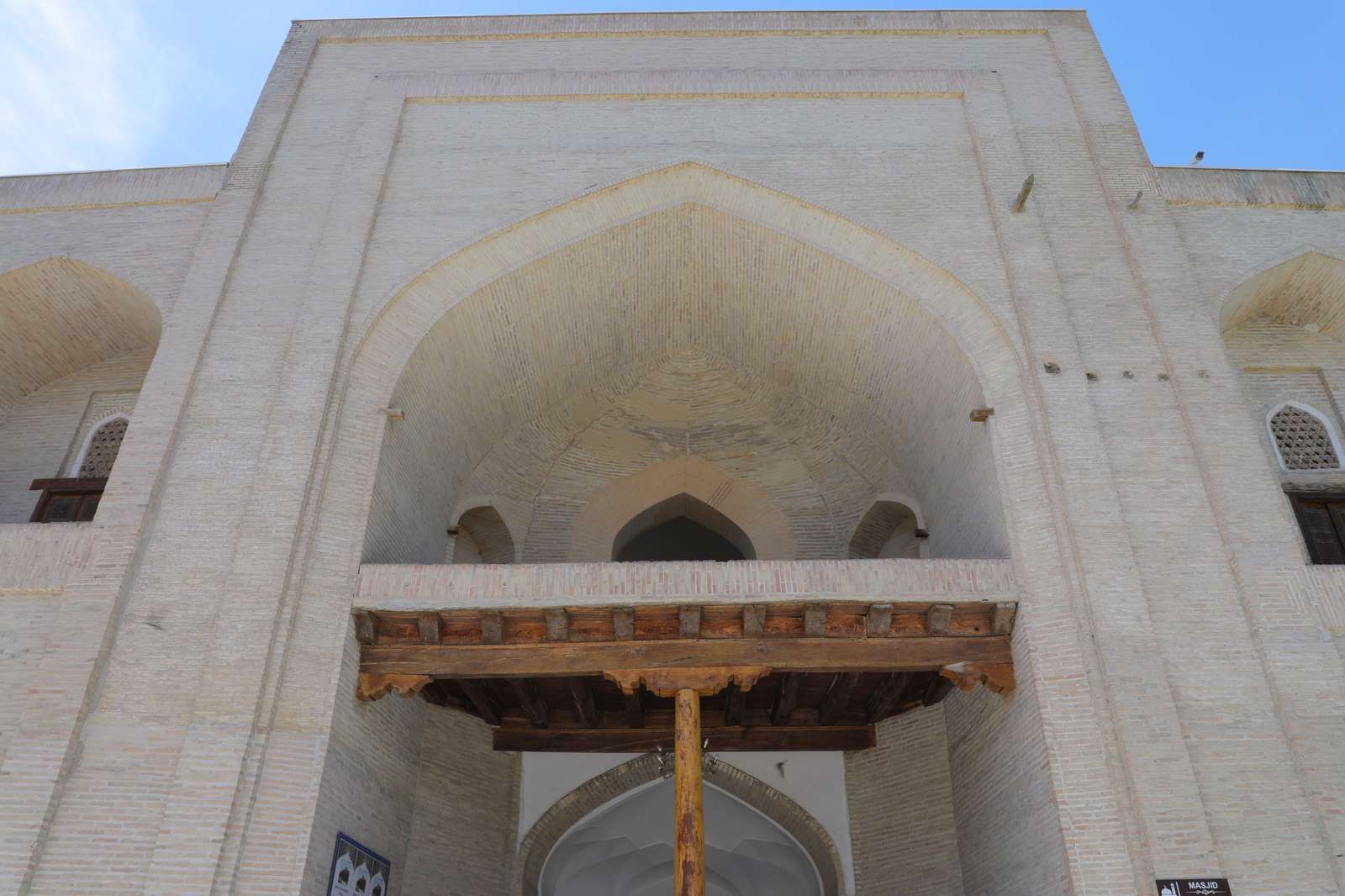
Bukhara has two kinds of bazaar, and they sell different things. In the old town, four covered trading domes of the 16th century still stand over the old merchant crossroads. Toki Sarrafon was the money changers’ dome, Toki Zargaron the jewellers’, Toki Telpak Furushon sold caps and turbans, and Tim Abdullakhan traded silk and carpets. Today they sell caps, knives, jewellery, carpets and souvenirs, and walking through costs nothing.
For food, Bukhara goes to its central bazaar, still often called by its old name, the Kolkhoz bazaar: fruit and vegetables, meat, dairy, spices and dried fruit. Do the domes on foot from Did you know? Bukhara's ponds were once its water supply Pools like Lyabi-Hauz, dug around 1620 and 46 × 36 m, were the city's main source of water. Most were filled in during the 1920s–30s because they spread disease; Lyabi-Hauz survived. Read more → and take a short taxi to the central bazaar; both fit into our Bukhara plan.
The Fergana Valley: Kumtepa and Andijan
The valley has the liveliest market days in the country. Kumtepa, about 5 km outside Margilan, trades only on Thursdays and Sundays: ikat silk by the metre, both atlas and adras, alongside produce, spices, bread, samsa and plov. If your dates allow, plan Margilan around one of those days.
In Andijan, the Jahon bazaar, about 4 km north of the city, is the biggest open-air market on the Uzbek side of the valley. It trades every day and is busiest on Thursdays and Sundays. The rest of the valley, from Rishtan’s potters to Margilan’s looms, is in our Fergana Valley guide.
Bargaining, tasting and photos
Bargaining is part of buying, especially for dried fruit, nuts, spices and crafts. Ask the price, offer less with a smile and meet somewhere in between. Buying several things from one seller is the easiest way to a better price.
Tasting is welcome. Sellers often hand you an apricot or a few nuts to try; take it, and do not feel you must buy. Eat fresh fruit washed, and keep your phone and wallet close in the crowd: our safety notes cover the rest.
Photograph the stalls freely, but ask before you photograph a seller. A gesture at the camera and a smile is enough, and most people say yes. For how to dress and behave, see etiquette in Uzbekistan.
Cash or card
Almost every card terminal in Uzbekistan reads Visa and Mastercard. Cash is for places without one, and that means the bazaar, street vendors and some taxis. Carry so’m in small notes for the stalls. Cards, ATMs and tipping are in cards, cash and tipping.
What to take home, and what to leave
Dried fruit, nuts, spices, halva and navat travel well. Bread does too: Samarkand non keeps for a long time, and a little water and heat revive it at home.
Check your own country before you pack food. The European Union does not let travellers bring in meat, milk or milk products from outside the EU, and that includes kurt. Australia asks you to declare dried fruit, nuts and spices on arrival.
Carpets, suzani and anything sold as antique are another matter: pieces 50 years old or more generally cannot leave the country, and some newer ones need a certificate. The rules are in registration and customs, and what is worth buying beyond the food stalls is in what to buy in Uzbekistan.
Planning your bazaar morning
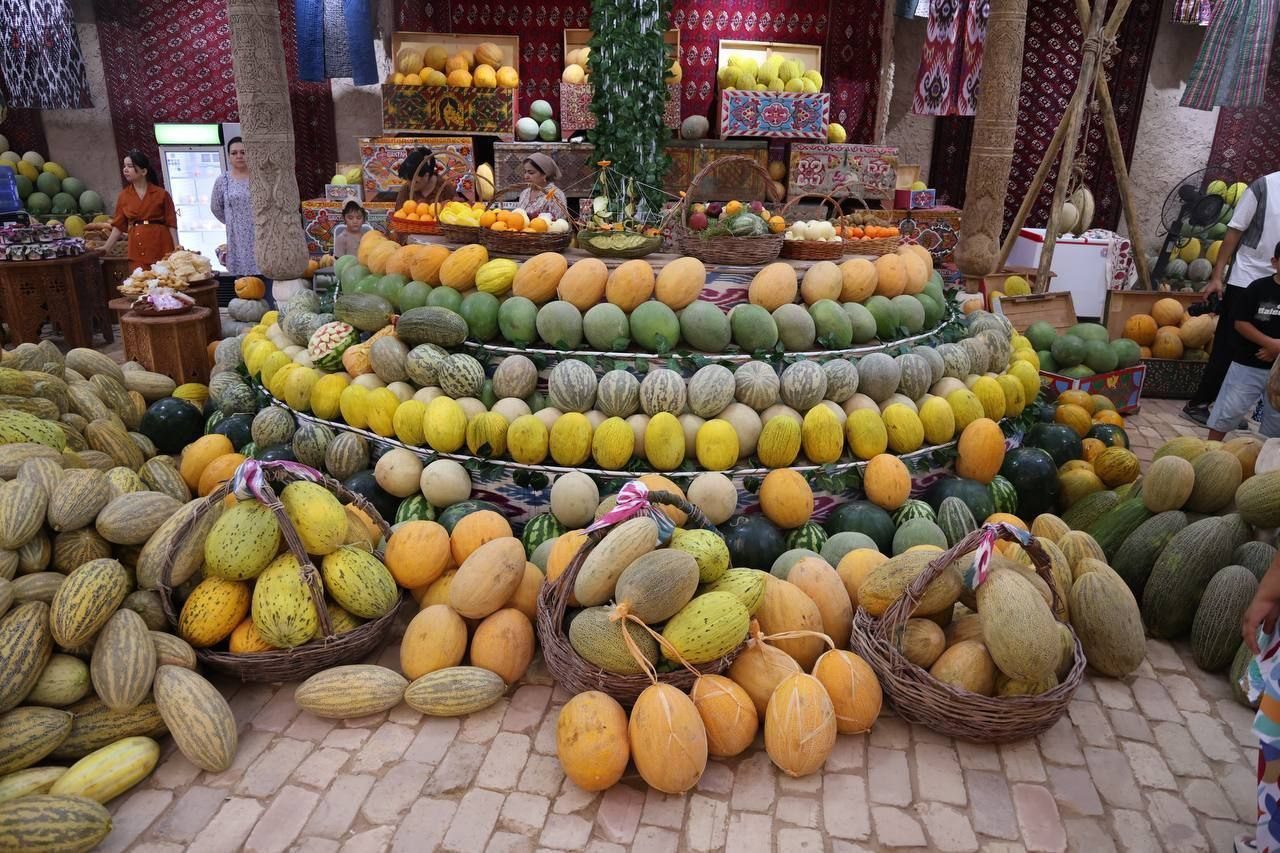
When: come in the morning. The bread is fresh, the stalls are full and the heat has not set in. In summer, be out of the open rows by noon. Siab now stays open until midnight, but the evening is for strolling, not for the best choice.
Season: from early summer apricots and cherries, then grapes and melons into autumn. Dried fruit, nuts and spices are there all year.
Getting there: Chorsu has its own metro station. Siab is a walk from the Registan past Bibi-Khanym. In Bukhara, the domes are on foot from Lyabi-Hauz; the central bazaar and Kumtepa are a short taxi ride.
How long: an hour is enough to walk through and taste; give it two if you want to shop. Bring a bag of your own and so’m in small notes.
Want a guide who knows the sellers? Pick a route in our tour catalogue or let the tour finder suggest one.
In short
- Chorsu in Tashkent: meat and dairy under the dome, spices on the gallery upstairs, bread and fruit in the rows outside.
- Siab in Samarkand: buy Samarkand non and halva, then walk next door to Bibi-Khanym.
- Bukhara: crafts under the 16th-century domes, food at the central bazaar.
- Fergana Valley: Kumtepa trades only on Thursdays and Sundays.
- Come in the morning, taste before you buy, ask before you photograph a seller, and carry so’m in small notes.
© Photos
- Siab Bazaar, Samarkand — Adam Harangozó / Wikimedia Commons · CC BY-SA 4.0