
Places in this article: Bukhara
The trading domes of Bukhara: Toki Sarrafon, Toki Telpak Furushon, Toki Zargaron and Tim Abdullah Khan
Stand under Did you know? Under Bukhara's domes merchants changed money and gold Four 16th-century trading domes still stand over old crossroads. Toki Sarrafon was the money changers' dome, where merchants from India and China swapped coins; Toki Zargaron held jewellers' workshops, Toki Telpak Furushon sold caps. Read more → at noon and the temperature drops. Light falls in through the openings of the dome, the brick keeps the heat of the street outside, and a shop with Did you know? One suzani was often stitched by several women at once A family member or a pattern drawer, the kalamkash, drew the design across strips of cotton. The strips went to different women of the family or neighbourhood, who embroidered them at the same time; sewn back together, they show slightly mismatched seams. Read more → and old coins opens on each side. The money changers of Bukhara sat here in the 16th century, and the same domes still shelter trade today.
Bukhara built six covered bazaars at the crossroads of its merchant streets, and four of them still stand. Here is when each one was built, what was sold under it then and now, how to shop for crafts without regrets, and the walk that links all four.
Covered crossroads of a merchant city
In the 16th century, under the Shaybanids, Bukhara became a capital and one of the busiest markets of Central Asia. Its builders covered the main crossroads of the bazaar streets with domes: a toki is a domed crossing of streets, a tim a covered trading hall. Under each dome, shops lined the arches, and each dome had its own trade, so a merchant knew where to go for money, caps, silk or gold.
Of the six covered bazaars, four survive: three domed crossings and one hall. The other two were lost in 1920. Today they are part of the Historic Centre of Bukhara, on the UNESCO World Heritage List since 1993, and walking through them costs nothing.
Toki Sarrafon: the money changers’ dome
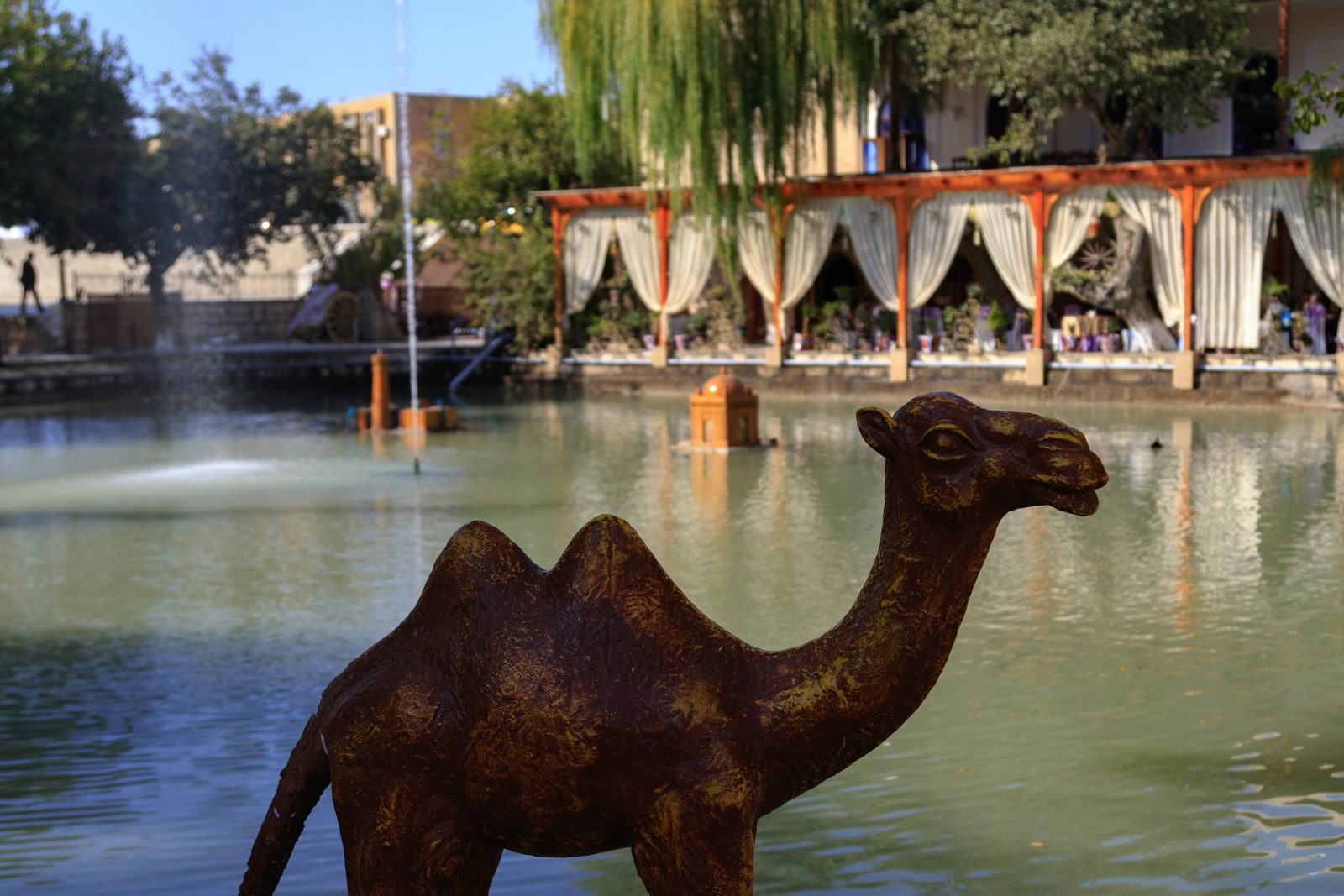
The first dome you meet from Did you know? Bukhara's ponds were once its water supply Pools like Lyabi-Hauz, dug around 1620 and 46 × 36 m, were the city's main source of water. Most were filled in during the 1920s–30s because they spread disease; Lyabi-Hauz survived. Read more → is the oldest. Toki Sarrafon was built in 1534–1535, under Ubaydullah Khan, over the Shahrud, the canal that brought water through the city. Its central dome rests on four massive arches, and around it stood exchange shops, a small mosque and a bathhouse.
The name means “dome of the money changers”. Bukhara traded with half of Asia, and the sarrafs changed the coins of the Ottoman and Russian empires, China, India, Afghanistan and Arabia, and lent money to merchants about to set out on the road. Many of them were merchants from India.
Today the shops sell jewellery, old coins, carpets, wood carving, paintings and national costume. If you buy anything sold as old, read the export rules in registration and customs first.
Toki Telpak Furushon: caps, turbans and books
A few minutes’ walk on, past the Did you know? Magoki-Attori: a mosque 'in the pit' Magoki-Attori means roughly 'in the pit': even in the 10th century it lay below street level. Beneath it lie remains of a pre-Islamic temple. Read more → mosque, which keeps a carpet museum of the 18th–20th centuries, five streets meet under one dome. Toki Telpak Furushon was built in 1570–1571, under Abdullah Khan II, and its name means “dome of the cap sellers”: fur telpaks, skullcaps and turbans were sold here. In earlier centuries booksellers worked under the same roof, and the dome was also called Toki Kitobfurushon, the booksellers’ dome.
The five arches still each lead somewhere different, so it is the easiest dome to get lost in, pleasantly. Today it sells painted ceramics, figurines, musical instruments, clothes and embroidered caps.
Tim Abdullah Khan: the silk hall
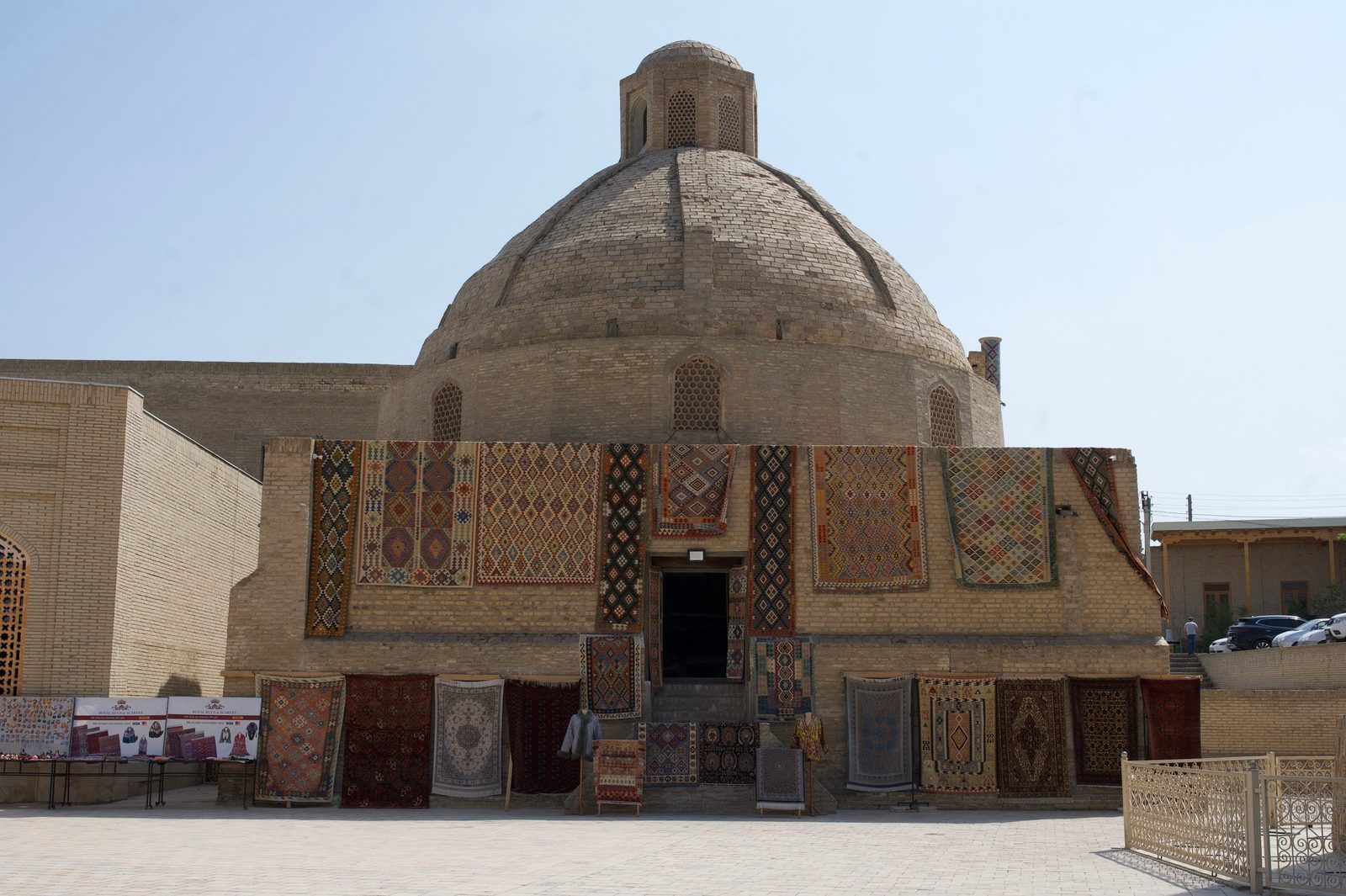
Unlike the domes over crossroads, the Tim of Abdullah Khan is a building of its own: a square hall of about 39 by 42 metres, built in 1577, with a central space about 10 metres across under a high dome and a gallery of domed shops around it. The shops in its arched niches numbered 56.
This was the silk market of Bukhara for centuries. Light comes in through small openings in the drum of the dome, and it stays cool inside. Carpet sellers have taken over: today it is the place to look at carpets, palas, suzani and wall hangings, slowly and out of the sun. It stands south-west of the Abdulaziz Khan and Timur's grandson, ruler of Samarkand and an astronomer. He built a madrasah on the Registan and an observatory whose star catalogue was used for centuries. Read more → madrasahs.
Toki Zargaron: the jewellers’ dome by Poi Kalyan
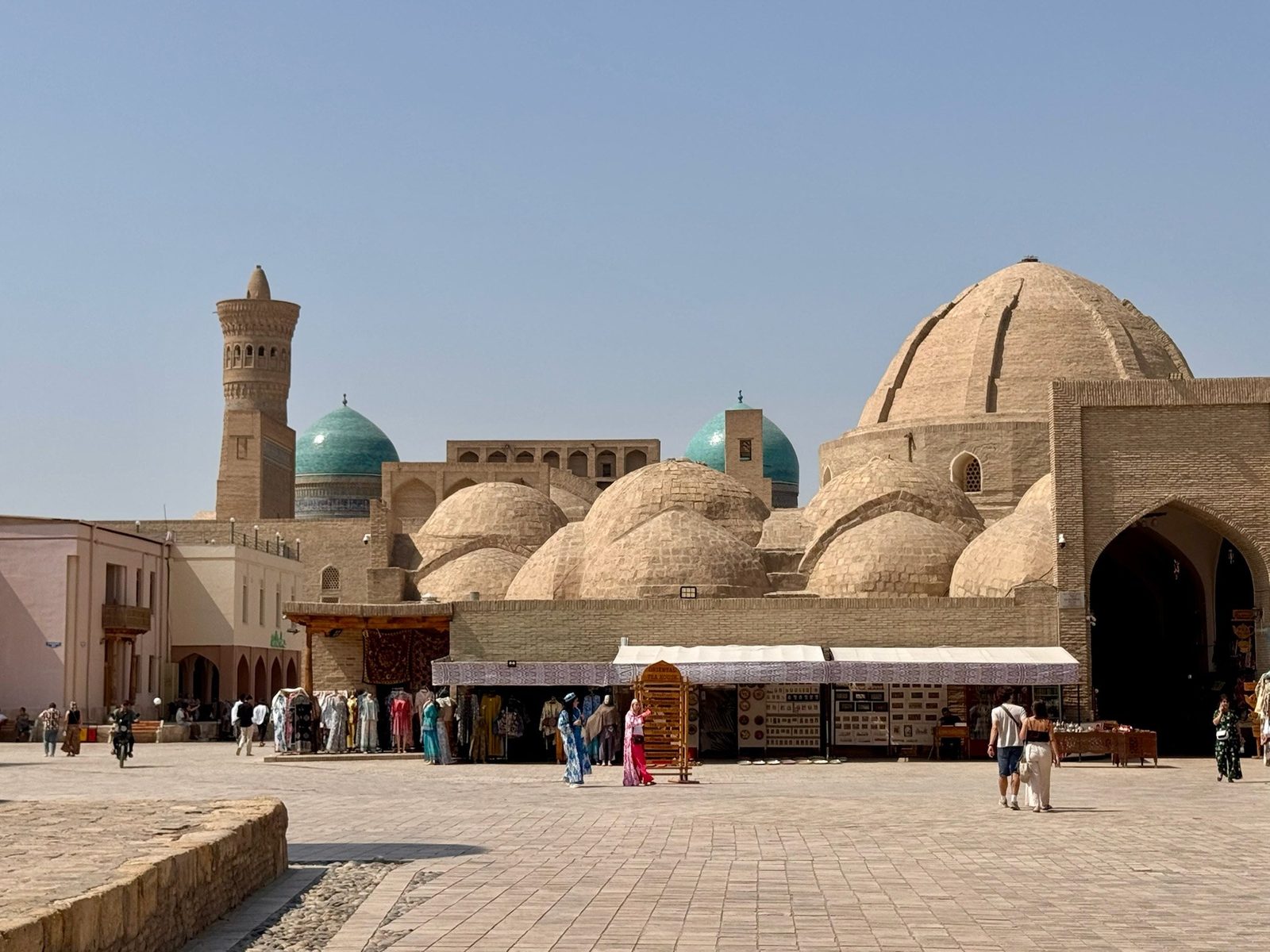
The largest of the domes stands at the northern end, on the site of the old Chorsu, the main crossroads of the shopping streets. Toki Zargaron, the jewellers’ dome, was built in 1569–1570, under Abdullah Khan II. Its central dome is 14 metres across, and 36 workshops of jewellers once worked under its arches, with shops running on towards the .Did you know? Central Asia's oldest surviving madrasah has a motto on its door Ulugh Beg's madrasah in Bukhara, built in 1417, is the oldest preserved in Central Asia. Its carved door reads: 'Education is obligatory for every Muslim man and woman.' Read more → Bukhara’s silver tanga is said to have been struck here too.
Today you find silver and jewellery, carpets, musical instruments, antiques and crafts. From here the Did you know? Diggers went 13 m down and never found its base The Kalyan Minaret of 1127 rises about 46 m, and an excavation reached 13 m without finding the bottom of its foundations. Genghis Khan reportedly ordered it spared. Read more → is a few steps away: continue to Poi Kalyan.
What to buy under the domes, and how
The domes sell the crafts Bukhara is known for: suzani and carpets, gold embroidery, chased copper, the bird-shaped scissors of the Bukhara blacksmiths, ceramics, silk scarves and embroidered caps. Many shops are workshops too, and you can watch the work.
Bargain. Prices are a starting point. Ask, offer less, and meet in the middle; buying several pieces in one shop helps.
Ask how it was made. Hand embroidery and machine embroidery can look alike from a distance; turn a suzani over and look at the back. A good seller will explain.
Old pieces need papers. Carpets, suzani and anything sold as antique may need a certificate of the Ministry of Culture to leave the country, and pieces 50 years old or more generally cannot leave at all. Ask the shop about the certificate before you pay.
Pay: some shops take cards, many prefer cash; carry so’m. The rest of our shopping advice, city by city, is in what to buy in Uzbekistan. To see ceramics made rather than sold, add our trip to the Gijduvan ceramics workshop with lunch.
Walking the domes: our route
Start at Lyabi-Hauz and walk north: Toki Sarrafon, Magoki-Attori, Toki Telpak Furushon, the Tim of Abdullah Khan, Toki Zargaron, and Did you know? Legend: the minaret's foundation was laid with camel milk Legend says master Bako laid the foundations of the Kalyan minaret with ganch plaster mixed with camel milk, then vanished for two years to let them harden, and only then built the tower. Locals still show a grave they say is his. Read more → at the end. The whole walk is under a kilometre, but give it one to two hours with shopping.
The domes need no ticket; the shops keep daytime hours. Midday is a good time, when the domes give shade from the heat, and the Magoki-Attori carpet museum on the way has its own small ticket. With a guide, the domes are part of our Bukhara Highlights tour; tickets and hours for the monuments around them are in Bukhara and Khiva sights, tickets and hours.
In short
- Four of Bukhara’s six 16th-century covered bazaars survive: Toki Sarrafon, Toki Telpak Furushon, the Tim of Abdullah Khan and Toki Zargaron.
- Toki Sarrafon of 1534–1535 was the money changers’ dome; Toki Zargaron of 1569–1570 the jewellers’.
- The Tim of Abdullah Khan of 1577 was the silk hall and is now the place for carpets and suzani.
- Walking through is free; bargain, look at the back of embroidery and ask for papers for anything old.
- Walk north from Lyabi-Hauz to Poi Kalyan in one to two hours, ideally at midday in the shade.