
Places in this article: Samarkand · Bukhara · Khiva · Tashkent
Uzbekistan in summer: how to travel in the heat, June to August
On 21 June the sun rises over Tashkent at 04:48 and sets at 20:01, and a Bukhara afternoon in July averages 37 °C. Let us be honest from the start: Uzbekistan in summer is hot. It is also dry, bright and full of fruit, the mountains an hour and a half from the capital are about ten degrees cooler, and the long evenings in the old towns are the best part of the day.
We live in Tashkent and work right through the summer. This is our guide to Uzbekistan in summer as a whole: how hot it really gets, how we plan a day around the heat, where to cool off, what the desert and the Fergana Valley are like from June to August, and what to wear. For the details of each month, read Uzbekistan in June, in July and in August.
Weather in Uzbekistan in summer
Average daytime highs and night lows from the long-term climate normals (1991–2020), the same figures we use across this site. Khiva's numbers come from the weather station in Urgench, 35 km away.
| City | June | July | August |
|---|---|---|---|
| Tashkent | 34 °C / 18 °C | 36 °C / 20 °C | 35 °C / 18 °C |
| Samarkand | 32 °C / 18 °C | 35 °C / 20 °C | 33 °C / 18 °C |
| Bukhara | 36 °C / 20 °C | 37 °C / 22 °C | 36 °C / 19 °C |
| Khiva | 34 °C / 19 °C | 36 °C / 21 °C | 34 °C / 18 °C |
July is the peak everywhere. Samarkand is the mildest of the four cities, Bukhara the hottest. It is a dry heat: in July and August there is almost no rain at all, and the sky is clear day after day. Nights stay warm, 18–22 °C, so an evening walk needs nothing more than a shirt. The whole year, month by month, is in our weather guide.
How we plan a summer day
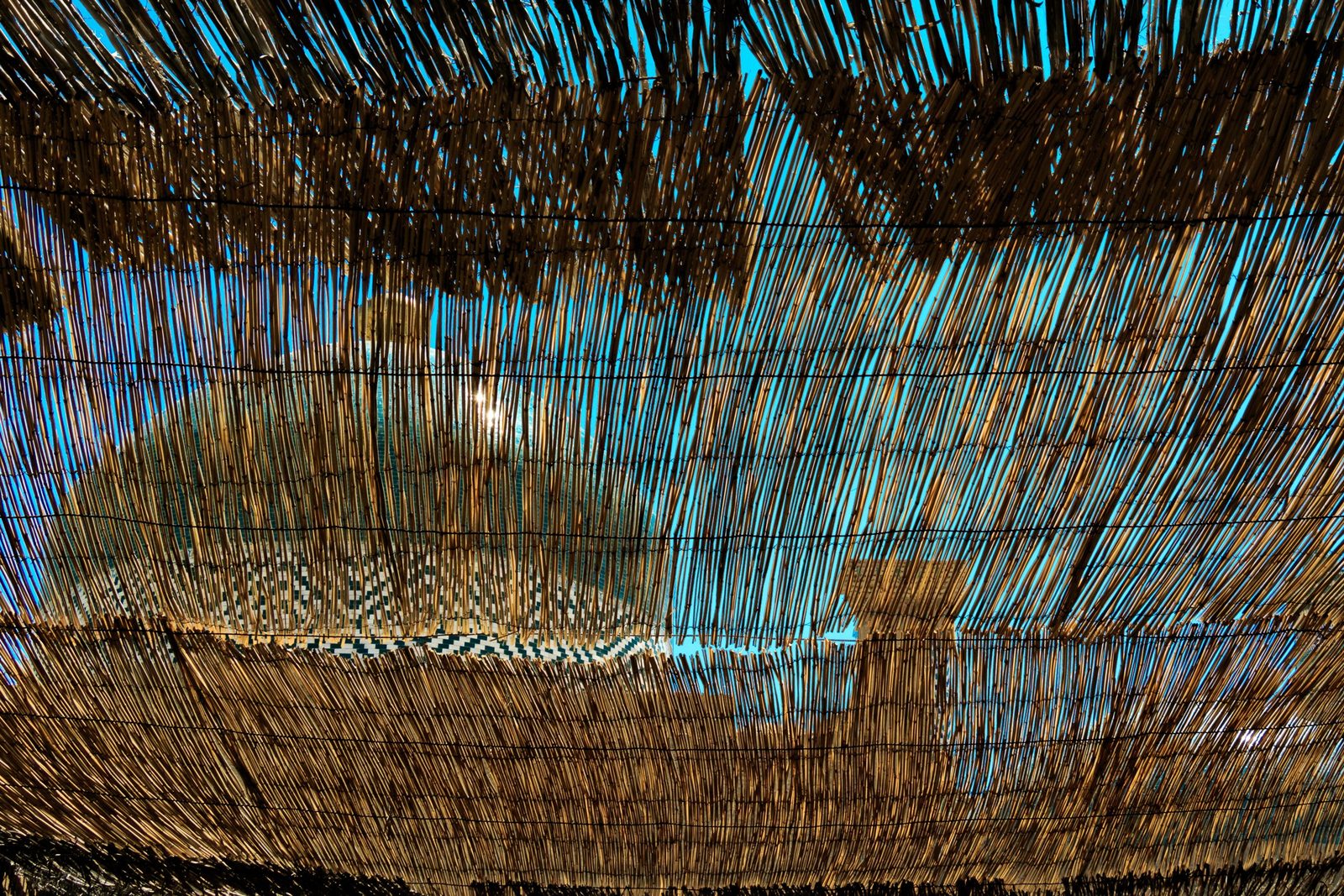
Our summer rule is simple: outside early and late, under a roof in between. The days are the longest of the year, 15 hours 13 minutes of daylight in Tashkent on 21 June, so there is time for everything without walking at noon.
- Morning, from about seven to eleven: open squares, minarets and city walls, while the air is still fresh.
- Late morning: covered bazaars, museums and shady An Islamic college: student cells and classrooms around a courtyard behind a grand portal. In the old towns many now house museums and craft workshops. courtyards.
- From one to about five: lunch and a rest at the hotel, a craft workshop, or the train to the next city.
- Evening: the old towns come back to life. In Bukhara around ,Did you know? Bukhara's ponds were once its water supply Pools like Lyabi-Hauz, dug around 1620 and 46 × 36 m, were the city's main source of water. Most were filled in during the 1920s–30s because they spread disease; Lyabi-Hauz survived. Read more → in Khiva on the walls and rooftop terraces, where the sun sets at 20:37 on 21 June, in Samarkand on the Did you know? The Registan's sun-carrying lion went on a banknote The Sher-Dor Madrasah (1619–1636) is named for the big cats with the sun on their backs on its portal. The image appeared on the reverse of Uzbekistan's 200-som note of 1997. Read more → at dusk.
The hour-by-hour plan is in Uzbekistan in July. For the evenings we arrange the Registan with its evening lights in Samarkand and dinner on a terrace with a view of Itchan Kala in Khiva. Bottled water is sold at every kiosk and shop, so keep a bottle in your bag and drink more than you think you need.
Between cities: the air-conditioned Afrosiyob
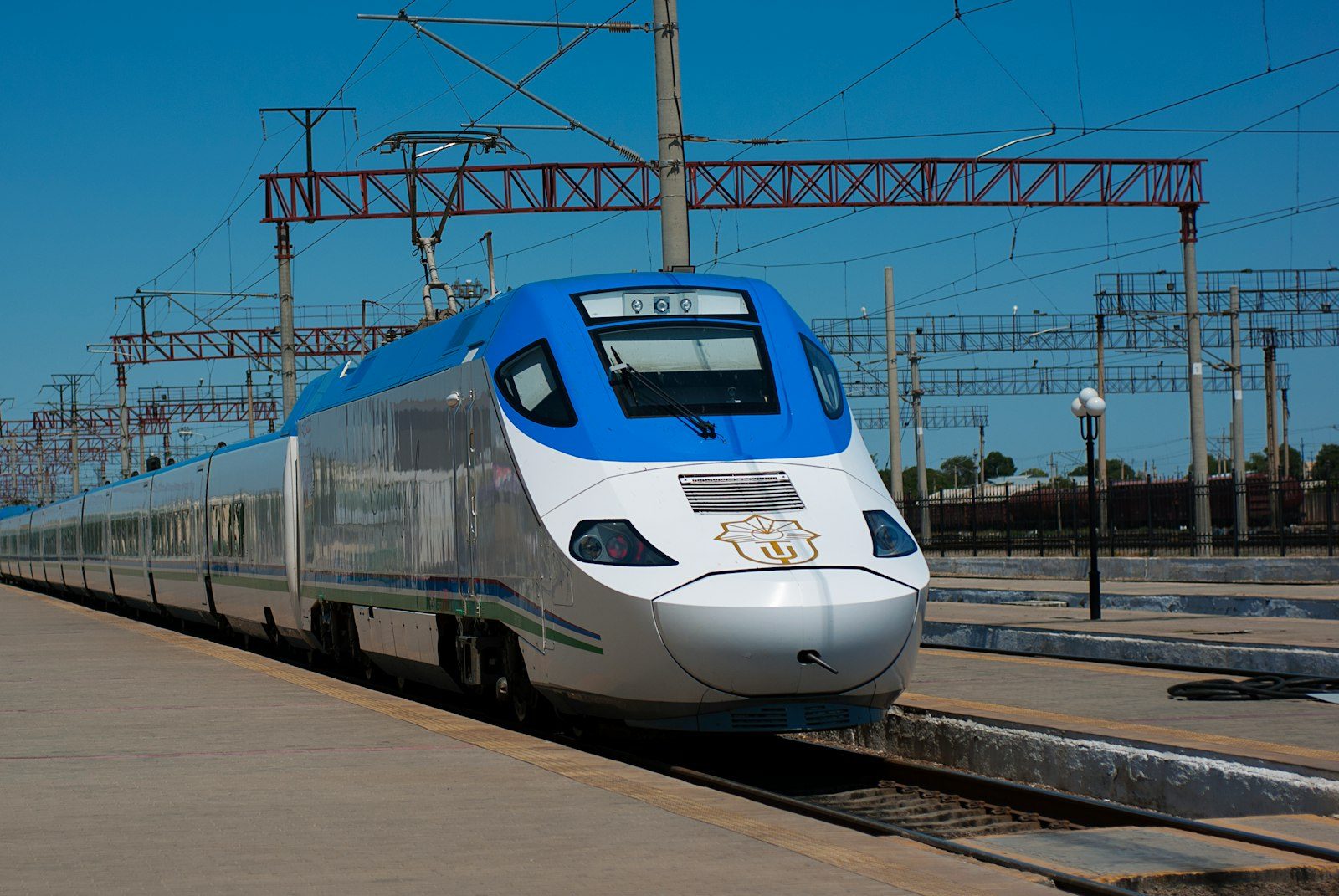
Summer is when the trains earn their keep. The Uzbekistan's high-speed train: Tashkent to Samarkand in about 2 hours 10 minutes, Tashkent to Bukhara in about 4 hours. Tickets are tied to your passport. Read more → high-speed train is air-conditioned and takes about 2 hours 10 minutes from Tashkent to Samarkand and about 4 hours to Bukhara, so we put the transfers into the hot middle of the day and keep the mornings for walking. The fast train to Khiva leaves Tashkent at 07:00 every day except Sunday and arrives at about 14:30, in time for the evening on the walls.
Tickets go on sale 60 days before departure, and in summer we buy on the first days. Everything about classes, stations and boarding is in our guide to trains in Uzbekistan, and the eight-day Uzbekistan by Train tour rides all of them.
The mountains: Chimgan, Charvak and Amirsoy
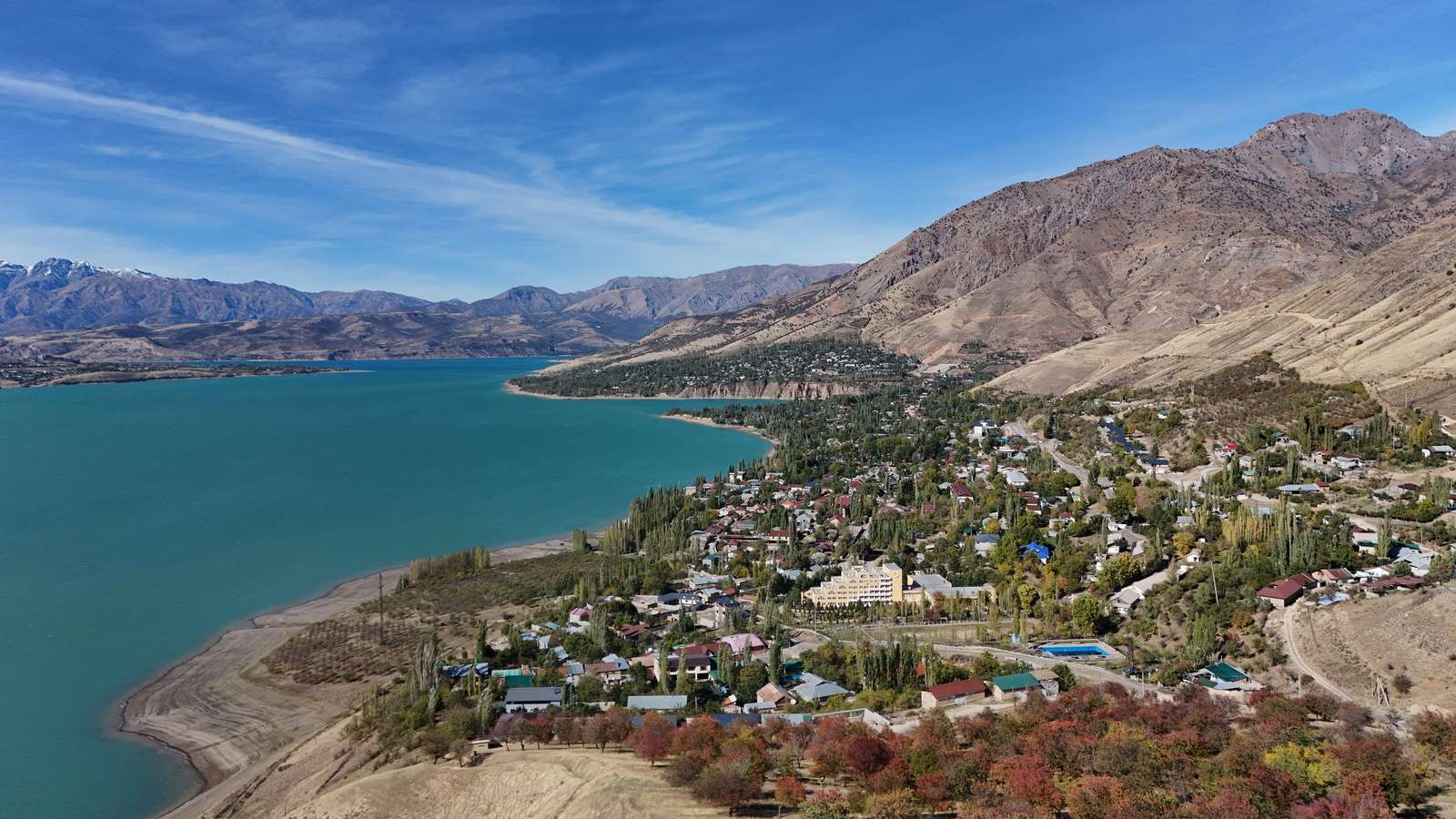
When Tashkent sits at 36 °C, the city heads for the mountains. At ,Mountains of the Western Tien Shan about 80 km from Tashkent: hiking in summer, skiing in winter, the Charvak reservoir nearby. Read more → about an hour and a half away, a July afternoon averages 26 °C and the night 17 °C. That gap of almost ten degrees is why we add a mountain day to most summer trips.
- Amirsoy, 65 km from Tashkent, runs its gondolas in summer too, up to 2,290 m, with guided mountain walks, a rope park, quad bikes and a heated outdoor pool. See our Amirsoy guide.
- Lake Did you know? The lake below Chimgan is held back by a 168-metre dam Charvak is a reservoir: a 168 m stone dam on the Chirchiq, built in 1964–1970, holds about 2 km³ of water from the Pskem, Koksu and Chatkal rivers. Its name is traced to the Persian chorbog, "four gardens". Read more →, about 80 km from the city centre, is a reservoir, and its shore villages are where Tashkent spends the summer, with tapchans by the water and paragliders taking off at Yusufkhona.
- Chimgan is for walking: the trails are open from May to October, and August is the driest month up there.
On summer weekends the road is busier, so we leave early. We organise a day at Amirsoy and Chinorkent, with lunch and a cable-car ride and a one-day mountain hike with a guide and a picnic. How we lay out the day is in Chimgan and Charvak in a day; for four days off the asphalt there is the Jeep Expedition: High Tashkent.
Higher still: Zaamin and summer Kyrgyzstan
Did you know? Zaamin guards Uzbekistan’s oldest nature reserve The mountains of Zaamin, the “Uzbek Switzerland”, were first protected in 1926 as the Guralash reserve, the oldest in the country, to save their juniper forests. The national park around it followed in 1976. Read more →, on the northern slope of the Turkestan Range between Tashkent and Samarkand, is where families from both cities go for cool air. High in the reserve the average July temperature is only about 15 °C, and a cable car lifts you from 1,961 m to 2,491 m among the juniper forests. It is a popular family holiday place, so in summer we book early. Everything is in our Zaamin guide, and for groups of 10 to 25 people there is the four-day nature tour to Samarkand, Zaamin and Tashkent.
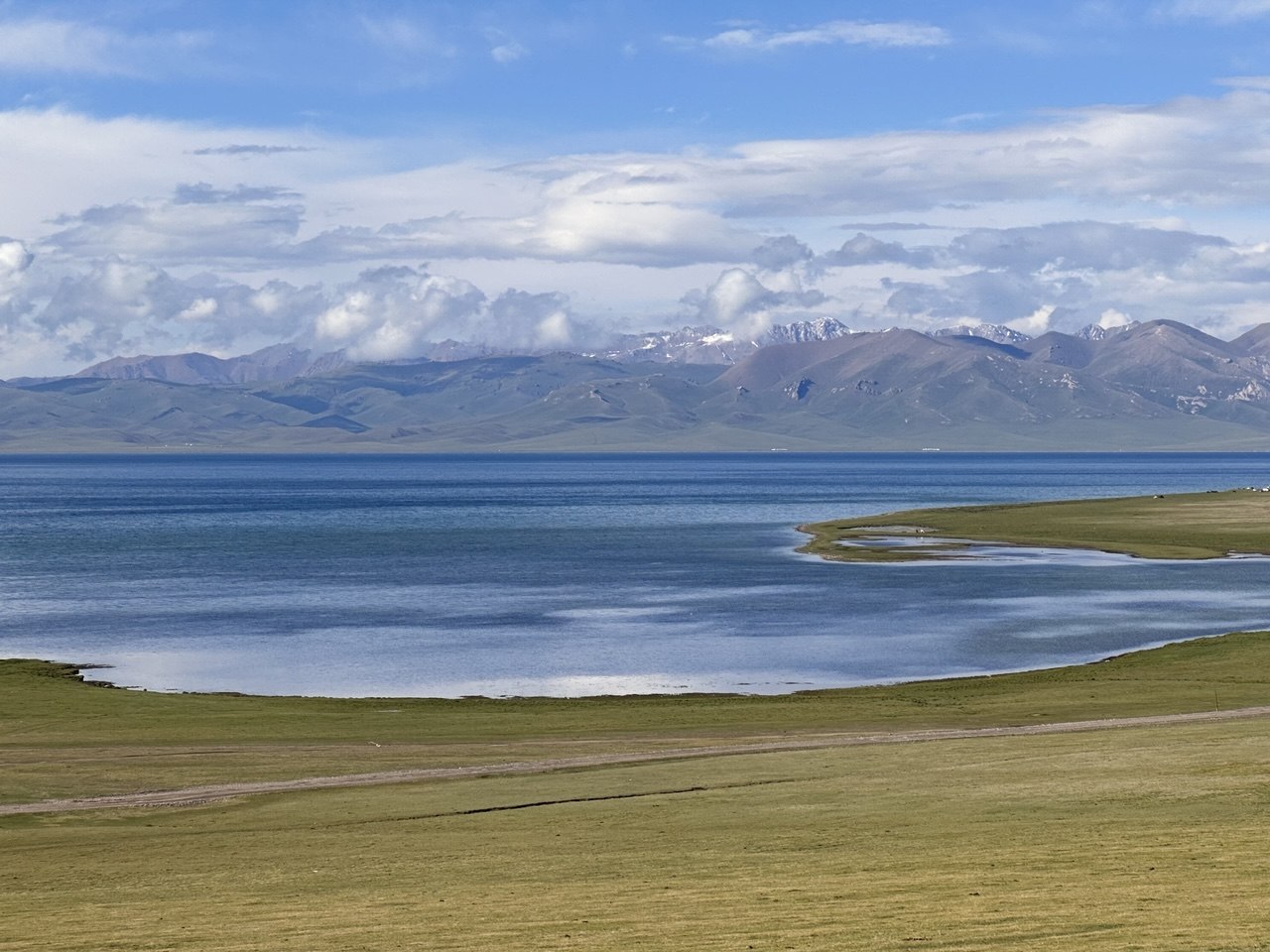
Kyrgyzstan is the summer contrast to the Uzbek cities. At ,Did you know? Song-Kul, at 3,016 m, is Kyrgyzstan’s largest freshwater lake Song-Kul lies at 3,016 m. It is the second-largest lake in Kyrgyzstan after Issyk-Kul and the largest of fresh water. In winter its ice grows to about a metre thick and melts only by late May; some 190 bird species have been recorded here. Read more → a lake at 3,016 m, the average for the whole of July is about 11 °C, and the yurt camps on its shores stand from mid-June to mid-September. ,Did you know? Issyk-Kul means 'hot lake', and it rarely freezes At 1,607 m, with harsh winters all around, Issyk-Kul rarely freezes because its water is slightly salty. It is 182 km long and up to 668 m deep, the second-largest mountain lake in the world after Titicaca. Read more → at 1,607 m, is the beach side of the country. Our nine-day Kyrgyzstan in summer tour from Tashkent spends two nights at Song-Kul; how to combine it with Uzbekistan is in Kyrgyzstan in summer from Uzbekistan.
The desert and the Fergana Valley in summer
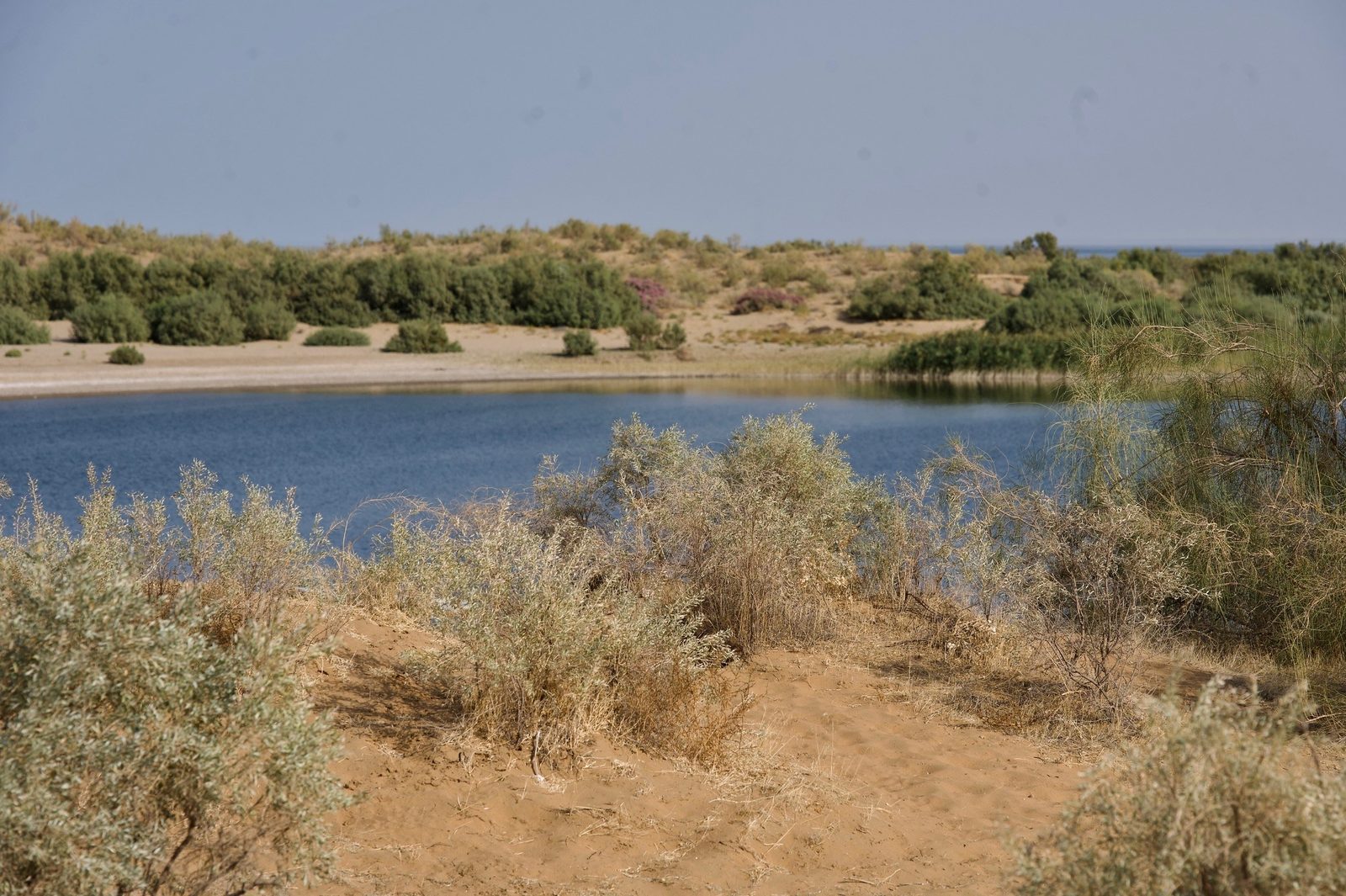
Here we are frank: in the The Kyzylkum, or Red Sands: the desert between the Amu Darya and Syr Darya rivers that the road and the railway cross on the way to Khiva. the heat lasts from mid-May to mid-September, and in Navoi, the nearest regional centre to ,Did you know? Aydarkul is a wetland of international importance In 2008 the Aydar-Arnasay lake system, about 527,000 ha, became a Ramsar site. It lies where two great bird flyways cross and shelters Dalmatian pelicans and the rare white-headed duck. Read more → a July afternoon is about 36 °C. If you want the desert in summer, we keep it to the evening, the night and the early morning, and for longer walks in the dunes we suggest spring or autumn. How a night by the lake works is in Aydarkul and a night in a yurt camp. The far west is just as hot: Nukus averages 36 °C on a July afternoon, so there we spend the hot hours in the Savitsky Museum.
In Fergana a July afternoon averages about 35 °C, which is hard going in a bazaar at noon, but much of what brings people here happens indoors. The morning train leaves Tashkent at 07:20 and reaches Did you know? Kokand's Friday mosque stands on 98 columns from India Muhammad Umar Khan built Kokand's Juma Mosque in 1812–1818. Its 100-metre iwan rests on 98 carved red-wood columns brought from India, and its minaret is 22 m tall. Inside is a small museum of applied arts. Read more → at 10:26, before the heat. Our Fergana Valley crafts tour keeps the silk workshops of Did you know? Legend says Margilan is named after chicken and bread Legend says locals greeted Alexander the Great with chicken and bread, 'murg' and 'non', and the dish gave the town its name. In fact Alexander never reached here; the name Margilan is recorded from the 10th century. Read more → and the potteries of Did you know? Legend says a Rishtan apricot made a great scholar praise God Legend says 12th-century Rishtan folk brought a new apricot to their countryman Burhan al-Din al-Marghinani in Samarkand; he tasted it and said 'Subhanallah' three times, so it is called subhoni. The scholar is real: he wrote al-Hidaya. Read more → for the hot hours of the day. More in our Fergana Valley guide.
Fruit season: cherries, apricots, melons and grapes
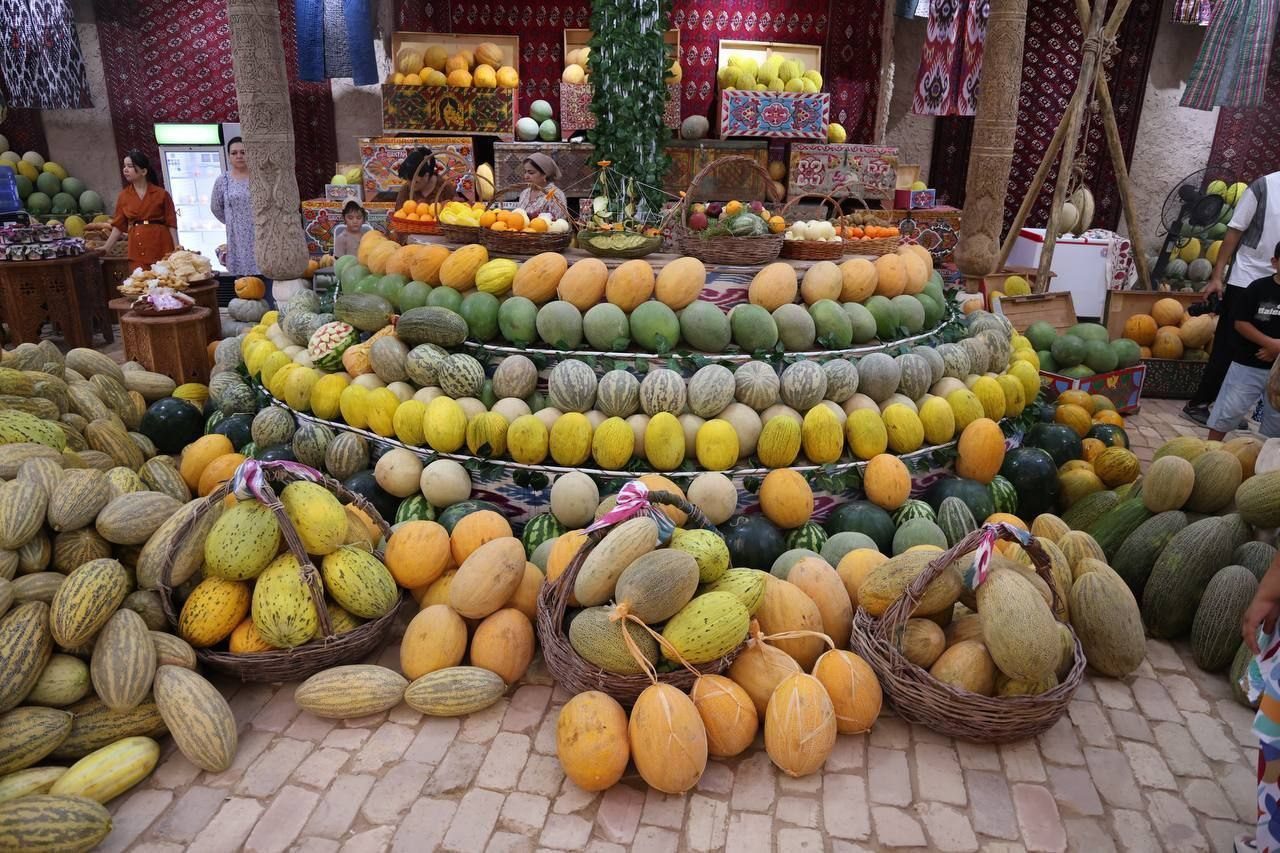
Summer is the sweetest season at the bazaar, and every few weeks the stalls change:
- Cherries from the second half of April into the first half of June.
- Apricots, with the peak of the harvest in the first half of June.
- Peaches from June, with July the busiest month.
- Melons from early June, with the mass harvest from the end of June and the bazaars piled high in August.
- Grapes in quantity from the second half of July.
The exact weeks shift every year with the spring weather. In early August Khiva holds its Melon Festival; in 2026 it ran on 7–9 August. We buy fruit in the morning, while it is fresh and the heat has not set in, at Tashkent's old bazaar under a big blue-green dome, not far from Hazrati Imam. Bring cash in so'm. Read more → in Tashkent and Samarkand's main bazaar, right next to Bibi-Khanym: Samarkand bread, dried fruit, nuts and halva. Read more → in Samarkand; how locals shop is in bazaars of Uzbekistan, and what each city cooks is in Uzbek food by city. If food is the reason for your trip, the Taste of the Road culinary tour goes through Samarkand, Bukhara, Khiva and Tashkent.
What to wear in summer, and the sun
- Loose, light clothes in cotton or linen that cover shoulders and knees: they keep the sun off and are right for mosques.
- In town, knee-length shorts and summer dresses are fine. For mosques and mausoleums carry a light scarf: women cover their hair before entering a mosque. The details are in what to wear and etiquette.
- A sun hat, sunglasses and sunscreen, especially for the open squares of Bukhara and Khiva.
- Comfortable slip-on shoes, which save time at mosque doors.
- A light sweater for the mountains, and a warm layer and a hat for Song-Kul, where July nights are cold.
The full list is in what to pack for Uzbekistan.
Which route, and when to book
July and August fall between our two city seasons, March to June and September to November. There are no public holidays from June to August 2027: Kurban Hayit falls in May that year, around 16–17 May, and the next big day is Independence Day on 1 September. So in summer trains and hotels follow the season, not the holiday calendar.
For the classic cities a week is enough: the 8-day classic tour covers Tashkent, Samarkand, Bukhara and Khiva, and in summer we add a day in the mountains near Tashkent at the end. In June we do the Uzbek cities first and finish in the Kyrgyz mountains. On our tours the guide speaks your language and is included in the price, and our office is on call 24/7 while you travel.
In short
- June to August is hot and dry: 32–37 °C in the afternoon, 18–22 °C at night, July the peak.
- Walk early and late, rest from one to five, and travel between cities by the air-conditioned Afrosiyob.
- Chimgan, Amirsoy and Charvak are about ten degrees cooler and an hour and a half from Tashkent; Zaamin and Song-Kul are cooler still.
- The desert and the Did you know? Legend says Fergana's 'heavenly horses' sweated blood Legend says the horses of Dayuan, as Chinese chronicles called Fergana, sweated blood, and around 102 BC Emperor Wu of Han sent an army to bring some home. The 'blood' was most likely a skin parasite that causes tiny bleeding spots. Read more → are hot too: plan them for mornings, evenings and indoor workshops.
- Cherries and apricots in June, peaches in July, melons and grapes in August.