
 Deutsch
 English
 Español
 Français
 Italiano
 Polski
 Português
 Suomi
 Svenska
 Türkçe
 Ελληνικά
 Български
 Русский
 עברית
 한국어
 中文
 日本語
Programme and details
Uzbekistan · 10 Days / 8 Nights · Group Tour · Summer 2027
Summer in Uzbekistan with a Yurt Camp
Tashkent – Samarkand – Lake Aydarkul – a yurt camp – Bukhara – Khiva – Urgench
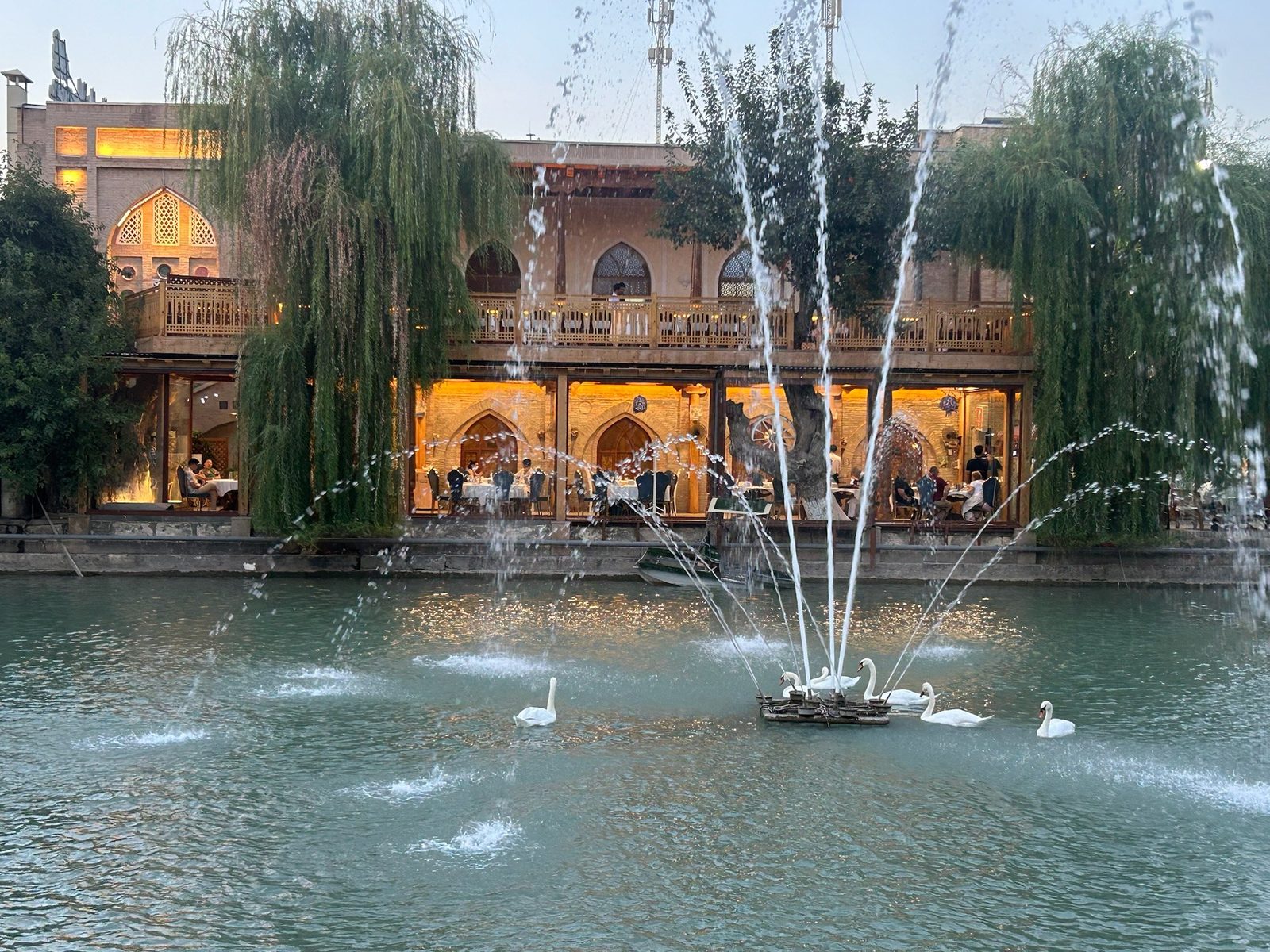
A 10-day group tour of Uzbekistan made for the summer, with departures on Wednesdays from June to August 2027. You see Tashkent, Samarkand, Bukhara and Khiva in the morning and the early evening, and spend the hot middle of the day at hotels with an outdoor pool. Between Samarkand and Bukhara the road turns into the The Kyzylkum, or Red Sands: the desert between the Amu Darya and Syr Darya rivers that the road and the railway cross on the way to Khiva. desert: a picnic and a swim at Lake Aydarkul, then a night in a yurt camp with a camel ride and dinner by the fire. Day 1 is your flight to Tashkent; on the ground you have 8 nights, 7 in hotels and 1 in the yurts.
| Duration | 10 days / 8 nights: day 1 is your flight to Tashkent, then 7 nights in hotels and 1 night in a yurt camp |
| Price | on request |
| Format | Group tour, fixed departures, from 2 travellers, up to 20; a private version on request |
| Departures | Wednesdays from June to August 2027, exact dates on request |
| Where | Tashkent, Samarkand, Lake Aydarkul and a yurt camp in the Kyzylkum, Bukhara and Khiva |
| Getting around | By road in an air-conditioned car, minivan or larger vehicle with driver, by group size; you fly home from Urgench |
| Guide | An English-speaking guide on all excursions |
| Best time | The tour runs only in summer: sightseeing in the cooler hours, the pool in the afternoon |
Ideal for couples, families and friends who can travel only in the summer holidays, for anyone who wants all four A network of caravan routes between China and the Mediterranean. Samarkand, Bukhara and Khiva grew rich as stops along it. cities plus one night in the desert, and for travellers who like to join a small group on a fixed date.
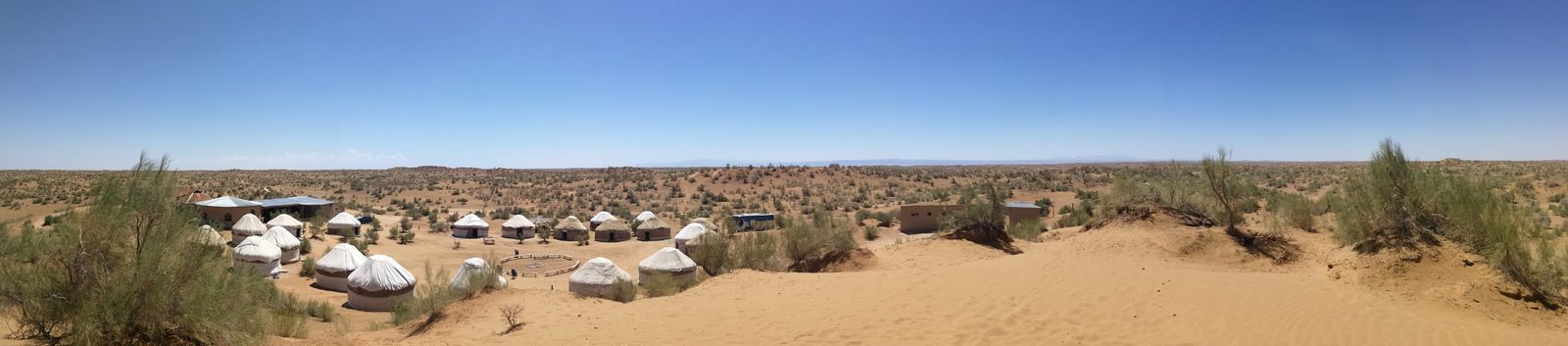
The yurt camp — a camel ride over the sand, dinner by the fire and a night in a felt yurt far from city lights.
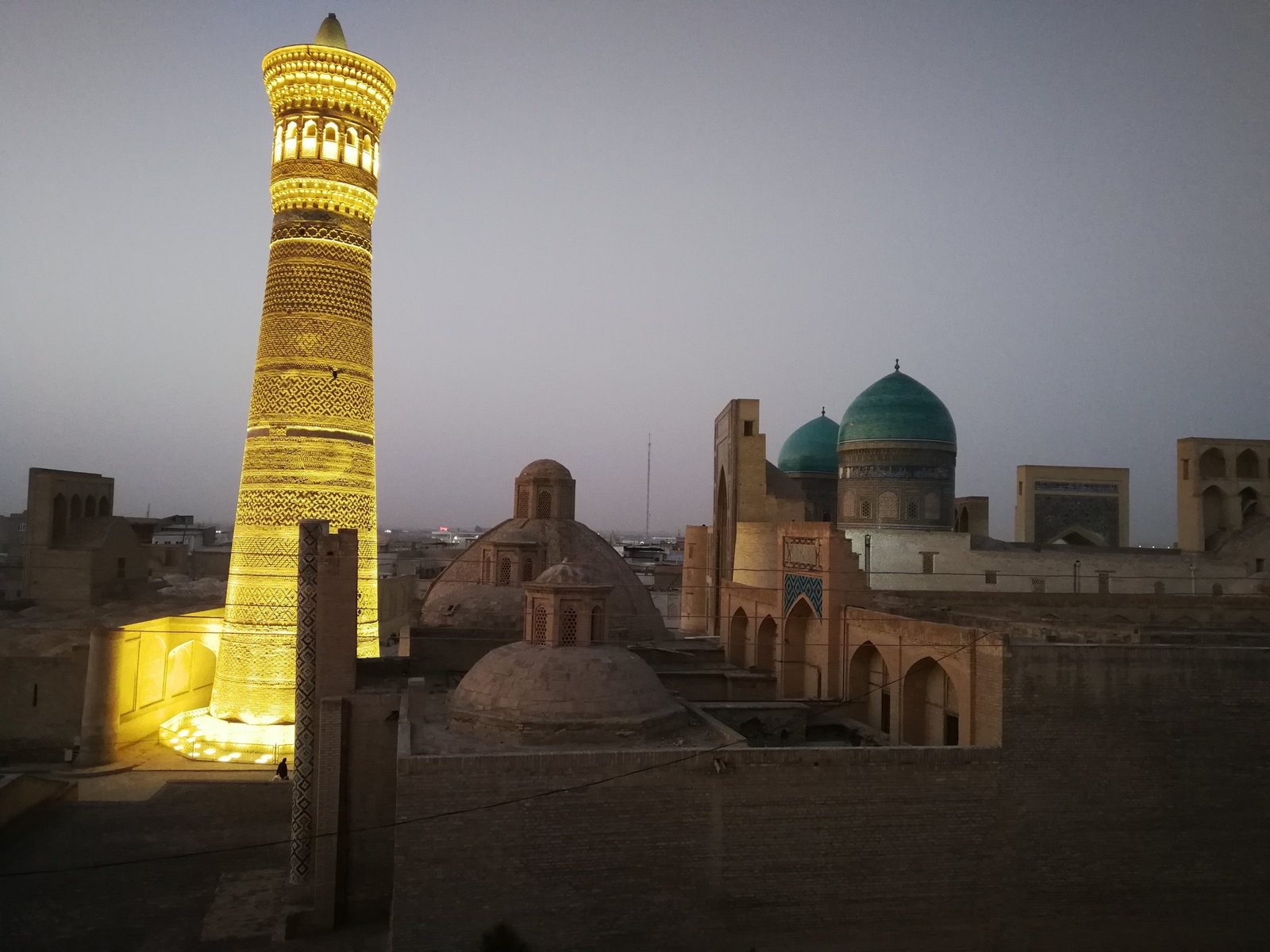
Samarkand, Bukhara and Khiva — the ,Did you know? The Registan's sun-carrying lion went on a banknote The Sher-Dor Madrasah (1619–1636) is named for the big cats with the sun on their backs on its portal. The image appeared on the reverse of Uzbekistan's 200-som note of 1997. Read more → Did you know? Legend: the minaret's foundation was laid with camel milk Legend says master Bako laid the foundations of the Kalyan minaret with ganch plaster mixed with camel milk, then vanished for two years to let them harden, and only then built the tower. Locals still show a grave they say is his. Read more → and ,Did you know? People still live inside Khiva's museum city Itchan Kala packs more than 50 historic monuments and about 250 old houses inside clay walls 8–10 m high and 5–6 m thick, and families still live and work in its lanes. Read more → timed for the morning and the evening.
Itinerary
Day by Day
Day 1 · Wednesday · Home – Tashkent — The flight
You fly to Tashkent. International flights are not part of the tour: book them yourself, or tell us your city and we suggest flights that arrive on Thursday morning.
Night on board
Day 2 · Thursday · Tashkent — The old city, a rest by the pool and the new centre
You land in Tashkent. After passport control and baggage claim our driver meets you in the arrivals hall with a sign and takes you to the hotel. Rooms are ready from 14:00, so you leave your luggage there; if you want the room from the moment you arrive, book early check-in with us.
At 09:00 your guide starts with the old city. The The religious heart of old Tashkent: madrasahs, a Friday mosque and mausoleums. Right next to it stands the new Center of Islamic Civilization, opened in 2026. Read more → ensemble stands around a wide square: the 16th-century Did you know? A mausoleum built for a khan who was buried in another city Barak Khan Madrasah was built in 1531–32. One of its two mausoleums was meant for Barak Khan himself, but he was buried in Samarkand, so the tomb is still called the Nameless Mausoleum. Its cell doors were inlaid with ivory. Read more → ,An Islamic college: student cells and classrooms around a courtyard behind a grand portal. In the old towns many now house museums and craft workshops. Read more → the mausoleum of ,Did you know? Tashkent's patron saint was nicknamed “the locksmith” Abu Bakr Kaffal Shashi, born in Shash, old Tashkent, in 903–904 and died in 976, was a jurist and poet and the son of a locksmith: “kaffal” means locksmith. His mausoleum at Hazrati Imam dates from 1541–1542. Read more → a scholar of the 10th century, and the Tilla Sheikh mosque. Next door is Did you know? Tashkent’s Chorsu dome is younger than the city’s metro Trade at the old crossroads is centuries old, but the domed building opened only in 1990, thirteen years after the metro. Architects Vladimir Azimov and Sabir Adylov gave it a main dome of 86 m ringed by seven smaller ones. Read more → under its big blue dome, with dried fruit, spices and bread straight from the tandoor.
From 14:00 you check in and rest by the hotel pool. In the late afternoon, when the heat eases, you see the modern centre: Independence Square with the memorial to those who fell in the Second World War and the Ezgulik arch, the Did you know? A Romanov grand duke gave Tashkent its first cinema Grand Duke Nikolai Konstantinovich Romanov lived in Tashkent from the 1880s; his palace of 1891 is by Heinzelman and Benois. He opened the city's first cinema, “Khiva”, funded canals in the Hungry Steppe, and his paintings seeded the Museum of Arts. Read more → built in 1891 for Grand Duke Nicholas Konstantinovich (from outside), the square in front of the Alisher Navoi opera house and .Did you know? Legend: “Strength lies in justice” were Timur's own words The equestrian statue of Amir Timur in central Tashkent, unveiled in 1994, bears the motto “Strength lies in justice” in four languages. Tradition attributes the words to Timur himself, but historians cannot confirm he said them. Read more →
Good to know: the transfer from the airport is with a driver only; your guide joins you for the tour. Early check-in on arrival is not included and is booked on request. More in our articles Tashkent in 1 or 2 days and Chorsu bazaar.
Overnight in Tashkent
Day 3 · Friday · Tashkent – Samarkand — The road west and the Registan in the evening
After breakfast you drive to Samarkand, about 300 km and 4 to 5 hours with a stop on the way. You check in and rest by the pool through the hot part of the day.
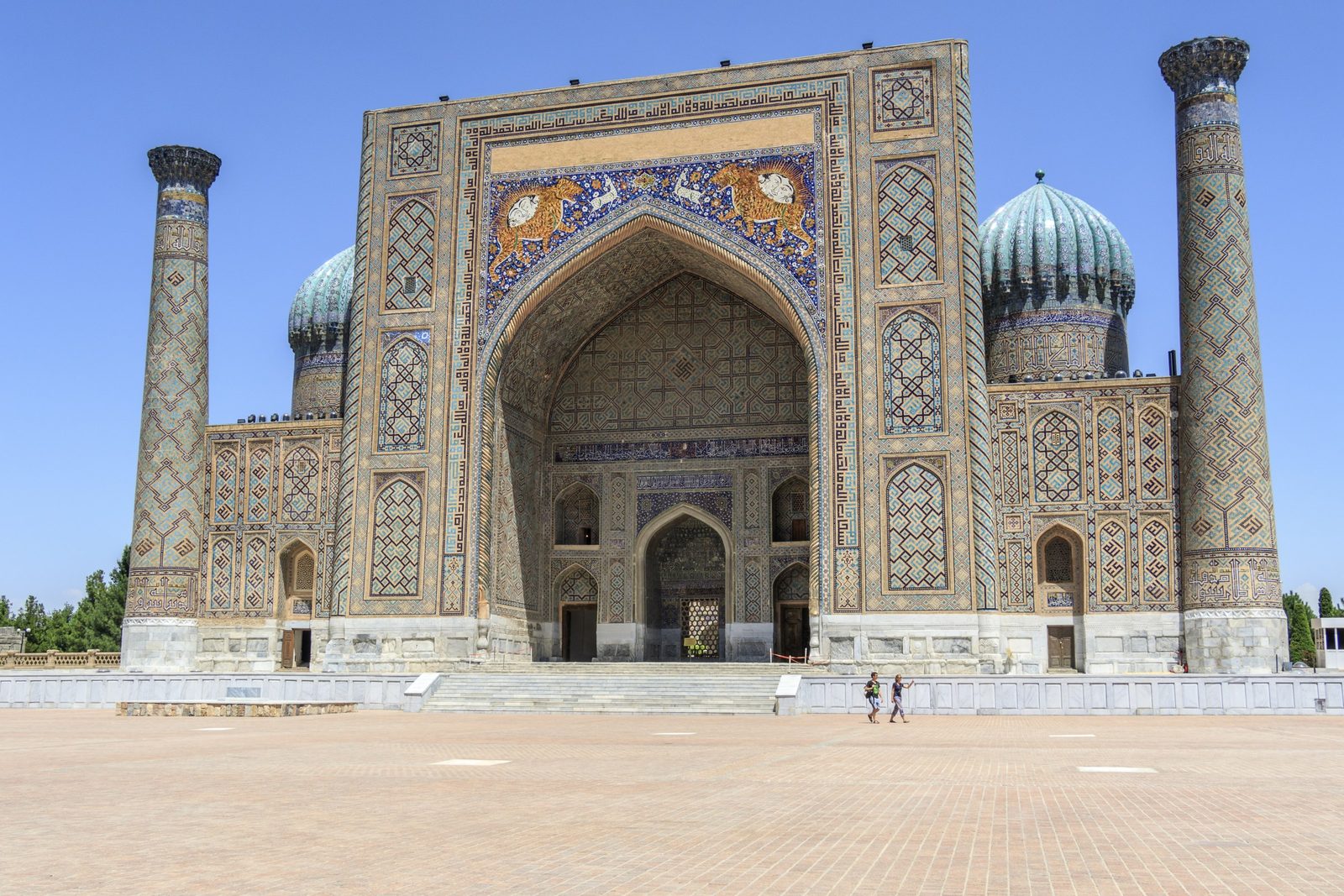
When the light softens, your guide takes you to the Registan, the square of three madrasahs: Did you know? Ulugh Beg measured the year to within 25 seconds Working at his Samarkand observatory, Ulugh Beg put the tropical year at 365 days 5 h 49 min 15 s, about 25 seconds too long, closer than Copernicus a century later. Read more → built the first in 1417–1420, Sher-Dor with the tigers on its portal followed in 1619–1636, and Did you know? The 'gilded' mosque of the Registan Tilla-Kari, built in 1646–1660, means 'gilded'. With Bibi-Khanym in ruins, it served as Samarkand's main Friday mosque until the 1920s. Its prayer hall glows with kundal, relief painting finished in gold leaf, restored in 1979. Read more → with its gilded mosque in 1646–1660. Stay on as the evening lights come on.
Good to know: more in our article on the Registan.
Overnight in Samarkand
Day 4 · Saturday · Samarkand — Gur-e-Amir, Shah-i-Zinda, Bibi-Khanym and Siab bazaar
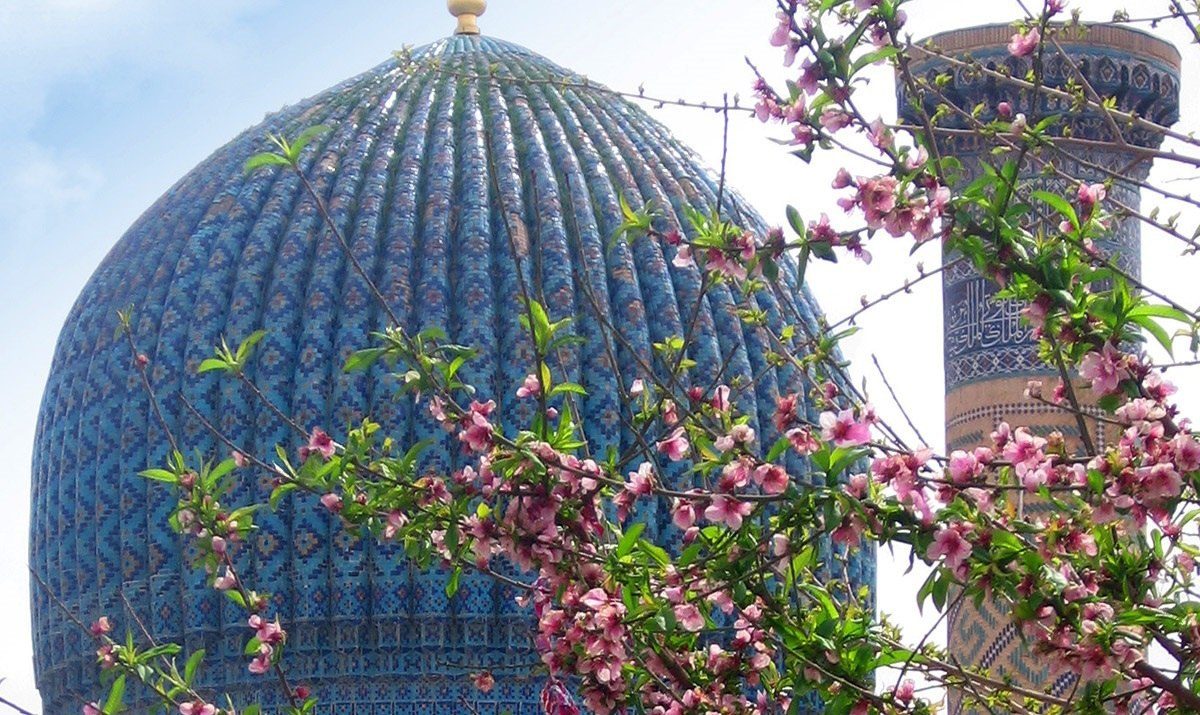
An early start, while the air is fresh. ,Did you know? Timur's tombstone went to Persia and came back The dark-green jade slab on Timur's grave in Gur-e-Amir was carried off by Nader Shah in 1740. It broke, and on his advisers' urging he sent it back to Samarkand. Read more → the mausoleum completed in 1404, is where Amir Timur (Tamerlane, 1336–1405), founder of the Timurid empire, which had its capital in Samarkand. Born near Shahrisabz. Read more → lies under a ribbed blue dome. Then ,Did you know? Why Shah-i-Zinda means 'the Living King' The necropolis grew around the shrine of Qutham ibn Abbas, a cousin of the Prophet Muhammad. Legend says he did not die in battle but went down a deep well to a garden of paradise, where he lives on. Read more → a street of tiled mausoleums climbing the slope above the city, built over many centuries. You end the morning at the ,Did you know? 95 elephants hauled stone for Timur's great mosque Bibi-Khanym, begun in 1399 after Timur took Delhi, was the largest mosque of his empire. Some 200 stonecutters worked on site and 95 elephants brought from India hauled the loads; the courtyard was meant to hold 10,000 people. Read more → which Timur began in 1399, and at Samarkand's main bazaar, right next to Bibi-Khanym: Samarkand bread, dried fruit, nuts and halva. Read more → right beside it: dried apricots, nuts, melons in season and .Did you know? Legend: Samarkand bread can't be baked anywhere else Legend says a Bukhara ruler brought Samarkand's best baker to his court with his oven, flour and water, yet the bread came out different. The missing ingredient, the baker said, was the air of Samarkand. The round loaves keep for a long time. Read more →
The afternoon is free for the pool and a slow lunch.
Good to know: Shah-i-Zinda is a revered place: cover shoulders and knees and speak quietly. More in our articles Shah-i-Zinda and Samarkand in 1, 2 or 3 days.
Overnight in Samarkand
Day 5 · Sunday · Samarkand – Lake Aydarkul – yurt camp — A desert lake and a night in the yurts
After breakfast you leave the city for the Kyzylkum, about 4 to 5 hours by road with the stop at the lake, through dry country and villages that live along their irrigation canals.
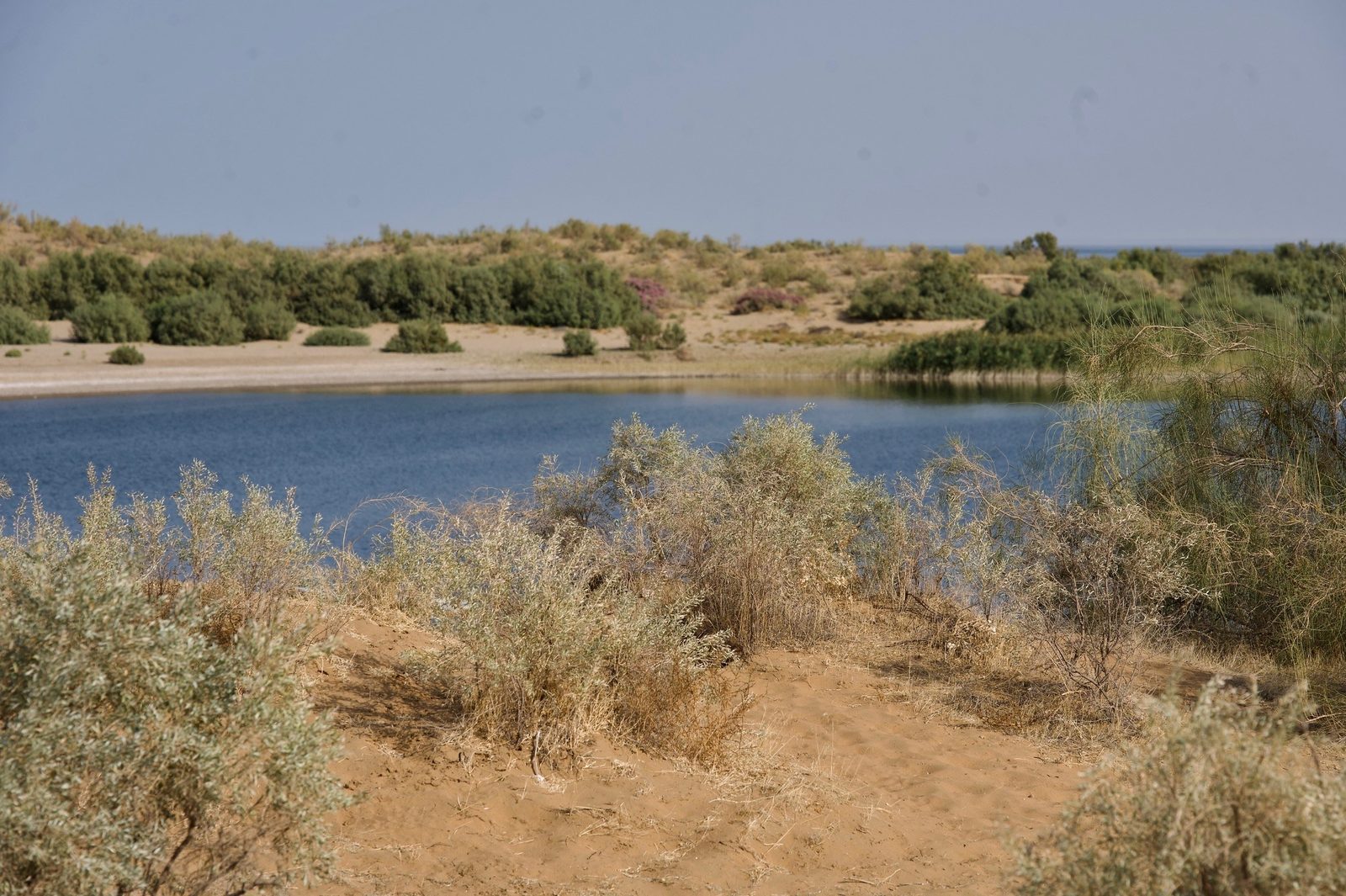
Lake Aydarkul did not exist before 1969. That year a flood on the Syr Darya forced water out of the Shardara reservoir into the Arnasay lowland on the edge of the desert, and it never drained away. Today the lake is nearly 250 km long, with sandy shores and slightly salty water. You have a picnic lunch on the shore and time to swim.
Then on to the yurt camp. Yurts are the felt houses of Central Asian herders, cool in the day and warm at night. As the light softens you ride a camel over the sand for 10 to 20 minutes, and dinner is served around the campfire. With no towns nearby, the night sky is dark, and on a clear night the Milky Way is easy to see.
Good to know: the yurts are shared, 3 or 4 people in each, with men and women in separate yurts; if you travel as a couple or a family, tell us when you book and we ask the camp. Conditions in the camp are simple: bring a torch, sunscreen and a light layer for the evening. More in our articles Aydarkul and a night in a yurt camp and the Kyzylkum desert.
Overnight in a yurt camp
Day 6 · Monday · Yurt camp – Bukhara — Lyabi-Hauz and the old merchant quarter
Breakfast at the camp, then about 4 to 5 hours by road to Bukhara. You check in and rest by the pool.
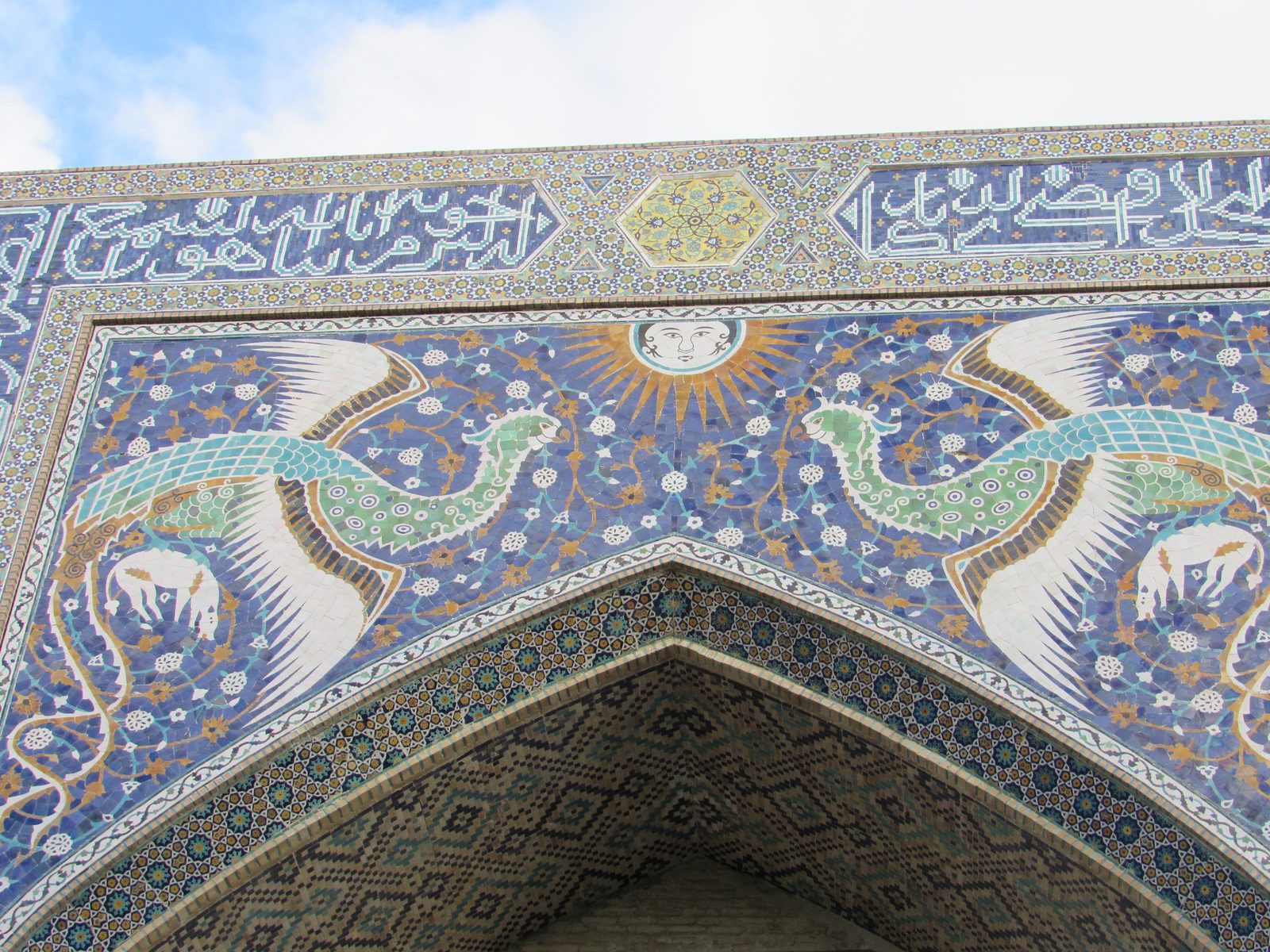
In the late afternoon your guide walks you to ,Did you know? Bukhara's ponds were once its water supply Pools like Lyabi-Hauz, dug around 1620 and 46 × 36 m, were the city's main source of water. Most were filled in during the 1920s–30s because they spread disease; Lyabi-Hauz survived. Read more → the square around a pond dug in about 1620 and the heart of the old town. On one side stands the Did you know? A madrasah that was an inn, a fort and a museum Tashkent's Kukeldash Madrasah, built around 1570, became a caravanserai in the 18th century, later a fortress and then a museum, before returning to teaching in the 1990s. Read more → of 1568–1569, on another the Did you know? A caravanserai that became a madrasah by a khan's word Nadir Divan-Begi built his 1622 building by Lyabi-Hauz as a caravanserai. At the opening Imam Quli Khan praised it as a fine madrasah, and a khan's word could not be taken back: a portal and cells were added, and a madrasah it became. Read more → of 1622 with the two phoenixes on its portal. A few steps away is the Did you know? Magoki-Attori: a mosque 'in the pit' Magoki-Attori means roughly 'in the pit': even in the 10th century it lay below street level. Beneath it lie remains of a pre-Islamic temple. Read more → mosque, which you see from outside: it sits below today's street, and its carved 12th-century façade is one of the oldest in Bukhara.
Overnight in Bukhara
Day 7 · Tuesday · Bukhara — From the Samanid mausoleum to Poi Kalyan
The longest walk of the trip, so you start early. The Did you know? Buried in mud, this tomb escaped Genghis Khan The 10th-century Samanid Mausoleum, one of the oldest monuments of Islamic Central Asia, was covered by flood mud and sand before the Mongols came in 1220. Hidden for centuries, its brick lacework survived intact. Read more → of the 10th century is a small cube whose walls seem woven from baked brick. Nearby, the Did you know? A cone-shaped dome over Job's spring Chashma-Ayub, 'Job's Spring', has a conical dome in the Khorezm style, rare in Bukhara. Legend says Job struck the ground with his staff and water flowed; inside is a museum of Bukhara's water supply. Read more → mausoleum stands over a spring that tradition links with the prophet Job. Then, from outside, the Did you know? The famous columns of Bolo-Hauz are barely a century old The Bolo-Hauz mosque opposite the Ark was completed in 1712, but its best-known feature, the tall, slender carved columns along the front of the iwan, was added only in 1917, together with the small minaret of 1916–1917. Read more → mosque of 1712 with its wooden columns over the pond, and the walls of ,The fortress-residence of the rulers of Bukhara on a high artificial hill: the oldest structure in the city. Read more → the fortress of the emirs.
You walk on through the 16th-century ,Did you know? Under Bukhara's domes merchants changed money and gold Four 16th-century trading domes still stand over old crossroads. Toki Sarrafon was the money changers' dome, where merchants from India and China swapped coins; Toki Zargaron held jewellers' workshops, Toki Telpak Furushon sold caps. Read more → Toki Sarrafon, Toki Telpak Furushon and Toki Zargaron, past the Did you know? Engineers pulled a leaning minaret back upright By 1920 a minaret of the Ulugh Beg Madrasah on the Registan was tilting. In 1932 engineer Vladimir Shukhov straightened it; the second minaret was set upright in 1965. Read more → and the Abdulaziz Khan madrasah facing each other, to Poi Kalyan: the Did you know? Diggers went 13 m down and never found its base The Kalyan Minaret of 1127 rises about 46 m, and an excavation reached 13 m without finding the bottom of its foundations. Genghis Khan reportedly ordered it spared. Read more → of 1127, about 46 m high, between the great Kalyan mosque and the Did you know? A madrasah still teaching after almost 500 years Mir-i-Arab, built in the 1530s opposite the Kalyan Mosque, was one of only three Islamic schools that kept working through the Soviet period, and it still trains students today. Read more → madrasah. The afternoon is for the pool.
Good to know: Poi Kalyan is a working religious complex: cover shoulders and knees. More in our article Bukhara in 1, 2 or 3 days.
Overnight in Bukhara
Day 8 · Wednesday · Bukhara – Khiva — Across the Kyzylkum
A long day on the road: about 450 km across the Kyzylkum, 7 to 8 hours with stops, for long stretches beside the Amu Darya. The car is air-conditioned, and we stop for lunch and for photos of the river and the sand.
You arrive in Khiva in the afternoon, check in and cool off in the pool. The evening is free: the clay walls of Itchan Kala turn orange at sunset.
Good to know: keep water and a hat in the car. More in our article Khiva to Bukhara.
Overnight in Khiva
Day 9 · Thursday · Khiva — A day inside Itchan Kala
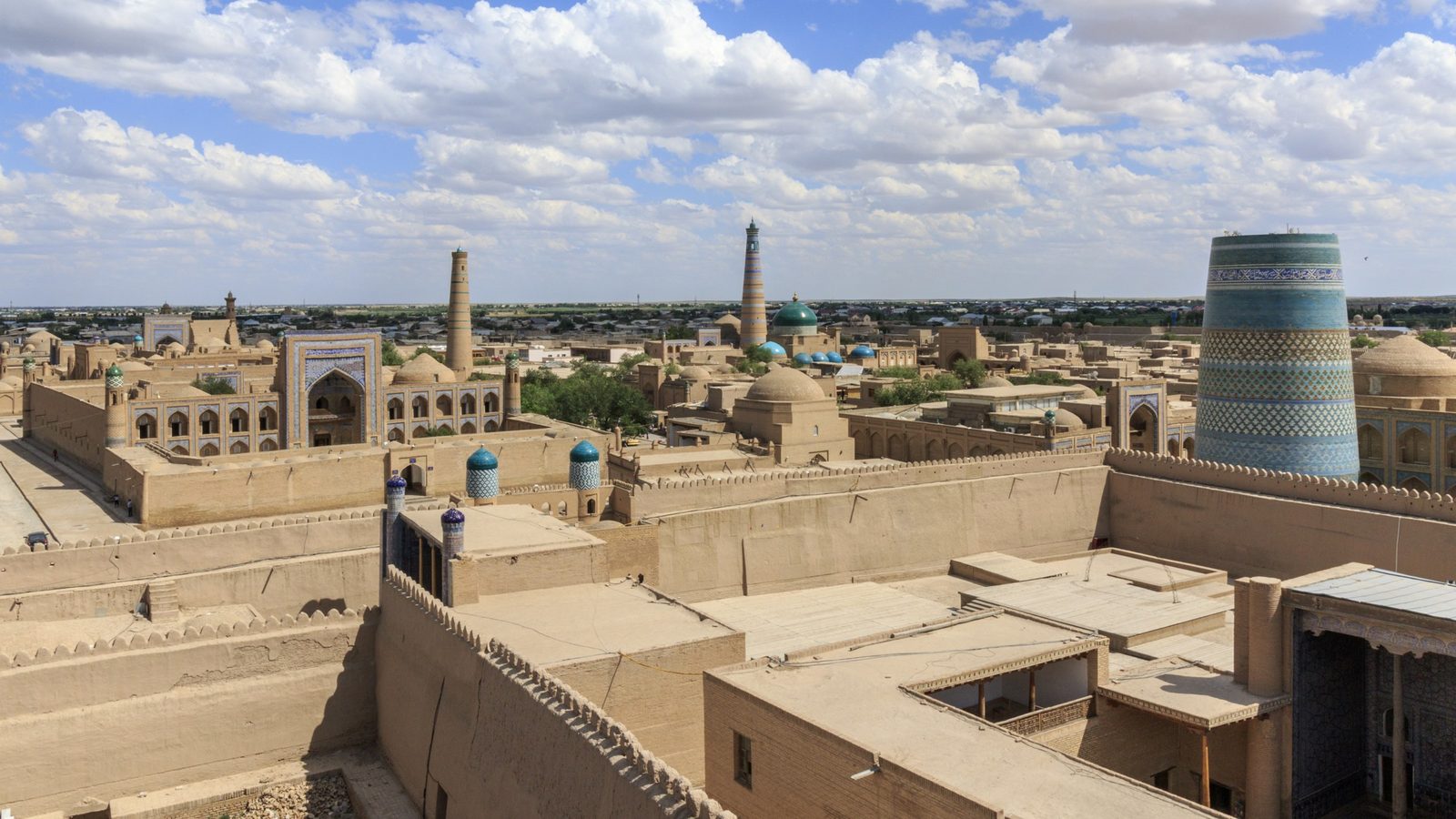
You start in the morning at the West Gate of Itchan Kala, the walled inner town. Just inside stands the ,Did you know? A 14-metre-wide base for a tower that stopped at 29 m Kalta-Minor was begun in 1852 and meant to reach 70–80 m, but work halted in 1855 at about 29 m when its khan died. It is said to be the only minaret covered entirely in glazed tiles. Read more → the tiled minaret begun in 1852 and stopped in 1855 at 29 m, beside the ,Did you know? Khiva's largest madrasah now welcomes hotel guests Muhammad Amin-Khan built his madrasah in 1852–1855 beside the Kalta-Minor. With about 130 rooms around a 38-metre courtyard it is the largest in Khiva and once taught some 260 students; today it houses a hotel. Read more → which is now a hotel. Then ,Did you know? In the khan’s courtyard a round platform waited for a yurt The Kunya-Ark, the khans’ citadel, had its own mint, arsenal and harem. In the courtyard of its reception hall of 1804–1806 stands a round platform: a yurt was set up on it, and there the khan received envoys of the steppe nomads. Read more → the khans' citadel begun in 1686, the Muhammad Rahim Khan madrasah opposite, and the Juma mosque with its hall of carved wooden columns.
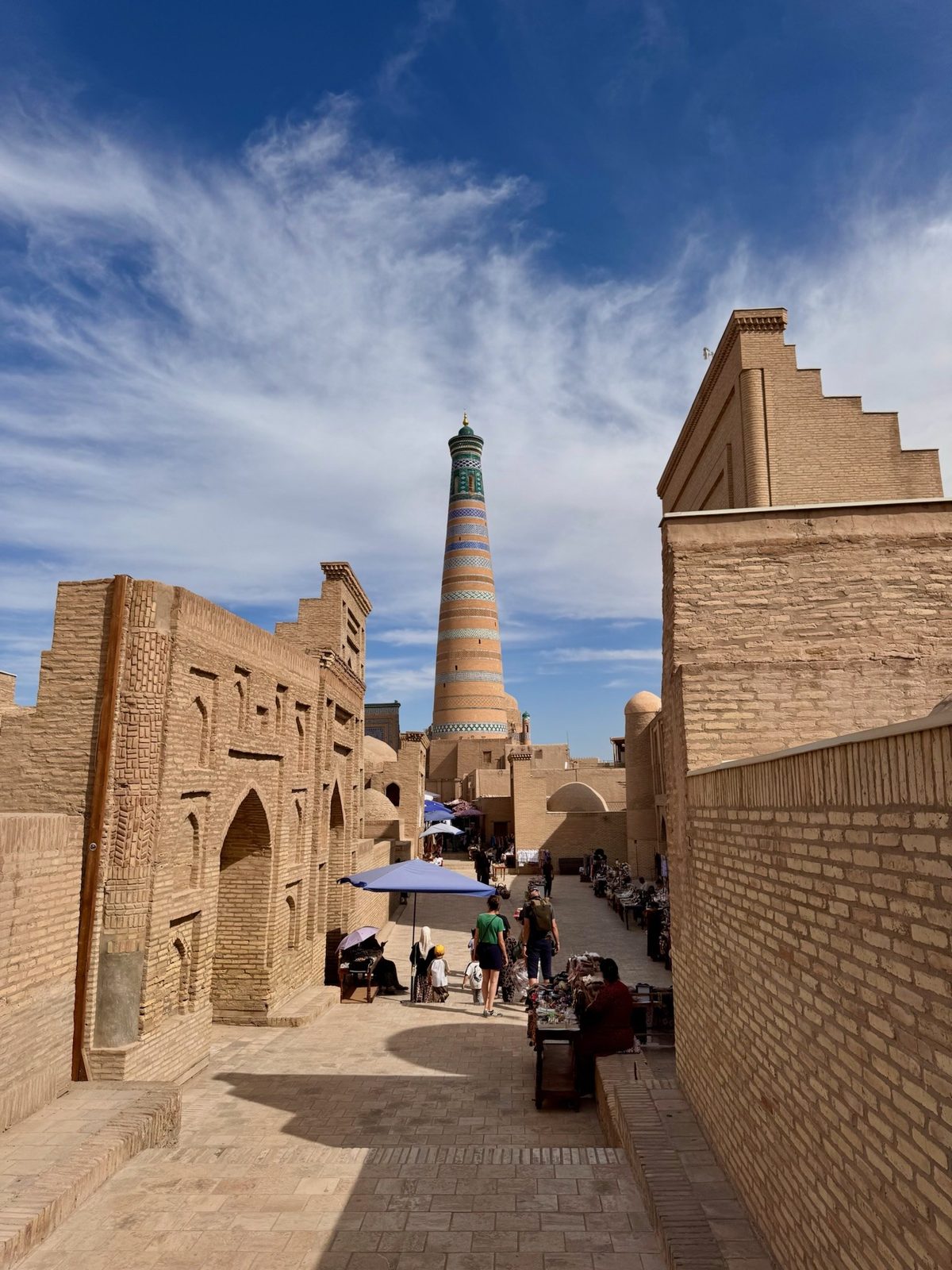
Next come the Did you know? In Tash-Hauli's harem each of four wives had her own loggia Allakuli Khan built the Tash-Hauli palace in 1830–1838 around three courtyards. In the harem four tall loggias belonged to the khan's four wives and a fifth, the largest, to the khan himself; behind each summer terrace lay a winter room. Read more → palace of the 1830s with its tiled courtyards, the Allakuli Khan madrasah and caravanserai, and the Did you know? A grand vizier brought Khiva a hospital and a telegraph Islam Khoja, grand vizier of Khiva from 1898, funded the khanate's first European-style school, a hospital, a pharmacy, a post office and a telegraph. In 1908–1910 he also built the small madrasah beside his famous minaret. Read more → with its minaret of 56.6 m, the tallest in Khiva. After lunch, the pool; in the evening you can go back to the walls for the sunset.
Good to know: one combined ticket covers the museums and monuments of Itchan Kala, and it is included. More in our articles Itchan Kala and Khiva in 1 or 2 days.
Overnight in Khiva
Day 10 · Friday · Khiva – Urgench — Departure
After breakfast our driver takes you to Urgench airport, about 30 km, for your flight home or to Tashkent. End of services.
Good to know: the transfer is with a driver only. Hotel rooms are vacated by 12:00; for an evening flight we arrange a late check-out on request.
A longer stay — the mountains, more of the desert or another season
For more of the Kyzylkum, our Karakalpakstan and the Desert Fortresses of Khorezm starts in Khiva and adds a night in a yurt camp by .Did you know? Legend says a shepherd named Ayaz built Ayaz-Kala for a bride Legend says a Khorezm king promised his daughter to whoever built an unassailable fortress; the shepherd Ayaz began, the king broke his word, and the walls stayed unfinished. In fact the oldest fort here dates to the 4th–3rd century BC. Read more → If you would rather walk than swim, Hiking Uzbekistan crosses the Nuratau villages to Aydarkul in spring and autumn. For cool mountain air in July, look at Kyrgyzstan in Summer from Tashkent.
Travelling outside the summer? Our 8-day group tour of Samarkand, Bukhara and Khiva leaves on Fridays all year round. A night in Tashkent before or after the tour can be added on request.
Good to know: how we plan the hot months is in our guide Uzbekistan in summer.
Accommodation
Where you stay
| City | Stay |
|---|---|
| Tashkent | A superior hotel with an outdoor pool, 1 night |
| Samarkand | A superior hotel with an outdoor pool, 2 nights |
| Lake Aydarkul | A yurt camp in the Kyzylkum, shared yurts, 1 night |
| Bukhara | A superior hotel with an outdoor pool, 2 nights |
| Khiva | A hotel with an outdoor pool, 2 nights |
We confirm the hotels for your departure before booking; if one is full, we book another of the same category with a pool.
Price
Price
The price is on request: it depends on your departure date, the room type and whether you join the group or travel privately.
Good to know
Conditions
- Summer in Uzbekistan is hot and dry: on a July afternoon the average is about 35 °C in Samarkand and 37 °C in Bukhara, and the nights stay around 20 °C. That is why the walks are in the morning and the early evening and the hotels have pools. Bring a hat, sunglasses, sunscreen and light clothes that cover shoulders and knees.
- Drink bottled water: it is sold everywhere, and we keep some in the car.
- The group is from 2 to 20 travellers. Bookings close 20 days before each departure, and places are confirmed while there are rooms in the hotels on the route.
- Citizens of close to 90 countries, including the EU, the UK and, since January 2026, the USA, can visit Uzbekistan without a Entry rules depend on your passport. Once you are here, each stay must be registered within three days, and hotels do it for you; customs and registration rules are in our guide. Read more → for up to 30 days. Rules change, so we check them for your passport before booking.
- Your guide speaks English on all excursions; the airport transfers on days 2 and 10 are with a driver only.
- Rooms are ready from 14:00 and are vacated by 12:00. Triple rooms in Uzbekistan are double rooms with an extra bed or sofa, so we do not recommend them for three adults.
- In the yurt camp 3 or 4 people share a yurt, men and women separately. Ask us about a yurt for your couple or family.
- Read before you go: Uzbekistan in summer, Uzbekistan in July and What to pack for Uzbekistan.
- Reservations are confirmed with passport copies only.
Cancellation policy
| Cancellation timing | Penalty |
|---|---|
| 14–8 days before the service | 20% |
| 7 days | 50% |
| 6–0 days | 100% |
Transportation
| Vehicle | Group size |
|---|---|
| Sedan | 2 pax |
| Hyundai Grand Starex | 3–4 pax |
| Toyota Hiace | 5–7 pax |
| Mercedes Sprinter | 8–10 pax |
| On request | 11 pax and more |
Vehicles may differ in make and colour.
🌿 Responsible tourism: we allocate part of our profits to good causes and are preparing for GSTC certification.
Expert opinion
Pluses
- A pool every afternoon: every hotel on the route, in Tashkent, Samarkand, Bukhara and Khiva, has an outdoor pool for the hot middle of the day.
- A night in the desert: a swim at Lake Aydarkul, a lake of nearly 250 km that appeared in 1969, then a camel ride, dinner by the fire and a night in a yurt camp.
- Easy to join: fixed Wednesday departures from June to August 2027 for groups of 2 to 20, on one line from Tashkent to Khiva.
Minuses
- Real summer heat: July afternoons average about 35 °C in Samarkand and 37 °C in Bukhara, so the walks are early and late.
- Long days on the road: the whole route is by car, and Bukhara to Khiva takes 7 to 8 hours with stops.
- Shared yurts: in the camp 3 or 4 people share a yurt, with men and women in separate yurts.
AroundCA numbers
How we counted
By the AroundCA programme: we count only what is written in the day-by-day programme of this tour. If the programme gives no figure, we show nothing.
- Hotel changes
- 4
- Longest transfer
- 8 h · by car
- Walking
- Medium
Walking: Medium: city walks in the morning and the early evening, the longest on day 7 in Bukhara and day 9 inside Itchan Kala in Khiva, with the afternoons free for the pool.
Best time
Jun–Aug
The tour runs only in June, July and August: long days, summer fruit, warm water at Aydarkul and a pool in every city for the afternoons of 32–37 °C.
A typical day
On day 4 in Samarkand you set out early, while the air is fresh: Gur-e-Amir, the street of tiled mausoleums at Shah-i-Zinda, the Bibi-Khanym mosque and Siab bazaar next to it. After lunch the afternoon is free at the hotel pool, and the evening is yours.
What the price includes
What is included
- Accommodation: 8 nights in double or twin rooms, 7 in hotels with breakfast and 1 in a yurt camp
- Hotel tourist tax
- At Aydarkul: a picnic lunch, dinner at the camp and breakfast
- Air-conditioned transport on the programme, including the airport transfers with a driver
- An English-speaking guide on all excursions
- Entrance tickets on the programme
- A camel ride at the yurt camp
- A map of Uzbekistan
Not included
- International flights
- Early check-in on arrival day (on request)
- A single room (on request)
- Lunches and dinners not listed
- Drinks
- Photo and video fees at the sites
- Visa fees, if your passport needs a visa
- Tips and personal expenses
Extra cost on site
- Lunches, dinners and drinks not listed
- Photo and video fees at the sites
- Tips and personal expenses
Good for
- Couples, families and friends who can travel only in the summer holidays
- Travellers who want all four Silk Road cities and one night in the desert in a single trip
- Anyone who would rather join a small group on a fixed date than plan a private route
Maybe not for you if
- Travellers who find it hard to cope with heat: afternoons in July reach about 35–37 °C
- Anyone who dislikes long drives: the whole route is by road, and Bukhara to Khiva takes most of a day
- Couples who need privacy every night: in the yurt camp 3 or 4 people share a yurt, men and women separately
Questions about this tour
How much does the tour cost?
The price is given on request. It depends on your departure date, the room type and whether you join the group or travel privately with your own guide and car. Send us the month you have in mind and the number of travellers, and we reply with the exact dates and a full quote.
On which dates does the group leave?
The tour leaves on Wednesdays from June to August 2027: you fly to Tashkent on Wednesday and land on Thursday. Write to us for the exact list of 2027 departures. Bookings for each date close 20 days before it, and places are confirmed while the hotels on the route have rooms.
Is it too hot to travel in Uzbekistan in summer?
It is hot and dry: in July the afternoon average is about 35 °C in Samarkand and 37 °C in Bukhara, with nights near 20 °C. The tour is built around it. Sightseeing is in the morning and the early evening, every hotel has an outdoor pool, and the cars are air-conditioned. Bring a hat and drink bottled water.
What is the night in the yurt camp like?
After a picnic and a swim at Lake Aydarkul you reach a camp of felt yurts in the Kyzylkum. You ride a camel for 10 to 20 minutes, have dinner around the fire and sleep in a shared yurt, 3 or 4 people, men and women separately. Conditions are simple, and breakfast is served before you leave.
How long are the drives?
The whole route is by road in an air-conditioned vehicle. Tashkent to Samarkand and the two legs through the yurt camp take about 4 to 5 hours each. The longest day is Bukhara to Khiva, about 450 km and 7 to 8 hours with stops across the Kyzylkum. At the end you fly home from Urgench.
How is it different from your other group tour?
Our 8-day group tour leaves on Fridays all year and uses trains and a flight between the cities. This summer tour runs only from June to August, goes by road, adds Lake Aydarkul and a yurt night, and keeps the afternoons free for the hotel pool.
Didn’t find your answer? Ask about this tour →
Make it your trip
Tick what you’d like to add — it goes into your request, and the manager confirms the final price.
Add a few days
Arrival, departure, transfers
Arrive earlier or stay longer
Need extra nights before or after the tour?
Prices are indicative; we confirm the exact rate after your request.