
Places in this article: Samarkand · Bukhara · Khiva · Tashkent
Uzbekistan in winter: what to do from December to February
Between 21 December, when the sun sets over Tashkent at 16:58, and the end of February, when it sets at 18:13, Uzbekistan has its quietest season. Madrasah courtyards in Samarkand and Bukhara have no queues in the morning, hotels in the old towns have rooms to spare, and 65–85 km from the capital the ski lifts are running.
We live in Tashkent and work right through the winter. This is our guide to Uzbekistan in winter as a whole: why we like the season, what is open and what closes, where to ski, what to wear and how many days to plan. For the details of each month, read Uzbekistan in December, in January and in February.
Why winter is the underrated season
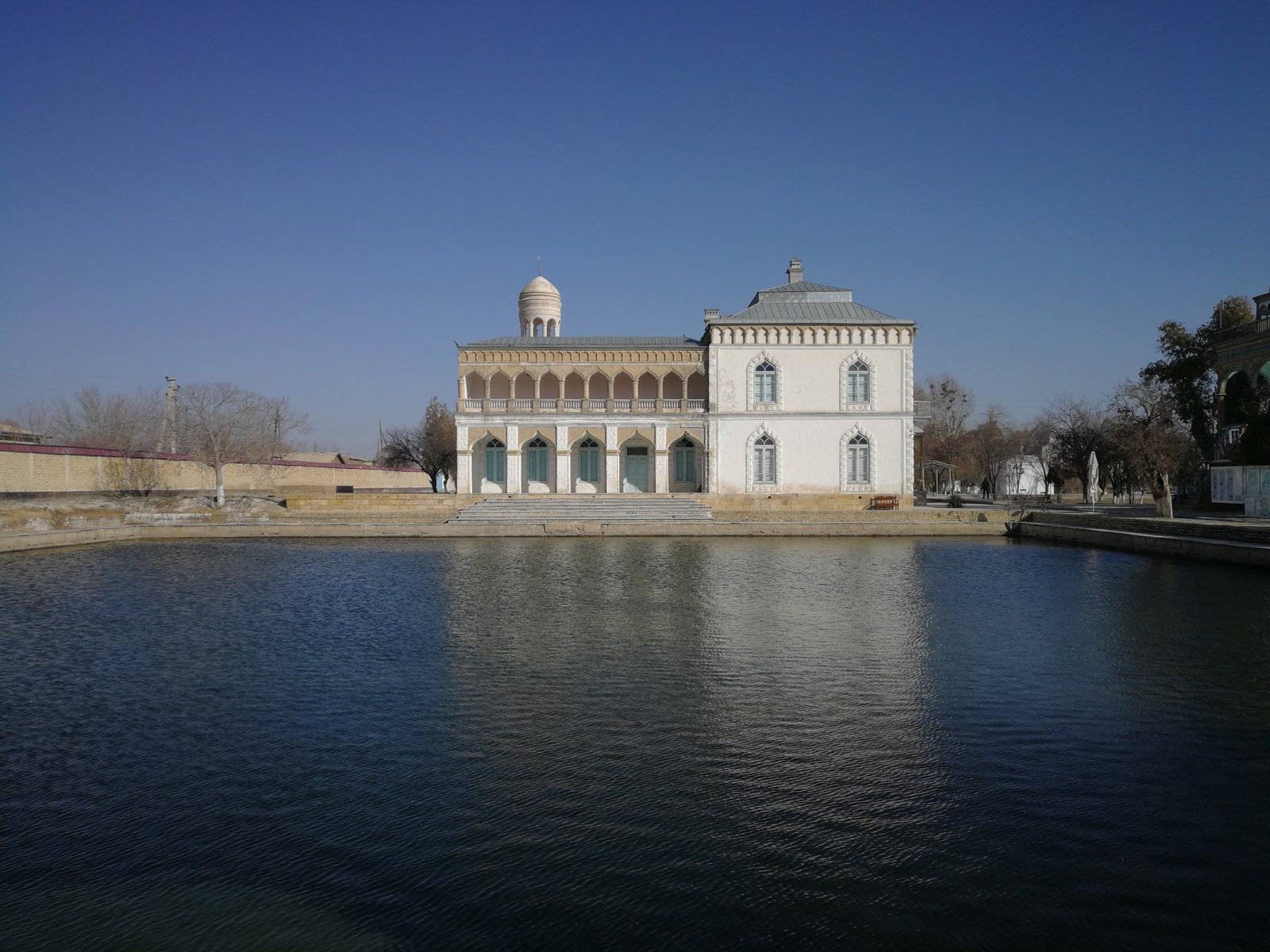
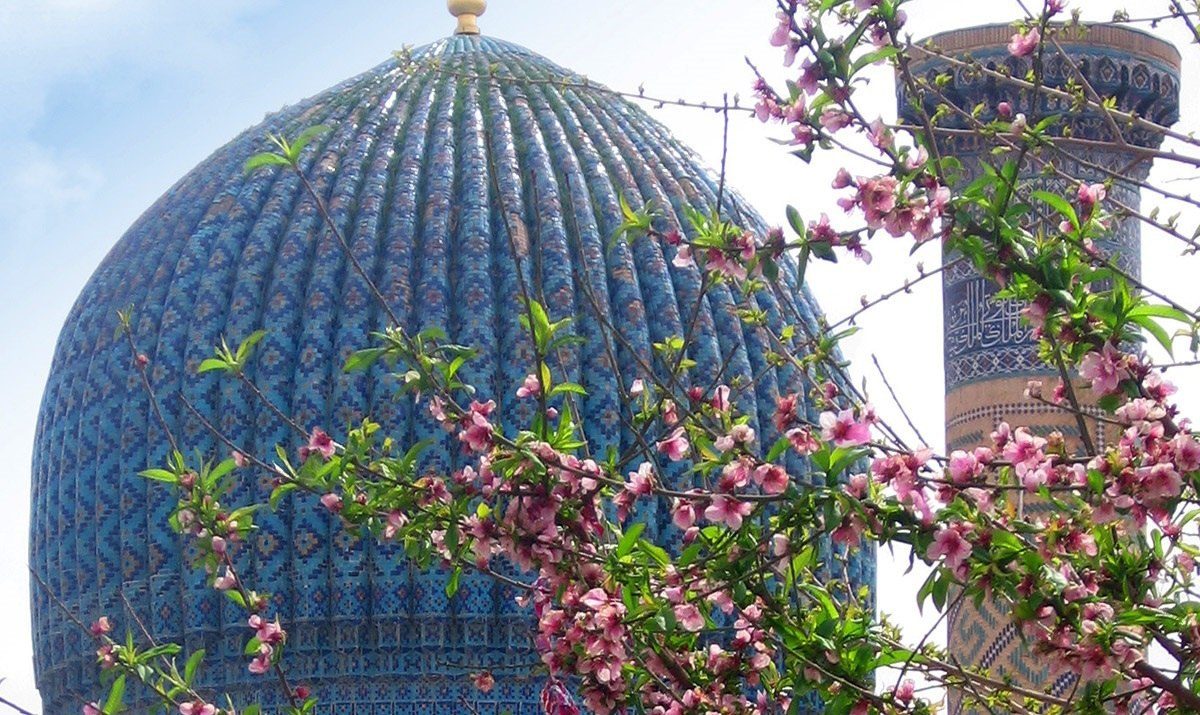
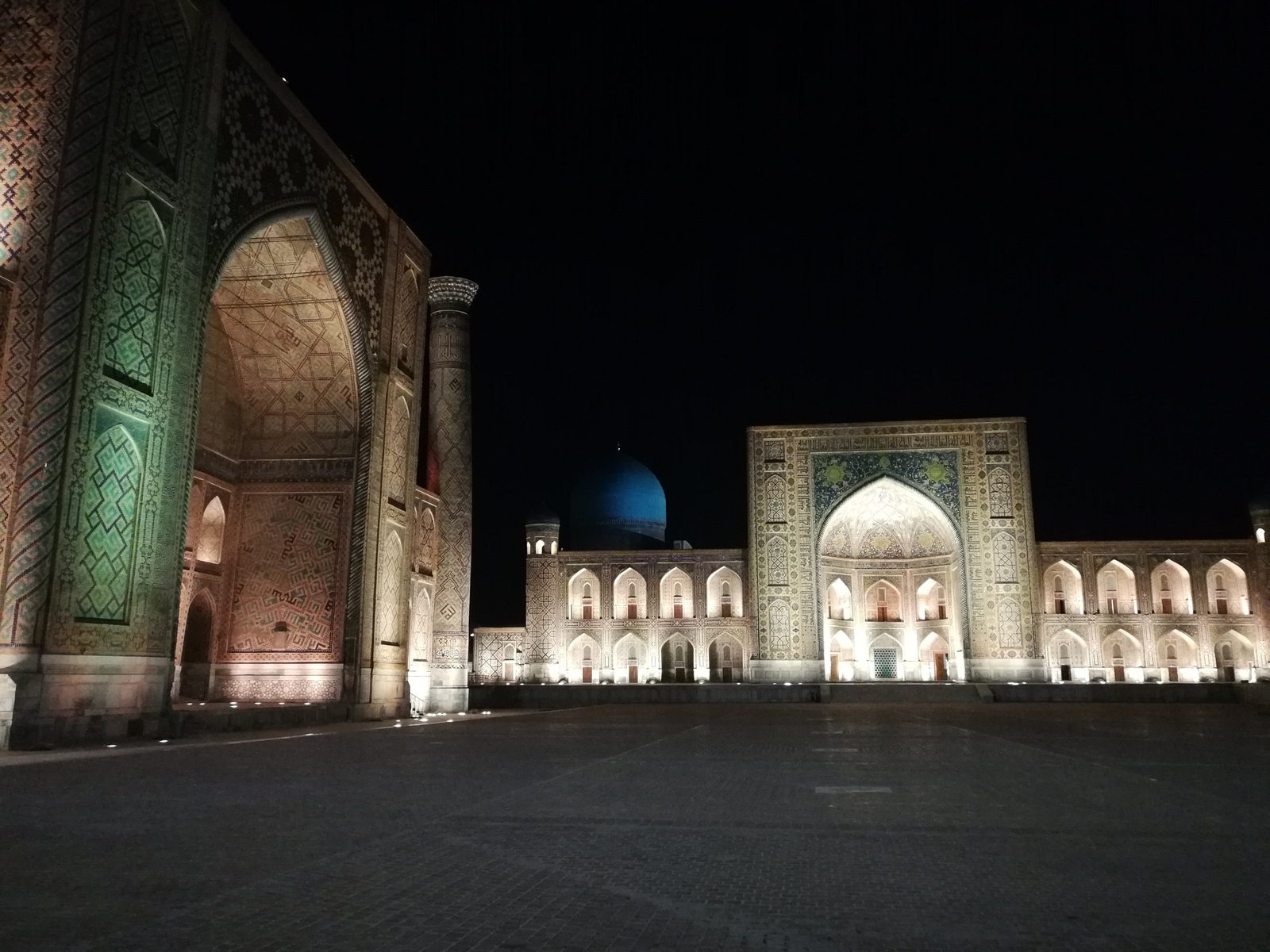
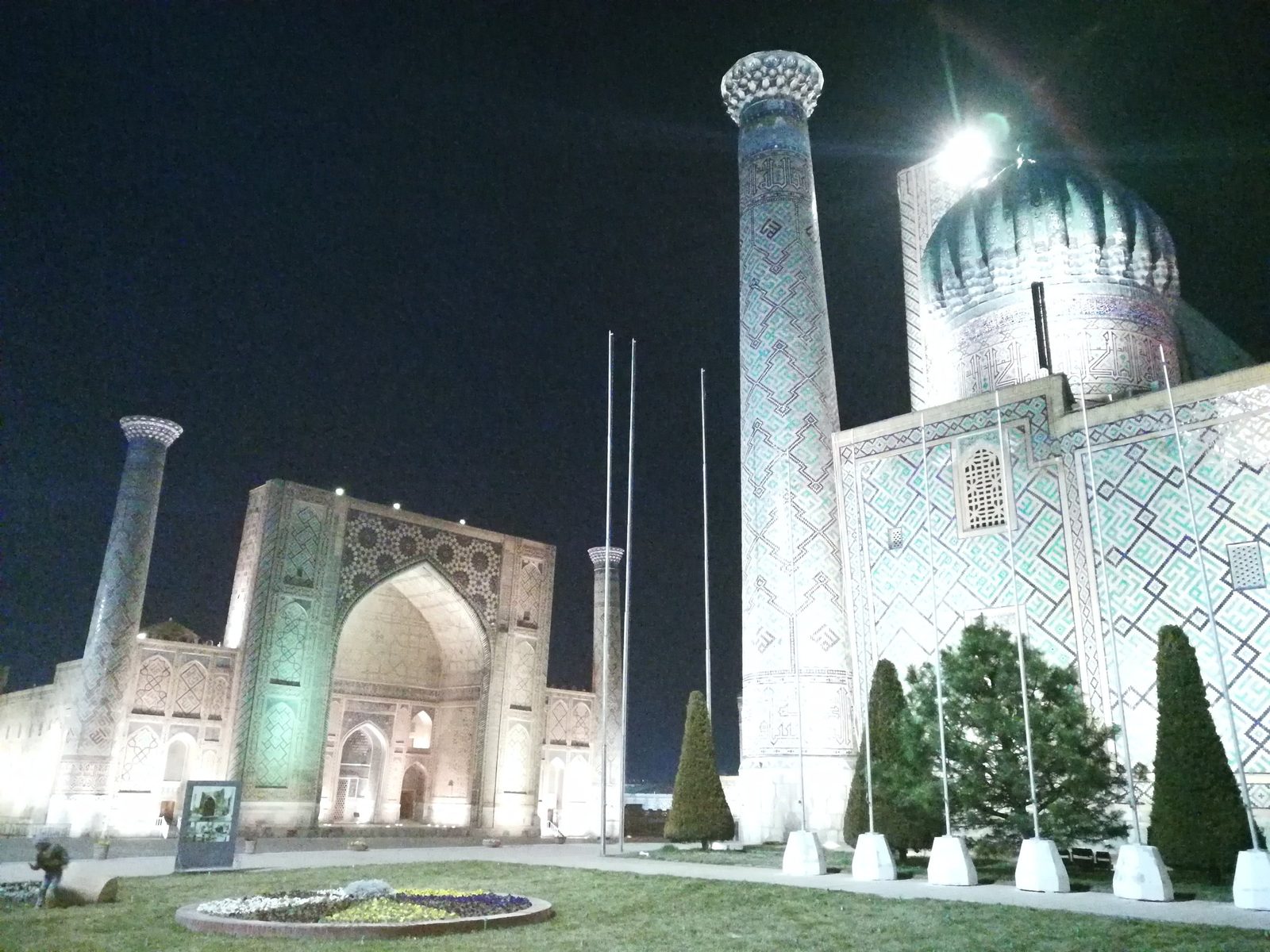
Most travellers come in spring and autumn, and so do the crowds on the .Did you know? The Registan's sun-carrying lion went on a banknote The Sher-Dor Madrasah (1619–1636) is named for the big cats with the sun on their backs on its portal. The image appeared on the reverse of Uzbekistan's 200-som note of 1997. Read more → From December to February, apart from the New Year week, Samarkand, Bukhara and Khiva are at their calmest. In our experience you can photograph the Did you know? Legend: the minaret's foundation was laid with camel milk Legend says master Bako laid the foundations of the Kalyan minaret with ganch plaster mixed with camel milk, then vanished for two years to let them harden, and only then built the tower. Locals still show a grave they say is his. Read more → courtyard or the alley of Did you know? Why Shah-i-Zinda means 'the Living King' The necropolis grew around the shrine of Qutham ibn Abbas, a cousin of the Prophet Muhammad. Legend says he did not die in battle but went down a deep well to a garden of paradise, where he lives on. Read more → in the morning without waiting for a gap in the crowd, and your guide has time for your questions instead of the next group.
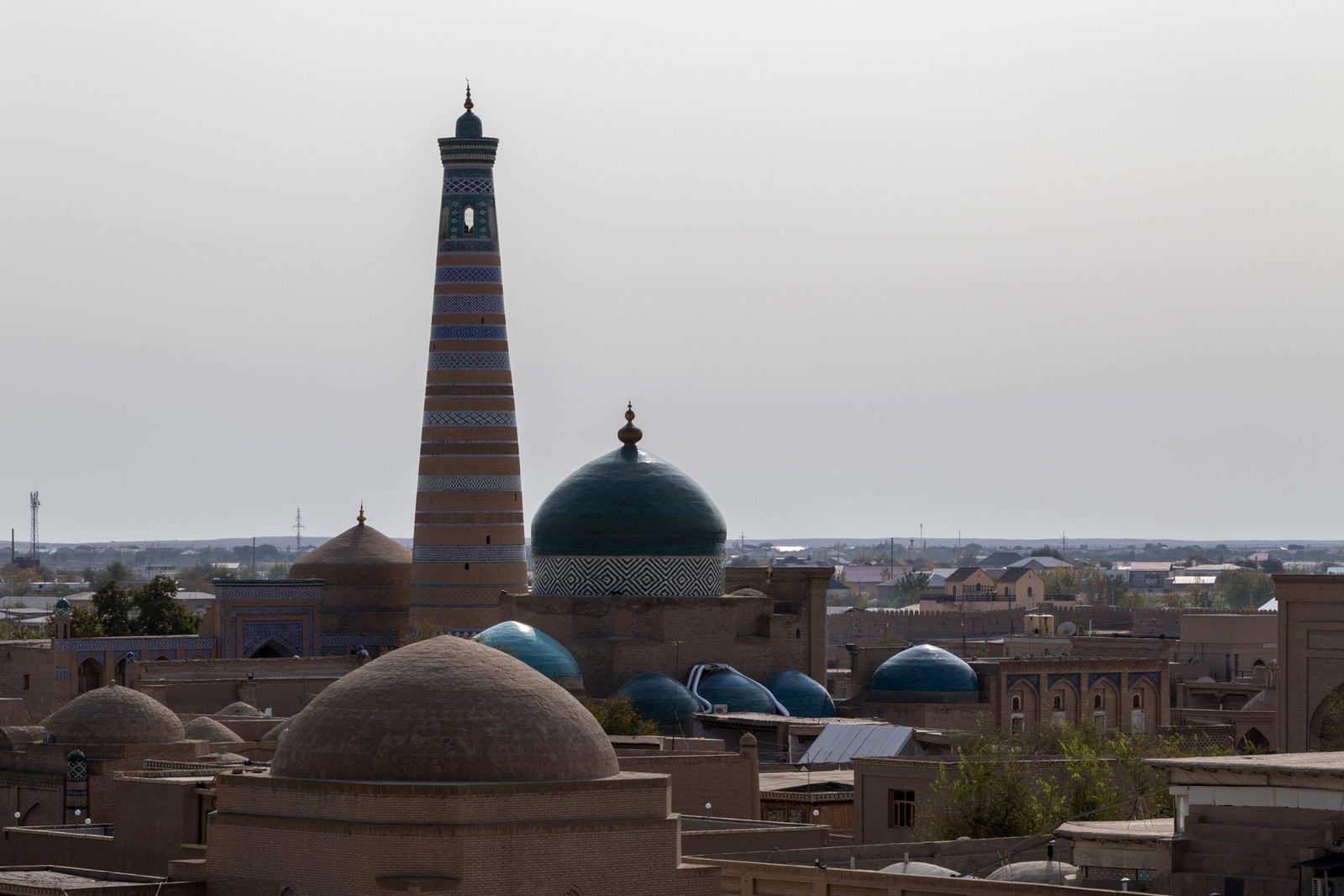
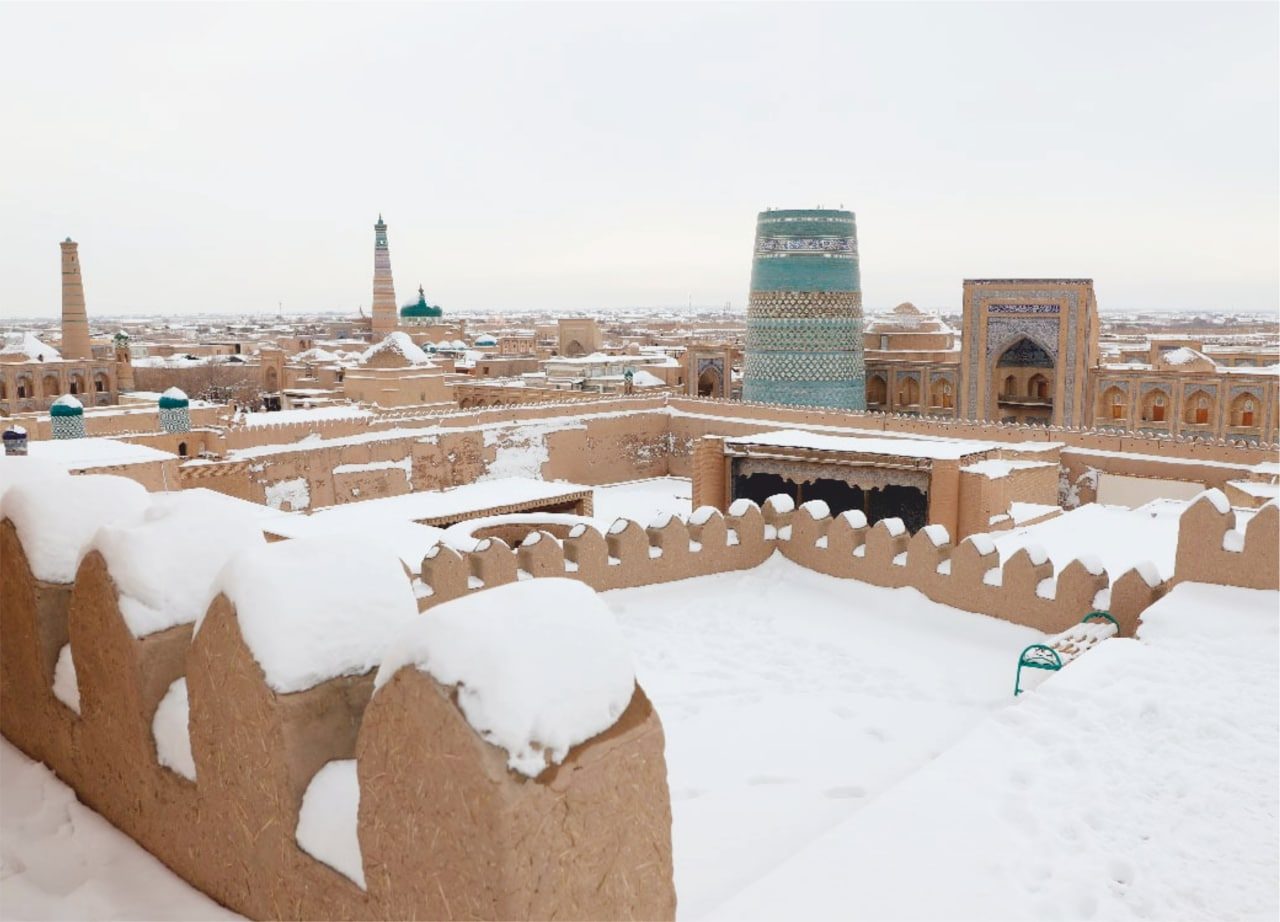
Winter also has a light of its own: a low sun on the tilework from mid-morning, dry clear skies over Bukhara and Khiva, and early evenings when the monuments are already lit. In some winters snow settles on the flat roofs and clay walls of Did you know? People still live inside Khiva's museum city Itchan Kala packs more than 50 historic monuments and about 250 old houses inside clay walls 8–10 m high and 5–6 m thick, and families still live and work in its lanes. Read more → in Khiva. It does not happen every year, and nobody can promise it for your dates, but when it falls, it is the picture of Khiva most visitors never see.
Low season for hotels means a wider choice of rooms in the historic centres. The one exception is the last week of December, when the whole country travels for New Year.
Weather in Uzbekistan in winter
Average daytime highs and night lows from the long-term climate normals (1991–2020), the same figures we use across this site. Khiva's numbers come from the weather station in Urgench, 35 km away.
| City | December | January | February |
|---|---|---|---|
| Tashkent | 9 °C / 0 °C | 7 °C / −1 °C | 10 °C / 0 °C |
| Samarkand | 9 °C / 0 °C | 7 °C / −1 °C | 10 °C / 0 °C |
| Bukhara | 8 °C / −1 °C | 7 °C / −2 °C | 10 °C / 0 °C |
| Khiva | 4 °C / −4 °C | 3 °C / −6 °C | 6 °C / −4 °C |
In Tashkent, Samarkand and Bukhara a winter afternoon is usually 7–10 °C, and nights hover around zero. Sunny days feel warmer than the numbers. Khiva is the real winter: 3–6 °C by day and down to −6 °C at night in January. It is also the driest, with about 13 mm of rain or snow in December and again in January, so the sky is often clear. Tashkent gets the most, about 72 mm in February. The whole year, month by month, is in our weather guide.
What is open in winter and what closes
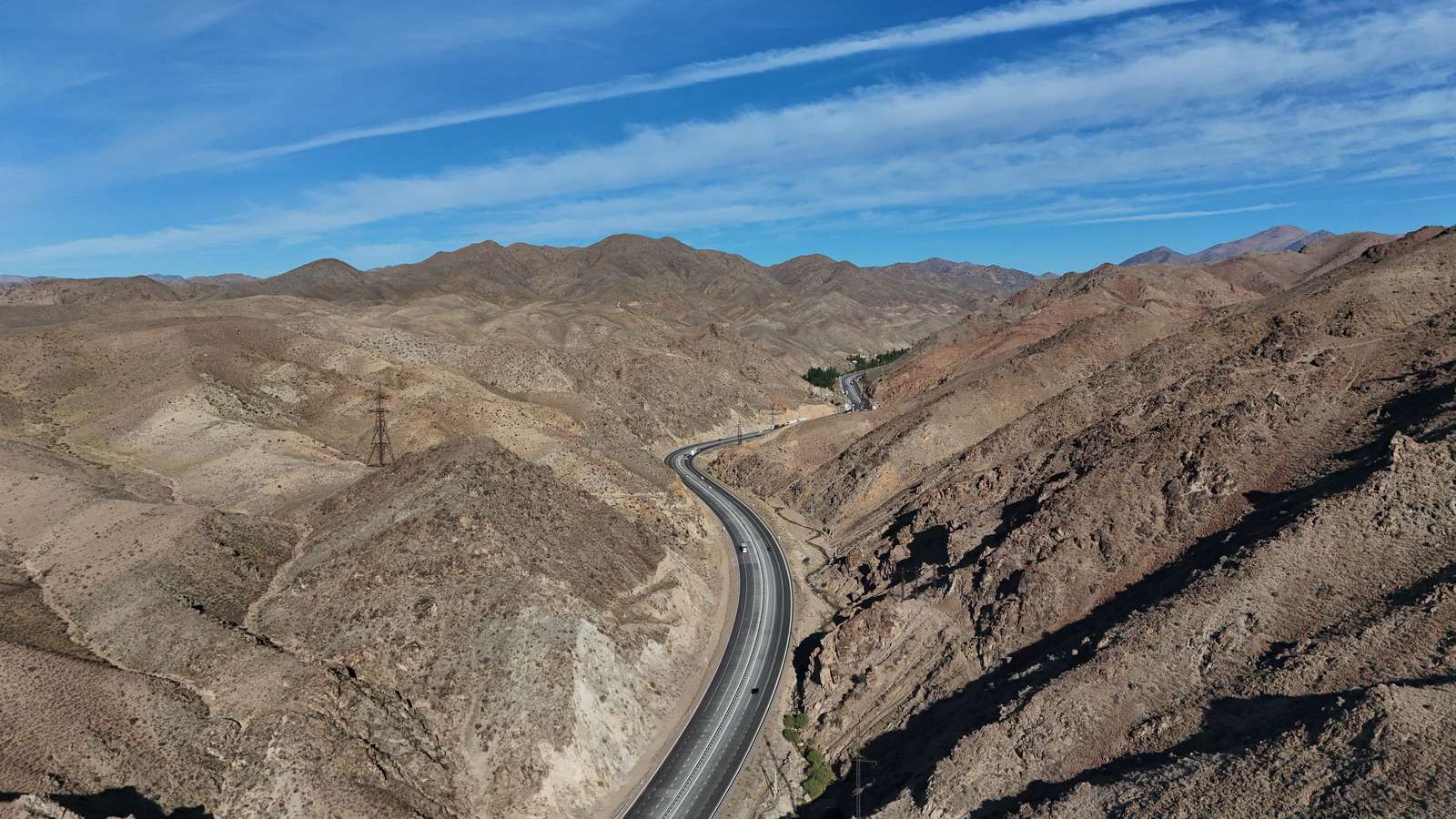
Everything a city trip needs keeps working through the winter. The monuments of Samarkand, Bukhara and Khiva receive visitors, the museums of the Bukhara museum-reserve open every day, the bazaars trade as usual and the trains keep to their timetable. What changes is in the mountains and the desert.
- The Kamchik pass on the road from Tashkent to the Fergana Valley rises to 2,268 m and can close in winter because of avalanche risk. The train goes underneath, through a 19.2 km tunnel: it leaves Tashkent every day at 07:20 and reaches Did you know? Kokand's Friday mosque stands on 98 columns from India Muhammad Umar Khan built Kokand's Juma Mosque in 1812–1818. Its 100-metre iwan rests on 98 carved red-wood columns brought from India, and its minaret is 22 m tall. Inside is a small museum of applied arts. Read more → at 10:26. From December to March we put our travellers on the train. More in our Fergana Valley guide.
- The Takhtakaracha pass, at about 1,700 m on the road from Samarkand to Shahrisabz, has been closed for a while by heavy snow, as in December 2021 and January 2024. The detour around the mountains takes about three hours one way, so we check the pass the day before a Shahrisabz day trip.
- The yurt camps at Did you know? Aydarkul is a wetland of international importance In 2008 the Aydar-Arnasay lake system, about 527,000 ha, became a Ramsar site. It lies where two great bird flyways cross and shelters Dalmatian pelicans and the rare white-headed duck. Read more → do not work in winter. A night in a yurt by the desert lake belongs to spring and autumn; see our Aydarkul guide.
- The ski resorts near Tashkent are the opposite: they open in December, as soon as the snow allows.
Skiing near Tashkent: Amirsoy, Beldersay and Chimgan
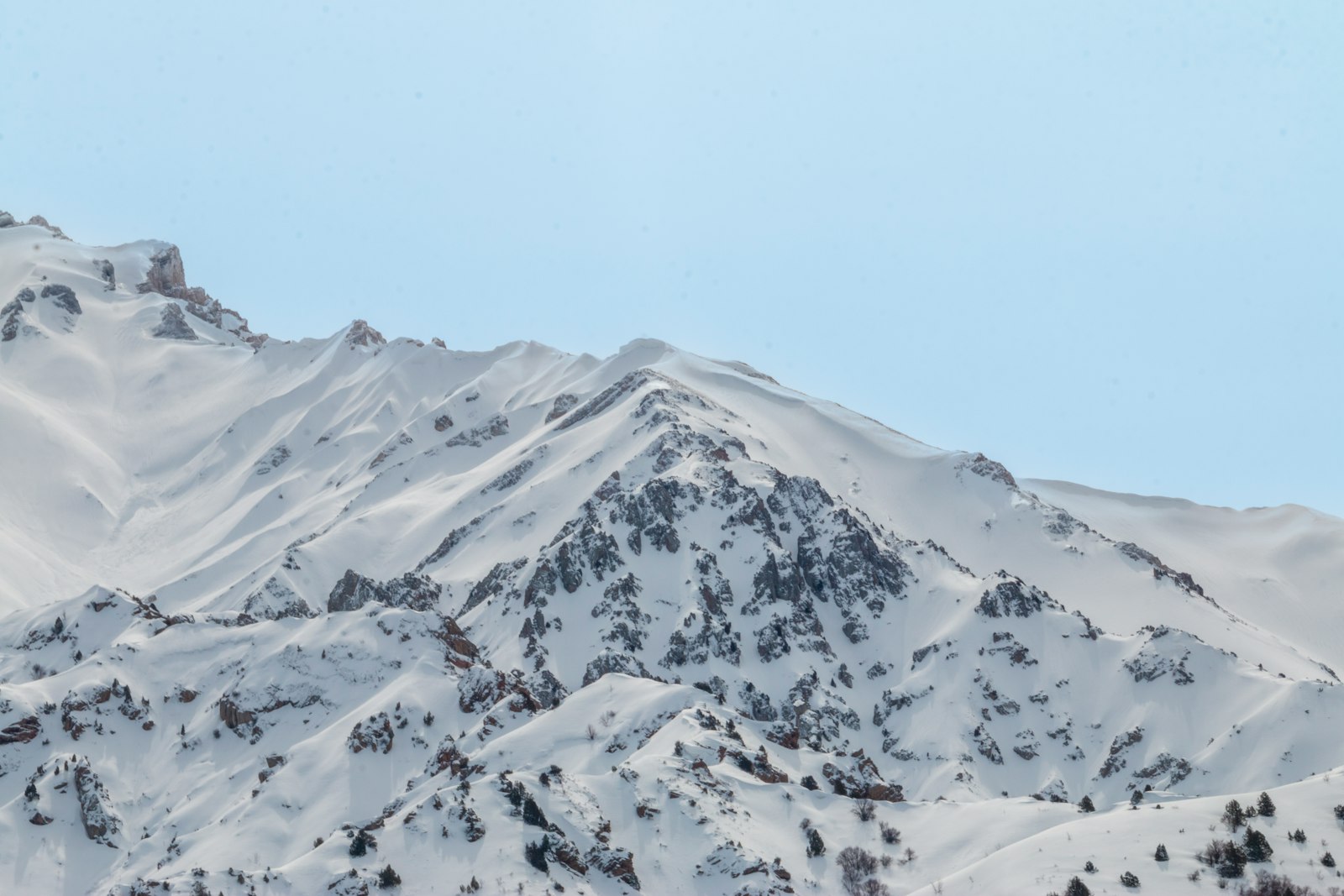
The ski season runs in the mountains 65–85 km from Tashkent, usually from December to March. Each resort sets its own dates, and the runs open when there is enough snow. Up there it is a different winter: at Mountains of the Western Tien Shan about 80 km from Tashkent: hiking in summer, skiing in winter, the Charvak reservoir nearby. Read more → a January afternoon averages 1.2 °C and the night −5.6 °C.
- Amirsoy is the closest, 65 km away, with 11 easy and intermediate runs between 1,630 and 2,286 m. It suits families and beginners, and its season usually lasts until late March. Everything about it is in our Amirsoy guide.
- Beldersay has a longer vertical, from 1,506 to 2,307 m, and a ten-seat gondola. Beldersoy Resort and Spa opened beside it in July 2026, so winter 2026/27 is its first ski season.
- Chimgan is the old-school option, with snowmobiles, tubing and horse rides for those who do not ski.
Strong skiers should know that the runs here are mostly easy and intermediate. Our ski weekend in the Tashkent mountains is a private trip from your hotel to the slope of your choice and back, with a night at the resort and help with passes, rental and an instructor. For a day in the snow without skis we organise Amirsoy and Chinorkent, with lunch and a cable-car ride. What the mountains offer in the other seasons is in holidays in Uzbekistan.
Cities in the frost: how we plan a winter day
Winter days are short. On 21 December Tashkent has 9 hours and 15 minutes of daylight; by 28 February it has about 11 hours and 15 minutes. Mornings stay cold and dark until almost eight, so we start walks at about nine, when the sun has taken the edge off the frost, keep the open-air sights for the middle of the day and leave museums and bazaars for the afternoon.
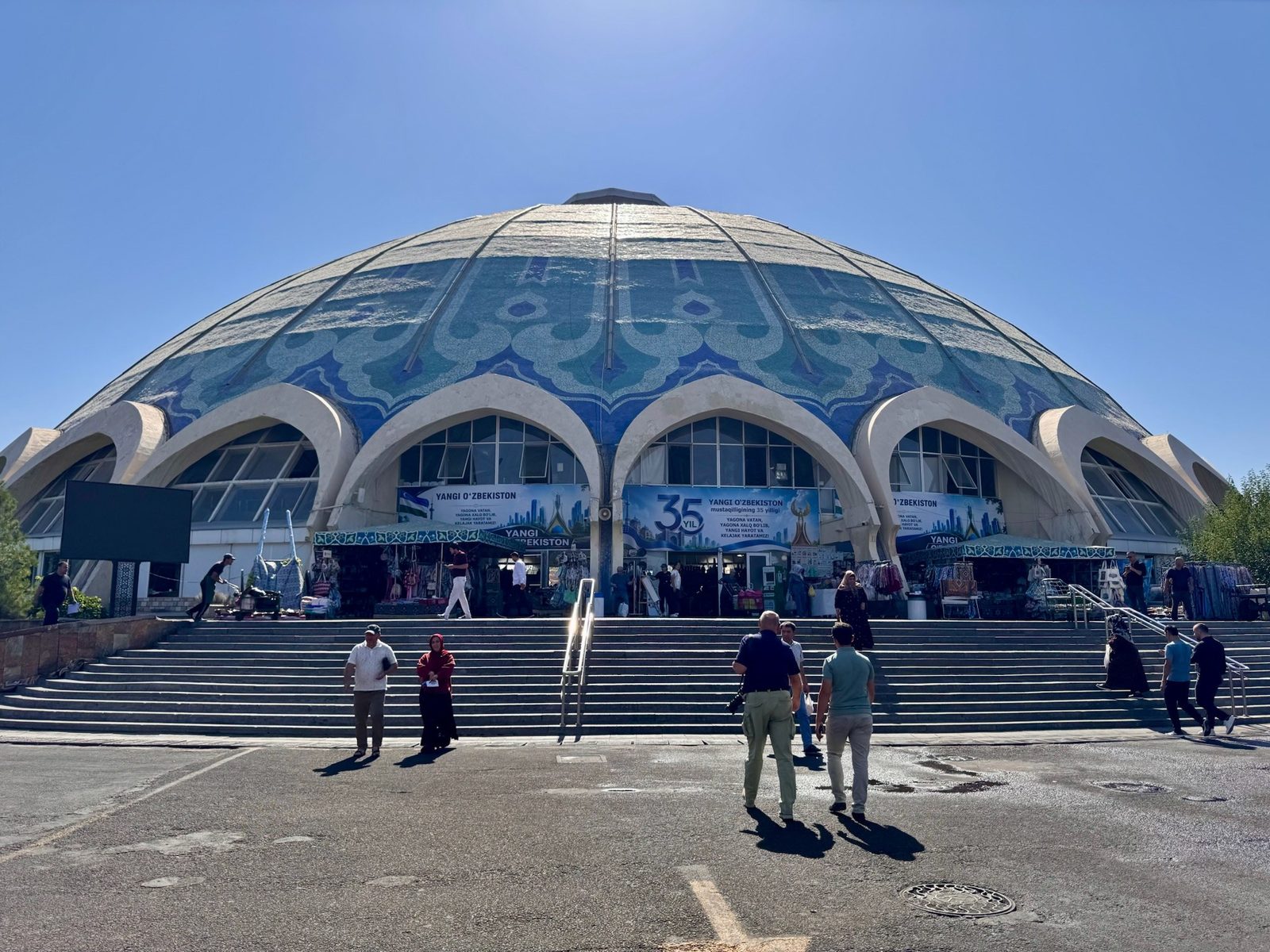
Tashkent is the easiest city on a cold or wet day. The ,Did you know? A metro designed to ride out a magnitude-9 earthquake The three original lines of the Tashkent Metro were built to withstand an earthquake of magnitude 9.0, and the tunnels lie unusually shallow, only 8–25 m below the street. Read more → the museums and the covered halls of Did you know? Tashkent’s Chorsu dome is younger than the city’s metro Trade at the old crossroads is centuries old, but the domed building opened only in 1990, thirteen years after the metro. Architects Vladimir Azimov and Sabir Adylov gave it a main dome of 86 m ringed by seven smaller ones. Read more → keep you indoors, and the Humo Arena ice rink holds public skating sessions. For the evening there is our guided Evening Tashkent walk, and in Samarkand the Registan with its evening lights.
Cold days are also the season for the most filling food: Rice cooked in a kazan with carrots, onions and meat: the dish of every Uzbek celebration. Each region cooks it its own way. at lunch, samsa from the tandoor, hot soups and long tea in a .A teahouse: green tea, plov and conversation on wide wooden beds called topchan. Our culinary tour Taste of the Road is built around exactly that.
New Year and other winter dates
8 December is Constitution Day and 1 January is New Year's Day, both public holidays. New Year's Eve is the biggest night of the year, and the last week of December is the one busy week of the winter: families from Tashkent travel too, and trains and hotels in Samarkand and Bukhara fill up. Train tickets go on sale 60 days before departure, so plan that week early.
We run three New Year tours with fixed dates: New Year in Samarkand, 5 days, New Year in Bukhara, 4 days and New Year in Uzbekistan, 8 days. We take bookings for them up to 21 days before the start. Where and how to see in the New Year is in our New Year guide.
In 2027 Ramadan is expected to begin around 8 February. In the cities, cafés and restaurants stay open in the daytime; the details are in Uzbekistan in February.
What to wear in winter
- A proper winter coat, a hat, a scarf and gloves: nights are around zero or below everywhere, and in January Khiva reaches −6 °C.
- Waterproof boots with a good grip for wet or icy pavements and courtyards; Tashkent is at its wettest in February.
- Layers rather than one thick sweater: you will take your coat on and off all day between courtyards, museums and trains.
- Thermal layers and sunglasses if you plan to ski; the sun on snow is strong.
- A light scarf for mosques and mausoleums; the rules are in our guide to what to wear and etiquette.
The full list for every season is in what to pack for Uzbekistan.
How many days to plan, and which route
For the classic cities a week is enough in winter, as in any season. The 8-day classic tour covers Samarkand, Bukhara, Khiva and Tashkent, and we put Khiva in the middle of the trip on a sunny forecast. The 8-day independent tour arranges hotels, trains and transfers if you like to set your own pace.
A good winter week combines both sides of the season: three or four days in Samarkand and Bukhara, then two days on the snow near Tashkent before you fly home. If you come mainly to ski, Samarkand in a day from Tashkent fits between the ski days. On our tours the guide speaks your language and is included in the price, and our office is on call 24/7 while you travel.
In short
- December to February is low season: quiet courtyards in Samarkand, Bukhara and Khiva, except in the New Year week.
- Afternoons are 7–10 °C in Tashkent, Samarkand and Bukhara and 3–6 °C in Khiva; nights are around zero or below.
- Monuments, museums, bazaars and trains work as usual. The Kamchik and Takhtakaracha passes can close after snow, and the Aydarkul yurt camps are closed.
- The ski season near Tashkent usually runs from December to March at Amirsoy, Beldersay and Chimgan.
- A week covers the classic cities; add two days on the snow.