Places in this article: Samarkand · Bukhara · Khiva · Tashkent
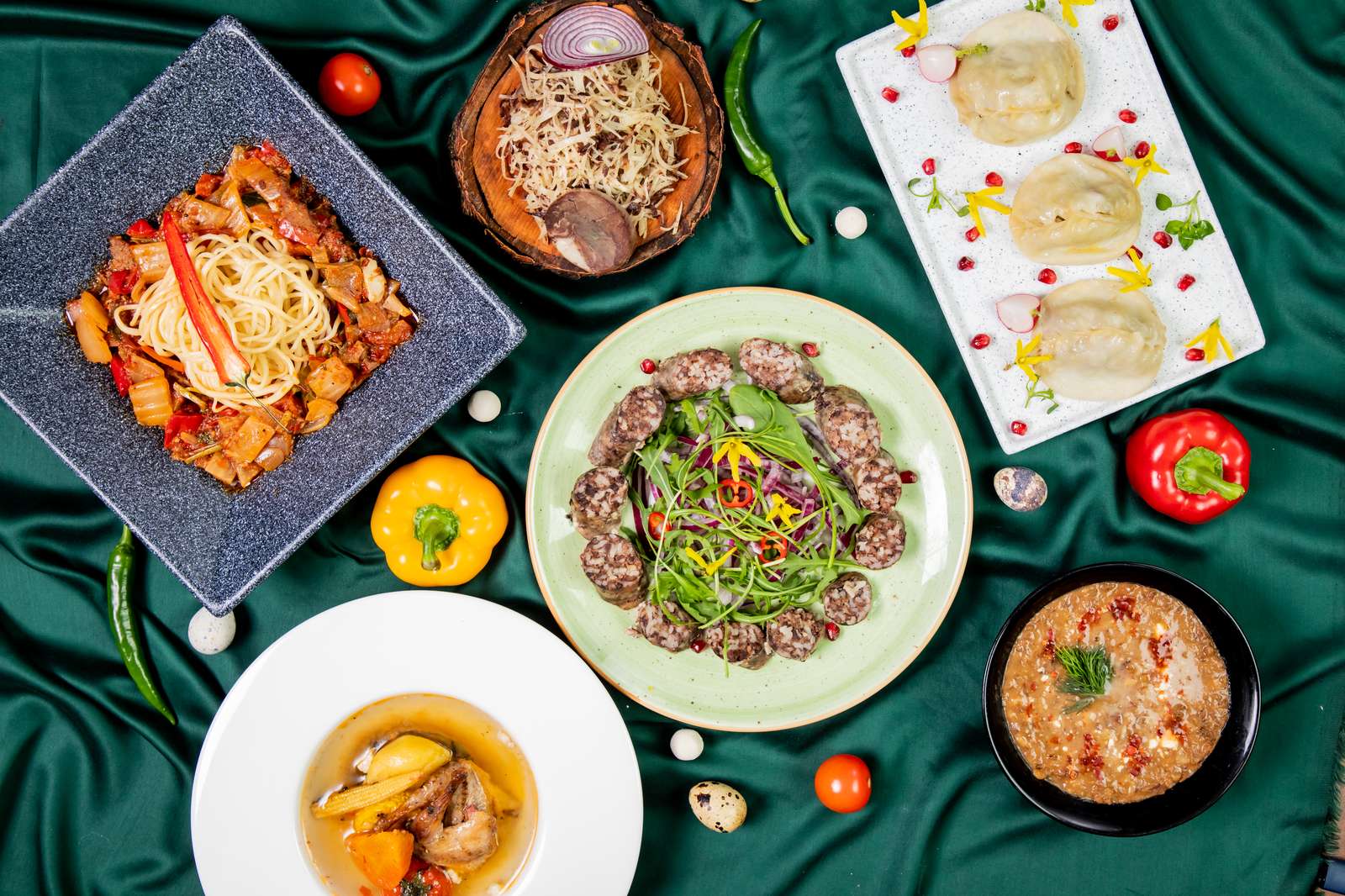
Uzbek food by city: what to eat in Tashkent, Samarkand, Bukhara, Khiva, Fergana and Karakalpakstan
In February 2025 the bread of Samarkand became a protected name, the way a French cheese is. Four months later Khorezm's egg dumplings, tukhum-barak, joined it, and in May 2026 so did the sorghum dumplings of Karakalpakstan. Uzbekistan is registering its food region by region, and that tells you the most useful thing about Uzbek food before you land: it is not one menu. What you eat in Khiva is not what you eat in the Fergana Valley.
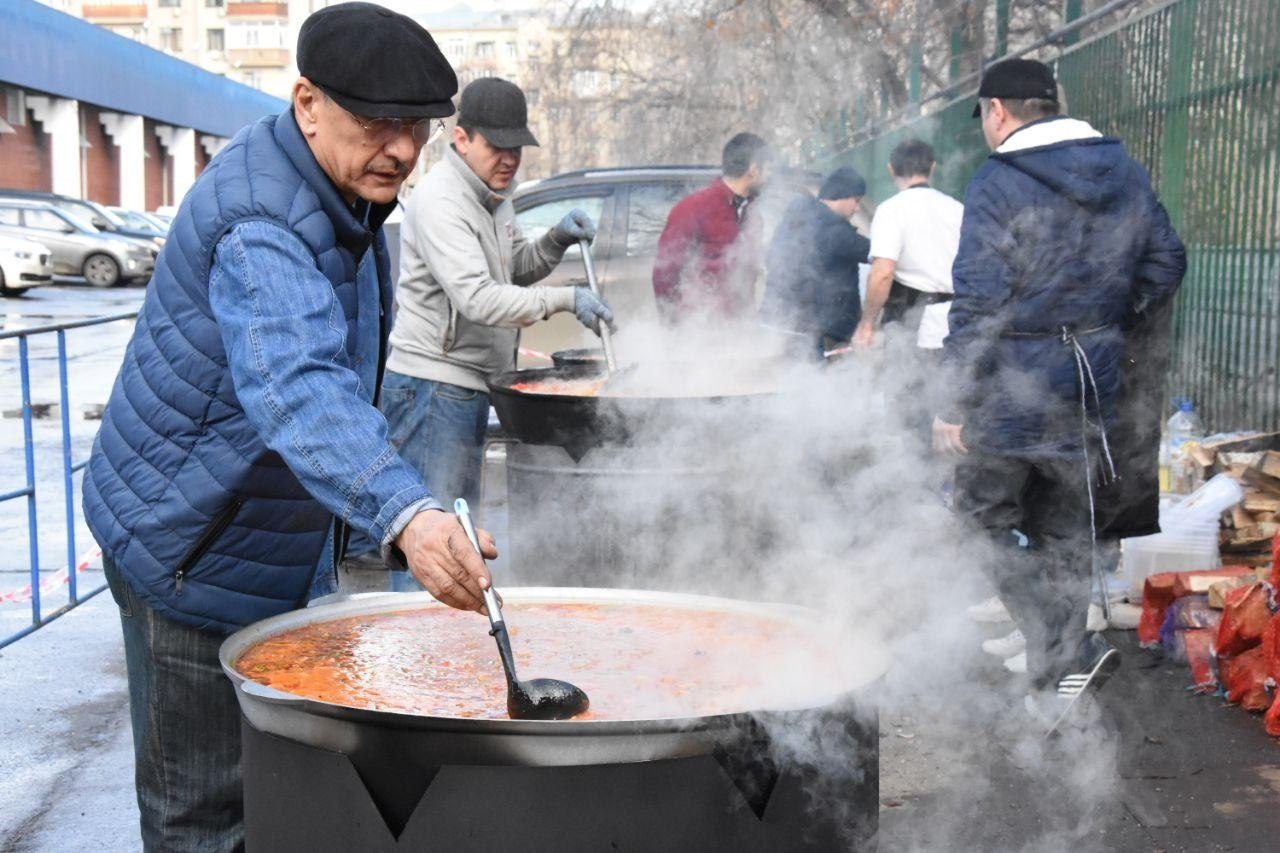
We live in Tashkent and travel these roads every month. Here is what to order in each region, what to look for in a A teahouse: green tea, plov and conversation on wide wooden beds called topchan. and at the bazaar, which fruit is in season when, and what to eat if you do not eat meat. Rice cooked in a kazan with carrots, onions and meat: the dish of every Uzbek celebration. Each region cooks it its own way. has its own guide, and the dishes you will meet everywhere, from lagman to manti, are in our list of ten Uzbek dishes.
Tashkent: naryn, black tea and the samsa of Sukok
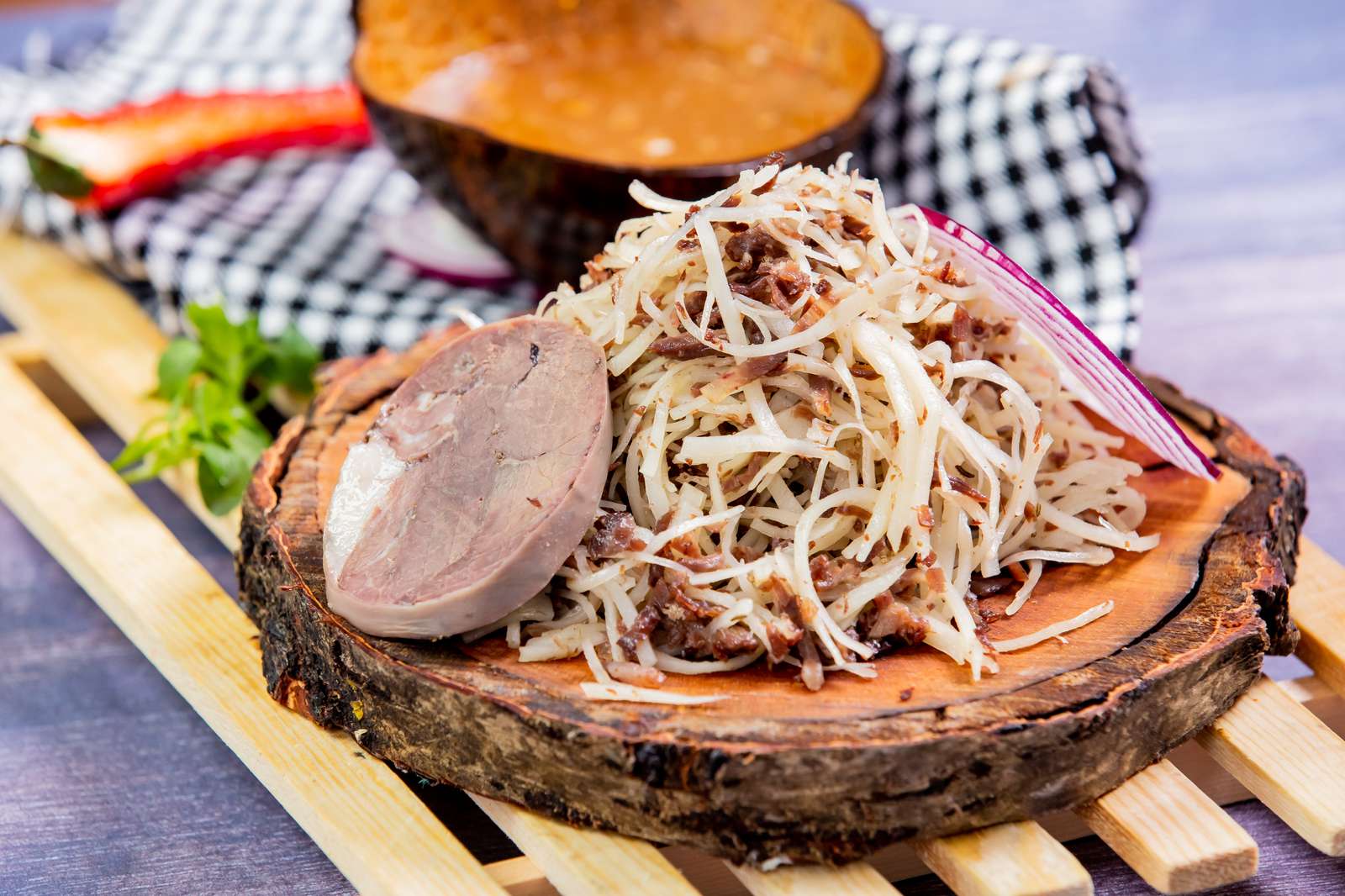
The capital's own dish is naryn: dough rolled very thin and cut into fine strips, mixed with boiled horse meat sliced just as fine and seasoned with cumin. It is served cold, often with a bowl of hot broth on the side. Naryn belongs to the cold months and to celebrations, and at a big meal it comes after the samsa and before the plov.
Tashkent also drinks differently. Green tea is the national drink, but in the capital black tea is the one most people pour. Plov here means wedding plov or teahouse plov, and the best place to see what the city eats is Chorsu Bazaar.
In April and May, look for the samsa of Sukok, a mountain village in the Parkent district. It is filled with spring greens and mador, a mountain onion that grows only in the cool weather of those two months, and the name is on the national register of geographical indications.
Samarkand: the bread people carry home
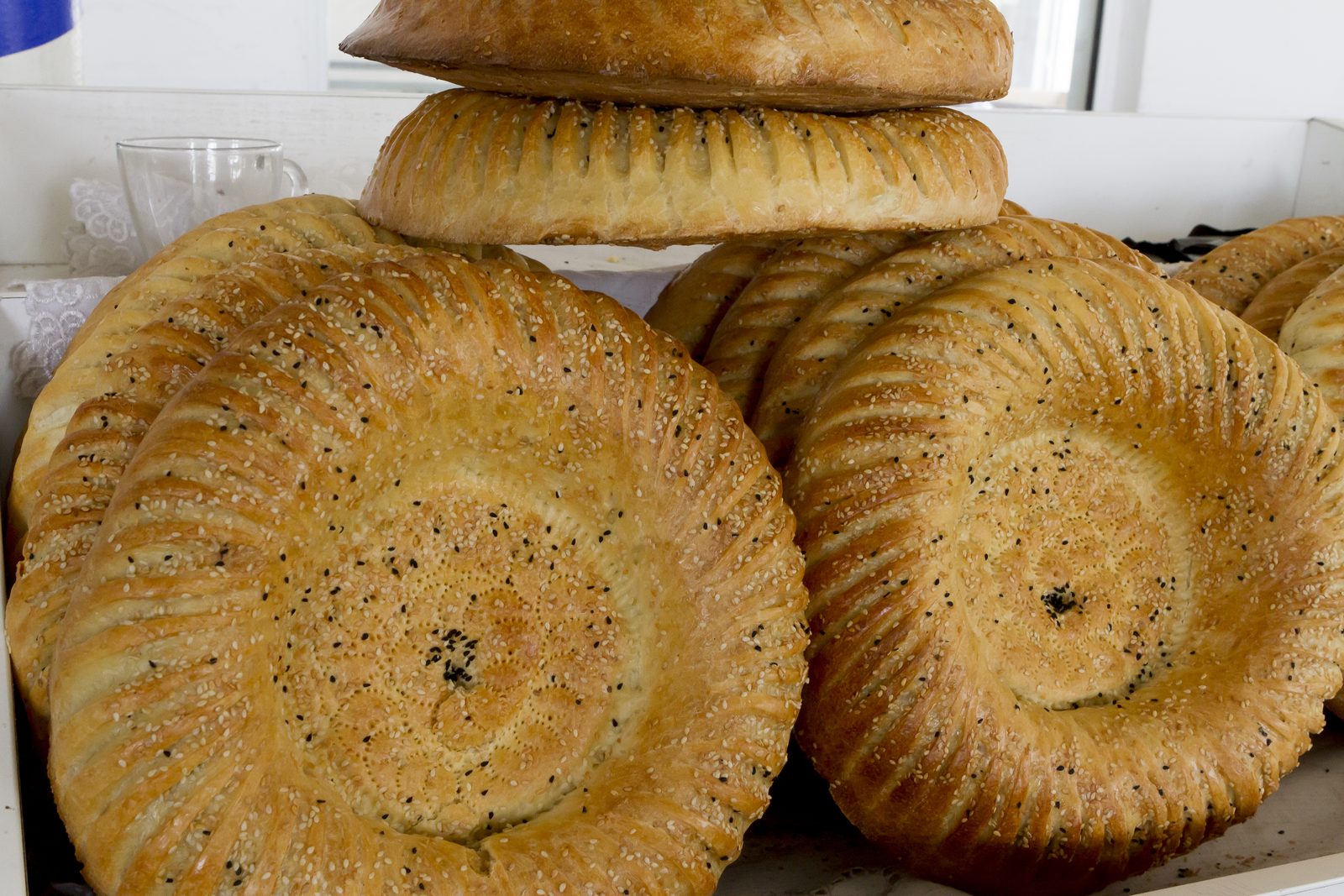
Every city bakes non, round flatbread from a clay tandir, but Samarkand's is the one people take to other cities as a gift. It is dense, thick and slightly sweet, and it keeps for a long time. Did you know? Legend: Samarkand bread can't be baked anywhere else Legend says a Bukhara ruler brought Samarkand's best baker to his court with his oven, flour and water, yet the bread came out different. The missing ingredient, the baker said, was the air of Samarkand. The round loaves keep for a long time. Read more → has been a geographical indication since February 2025, and in October 2026 it was also registered as a trademark.
Samarkand plov is cooked in layers and served unmixed, with the meat laid on top. At ,Samarkand's main bazaar, right next to Bibi-Khanym: Samarkand bread, dried fruit, nuts and halva. Read more → look for the local halva, shaped more like a cake and decorated with nuts, and for navat, sugar crystals grown on threads that go into tea. More about the city on our Samarkand page.
Bukhara: pure plov and the shashlik of Gijduvan
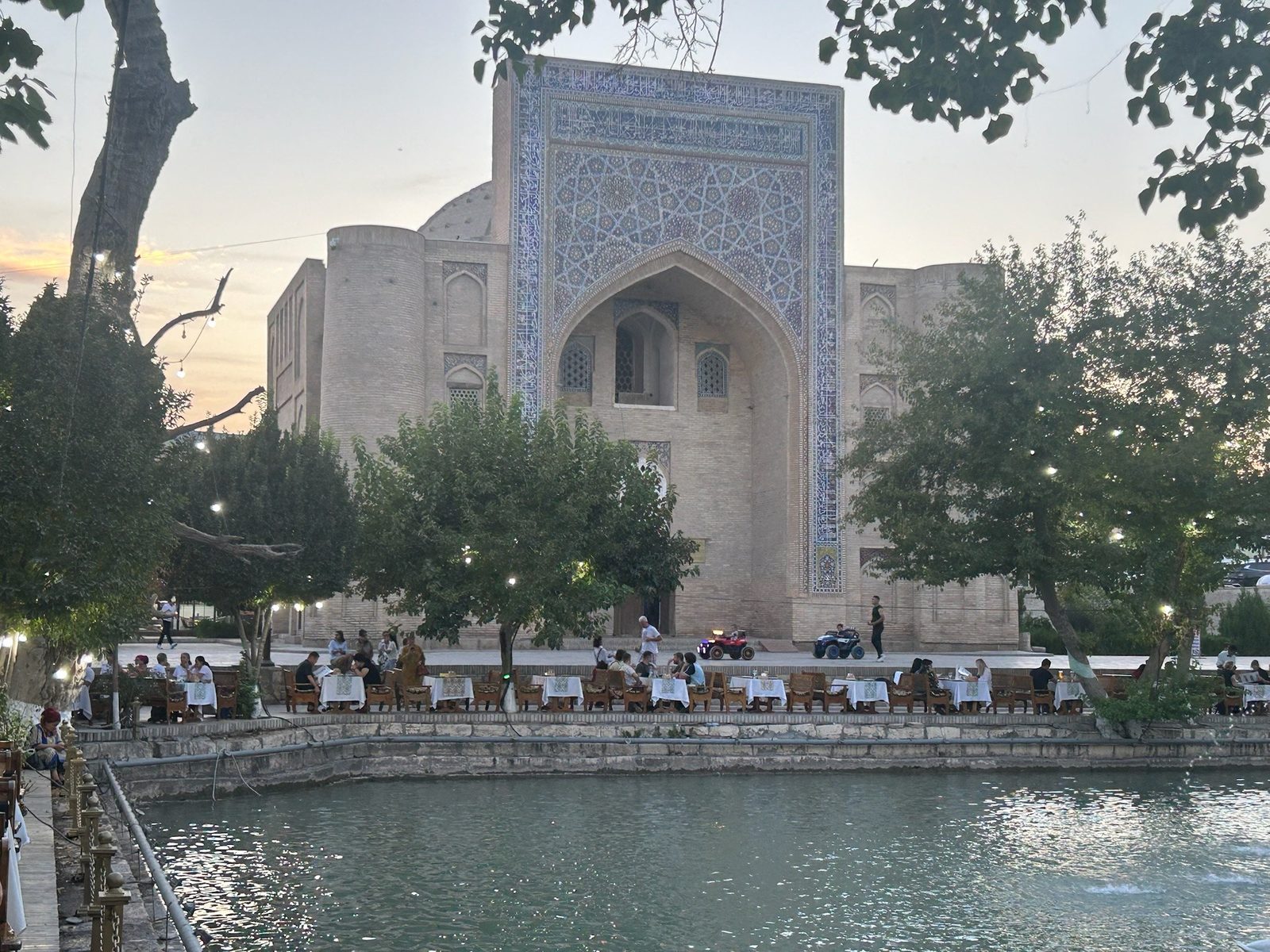
The teahouses around Did you know? Bukhara's ponds were once its water supply Pools like Lyabi-Hauz, dug around 1620 and 46 × 36 m, were the city's main source of water. Most were filled in during the 1920s–30s because they spread disease; Lyabi-Hauz survived. Read more → serve oshi sofi, "pure plov", and Bukhara's plov in general is sweeter, with raisins and dried fruit. The city also keeps bakhsh, a green plov cooked with herbs. Bukhara's non is often sprinkled with sesame or nigella seeds, so it smells different from Samarkand's.
The dish people drive out for is the shashlik of Gijduvan, a town in the Bukhara region. Its meat comes from the local Bukhara breed of cattle and is minced, frozen and minced again, so the kebab is firm and holds its sausage shape on the skewer with nothing added but onion, fat, coriander, black pepper and cumin. Gijduvan shashlik has been a registered geographical indication since August 2023.
Khiva and Khorezm: egg dumplings and green noodles
Khorezm, in the far west, cooks dishes you will not find on menus elsewhere in the country. Start with tukhum-barak: thin dough pockets filled with beaten raw egg and sealed, so the filling sets only when they go into boiling water. In June 2025 Khorezm tukhum-barak became a registered geographical indication.
The second dish is shivit oshi, noodles coloured green with dill, served with a meat sauce. Then come gumma, fried pies, and a plov lighter than in the east, with less oil and fewer spices. When Khiva held its festival of Khorezm dishes at A new tourist complex on the shore of Lake Govuk, a short drive from Ichan-Kala, opened in May 2025: 17 hotels and guest houses, a 3,000-seat amphitheatre, restaurants, a bazaar under domes and a canal with gondolas. Read more → in September 2026, the list ran to more than 20, including barak with greens and barak with pumpkin.
On our culinary tour of Uzbekistan you make tukhum-barak and shivit oshi yourself at a cooking class in Khiva before going on to Bukhara and Samarkand. More about the old town on our Khiva page.
The Fergana Valley: devzira rice and Kokand halva
The east of the country is the land of rich plov. It is cooked on devzira, a reddish rice grown in the valley, and in June 2026 Andijan devzira plov was registered as a geographical indication.
For something sweet, look for Did you know? Kokand's Friday mosque stands on 98 columns from India Muhammad Umar Khan built Kokand's Juma Mosque in 1812–1818. Its 100-metre iwan rests on 98 carved red-wood columns brought from India, and its minaret is 22 m tall. Inside is a small museum of applied arts. Read more → halva: in July 2026 its name and traditional recipe became a registered geographical indication. Andijan bakes a festive patir, a flaky flatbread enriched with cream and butter. The valley also grows famous melons, pomegranates, apples and grapes. The towns, from Kokand to ,Did you know? Legend says Margilan is named after chicken and bread Legend says locals greeted Alexander the Great with chicken and bread, 'murg' and 'non', and the dish gave the town its name. In fact Alexander never reached here; the name Margilan is recorded from the 10th century. Read more → are in our Fergana Valley guide.
Karakalpakstan: sorghum dumplings and dried melon
In Nukus and the north-west, dough is often made from sorghum. The best-known local dish, jughara gurtik, is sorghum dumplings cooked with meat, potatoes, carrots and onions, and on 15 May 2026 it was registered as a geographical indication. Beshbarmak here is made with dumplings of white sorghum flour, cooked in meat broth and served with an onion sauce.
Look also for mayek borek, envelopes of dough filled with whipped egg and melted butter, and for dried melon, watermelon and pumpkin, eaten here as sweets. If you come for the Savitsky Museum in Nukus, plan at least one meal of local food. More on our Nukus and Karakalpakstan page.
In the teahouse and at the bazaar
The choyxona, the teahouse, is where Uzbek food is at its most everyday. Tea comes in a pot with small bowls called piyola, usually without sugar. A good order for two: a round of non, a soup such as shurpa, samsa from the tandir, lagman or, at lunchtime, plov, and a pot of green tea. Who pours and how much is in our etiquette guide.
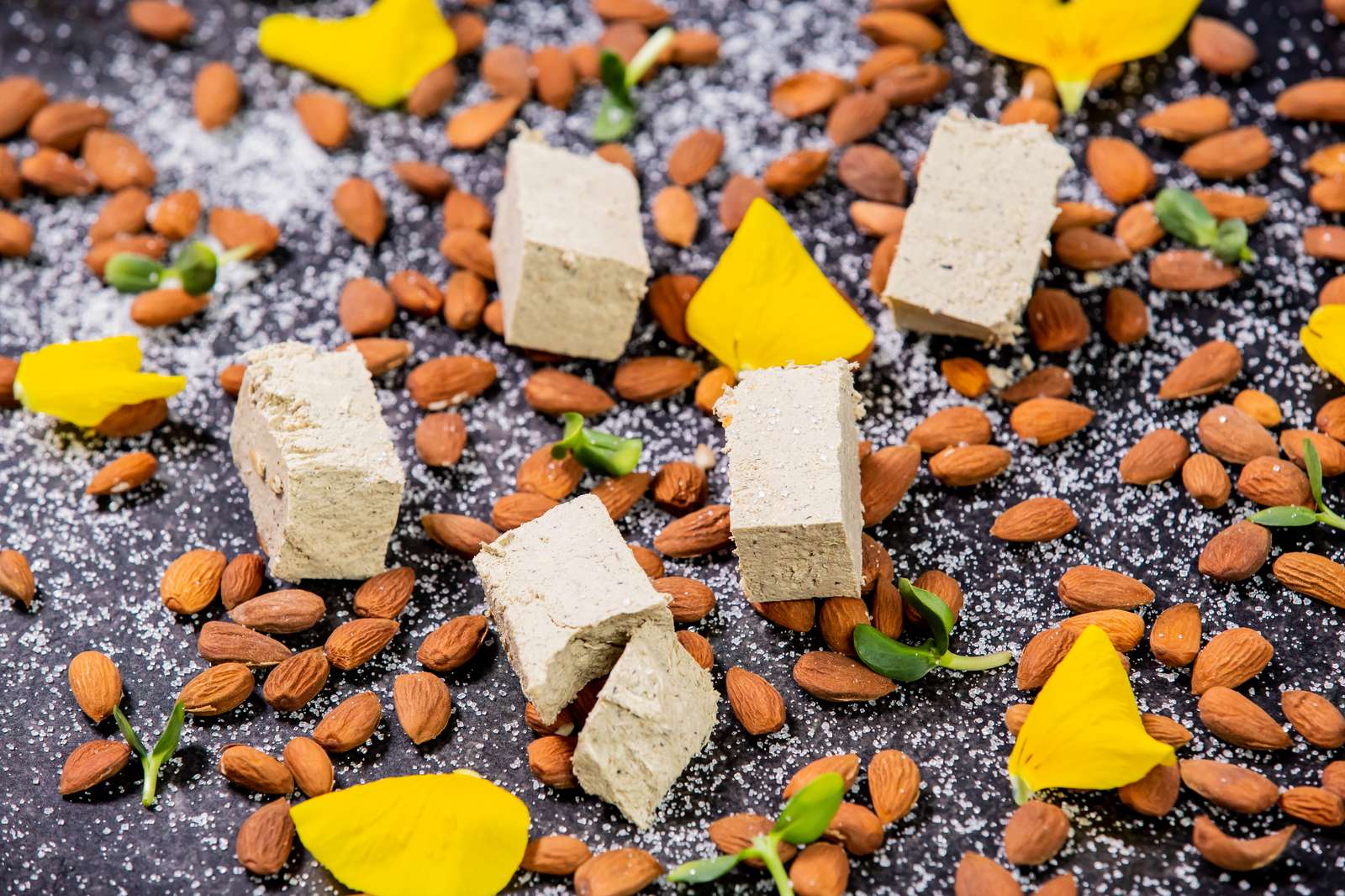
At the bazaar, sellers expect you to taste before you buy: kurt, small salty balls of dried sour milk; dried apricots and raisins; almonds and pistachios. Halva is the national dessert, and each region makes its own. A festive meal ends the same way everywhere: fruit, nuts, halva and another pot of tea.
Fruit and melons by month
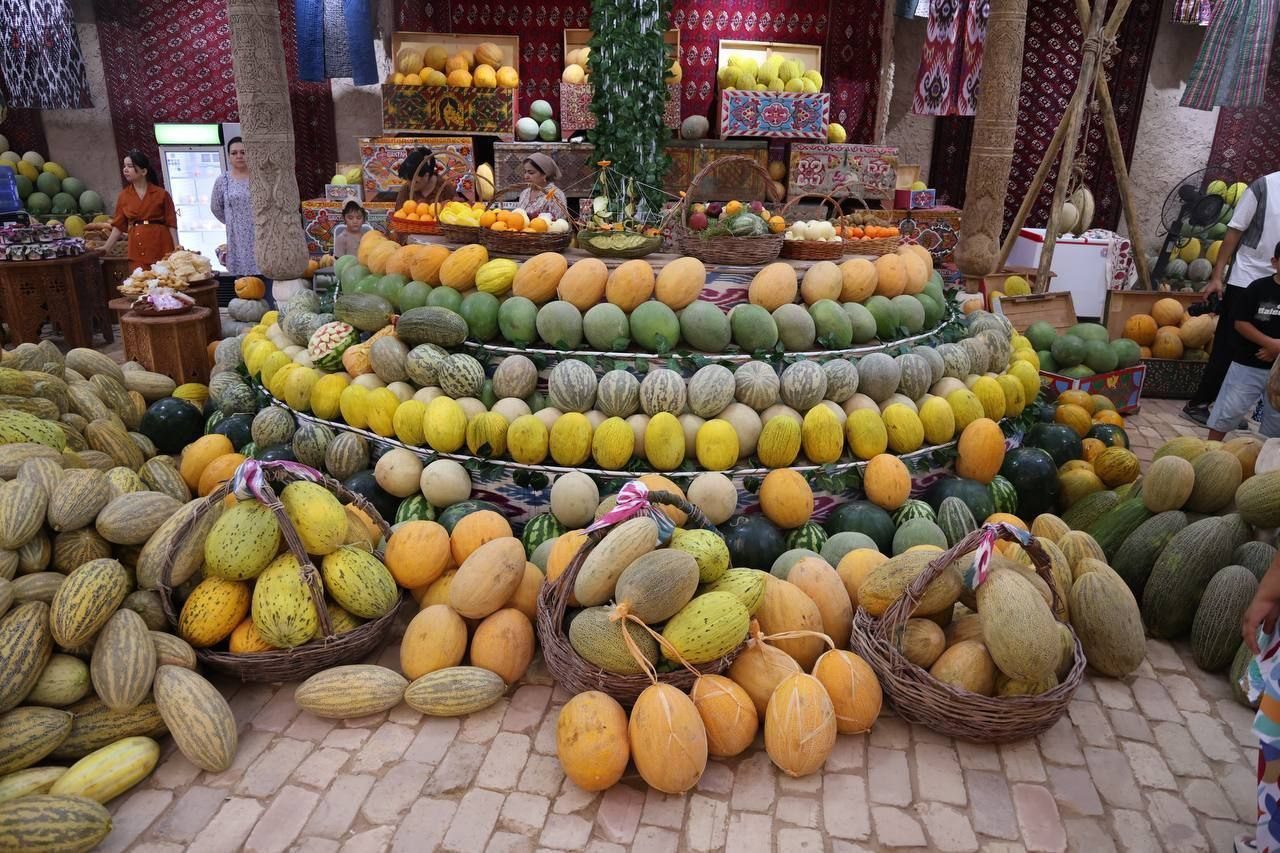
- Late April to May: strawberries and the first cherries.
- June: cherries to the middle of the month, apricots and peaches, the first plums and nectarines.
- July and August: the height of the melon and watermelon season, with figs, apples and pears. Khiva holds its Melon Festival, Qovun sayli, in August: in 2026 it showed more than 100 varieties of Khorezm melons.
- From mid-August: the grape harvest, in vineyards such as those of Parkent near Tashkent, one variety after another until late autumn.
- September: the peak of the harvest, with pomegranates, quinces and figs.
- Autumn: persimmons, pomegranates and the last grapes.
Out of season, the bazaars fall back on dried fruit and nuts, which are there all year.
Vegetarian? What to order
Uzbek food is built on meat: plov, shurpa, lagman and naryn all start with it, and many soups are cooked on meat broth. Vegetarians still eat well if they know the names.
- Samsa and manti with pumpkin or greens. Ask for qovoqli, with pumpkin, or ko'k, with greens.
- Tukhum-barak in Khiva, dough and egg, and its relatives with greens and pumpkin.
- Bread and dairy: non with qatiq, sour milk, or suzma, thick strained yoghurt.
- Fruit, nuts, halva and dried fruit, at any bazaar.
The word to know is go'shtsiz, "without meat". Tell us about your diet in advance, and we will take it into account when choosing where to eat.
Practical tips
- Plov is a lunch dish. Plov centres cook in the morning; by evening the choice is smaller.
- One local dish per city: naryn in Tashkent, bread in Samarkand, Gijduvan shashlik around Bukhara, tukhum-barak and shivit oshi in Khiva, devzira plov in the .Did you know? Legend says Fergana's 'heavenly horses' sweated blood Legend says the horses of Dayuan, as Chinese chronicles called Fergana, sweated blood, and around 102 BC Emperor Wu of Han sent an army to bring some home. The 'blood' was most likely a skin parasite that causes tiny bleeding spots. Read more →
- Water: drink bottled water. It is sold everywhere, from hotels to the smallest shop by the bazaar.
- Fruit from the bazaar: wash it before you eat it, and enjoy it.
- Time: our culinary tour takes 8 days through Tashkent, Khiva, Bukhara and Samarkand, with three cooking classes. On a classic route, simply plan one lunch in each city around its own dish.
In short
- Uzbek food is regional: each city has dishes you will not meet elsewhere.
- Tashkent: naryn and black tea. Samarkand: bread and halva. Bukhara: oshi sofi and Gijduvan shashlik.
- Khiva: tukhum-barak and green shivit oshi. Fergana: devzira plov and Kokand halva. Karakalpakstan: sorghum dumplings.
- Melons peak in July and August, grapes from mid-August, pomegranates and persimmons in autumn.
- Vegetarians: samsa and manti with pumpkin or greens, egg dumplings in Khiva, bread with dairy, and say go'shtsiz.
© Photos
- Uzbek bread, obi non — Benjamin Goetzinger / Wikimedia Commons · CC BY-SA 4.0