
 Deutsch
 English
 Español
 Français
 Italiano
 Özbekça
 Polski
 Português
 Suomi
 Svenska
 Türkçe
 Ελληνικά
 Български
 Русский
 עברית
 한국어
 中文
 日本語
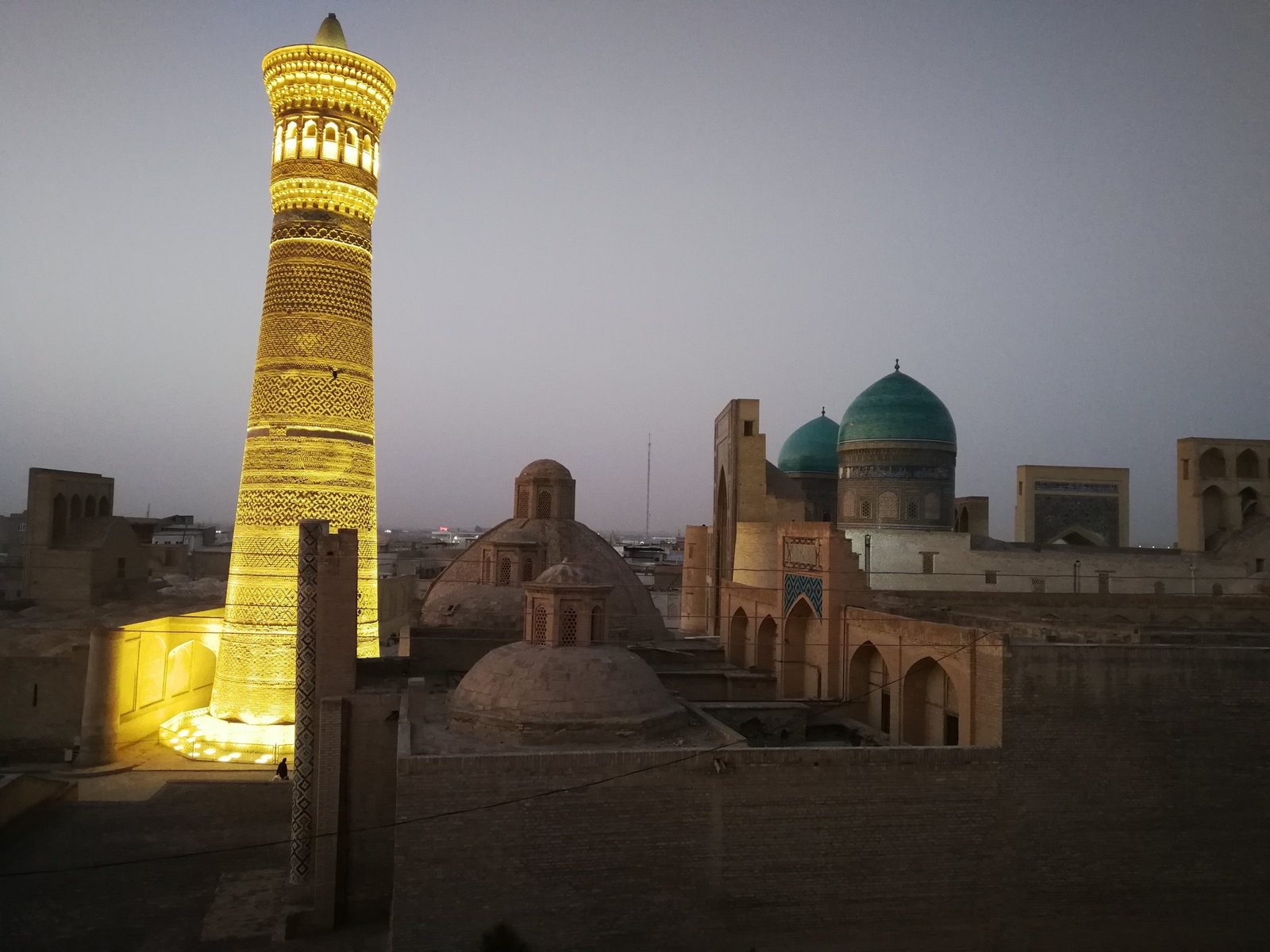
Places in this article: Samarkand · Bukhara · Khiva · Tashkent
Uzbekistan in July: weather, heat, mountains and summer fruit
In July the sun rises over Tashkent before five, so by the time the fast train leaves for Khiva at 07:00 it has already been light for two hours. Those early hours are the secret of an Uzbek summer. July is the hottest month of the year: Bukhara averages 37 °C in the afternoon and gets less than a millimetre of rain in the whole month.
We live in Tashkent and work right through the summer, and July can be a very good month if you plan it our way: the old towns at dawn and after sunset, the middle of the day indoors, and a day or two in the mountains, where it is ten degrees cooler. Here is how we do it.
In short
- July is the hottest month: 35–37 °C in the afternoon, 20–22 °C at night, practically no rain.
- The days are long: 15 hours 10 minutes in Tashkent on 1 July, sunset in Khiva at 20:38.
- Walk early and late and rest from one to five; Mountains of the Western Tien Shan about 80 km from Tashkent: hiking in summer, skiing in winter, the Charvak reservoir nearby. Read more → is about ten degrees cooler than the city.
- Peaches are at their peak, melons arrive and the first grapes appear.
- No public holidays in July; train tickets go on sale 60 days ahead. All months side by side are in when to visit Uzbekistan.
Tours where you can see this for yourself. Find a tour that fits you →
Contents
Weather in Uzbekistan in July
Average daytime highs and night lows from the long-term climate normals (1991–2020), the same figures we use across this site. Khiva's numbers come from the weather station in Urgench, 35 km away.
| City | Day | Night | Rain in the month |
|---|---|---|---|
| Tashkent | 36 °C | 20 °C | 3 mm |
| Samarkand | 35 °C | 20 °C | 2 mm |
| Bukhara | 37 °C | 22 °C | under 1 mm |
| Khiva | 36 °C | 21 °C | 1 mm |
July is the peak of the summer and the hottest month in all four cities, a degree or two above June. Samarkand is again the mildest at 35 °C in the afternoon; Bukhara, at 37 °C, has the hottest afternoons of the whole year.
It is dry heat: 3 mm of rain in Tashkent over the month, even less elsewhere. Nights stay warm, 20–22 °C, and an evening walk needs nothing more than a shirt.
Daylight in July
Uzbekistan runs on one time zone, UTC+5, with no daylight saving, so in Khiva the sun rises and sets about 35 minutes later than in Tashkent.
- Tashkent, 1 July: sunrise 04:52, sunset 20:02, 15 hours 10 minutes of daylight.
- Tashkent, 31 July: sunrise 05:16, sunset 19:43, 14 hours 28 minutes.
- Khiva, 1 July: sunrise 05:27, sunset 20:38.
The long evenings are what make July work. In early July the sun sets over Khiva after half past eight, and the last hours before sunset, when the heat eases, are the best of the day on the city walls.
How we plan a day in the heat
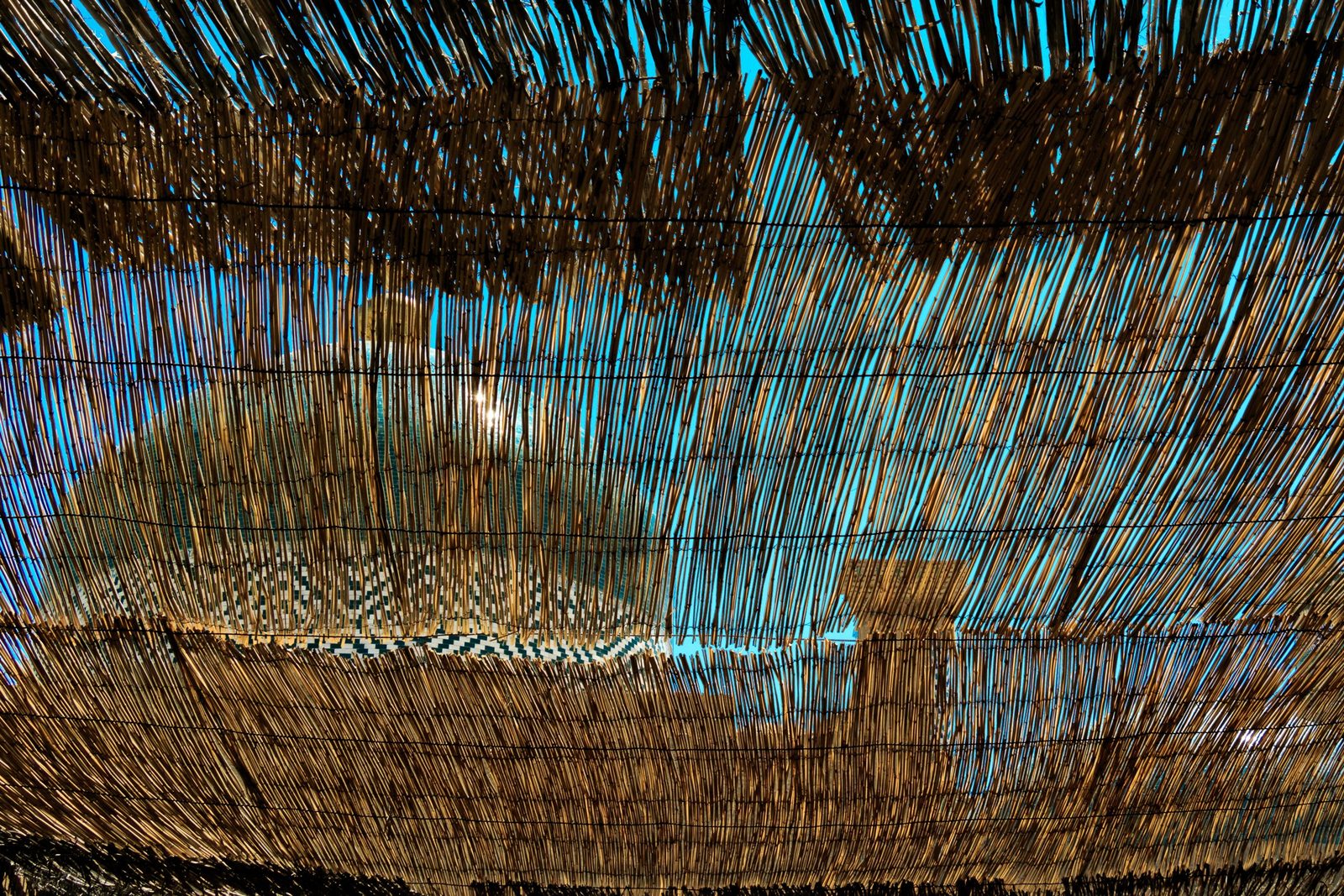
Our summer rule is simple: outside early and late, under a roof in between. This is what a July day in Bukhara or Khiva looks like with us:
| Time | What we do |
|---|---|
| 07:00–11:00 | Open squares, minarets and city walls, while the air is still fresh |
| 11:00–13:00 | Covered bazaars, museums and shady An Islamic college: student cells and classrooms around a courtyard behind a grand portal. In the old towns many now house museums and craft workshops. Read more → courtyards |
| 13:00–17:00 | Lunch and a siesta at the hotel, a craft workshop, or the fast train to the next city |
| 17:00–21:00 | The evening walk, sunset from a terrace, dinner outdoors |
After five the old towns come back to life: in Bukhara around ,Did you know? Bukhara's ponds were once its water supply Pools like Lyabi-Hauz, dug around 1620 and 46 × 36 m, were the city's main source of water. Most were filled in during the 1920s–30s because they spread disease; Lyabi-Hauz survived. Read more → in Khiva on the walls and the rooftop terraces, in Samarkand on the Did you know? The Registan's sun-carrying lion went on a banknote The Sher-Dor Madrasah (1619–1636) is named for the big cats with the sun on their backs on its portal. The image appeared on the reverse of Uzbekistan's 200-som note of 1997. Read more → at dusk. Drink more water than you think you need, keep a hat on in the open squares, and read our health and safety guide before you go. In Khiva we book dinner on a terrace with a view of Itchan Kala.
The mountains and Lake Charvak in July
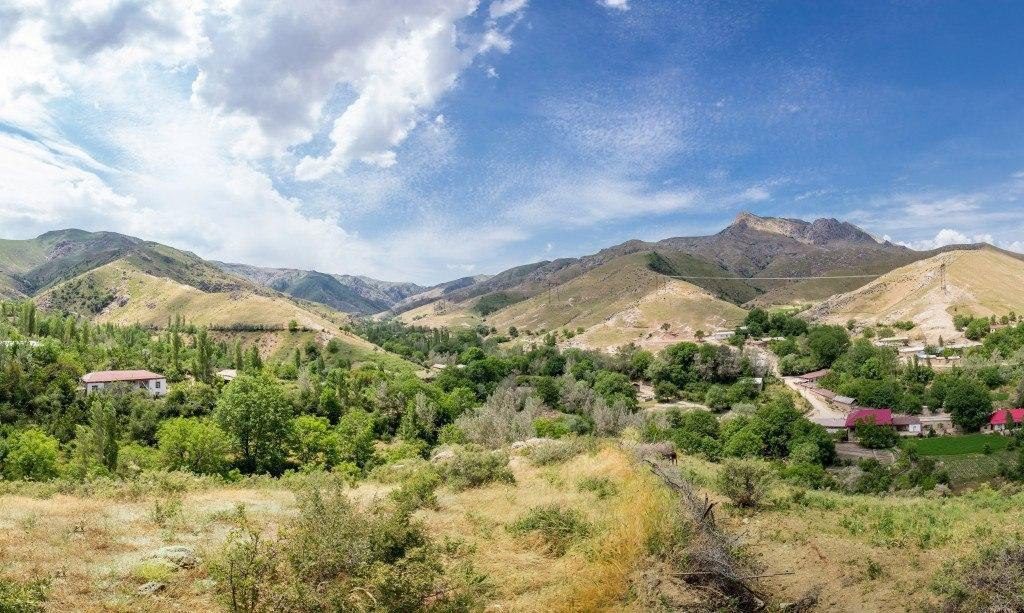
When Tashkent sits at 36 °C, the city heads for the mountains. At Chimgan, an hour and a half away, the average July afternoon is 26 °C and the night 17 °C, about ten degrees cooler than town.
Did you know? Amirsoy drew about 150,000 visitors in its first three months Amirsoy opened in December 2019 on the northern slope of Mount Maygashkan in the Chatkal range, about 65 km from Tashkent. Some 150,000 visitors, mostly locals, came in its first three months, and its chalets get about 90% of their energy from the sun. Read more → runs its gondolas in summer too, with guided mountain walks, a rope park, quad bikes and a heated outdoor pool. Lake ,Did you know? The lake below Chimgan is held back by a 168-metre dam Charvak is a reservoir: a 168 m stone dam on the Chirchiq, built in 1964–1970, holds about 2 km³ of water from the Pskem, Koksu and Chatkal rivers. Its name is traced to the Persian chorbog, "four gardens". Read more → about 80 km from the city centre, is a reservoir, and its shore villages are where Tashkent spends the summer, with tapchans by the water and paragliders taking off at Yusufkhona. On weekends the road is busier, so we leave early and come back before the evening rush. We organise a day at Amirsoy and Chinorkent, with lunch and a cable-car ride.
How we lay out the day is in Chimgan and Charvak in a day, and the walks are in hiking in Uzbekistan. For four days off the asphalt there is the Jeep Expedition: High Tashkent.
Nukus, the Aral Sea and the desert in summer
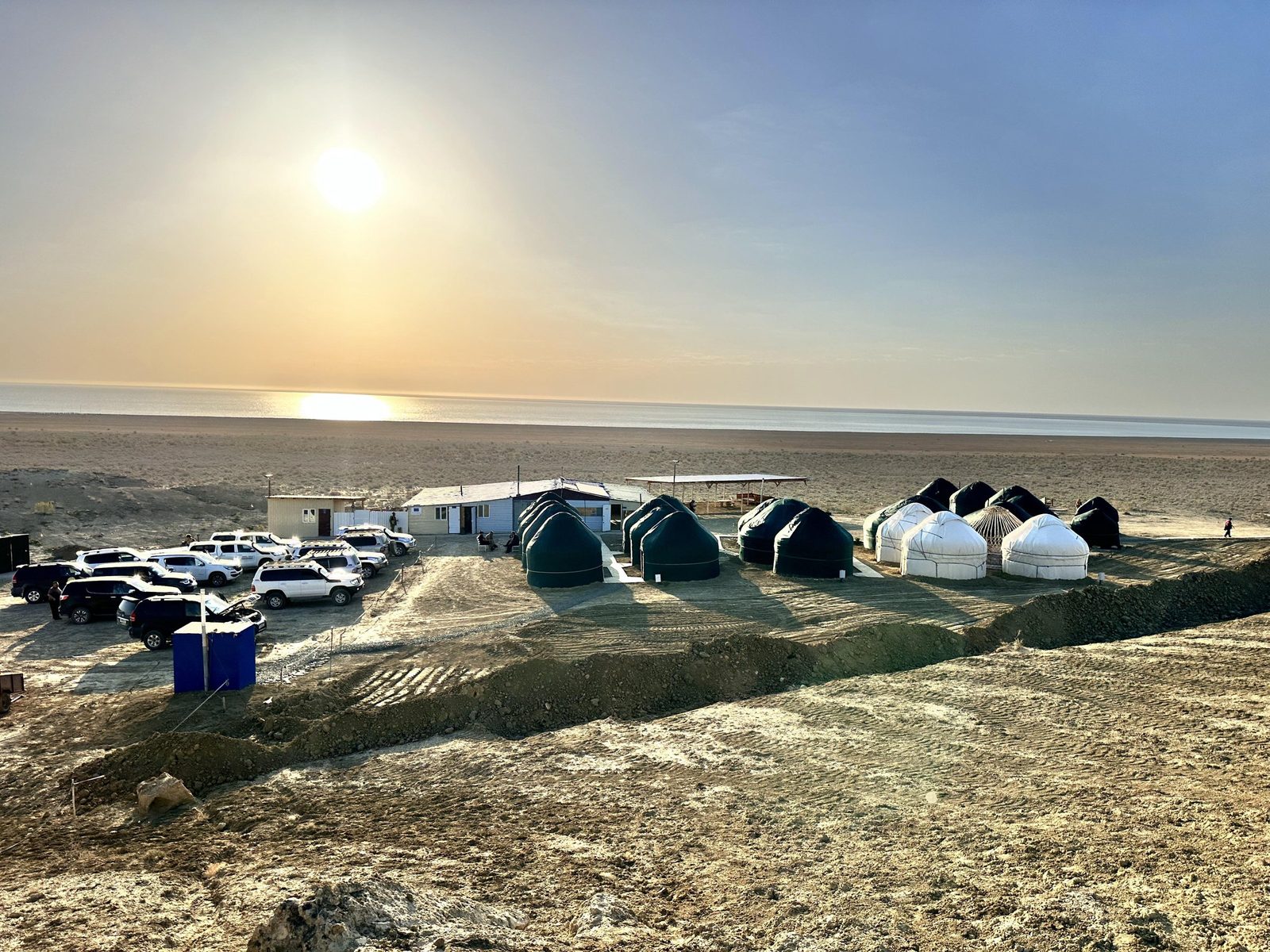
The far west is the hottest part of any July route: Nukus averages 36 °C in the afternoon and 21 °C at night. It is perfectly doable; you simply plan the day around the sun.
In Nukus we visit the Did you know? Legend says Mizdakhan's little brick towers grant wishes Legend says that if you stack a column of seven bricks at the Mizdakhan necropolis near Nukus, your wish comes true; another tale says each column adds seven years to the life of the world. The hill site holds ruins from many centuries. Read more → necropolis early in the morning and spend the hot hours in the Savitsky Museum, open Tuesday to Sunday from 9:00 to 18:00 and closed on Mondays. The desert fortresses of Did you know? Legend says a shepherd named Ayaz built Ayaz-Kala for a bride Legend says a Khorezm king promised his daughter to whoever built an unassailable fortress; the shepherd Ayaz began, the king broke his word, and the walls stayed unfinished. In fact the oldest fort here dates to the 4th–3rd century BC. Read more → and Did you know? Toprak-Kala was the palace city of ancient Khorezm's kings In the 2nd–3rd century AD Toprak-Kala was the capital of Khorezm. From 1938 Sergey Tolstov's expedition uncovered its palace, with wall paintings, coins and archives; its sculptures are now in the Hermitage. Read more → are at their best at sunset anyway. Did you know? A music festival is held among Muynak's old fishing boats Since 2018 the Stihia festival of electronic music, art and science has gathered in Muynak, once a port on the Aral Sea, right beside the ships left on the sand. It ends by burning a 10-metre installation of the word SEA. Read more → and the Did you know? Part of the Aral Sea is coming back In 2005 the 12-km Kokaral dike was completed to keep the Syr Darya's water in the North Aral Sea. The level rose faster than expected, the water grew less salty, and fish and fishing returned. Read more → are about three hours' drive north of Nukus, and our 2-day Aral Sea extension spends the night in a camp by the water.
In the The Kyzylkum, or Red Sands: the desert between the Amu Darya and Syr Darya rivers that the road and the railway cross on the way to Khiva. the heat lasts from mid-May to mid-September, so in summer we keep desert time to the evening, the night and the early morning, and suggest spring or autumn for longer walks. How a night in the desert works is in Aydarkul lake and a night in a yurt camp.
Fruit season: peaches, melons and the first grapes
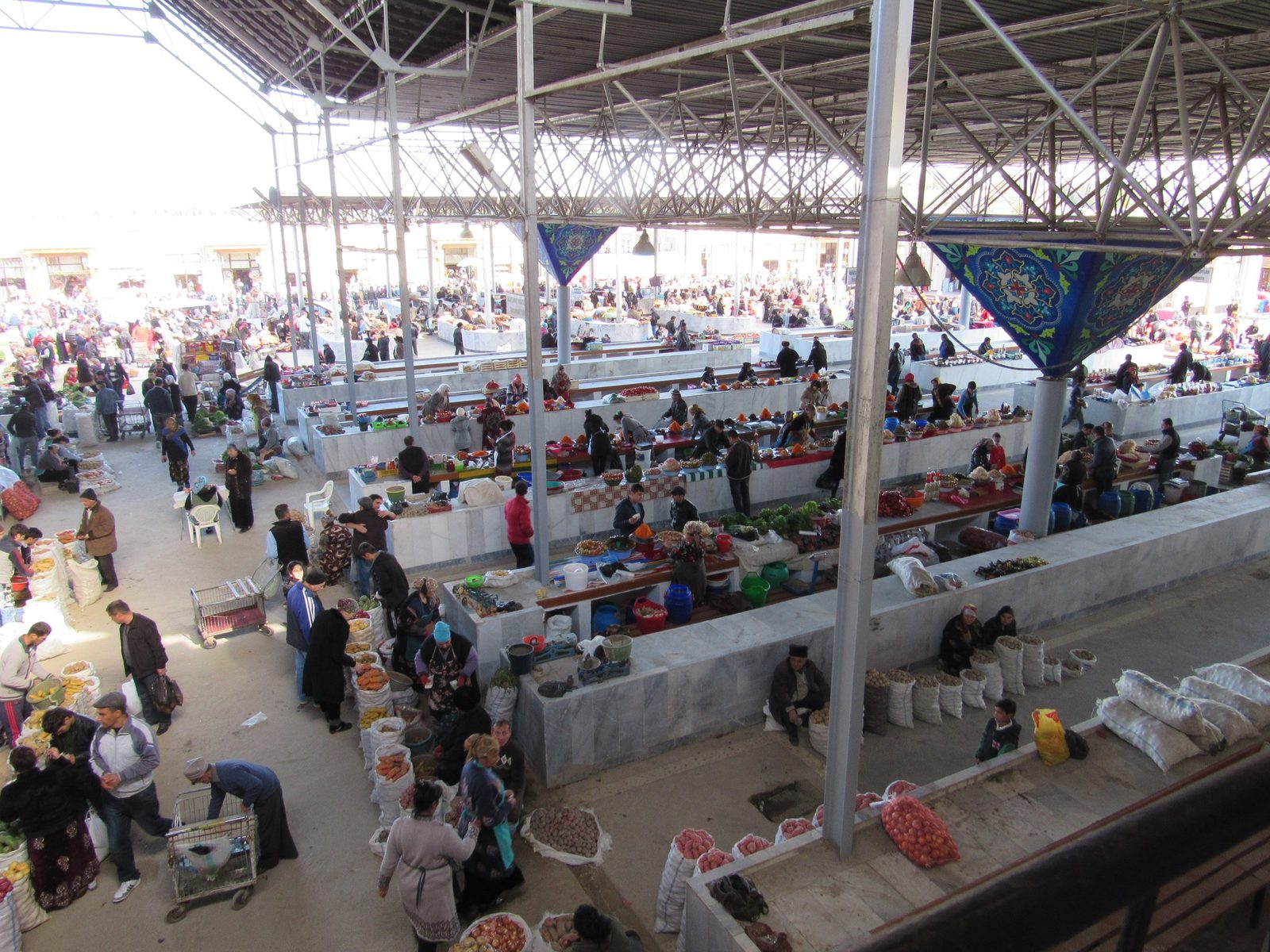
July is peach month. The main peach harvest starts in June, and July is the busiest month of the season. Melons come in at the same time: the first big batches reach the Tashkent wholesale markets in early June, and the mass harvest in the Mirzachul steppe begins at the end of June and in early July.
The first grapes of the new crop, the early Did you know? Most Uzbek grapes are eaten, not made into wine Uzbekistan is the largest grape grower in Central Asia, yet about 73% of its grapes are eaten fresh and only 23% go into juice, wine and brandy. Favourite table grapes are Husayni, Rizamat and Kishmish; in 2018 the country joined the OIV as its 47th member. Read more → and black kishmish, appear at the end of June, and from the second half of July grapes arrive in quantity. The exact weeks shift a little every year with the weather. In Tashkent we buy fruit at ,Tashkent's old bazaar under a big blue-green dome, not far from Hazrati Imam. Bring cash in so'm. Read more → in Samarkand at .Samarkand's main bazaar, right next to Bibi-Khanym: Samarkand bread, dried fruit, nuts and halva. Read more → Stalls want cash (see cards, cash and tipping), and fruit should be washed before you eat it.
If food is the reason for your trip, the Taste of the Road culinary tour goes through Samarkand, Bukhara, Khiva and Tashkent, and our guide to plov in Uzbekistan explains the national dish.
Holidays and events in July
There are no public holidays in July. Kurban Hayit falls in May in 2027, and the next big holiday is Independence Day on 1 September (see Uzbekistan in September). So in July trains and hotels follow the season, not the holiday calendar.
The big summer festival comes in early August: the Melon Festival in Khiva, held on 7–9 August in 2026. If your trip runs into August, read Uzbekistan in August and our festival calendar for 2027.
Booking a July trip
July and August fall between the two city seasons, March to June and September to November. Train tickets go on sale 60 days before departure: for a trip in mid-July, that means mid-May. We buy on the first days of sales, so that the long train rides fall in the hot middle of the day and the mornings stay free for walking.
- The 8-day classic tour, or the 11-day classic tour with more time in each city: Tashkent, Samarkand, Bukhara and Khiva.
- The 8-day group tour of Samarkand, Bukhara and Khiva, which starts every Friday in 2026 and 2027.
- The Fergana Valley crafts tour: silk in Did you know? Legend says Margilan is named after chicken and bread Legend says locals greeted Alexander the Great with chicken and bread, 'murg' and 'non', and the dish gave the town its name. In fact Alexander never reached here; the name Margilan is recorded from the 10th century. Read more → and ceramics in ,Did you know? Legend says a Rishtan apricot made a great scholar praise God Legend says 12th-century Rishtan folk brought a new apricot to their countryman Burhan al-Din al-Marghinani in Samarkand; he tasted it and said 'Subhanallah' three times, so it is called subhoni. The scholar is real: he wrote al-Hidaya. Read more → with the workshops for the hot hours of the day.
For the start of the summer, read Uzbekistan in June.
What to wear in July
- Loose, light clothes in cotton or linen that cover shoulders and knees: they keep the sun off and are right for mosques.
- In town, knee-length shorts and summer dresses are fine. For mosques and mausoleums carry a light scarf: women cover their hair before entering a mosque. The details are in what to wear and etiquette.
- A sun hat, sunglasses and sunscreen, especially for the open squares of Bukhara and Khiva.
- A bottle of water in your bag, bought at any kiosk: in the afternoon heat you drink more than you expect.
- Slip-on shoes, which save time at mosque doors, and a light sweater and rain jacket for the mountains, where the weather turns faster than in the city.