
What to wear and how to behave in Uzbekistan
At an Uzbek table, the first bowl of tea never reaches the guest. The host pours it, tips it back into the pot and does this three times. Only the fourth pour is yours, and the bowl will be barely half full. That is not stinginess. It is the most polite thing we can do for you.
We are a Tashkent company and have been showing guests around Uzbekistan for twenty years. Our customs are easy to follow once someone explains them, so here is what we tell friends before their trip: what to wear, how we greet each other, what happens when you are invited home, and how to treat bread, tea and Ramadan.
What to wear in the city and at the mosque
In Tashkent you can dress the way you would in any European city. Jeans, a summer dress, a T-shirt: nobody will look twice. In the heat men wear knee-length shorts, and on the street that is fine. Outside the big cities life is more traditional, and longer clothes simply make everyone more comfortable.
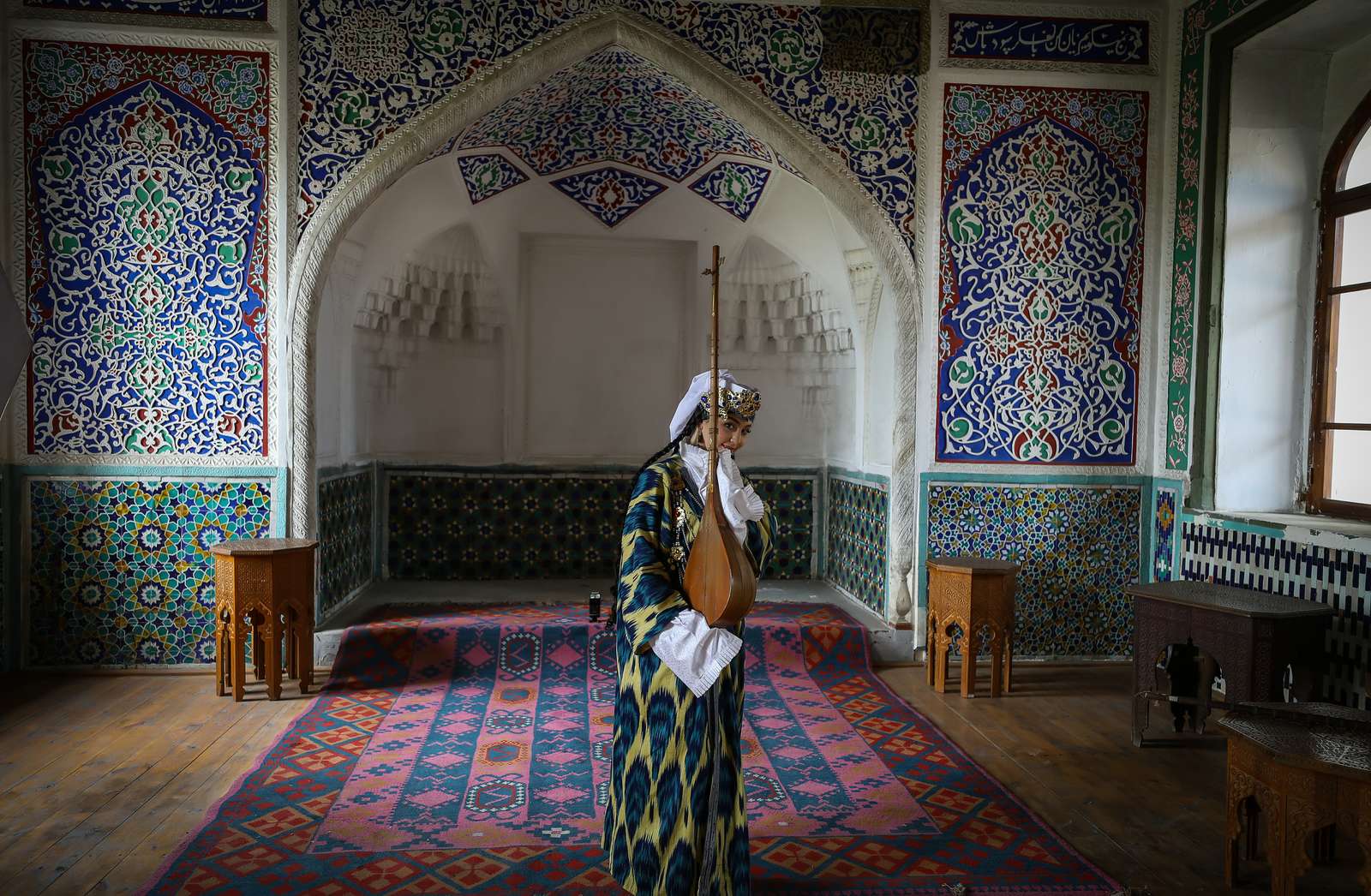
Mosques and mausoleums are different. There we cover shoulders and knees, men and women alike, and women cover their hair with a scarf before entering a mosque. Short shorts, sleeveless tops and short skirts are not welcome. A light scarf in your bag solves most situations, and the sign at the entrance tells you the rules of that particular site.
Prayer halls are laid with carpets, and shoes come off at the threshold. Slip-on shoes save a lot of time on a day of sightseeing. Inside, speak quietly and never walk in front of people who are praying. If a prayer is under way, come back a little later.
What to pack for heat or cold depends on the month. We cover that in the article on the best time to visit.
Greetings and photographs
Men greet men with a handshake, usually followed by questions about health, family and the journey. This is not small talk: answer, and ask in return. The right hand often goes to the heart with a slight bow. With women we wait: if a woman offers her hand, shake it; if not, a hand on the heart and a nod is the right greeting. In winter, take your glove off before shaking hands.
Older people get the first greeting and the best seat. Offer your place to an elder on the bus or at the table without being asked, and you will see how much it means here.
Before you photograph a person, ask. A smile and a nod towards the camera are enough, and most people agree, but a no is a no. Never photograph people at prayer. Almost all historic sites can be photographed; some charge a separate filming fee set by the site itself, so ask at the ticket office. Keep the camera away from government buildings, military sites, airports and police stations.
A drone needs prior permission from the Civil Aviation Agency, and the request is filed weeks in advance. Flying without it, especially near historic monuments, can cost you a fine and the drone. And keep your passport with you at all times: the police do check documents.
Invited home: shoes, gifts and the dastarkhan
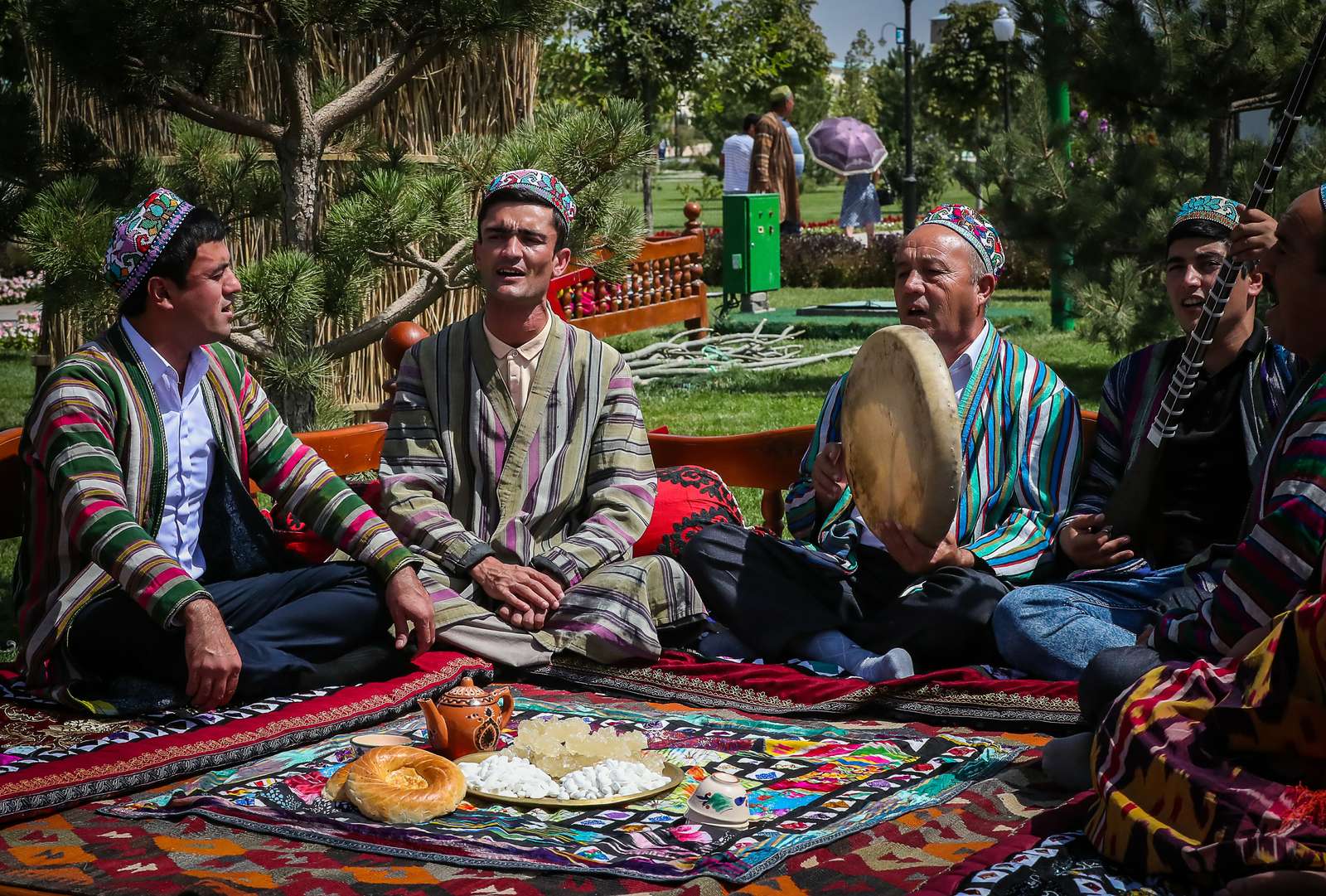
An invitation to an Uzbek home is the best thing that can happen on a trip. Take your shoes off at the door. Bring a small gift: sweets, fruit or a couple of flatbreads from the bazaar are exactly what we bring ourselves. If the hosts give you something as you leave, accept it. Refusing a gift is an offence.
The guest of honour sits furthest from the door: the further from the entrance, the greater the respect. The dastarkhan, our laid table, may be a low table or a cloth spread on the floor with cushions and kurpacha mattresses around it. It should never look empty, so dishes keep coming. A visit begins and ends with tea and easily runs longer than planned, so do not book anything tight for that evening.
Bread and tea
Bread, non, is the most respected thing on our table. We never put it face down and never cut it with a knife: the host tears the flatbread by hand and shares it with everyone. Bread does not go on the floor and is not thrown away. If an Uzbek sees a piece lying on the ground, they pick it up, kiss it, touch it to their forehead and put it somewhere clean.
Tea is poured by the host or the hostess. Those three pours back into the pot are called qaytar, from the Uzbek word for "return": this is how the tea brews properly. Then you get a bowl that is only partly full, so it does not burn your fingers. The less tea in the bowl, the more often the host refills it, and every refill is a small sign of attention. A bowl filled to the brim goes against our idea of hospitality.
Drinking alcohol in public places, on the street or in a park, is not allowed; keep it for a restaurant. Tipping is up to you, and how we pay and how much we leave is in the article on cards, cash and tipping.
Ramadan
Uzbekistan is a secular country, and during Ramadan the cafés and restaurants of Tashkent stay open in the daytime. Nobody will ask you to fast. We only ask for tact: do not eat, drink or smoke demonstratively in the street during daylight hours.
Iftar, the meal that breaks the fast, starts right after sunset. At that hour restaurants fill up and some change their menus, and the streets around mosques are busy at prayer times. If you want dinner at a popular place, book a table or come later. Ramadan moves to new dates every year, so check them before you book flights and hotels.
Ramadan ends with Eid al-Fitr, Ramazon hayiti. We greet each other with "Hayitingiz muborak boʻlsin!", happy holiday, families visit one another and treat guests to Rice cooked in a kazan with carrots, onions and meat: the dish of every Uzbek celebration. Each region cooks it its own way. and sweets.
For the rest of your preparation, see our guide to exchanging currency, or choose a route in the tour finder and the tour catalogue.
In short
- In the city, dress as you would at home. In mosques and mausoleums: shoulders and knees covered, a scarf for women, shoes off on the carpets.
- Men shake hands; a hand on the heart works for everyone. Ask before you photograph a person.
- Visiting a home: shoes off at the door, a small gift, and accept what you are given.
- Bread is never put face down, cut with a knife or left on the ground; a half-full bowl of tea is a sign of respect.
- During Ramadan cafés stay open; just do not eat or smoke demonstratively in the street in daytime.