Places in this article: Bukhara · Khiva · Tashkent
What to pack for Uzbekistan: a packing list by season
In October an afternoon in Bukhara reaches 23 °C and the night falls to 7 °C. In July the same city averages 37 °C, and on a January night Khiva drops to −6 °C. Packing for Uzbekistan depends less on the country than on the month, and on where you spend the day: a mosque courtyard, a cobbled lane, a mountain path or a yurt camp in the desert.
This is what to pack for Uzbekistan, the list we in Tashkent give friends before their first trip: season by season first, then the things that matter in any month.
What to pack for Uzbekistan by season
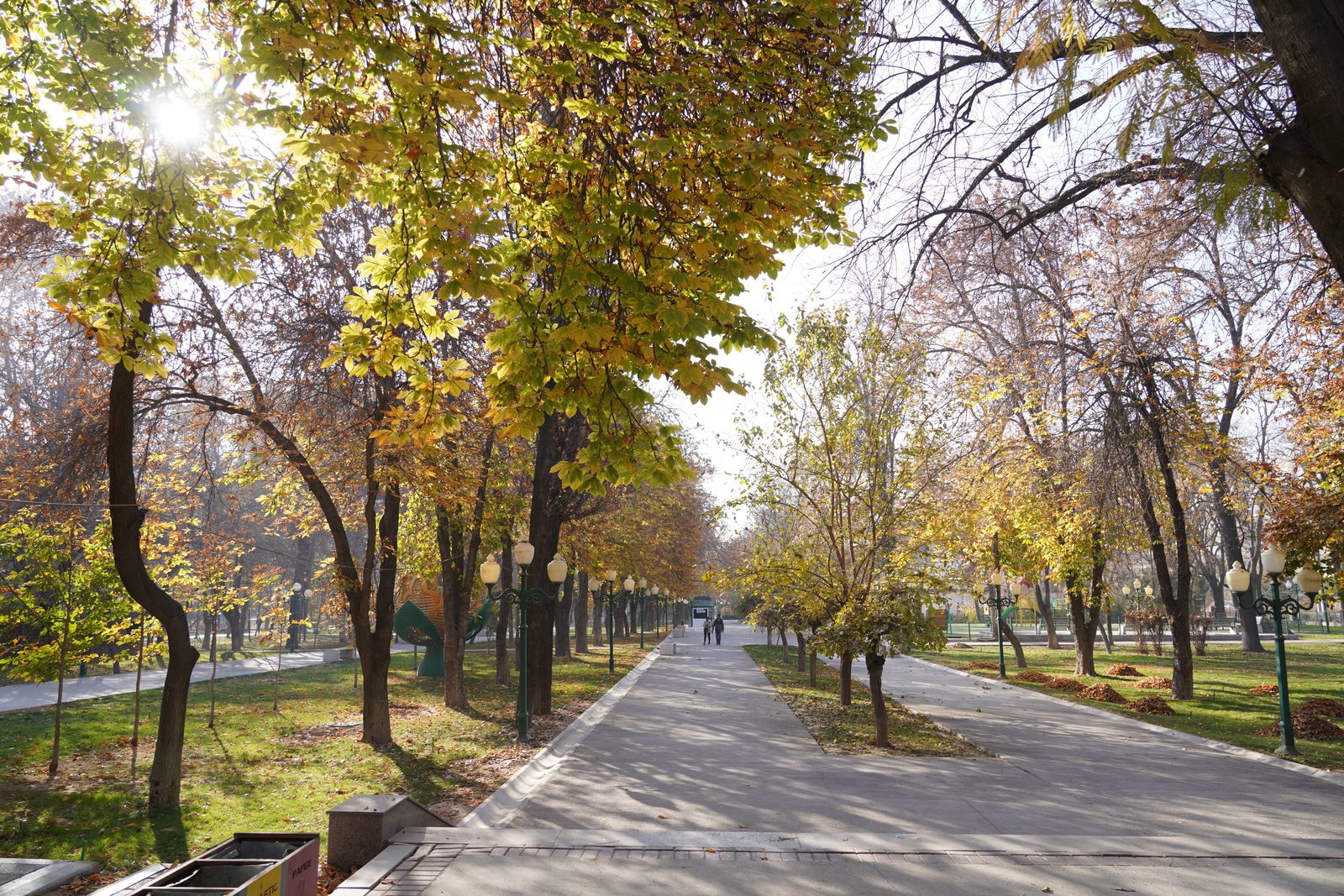
Our rule for every season is layers. Day and night differ by more than ten degrees for much of the year, and the same day can start in a jacket and end in a T-shirt.
- Spring, March to May. Tashkent warms from 16 °C in the afternoon in March to 28 °C in May, with nights of 5 to 14 °C. Bring light trousers and long sleeves, a fleece or a light jacket, and a compact umbrella: most of the rain falls between November and April.
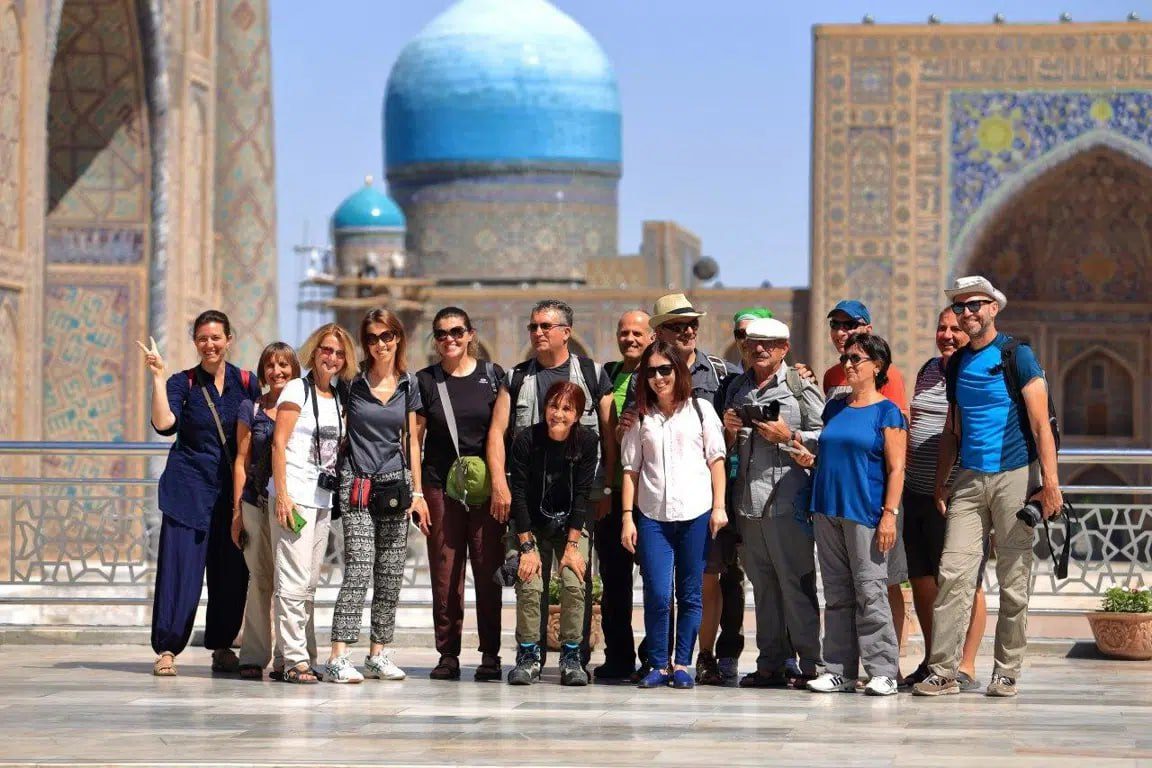
- Summer, June to August. Afternoons of 32–37 °C in Tashkent, Samarkand and Bukhara, and almost no rain. Pack loose cotton or linen, long and light rather than short and tight, a wide-brimmed hat and comfortable sandals or breathable shoes.
- Autumn, September to November. September is still summer, about 30 °C. By November afternoons are around 14 °C and nights 0–4 °C. Pack as for spring, with a warmer jacket from late October.
- Winter, December to February. Afternoons of 7–10 °C, nights around zero, and Khiva about four degrees colder. A warm coat, a hat, gloves and a scarf. February is the wettest month in Tashkent, so shoes that keep the water out help.
The figures for every month and city are in our weather in Uzbekistan by month, with a link to the full guide for each month.
Clothes for mosques and madrasahs
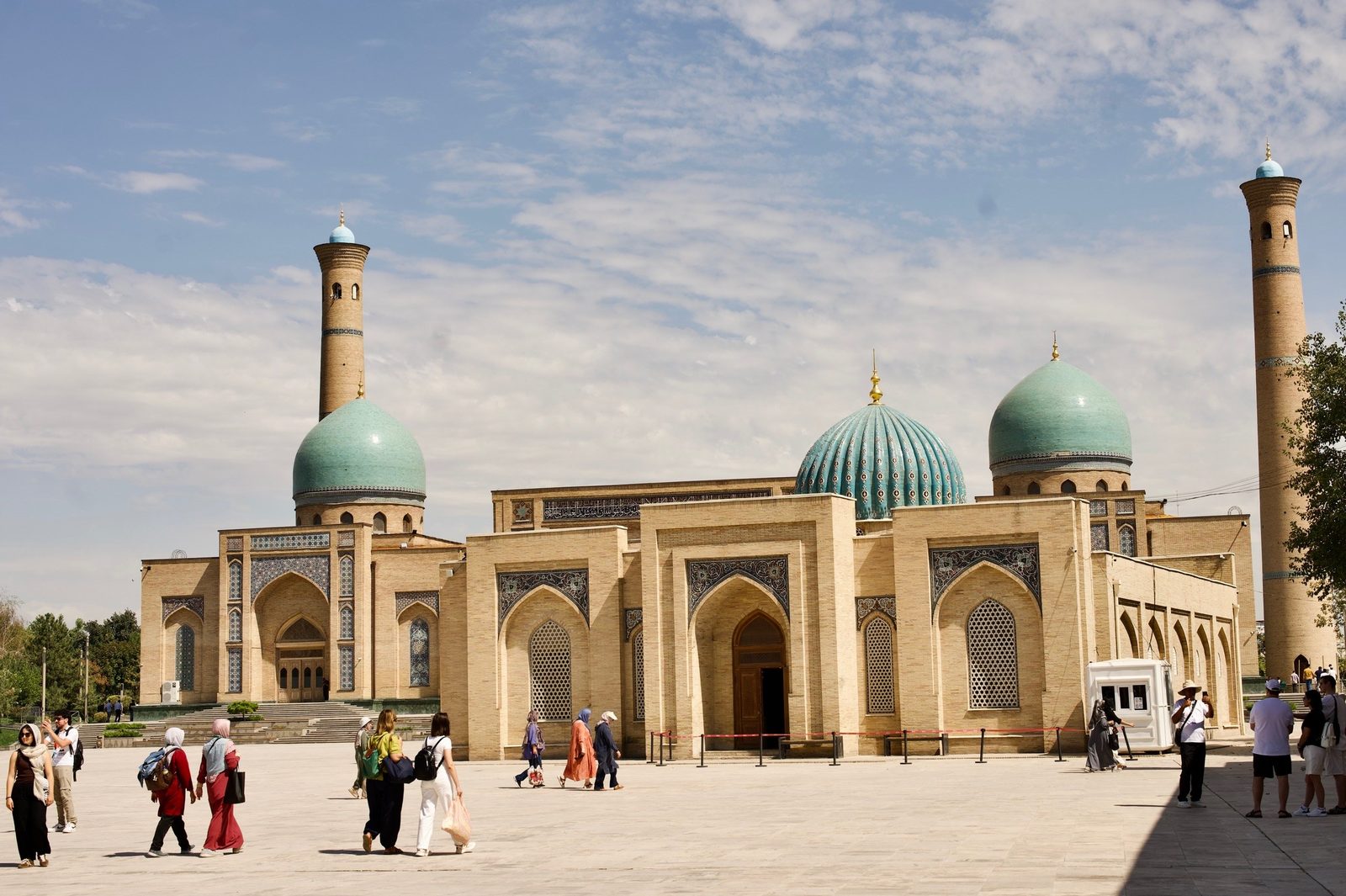
In the cities you can dress the way you do at home. Mosques and mausoleums have their own rule, for men and women alike: shoulders and knees covered. Women also cover their hair before entering a mosque. Many sights on a classic route are working religious sites, from The religious heart of old Tashkent: madrasahs, a Friday mosque and mausoleums. Right next to it stands the new Center of Islamic Civilization, opened in 2026. Read more → in Tashkent to the shrines around Bukhara, so it is easier to dress for them in the morning than to carry a change of clothes.
What works: a light scarf or shawl that lives in your day bag, long trousers or a midi skirt in thin fabric, a shirt with sleeves to the elbow. Prayer halls are laid with carpets, and shoes come off at the threshold, which brings us to the next point. Greetings, photographs and the table are covered in what to wear and how to behave in Uzbekistan.
Shoes for cobbles, sand and steps
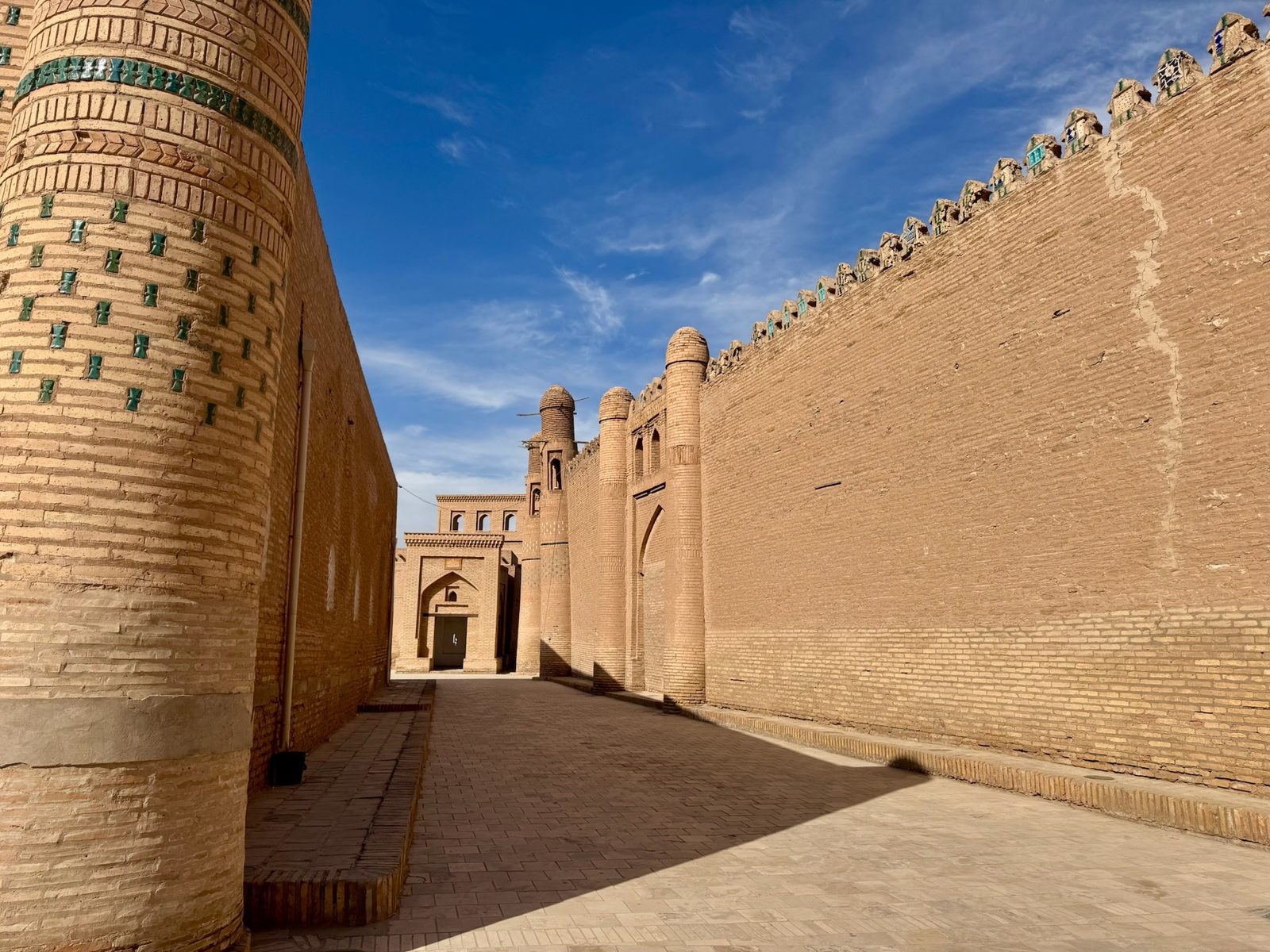
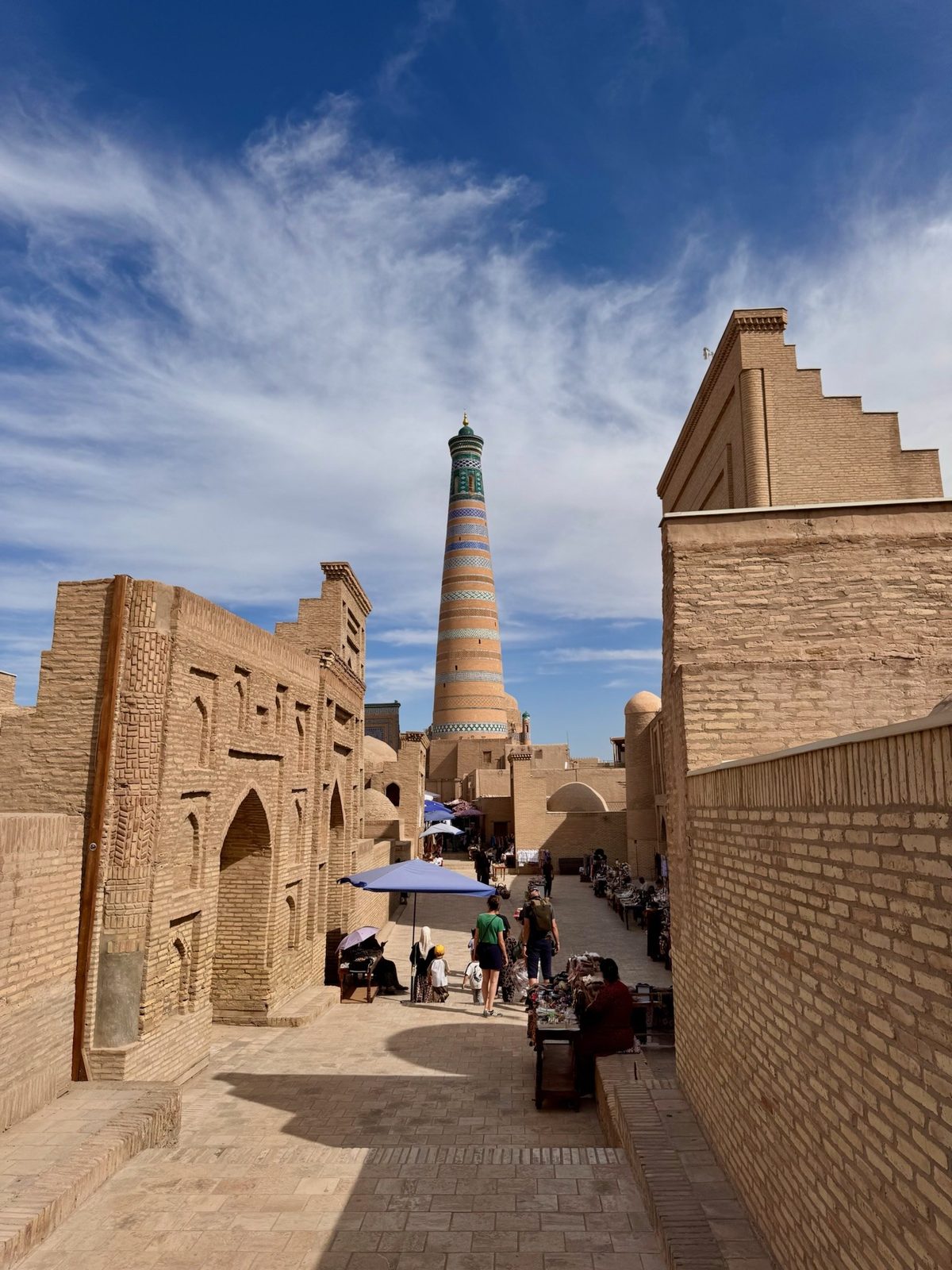
On a day in Bukhara or Khiva you walk more than you expect. The old towns are made for walking, on stone paving and uneven brick, and the sights stand close together. We advise two pairs. One is broken-in walking shoes or trainers with a firm sole. The other slips on and off in a second, for mosques, mausoleums and a visit to a family home, where shoes also stay at the door.
Leaving the cities? At the desert fortresses of Karakalpakstan and Khorezm the paths up to the walls are loose sand and crumbling clay, so you need shoes with a good grip. For a hike in the mountains near Tashkent, bring boots you have already walked in. New shoes on day one mean plasters on day two.
Sun protection
From May to September the sun is strong and the sky is mostly clear; in July there is almost no rain. A wide-brimmed hat, sunglasses and your usual sunscreen belong in the day bag in every season, spring and autumn included: An Islamic college: student cells and classrooms around a courtyard behind a grand portal. In the old towns many now house museums and craft workshops. courtyards and the squares between them have little shade.
In summer we plan sightseeing for the early morning and after five in the evening, with a long lunch in between. Loose long sleeves keep you cooler than a T-shirt. Buy bottled water as you go: it is sold in every shop and kiosk, so there is no need to carry a supply. More on the heat in safety and health in Uzbekistan.
Mountains and yurt camps: a warm layer in any month
Two kinds of side trip change the list. In the mountains near Tashkent the weather turns faster than in the city. In July the Mountains of the Western Tian Shan about 80 km from Tashkent: hiking in summer, skiing in winter, the Charvak reservoir nearby. Read more → weather station averages 26 °C in the afternoon and 16 °C at night; in January about 1 °C by day and −6 °C at night. Bring a warm layer and a rain jacket even in summer, and sturdy shoes. Planning a walk? Our one-day mountain hike with a guide starts from Tashkent, and the area is described in the mountains of Uzbekistan.
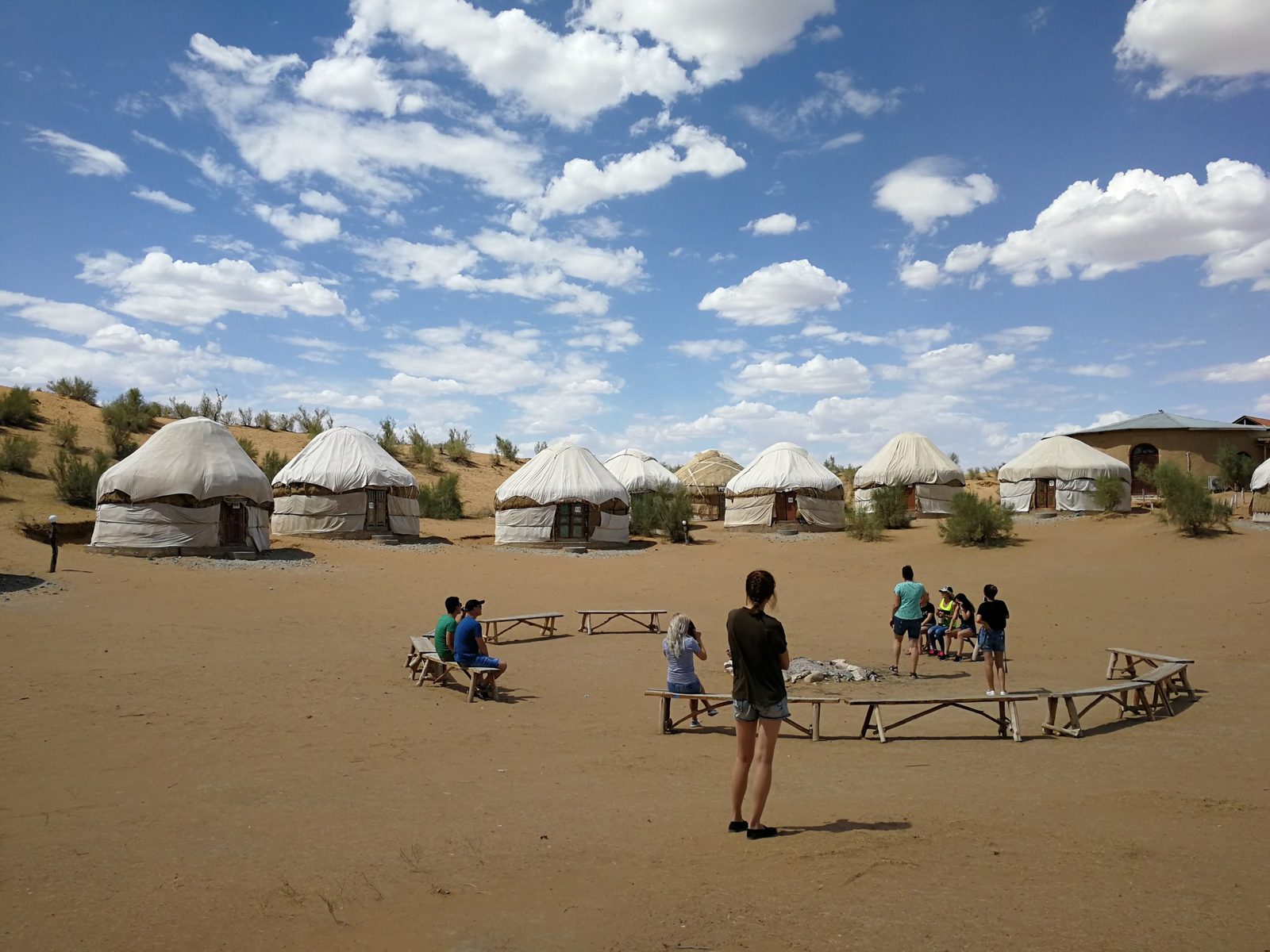
The desert cools quickly after sunset. In Navoi, the regional centre, an October afternoon of about 23 °C becomes about 8 °C at night. For a yurt camp, pack a fleece or a warm jacket even in spring and autumn, a torch or head torch for the walk between the yurt and the washrooms, closed shoes for the sand, and a scarf or buff against wind-blown sand. The camp itself is described in a night at the Aydarkul yurt camp.
First-aid kit and medicines
Pharmacies are easy to find in every city: look for the sign Dorixona or Apteka. Painkillers, rehydration salts, plasters and antiseptic are on every shelf, so a small kit for the road is enough: blister plasters, something for an upset stomach, a hand sanitiser and any medicine you take regularly, enough for the whole trip.
With medicines from home, bring only what you know is allowed. Keep them in the original packaging with the doctor’s prescription, and declare prescription medicines at customs. Some medicines sold freely elsewhere, especially those containing codeine, are controlled here, so check before you fly. The rules are in registration and customs.
Money, an adapter and your phone
Cash. Cards work in hotels, restaurants, shops and stations, and ATMs give so’m. If you bring dollars, bring clean notes of the new series: older ones are often refused. Change money only at banks and official exchange offices, with your passport. Cash above the equivalent of 100 million so’m, about $8,000, is declared on arrival. More in cards, cash and tipping.
Adapter. Sockets are types C and F, the round two-pin European kind, at 220 V and 50 Hz. Plugs from continental Europe fit as they are; from the UK, the US, Australia or Japan you need an adapter. Phone and laptop chargers marked 100–240 V need nothing more; a hair dryer made for 110 V needs a converter, so check the label.
Phone. Here the phone is your taxi, your map and your translator. Which apps to install before the flight, and why some want a local number, is in useful apps for Uzbekistan; the SIM card at the airport is in arriving at Tashkent airport.
What to leave at home
- Water and filters. Bottled water, still and sparkling, is sold in every shop and kiosk in the country. Buy it as you go.
- A drone, unless you have a permit from the Civil Aviation Agency; apply a few weeks ahead.
- A thick wad of cash. Cards and ATMs cover most of the trip.
- Not the empty space. Leave room in the suitcase for ,Did you know? One suzani was often stitched by several women at once A family member or a pattern drawer, the kalamkash, drew the design across strips of cotton. The strips went to different women of the family or neighbourhood, who embroidered them at the same time; sewn back together, they show slightly mismatched seams. Read more → ceramics, silk and spices; what to buy and where is in what to buy in Uzbekistan.
Travelling on one of our tours? Send us your dates, and we will tell you what the weather on your route asks for.
In short
- Pack for the month and in layers: day and night often differ by more than ten degrees.
- A light scarf and clothes that cover shoulders and knees for mosques and mausoleums.
- Broken-in walking shoes, plus a pair that slips off easily.
- A hat, sunglasses and sunscreen in every season; a warm layer for the mountains and the desert.
- Your own medicines with the prescription, new-series dollars and an adapter if you are not from continental Europe; bottled water you buy here.