
Places in this article: Khiva · Tashkent
Melons and fruit season in Uzbekistan: what to eat, month by month
The oasis of Khorezm once grew more than 400 varieties of melon. Medieval travellers praised them, and dried Khorezm melons were sent far beyond the oasis a thousand years ago. Today Urgench State University keeps a gene bank of 127 seed samples to save the old varieties, and every August Khiva holds a festival in their honour.
Fruit is one of the pleasures of travelling here, and it follows a calendar. Here is what is in season when, where to find it, and what you can pack for home.
The fruit calendar
| Month | What is in season |
|---|---|
| May | Cherries, mulberries, the first early melons in the south |
| June | Apricots, cherries, the first melons at the Tashkent markets, the first grapes at the end of the month |
| July–August | Melons at their peak, peaches, apricots for drying; the grape harvest from mid-August |
| September | Melons, grapes, figs, quince and pomegranates |
| October–November | Late grapes, pomegranates, persimmons, apples; winter melons go into storage |
The dates move with the weather: a hot spring brings everything forward, and in 2025 the heat ended the cherry season by mid-June. For the season as a whole, see Uzbekistan in summer and Uzbekistan in autumn.
Melons: from June to the winter
The first big batches of melons reach the Tashkent wholesale markets in early June, and by early July there are so many that prices fall sharply. July to September is the main season. Every region has its pride: Mirzachul melons from the steppe of Jizzakh, harvested in July and August, and, above all, the melons of Khorezm.
Khorezm farmers grow varieties with names you will hear in the bazaar of Khiva: gurvak, grown on the sandy, slightly saline soil of Khorezm and Karakalpakstan; oq novvot; beshak; ichi qizil, red inside; and the gulobi melons. Winter varieties are planted in May, hung from wooden beams in airy sheds after the harvest and sold through the winter, without any refrigerator. A local tip for choosing: a ripe melon feels heavy for its size and has a fresh stem.
The melon festival in Khiva
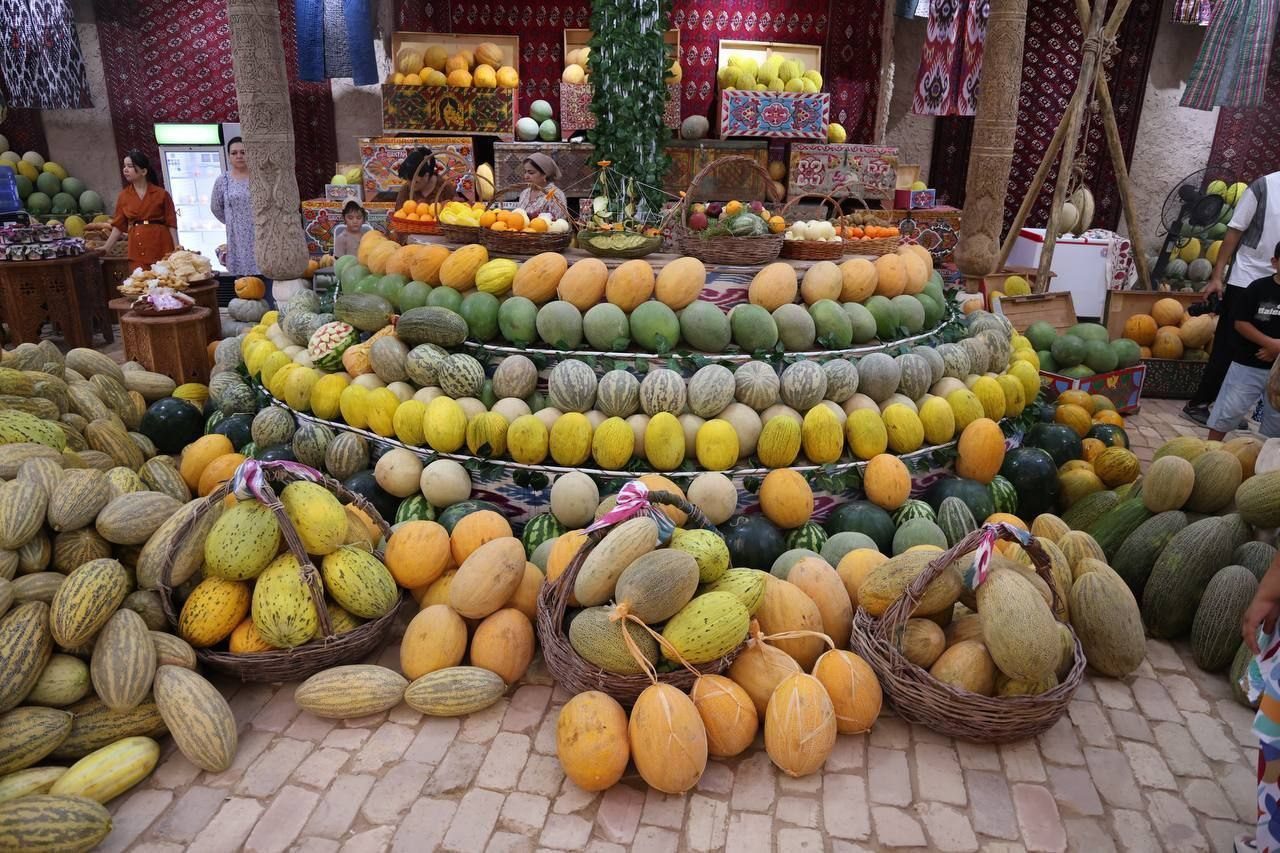
Qovun sayli, the melon festival, is held every year in Khiva in early August. In 2024 about 125 local varieties were shown in 60 pavilions; in 2026 the festival ran on 7–9 August and drew 186,000 visitors. Farmers bring their best melons, and you can taste varieties that never reach a supermarket. If your dates are flexible, it is a good reason to be in Khiva in early August, as early in the morning as you can. The town itself is in Khiva in 1 or 2 days.
Apricots and cherries: early summer
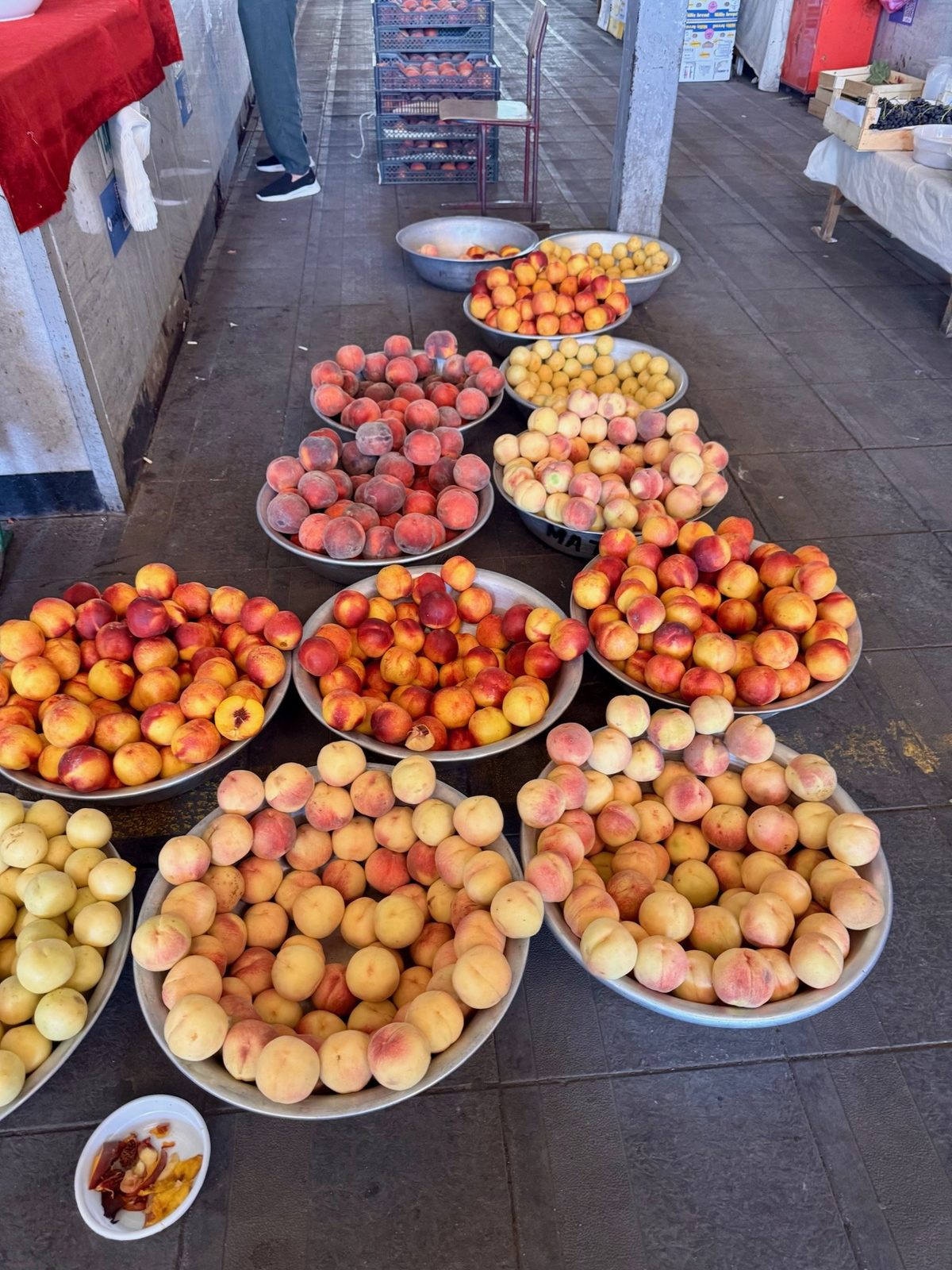
Uzbekistan is the second-largest apricot producer in the world: 451,263 tonnes in 2022. The season is short, from June into July, and the fruit at the bazaar is sold ripe, not picked green for shipping. Much of the crop is dried, so in any month you will find dried apricots in several shades. Cherries come first, from May: in the first seven months of 2025 the country exported 25,200 tonnes of them.
Grapes, figs and pomegranates: autumn
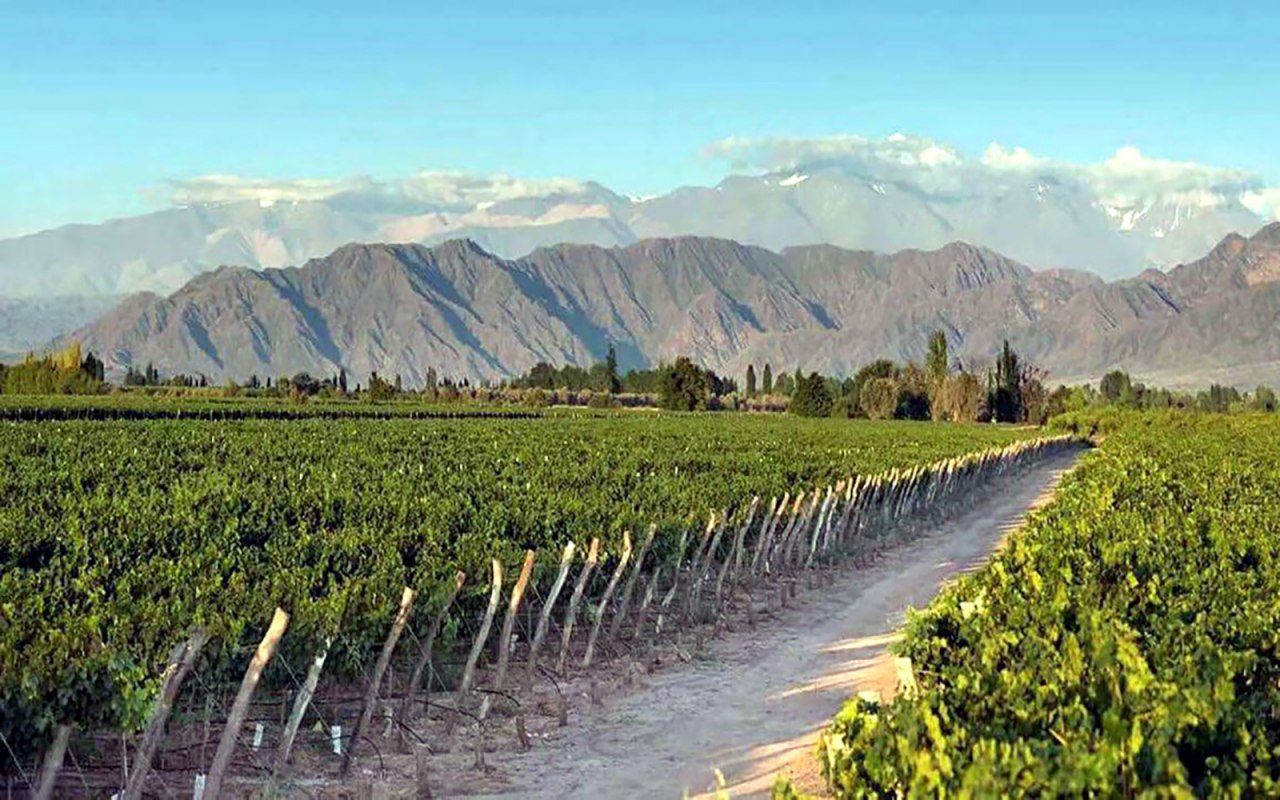
The grape harvest around Parkent, near Tashkent, begins in mid-August, and the varieties ripen one after another until late autumn. Early Kishmish and Rizamat reach the markets around 20 June; Husayni, with long fingers, keeps well; Tayfi, pink and late, is the export favourite; and Kishmish is the grape for raisins. Figs ripen from late August, and September is the peak for figs, quince and pomegranates. Persimmons follow in October and November.
Dried fruit and what to take home
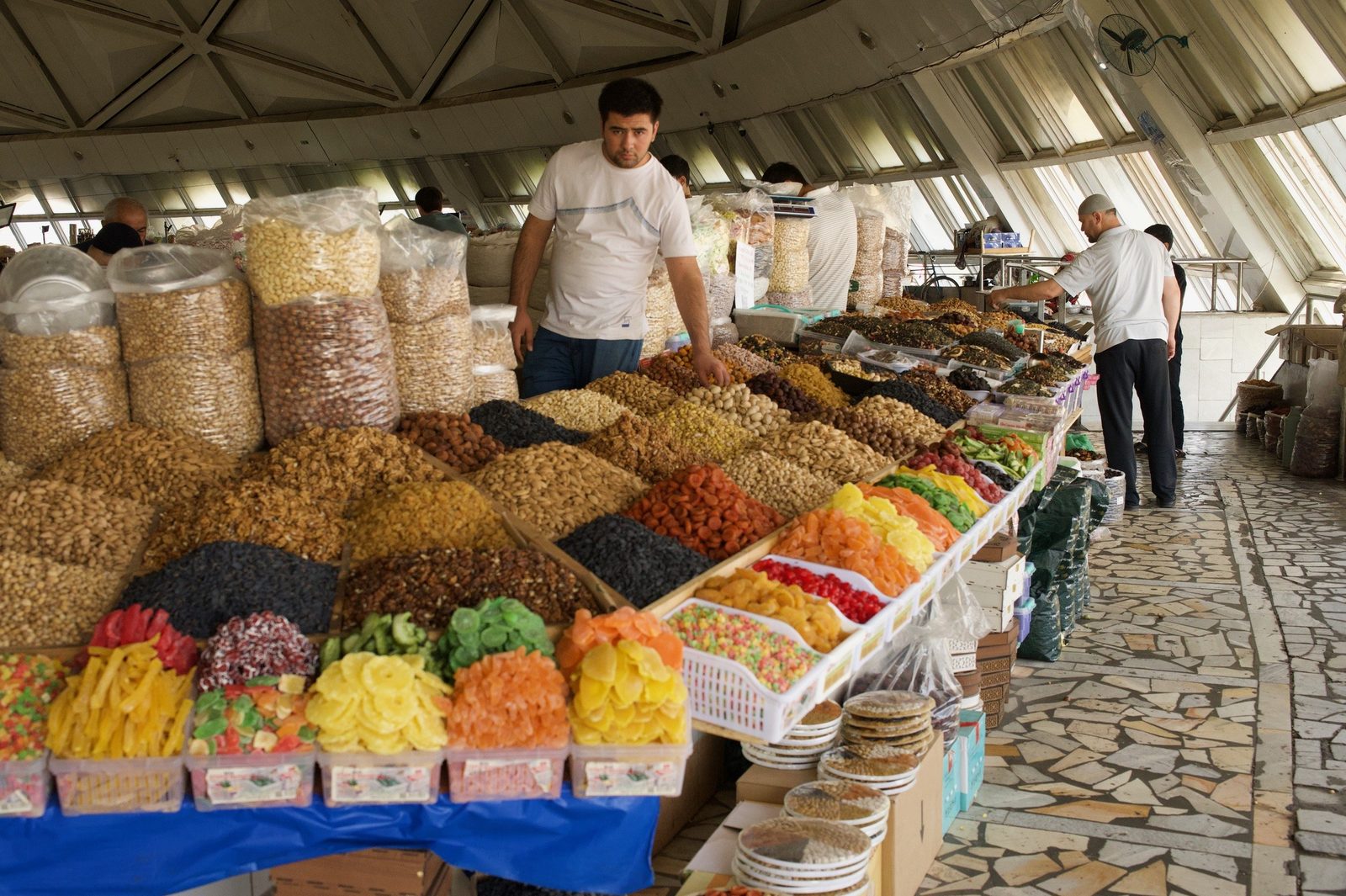
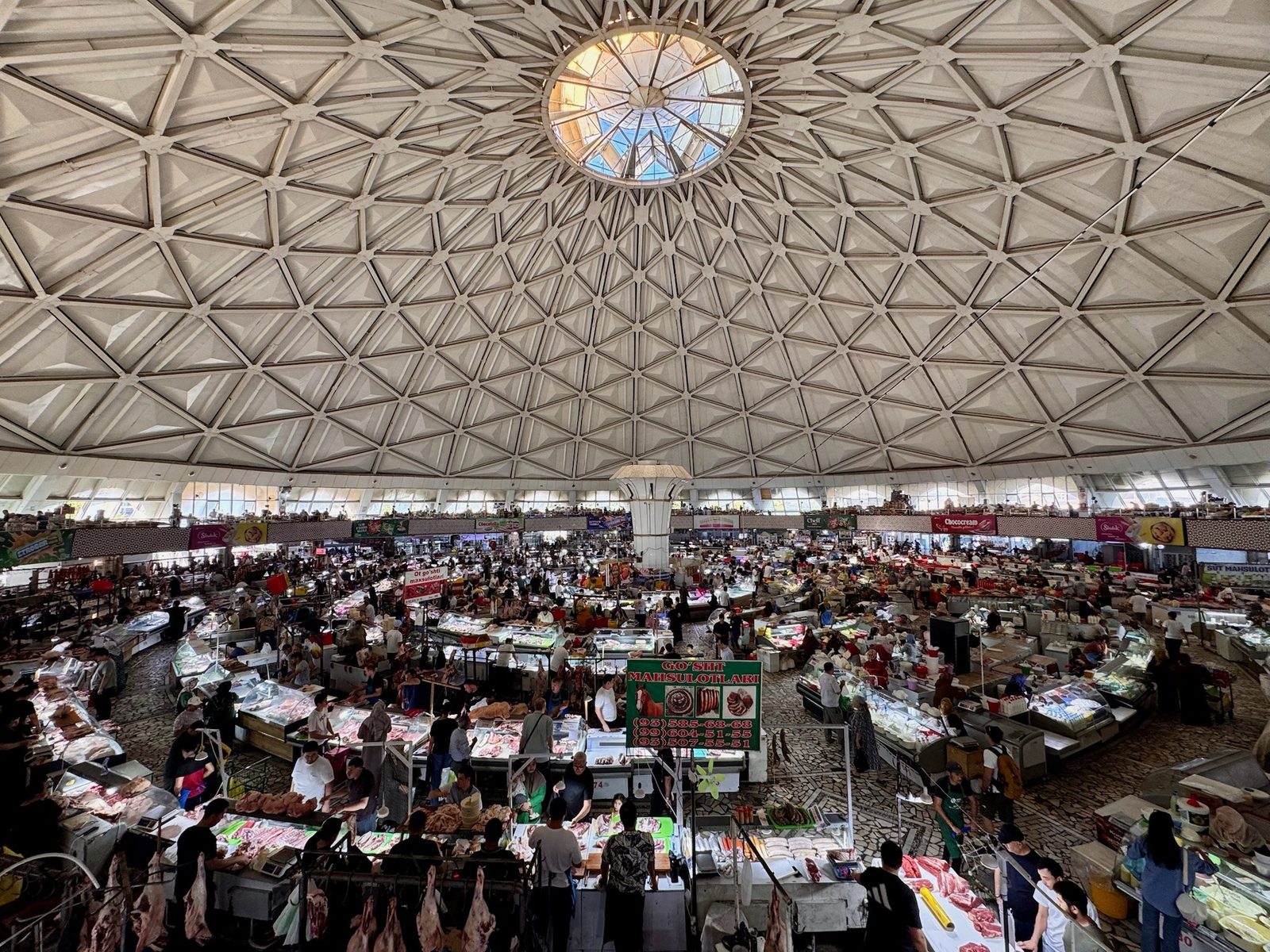
Dried fruit is the easiest edible gift: dried apricots, raisins, figs, dried melon and nuts travel well in a suitcase. You find them at Tashkent's old bazaar under a big blue-green dome, not far from Hazrati Imam. Bring cash in so'm. Read more → in Tashkent and the Siab Bazaar in Samarkand, where tasting before you buy is normal; more in bazaars of Uzbekistan, and the sweets that go with them in Uzbek sweets and desserts.
Leaving Uzbekistan, the rules adopted in 2018 let a traveller take out up to 40 kg of fresh fruit, melons, vegetables and dried fruit without duty. The stricter rules are at the other end. The European Union does not allow fresh fruit in passengers’ luggage without a phytosanitary certificate, except pineapple, coconut, durian, banana and dates. Russia allows up to 5 kg of fruit and vegetables per passenger without a certificate, with stricter rules for some fruit. So a melon is best eaten here, and dried fruit is the safe choice. Before you pack, check the rules of your home country; ours are in registration and customs in Uzbekistan.
Eating fruit on the road
Wash fruit with bottled water or buy it from the hotel kitchen, peeled and sliced. On our tours the guide knows the best stalls in each bazaar, and a melon after dinner is part of the programme in summer and autumn.
Fruit is only part of the seasonal table. The dishes of each season, from the green samsa of Navruz to winter naryn, are in what to eat in Uzbekistan in each season.
In short
- May–June: cherries and apricots; June to September: melons, with the peak in July and August.
- The Khiva melon festival, Qovun sayli, is held every year in early August; in 2026 it ran on 7–9 August.
- Grapes from mid-August, figs, quince and pomegranates in September, persimmons in October and November.
- Dried fruit is the easiest gift; fresh fruit is restricted in the EU luggage rules.
- Uzbekistan allows up to 40 kg of fruit out duty-free; your home country may allow far less.