
Places in this article: Samarkand · Bukhara
Uzbek sweets: halva, navat, parvarda, chak-chak and what to bring home
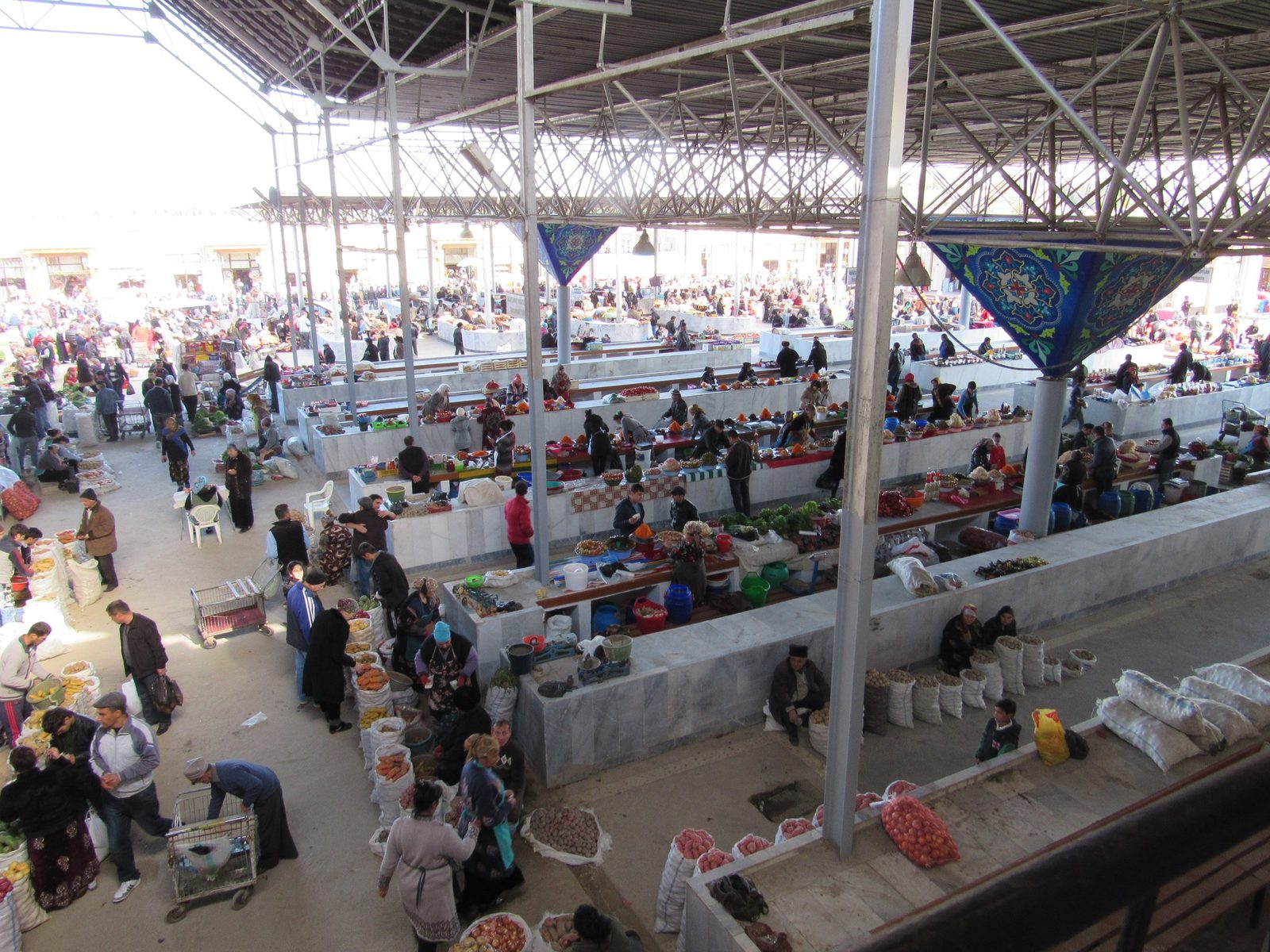
At Samarkand's main bazaar, right next to Bibi-Khanym: Samarkand bread, dried fruit, nuts and halva. Read more → in Samarkand, halva comes the size of a cake, topped with nuts and dried fruit, and some pieces carry a wish written across the top. A few stalls along, sugar hangs on threads in clusters of amber crystals. That is navat, and people here drop it into their tea instead of a spoonful of sugar.
This is our guide to Uzbek sweets and desserts: what each one is, when it is made, where to buy it and what survives the flight home. For the savoury side of the table, start with Uzbek food by city; for the ritual of the teapot, read tea and the chaikhana.
Halva: Kokand, Samarkand and Bukhara
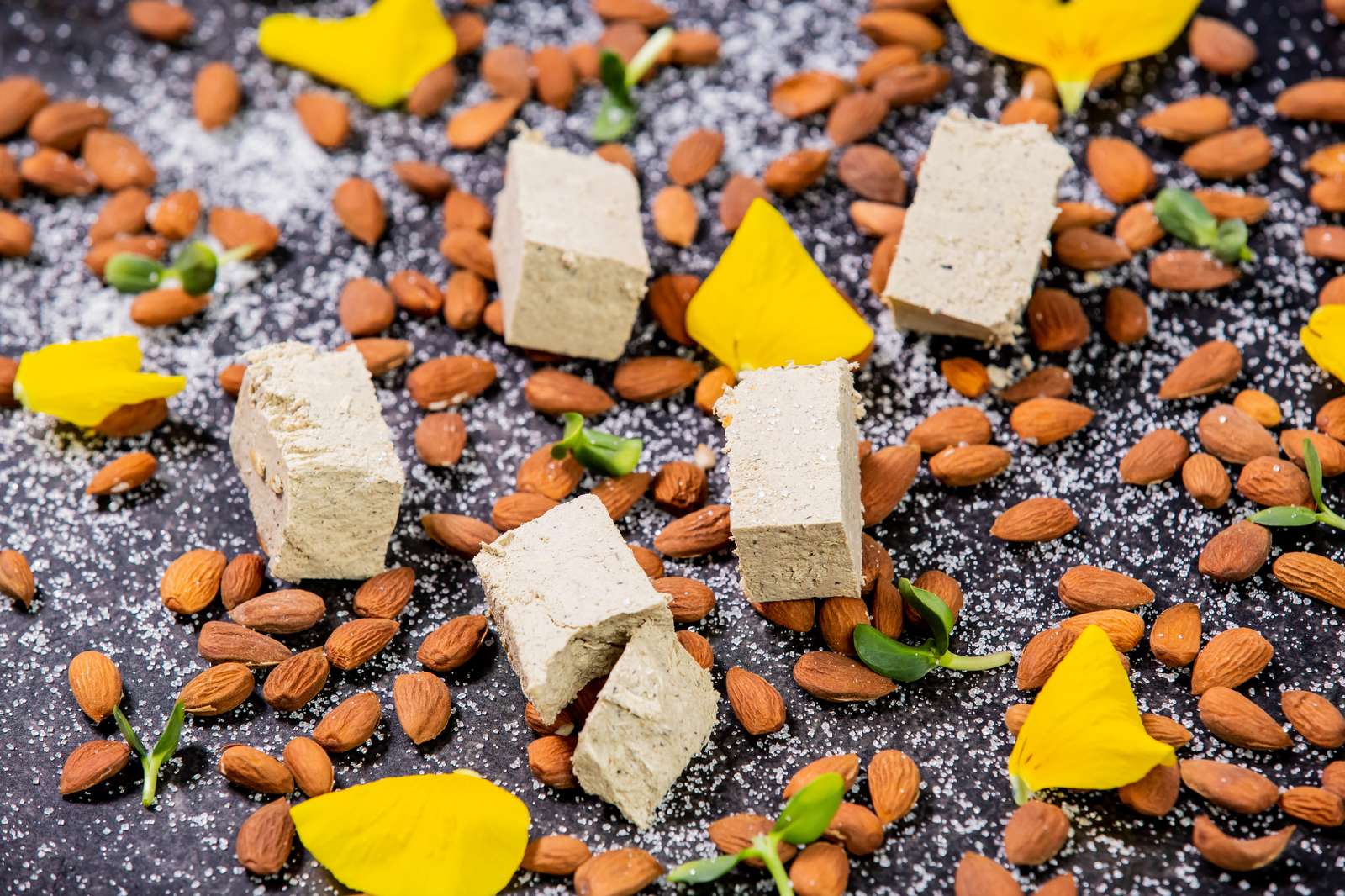
Halva is the national dessert, and a festive meal ends the same way everywhere: fruit, nuts, halva and another pot of tea. The word covers a whole family. There is halva of sesame, of sunflower seeds, of nuts, including pistachio, milk halva and halva made with flour. There is also pashmak, the “cotton” halva of fine sugar threads.
Ask people here which halva is best and you will hear three cities: Kokand, Samarkand and Bukhara.
- Kokand. The best-known in the country. In July 2026 the name “Kokand halva” was registered as a geographical indication, so the name and the traditional way of making it are protected. More on the city in our Kokand guide.
- Samarkand. Shaped more like a cake, decorated with nuts and dried fruit, and traditionally bought for weddings and engagements. It holds up well in the summer heat, which is why it sits on open stalls all day.
- Bukhara. The third name on every local list. On our food tour the dinner by Did you know? Bukhara's ponds were once its water supply Pools like Lyabi-Hauz, dug around 1620 and 46 × 36 m, were the city's main source of water. Most were filled in during the 1920s–30s because they spread disease; Lyabi-Hauz survived. Read more → ends with tea and halva.
Halva is sold by weight, and sellers expect you to taste before you buy.
Navat: sugar crystals for your tea
Navat is crystalline sugar, yellow or light brown, made from grape juice and sugar syrup. Threads are dipped into the thick syrup, and the crystals slowly grow around them. At home it is broken into pieces before it goes on the table.
Tea here is poured without sugar. The sweetness sits beside the bowl: a piece of navat to drop in or to eat on its own, dried fruit and nuts. Navat is light and hard, which makes it one of the easiest presents to carry home.
Parvarda and chak-chak
Parvarda is a pulled sugar candy, something between a caramel and a fudge. Sugar syrup with lemon is boiled down, pulled while still warm and elastic, cut into small pillows and dusted with flour. The old-style parvarda is white or milky; coloured versions are now common too.
On the government’s list of national sweets, parvarda, halva, pashmak, nishalda and navat all belong at the breakfast table, next to fruit or dried fruit.
Chak-chak is small pieces of unleavened dough, fried in oil, piled into a mould and set with warm honey. The Uzbek kind comes as half-round balls, as short noodles or as flakes. Wedding chak-chak is larger and often covered with sweets.
Sweets of the season: nishalda and sumalak
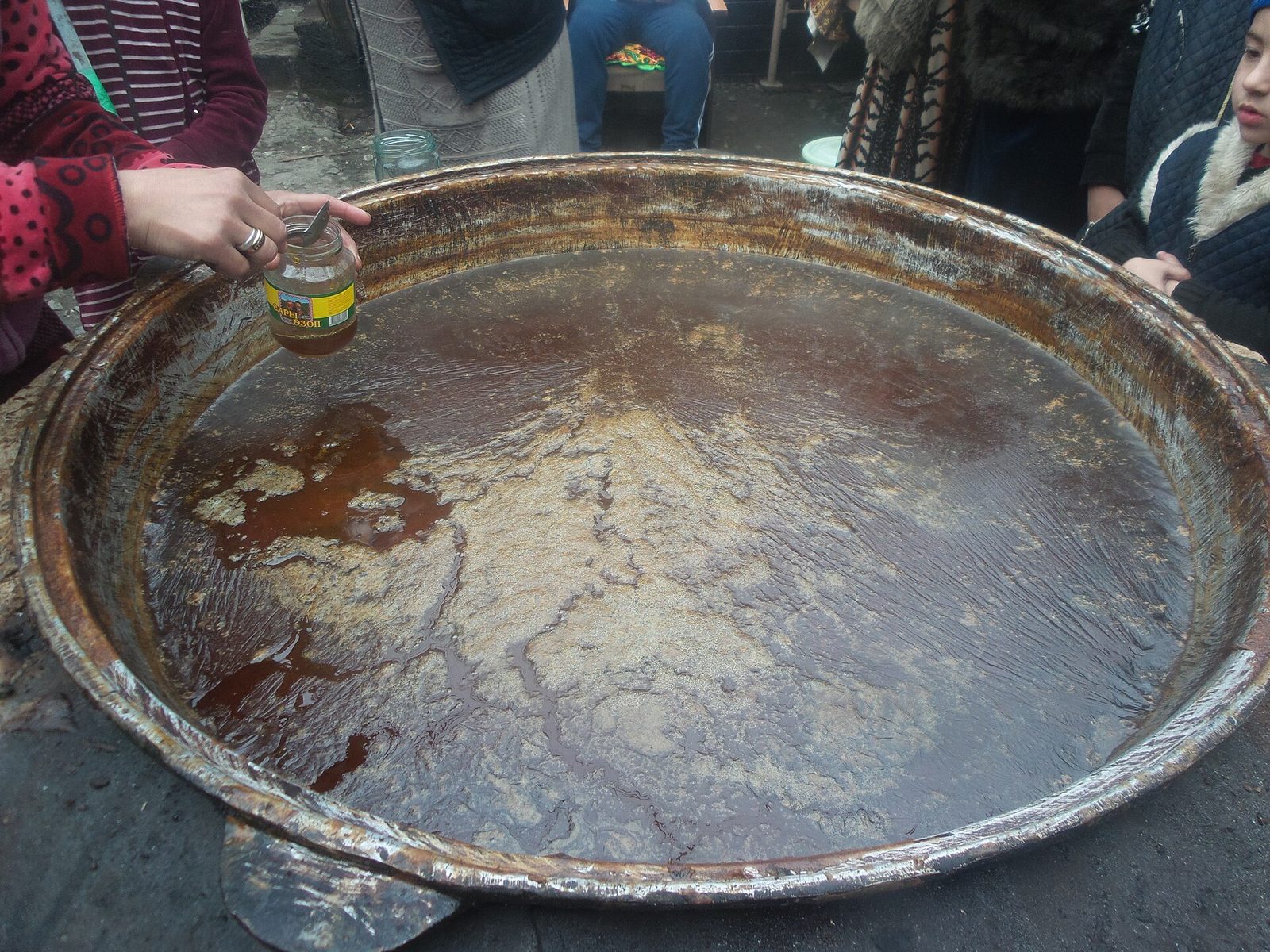
Nishalda is a white, airy cream of egg whites whipped with sugar and a decoction of soapwort root or liquorice. It is traditionally made during Ramadan and eaten at iftar, the evening meal that breaks the fast, with bread and hot green tea. At the bazaars it is sold straight from big pots. Ramadan moves with the moon: in 2027 it is expected to begin around 8 February, and our festival calendar has the dates. Nishalda is a sweet to eat here, not one to pack.
Sumalak is the sweet of Navruz, the spring new year on 21 March. Sprouted wheat is cooked in a big kazan through the night and stirred in turns, and the sweetness comes from the wheat itself, with no sugar added. The whole story is in our article on Navruz in Uzbekistan.
Dried fruit and nuts
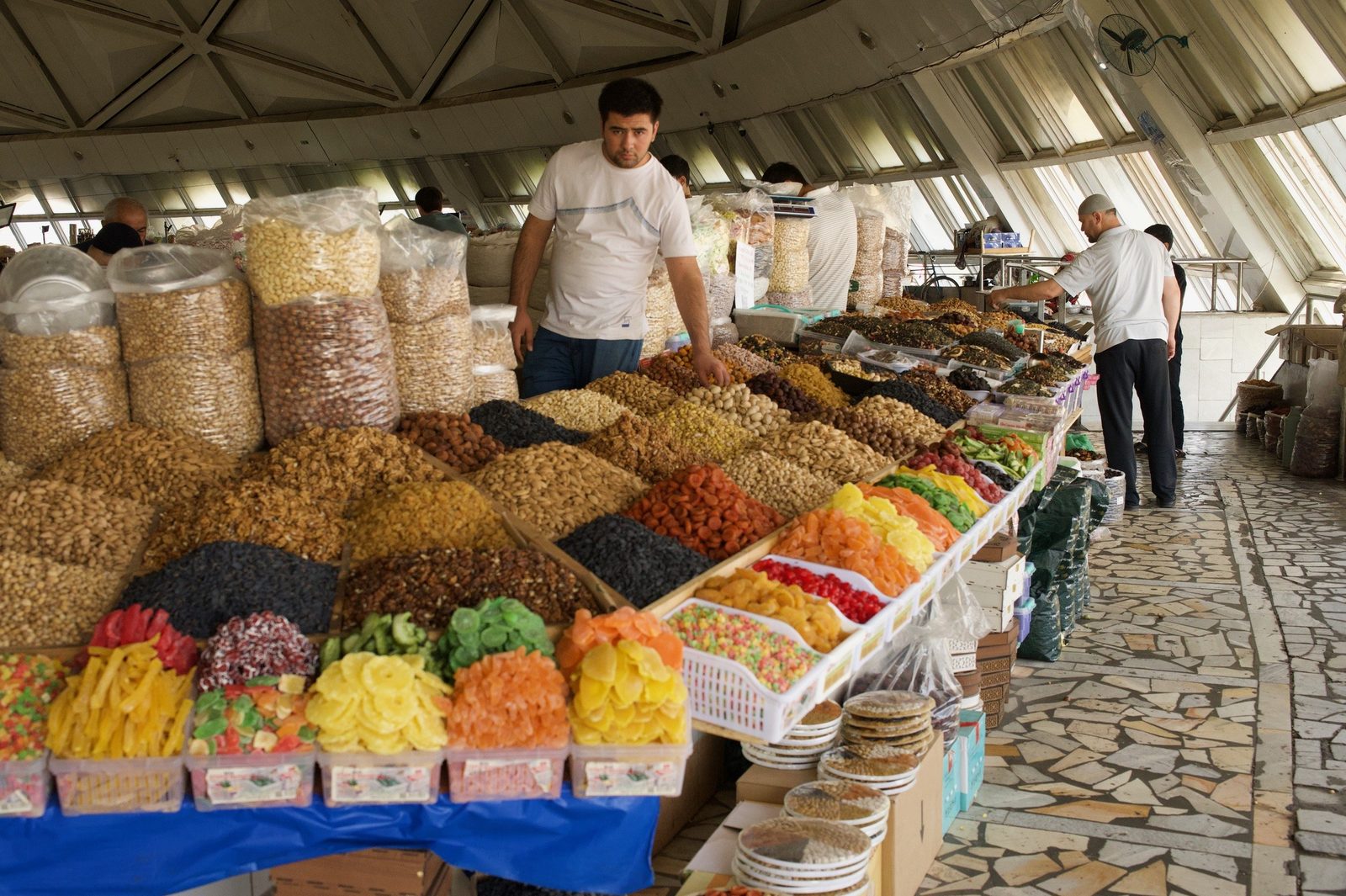
Dried apricots, raisins in several colours, figs and tart barberries, then walnuts, almonds and pistachios: this is the part of Uzbek sweets that is there all year, whatever the season. Sellers often hand you an apricot or a few nuts to try. Take it, and do not feel you must buy.
Bargaining is normal for dried fruit and nuts, and it is a calm, friendly conversation.
Melons and dried melon
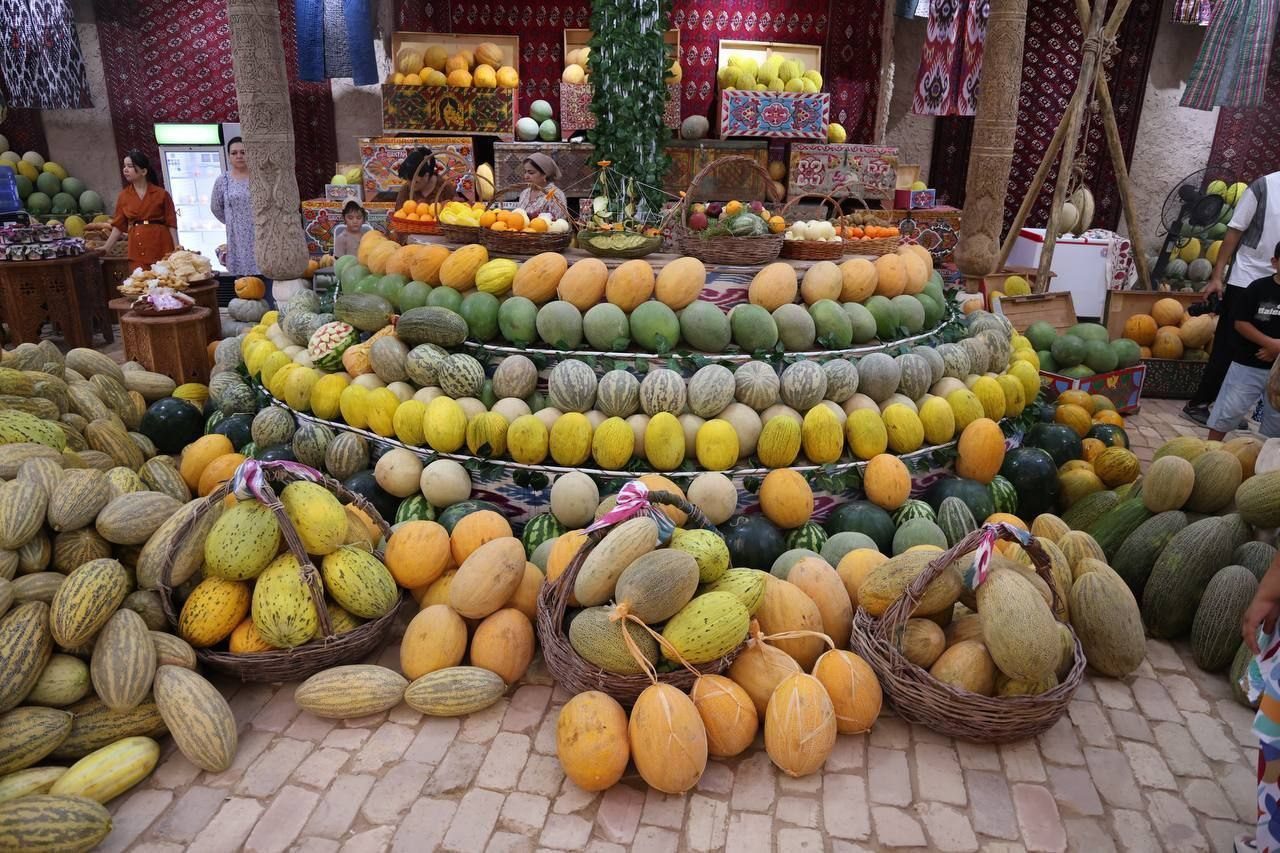
In the west of the country, the melon is the dessert. Khorezm melons are in season from June to October, and in August Khiva holds its Melon Festival, Qovun sayli; in 2026 it showed more than 100 varieties of Khorezm melons.
Further north, in Karakalpakstan, melons, watermelons and pumpkins are dried in the sun and eaten as sweets. A fresh melon will not survive the flight; dried melon will.
Where to buy Uzbek sweets, and how to get them home
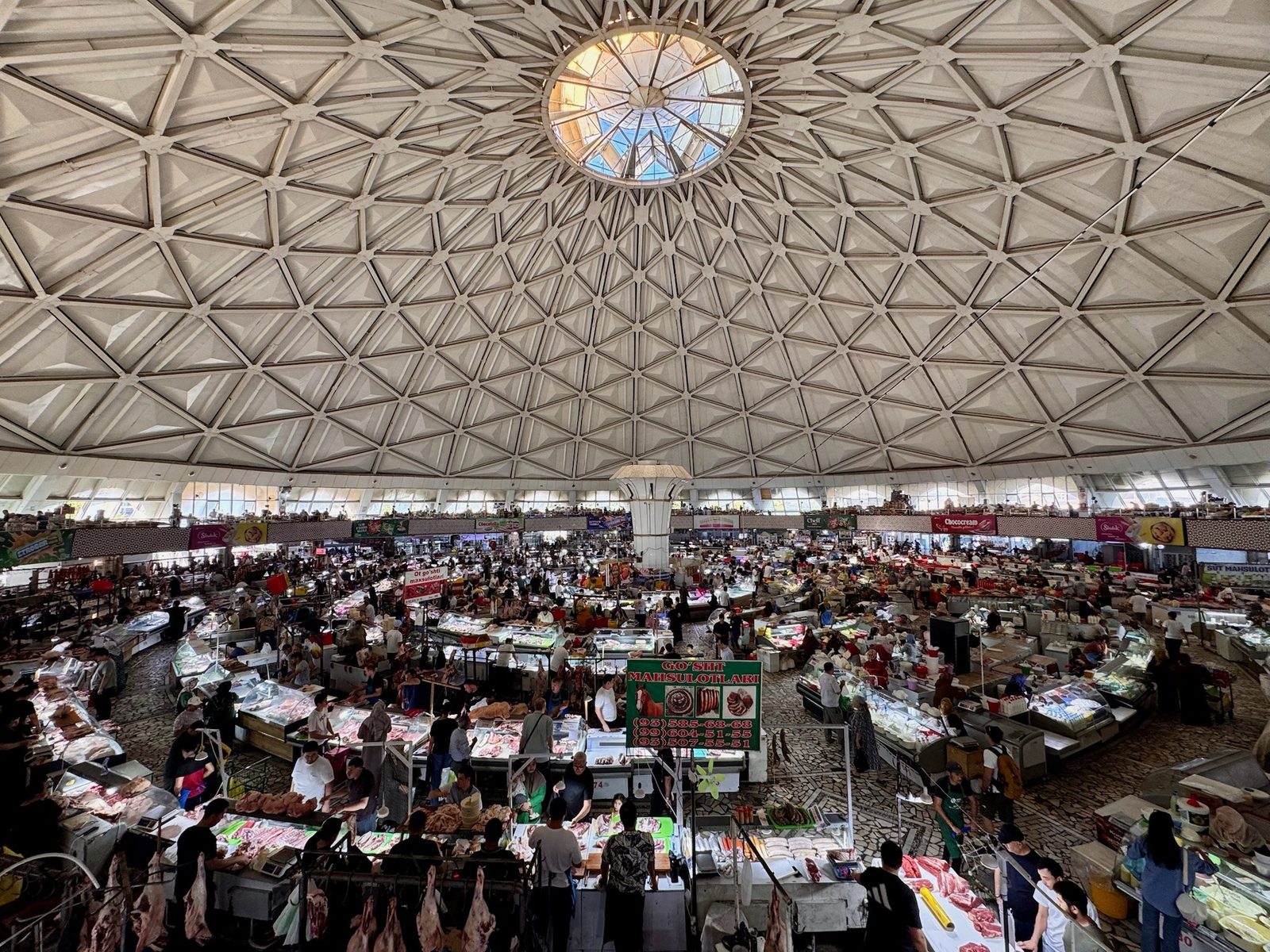
The bazaars are the place: Chorsu in Tashkent, Siab in Samarkand, the central bazaar in Bukhara. Come in the morning, taste, compare two or three stalls, then buy. Our guide to the bazaars of Uzbekistan explains how each one works, and in Samarkand a walking tour with a guide can include Siab.
For a whole trip built around food, Taste of the Road, our culinary tour, walks through Chorsu with its navat and dried fruit, the Bukhara bazaar with its sweets and Siab with its halva, and ends in Samarkand with a short tasting of Uzbek sweets.
Packing them:
- What travels well: navat, parvarda, dried fruit, nuts and halva.
- Halva: ask the seller to wrap it tightly in film and a box; in summer, keep it out of the sun until you pack.
- Chak-chak: buy it in a sealed box and put it in your checked bag.
- Nishalda and fresh melon: eat them here.
Leaving Uzbekistan, sweets for yourself and as presents are personal goods, and our page on registration and customs covers the limits. The rules that matter more are those of your home country: Australia, for example, asks you to declare dried fruit and nuts on arrival. More gift ideas, from ceramics to ,Did you know? One suzani was often stitched by several women at once A family member or a pattern drawer, the kalamkash, drew the design across strips of cotton. The strips went to different women of the family or neighbourhood, who embroidered them at the same time; sewn back together, they show slightly mismatched seams. Read more → are in what to buy in Uzbekistan.
Vegetarian, vegan or gluten-free?
We will be honest: most Uzbek sweets are sugar and flour. Chak-chak is fried dough, parvarda is dusted with flour, pashmak and some halva are made with flour, and sumalak is wheat. Nishalda is made of egg whites, and milk halva contains milk.
Navat is sugar and grape juice. For a gluten-free or vegan treat, dried fruit and nuts are the safest choice; for anything else, ask what is inside before you buy, because recipes change from stall to stall. More on eating without meat is in our guide for vegetarians in Uzbekistan.
In short
- Halva is the national dessert; Kokand, Samarkand and Bukhara are the three names to know, and “Kokand halva” has been a geographical indication since July 2026.
- Navat, sugar crystals grown on threads, goes into tea instead of sugar and travels well.
- Nishalda belongs to Ramadan and sumalak to Navruz: taste them in season, on the spot.
- Dried fruit and nuts are there all year, and in summer the melon is dessert.
- Buy at the bazaar, taste first, and check your home country’s rules before you pack food.