Places in this article: Tashkent
Vegetarian in Uzbekistan: what to eat and how to order
The most useful Uzbek word for a vegetarian is short: go'shtsiz, “without meat”. Go'sht means meat, and -siz means “without”. Say it at a samsa stall or in a A teahouse: green tea, plov and conversation on wide wooden beds called topchan. and people understand at once. Whether there is a meatless option is another question, and the honest answer is: more often than you might fear, but not everywhere.
We live in Tashkent and plan trips for travellers with all kinds of diets. Here is how a vegetarian in Uzbekistan can eat well: which dishes to look for, what to ask, what to buy at the bazaar, and what is harder for vegans.
Honestly: this is a meat cuisine
Uzbek cooking is built around meat, and mutton is the meat people love most. ,Rice cooked in a kazan with carrots, onions and meat: the dish of every Uzbek celebration. Each region cooks it its own way. the national dish, is rice, carrots, onions and chunks of meat, and it is traditionally fried in the fat of the fat-tailed sheep. Shurpa is a soup of large pieces of fatty meat and vegetables. Lagman, the noodles, comes with meat too, and many soups start from a meat broth even when you cannot see any meat in the bowl.
So the rule is simple: a dish that looks like vegetables is not always vegetarian. Ask about the broth and the fat, not only about the meat. In plov centres plov is cooked in the morning in one big pot, with meat; there is no point asking them for a version without it.
Samsa, manti and the green dishes
Samsa, the pastry baked on the wall of a clay oven, is usually filled with meat. But look for the other kinds: samsa with pumpkin, qovoqli somsa, when pumpkin is in season, and samsa with potatoes or spinach. In spring there is ko'k somsa, filled with fresh greens, and ko'k chuchvara, small dumplings with a filling of herbs: these are among the dishes of Navruz, the spring new year on 21 March. Manti, the large steamed dumplings, also come with pumpkin and are served with sour cream.
Two regional dishes are worth a detour if you eat eggs. In Khiva, tukhum-barak is thin dough filled with beaten egg and boiled; it is a registered geographical indication of Khorezm. In Nukus, mayek borek is pastry with beaten egg and melted butter; more about the food of the far west is in our guide to Karakalpakstan.
Bread, salads and dairy
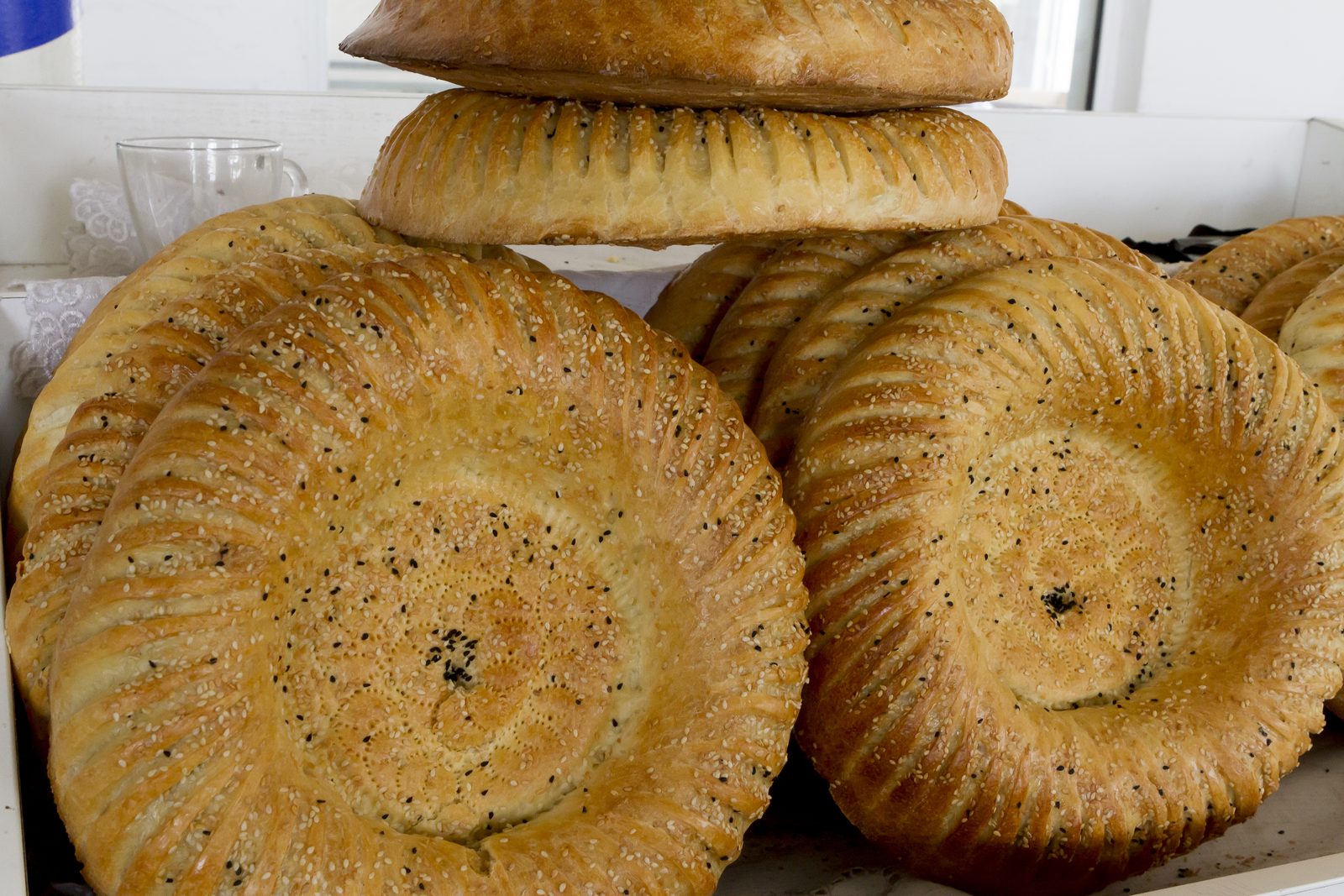
Non, the round flatbread, is on every table, at every meal. Each city bakes its own, and the story of the tandir oven and the stamped centre is in our article on Uzbek bread. Some festive breads are richer: patir from Andijan is made with milk and butter.
Salads come before the hot dishes, and several are vegetarian by nature. Achchiq-chuchuk is sliced tomato and onion. Others are made of radish with pomegranate seeds or of cabbage with sweet pepper. Some salads are dressed with sour cream, others with oil.
Dairy is everywhere. Qatiq is a soured milk, suzma a thick strained yogurt, and qaymoq a rich cream that is eaten at breakfast with hot bread and honey. At the bazaar you will meet qurt, small salted balls of dried soured milk. With bread, a salad and a bowl of qatiq you already have a good lunch.
Soups and hot dishes: what to ask
Mastava, the rice soup with vegetables, shows the whole problem in one bowl. It can be made from rice and vegetables only, but it is customarily cooked in meat broth, and it is often served with qatiq. So do not order it blind: ask whether it is cooked on meat broth. The same goes for vegetable stews and for any soup.
In restaurants in Tashkent, Samarkand and Bukhara the menu is longer than in a roadside teahouse, and the cook can often make something without meat if you ask. In a small café the choice may be bread, salads and samsa, and that is a fine meal too.
Fruit, nuts and sweets at the bazaar
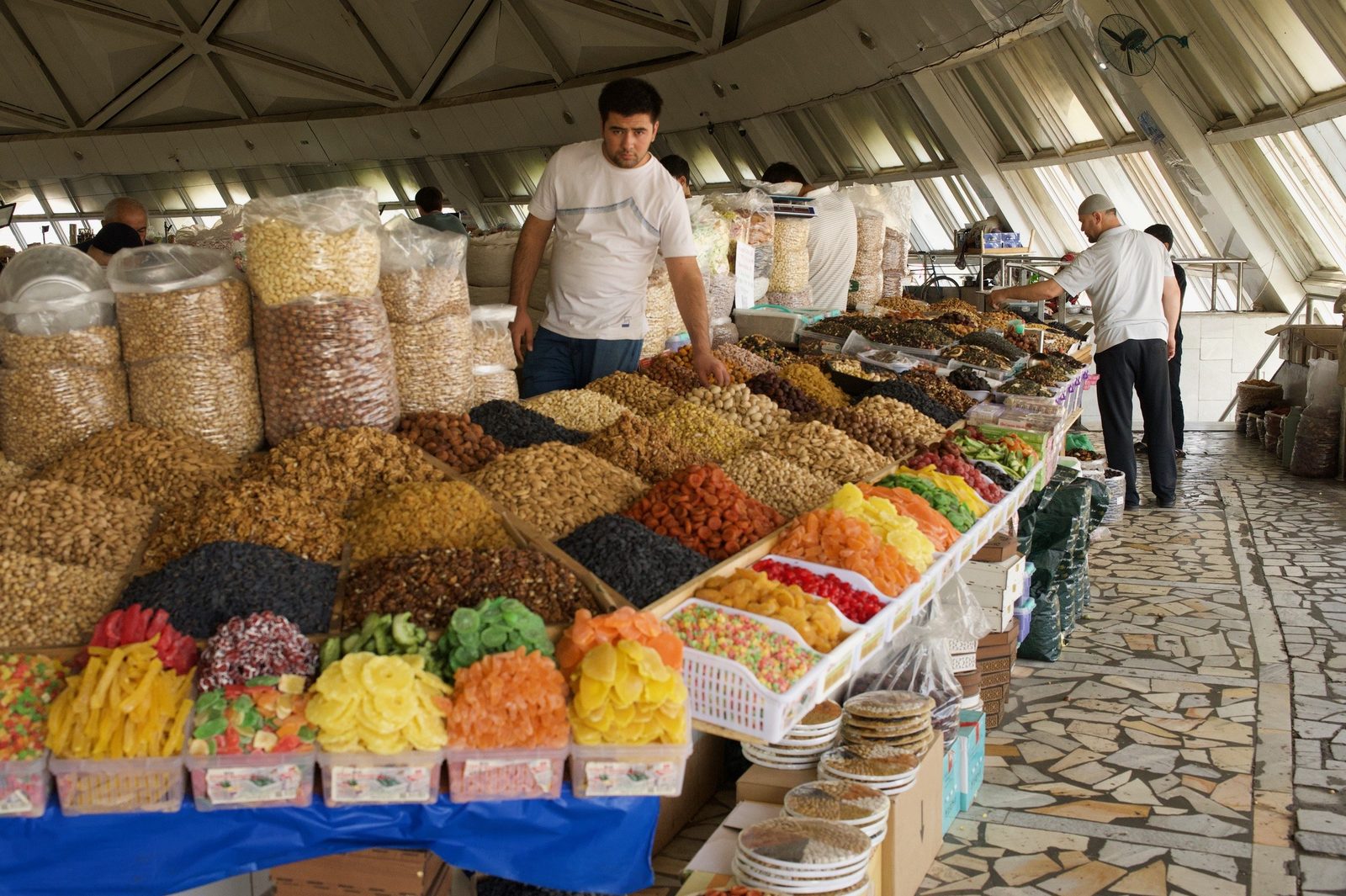
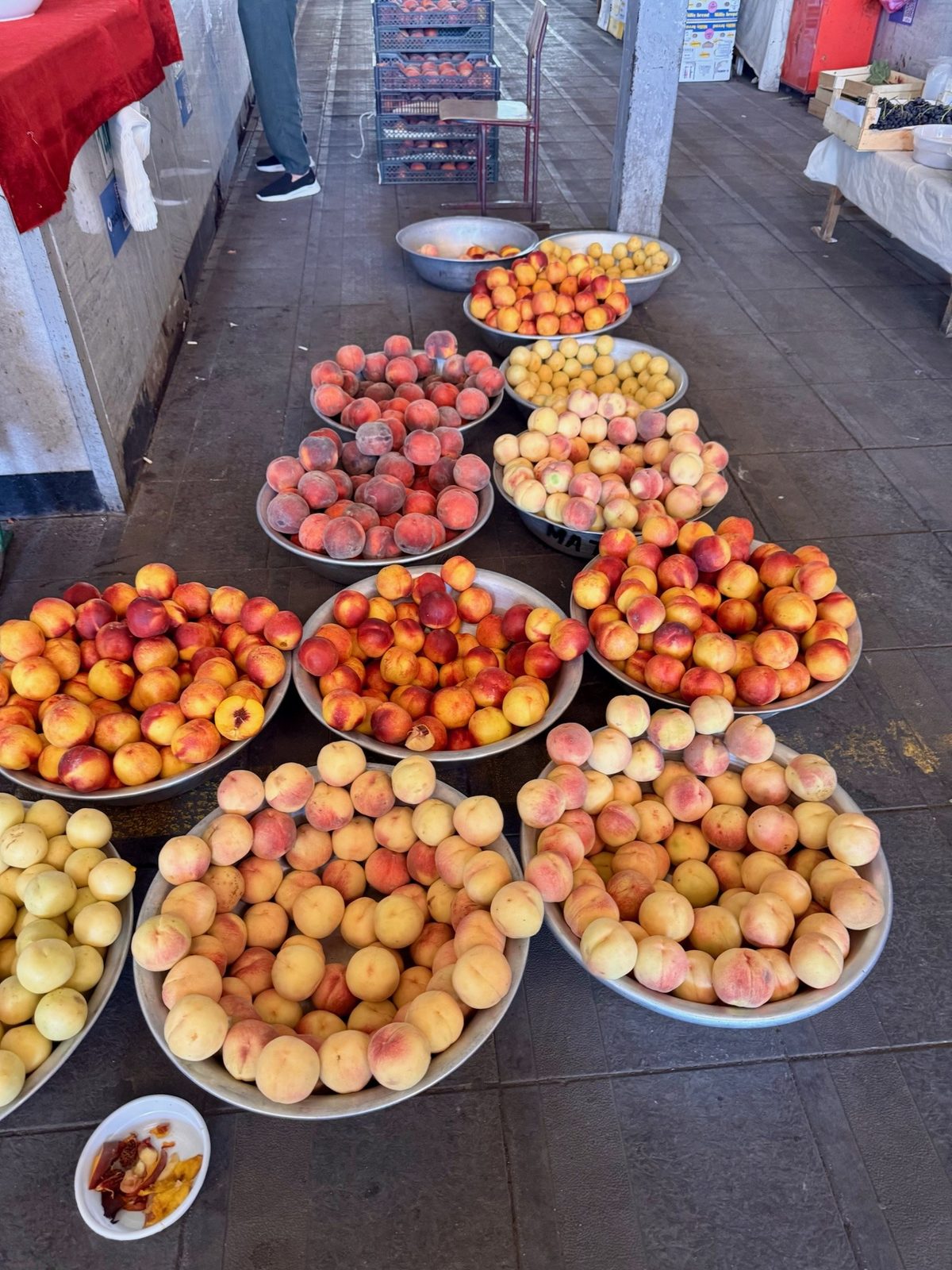
The bazaar is where a vegetarian in Uzbekistan eats best. Melons and watermelons are at their peak in July and August, grapes come from mid-August, pomegranates and persimmons in autumn; all year round there are dried apricots, raisins, almonds and pistachios, and sellers expect you to taste before you buy. What to buy and how the big markets work is in bazaars of Uzbekistan.
For sweets, look for halva, the national dessert. A festive meal here ends the same way everywhere: fruit, nuts, halva and another pot of tea. In March, at Navruz, try sumalak: sprouted wheat cooked with flour and water through the night into a sweet brown paste, with no sugar added. How the holiday is celebrated is in Navruz in Uzbekistan.
Words that help you order
In cities, many people speak Russian, and a menu in Russian is easier to find than one in Uzbek. These phrases cover most situations:
| In English | In Uzbek | In Russian |
|---|---|---|
| Without meat | Go'shtsiz | Bez myasa |
| I don't eat meat | Men go'sht yemayman | Ya ne yem myaso |
| What do you have without meat? | Go'shtsiz nima bor? | Chto u vas yest bez myasa? |
| Is there meat in this? | Bunda go'sht bormi? | Zdes yest myaso? |
| Is it made with meat broth? | — | Eto na myasnom bulone? |
| I don't eat dairy or eggs either | Sut mahsulotlari va tuxum ham yemayman | Ya ne yem molochnoye i yaytsa |
The word vegetarian itself is understood in Russian, vegetarianets, but people take it in different ways. A plain “without meat” plus a question about the broth works better.
For vegans: harder, but possible
We will not pretend otherwise: for vegans Uzbekistan is harder. Dairy is part of many dishes, from the qatiq in mastava to the sour cream with manti; eggs go into barak and borek; butter goes into rich breads and pastries, and animal fat into much of the cooking. Even pastry with a vegetable filling may have butter or fat in the dough.
What works: salads with oil, fresh and dried fruit, nuts, sumalak in spring, and a cook who knows what you need. Larger restaurants in Tashkent and the main tourist cities give you more choice than small towns and roadside cafés. Plan a little more time for meals, and keep fruit and nuts from the bazaar for the road.
How we take your diet into account
Tell us about your diet when you book, as precisely as you can: vegetarian, no fish, no eggs, vegan. We take it into account when we choose the restaurants, cafés and teahouses on your route. Your guide orders with you in Uzbek or Russian; on our tours the guide in your language is included in the price.
The same goes for dinner in a home: at our dinner with a local family in Bukhara and the family dinner in Khiva we pass your request on to the hosts in advance. And if anything goes wrong on the way, our office in Tashkent is in touch 24/7. Regional dishes for everyone else at your table are in our guide to Uzbek food by city and in plov in Uzbekistan.
In short
- Uzbek cooking is built on meat: ask about the broth and the fat, not only about the meat.
- Look for samsa and manti with pumpkin, greens or potatoes, the green dishes of spring, and tukhum-barak in Khiva.
- Bread, salads, qatiq, suzma and qaymoq make a good meal on their own.
- The key word is go'shtsiz, “without meat”; in Russian, “bez myasa”.
- For vegans it is harder; tell us about your diet in advance and we will take it into account when we choose where you eat.
© Photos
- Uzbek bread, obi non — Benjamin Goetzinger / Wikimedia Commons · CC BY-SA 4.0