
 Deutsch
 English
 Español
 Français
 Italiano
 Polski
 Português
 Suomi
 Svenska
 Türkçe
 Русский
 עברית
 한국어
 中文
 日本語
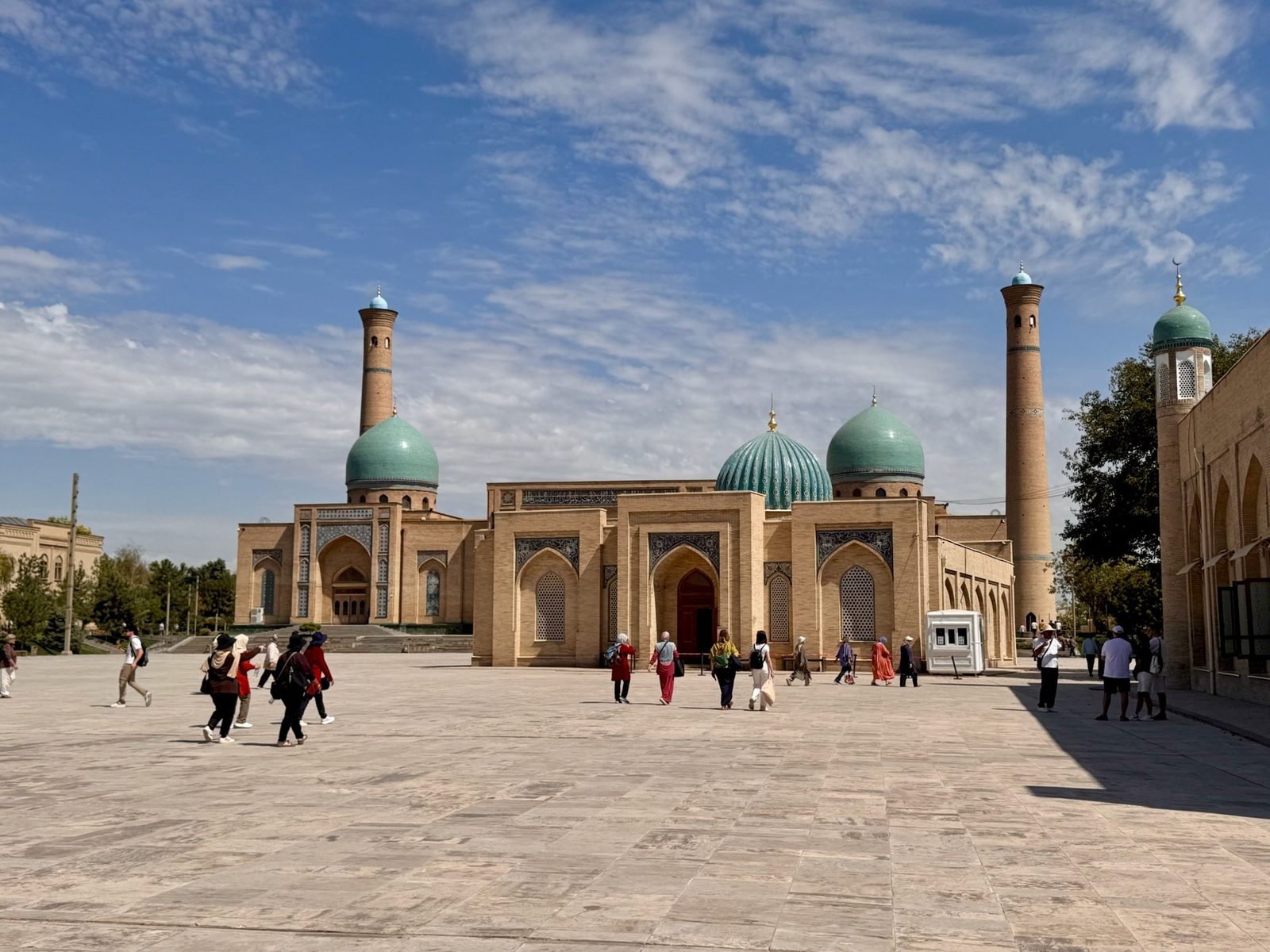
Places in this article: Tashkent
Uzbek Cuisine: 10 Dishes Every Traveler Should Actually Try
On your first day in Uzbekistan someone will put a flatbread on the table, tear it by hand and pass the pieces round before anything else arrives. That is the start of almost every meal here, and it tells you how the cuisine works: bread first, tea always, and a short list of dishes that every family cooks a little differently.
We are a tour operator in Tashkent, and food is what our guests ask about most after the .Samarkand's main square, framed by three madrasahs: Ulugh Beg (15th century), Sher-Dor and Tilla-Kari (both 17th century). Read more → Below are the ten dishes you will meet on any trip, roughly in the order you will meet them, with what to look for and where each one is at its best. This is the list of dishes; for what to eat in each city, from Tashkent naryn to Khorezm green noodles, see our companion guide to Uzbek food by city.
1. Plov (osh)
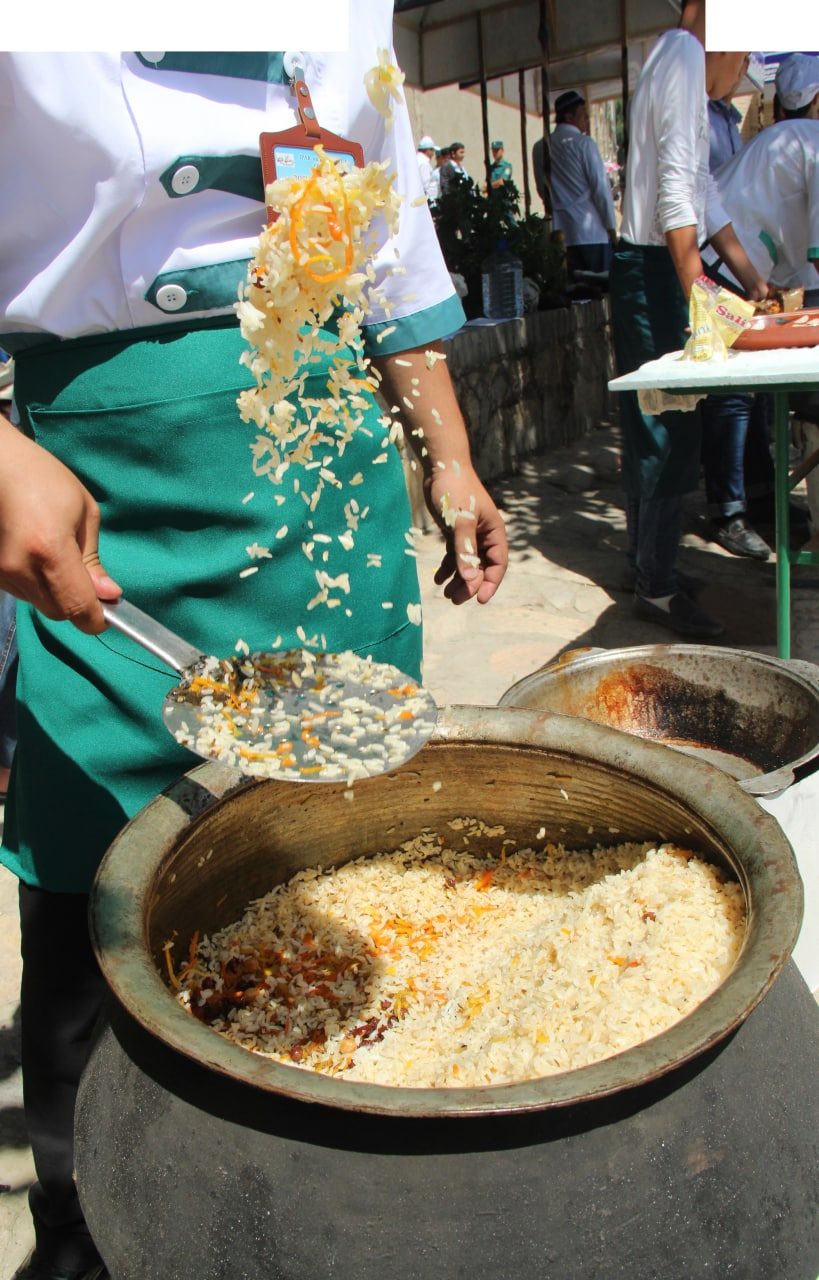
Rice, meat, carrots and onions, cooked in a wide cast-iron kazan over an open fire. The order never changes: the meat and onions are fried first, then the carrots, then the rice goes on top and steams without being stirred. The cook who specialises in it is called an oshpaz. In 2016 UNESCO added the culture and tradition of Rice cooked in a kazan with carrots, onions and meat: the dish of every Uzbek celebration. Each region cooks it its own way. to its list of the intangible heritage of humanity.
Plov is a lunch dish, not a dinner one: the big plov centres cook in the morning and are often sold out by mid-afternoon. At weddings it is served even earlier, as the morning plov, between about 6 and 9 a.m. Every region has its own style; our article on plov in Uzbekistan explains the differences and where to learn to cook it.
2. Lagman
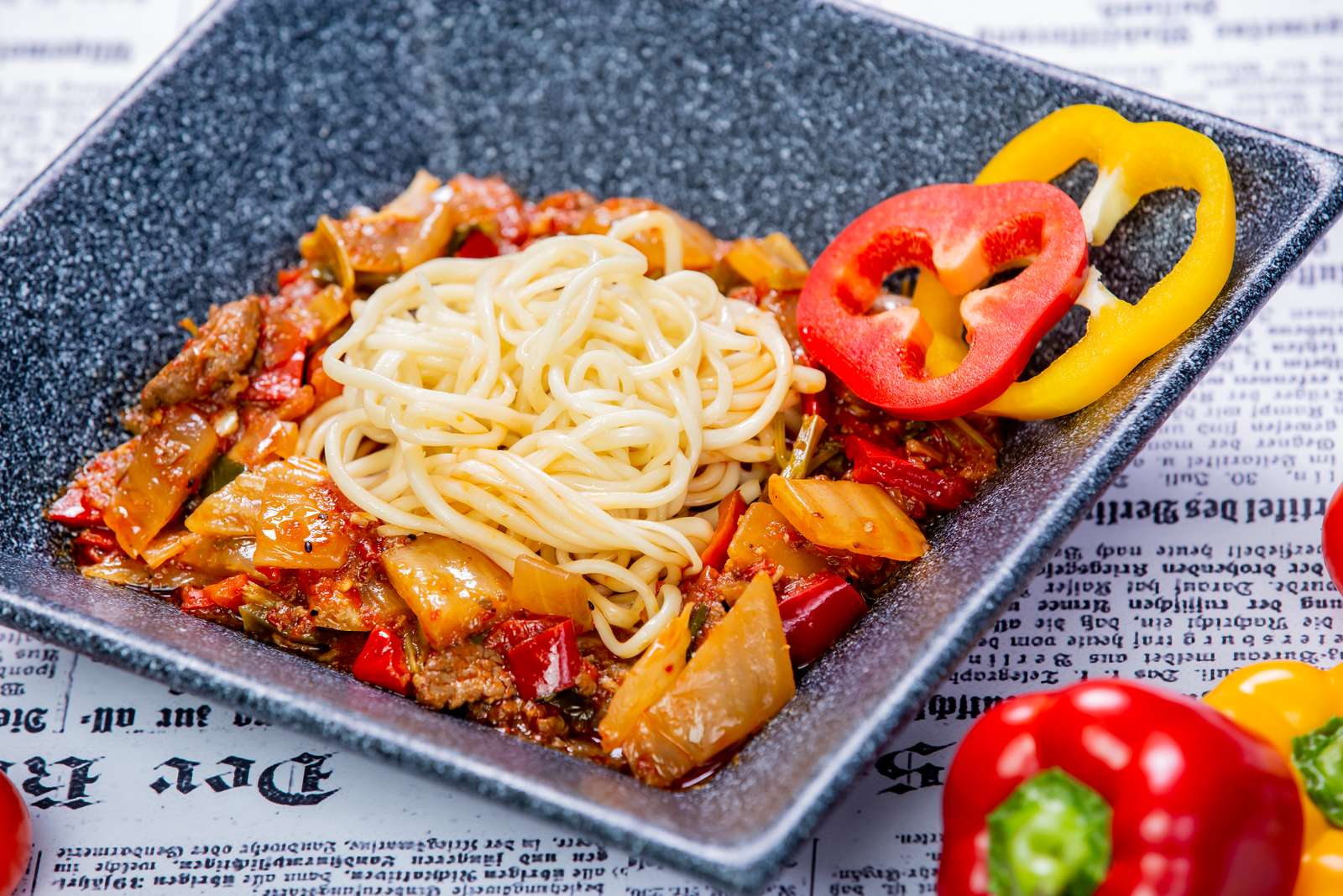
Thick hand-pulled noodles with a sauce of meat, peppers, tomatoes and garlic, served either as a soup or as a drier main course. The noodles are stretched by hand, not cut, and in a good kitchen you can watch the cook pull them. If the menu offers both kinds, try the soup in the cooler months and the fried version, without broth, in summer.
3. Manti
Large steamed dumplings, usually filled with chopped lamb or beef and onion, and in autumn often with pumpkin. They cook in a tall steamer of several tiers and come to the table with sour cream or a little melted butter. Eat them with your hands, carefully: the first bite releases hot juice. Pumpkin manti are also one of the best choices for vegetarians, as our guide to vegetarian food in Uzbekistan explains.
4. Shashlik
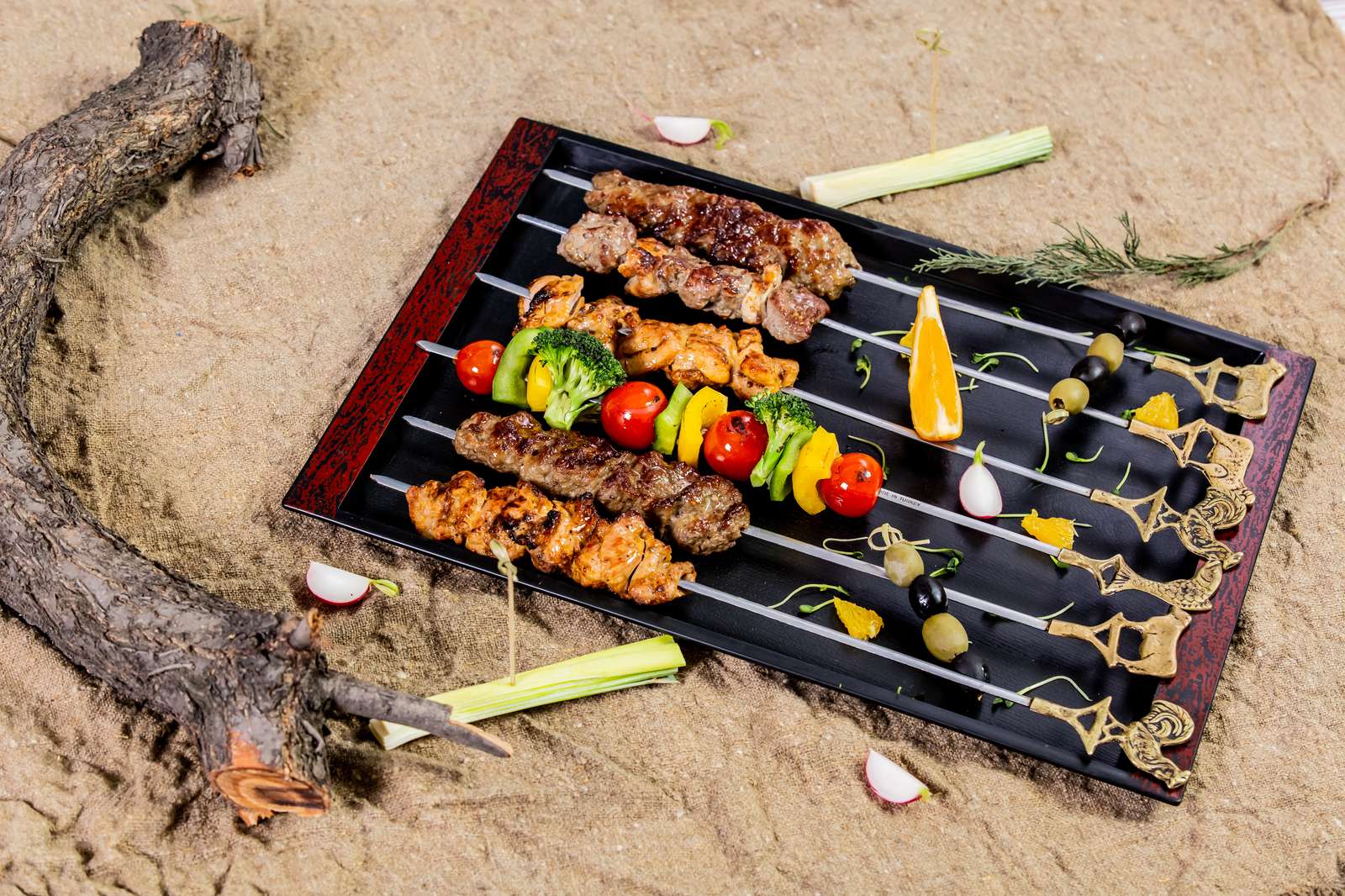
Meat grilled on long skewers over charcoal: lamb, beef, chicken, or minced lamb shaped around the skewer. You will smell a shashlik grill before you see it. It is served with raw onion, sometimes sprinkled with vinegar, and a fresh flatbread. The town of Gijduvan near Bukhara is so known for its shashlik that since 2023 «Gijduvan shashlik» has been a registered geographical indication.
5. Somsa
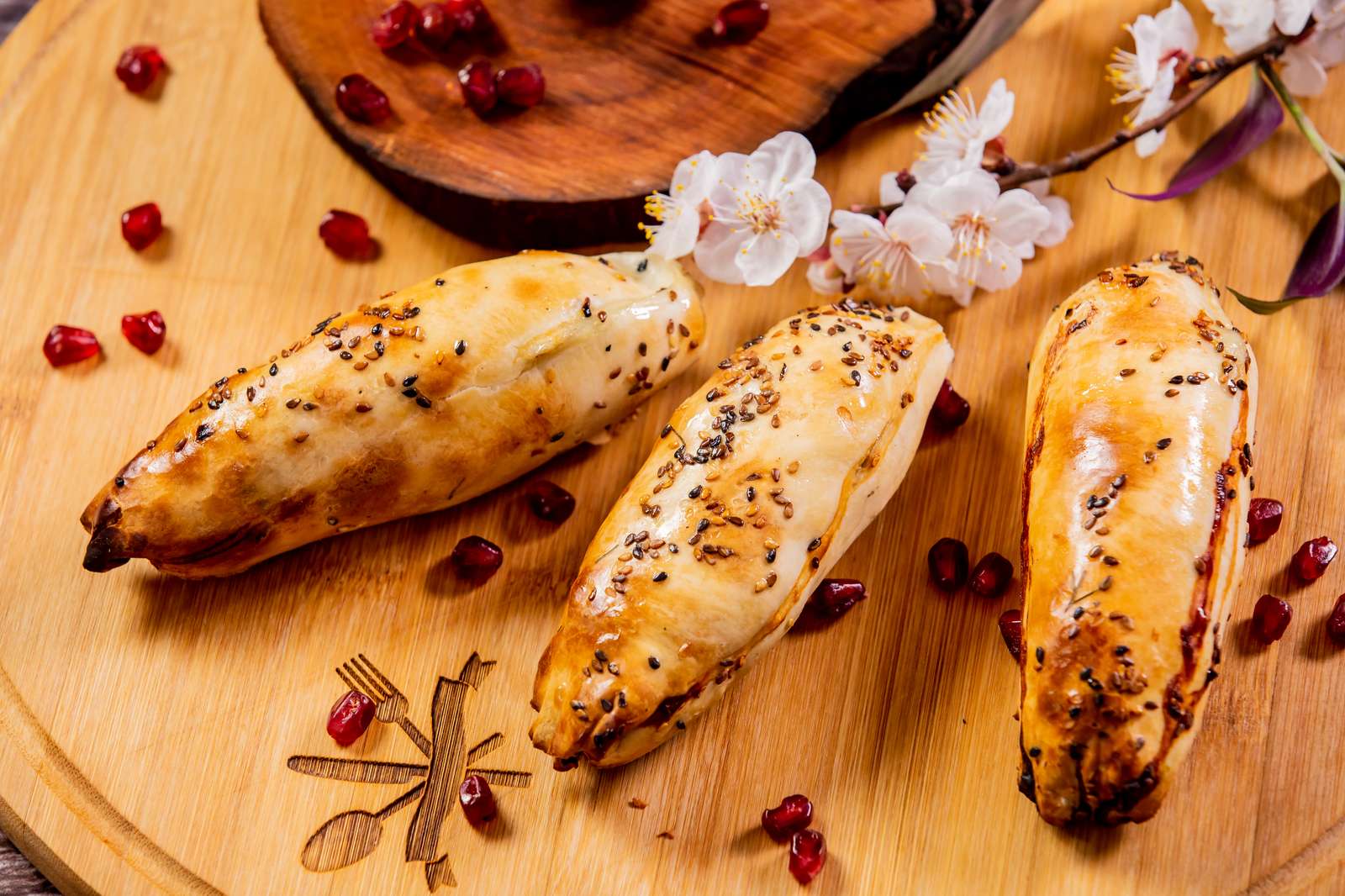
A pastry baked, not fried, on the inside wall of a clay tandir oven. The classic filling is lamb and onion; in season you will find pumpkin, potato or spring greens. A good somsa is flaky outside and juicy inside without the filling leaking through, which is the real test of a tandir baker. Every region has its own shape, and the somsa of Sukok, a village in the mountains near Tashkent, became a geographical indication in 2025.
6. Non, the bread
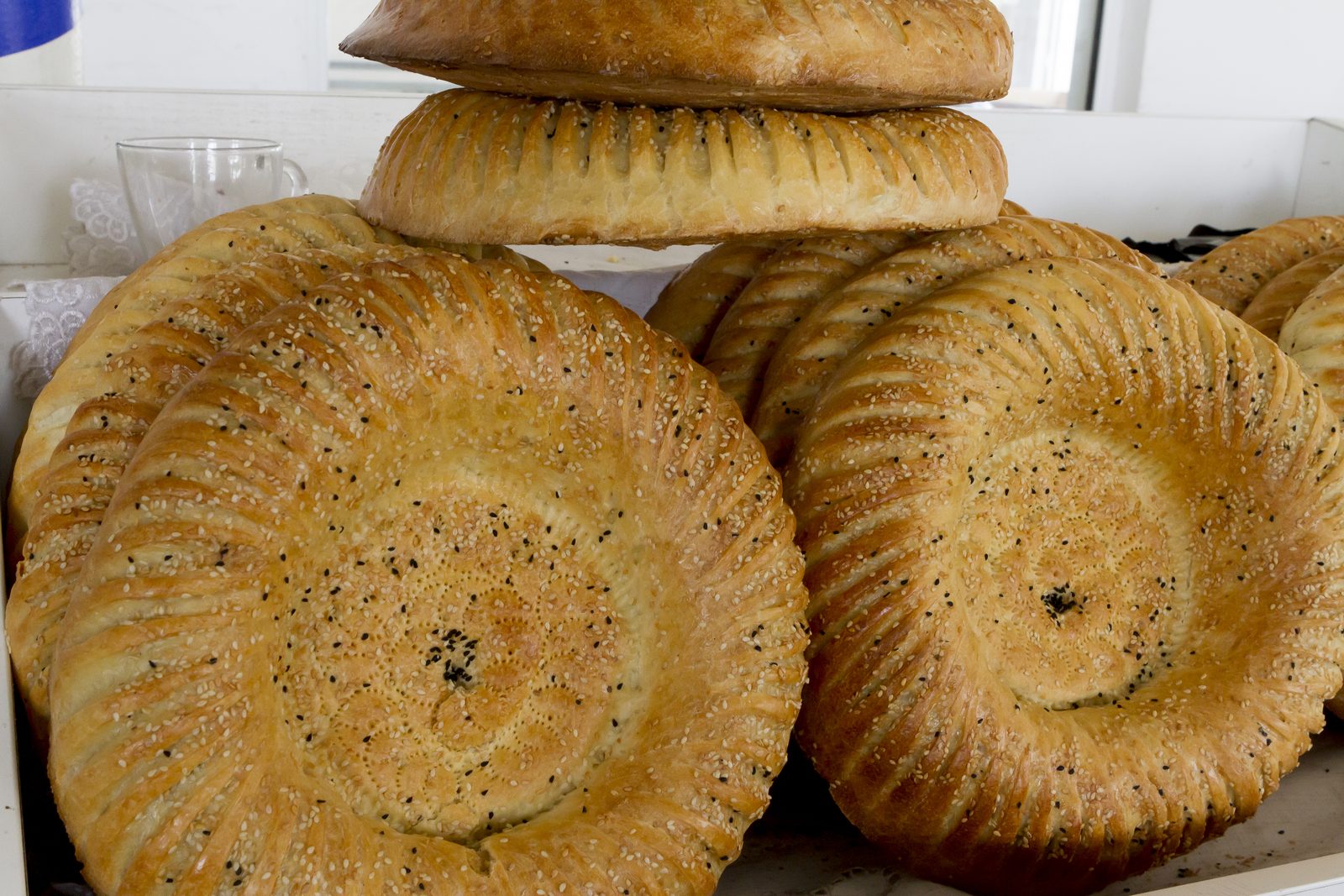
Round flatbread baked in the tandir, thick at the rim and stamped in the centre with a pattern made by a ,Did you know? The pattern on Uzbek bread is the baker’s signature The flat centre of non is pressed with a chekich, a stamp often made of nails, so it doesn’t rise and steam can escape. Bakers use their patterns as a signature. In Tashkent the radial lines on the rim come from a second press often made of bicycle spokes. Read more → a tool of pins that keeps the middle flat. Non is served with the decorated side up and broken by hand rather than cut with a knife, and it is treated with real respect at the table. Samarkand non is the most famous: since February 2025 it has been a geographical indication. How bread is baked and the customs around it are in our article on Uzbek bread.
7. Shurpa
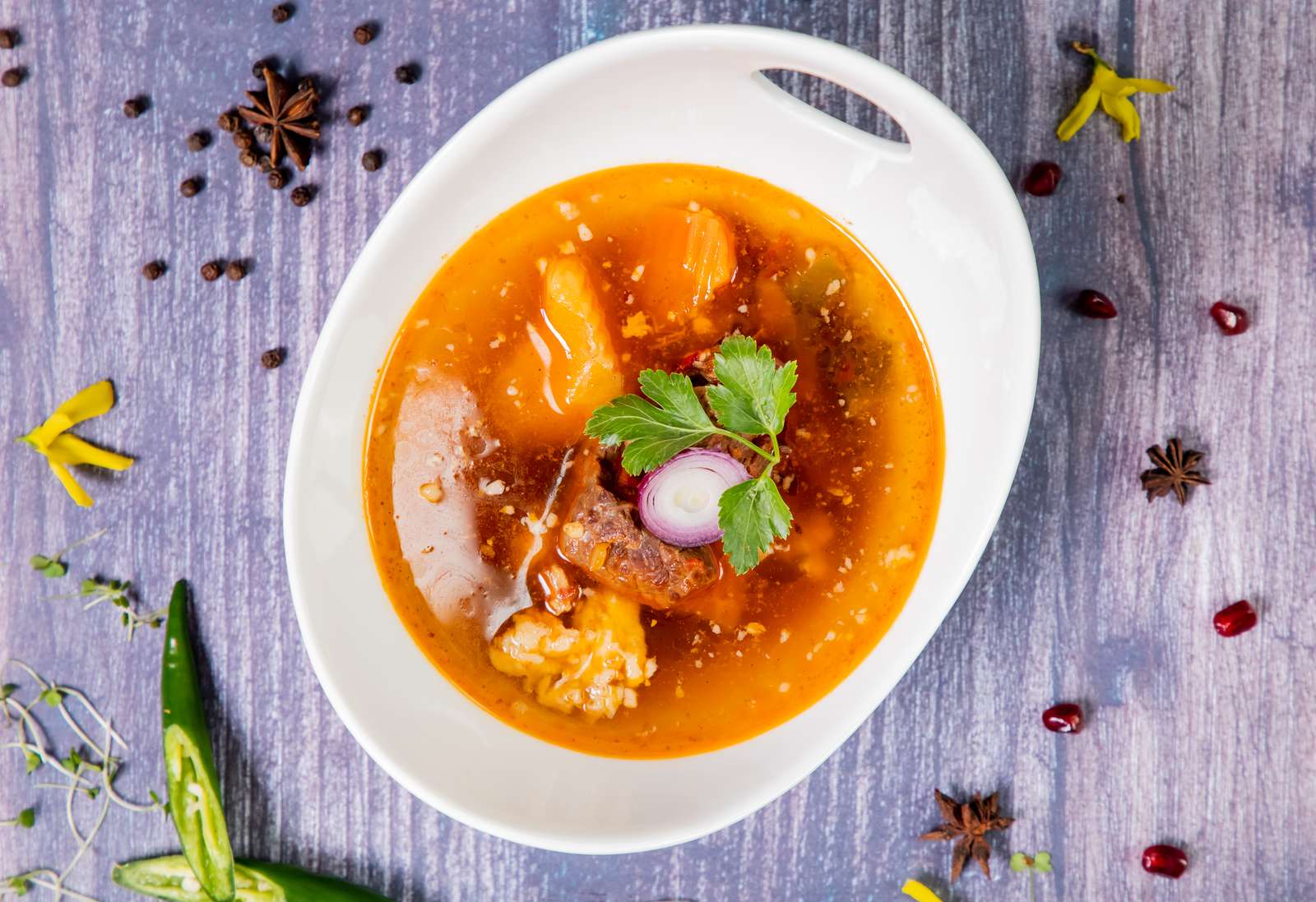
A soup of large pieces of meat, usually mutton, with whole vegetables: potato, carrot, onion, sometimes chickpeas. It cooks slowly, so the broth stays clear while the meat turns tender. It is the dish most likely to start a big meal, and the one we recommend on a cold evening or after a long day on the road.
8. Dimlama
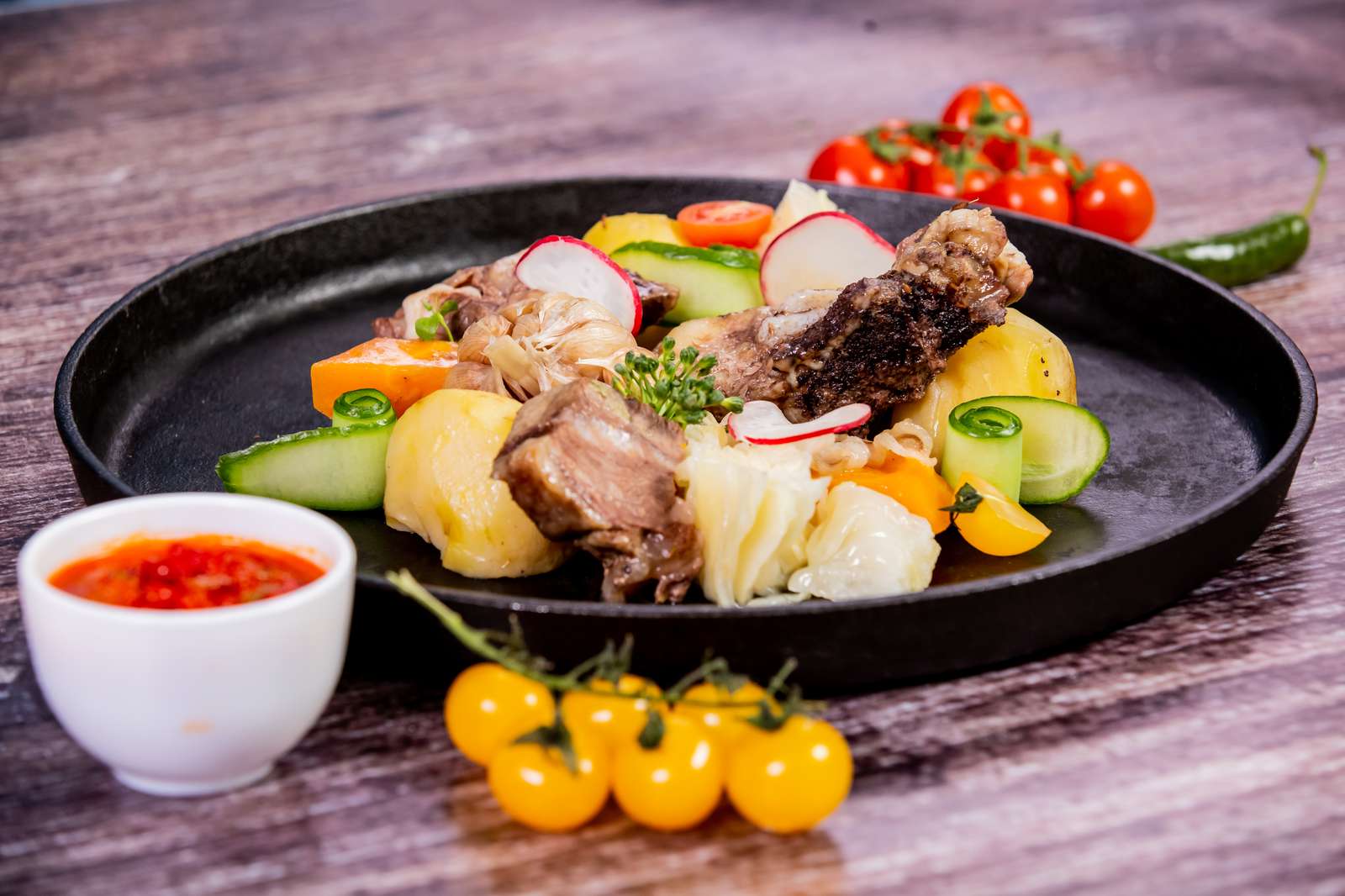
Layers of meat, potatoes, cabbage, carrots, peppers and tomatoes, cooked slowly in a closed pot in their own juices. It is a home dish more than a restaurant one, built around whatever vegetables the season brings, which makes it one of the best things to eat if you are invited into a family kitchen, for example at a dinner with a local family in Bukhara.
9. Chuchvara
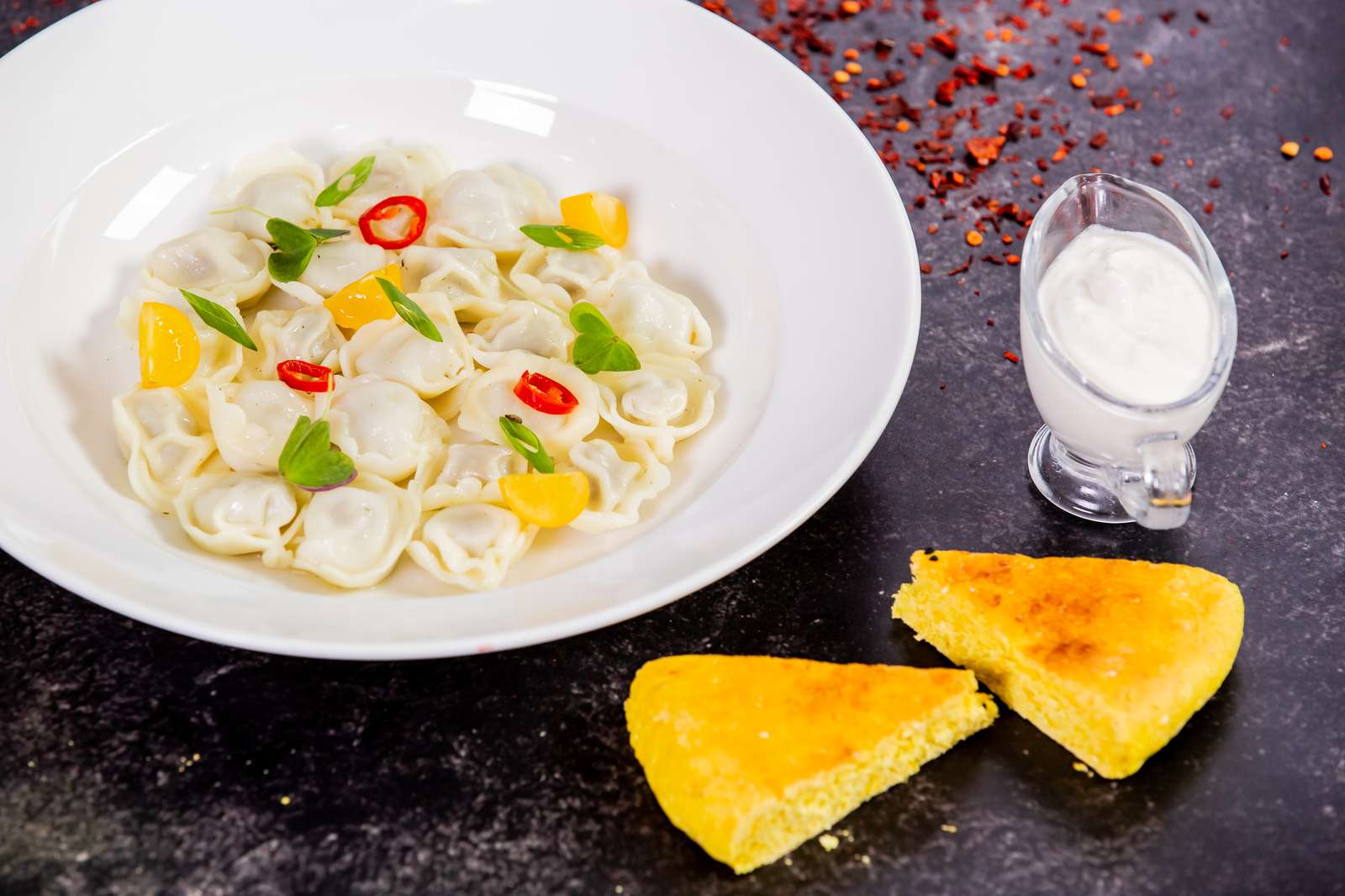
Small dumplings of thin dough with minced meat, much smaller than manti, boiled and served in broth or drained with sour cream or yoghurt. Folding them takes patience, so chuchvara are a dish of family kitchens and teahouses that make them by hand. In spring look for the green version filled with herbs, one of the dishes of Navruz.
10. Halva and nisholda
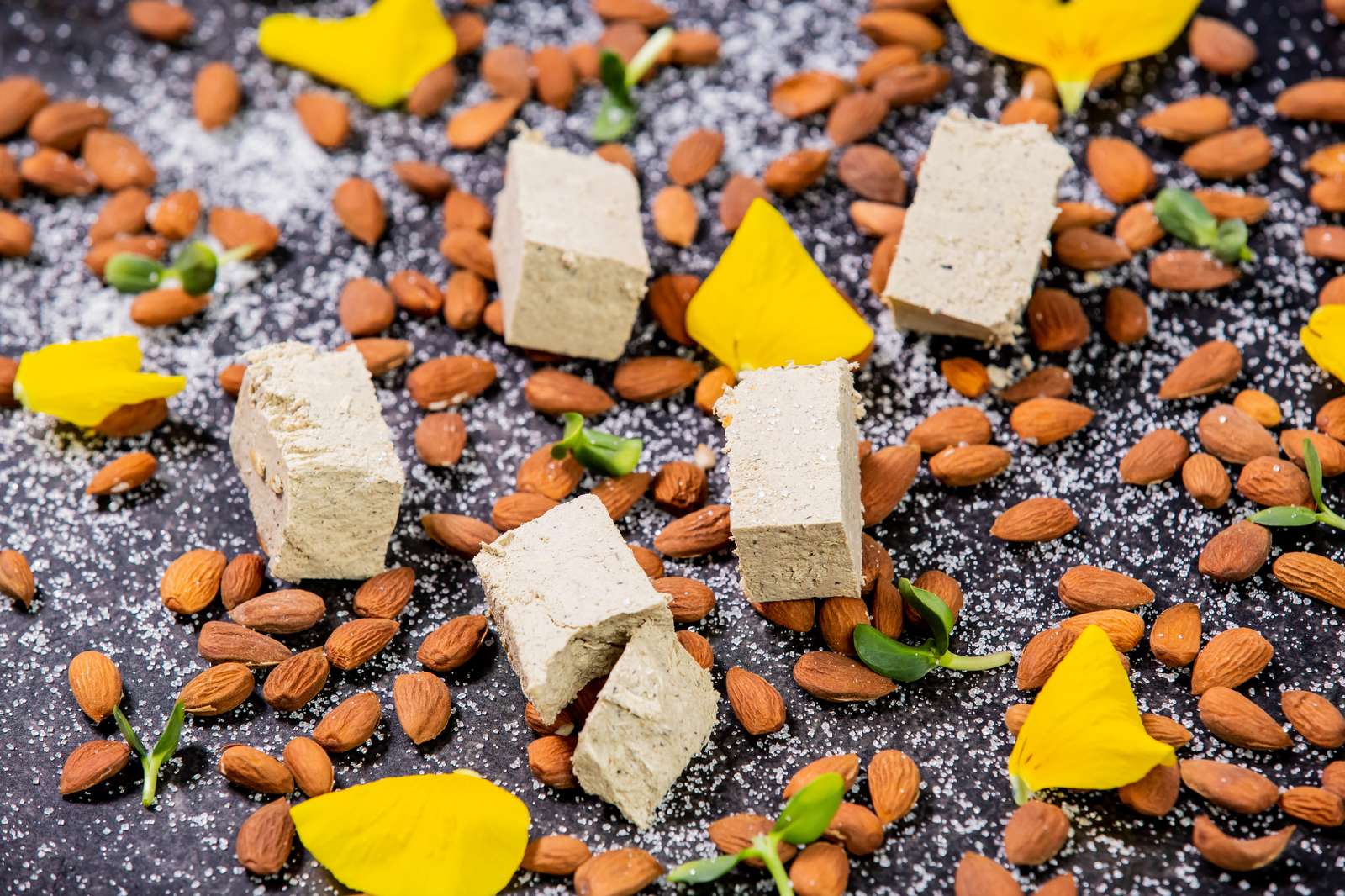
A festive Uzbek meal ends with green tea, nuts and halva. There are many kinds, from sesame and nut halva to the famous halva of ,Did you know? Kokand's Friday mosque stands on 98 columns from India Muhammad Umar Khan built Kokand's Juma Mosque in 1812–1818. Its 100-metre iwan rests on 98 carved red-wood columns brought from India, and its minaret is 22 m tall. Inside is a small museum of applied arts. Read more → whose name and traditional recipe have been protected as a geographical indication since 2026. Nisholda is lighter: a white, whipped cream of egg whites and sugar flavoured with a root extract, made above all during Ramadan and eaten with bread and tea after the fast.
How to eat your way through the ten
Most of these dishes fit into three days. Have plov for lunch at a plov centre, somsa and shashlik on the street, shurpa or lagman in the evening, and halva with tea at the end. Ask for green tea in the ;A teahouse: green tea, plov and conversation on wide wooden beds called topchan. in Tashkent many people drink black tea. More on that in tea and the chaikhana.
If food is the reason for your trip, our culinary tour «Taste of the Road» takes you through Tashkent, Samarkand, Bukhara and Khiva with bazaars, cooking and family meals. Tell us about any dietary needs in advance and we will plan meals around them.
In short
- Plov is a lunch dish; go to a plov centre before mid-afternoon.
- Somsa and non come from the tandir, a clay oven; shashlik from a charcoal grill.
- Manti, chuchvara, lagman, shurpa and dimlama make up the everyday table; pumpkin manti and green somsa suit vegetarians.
- A meal ends with green tea, nuts and halva; bread is broken by hand, not cut.
- For the specialities of each city, read Uzbek food by city.
© Photos
- Uzbek bread, obi non — Benjamin Goetzinger / Wikimedia Commons · CC BY-SA 4.0