Places in this article: Tashkent
Tea and the chaikhana: how Uzbekistan drinks its tea
At an Uzbek table the first bowl of tea never reaches the guest. The host fills it, pours it back into the pot, does it twice more, and only then pours a bowl for you, and only halfway. Each of those moves means something, and once you know them, a pot of tea tells you a lot about the table you are sitting at.
This is our guide to tea as it is drunk here: which tea, how it is poured, the A teahouse: green tea, plov and conversation on wide wooden beds called topchan. where it is drunk, and what to order with it. What to eat in each region is in Uzbek food by city, and the bread that comes with every pot in Uzbek bread.
Green and black: kok choy and Tashkent tea
Green tea, kok choy, is the national drink. It is what you will be poured almost everywhere: at home, in a teahouse and at the end of every meal. The capital is the exception: in Tashkent black tea, qora choy, is the one most people pour.
Tea comes in a pot with small bowls without handles, Did you know? Green tea is the national drink, but Tashkent prefers black Green tea, kok choy, is drunk all day across Uzbekistan and offered to every guest, without milk or sugar, in small bowls called piyola. Tashkent is the exception: here black tea, qora choy, is the one most people pour. Read more →, usually without sugar. Abroad, many Uzbek restaurants serve “Tashkent tea”, a blend of black and green tea with sugar, lemon and sometimes mint; in Tashkent itself tea is drunk with nothing added. Sweetness comes from what is on the table, not from the cup.
Qaytarish: three pours back into the pot
Before the first bowl is served, the person pouring fills a piyola and empties it back into the pot, three times. This is qaytarish, from the Uzbek word for “return”, and you will also hear it called simply qaytar. It lets the tea brew fully and opens up its aroma; only the fourth pour goes into a clean bowl for a guest.
The bowl used for the ritual stays with the person pouring, warmed by the tea. In restaurants the waiter often brings one more bowl than there are guests, exactly for this.
Why your bowl is only half full
The less tea in your bowl, the more welcome you are. A small pour stays hot, the bowl is easy to hold, and the host gets to refill it again and again: every refill is a small sign of attention. A bowl filled to the brim is the opposite: people call it “tea without respect”.
So do not be surprised when your piyola comes back a third full, and do not take it for stinginess. A hostess may hand you the bowl with a hand pressed to her heart, a sign of special respect; take it with your right hand, and a hand on your own heart is the simplest way to say thank you.
Who pours the tea
Tea is poured by the host or the hostess; your part is to accept the bowl and let it be refilled. At a teahouse table the person who invited you plays the host. A visit begins and ends with tea and easily runs longer than planned, so do not book anything tight for that evening.
Tea is also how a meal finishes. A festive table ends the same way everywhere: fruit, nuts, halva and another pot of tea. The rest of our table manners, from bread to shoes at the door, are in our etiquette guide.
The Uzbek chaikhana: where the neighbourhood meets
The chaikhana, choyxona in Uzbek, is older than any café here. On the A network of caravan routes between China and the Mediterranean. Samarkand, Bukhara and Khiva grew rich as stops along it. it was where merchants and travellers rested, ate and traded news. In the mahallas, the old city neighbourhoods, it became a community centre: the place to drink tea, talk business and hear the latest news, and the place where big family events are still held.
A traditional teahouse stands where there is shade, out of the heat. Instead of chairs it has tapchans: low wooden platforms spread with carpets and cushions, with a low table in the middle. Take your shoes off before you step up, sit cross-legged or lean on the cushions, and share the dishes from the middle of the table. It is also where Uzbek food is at its most everyday, and in the cities a teahouse is a place for everyone: families, friends and travellers.
What to order with your tea
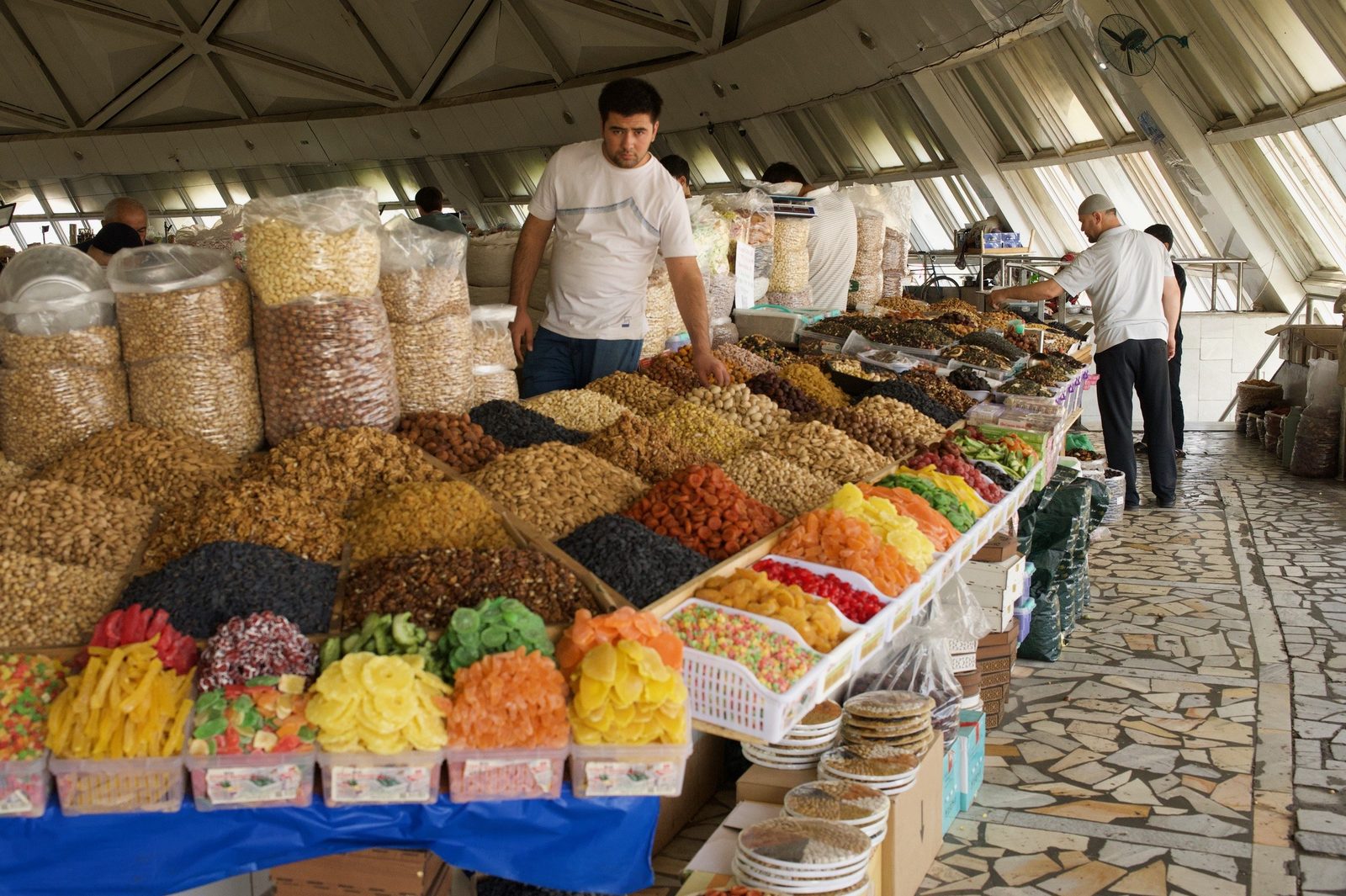
Nobody here drinks “empty” tea. It comes with navat, crystals of sugar, with nuts, dried fruit and sweets. At the bazaar look for navat grown on threads, which people put straight into their tea, and for halva; both make good presents to take home.
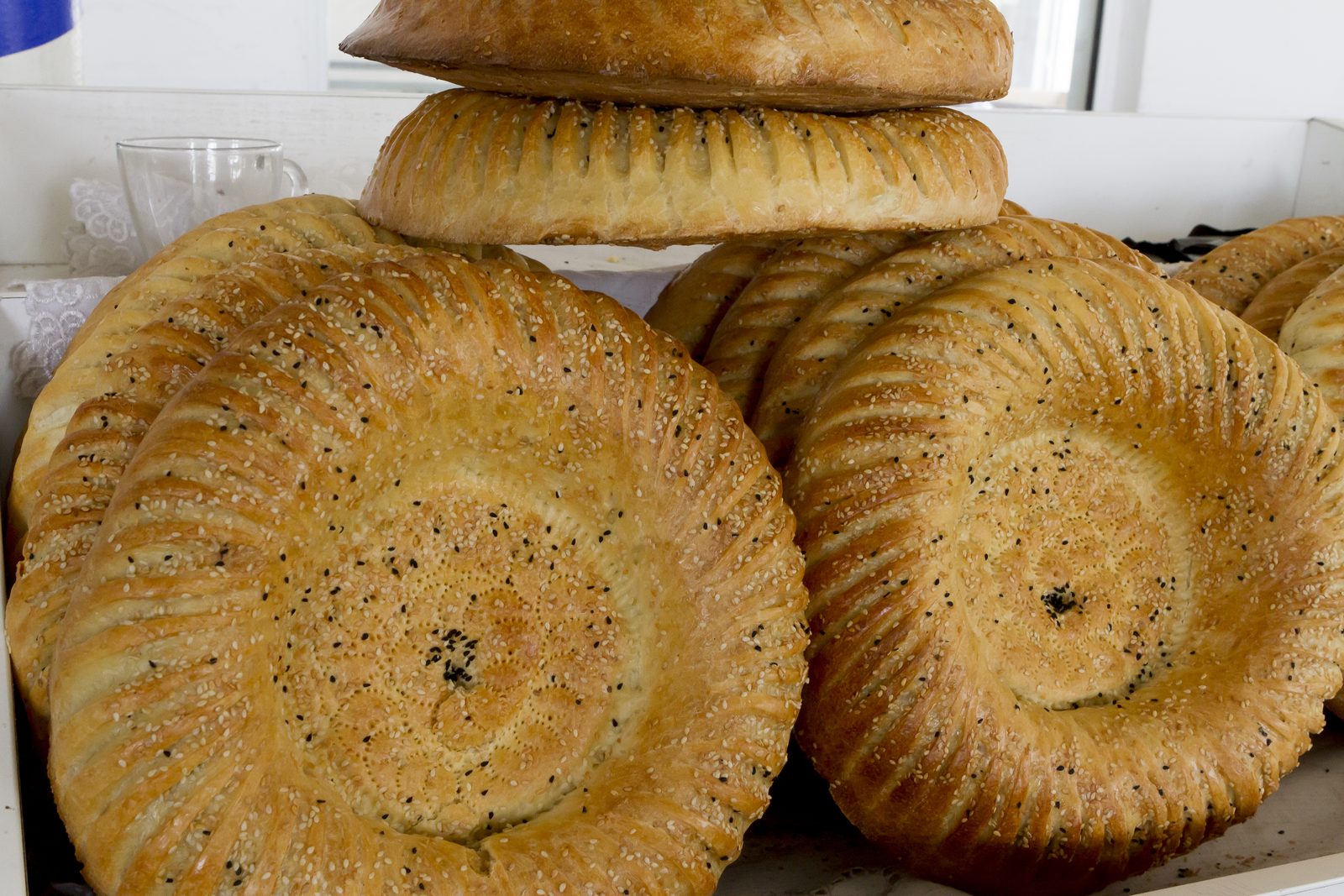
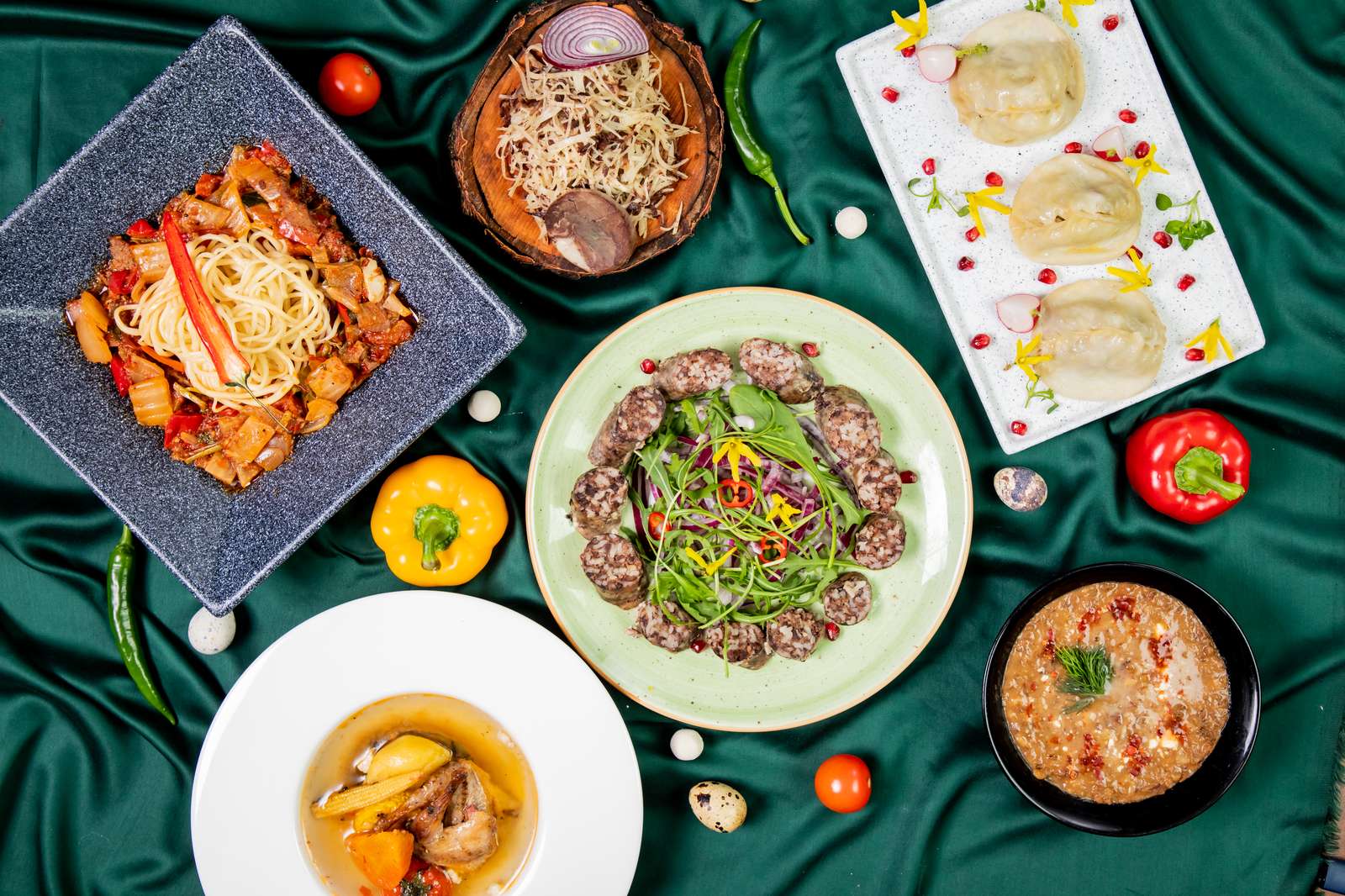
In a teahouse, tea goes with a meal. A good order for two: a round of non, a soup such as shurpa, samsa from the tandir, lagman or, at lunchtime, ,Rice cooked in a kazan with carrots, onions and meat: the dish of every Uzbek celebration. Each region cooks it its own way. and a pot of green tea. Choyxona oshi, teahouse plov, is the everyday plov, usually cooked on devzira rice and cottonseed oil; ask your guide or your hotel which teahouse nearby cooks plov that day. More in our guide to plov in Uzbekistan.
Teahouses in the cities
- Tashkent. Black tea in the pot and teahouse plov at lunchtime; the morning bread for it comes warm from the tandirs of Chorsu Bazaar.
- Samarkand. In the village of Konigil, by the workshop where paper is still made by hand, there is a water wheel and a teahouse by the river, a good place to slow down after two days of tilework.
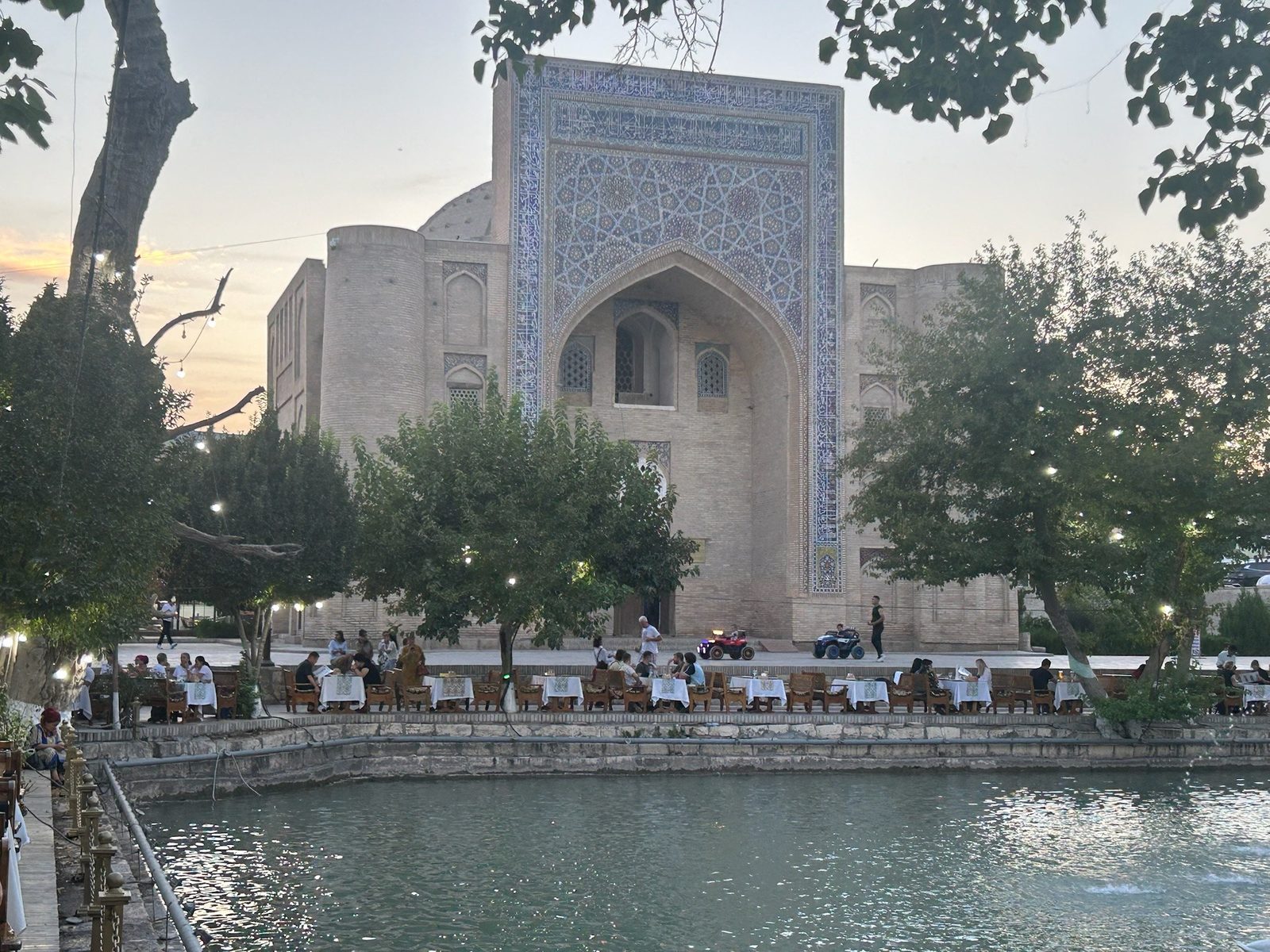
- Bukhara. The teahouses around the Lyabi-Hauz pond set their tables by the water and serve oshi sofi, the city’s “pure plov”; in the evening the lights of the madrasahs are reflected in the pond.
To see tea customs as they are meant, at a home table rather than in a teahouse, we arrange dinner with a local family in Bukhara and in Khiva. For a whole trip built around food, Taste of the Road, our culinary tour, includes a dinner by Lyabi-Hauz that ends with tea and halva.
In short
- Green tea, kok choy, is poured everywhere; in Tashkent most people drink black tea, qora choy. No sugar in the cup: sweets, navat and dried fruit go on the side.
- The first three pours go back into the pot: that is qaytarish, and only the fourth is for the guest.
- A half-full bowl is a sign of respect; let the host refill it and take it with your right hand.
- In a chaikhana you sit on a tapchan with your shoes off and share everything; order non, shurpa, samsa, lagman or plov at lunch, and a pot of green tea.