Places in this article: Samarkand · Bukhara · Khiva · Tashkent
Uzbek bread: flatbreads, the tandir oven and table customs
Inside a working tandir the clay walls reach about 315 °C. The baker leans into the opening, slaps a round of dough onto the wall, and the bread bakes stuck to the clay. This is how non, the Uzbek flatbread, is made every morning across the country, and why the first loaves reach the bazaars still warm.
What to eat in each region is in our guide to Uzbek food by city. This article is about bread alone: how it is baked, how the flatbreads of different cities differ, the customs around it at the table and in family life, and where you can watch it baked or bake it yourself.
The tandir: an oven of clay
A tandir is a deep, well-shaped clay oven heated from inside. Bread does not go in on a tray: the baker presses each round straight onto the hot wall, and it stays there until the crust is done. Samsa, the meat pastry, bakes in the same kind of oven.
Tandirs were once fired with wood. Many bakeries now use gas for a steady heat, but the shaping, the stamping and the baking are still done by hand, and the bakers say the hands matter more than the fuel.
The chekich: why the centre is flat
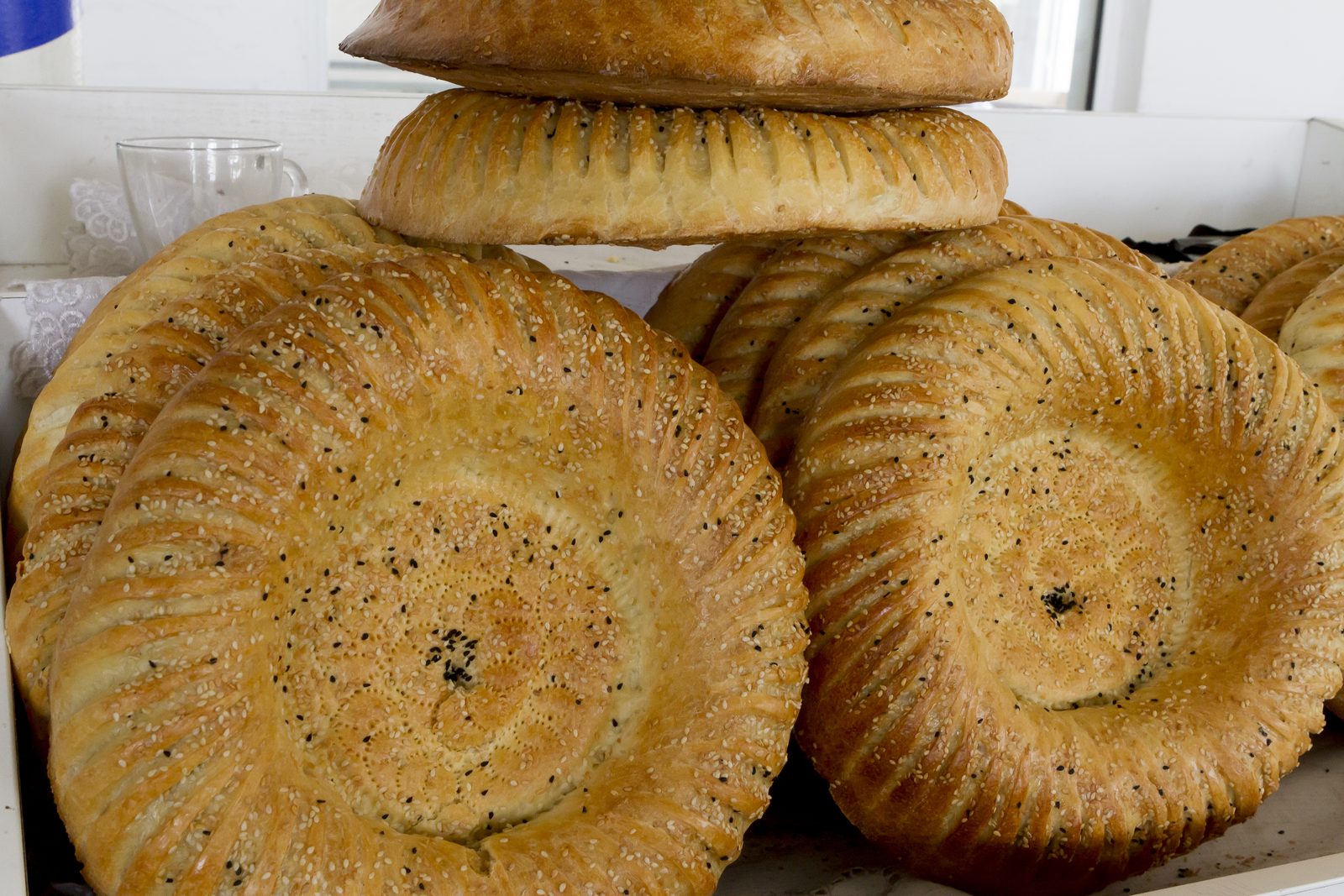
Look at any non and you will see a flat, patterned centre and a high, soft rim. The pattern comes from the Did you know? The pattern on Uzbek bread is the baker’s signature The flat centre of non is pressed with a chekich, a stamp often made of nails, so it doesn’t rise and steam can escape. Bakers use their patterns as a signature. In Tashkent the radial lines on the rim come from a second press often made of bicycle spokes. Read more →, a stamp often made of nails set in a design. It presses the centre down so that only the unstamped rim rises, and its holes let the steam escape. Bakers use their patterns as a signature. In Tashkent the radial lines around the rim come from a second press, often built from old bicycle spokes.
The dough starts from a sourdough, xamir. It is rolled flat, stamped, brushed and sprinkled with sesame before it goes into the oven.
Uzbek flatbreads by city
Every region bakes its own non, and people here can tell them apart at a glance.
Tashkent
Lighter, softer and chewier, with that radial pattern on the rim. Tashkent non is at its best for only a few hours, so buy it in the morning and eat it the same day.
Samarkand
Denser and heavier, with a darker crust, a light sheen of oil, and a centre thinner than the rim. Some Samarkand loaves ferment for 12–13 hours, where ordinary dough needs 3–5, and bakers spray them with water during baking for the shine. In 2022 about 15,000 Samarkand loaves were baked every day.
This bread keeps for a long time and freezes well, which is why it travels to other cities and abroad as a gift. Its name has been a geographical indication since February 2025 and a registered trademark since October 2026, as our news story explains. The legend of the khan of Bukhara and the air of Samarkand is in our legends of Samarkand.
Bukhara
Between the two in density, and sprinkled with black nigella or sesame seeds, so it smells different from Samarkand's. Bukhara also shows how much bread a celebration takes: a big wedding meal here needs 300 to 400 loaves.
The Fergana Valley
Andijan is known for patir, a large, rich flatbread made with milk and butter that can weigh several kilograms. The dough is made in the evening, shaped and decorated, then baked over several hours. Patir goes to weddings and big family occasions, and it stays fresh for a long time.
Khiva and Khorezm
In Khiva bread is baked in the tandir until the crust is crisp. The bakers do not agree on the recipe: some say Khorezm bread has no milk or oil in the dough, others add butter and sometimes milk.
Bread at the table: the customs
- Tear it, do not cut it. At home and at a traditional table, non is broken by hand and shared out, rarely if ever cut with a knife.
- Never face down. A loaf placed on its face is a sign of disrespect, so keep the patterned side up.
- Pick it up. A piece of bread that falls to the ground is picked up, never left there.
Nobody expects a guest to know all of this, and the first two already show respect for the table. More table manners, from the tea pour to shoes at the door, are in our etiquette guide.
Bread at the big moments of life
At an engagement party the two families break bread, share it out and eat it, and that makes the engagement official. At a wedding the bride and groom each bite two loaves placed face to face, and the loaves are finished at their first breakfast as a married couple.
The custom you are most likely to hear about is the one for a journey. Before a son leaves home for military service, work or study abroad, he bites the edge of two loaves placed face to face. The bitten bread is dried and hung near the ceiling, and it waits there until he comes home.
Where to watch bread being baked
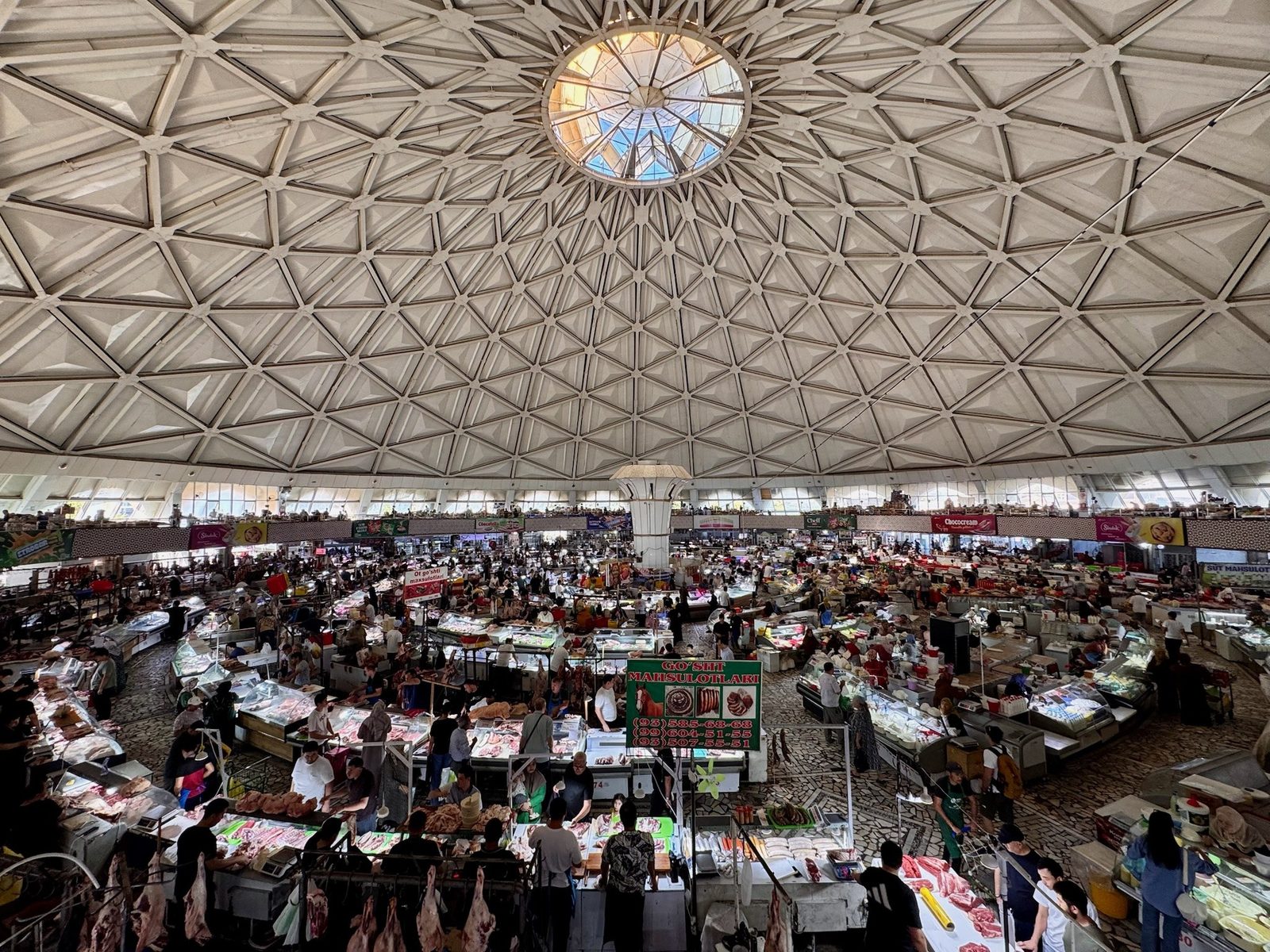
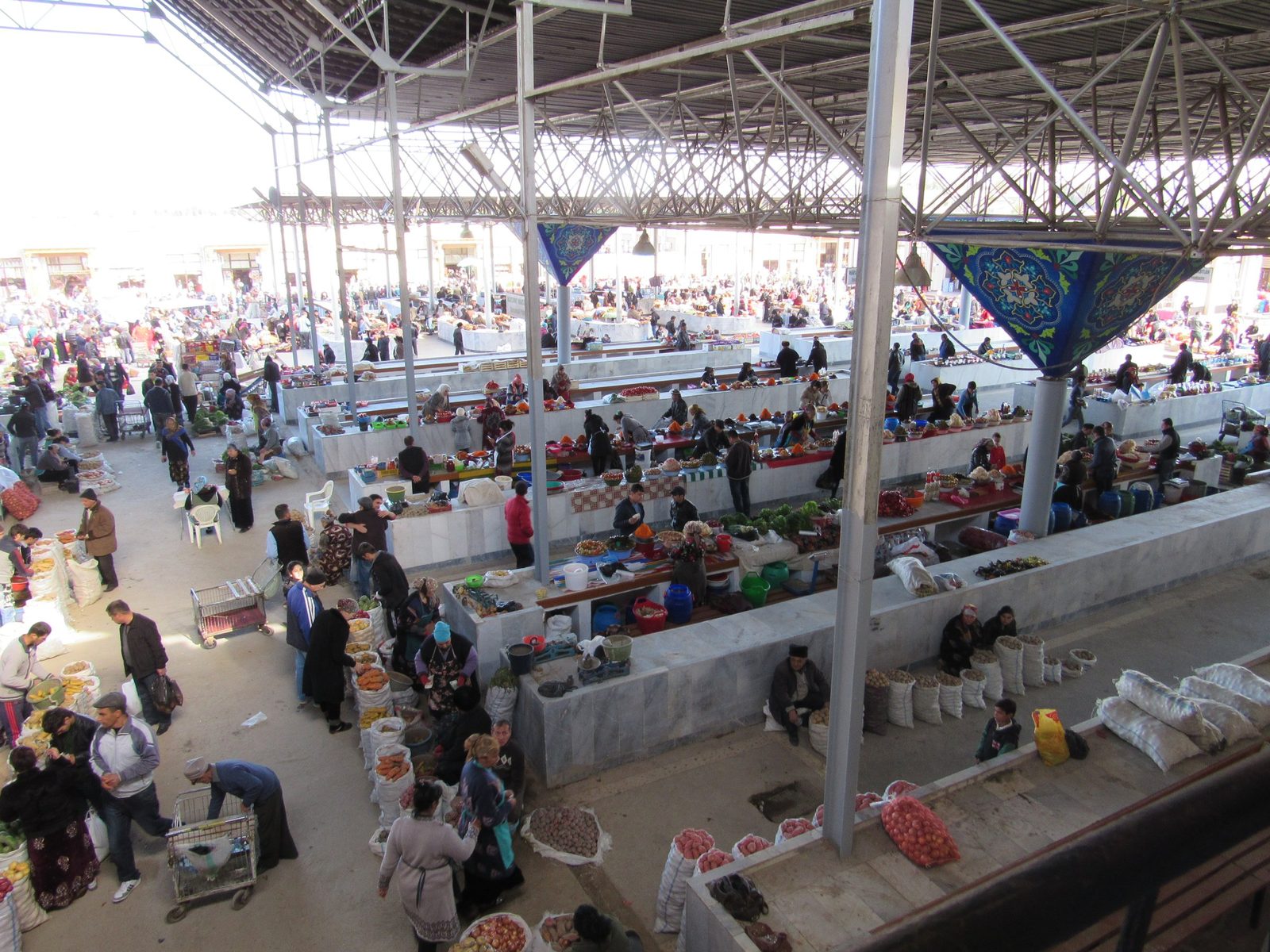
Go to a bazaar in the morning. At Tashkent's old bazaar under a big blue-green dome, not far from Hazrati Imam. Bring cash in so'm. Read more → in Tashkent and Samarkand's main bazaar, right next to Bibi-Khanym: Samarkand bread, dried fruit, nuts and halva. Read more → in Samarkand, the bread arrives warm from the tandirs and sellers stack it on carts and stalls. Our guide to the bazaars of Uzbekistan explains how each one works, and in Samarkand our walking tour with a guide can include Siab.
To bake it yourself, head for the desert near Khiva. On our evening in the Karakum desert you choose two experiences out of six, and one of them is a masterclass in tandoor flatbread.
For a whole trip built around food, Taste of the Road, our culinary tour, starts with hot samsa and tandoor bread at Chorsu and gives a Samarkand morning to the Siab bazaar and its famous flatbread.
Taking bread home
- Buy in the morning. The bread is fresh and the choice is widest.
- Pack .Did you know? Legend: Samarkand bread can't be baked anywhere else Legend says a Bukhara ruler brought Samarkand's best baker to his court with his oven, flour and water, yet the bread came out different. The missing ingredient, the baker said, was the air of Samarkand. The round loaves keep for a long time. Read more → It keeps for a long time and freezes well; Tashkent non is for eating on the day.
- Revive it at home. Sprinkle a dried loaf with a little water and warm it for a few minutes.
In short
- Non is baked on the walls of a clay tandir and stamped with a chekich, which keeps the centre flat and the rim high.
- Tashkent non is light and best on the day; Samarkand non is dense and keeps; Bukhara's has nigella or sesame; Andijan bakes rich patir.
- Break bread by hand, keep it face up, and pick up any piece that falls.
- Watch it baked at the morning bazaar, or bake it yourself at a tandoor masterclass near Khiva.
© Photos
- Uzbek bread, obi non — Benjamin Goetzinger / Wikimedia Commons · CC BY-SA 4.0