
 Deutsch
 English
 Español
 Français
 Italiano
 Polski
 Português
 Suomi
 Svenska
 Türkçe
 Русский
 עברית
 한국어
 中文
 日本語
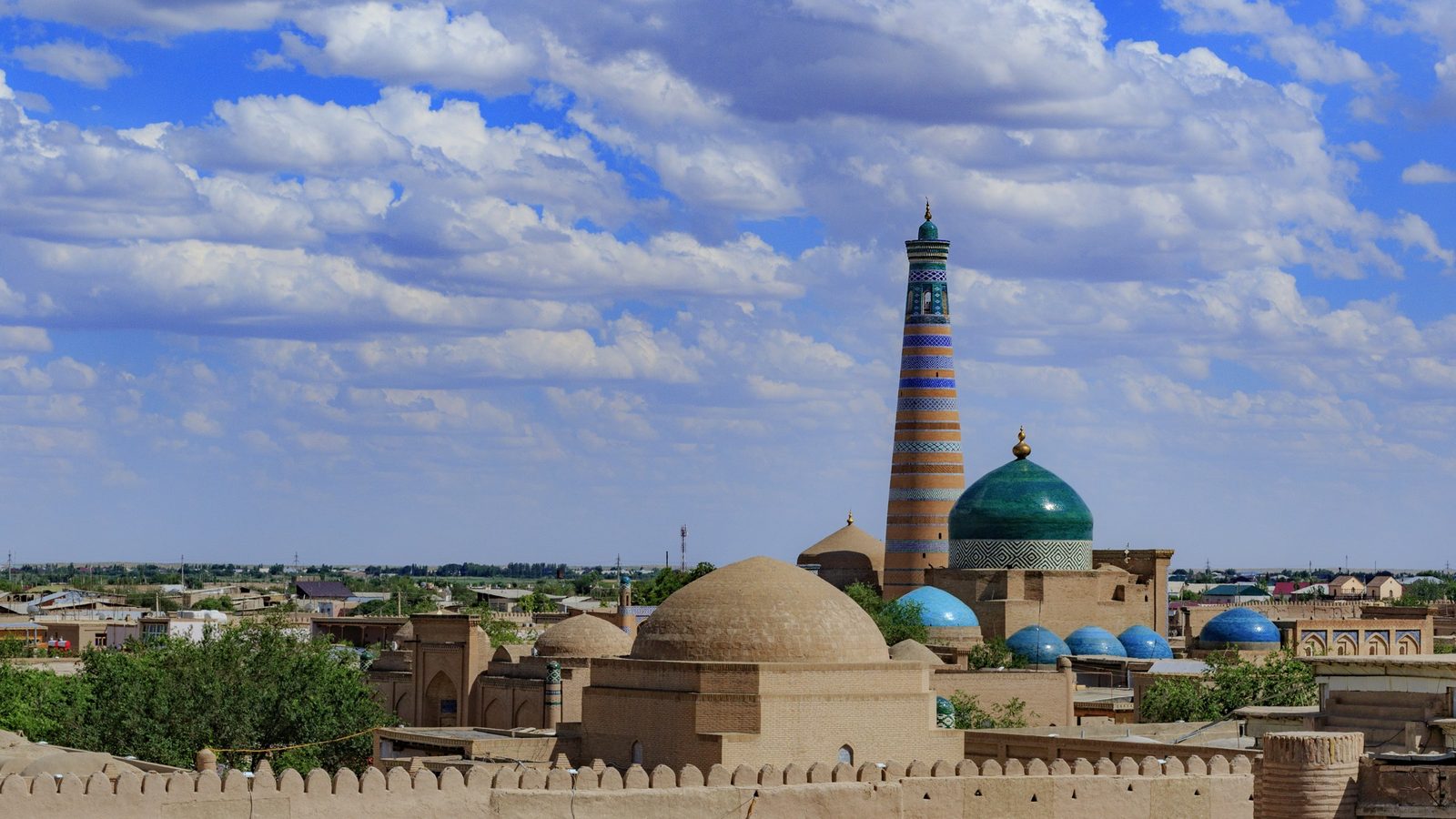
Places in this article: Samarkand · Bukhara · Khiva · Tashkent
A Short History of Uzbekistan in Six Things You Can Still See
In the Did you know? A 7th-century mural shows envoys from Korea Uncovered by road builders in 1965, the Ambassadors' Painting at Afrasiyab shows delegations bearing gifts, Chinese with silk among them, and two men in feathered hats thought to be envoys from Korea's Goguryeo. Read more → Museum in Samarkand there is a room where tour groups usually go quiet. Three walls are covered with a painting from the 7th century: riders, camels, envoys in foreign clothes. Look for two men with feathers in their caps. Many scholars read them as envoys from Korea, painted here, in Sogdian Samarkand, some thirteen centuries before the first direct flight from Seoul to Tashkent.
That is a good way into the history of Uzbekistan. As a state, the country is young: it became independent in 1991. But cities have stood on this land for more than two and a half thousand years, and whoever held the trade roads held the region. Persians, Greeks, Arabs, Mongols and Russians came in turn, and each left something you can still stand in front of.
We are a tour operator in Tashkent, and below are six such things, plus one from the 20th century. You will see all of them on the usual Samarkand, Bukhara and Khiva route, sometimes without knowing what you are looking at.
A painting where the whole world came to visit
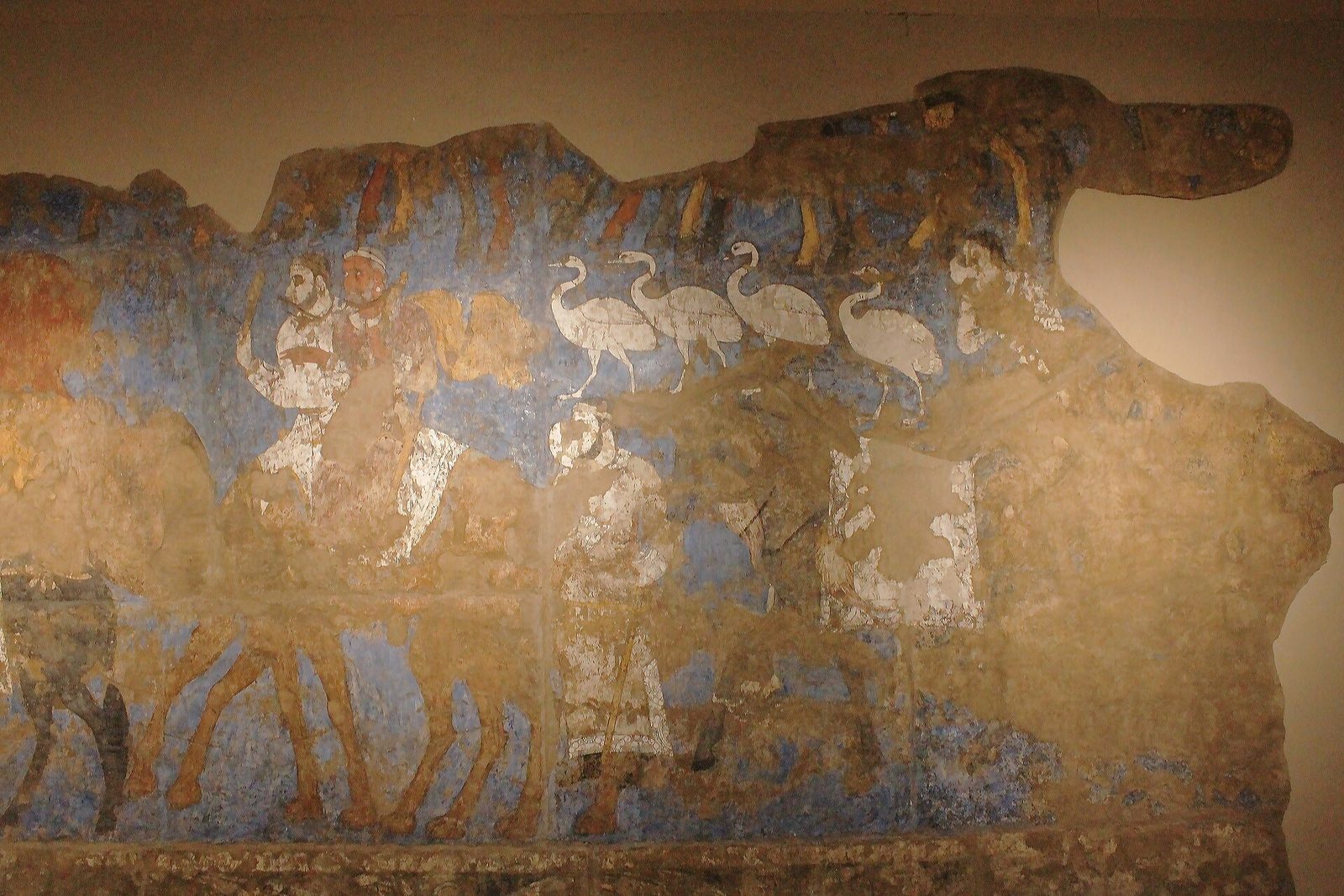
The Afrasiyab painting is the main document of pre-Islamic Samarkand. The city was then the capital of Sogd, and Sogdian merchants traded from China to Byzantium. The murals show envoys being received by the ruler of Samarkand. Who exactly is painted there, and how to read the scene, is still debated. But the list of guests says more than any textbook: people came here from every direction.
Something from that world survives outside the museum too. Navruz, the spring festival Uzbekistan celebrates every March, is older than Islam; its roots lie in the pre-Islamic, including Zoroastrian, traditions of the region. And Alexander the Great came this way: in 329 BC his army reached ,Did you know? Legend: Alexander found Samarkand more beautiful than told Alexander the Great took Maracanda, ancient Samarkand, in 329 BC. Legend credits him with saying that all he had heard of the city was true, except that it was even more beautiful. No ancient author records the words. Read more → as the Greeks called Samarkand, a city that was already old.
The painting makes far more sense with someone to explain it. We tell its story, and that of the hill around it, in the museums of Samarkand and Bukhara, and build a whole trip around it in the Ambassadors of Afrasiyab tour.
A stupa near the Amu Darya
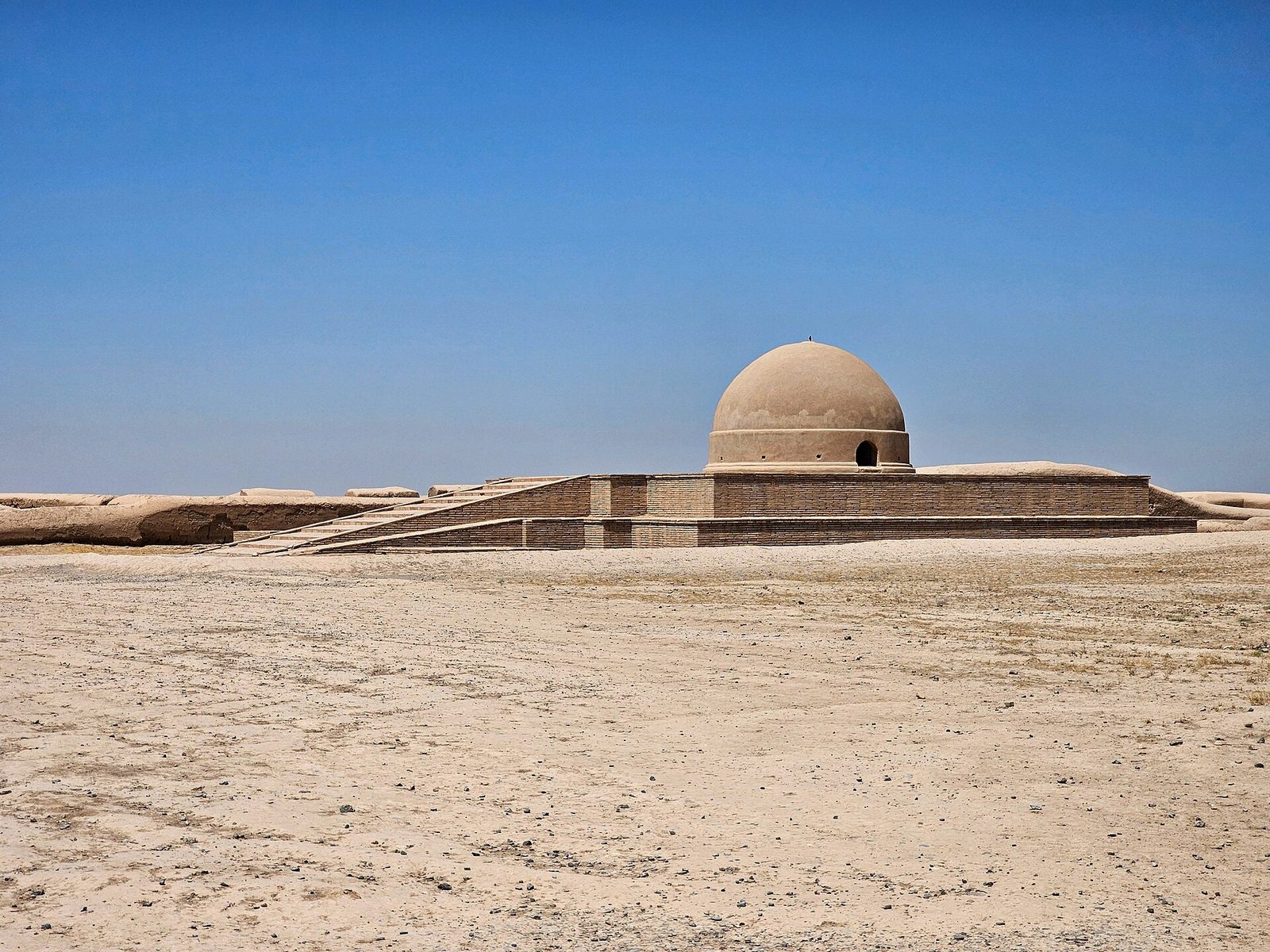
In the far south, near Termez and a few kilometres from the Amu Darya, a clay stupa stands under a protective dome. It belonged to the Buddhist monastery of Fayaz Tepe, which is about two thousand years old. Buddhism came here along the trade roads, and for centuries Termez was one of its centres in Central Asia.
The surprising part is the direction of travel. From these lands Buddhism moved further east, to China. Uzbekistan is usually pictured as a country of minarets, yet in the south you can see what its religious life looked like before Islam: monks' cells, the remains of a courtyard, the stupa itself. Our guide to Termez covers the sites and how to get there.
A mausoleum that outlived Genghis Khan
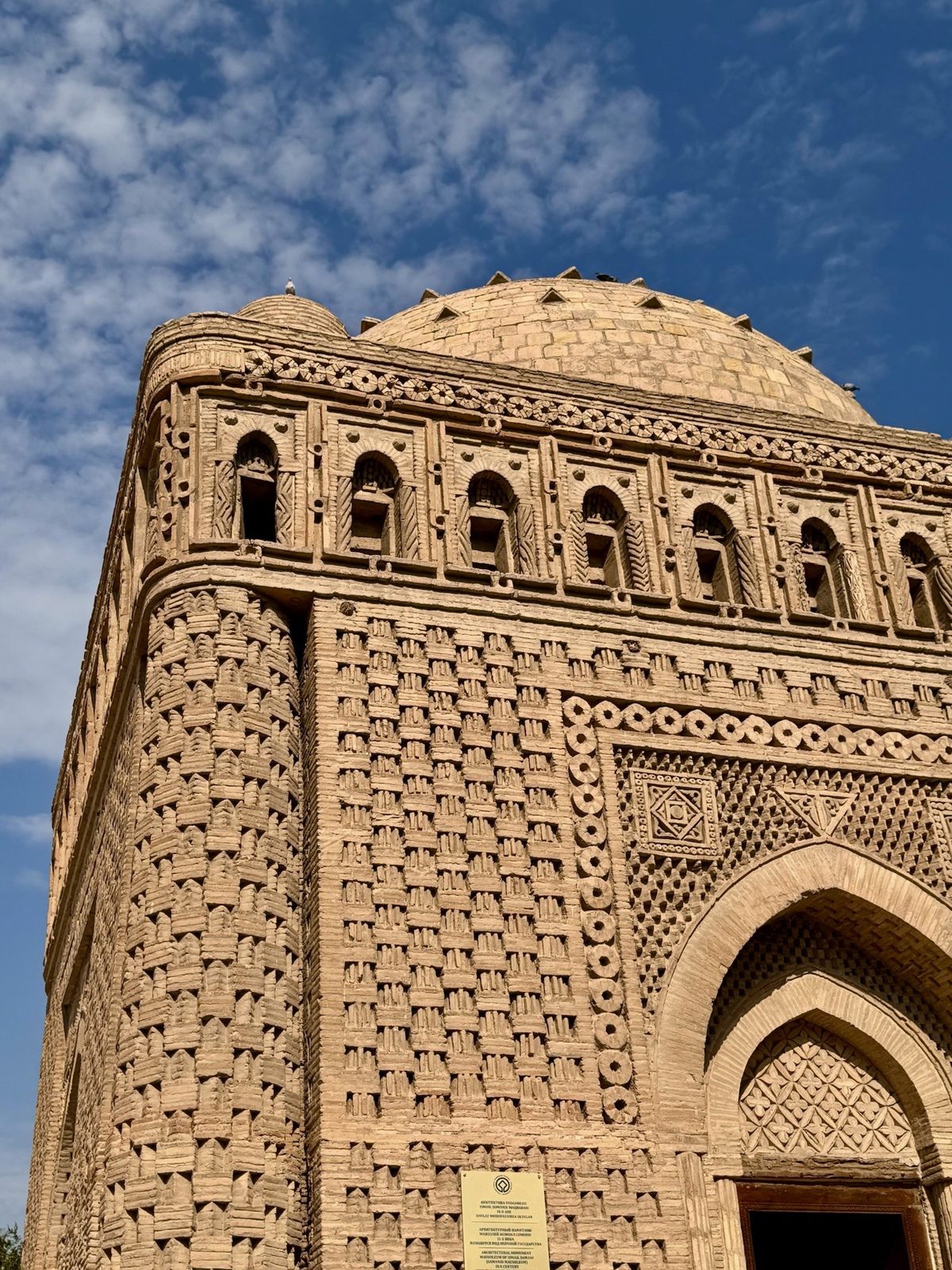
Arab armies reached the region in the early 8th century. What followed was probably not in the conquerors' plans: scholars from here became stars of the whole Islamic world. Imam al-Bukhari, born in Bukhara, compiled the collection of hadith that Sunni Muslims consider the most authoritative. ,Did you know? The word “algorithm” comes from a scholar of Khorezm Muhammad al-Khwarizmi, born in Khorezm around 780, worked at the House of Wisdom in Baghdad. The Latin form of his name gave us “algorithm”, and “algebra” comes from al-jabr in the title of his book. A statue of him stands in Khiva. Read more → from Khorezm, worked in Baghdad; his name gave us the word «algorithm», and the title of his treatise the word «algebra».
From that age Bukhara keeps the ,Did you know? Buried in mud, this tomb escaped Genghis Khan The 10th-century Samanid Mausoleum, one of the oldest monuments of Islamic Central Asia, was covered by flood mud and sand before the Mongols came in 1220. Hidden for centuries, its brick lacework survived intact. Read more → a cube of fired brick from the early 10th century. The bricks are laid so that the walls look woven, like a basket. At noon you see one pattern; towards evening the shadows draw another.
In 1220 the Mongols came. Bukhara and Samarkand were sacked; the old city on the Afrasiyab hill was never rebuilt, and Samarkand grew up again beside it. The Samanid Mausoleum survived. Locals say it was buried in earth and sand by then, and the conquerors simply did not see it. That is a legend, but a good one. See it on foot with our notes on the Samanid Mausoleum and Bolo-Hauz.
A minaret a khan, they say, bowed to
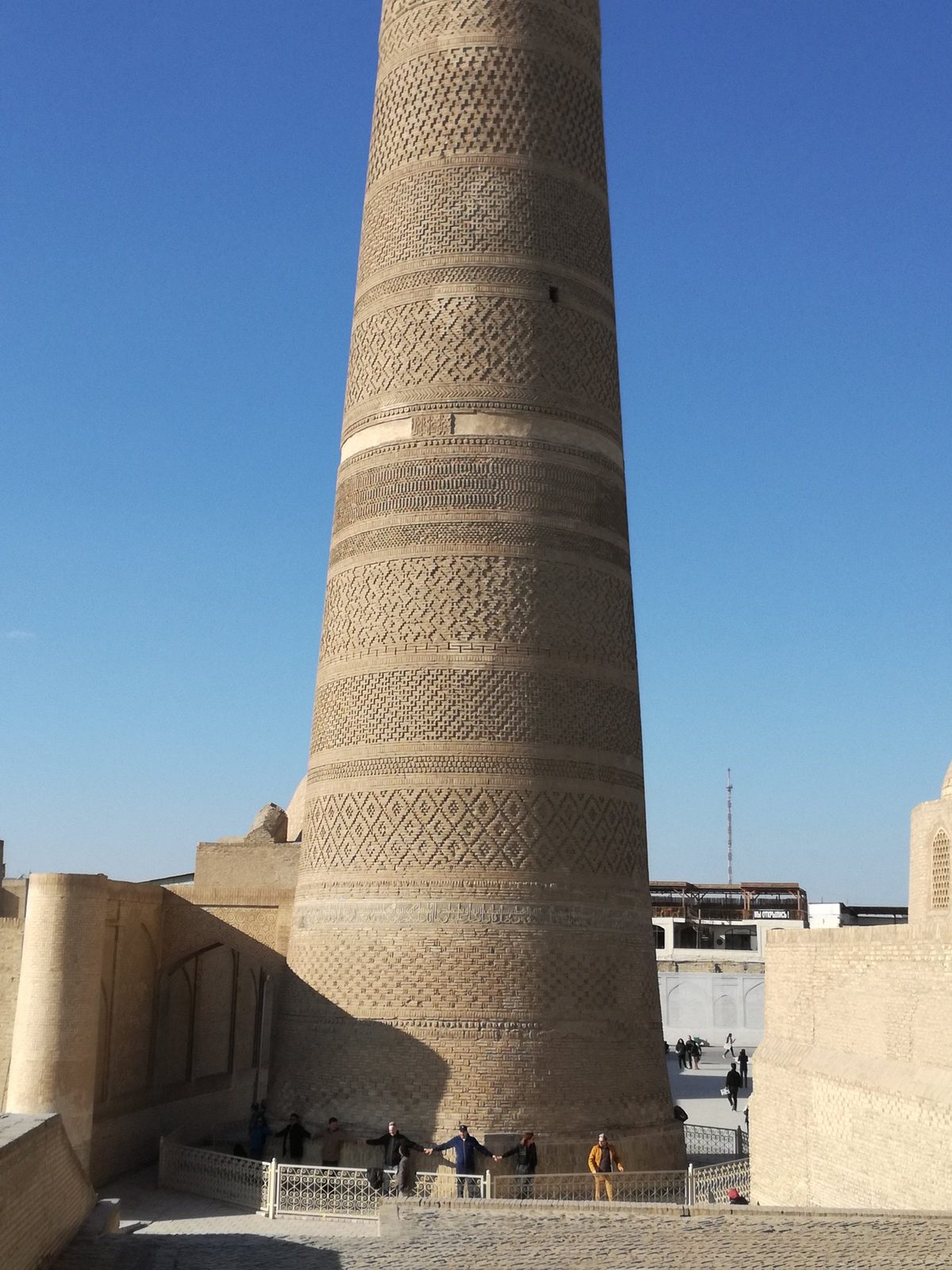
The Did you know? Diggers went 13 m down and never found its base The Kalyan Minaret of 1127 rises about 46 m, and an excavation reached 13 m without finding the bottom of its foundations. Genghis Khan reportedly ordered it spared. Read more → in Bukhara was built in 1127. For almost nine hundred years it has been the tallest structure in the old city, and it carries another Mongol story. Genghis Khan, the legend goes, tipped his head back to see the top, his hat fell off, and he ordered the tower spared. Historians treat the tale with caution. The fact remains: the mosque next to it was destroyed, and the minaret still stands.
What came after the invasion is just as interesting. Once the conquest was over, the vast Mongol state for a time made the roads from China to the Mediterranean safer than before. Trade did not stop; in time it flourished again. More on the square at its foot is in our page on Poi Kalyan.
A groove in a hill, lost for almost five hundred years
Amir Timur (Tamerlane, 1336–1405), founder of the Timurid empire, which had its capital in Samarkand. Born near Shahrisabz. Read more → was born in 1336 near Shahrisabz. He built a vast empire, made Samarkand his capital and filled it with domes that still define the city's skyline. Yet the most intriguing monument of the age was built by his grandson.
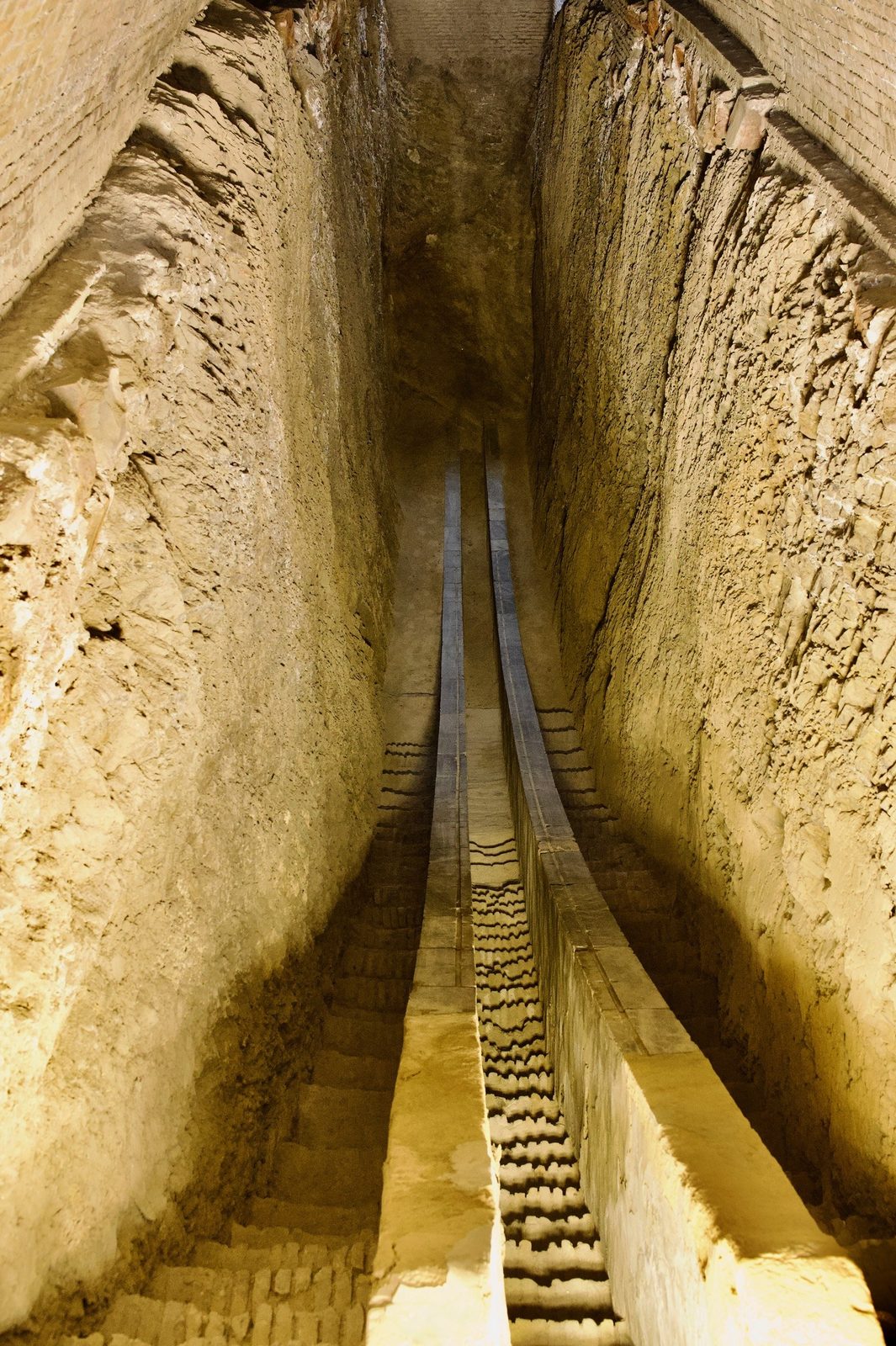
Did you know? Ulugh Beg measured the year to within 25 seconds Working at his Samarkand observatory, Ulugh Beg put the tropical year at 365 days 5 h 49 min 15 s, about 25 seconds too long, closer than Copernicus a century later. Read more → is remembered for astronomy rather than battles. In the 1420s he built an observatory on a hill outside Samarkand, and its star tables were among the most accurate of their time. After his death the observatory fell into ruin and its site was forgotten. In 1908 the archaeologist Vasily Did you know? A former teacher found the lost observatory in 1908 After Ulugh Beg's death his observatory was taken apart for its bricks and even its site was forgotten. Vasily Vyatkin, keeper of Samarkand's monuments, traced it through a 17th-century land deed and in 1908 dug up the great marble arc. Read more → found it again.
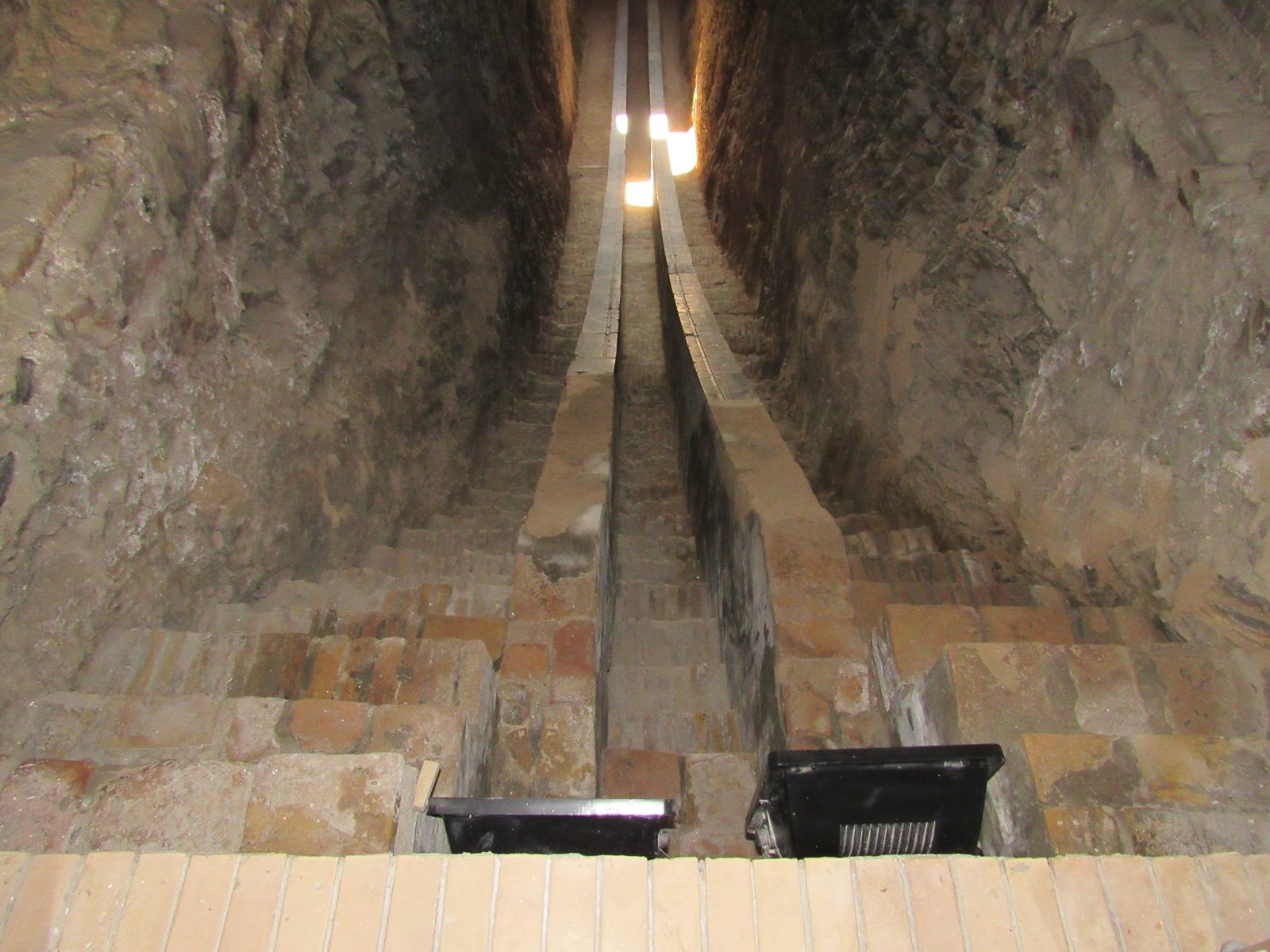
Today you walk down steps into a narrow underground passage. Part of the giant instrument survives there: a marble-faced arc running down into the rock. Almost nothing else is left, but from that arc it is easy to imagine the scale of the rest. Read more in our page on the Ulugh Beg Observatory.
An unfinished tower and the age of the khanates
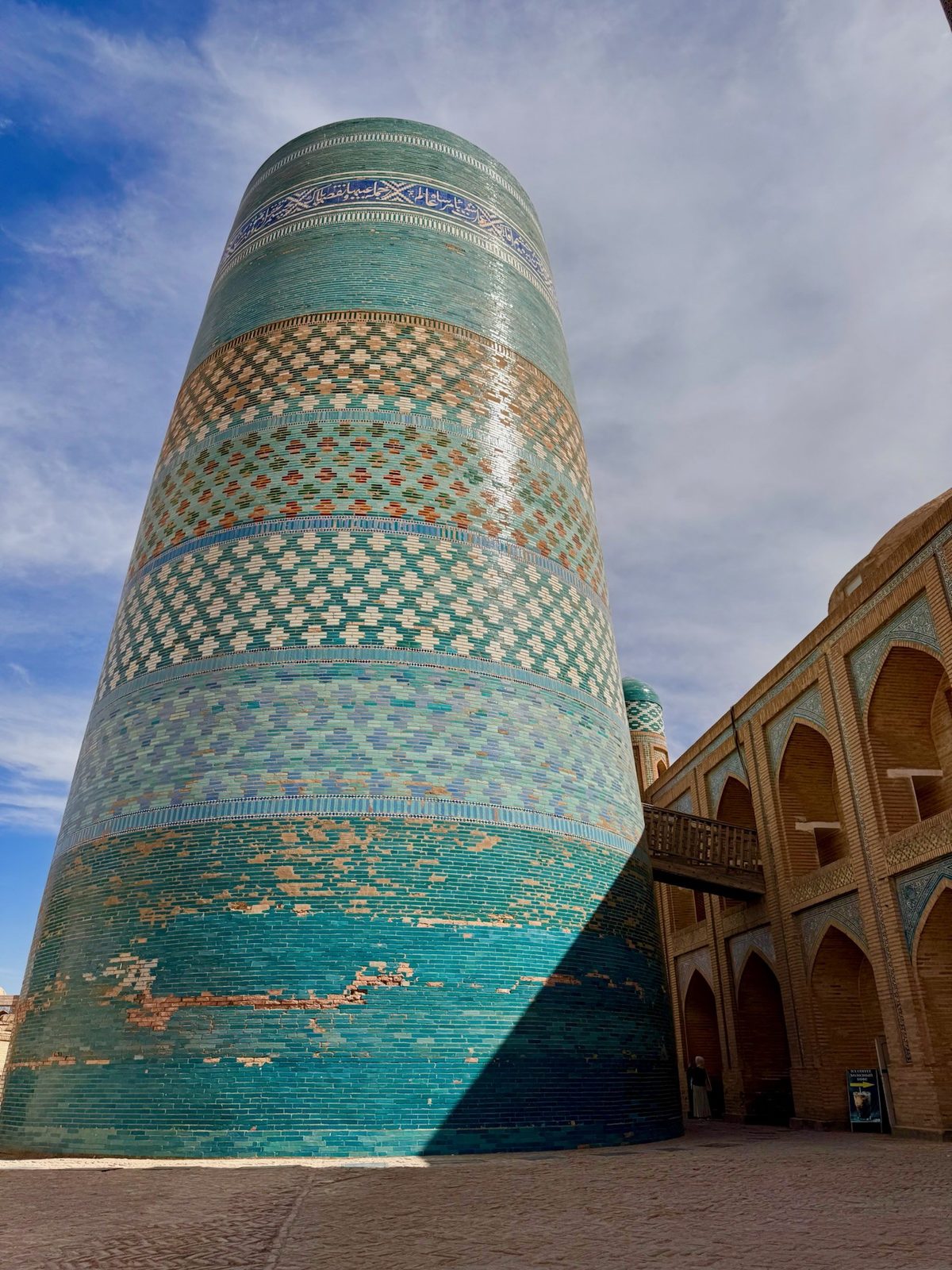
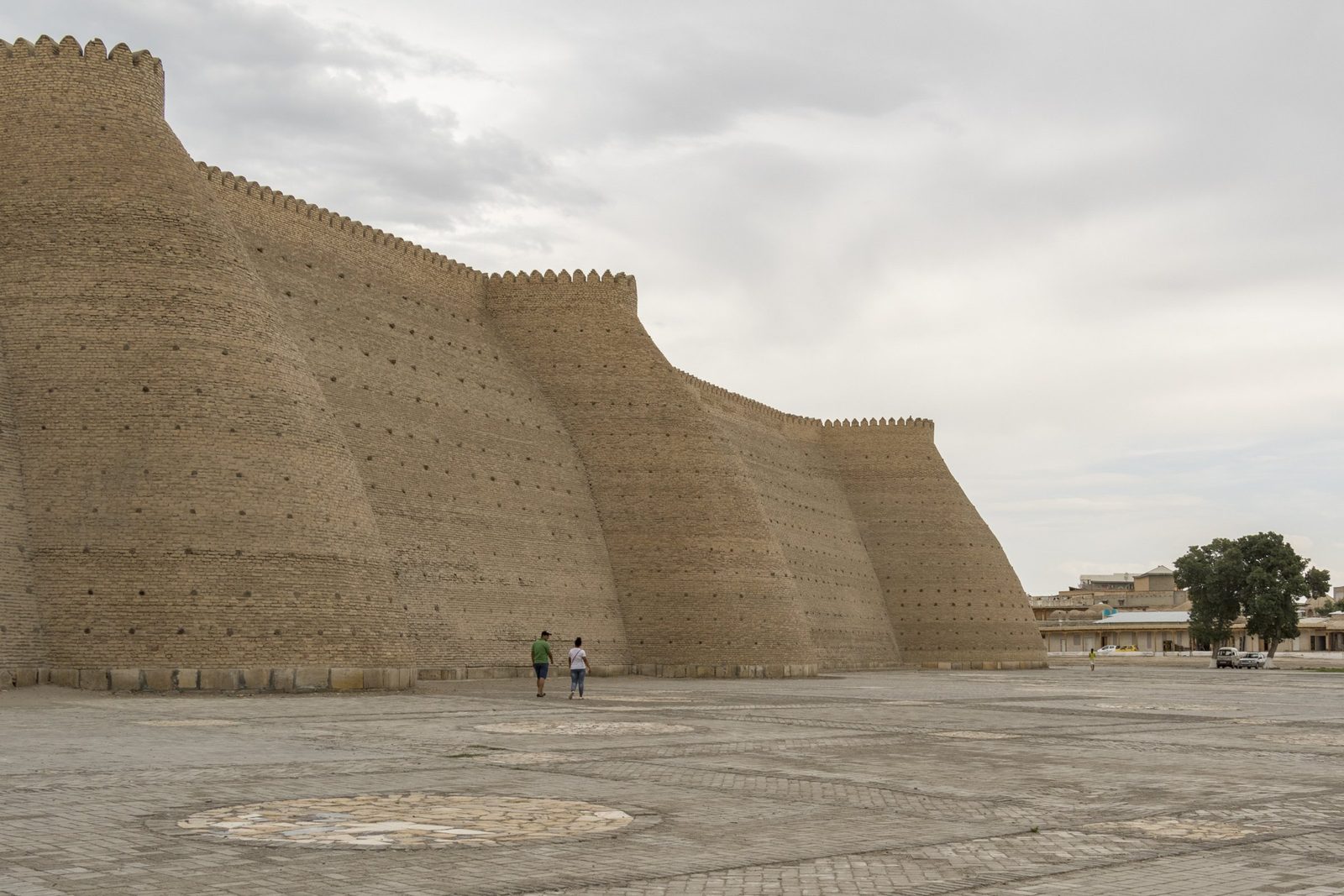
In Khiva, near the west gate of ,Did you know? People still live inside Khiva's museum city Itchan Kala packs more than 50 historic monuments and about 250 old houses inside clay walls 8–10 m high and 5–6 m thick, and families still live and work in its lanes. Read more → stands the wide turquoise .Did you know? Legend: the khan wanted to see Bukhara from his minaret Legend says Muhammad Amin-Khan wanted the Kalta-Minor so tall that Bukhara, some 400 km away, could be seen from the top. In reality work began in the 1850s and stopped in 1855, when the khan died, at a height of about 29 m. Read more → It is short because it was never finished. Khan Muhammad Amin planned a very tall tower, but he died in 1855 and the work was abandoned.
The tower sums up the last centuries before Russia. The Timurid state broke apart. In the 16th century the Bukhara and Khiva khanates appeared, and in the 18th century the Did you know? Kokand's Friday mosque stands on 98 columns from India Muhammad Umar Khan built Kokand's Juma Mosque in 1812–1818. Its 100-metre iwan rests on 98 carved red-wood columns brought from India, and its minaret is 22 m tall. Inside is a small museum of applied arts. Read more → khanate joined them. They competed with each other, which is one reason Khiva looks so different from Samarkand or Bukhara. In the second half of the 19th century the Kokand khanate became part of the Russian Empire, while Bukhara and Khiva remained its protectorates until 1920. The Uzbek Soviet Socialist Republic was formed in 1924, and in 1991 Uzbekistan became independent. The story of the tower is in our page on Kalta-Minor and Islam Khoja.
The 20th century is on the list too
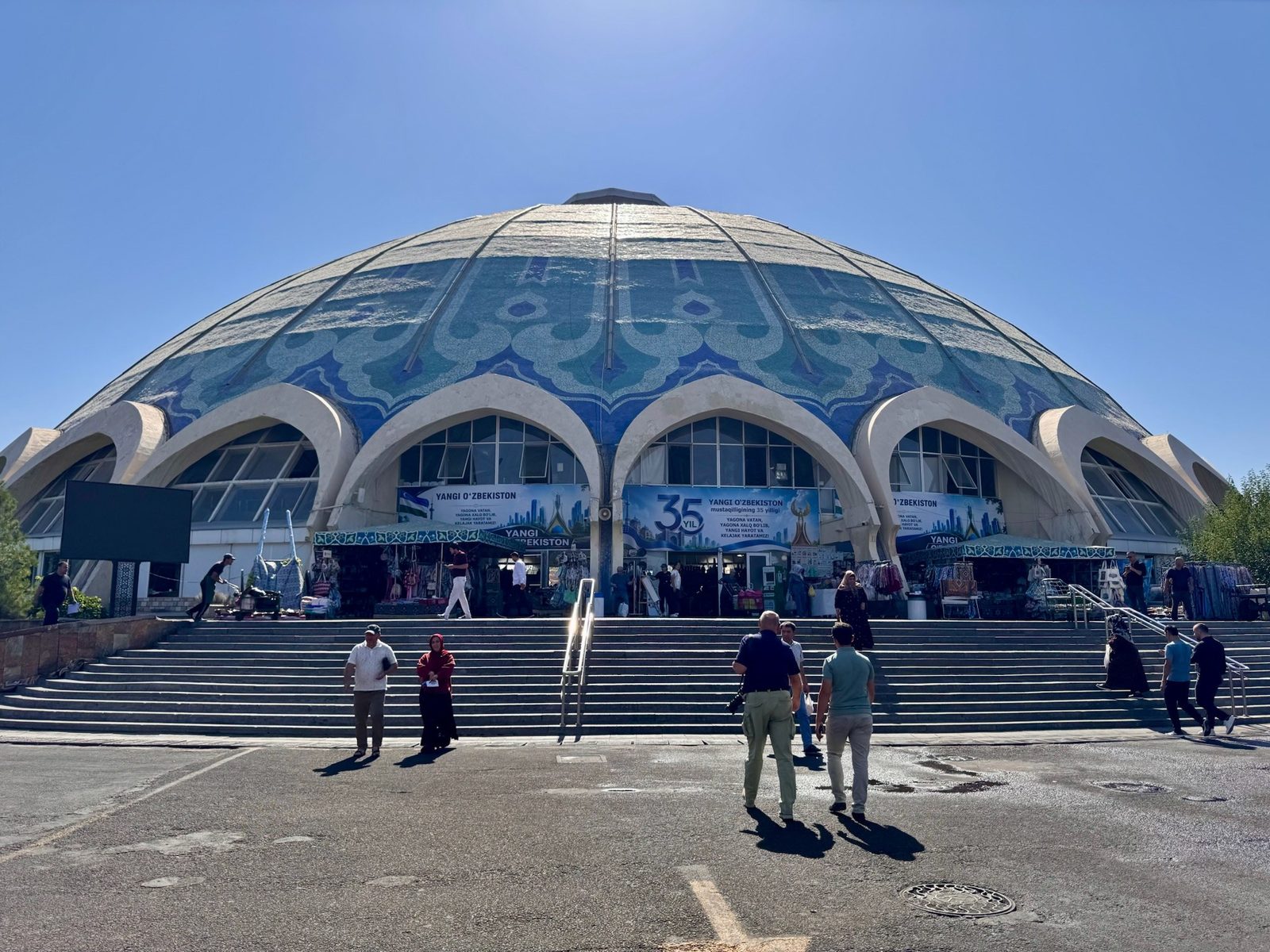
The Soviet chapter is easiest to see in Tashkent. On 26 April 1966 an earthquake badly damaged the city, and its centre was rebuilt. In July 2026 ten buildings of that era, from Did you know? Tashkent’s Chorsu dome is younger than the city’s metro Trade at the old crossroads is centuries old, but the domed building opened only in 1990, thirteen years after the metro. Architects Vladimir Azimov and Sabir Adylov gave it a main dome of 86 m ringed by seven smaller ones. Read more → to Did you know? A metro station where Ulugh Beg meets Gagarin Kosmonavtlar station, opened in 1984, has ceramic medallions of Ulugh Beg, Galileo, Icarus, Gagarin and Tereshkova, and glass stars in the ceiling that hint at the Milky Way. Read more → Did you know? A metro designed to ride out a magnitude-9 earthquake The three original lines of the Tashkent Metro were built to withstand an earthquake of magnitude 9.0, and the tunnels lie unusually shallow, only 8–25 m below the street. Read more → station, were inscribed on the UNESCO World Heritage List. History here is still being added to. Walk the route with our guide to Tashkent modernism.
In short
- Six layers on one route: the Afrasiyab painting and Ulugh Beg's observatory in Samarkand, the Samanid Mausoleum and the Kalyan minaret in Bukhara, the Did you know? A 14-metre-wide base for a tower that stopped at 29 m Kalta-Minor was begun in 1852 and meant to reach 70–80 m, but work halted in 1855 at about 29 m when its khan died. It is said to be the only minaret covered entirely in glazed tiles. Read more → in Khiva, and Tashkent modernism. Trains link the cities.
- Termez and its Buddhist sites are a separate trip to the south: plan an extra day or a domestic flight, or take the Buddhist South tour.
- See the Afrasiyab painting with a guide: without the story, it is just a faded mural.
- Come in spring or autumn. In summer Bukhara and Khiva are very hot at midday, and most monuments stand in open sun.
- Read on: what the Silk Road was and Uzbekistan's UNESCO sites.
© Photos
- The 7th-century Ambassadors' Painting in the Afrasiyab Museum, Samarkand — Nassima Chahboun / Wikimedia Commons · CC BY-SA 4.0
- Fayaz Tepe Buddhist site, Termez — Prof. Mortel / Wikimedia Commons · CC BY 2.0