
Places in this article: Samarkand · Bukhara · Tashkent · Tajikistan
The Sogdians: merchants of the Silk Road and where to see their heritage
In 1907 the archaeologist Did you know? Letters to Samarkand from around 313 are kept in London In 1907 Aurel Stein found a bundle of letters in a watchtower west of Dunhuang. Written by Sogdian merchants around 313, they are among the earliest Sogdian documents known, and one of them was to be sent to Samarkand. The British Library keeps them today. Read more → searched a ruined Chinese watchtower about 90 km west of Dunhuang and found a lost mailbag. Inside were letters written in Sogdian, the language of Samarkand, around 313. One merchant reported to his partners back home on musk, linen and silver; a young woman wrote to her mother that she was stuck in Dunhuang without money. The envelope of one letter still says where it was going: Samarkand.
The Sogdians were the people of that city and its oases, and for centuries they were the merchants of the .A network of caravan routes between China and the Mediterranean. Samarkand, Bukhara and Khiva grew rich as stops along it. Here is who the Sogdians were, how their trade reached China, and where you can see their heritage today in Samarkand, Bukhara and across the border in .Did you know? Penjikent's walls showed Rustam long before Ferdowsi From the 5th to the 8th century the Sogdian houses of ancient Penjikent were painted with feasts, gods and the hero Rustam, centuries before Ferdowsi wrote the Shahnameh. Many murals are now in the Hermitage and in Dushanbe. Read more →
Who the Sogdians were
Sogd, or Sogdiana, was the land of the Zarafshan valley and its neighbouring oases, between the Amu Darya and the Syr Darya. Its cities were Samarkand, Bukhara, Penjikent and Paykend, and by the time of the Persian Achaemenid kings Samarkand was its capital. The Greeks knew it as Did you know? Legend: Alexander found Samarkand more beautiful than told Alexander the Great took Maracanda, ancient Samarkand, in 329 BC. Legend credits him with saying that all he had heard of the city was true, except that it was even more beautiful. No ancient author records the words. Read more → when Alexander the Great took it in 329 BC.
The Sogdians farmed the irrigated valley, but they are remembered for something else. From the last centuries BC to about the 10th century AD they led much of the caravan trade between China, India, Persia and Byzantium. In 568 a Sogdian took part in a mission from the Turkic khaganate to Constantinople, sent to talk about the silk trade. How Sogd fits into the longer story of the country is in the history of Uzbekistan in 10 minutes.
A language written from Samarkand to China
Sogdian was an Eastern Iranian language, and by the 7th century it was the common language of trade along the Silk Road. It had its own script, which grew out of the Aramaic alphabet. The script travelled further than the language: the Uyghurs adopted it, the Old Uyghur alphabet gave rise to the Mongolian script, and Manchu descends from that line in turn.
Most of what we know comes from letters and documents. The Ancient Letters found by Stein are the earliest substantial texts in Sogdian, and today they are kept in the British Library. Another archive was found in the early 1930s at Mount Mugh, in the mountains of today’s Tajikistan: business and official documents of about 700 from the court of Devashtich, the ruler of Penjikent. Sogdian texts from Dunhuang and Turfan add Buddhist, Manichaean and Christian writings: Sogdian merchants carried more than goods.
Merchants from Samarkand to Chang’an
The trade worked through communities. Sogdian families settled in the towns along the road into China, from Dunhuang to the capitals, and kept in touch with Samarkand by letter, as the mailbag shows. In China the leader of such a community held the title sabao, a Chinese form of the Sogdian word for a caravan leader.
One of them, Wirkak, known in Chinese as Shi Jun, held that office in Liangzhou and died in 579 at the age of 86. His tomb was found in 2003 in Xi’an. The epitaph is written in Chinese and in Sogdian, and the stone sarcophagus shows banquets, hunts, processions and a caravan journey. Under the Tang dynasty (618–907) Sogdians were well known in China as merchants and officials.
For what moved along the road, and why it ran through these oases, read what the Silk Road was.
Afrasiyab and the Ambassadors’ Painting
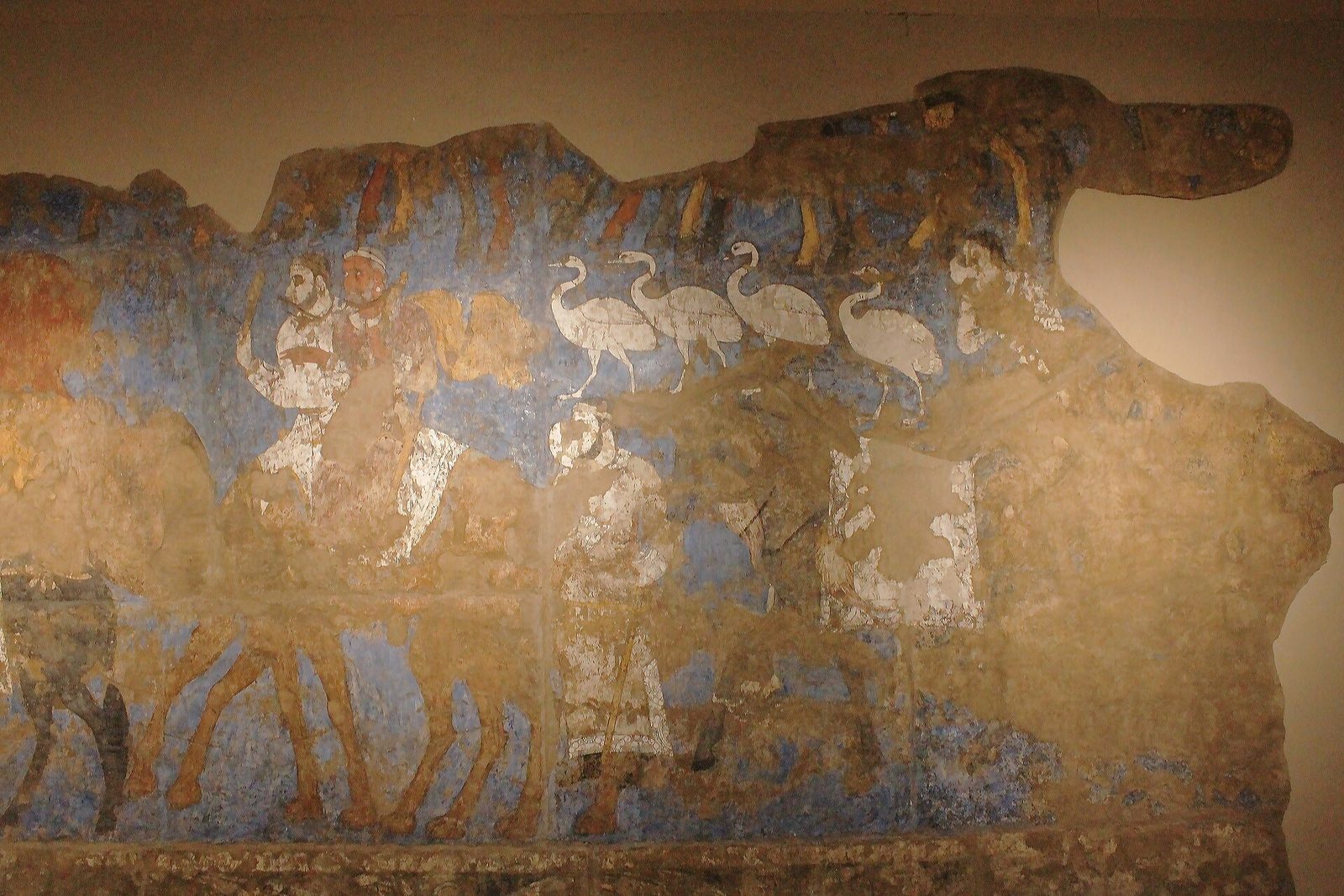
Sogdian Samarkand stood on the Did you know? A 7th-century mural shows envoys from Korea Uncovered by road builders in 1965, the Ambassadors' Painting at Afrasiyab shows delegations bearing gifts, Chinese with silk among them, and two men in feathered hats thought to be envoys from Korea's Goguryeo. Read more → hill until the Mongols took it in 1220. In 1965, when a road was cut through the hill, workers uncovered the walls of a hall painted between 648 and 651 for King .Did you know? The Ambassadors’ Painting was found by road builders The murals of about 650 for King Varkhuman came to light in 1965, when a road was cut through the Afrasiyab hill; the bulldozers had already taken their upper part. A Sogdian inscription on one envoy’s robe names him: Pukarzate, chancellor of Chaganian. Read more → On the west wall, envoys from many lands come before him, and a Sogdian inscription on one robe names its wearer: Pukarzate, chancellor of Chaganian. The north wall shows China, with the emperor hunting and the empress in a boat. Two men with feathers in their caps are usually identified as envoys from Goguryeo, a Korean kingdom.
The Afrasiyab Museum, founded in 1970, stands on the hill and keeps the painting and more than 20,000 finds. It is open Monday to Saturday, 9:00 to 17:00; allow an hour. The painting needs a story to come alive, so we see it with a guide, and our 7-day Ambassadors of Afrasiyab tour is built around it. Other museums of the city are in museums of Samarkand and Bukhara.
Penjikent: a Sogdian town across the border
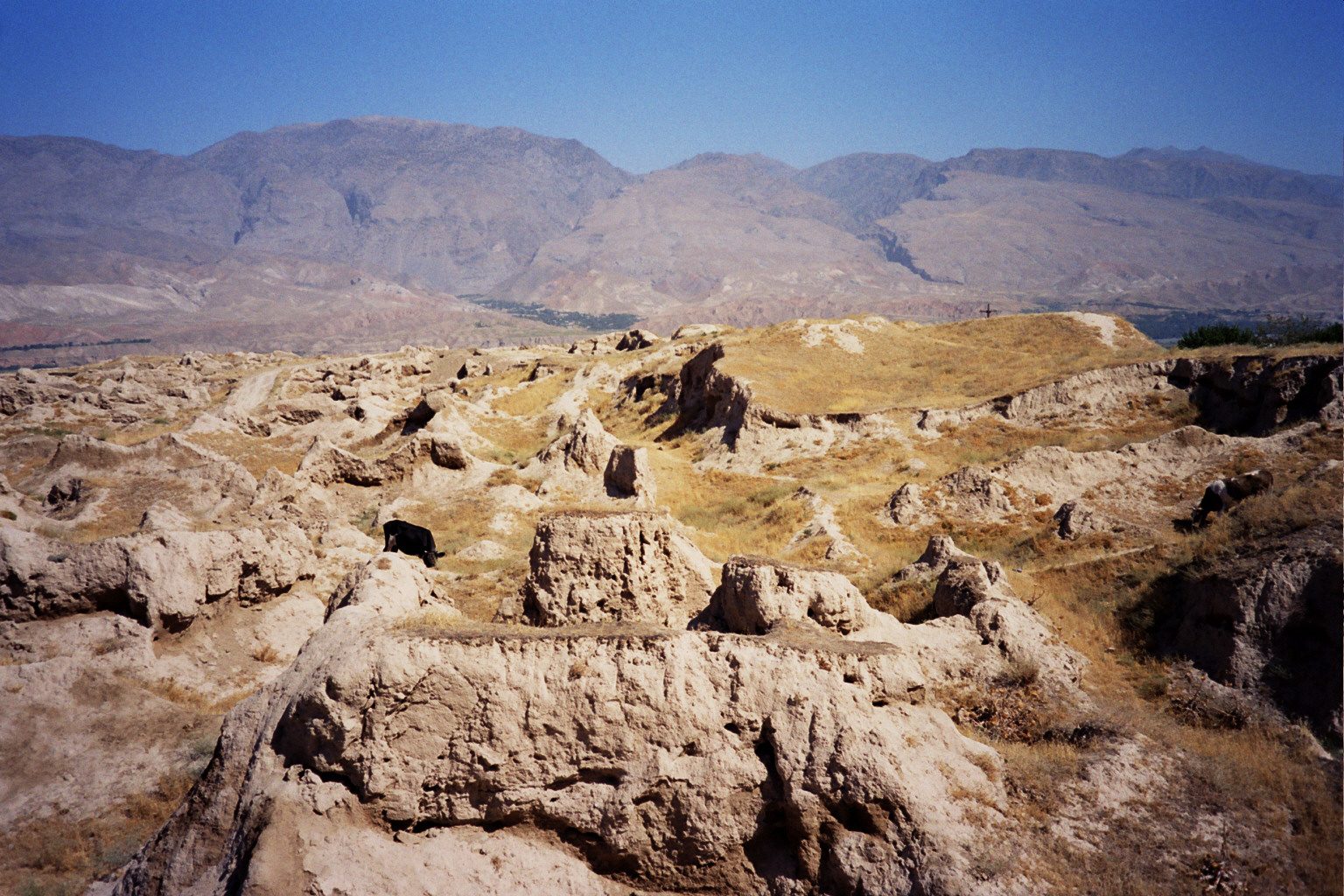
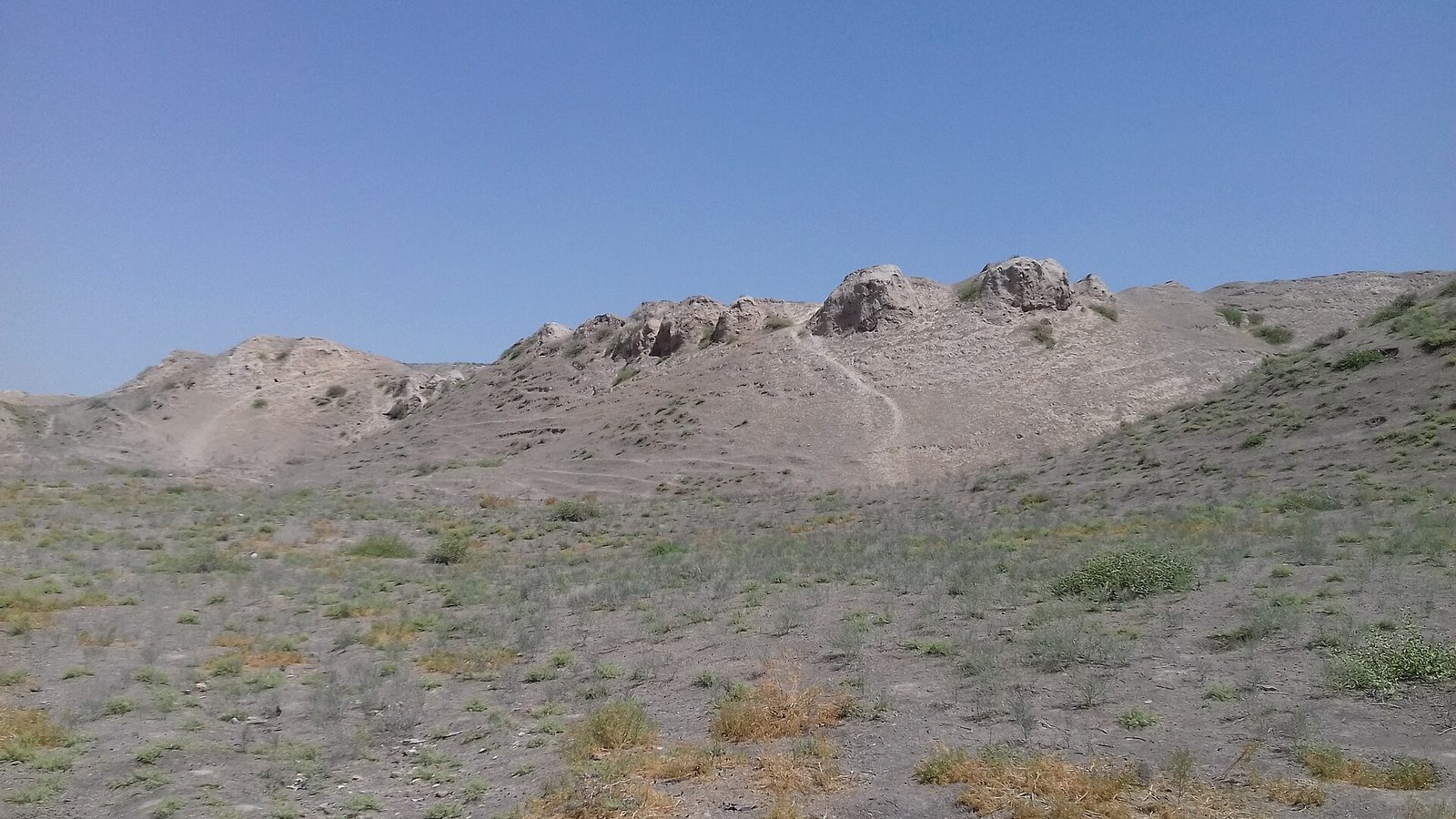
Upstream on the Zarafshan, just across the border in Tajikistan, ancient Penjikent stands on a terrace above the modern town. It grew from the 5th century AD, its houses were painted with murals until 722, and by the end of the 8th century the town on the terraces was abandoned. That is why archaeologists found whole streets of a Sogdian town, not layers of later building.
The best murals went to museums: some are in the Hermitage in St Petersburg, others in the National Museum of Antiquities in .Did you know? Tajikistan’s capital is literally called “Monday” Dushanbe means “Monday” in Tajik — literally “the second day after Saturday”. By tradition, a lively market was held here every Monday. The first records of a village with this name date from the 17th–18th centuries. Read more → On site you walk the streets of the ruins, then see the finds in the Did you know? Legend says the first great Persian poet was born blind Legend, via the historian Awfi, says Rudaki (c. 858–941), honoured as the father of Tajik literature, was born blind. Scholars doubt it: his verses paint nature too vividly. He came from Panjrud, near Penjikent. Read more → museum in the town. Penjikent is a day from Samarkand through the Jartepa crossing; how the border works is in our Tajikistan travel guide, and the Penjikent and Seven Lakes day adds the mountain lakes above the town.
Paykend and Varakhsha near Bukhara
Paykend, about 40 km south-west of Bukhara, was called the city of merchants: a Sogdian trading town that grew from a settlement of the last centuries BC. It was taken by the Arabs in 706, flourished again under the Samanids and faded in the 11th century, when water no longer reached it. Excavations began in 1981; you walk among the citadel, the town walls and the foundations of a mosque, and a museum on site shows the finds. Since 2023 Paykend has been part of the UNESCO World Heritage property Silk Roads: Zarafshan–Karakum Corridor.
Varakhsha, about 39 km north-west of Bukhara, was the seat of the Bukhar Khudahs, the pre-Islamic rulers of Bukhara. In the 8th century its palace was painted with a king riding an elephant and fighting tigers and monstrous beasts. The ruins are earthen mounds today, so we tell the story in town: the museum of Varakhsha and Bukhara ceramics is in the Did you know? A caravanserai that became a madrasah by a khan's word Nadir Divan-Begi built his 1622 building by Lyabi-Hauz as a caravanserai. At the opening Imam Quli Khan praised it as a fine madrasah, and a khan's word could not be taken back: a portal and cells were added, and a madrasah it became. Read more → khanqah at .Did you know? Bukhara's ponds were once its water supply Pools like Lyabi-Hauz, dug around 1620 and 46 × 36 m, were the city's main source of water. Most were filled in during the 1920s–30s because they spread disease; Lyabi-Hauz survived. Read more → How to combine both with other sights is in around Bukhara.
Where to see Sogdian finds in museums
- Samarkand: the Afrasiyab Museum, with the Ambassadors’ Painting.
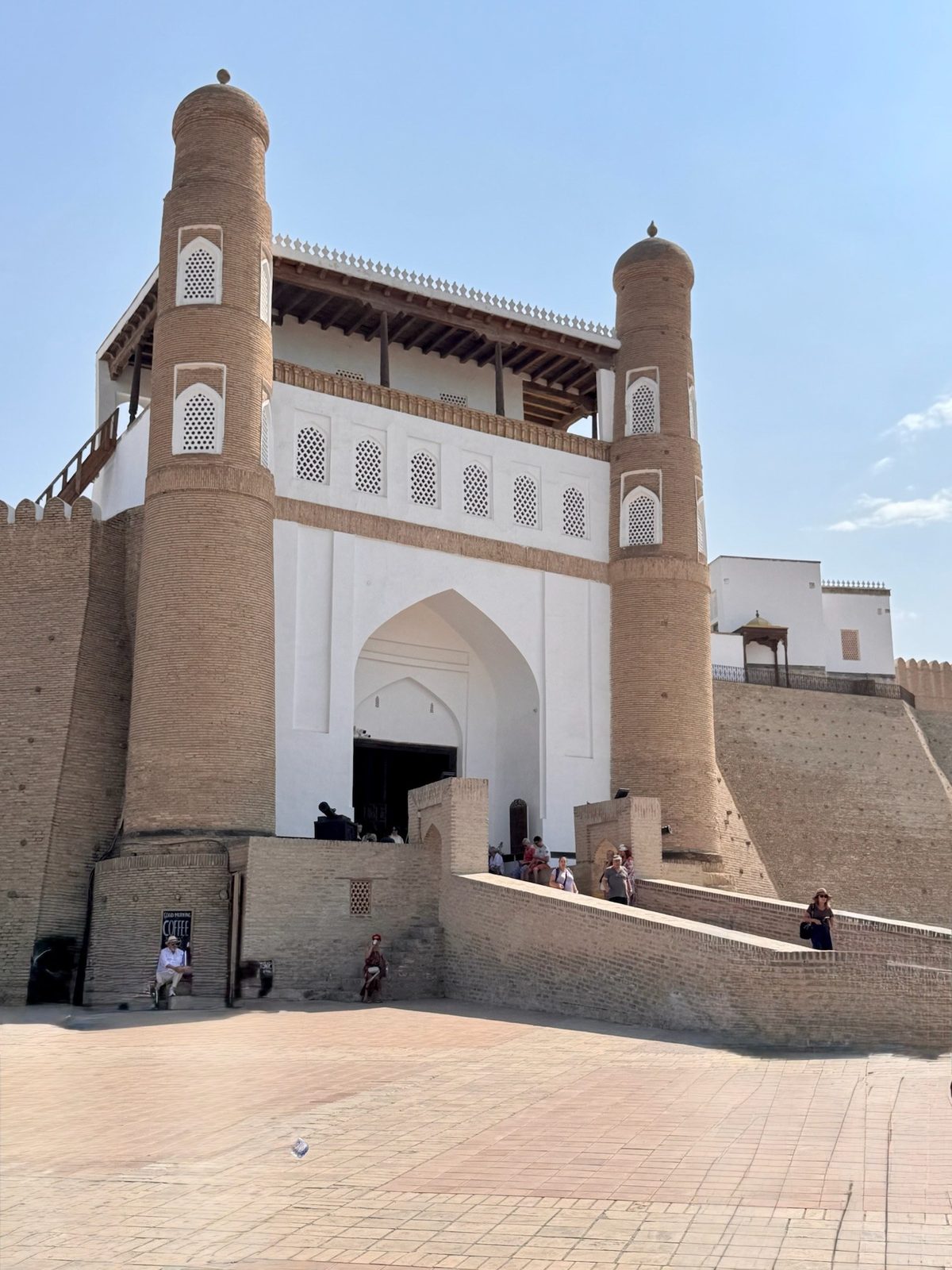
- Bukhara: the museum inside ,The fortress-residence of the rulers of Bukhara on a high artificial hill: the oldest structure in the city. Read more → where rooms show the archaeology of ancient Sogd and Bukhara; the Varakhsha museum at Lyabi-Hauz; the museum at Paykend. More in the Ark of Bukhara.
- Tashkent: the State Museum of History of Uzbekistan, and the Center of Islamic Civilization, whose halls run from Sogdiana to the Timurids. Both are in Tashkent museums.
- Penjikent: the ruins and the Rudaki museum, across the border in Tajikistan.
Sogdiana on a trip
The Sogdians are easy to follow on the classic route, because their cities are the ones you visit anyway. Our 8-day Sogdiana Unearthed tour is the archaeology version: the Museum of History in Tashkent, Afrasiyab and its painting, Paykend, the Ark and the Varakhsha paintings in Bukhara. The 7-day Ambassadors of Afrasiyab tour puts the painting at the centre of a first trip to Tashkent, Samarkand and Bukhara. On both, the guide speaks your language and is included in the price.
In short
- The Sogdians were the people of Samarkand, Bukhara and the Zarafshan valley, and for centuries the merchants of the Silk Road.
- Their language had its own script, from Aramaic; it went on to the Uyghur and Mongolian scripts. The Ancient Letters of about 313, found by Aurel Stein in 1907, are in the British Library.
- See the Ambassadors’ Painting of 648–651 in the Afrasiyab Museum in Samarkand, Monday to Saturday, 9:00–17:00.
- Near Bukhara, Paykend has ruins and a museum on site; the Varakhsha paintings are best seen at Lyabi-Hauz. Penjikent is a day across the border from Samarkand.
- Come in April–May or September–October: the excavations are in open sun, and in summer we go there early in the morning.
© Photos
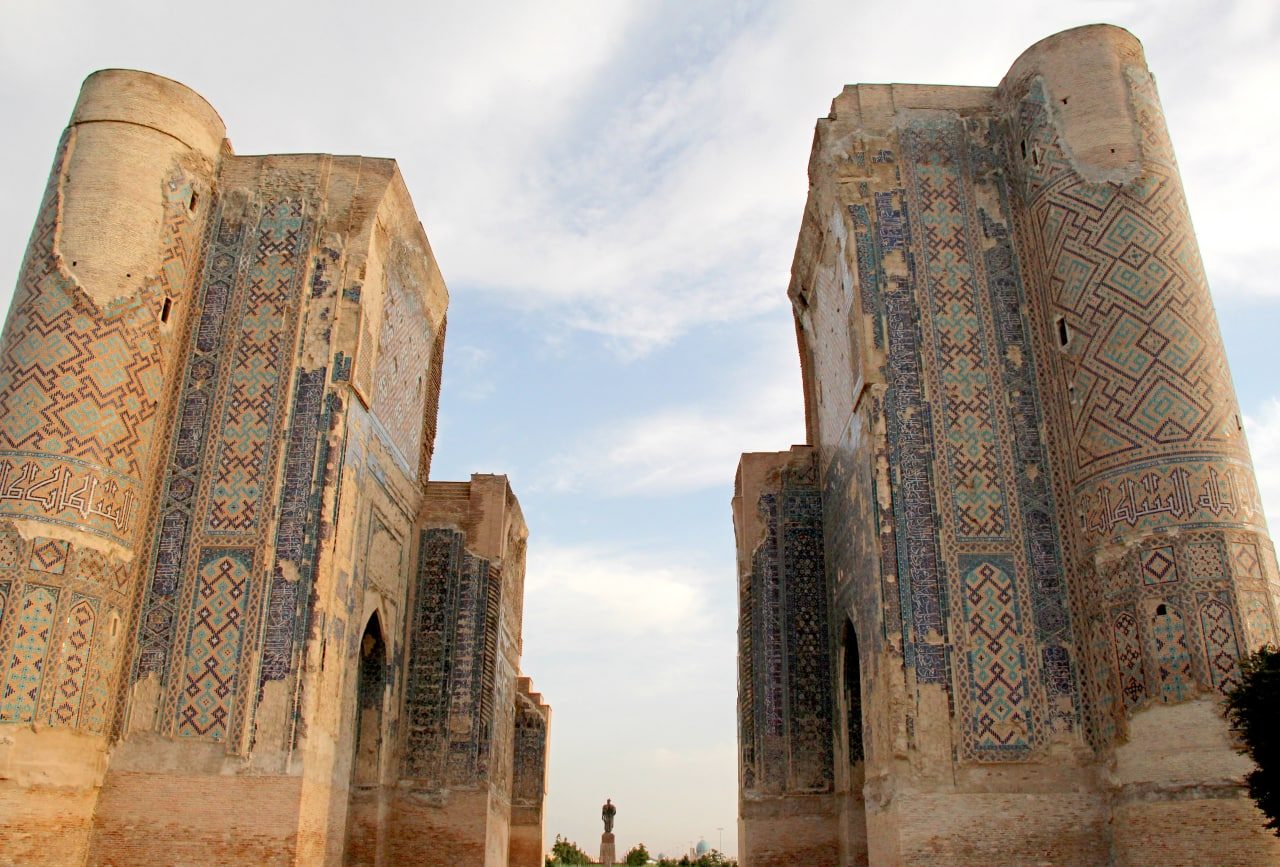
- Afrasiyab ancient settlement, Samarkand — Akhemen / Wikimedia Commons · CC BY-SA 4.0
- The 7th-century Ambassadors' Painting in the Afrasiyab Museum, Samarkand — Nassima Chahboun / Wikimedia Commons · CC BY-SA 4.0
- Ruins of ancient Penjikent and the Zarafshan mountains, Tajikistan — upyernoz from Haverford, USA / Wikimedia Commons · CC BY 2.0