
 Deutsch
 English
 Español
 Français
 Italiano
 Polski
 Português
 Suomi
 Svenska
 Türkçe
 Русский
 עברית
 한국어
 中文
 日本語
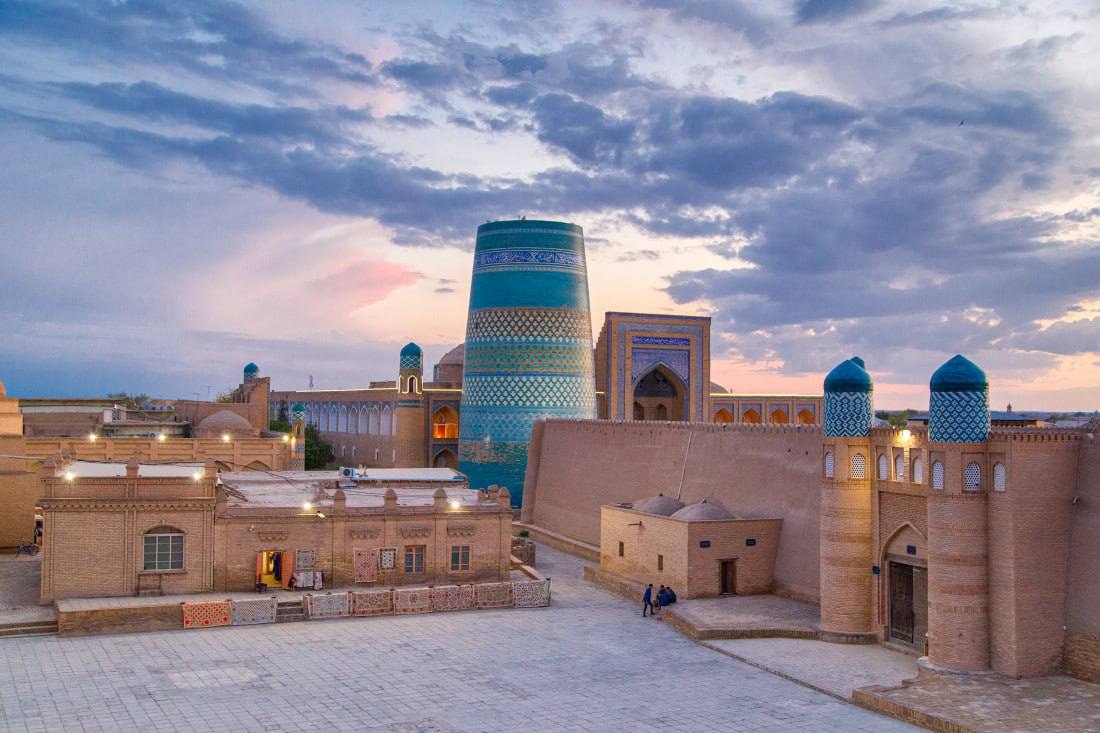
Places in this article: Samarkand · Bukhara · Khiva · Tashkent
Uzbekistan’s UNESCO Sites: What’s Actually There
Eight in the morning at Did you know? Tashkent’s Chorsu dome is younger than the city’s metro Trade at the old crossroads is centuries old, but the domed building opened only in 1990, thirteen years after the metro. Architects Vladimir Azimov and Sabir Adylov gave it a main dome of 86 m ringed by seven smaller ones. Read more → in Tashkent. Under the huge turquoise dome a woman lays out balls of kurt, salty dried cheese, while a man with a cart of flatbreads calls «posht-posht» to clear the way. The dome was built in the 1980s, and since July 2026 it has been protected as World Heritage, just like the .Did you know? The Registan's sun-carrying lion went on a banknote The Sher-Dor Madrasah (1619–1636) is named for the big cats with the sun on their backs on its portal. The image appeared on the reverse of Uzbekistan's 200-som note of 1997. Read more → Trade under it has not changed at all.
That is what sets Uzbekistan's UNESCO list apart. Almost nothing on it is fenced off. Three sites are whole historic town centres where people live, pray and trade; another is ten 20th-century buildings in Tashkent that people walk through every day. You do not look at these places from behind a rope. You walk in.
We are a tour operator in Tashkent, and here is the list as it stands in October 2026: eight World Heritage sites, what each one actually is, where to stand, and how they fit into a trip. Along with them, one note that older guidebooks miss: Termez is not on the list yet.
Itchan Kala, Khiva (1990): the first and the most complete
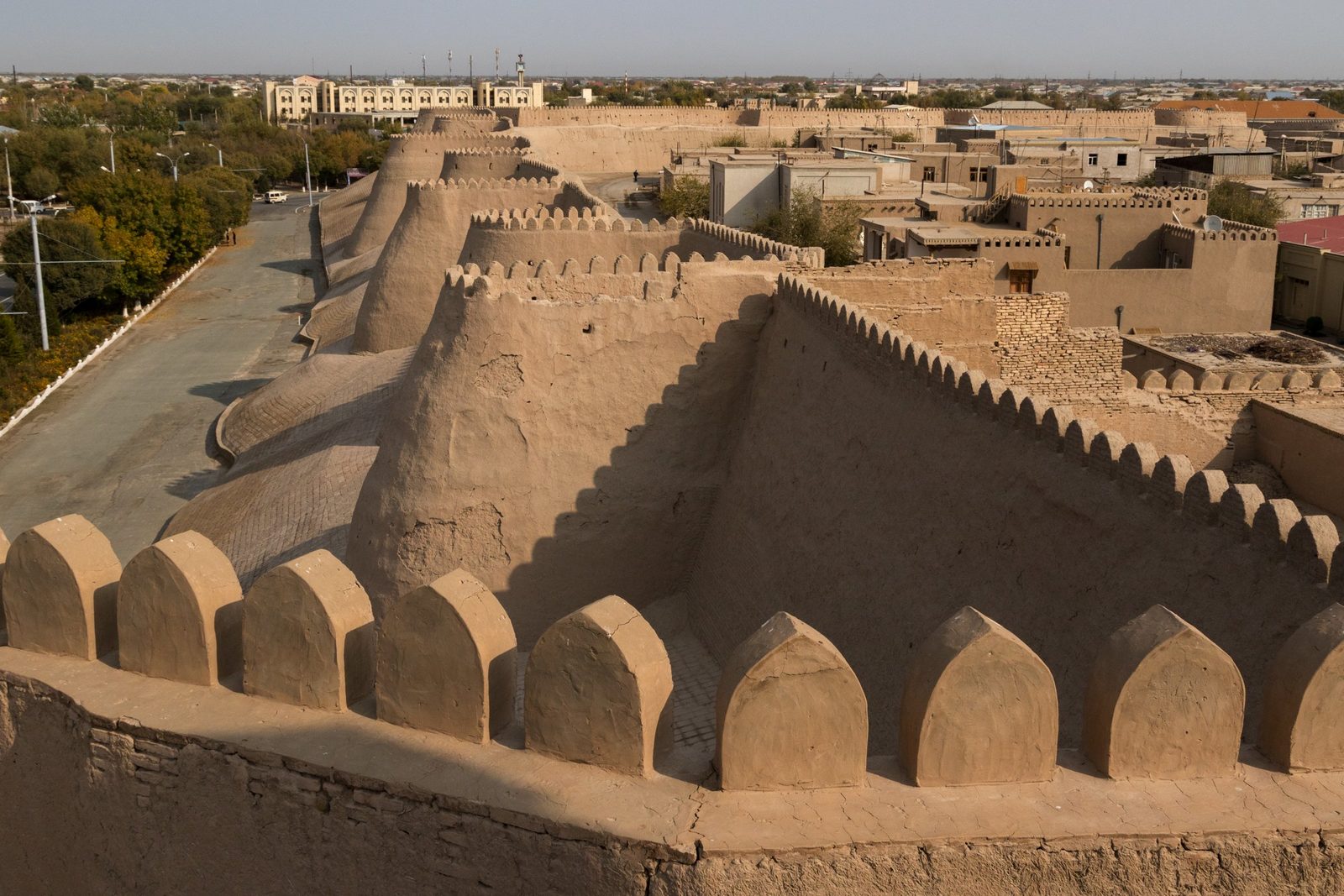
Uzbekistan's first World Heritage site was inscribed as a whole: the inner town of Khiva with its clay walls about ten metres high, its streets, mosques, madrasahs and houses. What counts here is not any single building but the way they make up one town together.
Where to stand: on the wall by the west gate at sunset. From up there you see how small Did you know? People still live inside Khiva's museum city Itchan Kala packs more than 50 historic monuments and about 250 old houses inside clay walls 8–10 m high and 5–6 m thick, and families still live and work in its lanes. Read more → is; you can cross it on foot in about fifteen minutes. Our guide to Itchan Kala has the route.
Historic Centre of Bukhara (1993): about 140 monuments and no fence
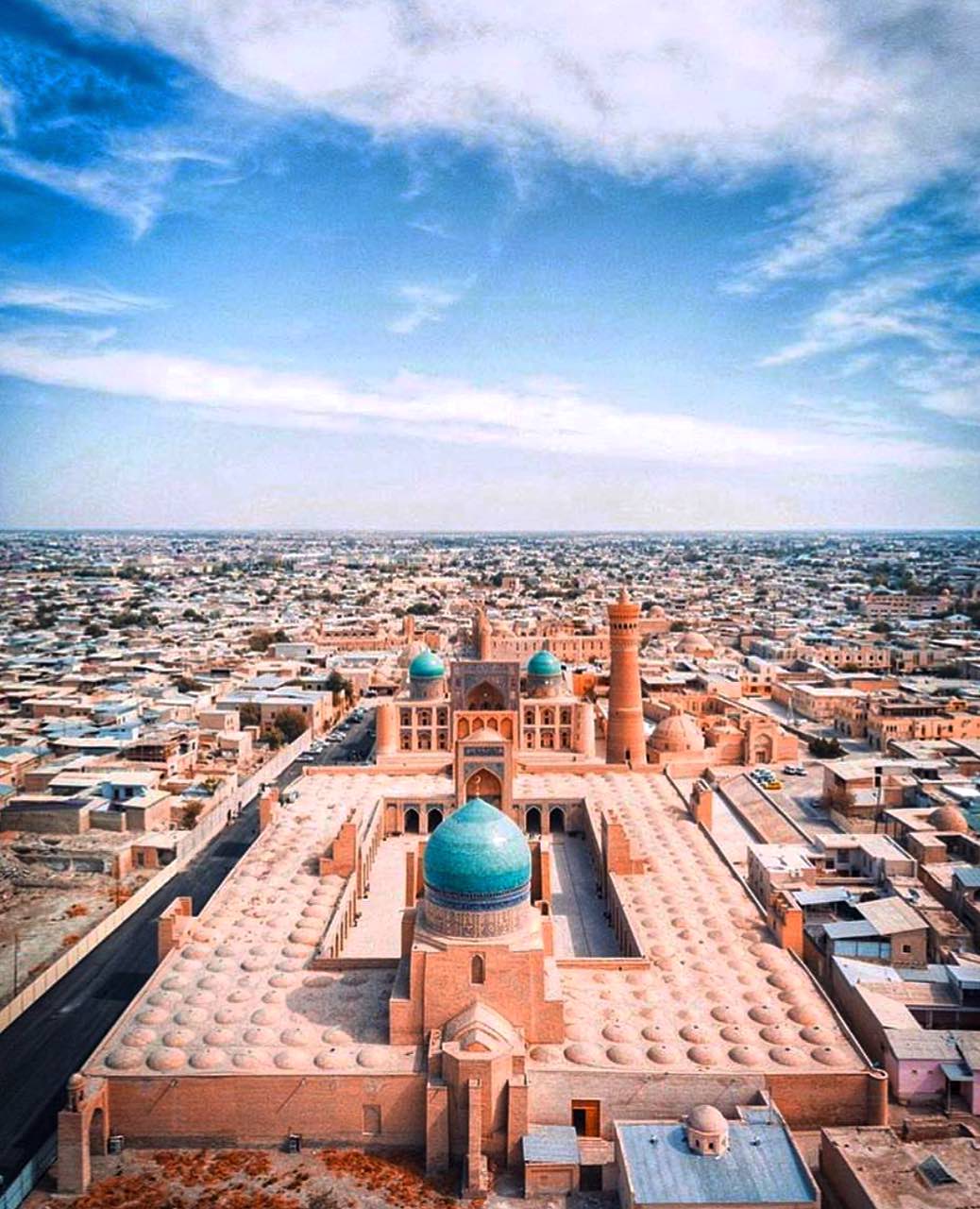
Bukhara is more than two thousand years old, and its historic centre holds about 140 listed monuments from the 9th to the 19th century. The listing covers not only the postcard sights, ,The fortress-residence of the rulers of Bukhara on a high artificial hill: the oldest structure in the city. Read more → the Did you know? Diggers went 13 m down and never found its base The Kalyan Minaret of 1127 rises about 46 m, and an excavation reached 13 m without finding the bottom of its foundations. Genghis Khan reportedly ordered it spared. Read more → and ,Did you know? Bukhara's ponds were once its water supply Pools like Lyabi-Hauz, dug around 1620 and 46 × 36 m, were the city's main source of water. Most were filled in during the 1920s–30s because they spread disease; Lyabi-Hauz survived. Read more → but the whole centre, with the old Did you know? Under Bukhara's domes merchants changed money and gold Four 16th-century trading domes still stand over old crossroads. Toki Sarrafon was the money changers' dome, where merchants from India and China swapped coins; Toki Zargaron held jewellers' workshops, Toki Telpak Furushon sold caps. Read more → and the quarters between them, because together they show how a A network of caravan routes between China and the Mediterranean. Samarkand, Bukhara and Khiva grew rich as stops along it. city worked.
What people miss: one of the oldest monuments stands in a park, away from the main street. The Did you know? Buried in mud, this tomb escaped Genghis Khan The 10th-century Samanid Mausoleum, one of the oldest monuments of Islamic Central Asia, was covered by flood mud and sand before the Mongols came in 1220. Hidden for centuries, its brick lacework survived intact. Read more → of the early 10th century is built of brick laid like basketwork. Many groups walk past it because it is small.
Historic Centre of Shakhrisyabz (2000): the site at risk
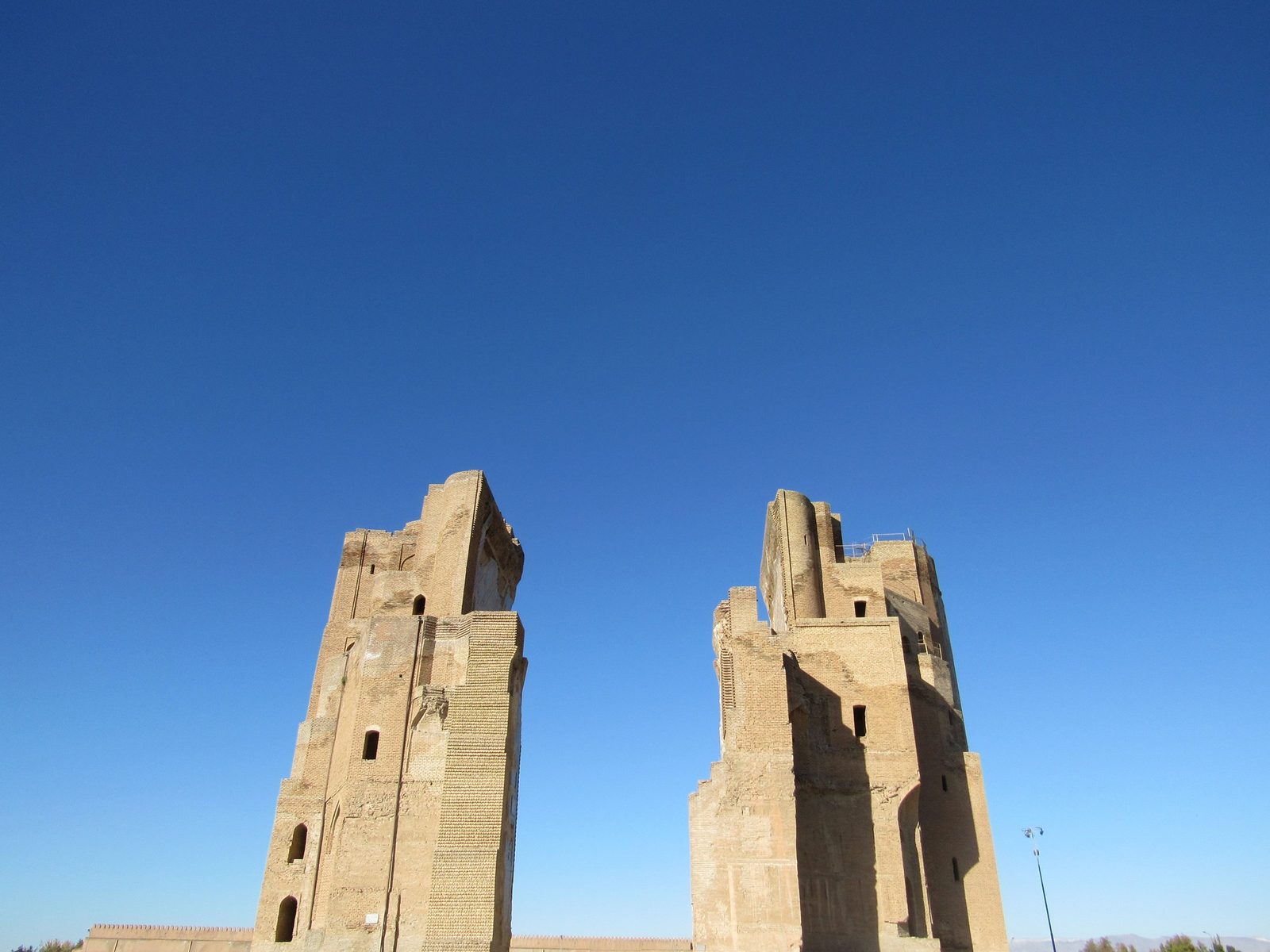
This is Amir Timur (Tamerlane, 1336–1405), founder of the Timurid empire, which had its capital in Samarkand. Born near Shahrisabz. Read more →'s home town. The main sight is what remains of the gate of his Ak-Saray palace: even the two surviving pylons show how enormous the entrance was.
Shakhrisyabz is also a warning for the whole list. In 2016, after a large-scale rebuilding of the centre, UNESCO placed it on the List of World Heritage in Danger, and it is still there. Uzbekistan is now preparing a smaller site focused on The ruins of Amir Timur's palace in Shahrisabz, his home town. Only parts of the giant entrance arch still stand. Read more → and the Timurid monuments, to be submitted by 2029. World Heritage status is not given for ever; it has to be kept. Shahrisabz is an easy day from Samarkand, for example on our trip to Shahrisabz with a guide and tickets included.
Samarkand – Crossroad of Cultures (2001): a city of two thousand years
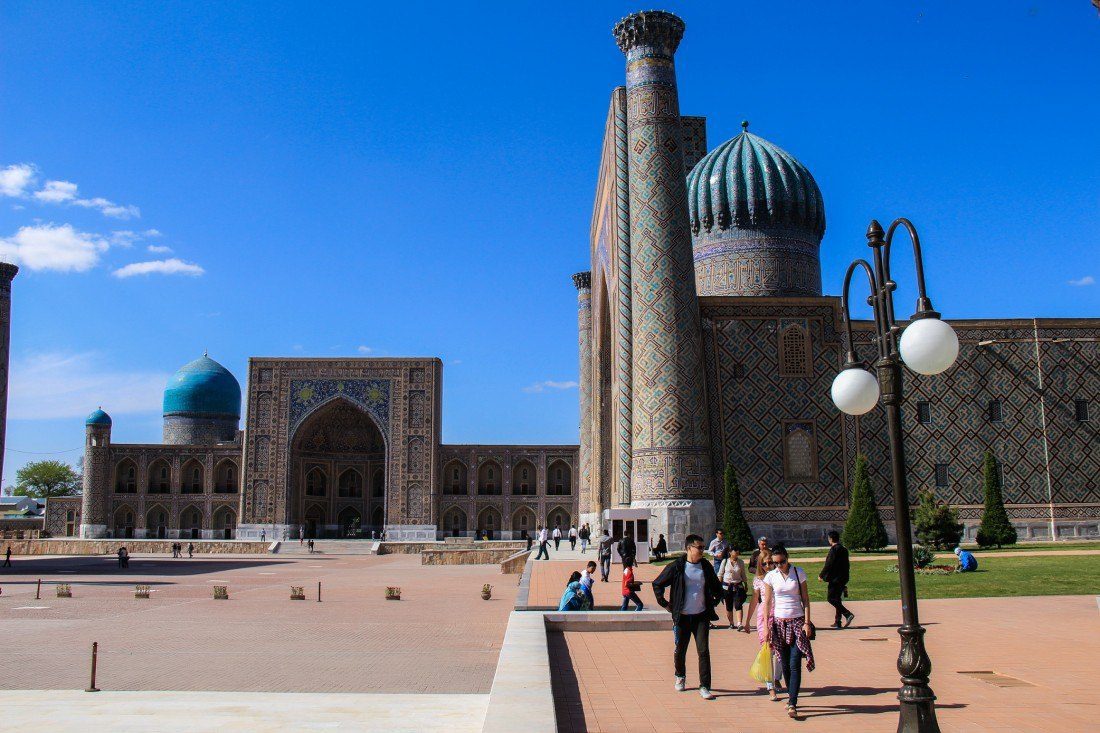
The Registan, ,Did you know? Why Shah-i-Zinda means 'the Living King' The necropolis grew around the shrine of Qutham ibn Abbas, a cousin of the Prophet Muhammad. Legend says he did not die in battle but went down a deep well to a garden of paradise, where he lives on. Read more → the ,Did you know? 95 elephants hauled stone for Timur's great mosque Bibi-Khanym, begun in 1399 after Timur took Delhi, was the largest mosque of his empire. Some 200 stonecutters worked on site and 95 elephants brought from India hauled the loads; the courtyard was meant to hold 10,000 people. Read more → ,Did you know? Timur's tombstone went to Persia and came back The dark-green jade slab on Timur's grave in Gur-e-Amir was carried off by Nader Shah in 1740. It broke, and on his advisers' urging he sent it back to Samarkand. Read more → the :Did you know? Ulugh Beg measured the year to within 25 seconds Working at his Samarkand observatory, Ulugh Beg put the tropical year at 365 days 5 h 49 min 15 s, about 25 seconds too long, closer than Copernicus a century later. Read more → all of them belong to one listing. It covers the city as a whole, from the ancient settlement of Did you know? A 7th-century mural shows envoys from Korea Uncovered by road builders in 1965, the Ambassadors' Painting at Afrasiyab shows delegations bearing gifts, Chinese with silk among them, and two men in feathered hats thought to be envoys from Korea's Goguryeo. Read more → to the Timurid domes. What UNESCO values most is some two thousand years of cultural exchange on the Silk Road; Timurid architecture is simply its most visible layer.
Where to stand: on the Afrasiyab hill. From there you see where the city stood before the Mongols and where it stands now. How to see it all in a few days is in Samarkand in 1, 2 and 3 days.
Western Tien Shan (2016): mountains instead of domes
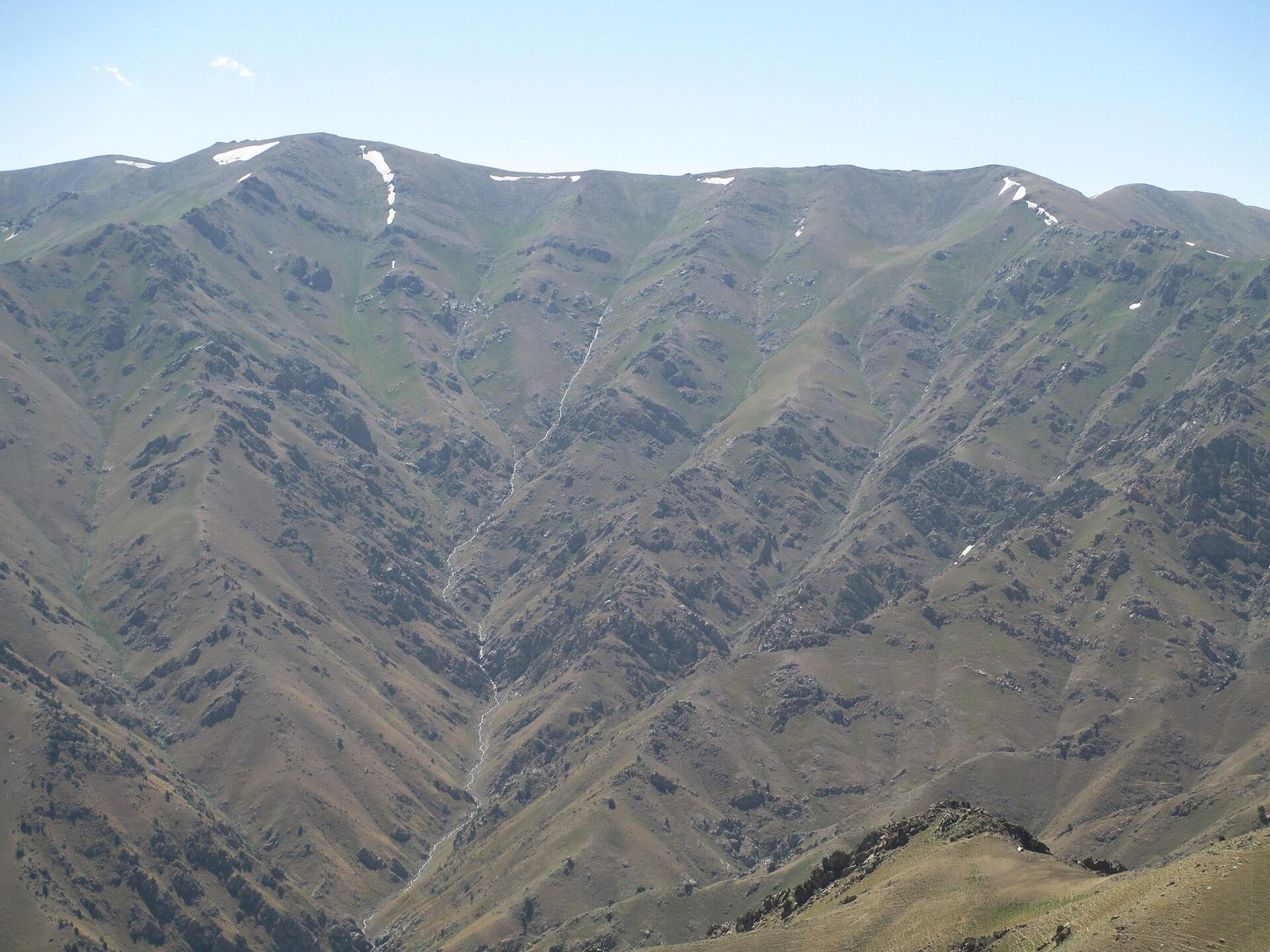
A natural site, shared with Kazakhstan and Kyrgyzstan: mountain ecosystems and forests of wild apple and walnut. The Uzbek part lies in the Did you know? Snow leopards live in a reserve near Tashkent The Chatkal Biosphere Reserve, founded in 1947, spans 1,500–3,900 m on the Chatkal Range. It protects 770 plant species and rare animals including the snow leopard and Menzbier's marmot. Read more → range, a few hours' drive from Tashkent. Few visitors see it, simply because it lies off the Samarkand, Bukhara and Khiva route. For a taste of these mountains, read about the mountains near Tashkent.
Cold Winter Deserts of Turan (2023): the second natural site
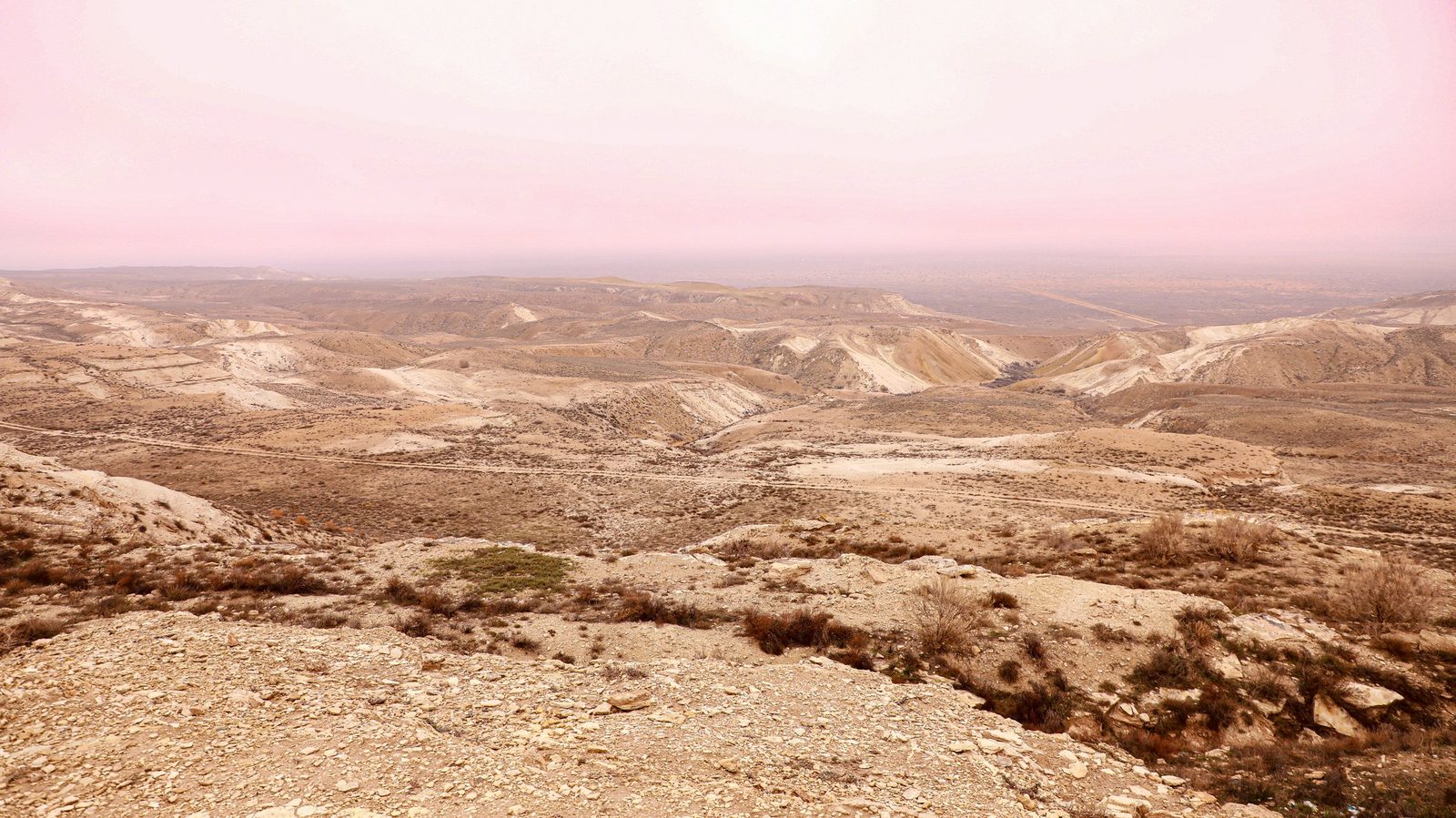
Another transnational site, shared with Kazakhstan and Turkmenistan. It protects deserts with harsh winters and hot summers, and the animals and plants that have adapted to both. The Uzbek part is on the Did you know? Giant stone “arrows” on the Ustyurt plateau were hunting traps Along the Ustyurt cliffs run low stone walls called arans, laid out as arrows, triangles and even stars. Saiga and gazelles run along a wall rather than over it, so hunters steered herds into pens. They were used from the Bronze Age on. Read more → in Karakalpakstan. Getting there takes time, and travellers usually see it on an expedition to the Aral, such as our Aral Sea extension.
Silk Roads: Zarafshan–Karakum Corridor (2023): the stops, not the capitals
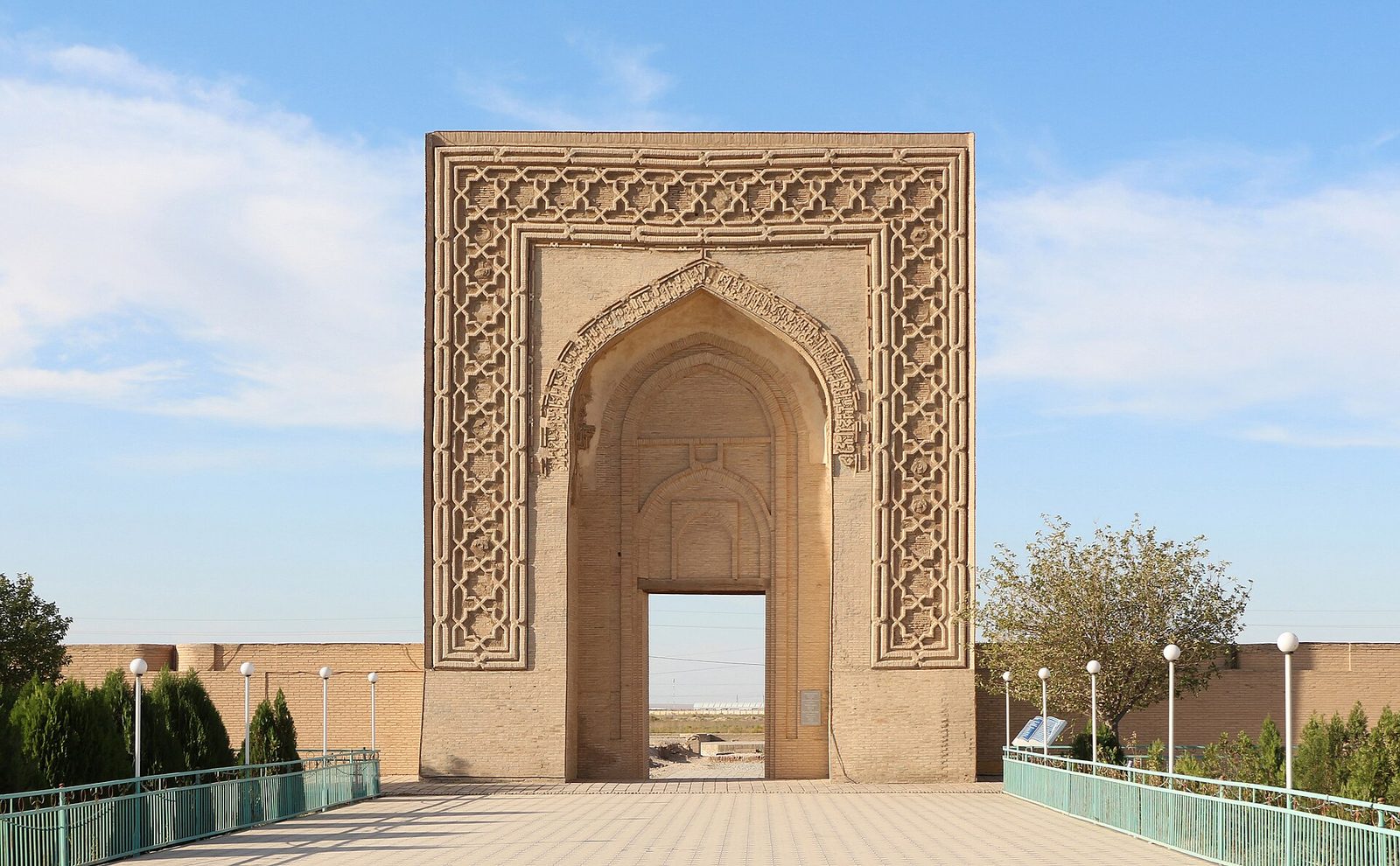
Shared with Tajikistan and Turkmenistan, this site protects the infrastructure of trade itself along an 886 km stretch of road: caravanserais, settlements, mosques, minarets and mausoleums. Fifteen of its components are in Uzbekistan.
What people miss: you will see many of them without knowing they are World Heritage. The Did you know? Legend says a nomad chief built Rabat-i Malik Local tradition, recorded by a traveller in the 19th century, remembered the ruin as the castle of a khan and his heirs, built by a nomad chief called Malik Khan. What is known: the Karakhanids raised it around 1078–1079 on the road from Bukhara. Read more → caravanserai and its Did you know? A domed cistern by Rabat-i Malik is named “cold water” Across the road from Rabat-i Malik stands the Malik sardoba, a covered cistern of the same period; the Persian name means “cold water”. An underground channel brought water from the Zarafshan, and steps lead more than 10 m down under the dome. Read more → on the Navoi–Bukhara road, the minaret of Vabkent, the Did you know? A village renamed in honour of a Sufi master Bahauddin Naqshband (1318–1389), who gave his name to one of the largest Sufi orders, was born and buried near Bukhara in Qasr-i Hinduvan. The village was later renamed Qasri Orifon in his honour; the tomb over his grave dates from 1544. Read more → complex and the Did you know? A necropolis named after four men called Abu Bakr Chor-Bakr, 5 km from Bukhara, grew from 1559 around the grave of Abu Bakr Said, who died in 970 and was one of four Abu Bakrs, hence the name. Its 25 buildings joined UNESCO's list in 2023 in the Zarafshan-Karakum Corridor. Read more → necropolis near Bukhara, the ancient towns of Paykend and Varakhsha. Several of them are in our day trips around Bukhara.
Tashkent Modernist Architecture (2026): the newest and the most surprising
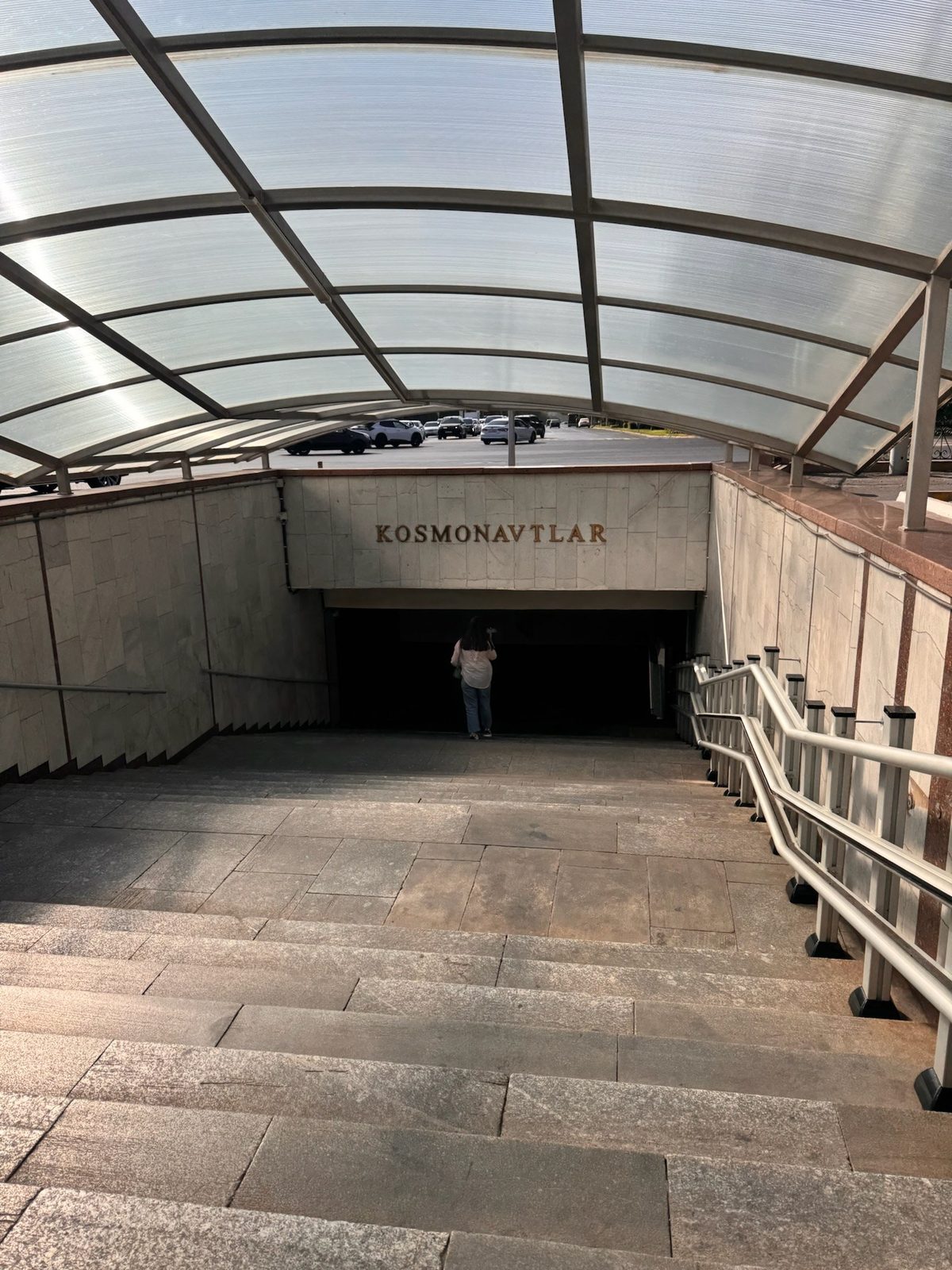
In July 2026, at the 48th session of the World Heritage Committee in Busan, «Tashkent Modernist Architecture» joined the list: ten buildings and complexes from the 1960s to the early 1990s. Among them are Chorsu Bazaar, the State Circus, the Palace of Friendship of Peoples, the State Museum of History, the Alisher Navoi Cinema Palace, Did you know? A metro station where Ulugh Beg meets Gagarin Kosmonavtlar station, opened in 1984, has ceramic medallions of Ulugh Beg, Galileo, Icarus, Gagarin and Tereshkova, and glass stars in the ceiling that hint at the Milky Way. Read more → Did you know? A metro designed to ride out a magnitude-9 earthquake The three original lines of the Tashkent Metro were built to withstand an earthquake of magnitude 9.0, and the tunnels lie unusually shallow, only 8–25 m below the street. Read more → station and the Did you know? A solar furnace near Tashkent catches the sun with 62 mirrors The Big Solar Furnace near Parkent, about 45 km from Tashkent, has worked since 1987. A field of 62 heliostats sends sunlight onto a parabolic concentrator of 10,700 small mirrors, and the heat is used to test and make new materials. Read more → outside the city. It is Uzbekistan's first national nomination to be inscribed in 25 years.
Where to stand: on the platform at Kosmonavtlar; all you need is a metro ticket. The full route is in our guide to Tashkent modernism, and the Tashkent Modernism tour covers it in two days with a guide.
What about Termez
Termez, the ancient Buddhist and then Islamic city in the south, has been on UNESCO's Tentative List since 2008 as «Ancient Termez». It is not on the World Heritage List itself yet. It is well worth the trip without that status, as our Termez guide shows, but it is too early to call it a World Heritage site.
UNESCO also lists the living culture of Uzbekistan as intangible heritage: among others, the cultural space of Baysun, Did you know? Shashmaqom is learned by ear: notes keep only its outline Shashmaqom, “six maqoms”, is the classical music of Bukhara: long suites of song, poetry and instruments. Written notes record only its basic framework, so it still passes from master to pupil. UNESCO proclaimed it a masterpiece of oral heritage in 2003. Read more → music, Navruz, and the culture and tradition of .Rice cooked in a kazan with carrots, onions and meat: the dish of every Uzbek celebration. Each region cooks it its own way. You will meet all of them on an ordinary trip.
In short
- Eight World Heritage sites as of October 2026: Itchan Kala, Bukhara, Shakhrisyabz, Samarkand, ,Did you know? Wild walnut and apple forests, now World Heritage Since 2016 the Western Tien Shan, shared by Uzbekistan, Kazakhstan and Kyrgyzstan, has been a UNESCO World Heritage Site. Its lower slopes hold wild walnut and apple forests and the wild relatives of apricot, pear and cherry. Read more → the Cold Winter Deserts of Turan, the Zarafshan–Karakum Corridor and Tashkent modernism.
- Five of them lie on or near the classic route: Tashkent, Samarkand, Shahrisabz (a day from Samarkand), Bukhara and its surroundings, and Khiva. Trains link the cities; the 11-day classic tour covers them at a calm pace.
- The natural sites need a separate trip: the Chatkal range from Tashkent, the Ustyurt plateau on an expedition to Karakalpakstan.
- Tashkent modernism fits into the first or last day of a trip, between the flight and the train.
- Come in spring or autumn; in summer see the open-air sites early in the morning or in the evening.
© Photos
- The Chatkal ridge of the Western Tien Shan, Tashkent region — German Stimban / Wikimedia Commons · CC BY-SA 3.0