
Places in this article: Tashkent
Termez and Surkhandarya: a guide to Uzbekistan’s Buddhist south
In the 7th century the Chinese monk Xuanzang stopped in Termez and counted about ten monasteries and a thousand monks. Their sanctuaries are still here, cut into a hill above the Amu Darya, a short drive from a 9th-century Sufi shrine and a museum that holds some 27,000 finds.
Termez is the far south of Uzbekistan and its warmest corner. Few first-time visitors get this far, and they miss the one place in the country where Buddhist, Hellenistic and Islamic history stand side by side. This is how we plan Termez and the Surkhandarya region for our guests: what to see and in what order, how to get there, when to come and how many days to give it.
Start at the Archaeological Museum
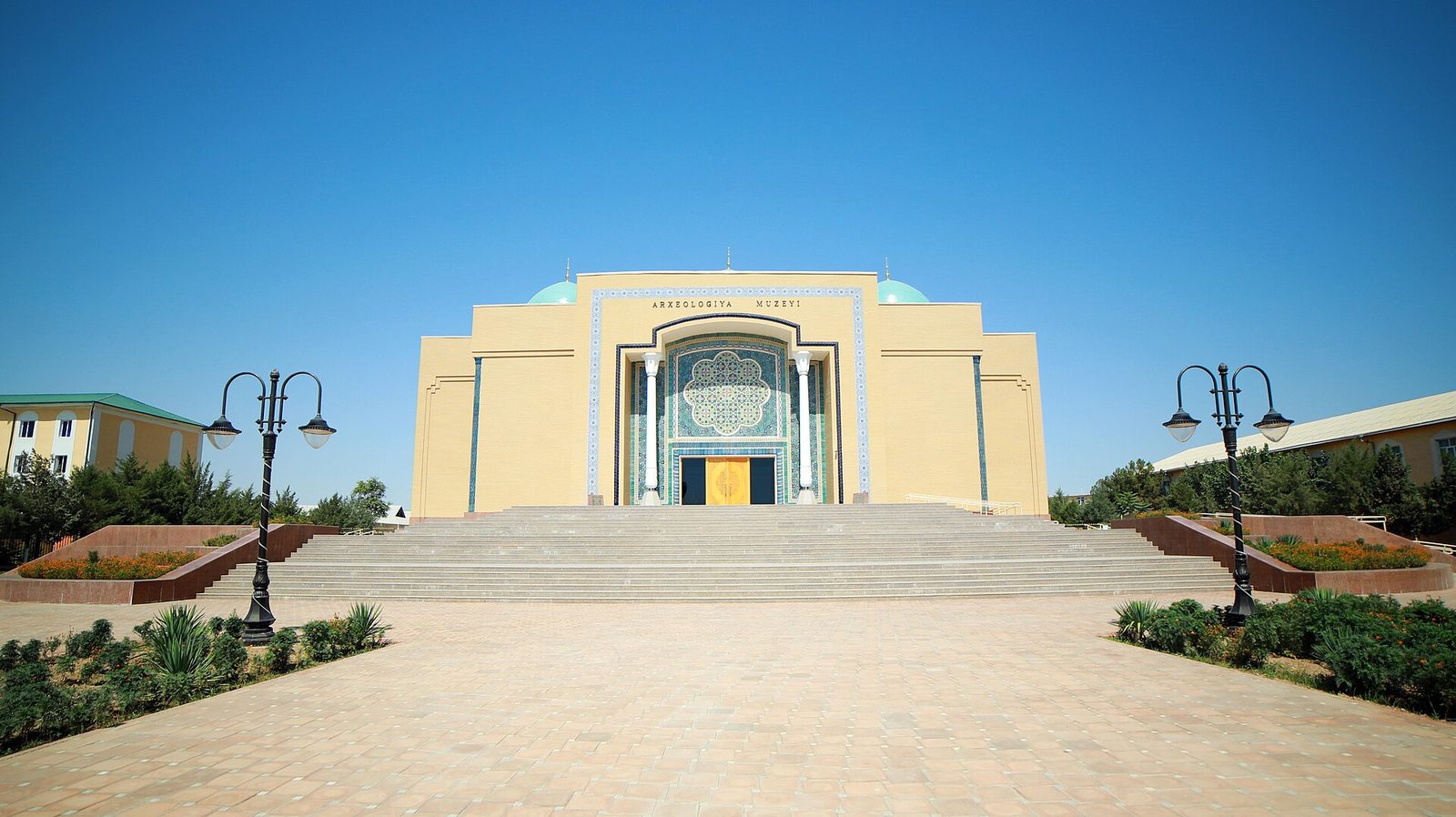
Termez marked its 2,500th anniversary in 2002 by opening an archaeological museum, and it is the best first stop of any visit. You will know the building by its turquoise dome. Inside are around 27,000 items: Bactrian and Kushan sculpture, coins, wall paintings and finds from the Buddhist monasteries you will see later in the day.
Give it an hour before the ruins. Mud-brick walls on a bare hill are hard to read; after the museum you know what once stood on them. Among the newer pieces are three carved stone compositions found near the Zurmala stupa in 2012.
Fayaz Tepe: a monastery with its stupa under glass
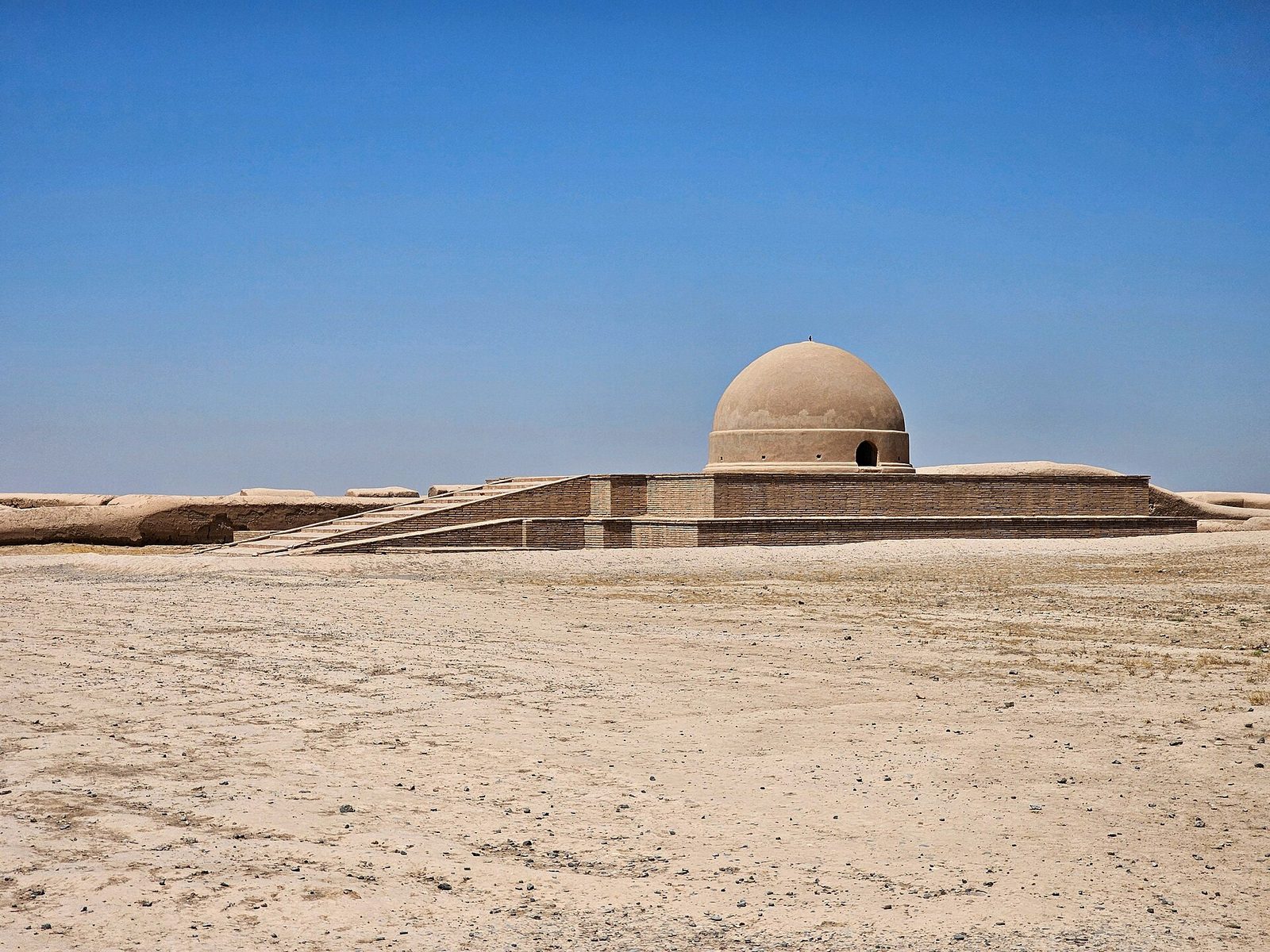
In 1968 a Buddha carved from alabaster turned up in the dunes west of Termez. The finds were studied until 1976, and what lay under the sand proved to be a whole monastery. It was founded in the 1st century AD, flourished under the Kushans and was abandoned around the 5th century.
The plan is easy to follow on the ground: a temple in the middle with a courtyard of 33 by 20 metres, the monks’ cells to the north-west and service rooms to the south-east, joined by a path of brick and stone. The stupa stands apart. Restoration began in 2000 with UNESCO, and the original stupa now sits inside a new protective dome: you look at it through a glass window.
The 1968 Buddha and most of the wall paintings and reliefs went to the State Museum of History of Uzbekistan in Tashkent. If your trip starts or ends in the capital, see them there; our guide to Tashkent in 1 or 2 days has the details. At Fayaz Tepe itself there is almost no shade, so come early and bring a hat and water.
Kara Tepe and the Zurmala stupa
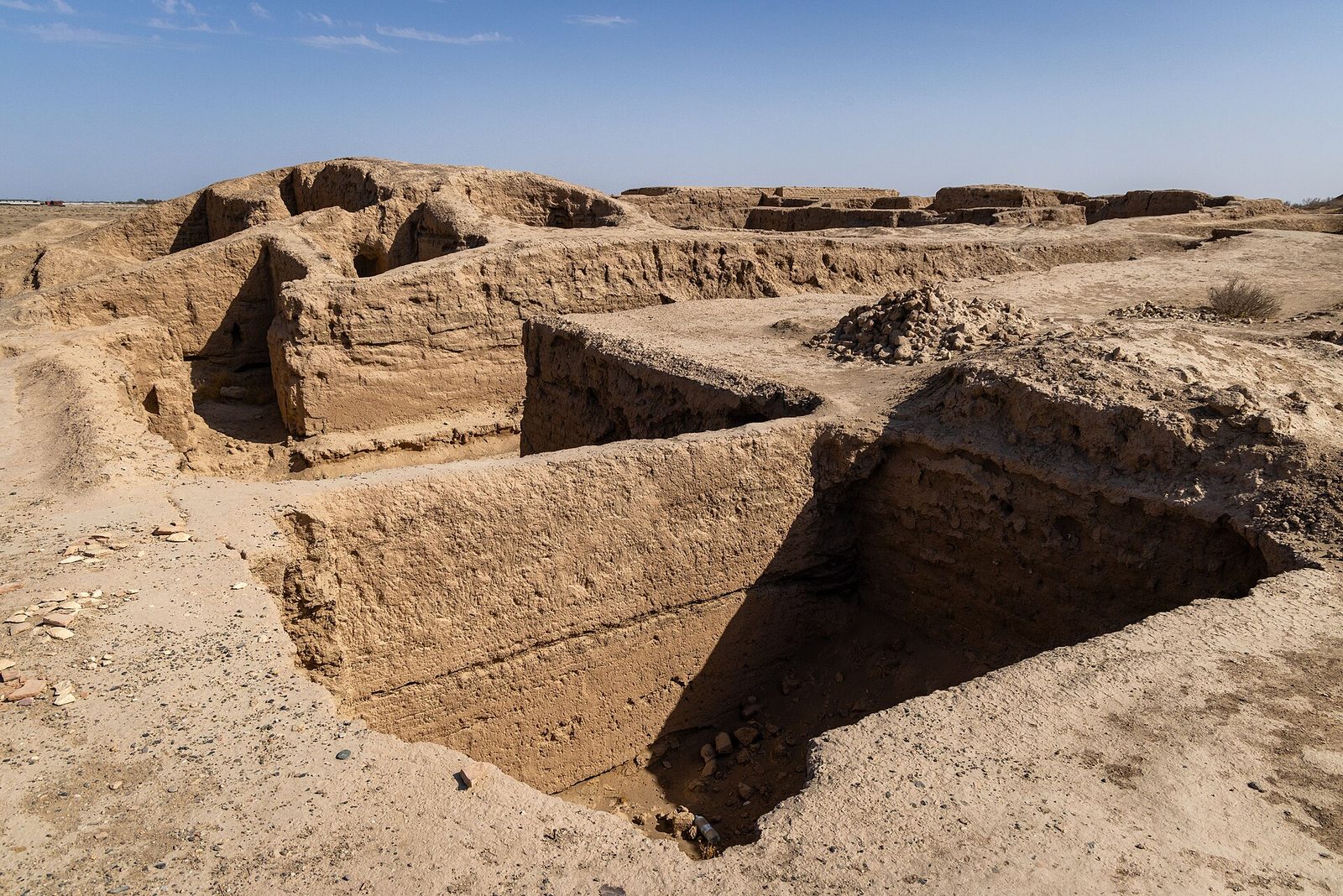
Next door to Fayaz Tepe rises Kara Tepe, a hill with three peaks that the monks turned into a monastery town. They cut sanctuaries into the slopes and built courtyards and stupas in front of them. Corridors run round some of the caves, so that monks could walk around the sacred image, a ritual called pradakshina. Most of the Kushan-era inscriptions found in Termez come from Kara Tepe and Fayaz Tepe.
Building began in the 1st century AD, and by the end of the 3rd century many of the communities had gone. Hermits moved into some of the half-ruined cells as late as the 12th century. Archaeologists have dug here since the 1960s, and a team from Rissho University in Japan excavated the northern hill with Uzbek colleagues every September from 2014 to 2017. Ask us about visiting Kara Tepe when we plan your day.
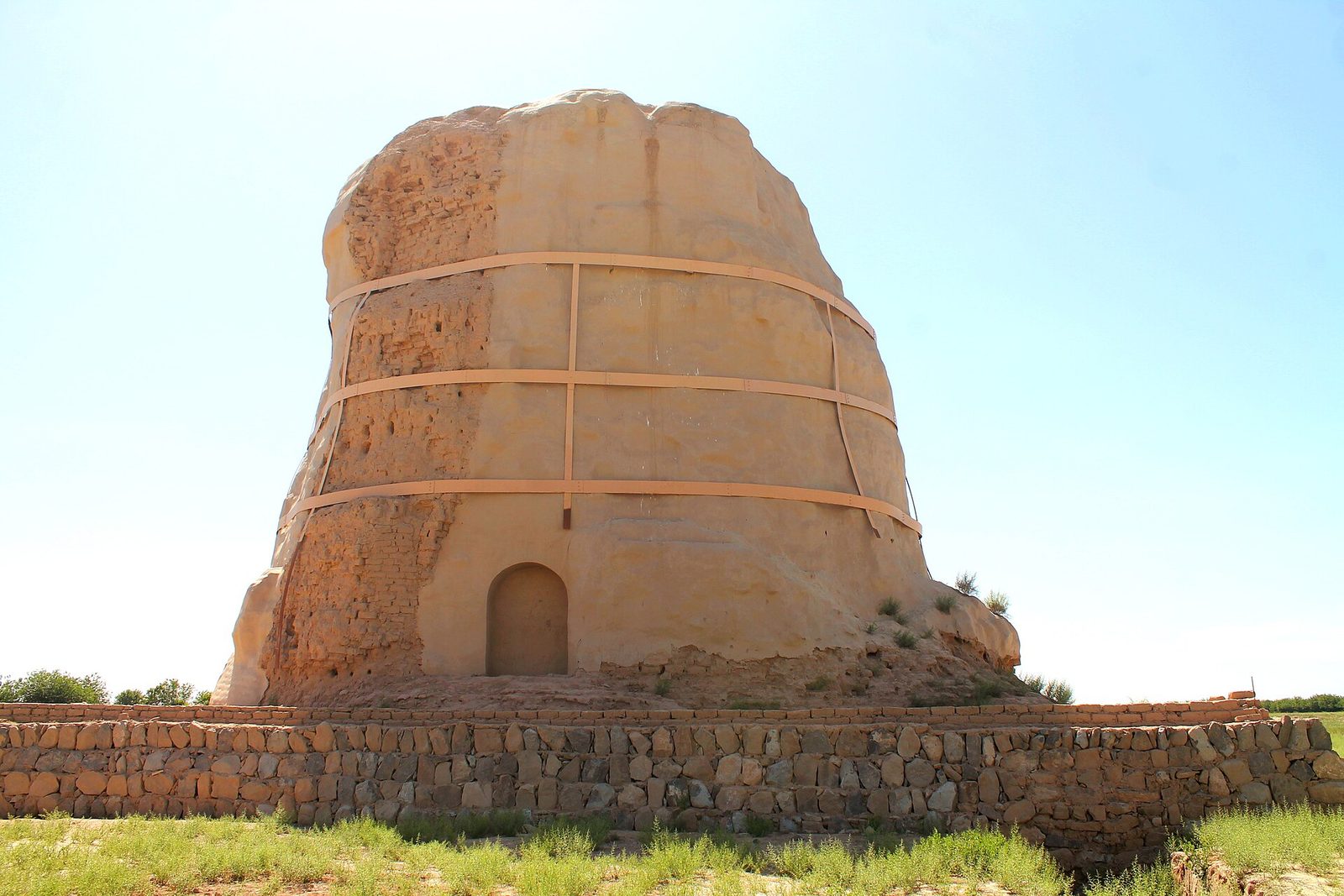
The Zurmala stupa is older still. It was built in the 1st–2nd centuries AD from about 1.2 million mud bricks and still stands around 13 metres tall. In 1927 the scholar Alexander Strelkov suggested it was a Buddhist stupa, and excavations led by Galina Pugachenkova some fifty years later proved him right. It was the first Buddhist building identified in Central Asia. Come in the late afternoon, when the low sun picks out the rows of brick.
Old Termez and the Al-Hakim at-Termezi complex
Old Termez lies a few kilometres west of the modern city, along the Amu Darya. It was already a city before the 3rd century BC and lasted until 1220, when Genghis Khan’s army took it after a two-day siege. When Ibn Battuta came through in the early 14th century, he found a new town two miles from the river. That is why today’s Termez stands apart from its ruins.
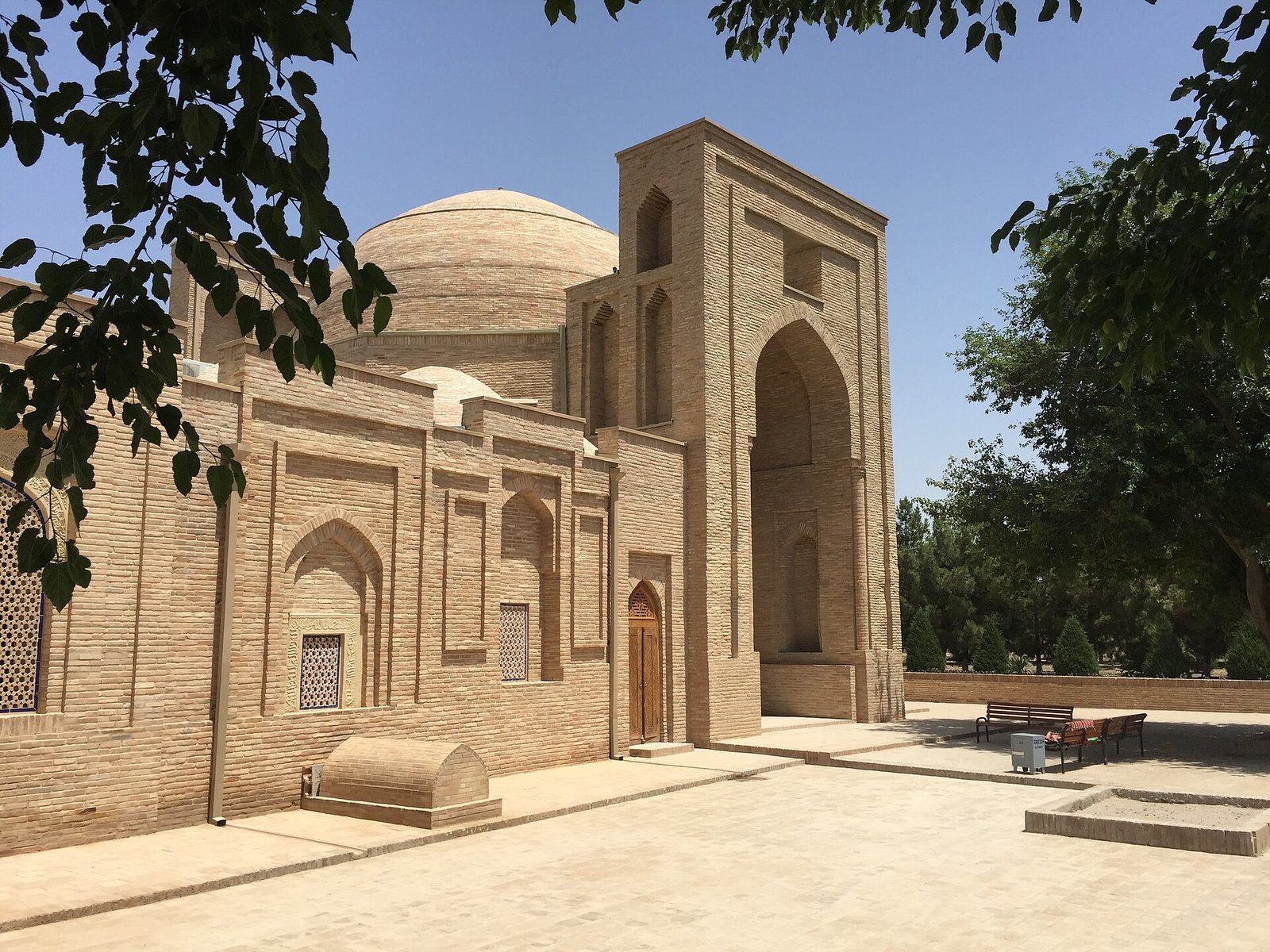
On the edge of the old city is the most revered shrine of Termez, the tomb of Al-Hakim at-Termezi. He was a 9th-century Sufi and one of the great early writers on Islamic mysticism; his best-known book is The Seal of the Saints, and the title al-Hakim, “the sage”, honours the range of his learning.
The complex grew over six centuries. First came a single domed chamber of baked brick over the grave, and by the end of the 11th century its interior was covered in carved ganch, plaster cut into patterns. A smaller mausoleum was added in 1389–1390. In 1405–1409 Khalil Sultan, Amir Timur (Tamerlane, 1336–1405), founder of the Timurid empire, which had its capital in Samarkand. Born near Shahrisabz.’s grandson, built a large khanaka, a lodge for travellers and dervishes. Over the grave lies a white marble tombstone of the early 15th century, a masterpiece of stone carving: look for it first.
This is a working shrine. Cover shoulders and knees, women may want a scarf, and come in the morning or late afternoon. More on visiting holy places: shrines of Uzbekistan and what to wear in Uzbekistan.
Sultan Saodat, Kokildor-ota and Kirk-Kiz
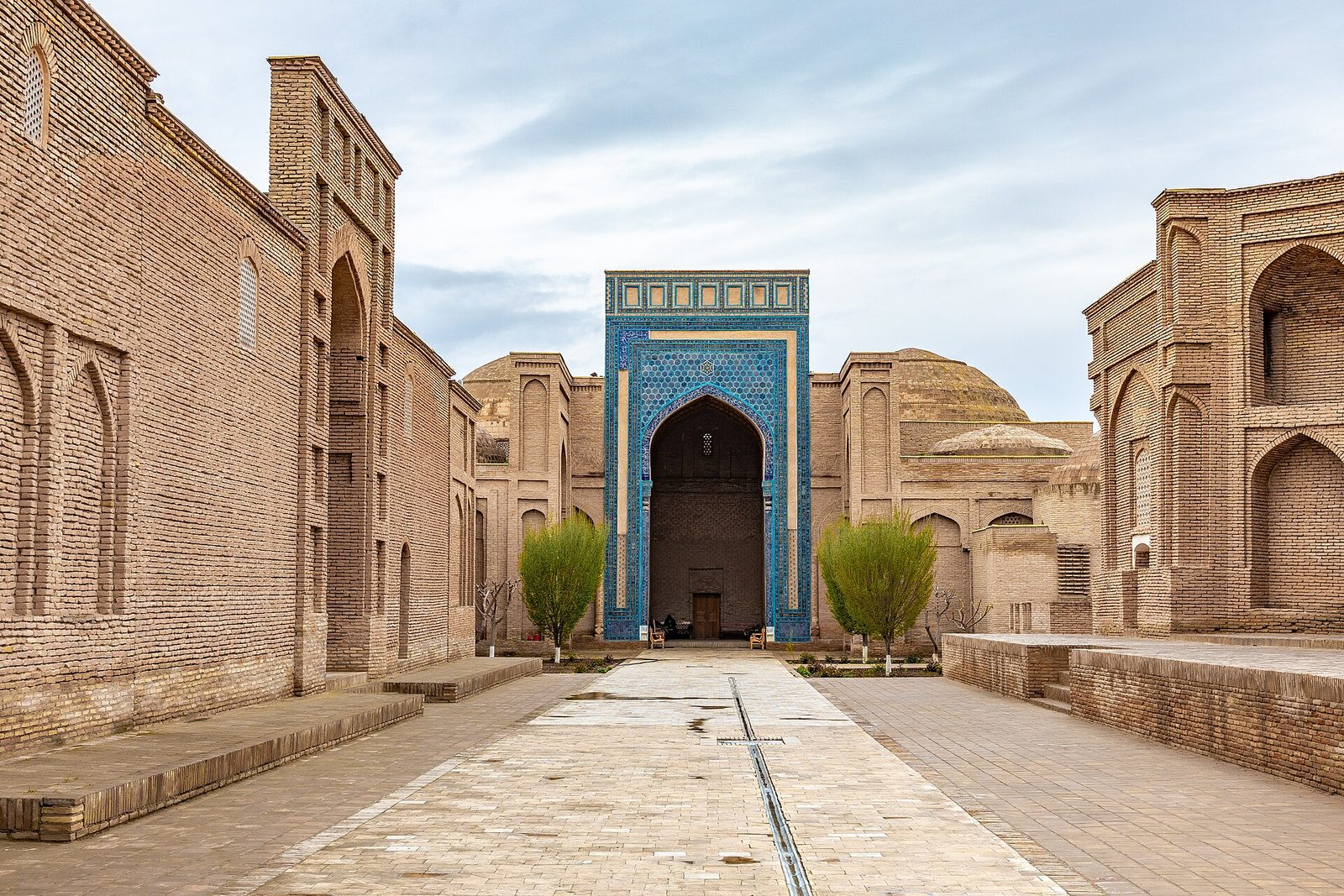
North-east of the centre, three more monuments make an easy half day together with the museum. Sultan Saodat is the family necropolis of the Termez sayyids, a dynasty that traced its line to the Prophet Muhammad. It grew from the 10th to the 17th century along one long passage: two square domed mausoleums of the 10th century, joined by a 15th-century iwan, then rows of later tombs, mosques and a khanaka. It holds about 120 graves. A local story says the builders mixed their mortar with egg yolk, camel’s blood and milk.
Kokildor-ota is a khanaka with a domed central hall and carved ganch inside; the largest tombstone in the hall belongs to Kokildor-ota himself. Its portal looks like Timurid work of the 15th century, although the building is often dated to the 16th.
Kirk-Kiz, “forty girls”, is a large square building of mud brick. Despite its fortress-like walls, archaeologists think it was a caravanserai or a summer palace.
Kampyr Tepe: a river port from the time of Alexander
About 30 km north-west of Termez, on the Amu Darya, lies the excavated town of Kampyr Tepe. Building began in the 4th century BC, at the time of Alexander the Great’s campaign in Central Asia, and the town lived for about four hundred years, through the Hellenistic, Saka-Parthian and Kushan periods.
It was a river port. A mud-brick citadel with rounded towers stood on a terrace above the harbour, and a lighthouse guided boats across the river. One gate copies the design of a gate at Sillyum in Pamphylia, in today’s Turkey, a town Alexander besieged in 333 BC. That is one reason why some scholars, among them Edvard Rtveladze, who discovered the site in 1972, see Kampyr Tepe as Alexandria on the Oxus. Not everyone agrees.
The site has been excavated, not rebuilt: you walk among real walls and streets. Ask us to add it to your route; it pairs well with the Buddhist sites west of town.
Baysun: mountains and a living tradition
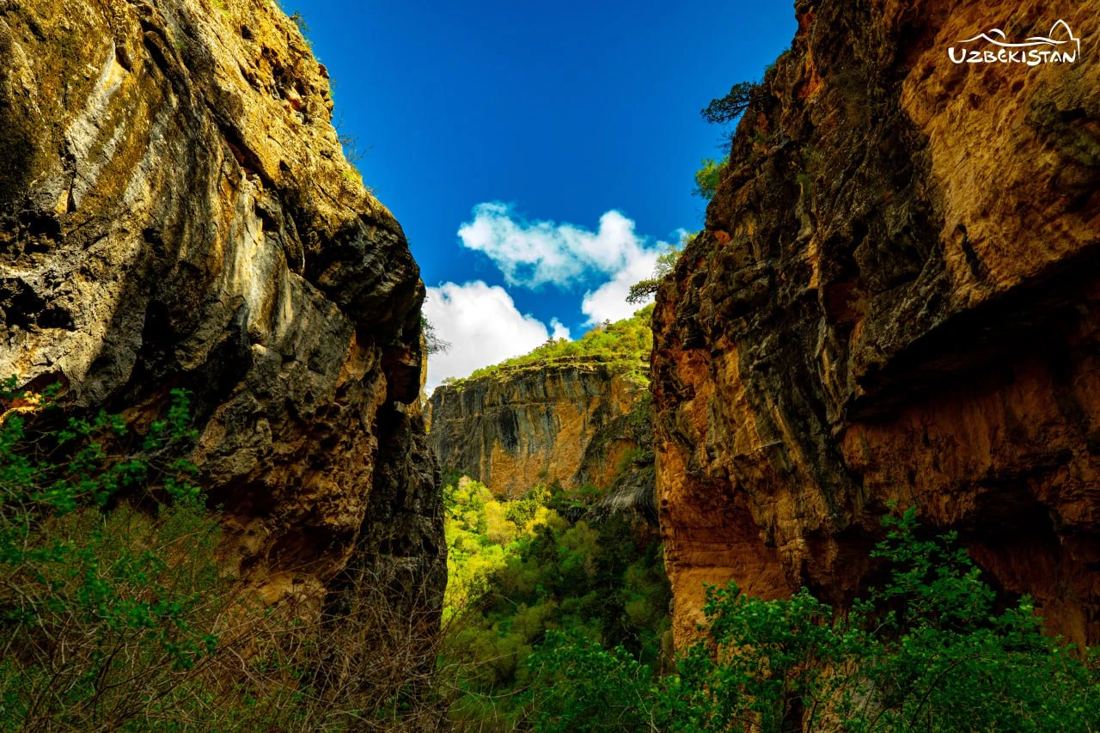
About 141 km north of Termez, a little over two hours by road, the plain gives way to the Baysuntau range and the town of Baysun. In 2001 UNESCO proclaimed the cultural space of Boysun District a masterpiece of intangible heritage, and in 2008 it was inscribed on the Representative List.
Why here? The district lies on an ancient route, and when the A network of caravan routes between China and the Mediterranean. Samarkand, Bukhara and Khiva grew rich as stops along it. faded, its isolation kept old customs alive, with traces of Zoroastrianism, Buddhism and Islam. On the eve of Navruz there is a sowing ritual with offerings of food; family celebrations bring wrestling and horse races; epic songs, ritual chants and dances are still part of life. In May the district hosts the Boysun Bahori international folklore festival: its 13th edition ran from 1 to 7 May 2026.
The mountains have an older story too. In the Teshik-Tash cave in Baysuntau, Alexei Okladnikov found the remains of a Neanderthal child in 1938, with five pairs of ibex horns set around the grave.
Our Wild Expedition: Baysun starts and ends in Termez: six days by 4×4, over the Iron Gate pass at Derbent, into the canyons and villages of Baysuntau and on to the Sangardak waterfall. For walking routes elsewhere in the country, see hiking in Uzbekistan.
Getting there, when to go and how many days
- By air: Uzbekistan Airways flies from Tashkent to Termez in about 1 hour 20 minutes. It is the quickest way, and our usual choice.
- By train: an overnight train leaves Tashkent’s South station every evening at 21:13 and reaches Termez at 11:17 the next morning, about 14 hours on the way. How to buy tickets: trains in Uzbekistan.
- Getting around: the sights are spread out, from Old Termez in the west to Sultan Saodat in the north-east. A car with a driver for the day is the simplest way to see them all.
- When to go: March–April or October–November. Average afternoon highs are 19.6 °C in March and 26.9 °C in April, 25.9 °C in October and 17.9 °C in November. From June to August they run at 38–40 °C, and the record is 47 °C. In summer we see the open-air sites early in the morning and spend the middle of the day indoors. Month by month: Uzbekistan in April and Uzbekistan in October.
- How many days: two for Termez, one for Old Termez, Fayaz Tepe, Kara Tepe and Al-Hakim at-Termezi, one for the museum, Zurmala, Sultan Saodat, Kokildor-ota and Kirk-Kiz. Add half a day for Kampyr Tepe and six days for the Baysun expedition.
The city at a glance is on our Termez page. Termez also makes a good final chapter for a classic route: see how we plan Silk Road tours, and if you are building a longer trip across the region, Central Asia tours: Uzbekistan and its neighbours.
In short
- Start at the Archaeological Museum: some 27,000 finds make the ruins easy to read.
- Fayaz Tepe, Kara Tepe and Zurmala are Kushan-era Buddhist sites; Zurmala alone took about 1.2 million bricks.
- Al-Hakim at-Termezi is the city’s most revered shrine, and Sultan Saodat grew along one passage from the 10th to the 17th century.
- Kampyr Tepe was a river port founded in Alexander’s time; Baysun, two hours north, has been on UNESCO’s intangible heritage list since 2008.
- Fly in, give Termez two days, and come in spring or autumn.
© Photos
- Archaeological Museum, Termez — Jonibek Qo'zimurodov / Wikimedia Commons · CC BY-SA 4.0
- Fayaz Tepe Buddhist site, Termez — Prof. Mortel / Wikimedia Commons · CC BY 2.0
- Kara Tepe Buddhist site, Termez — Marat Nadjibaev / Wikimedia Commons · CC BY-SA 4.0
- Al-Hakim at-Termezi mausoleum, Termez — 4pf3154f7 / Wikimedia Commons · CC BY-SA 4.0